China Auto Thread


Sunday China Drive | Geely’s LEVC L380 – heads to Europe by 2026​


Reading Time: 7 minutes

Adrian Leung

August 3, 2024


0


News like this to your inbox or phone?​


Weekly summary to your inbox
I want this

Never miss and important news
Get Instant notification once the news is published.
Follow Us

The LEVC L380 (see specs) is an innovative electric minivan from London EV Company—a British manufacturer under the Chinese Geely umbrella. This luxurious, fully electric vehicle has a variant that seats up to eight passengers and boasts 400 kW of power with an impressive range of up to 805 km CLTC.


Previously known as the British London Taxi Company, LEVC has broadened its offerings beyond the renowned TX cab, introducing the L380 for private and fleet use. After generating excitement with pre-orders in May and an official launch in June, deliveries commenced on July 25. When we visited the Lynk & Co dealership to see the brand new Z10 sedan, we accidentally stumbled upon the Levc L380 and requested a test drive. So, on this week’s Sunday China Drive, let’s head out with the new LEVC L380 minivan!

Exterior Design


Our test car is the LEVC L380, a 6-seat 4WD Ultra variant measuring 5316/1998/1920 mm with a wheelbase of 3185 mm. The L380 is shorter than the Li Auto Mega by only 34 mm, making it one of the biggest MPVs available in China today.

Crafted by former Bentley designer Brett Boydell, the LEVC L380 takes design inspiration from the Airbus A380, reflecting the aircraft’s spaciousness in its expansive interior. Its unique look features cues from the airplane’s fuselage, including a sleek bonnet, integrated headlights, and an LED strip. The high beltline and flat roof set it apart from other MPVs. It has retractable door handles and large rear sliding doors for enhanced practicality. Closing the doors felt sturdy. All the panels are perfectly aligned, and the paint has a smooth, well-finished appearance.

The Interior


The LEVC L380 is a full-size electric minivan built on Geely’s new SOA architecture, which evolves from the SEA platform. It’s the first vehicle to use this new architecture to maximize interior space and offer high-quality travel experiences for the global market. The interior features a 2+2+2 seating arrangement with independent “captain’s chairs” in the second and third rows. It is finished with soft semi-aniline leather, Alcantara fabrics, and crystal accents.

The L380 is packed with the latest technology, including a 15.4-inch main screen, a 10.25-inch instrument cluster, and a 19.8-inch AR-HUD. It has dual screens behind the front seats, complemented by dual rear armrest screens. It is one of the most spacious MPVs on the market.

Like the Xpeng X9 (test report) we tested earlier, the driver seat and second-row seats of the L380 are fitted with massage functions, the coplit seat does not enjoy this feature. I can only imagine my wife not being happy with this on a long journey sitting beside me. Jokes aside, the panels inside the vehicle are well-fitted and in alignment.

Storage

Depending on the position of the third-row seats, the rear cargo area can hold up to 1,100 liters.

Driving Experience

A standout feature of the L380 is its elevated seating position compared to other MPVs, providing a commanding view of the road. Equipped with advanced Continuous Damping Control (CDC) and air suspension systems, the L380 adjusts automatically based on driving mode, enhancing both comfort and handling.

In Comfort mode, the L380 offers smooth vibration filtering and excellent absorption of road impacts, even on uneven highways, ensuring a relaxing drive suitable for daily commutes.

Sport mode firms up the suspension while maintaining flexibility, improving body control, and reducing passenger motion sickness. It enhances responsiveness and handling, akin to standard sedans or SUVs, and provides better feedback during lane changes. The suspension compression feels more linear and natural, improving overall handling while retaining the familiar steering feel of traditional family cars.

We previously tested the Zeekr 007 and the Galaxy E8, both built on Geely’s SEA architecture. The Levc L380, however, is constructed using the new SOA architecture, an evolution of the SEA. During our test drive on familiar suburban roads in Zhuhai, the L380’s chassis felt notably solid.

The L380 may weigh over 3 tonnes, but its dual motor offers 400 kW and 686 Nm. The all-wheel-drive version accelerates from 0 to 100 km/h in just 5.5 seconds, highlighting its premium positioning. We were easily taking over other cars on the highway.

The NVH levels are quite commendable. The cabin remains impressively quiet at lower speeds and up to 100 km/h; no intrusive noises exist. The steering is notably light yet accurate.

I have also spent considerable time in the second row during the test drive. It felt comfortable. When the MPV was traveling on rough surfaces, there were noticeable bounces inside the cabin, yet I could still read car news on my smartphone without any issues. The third row is where the L380 shines. In most MPVs, when the second-row passengers have adjusted to their comfortable legroom positions, the third-row passengers will feel cramped. This is different with this full-sized minivan. The third-row passengers can still be relaxed and enjoy the spaciousness.

Battery Range

Our dual-motor version test car is equipped with a Qilin battery, which exceeds 800 kilometers CLTC. It supports a maximum charging power of 260 kW, enabling an 80% charge in approximately 30 minutes.

Safety Features

After passing rigorous safety tests, the L380 scored 20 points in the tail collision test, making it the first four-row MPV worldwide to achieve this milestone. In addition, it was the first pure electric MPV to complete the double-column side collision test in May successfully.

The L380 stands out with its eleven airbags across all three rows, providing an unmatched feature in its class. It also includes the most significant side curtain airbags in its category, each with a capacity of 112 liters, ensuring superior protection for occupants.

Dealership Experience

As mentioned, I was at Lynk & Co. to check out the latest full-electric Z10 sedan. As I was walking into the dealership, I found a dirty van parked outside. Taking a closer look, it was the new LEVC L380! As I was inspecting the Z10 with a Lynk & Co. rep, I asked for a test drive for the LEVC L380. He quickly organized a car wash and the paperwork.

While the L380 was being washed, we waited inside the Z10 and chatted about these new cars and how far Chinese cars have advanced in recent years. It wasn’t long til we were on our way to test the L380 full-sized minivan. The Lynk & Co rep emphasized that they were not briefed on the details of the LEVC L380 because it is only sold at their dealership but not represented by Lynk & Co.

Lynk & Co Z10
Conclusion

Geely is expanding its premium MPV lineup with the L380 and the Zeekr 009 (see specs). The latter is priced from 439,000 yuan (61,300 USD) and tailored for company executives. In contrast, the L380, whose price starts at 379,900 yuan (53,000 USD), is designed for families and competes with models like the Xpeng X9 and even the Mercedes-Benz EQV. The L380 stands out in terms of its spaciousness, driver engagement, and range.

LEVC announced that the L380 will be available in the UK by 2026, followed by its entry into the European market. This model represents a significant advancement for the Geely Group, combining cutting-edge design and advanced technology with a focus on premium travel.

Stay tuned for next week’s Sunday China Drive at Car News China, where you can read more first-person evaluations of Chinese cars.
 

Emerging Chinese NEV automakers July 2024 sales report​


Reading Time: 3 minutes

Dong Yi Chen

August 3, 2024


0


As July wrapped up for 2024, automakers are releasing their sales “report card”. Today, we’ll be focusing on the sales performance of the emerging new energy vehicle (NEV) automakers.
The term “Chinese emerging NEV automakers,” frequently mentioned in Chinese media reports, refers to the newer automakers specializing in the production of electric and plug-in hybrid vehicles that had sprouted in recent years, in contrast to the traditional automakers that previously focused on diesel or gasoline-engine cars. In China, the leading emerging automakers often referenced are Nio, Li Auto, and Xpeng.

RankingEmerging Chinese NEV AutomakersJuly Sales
1Li Auto51,000
2Aito41,535
3Leapmotor22,093
4Nio20,498
5Deepal16,721
6Geely Galaxy16,704
7Zeekr15,655
8Xpeng11,145
9Neta11,015
10Denza10,340
11Xiaomi>10,000
Emerging Chinese NEV Automakers July 2024 Sales

In July 2024, Li Auto delivered 51,000 new vehicles, up 49.4% year-on-year and 6.8% month-on-month. From January to July 2024, a total of 239,981 vehicles were delivered. As of July 31, Li Auto had delivered a total of 873,345 vehicles.

For Aito, which is part of the Harmony Intelligent Mobility Alliance (HIMA) along with Luxeed and Stelato, the brand delivered 18,047 M9s, 16,562 M7s, and 6,926 M5s in July, bringing its cumulative sales for the first seven months of 2024 to 222,679 vehicles. Earlier on July 29, Aito’s 400,000th vehicle rolled off the production line. At the same time, it is worth pointing out that HIMA’s July cumulative sales volume was 44,090 vehicles, a year-on-year increase of 942% and a month-on-month increase of 2.2%.

In July, Leapmotor returned to the top three in the sales of emerging Chinese NEV automakers, selling 22,093 vehicles, a year-on-year increase of 54.1% and a month-on-month increase of 9.8%. In the first seven months of this year, Leapmotor’s cumulative sales volume reached 108,789 vehicles.

As for Xiaomi, the official has not revealed the exact sales number but only shared a poster that the delivery volume in July exceeded 10,000 vehicles and that the delivery volume in August will continue to exceed 10,000 units.

Furthermore, according to the forecast data previously released by the China Passenger Car Association (CPCA), preliminary estimates show that the sales volume of the Chinese domestic passenger car retail market (i.e. sedans, MPVs, SUVs) in July was about 1.73 million units, a slight decrease of 2.0% year-on-year and month-on-month. More specifically, the retail sales volume of new energy vehicles in the Chinese domestic market is expected to reach 860,000 units, basically the same as in June, a year-on-year increase of 34.1%, and the penetration rate is expected to further increase to 49.7%.
Source: Li Auto Weibo, gxfin, qctt, DongCheDi
 

AITO M9: Best Back Seat EVER​


To view this content we will need your consent to set third party cookies.
For more detailed information, see our cookies page.
 

We Drove Our BYD For 20,000 Km (Here’s What Broke)​


To view this content we will need your consent to set third party cookies.
For more detailed information, see our cookies page.
 

Galaxy E5: Can Geely Beat BYD?​


To view this content we will need your consent to set third party cookies.
For more detailed information, see our cookies page.
 

2024 NIO ET5t Ev Range 680km Under $48,000 | NIO | China​


To view this content we will need your consent to set third party cookies.
For more detailed information, see our cookies page.
 

2024 BYD TANG DM-i Glory Edition 7-Seater PHEV Range1020km $25,000 | BYD | China​


To view this content we will need your consent to set third party cookies.
For more detailed information, see our cookies page.
 

2025 BYD Dolphin (Seagull) MiNi Ev Under $10,000 | BYD | China​


To view this content we will need your consent to set third party cookies.
For more detailed information, see our cookies page.


Automobile

New version of Tank 400 SUV to be launched in China 15:09​


Anika
By Anika
August 10, 2024

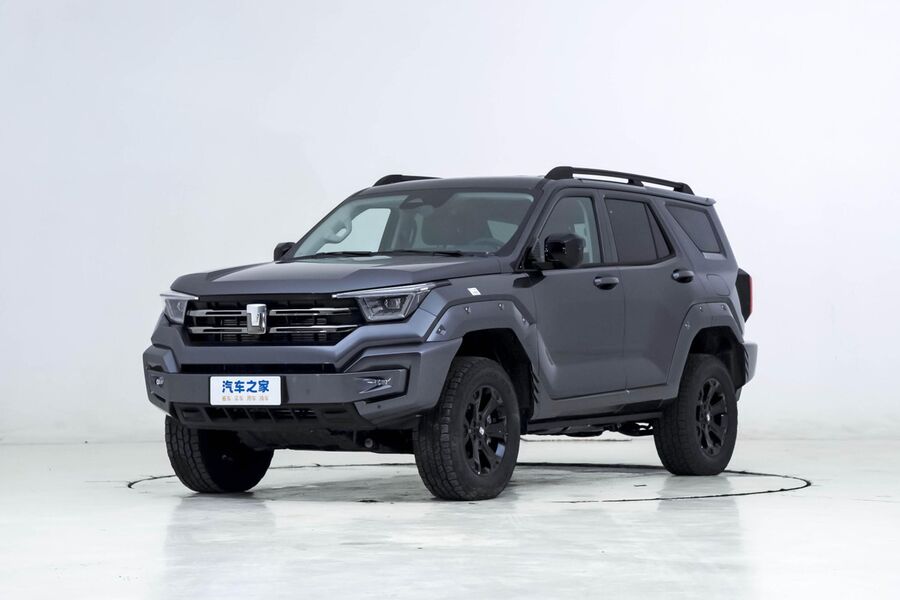
Chinese car brand Tank will launch a new diesel-powered version of its 400 SUV. reports carnewschina.com.

The model will receive a 2.4-liter turbodiesel with a capacity of 186 hp. It is possible that this will be the same engine. The public presentation of the Diesel Tank 400 may take place at the end of August at the Chengdu Auto Show, and the model is expected to go on sale before the end of the year. Diesel-powered vehicles are expected to be exported.

The Tank 400 is now available with the hybrid powertrain previously seen on the Tank 500 Hi4-T. The 2.0 petrol turbo engine produces 252 hp and 380 Nm of torque. It is equipped with a 9-speed automatic transmission and an electric motor. There is a reduction gear. The total power of the power plant is 408 hp. The traction battery allows you to travel 105 km on electricity alone.

Tank 400 is an SUV with a frame structure and a ground clearance of 224 mm. The length of the car is 4985 mm and the wheelbase is 2850 mm. The approach and departure angles are 33 and 30 degrees.

Previously reportedIt was stated that Mitsubishi will complete the production of the Space Star model by the end of 2024.


Source: Gazeta
 

2025 BYD Dolphin Ev 520km Extended Range with Unchanged Prices | BYD | China​


To view this content we will need your consent to set third party cookies.
For more detailed information, see our cookies page.
 

2024 NEW XPENG G6 Ev Range 580km Under $25,000 | Xpeng | China​


To view this content we will need your consent to set third party cookies.
For more detailed information, see our cookies page.
 

CATL opens first EV experience center showcasing nearly 100 models​


Reading Time: 3 minutes

Lawrence Ho

August 11, 2024


0


News like this to your inbox or phone?​


Weekly summary to your inbox
I want this

Never miss and important news
Get Instant notification once the news is published.
Follow Us

CATL officially launches the CATL New Energy Plaza in Chengdu, Sichuan. This facility is jointly developed by CATL, the government of Qingbaijiang District in Chengdu, and automotive companies. The plaza serves as a centralized showcase for viewing new energy vehicles equipped with CATL-made batteries.


The plaza exhibits nearly 50 brands and 100 models, allowing consumers to explore dozens of EV models in one place. Brands and models showcased include notable CATL clients such as Nio’s ET5/ET5 Touring, ET7, ES6, ES8, Tesla’s Model 3 and Model Y, and Xiaomi’s SU7.

365-day car show​

The new 13,800 square meter showroom marks the first time CATL has engaged directly with regular consumers. The center will not sell any cars, but instead function as a 365-day non-stop auto show.


The new space is purely an experience center for promoting EVs and enabling consumers to explore popular models all in one go. CATL has additionally assembled a team of experts ready to answer consumer questions about electric vehicles and batteries.

The showroom will offer services such as viewing, selecting, testing, and learning about the entire lifecycle of electric vehicles. The center is like stepping into a large supermarket for EVs. Showroom features a range of vehicles from sedans, SUVs, MPVs, both from foreign and domestic brands, all of which are equipped with CATL batteries.

Directly reaching consumers​

In addition to the new center, CATL has also officially launched its aftermarket service brand “Ningjia Service”, which has set up 112 professional service stations across China. The new service provides comprehensive professional services such as mobile rescue, battery maintenance, and vehicle health checks.


In conjunction with the service program, CATL also launched web-based mini-program offering services such as charging network maps, car viewing, car usage, and more. The mini-program and service center open up a new one-stop service path for NEVs.

It’s been rumored CATL may adopt a similar strategy to Intel’s “Intel Inside” and Huawei’s “Huawei Inside” by branding models using CATL batteries as “CATL Inside”. CATL Chief Marketing Officer, Luo Jian, firmly rejected this idea as outside speculation and stated CATL does not intend to label NEVs with the CATL brand, unlike Intel’s early marketing strategy.

CATL has created the world’s first NEV brand pavilion, bringing dozens models from competing brands together. As the penetration rate of NEVs in China exceed 50%, the center will allow users to better and faster choose the right NEV in a highly competitive market.

CATL is the leading battery supplier of EVs both in China and the world with 46.5% and 37.5% market share, respectively. The company is involved with joint ventures with leading Chinese automakers like SAIC, FAW, GAC, Geely, and Changan. CATL’s extensive partnerships put the company in a unique position allowing them to consolidate all its clients under one roof.

Sources: MyDrivers, People’s Daily, Shanghai Securities Daily
 

Sunday China Drive | GWM Haval H6 – can the 4th-gen reclaim its former glory?​


Reading Time: 4 minutes

Adrian Leung

August 10, 2024


0


News like this to your inbox or phone?​


Weekly summary to your inbox
I want this

Never miss and important news
Get Instant notification once the news is published.
Follow Us

The new fourth-generation GWM Haval H6 compact SUV has a starting price of 98,900 yuan (13,800 USD). Since its launch on August 25, 2011, the Haval H6 has been a dominant force in China’s domestic SUV market. Over the years, it has sold over 4 million units and consistently held the top spot in SUV sales. However, recent data indicates a decline in its market position, with the H6 now falling outside the top ten and experiencing monthly sales of 5,000 to 8,000 units. Can the fourth-generation model reverse this trend and rejuvenate the H6’s sales performance? So, on this week’s Sunday China Drive, let’s head out with the new Haval H6 SUV!


Exterior Design

Built on GWM’s L.E.M.O.N. platform, the new Haval H6 measures 4,703 mm in length, 1,886 mm in width, and 1,730 mm in height, with a 2,738 mm wheelbase. This marks a 50 mm increase in size compared to its predecessor, while other dimensions remain consistent. The new model features a redesigned front end with a large grille and new headlights, a simplified rear design with new taillights, and prominent Haval branding. The exterior includes black-painted window frame trims, roof luggage racks, and rims.


The Interior

The interior of the new H6 retains much of the layout from the third-generation model but includes several notable updates. It features a 10.25-inch floating instrument panel, a 14.6-inch central control screen, and a redesigned user interface with the removal of physical buttons. The vehicle runs on Coffee OS 2.0, powered by a Qualcomm Snapdragon 8155 chip, and supports Huawei HiCar 4.0. It also includes a 50W wireless charging pad, front seat heating and ventilation, and a 9-inch HUD on higher trims. Over 20 level 2 advanced driving assistance functions are available.

Storage


The 2025 GWM Haval H6 has a trunk capacity of 560 liters, expandable to 1,485 liters, with the rear seats folded down.

Driving Experience

The fourth-generation Haval H6 is surprisingly pleasant behind the wheel. The 2.0T engine delivers 175 kW (235 hp) and 385 Nm of torque, paired with a 9-speed dual-clutch transmission (DCT). While there’s a bit of turbo lag at the start, the 2.0T engine delivers sufficient low-end torque, making it well-suited for city driving. The mid-range acceleration feels more confident, and the 9-speed DCT provides smooth downshifts in standard mode and quicker responses in sport mode, though with occasional hesitation.

The 2.0T engine provides good acceleration and efficiency, contributing to a smooth driving experience. The 9-speed DCT shifts seamlessly, ensuring a refined ride. However, the H6’s handling and steering needs improvement. The steering feels disconnected, particularly at low speeds, affecting the vehicle’s dynamics compared to competitors.

The chassis and suspension offer a firmer setup that enhances handling while maintaining comfort for family use. The tighter suspension gives the car a more controlled feel.

Off-road, the Haval H6 performs well, maintaining stability on rough terrain. Steering improvements provide more precise feedback than the previous generation, but overall connectivity and on-road performance still require enhancement.

Safety Features

The 2025 GWM Haval H6 emphasizes safety with a range of advanced features. It has been thoroughly tested to achieve an Australian 5-Star N-Cap rating. Essential safety features include multiple airbags, advanced braking systems, and driver-assist technologies like lane departure warning and traffic sign recognition.

Dealership Experience

GWM Haval vehicles are sold through traditional dealerships, so I found one online. As usual, we booked through their official website and waited for the Haval sales rep to call. After a quick call, the Haval rep and I communicated via WeChat. Upon arriving at the dealership, we were greeted by three people. Two of them went on the test drive with us. Even after the test drive, we are unsure who to contact to ask questions. So, it was a confusing experience.

Conclusion

The new fourth-generation GWM Haval H6 compact SUV has surprised us with modernized updates. However, despite these advancements, the new Haval H6 faces EV and PHEV rivals like Aion Y and BYD Song Pro, offering superior design and performance. In recent months, the top-selling SUVs in China have all been NEVs. While the fourth-generation H6 offers incremental improvements, its success in reclaiming a leading position may need to wait until the release of its PHEV version arrives.

Stay tuned for next week’s Sunday China Drive at Car News China, where you can read more first-person evaluations of Chinese cars.
 

2025 BYD Song Plus DM-i(Seal U / Sealion 6) 1500km Range Only $17,000- $24,000 | BYD | China 🇨🇳


To view this content we will need your consent to set third party cookies.
For more detailed information, see our cookies page.
 

2024 NIO ET5 Ev Range 710km Under $48,000 | Better than Tesla Model 3 ? Nio | Tesla​


To view this content we will need your consent to set third party cookies.
For more detailed information, see our cookies page.
 

Users who are viewing this thread

Back
Top