China Auto Thread

High fuel prices help drive sales of Chinese EVs | ABC News​

To view this content we will need your consent to set third party cookies.
For more detailed information, see our cookies page.
 

Chinese Motorcycle Brand Makes History with Dominant Win at WSBK Portugal

by Li Jiaohao

March 30, 2026
[News]

Chongqing


Chinese Motorcycle Brand Makes History with Dominant Win at WSBK Portugal

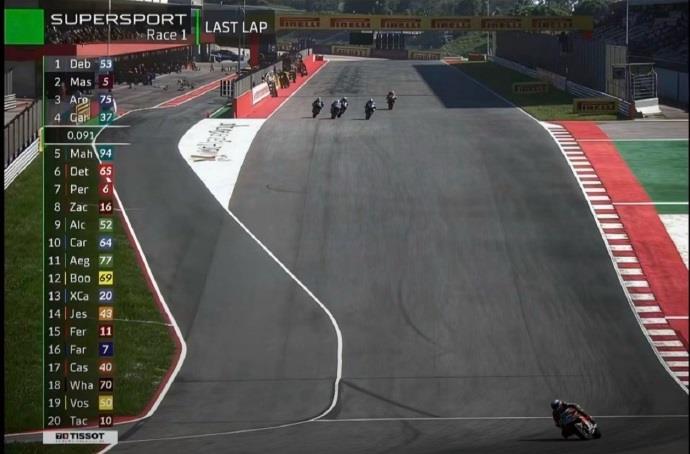
Caption: French rider Valentin Debise, riding a ZX Moto motorcycle, crosses the finish line nearly 4 seconds ahead of the pack at the World Superbike Championship (WSBK) Supersport round in Portugal on March 28.

In a stunning upset that has sent shockwaves through the world of motorcycle racing, French rider Valentin Debise clinched a commanding victory for the Chinese manufacturer ZX Moto at the World Superbike Championship (WSBK) Supersport round in Portugal on March 28.

Riding the newly developed 820RR-RS model, Debise crossed the finish line nearly 4 seconds ahead of the pack, leaving traditional powerhouses Ducati, Yamaha, and Kawasaki in his wake. The win marks a historic breakthrough, making ZX Moto the first Chinese motorcycle brand to secure a victory in the prestigious WorldSBK class.
Chinese Motorcycle Brand Makes History with Dominant Win at WSBK Portugal

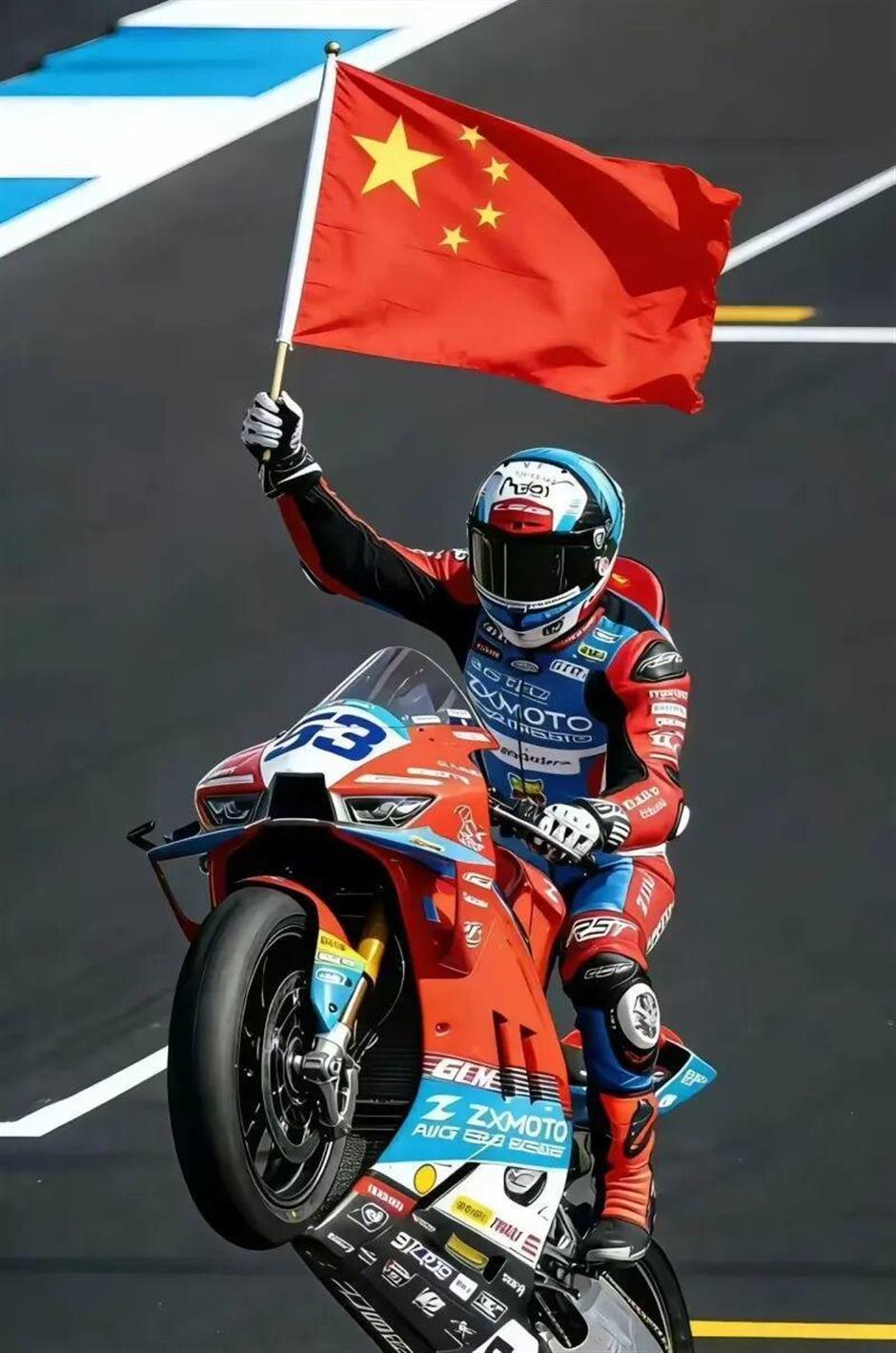
Caption: French rider Valentin Debise, after clinching the WSBK Portugal round victory aboard ZX Moto's 820RR-RS, holds the Chinese national flag aloft following the race.

Behind the historic triumph lies a story of grit that mirrors the underdog victory itself. Zhang Xue, the 39-year-old founder of the eponymous brand, has a journey that began in the impoverished mountains of Huaihua, central China's Hunan Province, according to a report by Red Star News.

Zhang grew up in a crumbling adobe house with a leaking roof. His parents divorced when he was young. At 14, his life changed when he saw a motorcycle. Dropping out of school, he became an apprentice in a repair shop, trading textbooks for grease-stained hands and sleepless nights.

The turning point came in 2006. A 19-year-old Zhang cold-called a local television station, claiming he possessed incredible motorcycle stunts and begging them to film him. Initially, the crew left after witnessing repeated falls. Determined not to let the opportunity slip, Zhang rode over 100 kilometers through the rain to chase down the crew, his sheer persistence moving them to grant him an hour of airtime.
Chinese Motorcycle Brand Makes History with Dominant Win at WSBK Portugal

Caption: A screenshot from the 2006 documentary featuring Zhang Xue showcasing his motorcycle stunts.

The broadcast led to a contract with a racing team, finally launching his career. But after injuries and financial constraints forced him to realize he would never become a top-tier racer, he pivoted. In 2013, he moved to Chongqing with just a few thousand yuan, selling modified bikes online to build his first capital.

In 2017, he co-founded Kove Moto, growing annual sales from 800 units to 30,000. He later led the brand's factory team to become the first Chinese motorcycle squad to complete the grueling Dakar Rally.

After departing Kove, Zhang founded ZX Moto in Chongqing in April 2024, staking his own name on the venture. At the Chongqing Motorcycle Expo that September, the brand unveiled its first model, the 500RR, which began deliveries in March 2025.

At the company's partner conference earlier this year, Zhang revealed that the brand achieved a total output value of 750 million yuan in 2025, with research and development investments hitting 69.58 million yuan (US$10.07 million).
Chinese Motorcycle Brand Makes History with Dominant Win at WSBK Portugal

Caption: Zhang Xue burst into tears at the moment of victory.

Back in Chongqing, Zhang watched the historic victory unfold on a live feed. Overwhelmed with emotion, he wept as Debise took the checkered flag.

Shortly after, he took to social media with a reflective post that captured the spirit of his journey: "When you do something not for the outcome, but because you love it, maybe the result really does turn out different."


To view this content we will need your consent to set third party cookies.
For more detailed information, see our cookies page.
 
To view this content we will need your consent to set third party cookies.
For more detailed information, see our cookies page.
 

China Overtakes Japan as Australia’s Top Auto Supplier​

Published: Apr. 2, 2026 9:36 p.m

More than 5,000 China-made vehicles wait to be shipped to Australia at the Waigaoqiao Haitong International Auto Terminal in Shanghai on July 6, 2025. Photo: VCG

China-made vehicles wait to be shipped to Australia at the Waigaoqiao Haitong International Auto Terminal in Shanghai on July 6, 2025. Photo: VCG

China overtook Japan as Australia’s largest source of imported vehicles for the first time in February, ending Japan’s decades-long lead in the market.

Australia imported 22,300 vehicles from China in February, giving China a 25% share, according to data from the Federal Chamber of Automotive Industries (FCAI). Japan ranked second with 21,600 units, followed by Thailand with 19,400. Japan had been the top source since 1998.


Don’t Stop Me Now: Chinese Cars Are Having a Good Time in Europe

A year and a half after the EU's new duties on China-made EVs, imports are still accelerating. The proposed Industrial Accelerator Act is one possible fix, but even in its strongest form, it might not be enough to shield European carmakers.

Gregor Williams
April 1, 2026

A year and a half after the EU slapped duties on electric vehicles produced in China, imports of Chinese cars are accelerating and member states are at odds over whether additional protection is needed. The European Commission’s latest and most ambitious response, the Industrial Accelerator Act, would tie public support to local content requirements in an attempt to slow the influx of Chinese cars and bolster domestic production. However, there is a significant risk that even these measures will not be enough to shield European carmakers.

Traveling at the speed of light​

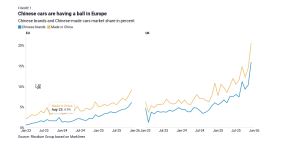
While sales at home are languishing, China-based carmakers are having a ball in Europe. In December, a record 9.3% of new cars sold in the EU were made in China, while in the UK the share surged to a striking 20.6%. For the full year, China-made vehicles accounted for 6.4% of EU sales and 12.1% in the UK (Figure 1).

搜狗截图20260403002724.png

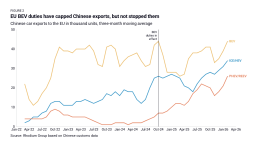
The success of Chinese car exports comes despite the EU’s countervailing duties on Chinese-made battery electric vehicles (BEVs), in place since October 2024 (Figure 2). While the measures briefly slowed exports in late 2024, shipments have since rebounded to pre-duty levels.

At the same time, exports of internal combustion engine (ICE) and plug-in hybrid vehicles (PHEV) which are not subject to additional duties have risen rapidly. This has meant that overall passenger car exports from China reached 922,000 units, up 29% year-on-year. In early 2026, exports are accelerating even further, reaching 214,000 units in just the first two months, up 62% year-on-year.

搜狗截图20260403002841.png

Defying the laws of history​

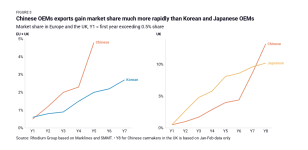
The speed at which Chinese carmakers, particularly BYD, Chery, and SAIC, are gaining market share in Europe is unprecedented. It differs markedly from the experience with Japanese and Korean automakers, which entered the market in the 1970s and 1990s, respectively (Figure 3).

Several factors help explain this acceleration. More Chinese carmakers are entering Europe at the same time than Japanese or Korean firms did. They also have much larger production capacity, allowing them to scale up quickly, especially as a price war drags on at home. With the US market largely closed to them, exports are focused on Europe, where margins are higher. On top of that, European EV incentives are giving Chinese manufacturers an extra boost.

This dynamic is further amplified by the fact that not only East Asian manufacturers, but also Western carmakers, are using China as an export hub, adding to the pressure on Europe’s auto sector.

搜狗截图20260403003019.png

 
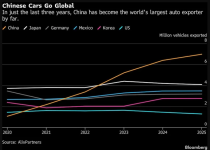
In just the last three years, China has become the world's largest auto exporter by far
微信图片_2026-04-03_003706_057.png
 
To view this content we will need your consent to set third party cookies.
For more detailed information, see our cookies page.
 

Baidu’s Apollo Go robotaxi leads global autonomous driving with 17M+ orders, targets profit this year​


Serious questions are being raised as to how autonomous they really are.

Waymo had issues when power went out in San Francisco last month but that was because street lights went out and it had trouble smoothly navigating in such a situtation.

Robotaxi Outage in China Leaves Passengers Stranded on Highways​


A suspected system failure froze Baidu’s robotaxis across Wuhan, trapping passengers and reportedly causing traffic disruptions and crashes.

An unknown technical problem caused a number of robotaxis owned by the Chinese tech giant Baidu to freeze on Tuesday in the middle of traffic, trapping some passengers in the vehicles for more than an hour.

In Wuhan, a city in central China where Baidu has deployed hundreds of its Apollo Go self-driving taxis, people on Chinese social media reported witnessing the cars suddenly malfunction and stop operating. Photos and videos shared online show the Baidu cars halted on busy highways, often in the fast lane.

A college student in Wuhan tells WIRED that she was stuck in a Baidu robotaxi with two friends for about 90 minutes on Tuesday. (She asked to be only identified with her last name, He, to protect her privacy.) The student says the car malfunctioned and stopped four or five times during the trip before it eventually parked in front of an intersection in eastern Wuhan. Luckily, it was not a busy road, and the group was not in immediate danger. The screen display in the car asked the passengers to remain in the car with seatbelts on and wait for a company representative to come “in five minutes,” according to a photo He shared with WIRED.

He says it took about 30 minutes to reach a Baidu customer representative on the phone. “They kept saying it would be reported to their superior. But they didn’t explain what caused [the outage] or let us know how long we needed to wait for the staff to come,” He says. But no one ever came, and after another hour of waiting, the three passengers decided to just get out and go home by themselves (the doors weren’t locked).

On Chinese social media, other passengers also complained about being unable to reach Baidu’s customer support. “I tried every way I could think of to call for help using the options the app showed, but the phone line wouldn’t go through, and when I pressed the SOS button it told me it was unavailable. So then what exactly is the SOS for?” wrote one person in a post on RedNote alongside a video showing the button not working. She said she had to force the door to open and get out of the car as traffic halted to a complete stop behind her robotaxi. “Apollo Go, you really owe me an apology,” she wrote.


Baidu didn’t immediately respond to a request for comment. Local police in Wuhan issued a statement around midnight in China that said the situation was “likely caused by a system malfunction,” but the incident is still under investigation. No one was injured, and all passengers have exited the vehicles, the police added. It’s unclear how many of Baidu’s robotaxis may have been impacted.

One dashcam recording posted to RedNote shows a car passing 16 Apollo Go vehicles parked on the road in the span of 90 minutes. On several occasions, the video shows the driver narrowly avoiding hitting the robotaxis by braking or changing lanes at the last minute.

Others were apparently not as fortunate. In another RedNote post, a man claimed he crashed into one of the malfunctioning Baidu vehicles. The man wrote in the caption that he was driving over 40 mph on a highway when the car in front of him suddenly changed lanes to avoid the stopped robotaxi. He couldn’t react fast enough and ended up running into the self-driving car. Photos of the man’s orange SUV being towed away show that the car’s front-right fender was completely torn off, and other parts appeared to have sustained major damage.

There were at least two other collisions on the same day, according to photos and videos posted on Chinese social media. A RedNote user in Wuhan confirmed to WIRED that she drove past a white minivan that had gotten into a rear-end collision with a parked robotaxi. The back of the Baidu car was badly damaged, but the two people standing beside the scene looked unharmed, she says. She added that she estimates she also saw at least a dozen more parked robotaxies.

Baidu is one of China’s leading self-driving firms. The company has launched robotaxi services in over a dozen Chinese cities so far and recently began expanding internationally to places like Seoul, Abu Dhabi, and Dubai. In February, Baidu announced that it completed 20 million rides covering over 300 million kilometers (about 186 million miles).

Wuhan has been among the most aggressive cities in allowing Baidu's fully autonomous vehicles on public roads. It permits them to operate on highways and run trips to the airport.
 
Last edited:

'We Have No Chance Against This': Honda Reacts To China's Supplier Strength​

Honda’s CEO delivered this stark verdict after touring an auto supplier factory in Shanghai.


2027-honda-insight.webp

Photo by: Honda

By: Adrian Padeanu
Apr 6, at 5:19am ET

It’s safe to say that Honda is in a bit of a pickle. It recently canceled two of its own electric vehicles, the 0 SUV and 0 Sedan, along with the Acura RSX revival. It will book up to $15.8 billion in losses, and that’s not all. The two Afeela-badged EVs it had been developing with Sony are also dead on arrival. It’s an alarming sign of how some traditional automakers are struggling to create a profitable business case for electric cars.

But the issues go deeper than just EVs. As with most long-running nameplates, Honda is having a hard time remaining competitive in China. Sales have collapsed in just a few years, from a peak of 1.62 million in 2020 to only 640,000 units in 2025. Only about half of its manufacturing footprint is being utilized, well below the 70–80 percent typically needed in the automotive industry to turn a profit. For 2026, annual output is projected to drop below 600,000 units.

Honda CEO and President Toshihiro Mibe recently traveled to China to gain insight into how domestic companies are churning out so many products in such a short timeframe. After visiting an auto supplier factory in Shanghai, he made a stark remark: “We have no chance against this," Nikkei Asia reports.

China Develops A New Car In Two Years​

You might have heard about “China Speed” and how local automakers can develop a brand-new model in two years or less. By comparison, legacy brands often need twice as long, and sometimes even more, to engineer a new product. With an astronomical number of companies developing vehicles at a record pace, it’s no wonder it feels like China is launching a new car every other day.

Chinese suppliers are not only able to match this pace but also do so with cost efficiency that the industry’s biggest names can only dream of. Mibe’s statement shouldn’t be seen as an admission of defeat, however. Upon returning from China, Honda’s CEO told suppliers, “We must act quickly” to accelerate development.

To that end, Honda is restoring its independent R&D division by relocating thousands of engineers to a newly established engineering subsidiary. It is expected to operate with greater autonomy than in the past six years, when development was centralized, and headquarters called the shots. Whether this added creative freedom will turn things around remains unclear, though it’s reasonable to assume that major decisions will still be made at HQ.

Ford And Toyota Are Also Worried​

Honda’s leadership isn’t alone in sounding the alarm across the supply chain. In an October 2025 interview with CBS Sunday Morning, Ford CEO Jim Farley didn’t mince words either:

'They have enough [production] capacity in China with existing factories to serve the entire North American market, put us all out of business.'
Similarly, former Toyota CEO Koji Sato recently told suppliers during a meeting with representatives from 484 companies that unless things change, the company’s very existence could be at risk:

'Unless things change, we will not survive. I want everyone to acknowledge this sense of crisis.'
When Toyota, the world’s largest carmaker for the sixth consecutive year, makes such statements, the gravity of the situation is unmistakable. China has become an automotive juggernaut and a force to be reckoned with, not just within its borders but across global markets.

Take Europe, for example, where BYD has a 1.8 percent share of total sales through the first two months of the year. According to registration data published by the European Automobile Manufacturers’ Association (ACEA), SAIC stands at a Nissan-matching 1.9 percent, well ahead of Honda at just 0.5 percent through February.

Motor1's Take: Honda is the latest major automaker to warn about the severity of the situation. China is developing and building cars at a pace and cost unmatched by the rest of the industry. Long-established companies must adapt to survive, whether independently or by partnering with Chinese automakers. Either way, legacy players need to rethink their modus operandi to avoid being overtaken by China’s rapid rise.

 
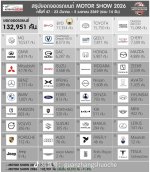
Thailand Bangkok International Auto Show Final Orders Revealed:Total orders: 132,951 vehicles, up 71.8% year-over-year;BYD takes the top spot with 17,354 vehicles;Among the top ten, Chinese brands claim eight spots, completely dominating Japanese brands;Chinese brands' orders: 90,578 vehicles, accounting for 68% of the total—2.5 times Japanese brands, 27 times German brands, and 78 times Korean brands.
1775512121033.jpeg
 
To view this content we will need your consent to set third party cookies.
For more detailed information, see our cookies page.
 

Chinese SUV outperforms US rivals but faces import ban​

April 6 2026

The Chinese-made Geely Galaxy M9 plug-in hybrid SUV has outperformed every three-row SUV currently sold in the U.S. during independent testing, impressing with its power, range, and luxury features at a fraction of the American market price.

Reviewers praised its 858 hp output, 808-mile range, and cabin refinement rivaling premium brands, noting it could compete even at much higher prices. However, steep tariffs and trade restrictions keep it out of the U.S. market, highlighting how policy—not capability—limits consumer choice.

Chinese SUV tops U.S. rivals in landmark test​

The Geely Galaxy M9, a three-row plug-in hybrid SUV from China’s second-largest automaker, has outperformed every American three-row SUV in independent evaluations. Edmunds’ three-week U.S. test measured 858 horsepower, an 808-mile combined range, and a 0-60 mph time of 4.2 seconds—quicker than a BMW X5 PHEV—while maintaining exceptional ride comfort. These results position the M9 as a direct challenge to established U.S. brands in both performance and refinement.

Why U.S. automakers should be concerned​

With a starting price of $25,000 in China and a top-spec model at $35,000, the Galaxy M9 offers features and capabilities that rival or surpass SUVs costing twice as much in the U.S. Edmunds Editor-in-Chief Alistair Weaver called its technology 'terrific' and 'ahead of the vehicles that we're driving in the US.' If allowed into the American market, even with tariffs pushing prices to $50,000–$70,000, it could pressure domestic automakers to compete on value, innovation, and efficiency.

Praise from testers and industry observers​

Reviewers highlighted the M9’s premium interior, including a 30-inch 6K display, massaging seats, and exceptional cabin quietness measured at 32.5 decibels at idle—quieter than a Rolls-Royce Spectre. Ride quality was described as 'among the best' in a three-row SUV, surpassing the Lexus TX PHEV. Technology journalist Annemarije de Boer emphasized that 'this isn't budget manufacturing disguised as luxury—it represents genuine attention to comfort and quality.

Trade barriers keep the M9 out of the U.S.​

Despite its standout performance and value, the Galaxy M9 cannot be sold in the U.S. due to steep tariffs and restrictions on Chinese-made vehicles. These trade policies, shaped by political tensions, prevent American consumers from accessing a vehicle that could redefine expectations for the segment. The case underscores how market access is influenced as much by geopolitics as by engineering merit, echoing past instances where foreign competition was slowed by import barriers.


Chinese car exports to EU surpass 1 million mark as competitors stall​

Chinese car exports to EU surpass 1 million mark as competitors stall
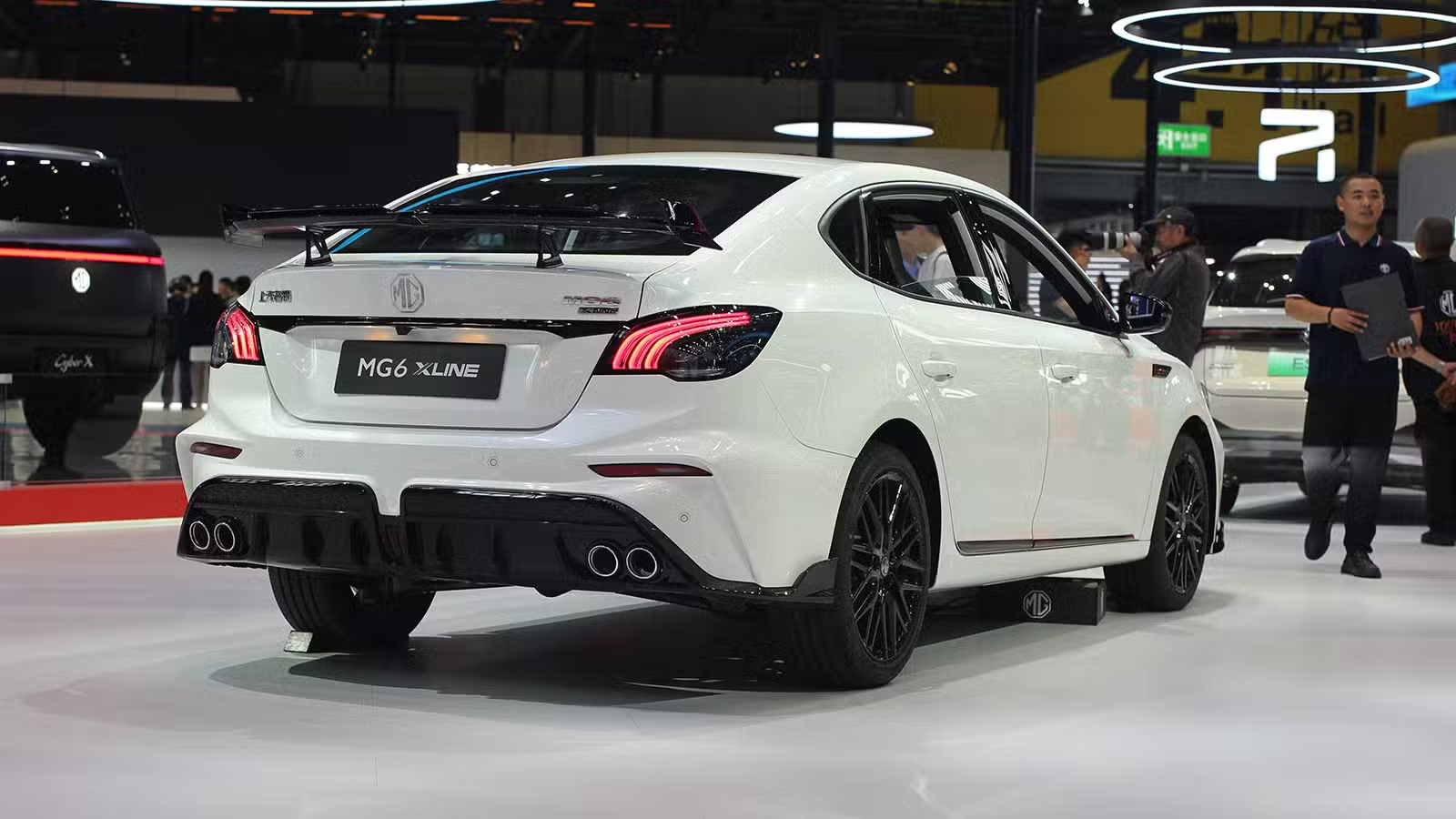
(An MG model displayed at the Shanghai Auto Show in April 2025. Image credit: CnEVPost)

April 6 2026

China's car exports to the European Union surpassed the 1 million mark for the first time in 2025, a milestone figure that underscores a profound restructuring of the global auto market.

The number of cars imported by the EU from China surged 30.7% to 1,006,188 units in 2025, according to the latest report released by the European Automobile Manufacturers' Association (ACEA) on April 2.

The share of China-made cars in the EU market has climbed to 7% from 5% in 2022, further cementing China's dominant position as the region's largest source of auto imports.

The ACEA report highlighted the trade imbalance between the EU and China, noting that EU car exports to China plunged 43% in 2025.

In value terms, China's car exports to the EU recorded 13.72 billion euros ($15.83 billion) in 2025, representing a 4.0% year-on-year increase.

While Chinese brands expanded rapidly, traditional Asian rivals stalled, with South Korea and Japan's market shares in Europe stagnating at 3% and 4% respectively last year.

This sluggish growth trend intensified further in 2026; in January and February, Hyundai and Kia's sales in the broader European market fell 8.4% year-on-year to 143,457 units.

In contrast, China's BYD saw its sales in the European market surge by 162.7% during the same period, reaching 36,069 units.

The European EV market is rapidly shifting toward small and low-priced models, with total electric vehicle sales in Europe growing 14.8% year-on-year to 379,604 units in the first two months of this year.


Users who are viewing this thread

Pakistan Defence Latest

Country Watch Latest

Back
Top