China Auto Thread

Xiaomi YU7 surpasses Tesla Model Y in October China sales with 33,662 units​


China’s Top 10 NEV SUVs in March: Model Y Leads as Xiaomi YU7 Slips

  • Tesla Model Y retained pole with 39,827 March sales, up 57.5% month-on-month but down 17.3% year-on-year.
  • Li Auto i6 surged to second with 24,198 units, driving nearly 60% of Li Auto’s monthly volume.
  • Xiaomi YU7 slipped 32.8% month-on-month to 13,558 units amid incentives and a possible lower-capacity variant.
Entering the traditional peak season of “Golden March and Silver April,” China’s NEV SUV market showed a marked recovery in March compared with February.

This is reflected in the fact that even the lowest-ranked model in the top 10 recorded sales exceeding 12,000 units.

By comparison, the last-place model in February, BYD Yuan UP, sold only 5,235 units.

At the same time, most models in the ranking posted significant month-on-month gains, with some exceeding 100%, signaling a strong recovery momentum.

Which models made the top 10 in March? Let’s take a closer look.

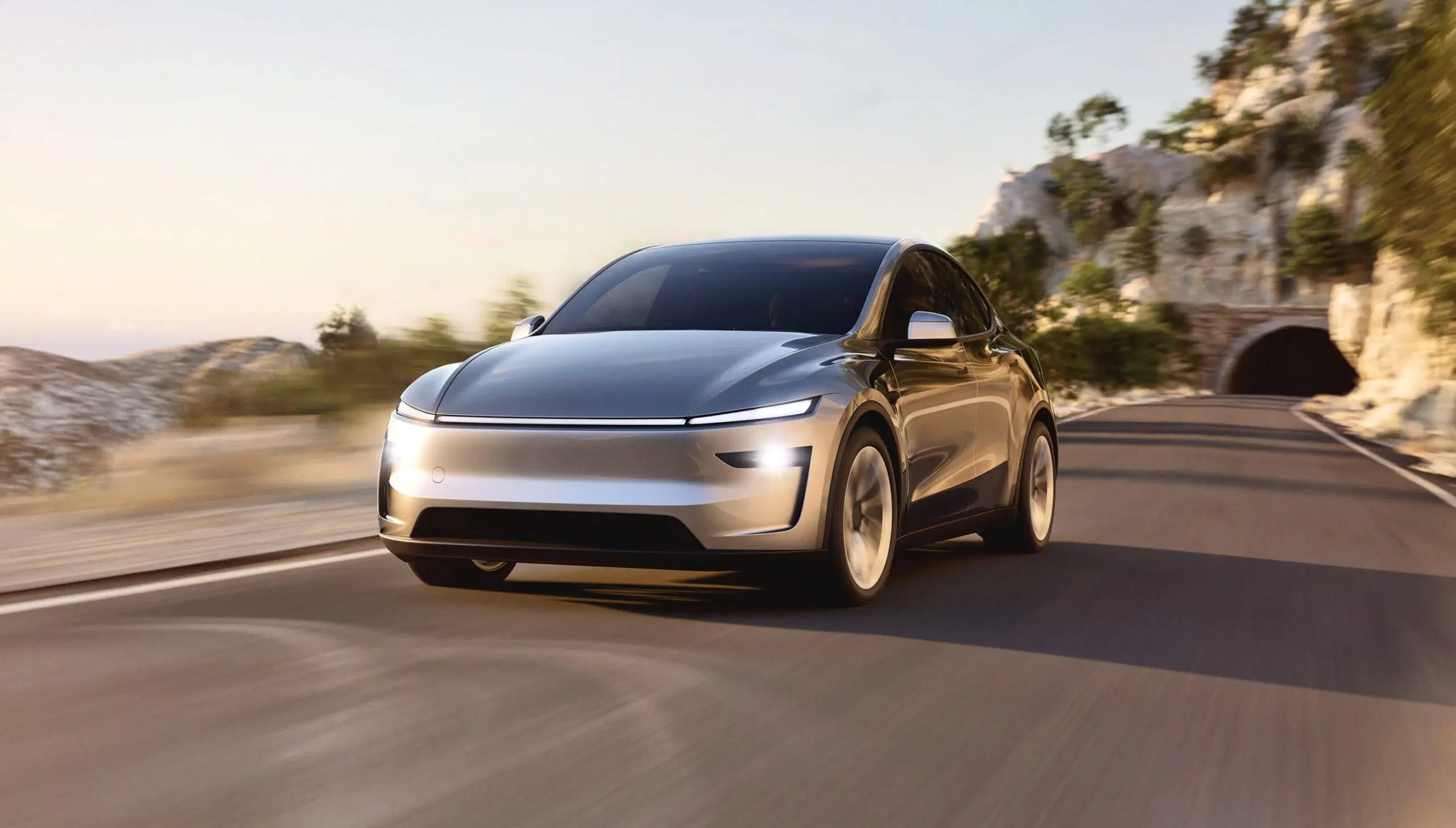
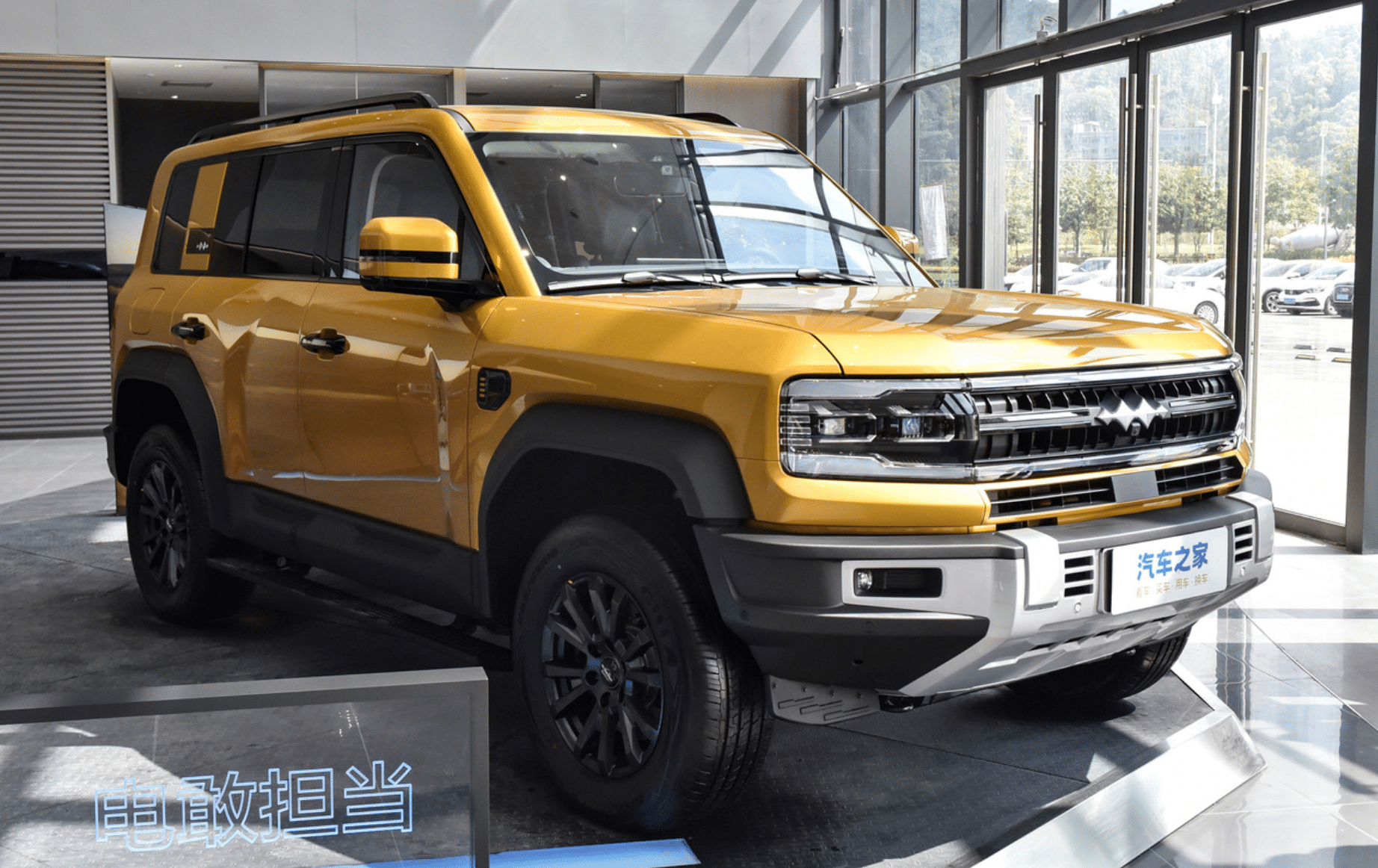
No. 1 Tesla Model Y: 39,827 units​

In March, the Tesla Model Y sold 39,827 units, down about 17.3% year-on-year but up roughly 57.5% month-on-month, maintaining its top position.

This may be linked to Tesla’s quarterly delivery rhythm, where exports are prioritized early in the quarter before shifting focus back to the domestic market.

img_v3_0210k_cebf0d32-cd82-4df0-9eb4-c1675c02bdbg.jpg
 

China leads solid-state battery patent surge in Q1 2026

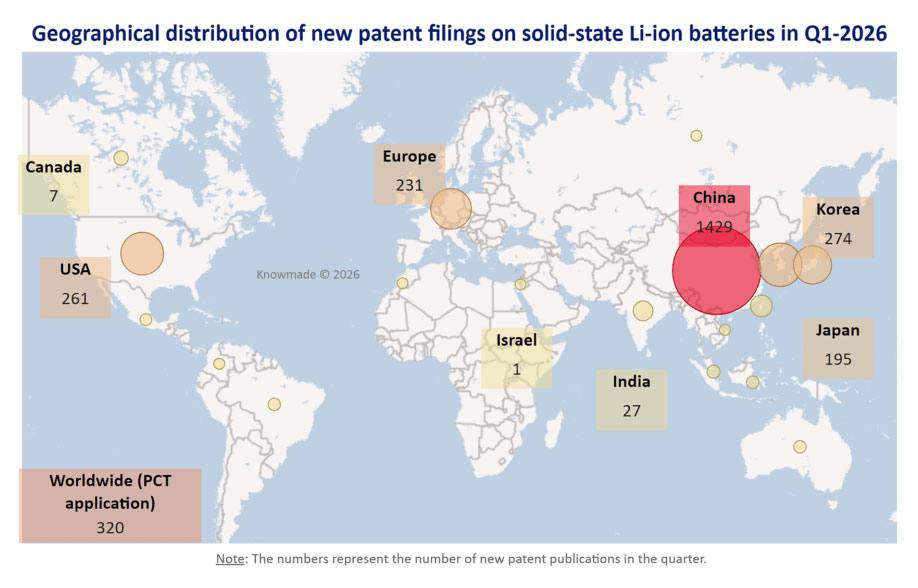
Over 1,710 solid-state battery patents were filed globally in Q1 2026, with China accounting for the bulk of activity, KnowMade data shows

April 14, 2026

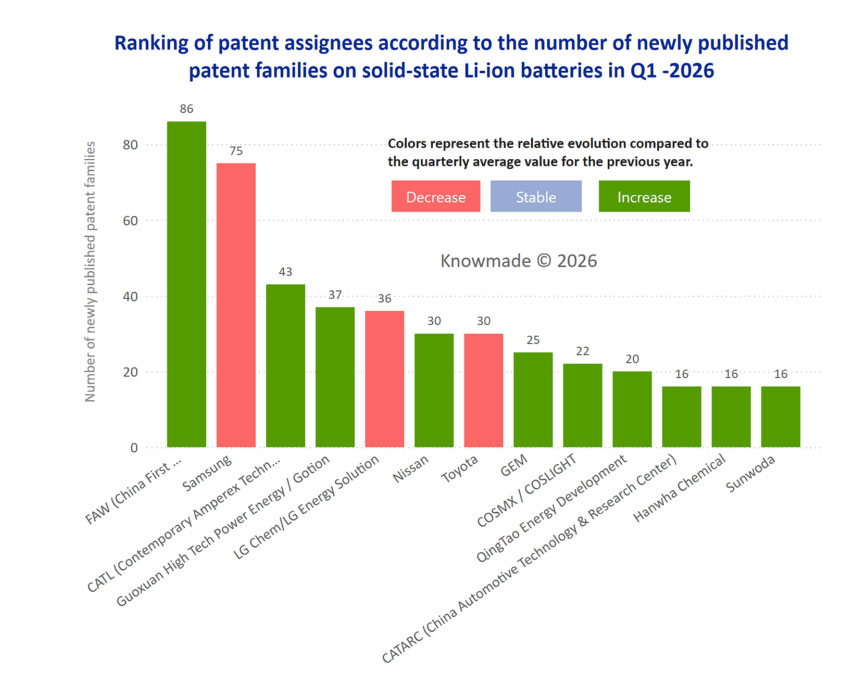
More than 1,710 solid-state battery patent applications were published globally in Q1 2026, with the majority originating from China, according to IP analysis firm KnowMade. The data points to continued acceleration in solid-state lithium-ion battery filings, led by Chinese players including FAW, CATL and Gotion.

knowmade-graph-1.jpg
(Source: Solid-state Li-ion batteries Patent Monitor)

FAW recorded an 800% increase in filing activity against its 2025 quarterly average, driven largely by co-assignments with Chinese institutions including CATARC, Jilin University and the Shanghai Institute of Ceramics, with filings focused on electrodes and electrolytes. CATL posted a 115% increase in new applications, while COSMX rose 300% and GEM 177%. Gotion also posted significant growth at 92% above its prior-year quarterly average.

knowmade-graph-2.jpg
(Source: Solid-state Li-ion batteries Patent Monitor)

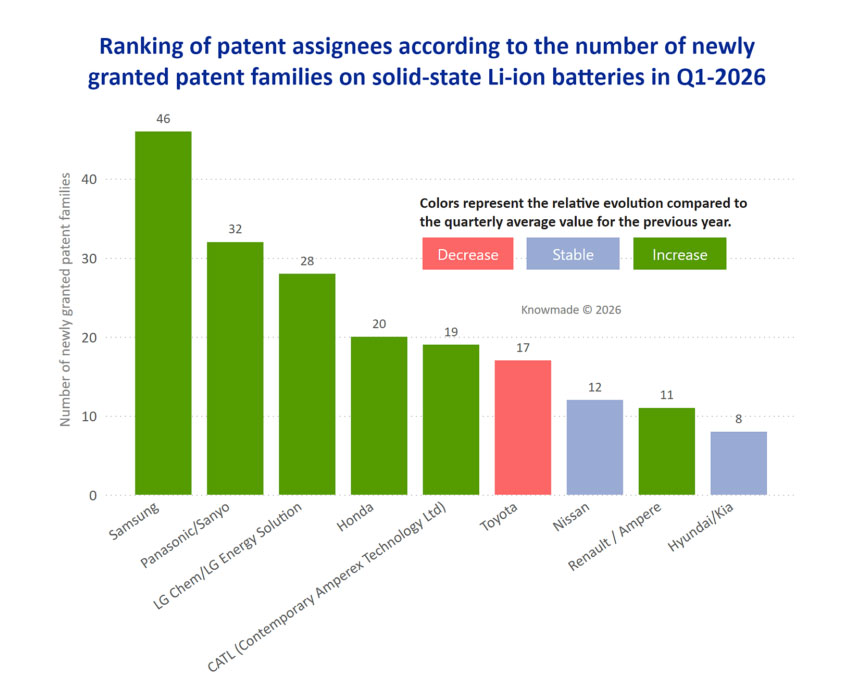
On the grant side, over 660 patent families received first-time grants in the quarter. Samsung was up 50% against its 2025 average, Honda rose 128% and CATL posted a 111% increase in granted patents. Toyota was an exception, recording a 56% decline in grants and a 17% fall in new filings versus its 2025 quarterly average. Korean firm LG Energy Solution also posted a 27% decline in new filings, though its granted patent count rose 20%.

knowmade-graph-3.jpg
(Source: Solid-state Li-ion batteries Patent Monitor)

The quarter recorded more than 190 IP newcomers, predominantly from China, further intensifying competition in the field. Non-Chinese entrants included French research institute LEPMI, working with Renata Batteries on composite electrode and solid electrolyte technologies, and US firm Amionx focusing on battery cell safety and thermal regulation. More than 60 patents also expired or lapsed during the period, reflecting ongoing portfolio management across established players.

Source: KnowMade
 

Massive fire in BYD garage for electic vehicles

To view this content we will need your consent to set third party cookies.
For more detailed information, see our cookies page.

Massive fire erupts at BYD factory’s facility in China’s Shenzhen
 

Honda to shut down at least one joint venture car plant in China, sources say​

By Maki Shiraki and Daniel Leussink
April 17, 20268:07 AM GMT+8Updated 2 hours ago

TOKYO, April 17 (Reuters) - Honda Motor will slash petrol car production in China by shutting down one of its joint venture plants this year and possibly another next year, said two people familiar with the matter, highlighting its troubles in the world's biggest auto market.

Japan's second-biggest automaker will halt operations at one of two petrol car plants jointly run with Guangzhou Automobile Group (GAC) in June, the people said. Honda is also considering suspending another plant owned with Dongfeng Motor Group next year, they added on condition ⁠of anonymity because the information was not public.
 

Audi, SAIC deepen tie-up to develop next-gen AUDI models in second China offensive​

Apr 17, 2026, 3:39 PM GMT+8

  • In the second offensive by Audi and SAIC, the two parties will jointly launch a first batch of four all-new AUDI brand models.
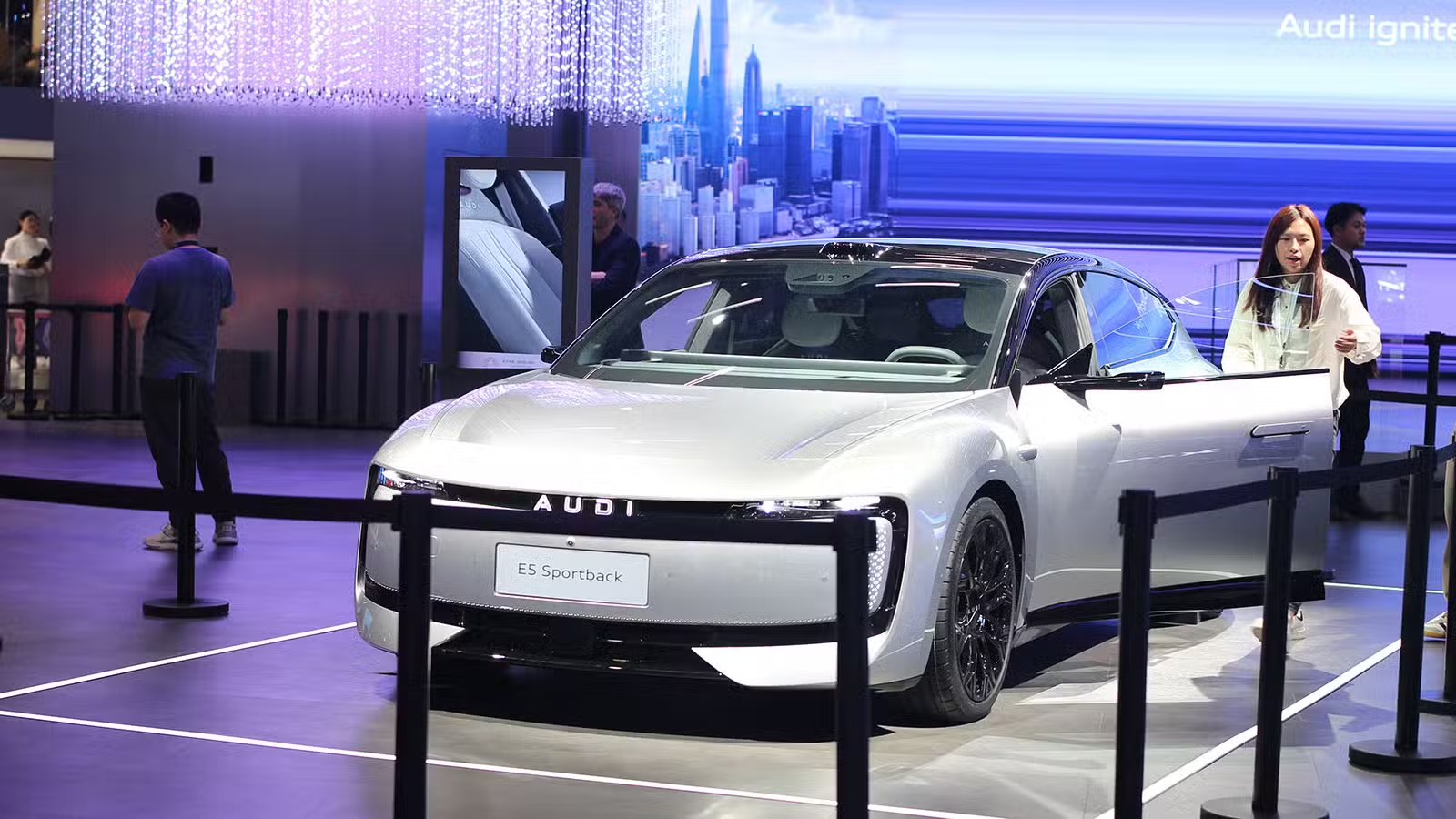
  • In the first product offensive, the AUDI brand has prepared three mass-produced models, including the already-launched E5 Sportback.

Audi and SAIC are deepening their cooperation to jointly develop the next generation of AUDI brand models, a strategic move that marks the AUDI brand's second major offensive in China.

The two companies have officially signed a strategic cooperation agreement to further deepen their partnership and drive Audi's growth in China, according to a statement released by SAIC-Audi on Friday.

At the core of the agreement is the establishment of a new, dedicated innovation and technology center in Shanghai led by Audi, focusing on vehicle research and development.

The move aims to pave the way for a full value chain layout for future AUDI models and meet Chinese consumers' evolving demands for smart EVs.

Based on the next generation of the Advanced Digitized Platform (ADP), the two parties will jointly develop and launch a first batch of four all-new AUDI brand models, according to the statement.

These all-new EV models will hit the Chinese market in the coming years, further expanding and complementing Audi's existing product lineup in China.

The newly established R&D center is not only a regional technology hub but also a key component of the German automaker's global R&D system.

Through this deepened Sino-German joint team collaboration, Audi expects to meet the most demanding needs of Chinese users in an agile manner.

Audi and SAIC launched the AUDI brand in China in November 2024, featuring an "AUDI" letter logo, hoping to leverage China's supply chain to build EV models that cater to local consumer preferences.

In the planning of its first product offensive, the AUDI brand has prepared a total of three mass-produced models to establish its initial leading position in China's premium EV market.

As the new brand's first mass-produced model, the wagon-style AUDI E5 Sportback was officially launched in China in September 2025.

Continuing the first wave of the offensive, AUDI's first SUV model, the AUDI E7X, is set to make its global debut at the 2026 Beijing Auto Show starting next week. The model already entered a Chinese regulatory catalog in December last year, paving the way for its market launch.

The third all-new model in the first offensive is scheduled to be launched in 2027, according to today's statement.

The signing of the new cooperation agreement will further accelerate the development of the AUDI brand and expand its product matrix, the statement said.

The establishment of the Shanghai innovation and technology center serves as Audi's strategic confidence and crucial technology hub for taking root in the Chinese market and making a strong push in the premium EV race.

The R&D center's core efforts will focus on immersive AI cockpits and advanced driver-assistance systems tailored specifically for China's high-end market.
 

Chinese carmaker patents voice-controlled 'in-vehicle toilet'​

April 17 2026
Osmond ChiaBusiness reporter
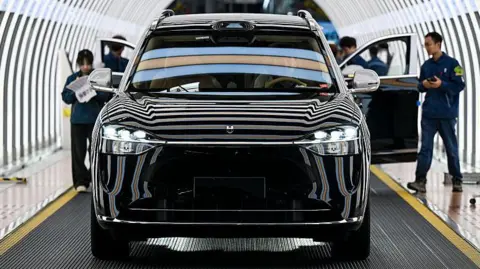
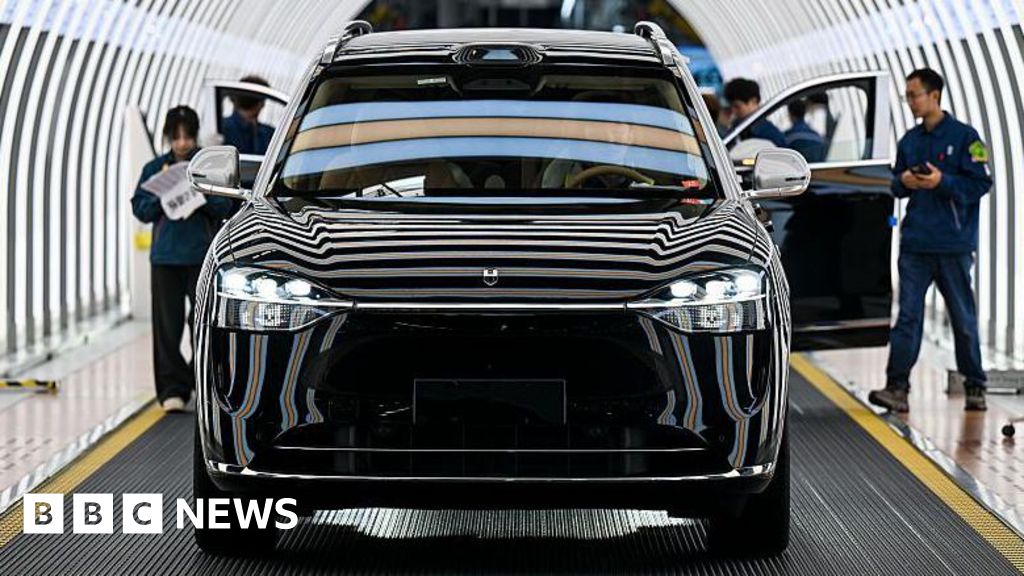
Getty Images Employees inspects a shiny black Seres electric sports utility vehicle in a production line at factory in China
Getty Images
Seres and its subsidiary brand Aito are known for electric sports utility vehicles
Chinese carmaker Seres has been granted a patent for what it calls an "in-vehicle toilet" that slides under a passenger's seat for visits to the loo while on the road.

The feature is meant to "satisfy users' toilet needs on long journeys, while camping or while staying in the car", engineers wrote in Seres' patent filing in China on 10 April.

Seres, based in the south-west city of Chongqing, has not announced any cars that have toilets and it is uncertain if any will be made.

Chinese electric vehicles have become increasingly packed with unconventional features, like built-in massage seats, karaoke systems and a fridge, to stand out in a highly competitive market.

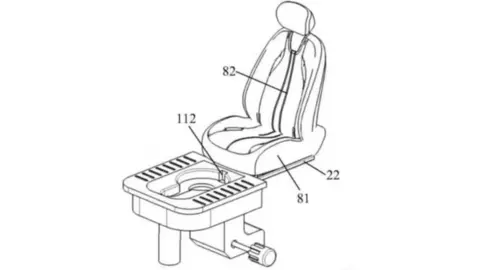
The patent filing shows Seres' plans for an onboard toilet that slides out from the bottom of a passenger's seat with a push or through voice-activated commands.

The loo will come with a fan and exhaust pipe to channel odours out of the car, according to the filing on China's intellectual property administration seen by the BBC.

Waste is collected in a tank that has to be emptied manually. The toilet also features a rotating heating element that evaporates urine and dries other waste.

When not in use, the toilet is concealed beneath the seat, making full use of the space inside a car without requiring more room.

A filing on the China National Intellectual Property Administration A sketch of Seres' in-car toilet concept, included in its patent filing. It shows a toilet attached to a sliding rail below a car passenger seat

Seres' in-car toilet concept, included in its patent filing
In-vehicle toilets are rare - mostly found in long-distance coaches - but are not unheard of in cars.

In the 1950s, a special version of a Rolls-Royce Silver Wraith included an in-built television set and a toilet beneath the passenger seat, according to auction house Sotheby's.


Chinese carmaker patents voice-controlled 'in-vehicle toilet'​

April 17 2026
Osmond ChiaBusiness reporter
Getty Images Employees inspects a shiny black Seres electric sports utility vehicle in a production line at factory in China
Getty Images
Seres and its subsidiary brand Aito are known for electric sports utility vehicles
Chinese carmaker Seres has been granted a patent for what it calls an "in-vehicle toilet" that slides under a passenger's seat for visits to the loo while on the road.

The feature is meant to "satisfy users' toilet needs on long journeys, while camping or while staying in the car", engineers wrote in Seres' patent filing in China on 10 April.

Seres, based in the south-west city of Chongqing, has not announced any cars that have toilets and it is uncertain if any will be made.

Chinese electric vehicles have become increasingly packed with unconventional features, like built-in massage seats, karaoke systems and a fridge, to stand out in a highly competitive market.

The patent filing shows Seres' plans for an onboard toilet that slides out from the bottom of a passenger's seat with a push or through voice-activated commands.

The loo will come with a fan and exhaust pipe to channel odours out of the car, according to the filing on China's intellectual property administration seen by the BBC.

Waste is collected in a tank that has to be emptied manually. The toilet also features a rotating heating element that evaporates urine and dries other waste.

When not in use, the toilet is concealed beneath the seat, making full use of the space inside a car without requiring more room.

A filing on the China National Intellectual Property Administration A sketch of Seres' in-car toilet concept, included in its patent filing. It shows a toilet attached to a sliding rail below a car passenger seat' in-car toilet concept, included in its patent filing. It shows a toilet attached to a sliding rail below a car passenger seat

Seres' in-car toilet concept, included in its patent filing
In-vehicle toilets are rare - mostly found in long-distance coaches - but are not unheard of in cars.

In the 1950s, a special version of a Rolls-Royce Silver Wraith included an in-built television set and a toilet beneath the passenger seat, according to auction house Sotheby's.


this should be marketed to the indians..

no more public pooping.
 

CEVA Logistics, Lenovo complete long-haul electric truck pilot along China-Kazakhstan corridor
Two global industry leaders join forces to advance low carbon, cross-border transport solutions

4/16/2026
ceva_EV-Trial-Run-with-Lenovo.jpg


SHENZHEN, China – April 16, 2026 – CEVA Logistics, a global leader in third-party logistics, and Lenovo, a global technology powerhouse, have successfully completed an eight-day long-haul trial utilizing a pure-electric heavy-duty truck from Shenzhen to Alashankou, China, before transitioning to a diesel fleet for the final leg of the journey to Almaty, Kazakhstan. Spanning nearly 6,000 kilometers and transporting 5.3 tons of cargo, the pilot reduced CO₂ emissions by 46%.

CEVA completed the 5,000-kilometer domestic leg from Shenzhen to Alashankou in just 4.5 days, supported by nine strategic charging stops. CEVA’s Alashankou International Road Transport (TIR) Center streamlined all cross-border and customs procedures, boosting the transport’s overall efficiency. Cargo security included GPS tracking and real-time monitoring to provide full end-to-end visibility across every critical milestone.

Leveraging its expertise in long-distance Electric Vehicle (EV) operations, CEVA designed a tailored cross-border solution that synchronizes domestic electric trucking, rapid customs brokerage and a seamless hand-off to international diesel fleets—effectively establishing a low carbon transport corridor between China and Central Asia.

Kelvin Tang, APAC Ground & Rail Leader, CEVA Logistics, said: “Together with the CMA CGM Group, CEVA Logistics is committed to achieving net zero emissions by 2050. We believe that this cannot be achieved alone, but rather through collaborative efforts with key customers and partners like Lenovo and Windrose. Together, we can develop more innovative low carbon ground transport solutions to better serve the evolving needs of the market.”
ceva_EV-Trial-Run-with-Lenovo_2.jpg

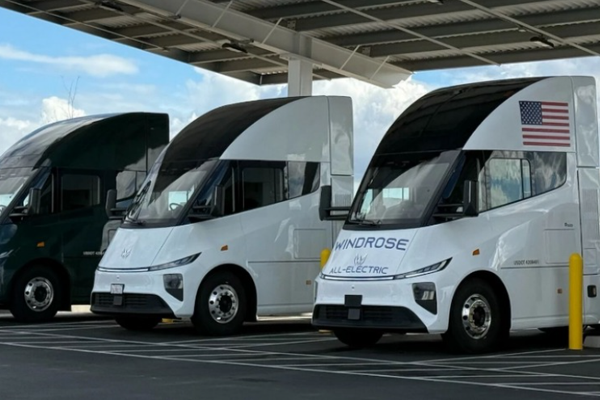
Windrose E700

Chinese trucks could go 100% electric, halving road transport oil use: industry​

China’s industrial supply chains and engineering expertise provide a distinct competitive advantage, CiDi CEO Albert Hu says​


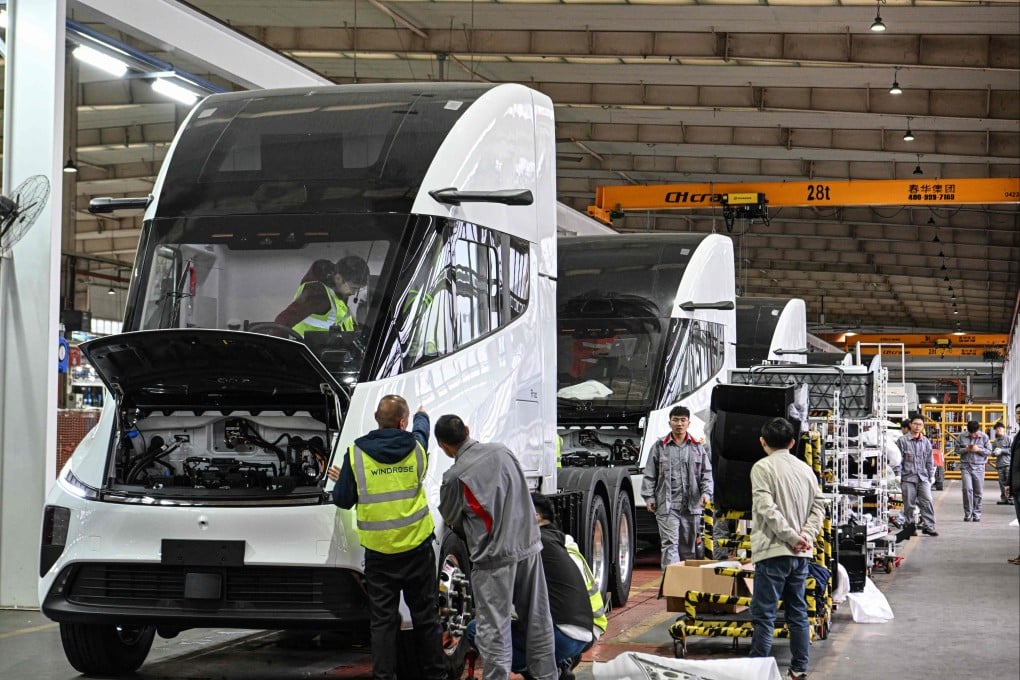
Diesel heavy trucks are responsible for about 50 per cent of all diesel and petroleum consumed in China’s road transport sector, according to Sany Truck chairman Liang Linhe. Photo: AFP

Windrose E700

Published: 9:00pm, 17 Apr 2026

Industry estimates suggest that heavy-duty cargo traffic in China is on track to become nearly 100 per cent electric, a transition that could halve the country’s road transport oil consumption.

Speaking at a forum on intelligent electric vehicle development in Beijing on April 11, Liang Linhe, chairman of Sany Truck – a subsidiary of the Changsha-headquartered multinational Sany Group – said China’s heavy truck sector could eventually be almost entirely electrified, although he did not put a timeline on the transition.

Chinese electric truck maker Windrose makes first US delivery​

April 8, 202610:15 PM GMT+8Updated April 8, 2026
European freight truck makers face a wave of low-cost Chinese rivals

The Global E700, a heavy-duty electric truck developed by Chinese startup Windrose, will start sales in Europe this year in Antwerp, Belgium, January 29, 2026. REUTERS/Nick Carey/File Photo Purchase Licensing Rights


Windrose completed its Series C1 financing to accelerate the delivery of pure electric heavy trucks in the United States, Europe, South America, Australia, and New Zealand.​

 
Last edited:

China’s researchers unveil 2,372°F lithium battery ‘firewall’ to prevent EV fires​

A research team from Nanjing Tech University has created a lithium battery insulation material that can withstand up to 2,372°F.

image

Chinese researchers push EV battery protection to 2,372°F threshold. (Representational image)Freepik

Amid intensifying focus on EV safety, researchers at Nanjing Tech University have developed a lithium battery insulation material capable of withstanding temperatures up to 2,372°F. The material is based on a silica aerogel insulation sheet, engineered to significantly limit heat transfer between lithium-ion cells during thermal runaway events – a critical failure mode in which internal temperatures spike rapidly.

In such scenarios, a single compromised cell can reach extreme temperatures within seconds, triggering a chain reaction that spreads across adjacent cells and increases the risk of fire. By acting as a high-temperature “firewall”, the aerogel layer helps contain and slow this propagation, buying valuable time for onboard safety systems to respond.

Researchers claim the approach could enhance battery pack integrity without adding substantial weight, making it particularly relevant as automakers push for higher energy densities and longer driving ranges.

Material shows hours-long thermal isolation in tests​

Test results point to a significant jump in high-temperature resilience for next-generation battery insulation. In controlled trials, a 0.09-inch aerogel sheet exposed to 1,832°F for five minutes kept the opposite surface below 212°F, demonstrating strong thermal shielding under extreme conditions. Researchers say the material can sustain thermal isolation for up to two hours, a window that could prove critical in containing cascading battery failures, CarNewsChina reports.

Earlier aerogel-based battery solutions typically operated at around 572°F, well below the 1,202°F to 1,832°F range commonly observed during lithium-ion cell combustion. The new material raises that tolerance ceiling from roughly 1,202°F to 2,372°F, aligning more closely with real-world failure conditions and significantly improving the ability to slow or contain thermal runaway.

At the core of the material’s performance is an ultra-light, nanoporous structure that is roughly 99% air, inherently limiting heat conduction. Building on this, the research team enhanced thermal resistance by reinforcing the internal network and fine-tuning catalyst conditions during synthesis, resulting in a more robust and heat-tolerant aerogel.

To overcome the brittleness typically associated with aerogels, the material was engineered for mechanical flexibility, achieving more than 90% elastic compression while maintaining structural integrity. This is particularly important in battery systems, where cells undergo continuous expansion and contraction during charge and discharge cycles, requiring insulation layers that can adapt without cracking or degrading over time.


China wants to eliminate diesel trucks, betting on electric models that can cut oil consumption by up to 50%, reduce pollution, and change cargo transportation worldwide.​


Written byFlavia Marinho
Published on18/04/2026 at 19:28

A plan with electric trucks can reduce oil consumption in China, transportation costs, and emissions in the freight sector

China is advancing with an ambitious plan to replace diesel trucks with electric trucks, with the potential to reduce oil consumption by up to 50% in freight transportation.

The proposal also promises to cut emissions, lower operational costs, and reduce dependence on imported fuels. The impact could extend beyond the country and affect the global energy market.

Electric trucks could dominate heavy transport in China​

Diesel-powered trucks are still the backbone of freight transport worldwide. They ensure the economy runs smoothly but generate high pollution and consume large volumes of fuel.

The shift to electric trucks could change this scenario. The expectation is for a significant reduction in diesel use and emissions while maintaining efficiency in the transportation of goods.

The report was published by South China Morning Post, an international newspaper focused on Asia, which highlighted the progress of this strategy in the country.

Cost reduction could accelerate the switch to electric trucks​

The financial factor appears to be the main driver of this transformation. The trend is that, with lower costs, companies will quickly adopt the new models.

Liang Linhe, president of Sany Truck, stated that the drop in transportation costs could lead to almost total adoption of electric trucks, leaving little room for diesel vehicles.

The reduction in fuel and maintenance costs could make electrification more advantageous for fleet operators.

China already leads electric vehicle technology​

China has built a strong industrial base focused on electric vehicles over the years. Companies like BYD stand out in battery and vehicle production, with a global presence.

This structure facilitates the expansion of electric trucks and reduces barriers to large-scale production. The country also has a logistics chain ready to absorb this change.

South China Morning Post, an international newspaper focused on Asia, provided details about this industrial and technological advantage.

Battery swapping could eliminate waiting time​

One of the biggest challenges for electric vehicles is the charging time. For trucks, this can represent hours of downtime and operational loss.

The solution under consideration involves rapid battery swapping. Instead of waiting to charge, the truck receives a fully charged battery and returns to operation.

This model reduces downtime and improves fleet productivity, making the system more efficient.

Dependence on oil may decrease with new strategy​


China still heavily relies on oil imports, mainly from regions like the Middle East. About 40% of consumption comes from the Persian Gulf.

With the adoption of electric trucks, this dependence may decrease. This brings more energy security and reduces risks associated with international crises and price fluctuations.

The volatility of oil remains a constant concern for transportation companies, which reinforces the search for alternatives.

Challenges still exist and limit expansion​

Despite the progress, some issues still need to be resolved. Batteries remain heavy, which reduces the payload capacity of trucks.

The charging infrastructure is also limited, and the electrical grid needs to be expanded to meet higher demand.

Therefore, electrification should begin in specific sectors, such as mining, ports, and short routes, before reaching large-scale transportation.

Change may transform the global energy market​

The replacement of diesel trucks with electric trucks could directly impact the global energy market, reducing the demand for oil.

If costs continue to fall and technology advances, the trend is for rapid growth of this change in the coming years.

The transformation could alter not only cargo transportation but also the global energy economy.


"Chinese EVs Are Flooding In... Korea's Automakers Need Tax Support"​

Jiyeon Han [email protected]
Input : 2026-04-22 17:36:21 Updated : 2026-04-22 19:21:14
BYD's Sealion 7
사진 확대
BYD's Sealion 7
South Korea has surpassed a cumulative 1 million registered EVs, marking the start of the mass-market era. But the domestic market is being rapidly overtaken by Chinese brands such as BYD, and voices are growing louder that the government must step in with active policy support, including a domestic production tax credit to protect the local auto industry ecosystem.

The Korea Automobile & Mobility Association (KAMA) held a forum on the morning of the 22nd at Automobile Hall in Seocho District, Seoul, under the theme "Survival Strategies for Korea's Auto Industry in the Era of Future Vehicle Competition." The group warned that the surge of Chinese EVs is weakening the country's production base.

According to KAMA, the share of Chinese-made EVs among newly registered EVs in South Korea jumped from 4.7% in 2022 to 33.9% last year, rising sharply in just three years. Over the same period, the share of Korean-made EVs fell from 75% to 57.2%. While sales of Korean-made EVs grew 126.1% year on year in the first quarter, Chinese-made EV sales surged 286.1%, intensifying the pressure. Although EV adoption in South Korea has recently hit record highs amid persistently high oil prices, the underlying picture is far from reassuring.

The crisis in the domestic market stems from structural changes in China's auto industry. China's domestic auto sales have fallen from a peak of 28.88 million units in 2017 to around 27.3 million units last year, showing clear weakness. By contrast, exports rose nearly sevenfold over the same period, from 1.06 million to 7.1 million units, underscoring China's push to offset stagnant domestic demand by targeting overseas markets. Last year, China's new energy vehicle output, including battery electric vehicles and plug-in hybrids, accounted for 16.63 million of the world's 21.42 million EV sales, or 77.6%.

Chuel Cho, a senior research fellow at the Korea Institute for Industrial Economics & Trade (KIET), said, "Chinese EVs have already overtaken internal combustion vehicles in price competitiveness, and they are rapidly narrowing the quality gap as well, worsening the competitive environment for our industry." He added that the pressure has become real as Tesla vehicles produced at its Shanghai Gigafactory, along with aggressive shipments from Chinese homegrown brands such as BYD and Zeekr, flood the market. BYD surpassed 10,000 cumulative sales in South Korea within 11 months of launch, setting the fastest record among imported car brands.

The industry says the government should not focus only on expanding EV adoption, but also consider ways to lower domestic production costs in order to counter China's offensive. In particular, it says practical policy measures are urgently needed, including a domestic production tax credit that would go beyond existing support centered on R&D and investment and instead provide benefits in line with actual output and plant utilization.

Jung Dae-jin, chairman of KAIA, warned, "As competition with low-cost Chinese EVs intensifies, a weakening of the finished-vehicle production base could lead to a contraction across the parts industry ecosystem and hollow out manufacturing."

Lee Taek-seong, chairman of the Korea Auto Industries Coop. Association (KAICA), also added, "Given the industry's structure, where automakers and parts suppliers are closely linked, it is urgent to introduce tax credits that can dramatically reduce production costs."


How new demand for EVs could redefine global competition | DW News​

To view this content we will need your consent to set third party cookies.
For more detailed information, see our cookies page.
 

Hyundai Motor goes all-in on China EV comeback​

Published : April 23, 2026 - 08:31:00

Gone are the days when Hyundai Motor Group was known in China primarily for affordable, gasoline-powered vehicles.

The South Korean auto giant is gearing up for its most ambitious transformation in more than two decades, seeking to reinvent itself as a maker of electric and software-driven vehicles in the world's largest automotive market.

Now Hyundai is eyeing a reset.

At Auto China 2026, Hyundai will unveil the first mass-produced EV under the Ioniq brand designed specifically for the Chinese market.

Hyundai said localization will be at the center of its revamp, spanning everything from design, autonomous driving software and connected services to charging infrastructure.

The new model will feature autonomous driving technology developed by Chinese startup Momenta, with functions tailored to local road conditions — a key factor in competing with Chinese EV makers.

Hyundai also plans to introduce extended-range electric vehicles in China for the first time next year, targeting consumers who drive long distances and remain concerned about charging availability.

Extended-range electric vehicles pair an electric motor with a gasoline engine that recharges the battery on the go, and have become one of the fastest-growing powertrain segments in China.

Hyundai Motor CEO Jose Munoz also signaled that China is critical to the company's future at last month's shareholders meeting. Under the slogan "In China, For China, To Global," Munoz announced Hyundai plans to unveil six new EVs by 2030, and hit a sales goal of 500,000 units annually.

Kia is also accelerating its efforts for electrification. The company has begun mass production of its EV5 SUV at its Yangcheng plant in China, using the model both for the local market and for exports to markets including Australia and Latin America.

Hyundai Motor Group's renewed China strategy extends beyond vehicles.

In January, senior Hyundai executives met with major Chinese companies, including CATL, Sinopec and Yueda Group to discuss broader partnerships in batteries, hydrogen energy and future mobility.

Hyundai and battery manufacturer CATL discussed next-generation battery technologies, including cell-to-pack systems and ways to secure a more stable supply chain.

With energy giant Sinopec, Hyundai is expanding cooperation around hydrogen infrastructure through HTWO Guangzhou, Hyundai's hydrogen fuel-cell subsidiary in the southern Chinese city.

The group is also exploring broader cooperation with Yueda Group, Kia's Chinese joint venture partner, to build a long-term business model spanning vehicle batteries, hydrogen and future mobility services.
 

China’s Carmakers Grab 30% of Europe’s Plug-In Hybrid Sales

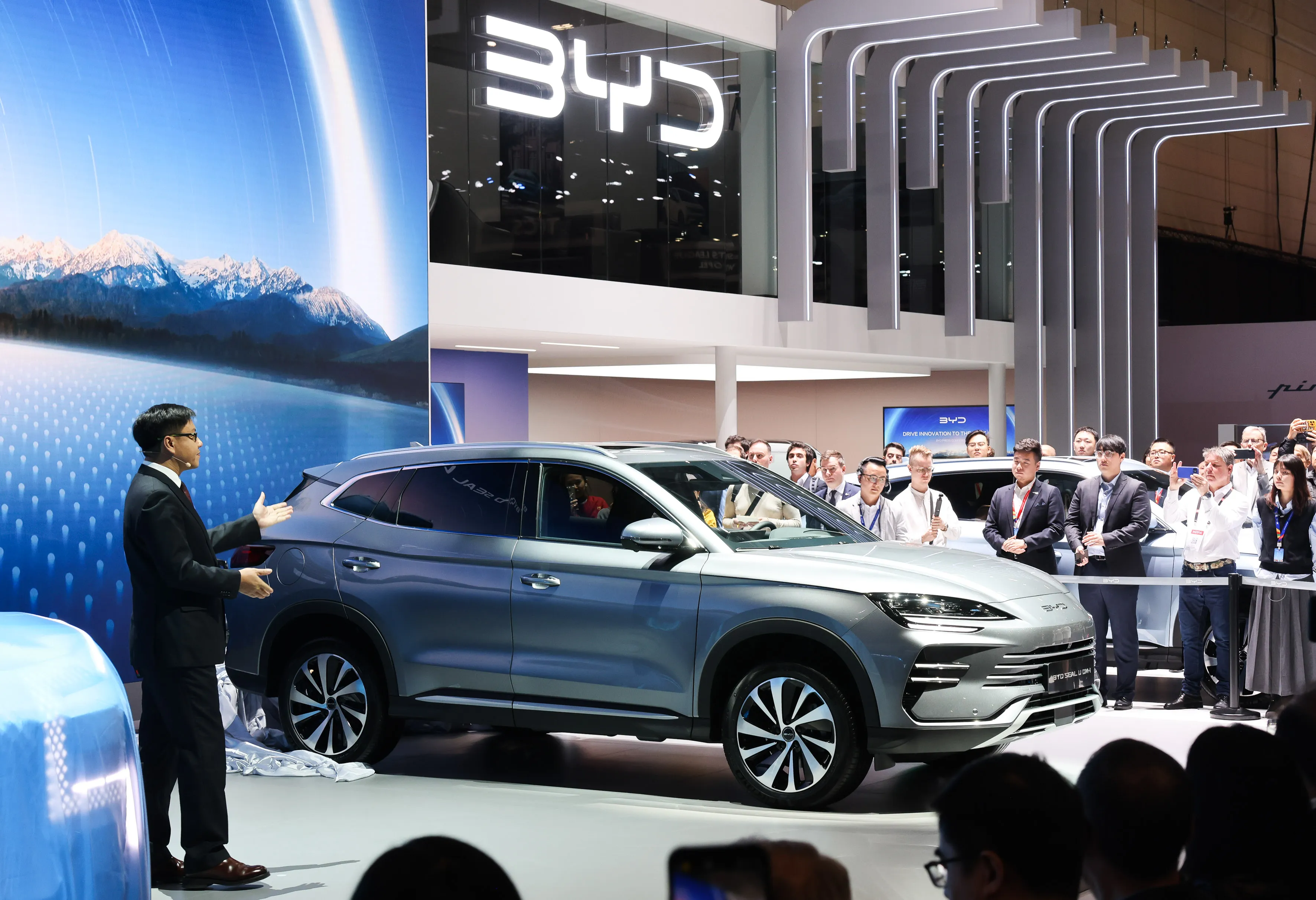
BYD's plug-in hybrid Seal U DM-i sport-utility vehicle.

BYD's plug-in hybrid Seal U DM-i sport-utility vehicle.
Photographer: Andrey Rudakov/Bloomberg

By Jamie Nimmo
April 24, 2026 at 8:00 AM GMT+8

Chinese automakers made strong inroads into Europe last month as consumers rushed to buy more affordable plug-in hybrids from brands led by BYD Co.

European sales of the models featuring both a plug and gasoline engine made by Chinese nameplates soared more than four-fold in March from a year earlier, accounting for almost 30% of that part of the car market, according to researchers at Dataforce.


Chinese EVs geared up to dominate world's biggest auto show

AFP AFP
Apr 23, 2026 Updated 35 mins ago

The world's biggest car show opens Friday in Beijing, with hundreds of thousands of auto fans expected to descend on the Chinese capital to size up the latest sleek, teched-out models on the market.

Legacy overseas brands such as Volkswagen, Toyota and BMW once dominated in China, but have lost market share in past years to domestic firms that beat them to the electric vehicle revolution and undercut them on price.

Chinese manufacturers including BYD, Xiaomi and Xpeng are now also at the forefront of integrating AI software and autonomous driving technology into their EVs.

The Auto China exhibition, hosted at two side-by-side venues in the capital, will span 380,000 square metres (four million square feet), according to organisers -- sprawling more than 50 football pitches.

More than 1,400 vehicles from hundreds of foreign and domestic companies will be on show from Friday, when the show opens to industry professionals and the media, and later to the public from April 28 until May 3.

Domestic brands are expected to fight to out-wow competition with upgrades in autonomous driving, battery charging and futuristic transportation.

Xpeng -- founded just over a decade ago -- said it plans to showcase "the latest progress in robotics and flying cars", as well as a new smart driving system.

Foreign automakers, meanwhile, are increasingly collaborating with local companies to keep pace with technological advances.

BMW has partnered with Chinese battery maker CATL, while Audi is using Huawei's driving assistance systems and Volkswagen is developing EVs together with Guangzhou-based Xpeng.

- Fierce competition -​


This year, companies will also jostle to sell space, analysts say, with roomy SUVs' new growth area targeting customers prioritising seating and comfort.

China "has become a customer retention and replacement/upgrade-driven market, and these big SUVs address that need," independent analyst Lei Xing wrote in a blog this week.

Firms have flooded the domestic market in recent years with trade-in schemes, offering huge discounts to customers to give up their old auto for a new one.

The fierce price war led Chinese officials last year to call for tighter price monitoring and improving long-term regulation of competition.

But newcomers appear unfazed, Lei wrote, naming at least eight EV brands from Chinese automakers that have cropped up over the last two years.

Electric cars, which China dominates, are also getting a boost as spiralling oil prices from the Middle East war nudge drivers away from fossil-fuel powered models.

Companies are vying to outlast the competition on range.

Xiaomi's CEO Lei Jun recently completed a 1,300-kilometre (800-mile) road trip from Beijing to Shanghai in the new SU7 Pro electric sedan -- stopping just once to charge during the 15-hour drive.


Users who are viewing this thread

Latest Posts

Back
Top