Navigation
Install the app
How to install the app on iOS
Follow along with the video below to see how to install our site as a web app on your home screen.
Note: This feature may not be available in some browsers.
More options
Style variation
You are using an out of date browser. It may not display this or other websites correctly.
You should upgrade or use an alternative browser.
You should upgrade or use an alternative browser.
China Auto Thread
- Thread starter StraightEdge
- Start date
More options
Who Replied?


Menthol
Trusted Member

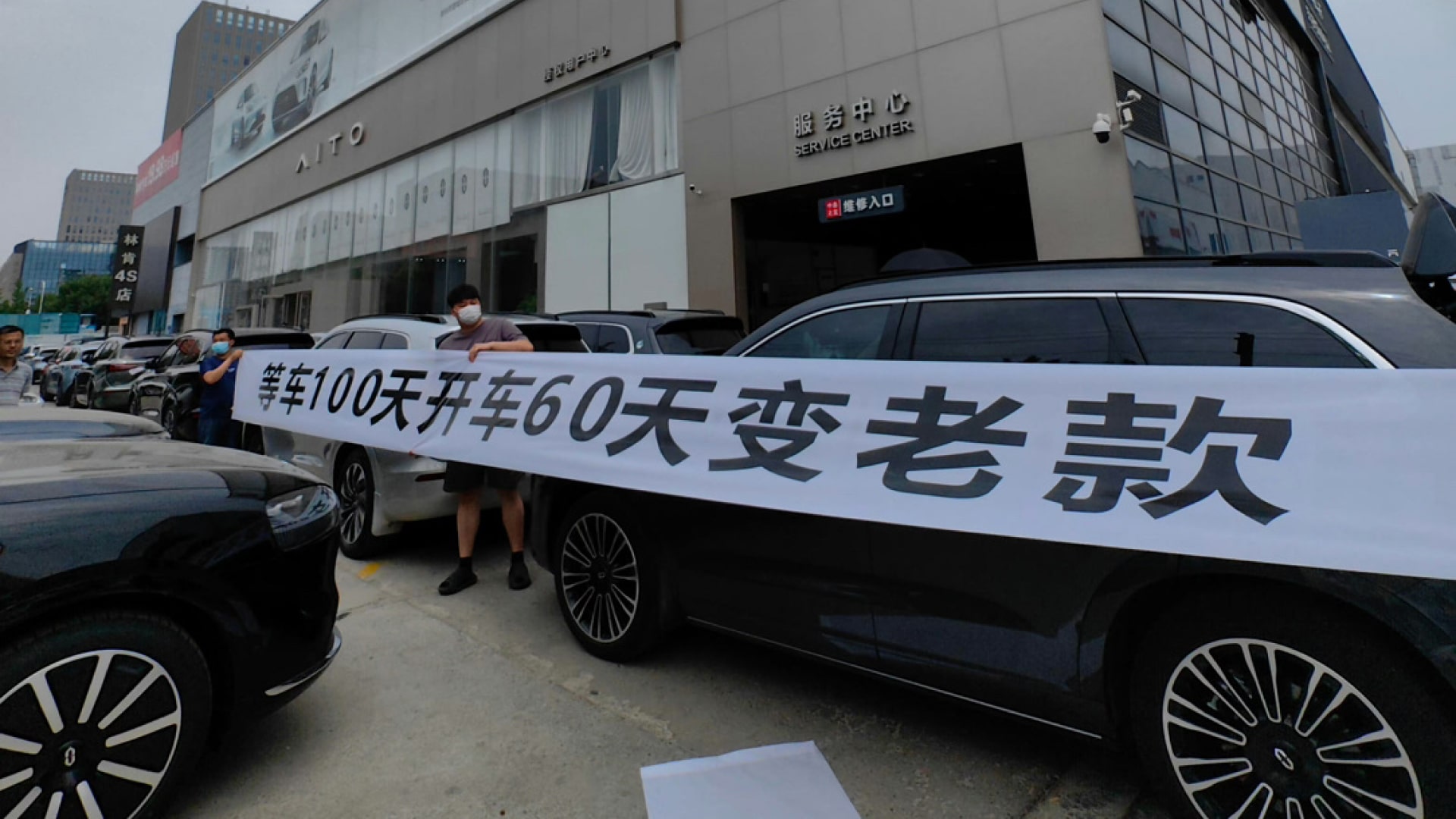
Unhappy Aito M7 owners put up banners at dealership
Aito M7 owners' principal complaints are a long delivery period, poor after-sales service, and a short period between car facelifts.carnewschina.com
“Drive a car for 60 days and it turns old,” unhappy Aito M7 owners put up banners at dealership
Reading Time: 3 minutes
Denis Bobylev
June 4, 2024
0
Aito M7 owners held a protest at the Wuhan dealership
News like this to your inbox or phone?
Weekly summary to your inbox
I want this
Never miss and important news
Get Instant notification once the news is published.
Follow Us
Unhappy Aito M7 (see specs here) owners put up banners at the Wuhan dealership to protect their rights. Their principal complaints are a long delivery period, poor after-sales service, and a short period between car facelifts. 180,000 simpletons have no place to appeal for justice, said a banner.
Briefly on Aito M7
Aito is a joint project between Seres and Huawei. Seres is responsible for manufacturing, and Huawei acts as a major parts and software supplier. Moreover, Huawei sells Aito cars in flagship stores and has recently formed a sales network called HIMA. However, Aito also has its own independent dealership network operating in China.
Aito M7 Ultra
The model line of this brand comprises three SUVs: M5, M7, and M9. The M7 is the bestseller among these three. This crossover was launched in July 2022. However, it became trendy only after the launch of the updated model in September 2023. Its starting price was cut by 40,000 yuan (5,550 USD). As a result, Aito M7 became one of the bestselling Chinese cars, delivering over 69,500 units in Q1 2024. The updated variant of the Aito M7 was launched on June 1, 2024.
The Aito M7 is a mid-to-large SUV that stands on the platform of the petrol-powered Dongfeng iX7, modified by Seres and Huawei. Its dimensions are 5020/1945/1760 mm with a wheelbase of 2820 mm. Inside, it has five or six seats. The Aito M7 is an EREV SUV with a 1.5-liter ICE under the hood. Its RWD variant has an e-motor for 200 kW (268 hp). The 4WD variant offers two electric motors with a combined power of 330 kW (443 hp). The price range of the M7 is 249,800 – 329,800 yuan (34,500 – 45,500 USD).
Aito M7 owners held a protest at Wuhan dealership
Chinese social media Weibo literally exploded, sharing pictures of the Aito M7 owners protesting at the Wuhan dealership. They appear to be the owners of the M7 pre-facelifted SUV. According to unhappy owners, they waited for a new car to be delivered for 100 days (14 weeks), drove it for 60 days, and then the facelift was launched. As a result, their recently new car turned into an old and unwanted model.
According to the manufacturer, the waiting period for Aito M7 can possibly reach 8-10 weeks due to the large number of orders. So, owners are worried that they will have to wait a long time to get an old model. One of the owners said that before the purchase, company representatives told him they wouldn’t launch a new model for at least a year. He had been waiting for a car for four months, and two months later, Aito launched the new model with a LiDAR sensor, a CDC suspension, and a new sound system.
However, there is another complaint: poor aftersales service. You will regret it after buying it, a banner said. Aito M7 owners haven’t specified this subject. It’s worth mentioning that dealership center employees didn’t try to hinder owners from the protest. In contrast, they offered them food and shielded them from rain with umbrellas.
Source: Weibo
Chinese car evolution moves way too fast.
I guess, every several months, we always get a new car model and new technologies too.
The market is too big, the competition is too fierce.
It's a killing field.
Menthol
Trusted Member
Xpeng reveal the Mona M03 - an EV designed by Artificial Intelligence
Using Midjourney?
"Create a sedan" and click "generate". Lol
Btw I don't like the design, it's ugly.
I feel many of Chinese car companies are not so serious about developing car, they are just throwing whatever products to the market, and hope the dealers and salesmen to figure it out on how to sell the car.
They don't think up to the level on how the consumers are going to think about their products. What consumers will react after the product launching, etc.
Many of Chinese car companies are shallow, especially state owned. It's not the right person who sit in the leadership board.
It's better they hired an ex-CEO or ex-head of marketing from foreign companies.
Menthol
Trusted Member
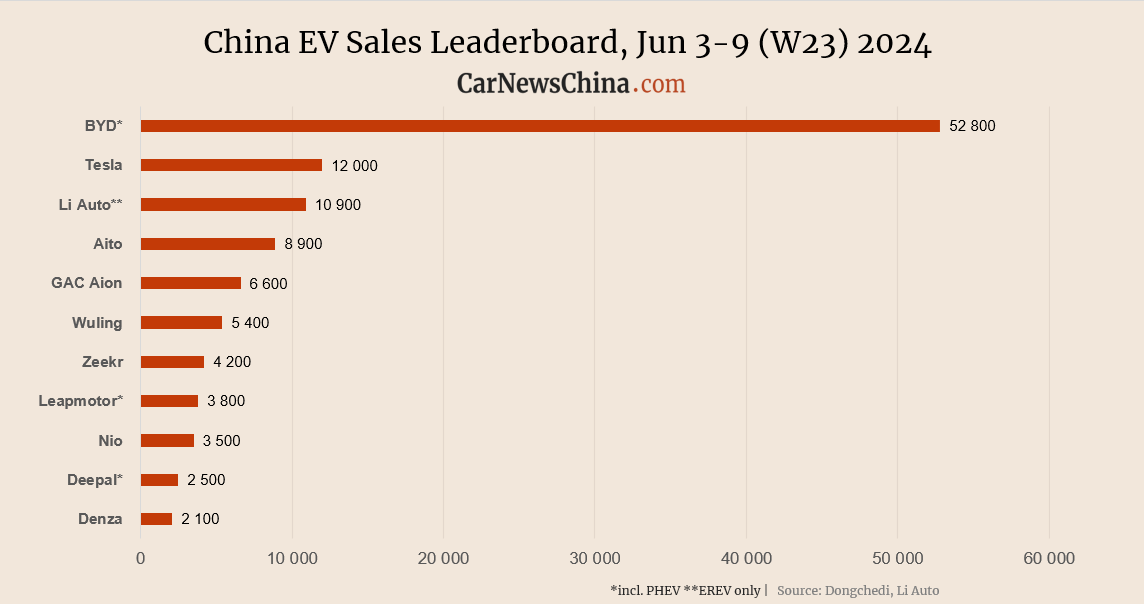
China EV registrations in W23: Xiaomi 2,100, Nio 3,500, Tesla 12,00, BYD 52,800
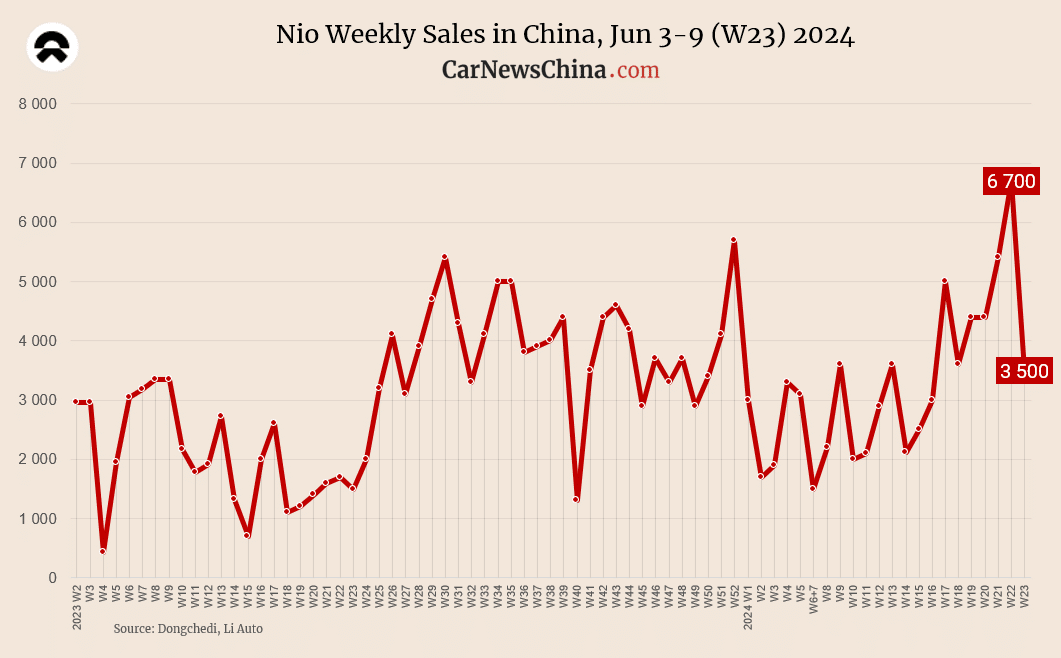
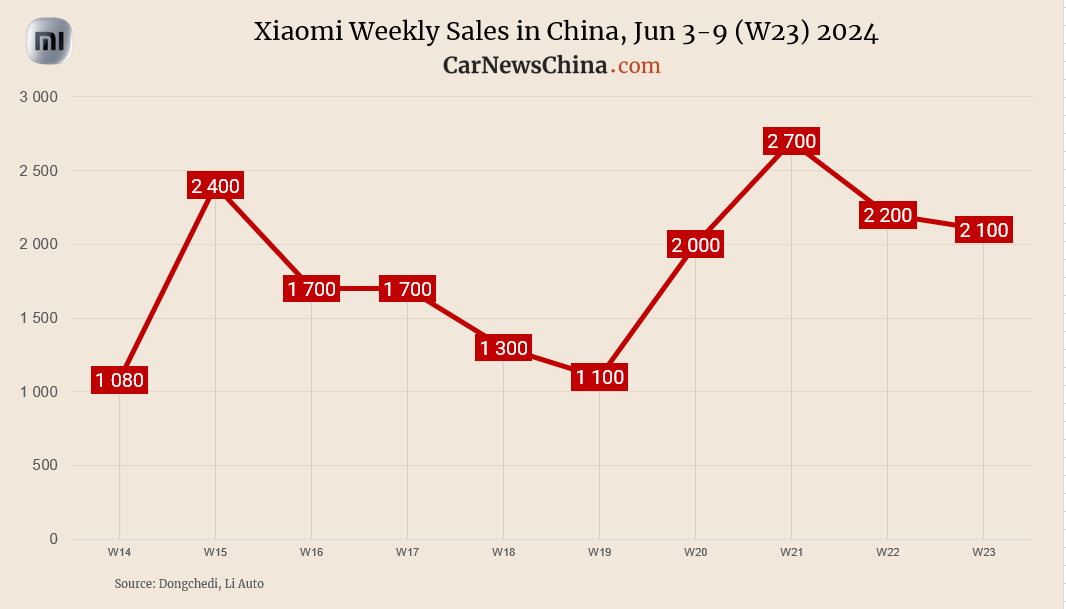
Xiaomi sales were down 5% compared with the week before, Nio was down 50%, Tesla was down 20%, and BYD sales were nearly flat.
China EV registrations in W23: Xiaomi 2,100, Nio 3,500, Tesla 12,00, BYD 52,800
Reading Time: 5 minutes
Jiri Opletal
June 12, 2024
0
News like this to your inbox or phone?
Weekly summary to your inbox
I want this
Never miss and important news
Get Instant notification once the news is published.
Follow Us
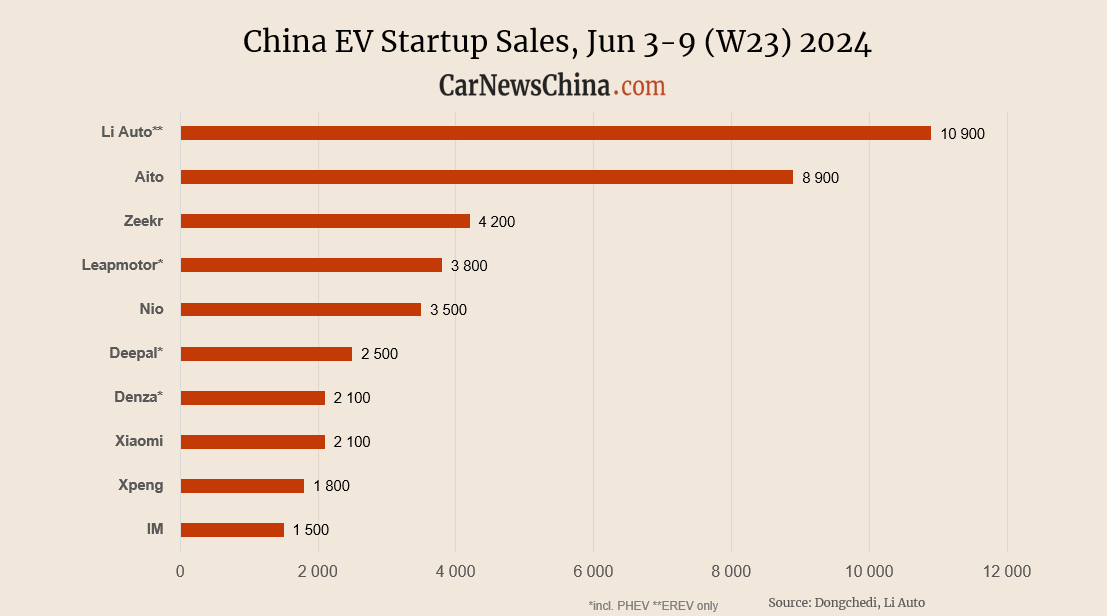
In week 23 of the year (June 3 – 9), the China EV market was mostly down, with few exceptions, such as Li Auto and Aito. Xiaomi sales were down 5% compared with the week before, Nio was down 50%, Tesla was down 20%, and BYD sales were nearly flat.
Li Auto publishes the weekly sales data, which resumed publishing registration data after a few weeks without any official explanation. The numbers are rounded and present new energy vehicles (NEV), the Chinese term for BEVs, PHEVs, and EREVs (range extenders). To be completely precise, it also includes hydrogen vehicles (FCEVs), but their sales are almost non-existent in China.
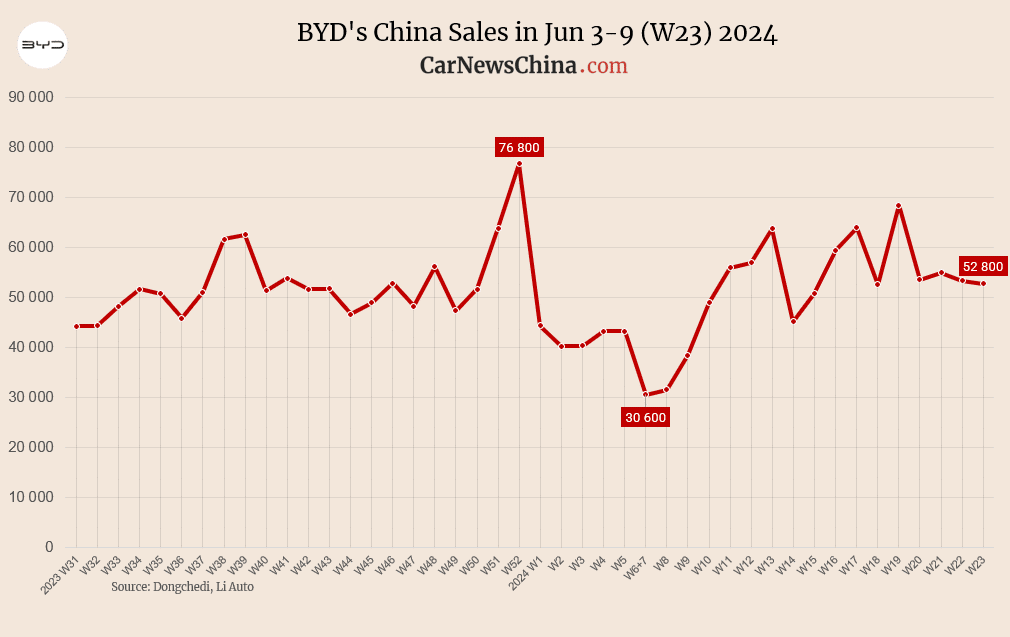
BYD took the first spot, registering 53,400 vehicles, down 1,12% from 53,400 units the week before. Last month, in May, BYD delivered 330,488 vehicles in China.
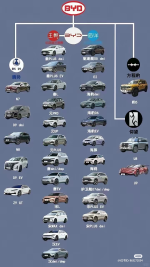
BYD doesn’t stop its EV offensive, flooding the market with dozens of new BEVs and PHEVs, accelerating the price war, and waiting for other EV makers to start losing the wheels. Aside from the BYD badged brand, BYD has three premium sub-brands: YangWang, Fang Cheng Bao, and Denza.
Under the leading BYD brand, the Shenzhen-based automaker recently launched two new plug-in hybrids, BYD Seal 06 and BYD Qin L. According to automotive survey agency CarFans, both models received 80,000 locked-in orders two weeks after the launch. BYD confirmed that Qin L delivered 5,000 units in three days following the launch. Moreover, BYD Song L DM-i, a new PHEV variant of the all-electric Song L, was officially announced and is poised to enter the market soon.
Its second brand, Denza, is also very active. The new Denza N9 flagship SUV, expected to launch at the end of the year, was recently spied in China, revealing its similarity in powertrain to the Z9 GT. Additionally, the Denza Z9 GT, a 900 hp shooting brake, was spotted during road tests on June 10, indicating its upcoming launch in the second half of this year.
Denza sells three models: D9 MPV, N7, and N8 SUVs.
Its third brand, Fang Cheng Bao, is not behind, as its upcoming hard-core SUVs, Bao 3 and Bao 8, were recently spotted in China in new spy shots, including the interior.
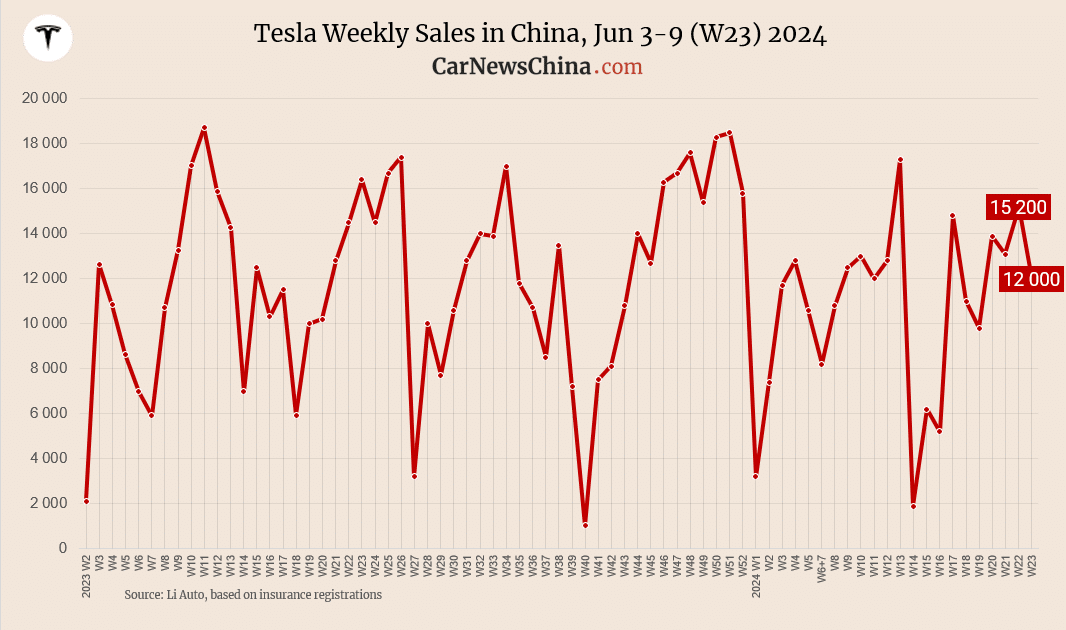
Tesla won second place, registering 12,000 vehicles, down 21.05% from 15,200 units the week before and 17.65% up from 10,200 last year. The week 23 (W23) of 2023 was June 5 – 11.
In April, Tesla introduced a 0% interest loan on vehicle purchases in China. Customers only need to pay a 79,900 yuan (11,200 USD) deposit to receive the loan, payable in up to 5 years.
Li Auto secured the third spot overall and first spot among EV startup builders, registering 10,900 vehicles, up 29.76% from 8,400 units the week before and 53.52%, up from 7,100 the same week last year. Last month, Li Auto delivered 35,020 vehicles in China.
Huawei-backed Aito came in fourth, registering 8,900 vehicles, up 27.14% from 7,000 units the week before and 709.09% up from 1,100 last year. Last month, Aito delivered 32,973 vehicles in China.
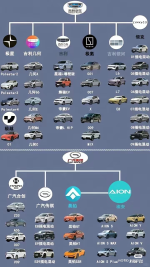
GAC Aion took fifth place, registering 6,600 vehicles, down 12.00% from 7,500 units the week before. Last month, GAC Aion delivered 40,073 cars in China.
Wuling came sixth, registering 5,400 vehicles, down 38.64% from 8,800 units the week before. Last month, Wuling delivered 44,611 cars in China.
Geely’s Zeekr maintained its position, registering 4,200 vehicles, unchanged from 4,200 units the week before and 110.00% up from 2,000 last year. Last month, Zeekr delivered 18,616 cars in China.
Stellantis-backed Leapmotor took eighth place, registering 3,800 vehicles, down 11.63% from 4,300 units the week before and 26.67% up from 3,000 last year. Last month, Leapmotor delivered 18,165 cars in China.
Nio came ninth, registering 3,500 vehicles, down 47.76% from 6,700 units the week before and 150.00% up from 1,400 last year. Last month, Nio delivered a record-breaking 20,544 vehicles in China, surpassing its all-time high of 20,462 last July.
Nio expects the June deliveries to be between 17,800 and 19,800 vehicles.
On May 15, Nio launched its first sub-brand, Onvo, and introduced the Onvo L60 coupe-SUV. The EV will compete with the Tesla Model Y in China, and pre-sale started at 30,500 USD. Delivery is set for September.
Nio plans to launch its second sub-brand, Firefly, in Q4 2024 in China. This is quite surprising as Firefly was initially meant as a Europe-bound brand. The launch was expected to take on the Old Continent, starting with an entry-level EV hatchback competing with VW ID.3. However, due to Nio’s disappointing sales in the EU, the company had to change strategy for Firefly, and the debut will take place in China.
Changan’s Deepal ranked tenth, registering 2,500 vehicles, down 7.41% from 2,700 units the week before and 66.67% up from 1,500 last year. Last month, Deepal delivered 14,371 cars in China.
Denza took eleventh place, registering 2,100 vehicles, down 16.00% from 2,500 units the week before and 19.23% down from 2,600 last year. Last month, Denza delivered 12,223 cars in China.
Xiaomi came twelfth, registering 2,100 units of SU7 sedan, down 4.55% from 2,200 units the week before. Last month, Xiaomi delivered 8,630 SU7 in China.
Last month, the company raised its 2024 delivery target from 100,000 to 120,000 units, reflecting a 20% increase. The SU7 all-electric sedan launched on March 28 and received strong market acceptance, with over 88,000 orders by the end of April. This month, Xiaomi’s factory will shift to double production to meet high demand.
From weekly numbers, we can see the plant’s production capacity is still fluctuating as the plant started trial production only earlier this year. The official production capacity is 150,000 vehicles per year in the first phase and 300,000 in the second phase.
Volkswagen-backed Xpeng took the thirteenth spot, registering 1,800 vehicles, down 28.00% from 2,500 units the week before and 20.00% up from 1,500 last year. Last month, Xpeng delivered 10,146 cars in China.
I don't understand on how to calculate and report sales.
I read in the news that the preorder of Xiaomi car and many other models can be up to tens of thousands units.
But in the monthly report, it just around thousands unit instead.
So where are the tens of thousands preorder units?
Menthol
Trusted Member
Chery confirmed Jaguar Land Rover will use E0X & M3X platforms
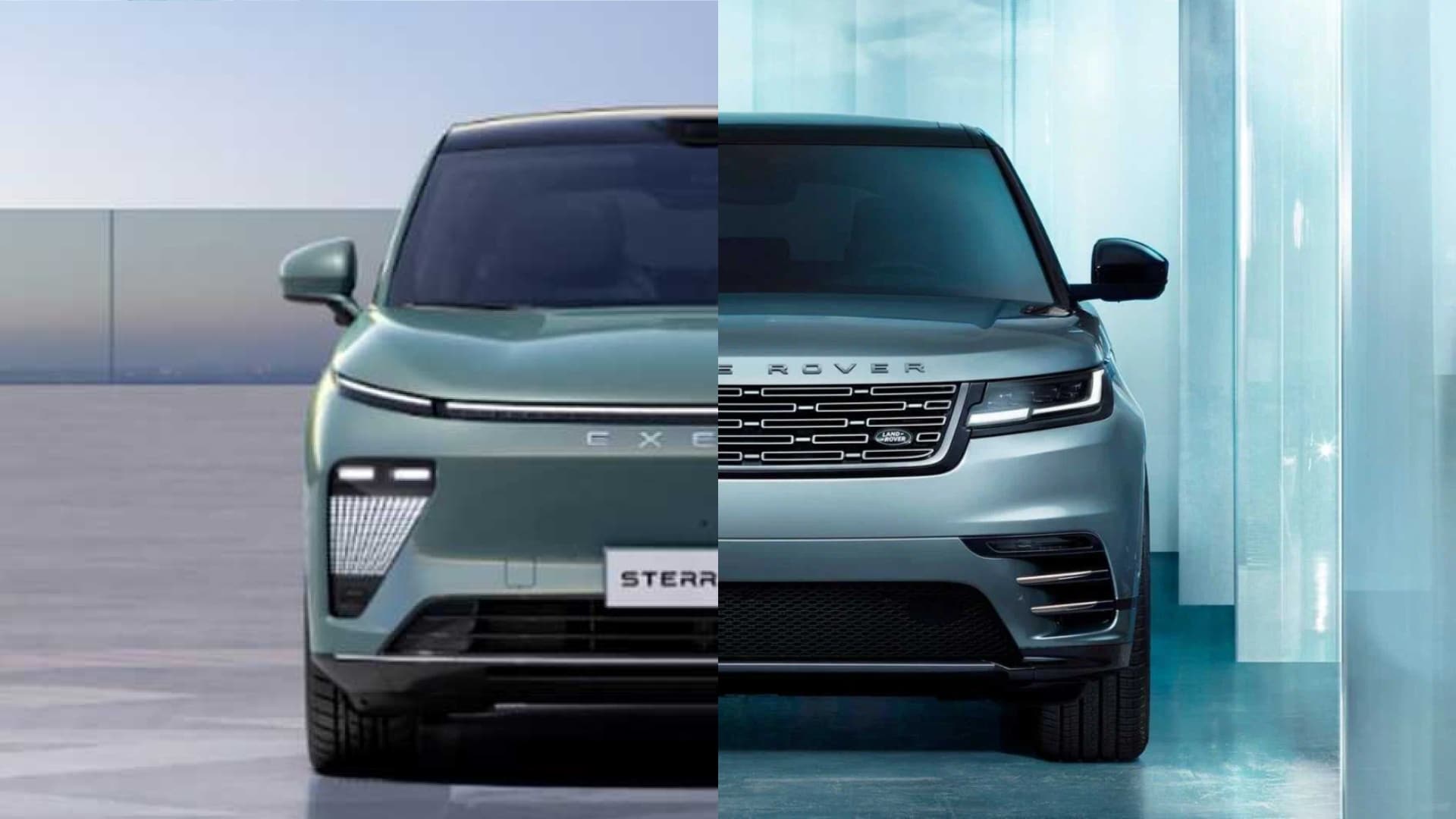
Chery Chairman Yin Tongyao confirmed previous rumors about Jaguar Land Rover's adoption of Chery's platforms during the interview.
Chery confirmed Jaguar Land Rover will adopt Chinese E0X and M3X platforms
Reading Time: 3 minutes
Denis Bobylev
June 12, 2024
3
Jaguar Land Rover cars to adopt Chery's platforms
News like this to your inbox or phone?
Weekly summary to your inbox
I want this
Never miss and important news
Get Instant notification once the news is published.
Follow Us
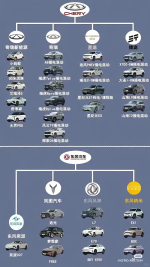
Chery Chairman Yin Tongyao confirmed previous rumors about Jaguar Land Rover’s adoption of Chery’s platforms during the interview. JLR’s future PHEV and BEV models will stand on M3X and E0X modular architectures that underpin such cars as Exlantix ET, Exlantix ES, Luxeed 7, Luxeed R7, Exeed RX, Chery Tiggo 9, etc.
Chery-JLR plant in China
Chery and Jaguar Land Rover have a 12-year friendship story in China. Back in 2012, these companies formed a joint venture in China to manufacture Jaguar Land Rover cars. The jointly-owned factory started operating in 2014 and is still in business. JLR engineers helped Chery a lot with the suspension setup. Moreover, Land Rover cars became a huge inspiration for Chery designers. And now it is Chery’s turn to help JLR.
Jaguar Land Rover to adopt Chery’s modular architectures
Chery’s high-end brand Exeed recently shared that it has signed a strategic cooperation agreement with Jaguar Land Rover. This agreement allows JLR to use Exeed’s platforms to create its future vehicles. Formally, it is an agreement between JLR and Exeed. However, that Chinese brand is fully owned by Chery Group. So, frankly speaking, we can call it an agreement between Indian Tata Motors and Chinese Chery Group.
M3X platform
Regarding the topic, Exeed confirmed that JLR will use two main platforms designed by Chery engineers. The first one is the M3X modular architecture. Its second generation is also known in China as T2X. Chery developed it with help from German Bentler. It is the platform dedicated to ICE vehicles and PHEVs. Of course, Jaguar Land Rover is mostly interested in the adoption of plug-in hybrid tech as it lags behind the NEV industry.
DHT “Syper Hybrid”
The M3X architecture can be equipped with Chery’s “Super Hybrid” powertrain. It comprises a petrol-powered ICE paired with two electric motors via a 3DHT165 gearbox. A few years back, this transmission was the world’s first gearbox to adopt two e-motors in one body. The main benefits of this DHT hybrid are nine operating modes, 11 gear combinations, over 1000-km range, and a thermal efficiency of 44.5%. The M3X (T2X) platform with DHT hybrid underpins such cars as Exeed RX PHEV, Chery Fulwin T9, etc.
Exeed Exlantix ES stands the E0X architecture
The second modular architecture that Jaguar Land Rover cars will adopt is the E0X. It was developed jointly by Chery and Huawei. This chassis currently underpins four vehicles: Exlantix ES, Exlantix ET, Luxeed S7, and Luxeed R7. This platform covers various body shapes. It is suitable for both BEV and EREV cars. Other benefits of E0X are the utilization of the 800V high-voltage system, the stated energy consumption of 12 kWh/100 km, and advanced autonomous driving tech. E0X can also be equipped with air suspension. Overall, it is a high-end platform suitable for JLR’s electric cars and range extenders.
Editor’s comment
Exlantix ET SUV
Indian-owned Jaguar Land Rover lags behind the trend for new energy vehicles. Its only BEV, the Jaguar I-Pace, was launched six years ago. At the same time, JLR’s sales volume slowly declines. This problem is especially acute in China since there is a huge trend for NEVs. This is why the Tata-owned automaker asked for Chery’s help. Most likely, M3X and E0X-based Jaguars and Land Rovers will sell exclusively in the Chinese market to satisfy local buyers’ needs.
Worth mentioning Jaguar Land Rover isn’t the only automaker to adopt Chinese modular architectures to build NEVs. It is a growing trend among lots of automakers. For clarity, Mitsubishi Airtrek adopts GAC’s GEP; Smart and Lotus EVs are underpinned by Geely’s SEA; Renault cars will adopt Geely’s CMA; Volkswagen agreed to use E/E platform from Xpeng; future Audi vehicles will be underpinned by iO Origin platform from SAIC.
Source: Exeed Press-release
It's a smart move by Jaguar and Land Rover.
Many of the Chinese EV startups are joint venture with many big brands.
Like for example, Xpeng, it's a joint venture with VW.
The driving experience it feels like Porsche, because the chassis was designed by Porsche engineers.
Wuling is GM, etc.
Users who are viewing this thread
Total: 5 (members: 0, guests: 5)
Pakistan Defence Latest
-
-
-

-
 PTI Murad Saeed in Afghanistan, was 'controlling KP govt' from there: Rana Sanaullah (3 Viewers)
- Latest: Starlord

Country Watch Latest
-
-

-

-
-
Turkey, Pakistan, Qatar, and Indonesia forge ‘Badr’ Pact to Jointly Produce Weapons (11 Viewers)
- Latest: Batman
Latest Posts
-
Türkiye - Azerbaijan | Strategic Partnership, Regional Alliance, Military Cooperation - News & Updates (56 Viewers)
- Latest: Anatolia
-
-
-
-