China Auto Thread

BYD’s Strategic Pivot: Overseas Sales Surpass Domestic Market for the First Time

By David Chen / March 10, 2026
BYD Stock

A significant shift is underway in the sales dynamics of the world’s largest electric vehicle manufacturer. For the first time, BYD’s exports have eclipsed its domestic sales, a milestone that underscores a strategic reorientation toward global markets and next-generation battery technology. This comes as the company’s home market in China experiences its most pronounced contraction in years.

Share Performance and Domestic Headwinds​

Trading in Hong Kong saw BYD’s equity advance by 3.54 percent to HK$98.05. This uptick follows an extended period of weakness, during which the stock lost approximately 23 percent of its value over the preceding twelve months. Intensifying price competition within China is a primary driver behind this trend.

Domestic deliveries in February plummeted 41 percent year-over-year to 190,190 units. This represents the sixth consecutive monthly decline and the sharpest drop since early 2020. A key factor is the expiration of a full tax exemption for electric vehicles in China at the end of 2025, which was replaced by a five percent levy in January 2026. This policy change triggered substantial pull-forward demand late last year, leaving a notable gap in orders at the start of the new period. Furthermore, domestic rivals including Leapmotor and Xiaomi are posting strong gains against the broader trend, signaling an increasingly competitive landscape.

Should investors sell immediately? Or is it worth buying BYD?

Export Milestone and Technological Advancements​

Counterbalancing the soft domestic performance is a strategic achievement: February exports of 100,600 vehicles officially exceeded local sales. This figure marks a 50 percent increase compared to the same month last year. Demand is accelerating notably in regions such as Europe and Brazil. To support this global expansion, the company is preparing to commence series production at a new Hungarian plant in the second quarter of 2026, a facility designed with an annual capacity of 300,000 vehicles.

Concurrently, BYD is accelerating its technological roadmap. Early March saw the unveiling of the “Blade Battery 2.0.” This new battery generation promises higher energy density and, when paired with a novel fast-charging system, can recharge from 10 to 70 percent in just five minutes. To deploy this technology at scale, the automaker plans to establish 20,000 proprietary fast-charging stations across China by the end of 2026. These stations will utilize integrated buffer storage to deliver high charging power even on conventional grids, thereby reducing installation costs.

Investor Focus Shifts to Annual Report​

Market participants are now looking ahead to March 26, when BYD will release its complete annual report for 2025. This disclosure will provide concrete data on the extent to which burgeoning overseas sales can offset the domestic slowdown on the company’s balance sheet. Key areas of scrutiny will include margin development within the fiercely competitive market and the investment costs associated with building out its worldwide technological infrastructure.

 
March 11, 2026 at 4:46 PM GMT+8

Geely Auto Overtakes BYD as China's Top-Selling Carmaker in Early 2026​

According to a report from the South China Morning Post, Geely Auto has become the top-selling carmaker in mainland China for the initial two months of the year. The company's sales performance exceeded that of BYD, which had previously held a leading position in the electric vehicle market.

Geely reported delivering 476,327 vehicles in January and February, representing a modest increase compared to the same period a year earlier. In contrast, BYD's sales for those two months fell significantly to 400,241 units. During this timeframe, Geely's sales of electric vehicles also saw a notable year-on-year rise.

Analysts suggest Geely's diverse portfolio of gasoline and electric models, under several brand names, contributed to its performance. The company's vehicles are perceived by some for their quality and reliability. This shift in sales leadership occurs as authorities work to limit price competition within the automotive industry.

Industry observers note that competition between these two major manufacturers could reshape the domestic automotive sector this year. The change in rankings follows a reduction in certain consumer incentives for electric vehicles.


Korea Sends Eight-Ministry Team to China to Study Autonomous Driving

"Let's Learn Autonomous Driving Policies from China": Joint Research Team Dispatched to Beijing​

Published 18 Mar.2026 06:00(KST)

Eight-Ministry Research Team Includes Land, Economy, and Police Agencies

On March 18, the government announced that it would dispatch a joint policy research team composed of eight central ministries to Beijing, China. China, along with the United States, is leading the development of autonomous driving technology and is implementing a variety of support policies to commercialize autonomous vehicles.

The research team includes the Ministry of Land, Infrastructure and Transport; the Ministry of Economy and Finance; the Ministry of Trade, Industry and Energy; the Office for Government Policy Coordination; the Financial Services Commission; the Personal Information Protection Commission; the Ministry of Planning and Budget; and the National Police Agency, all of which are responsible for policies related to autonomous driving and physical AI. The Korean government has set 2027 as the target year for the commercialization of fully autonomous vehicles. According to the Ministry of Land, Infrastructure and Transport, this dispatch is significant as it marks the first time that Korea will directly inspect demonstration sites in leading countries in order to enhance industrial competitiveness.

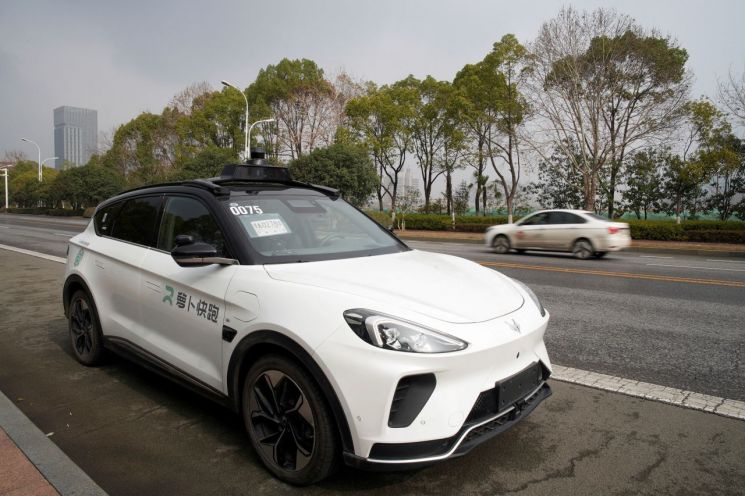
China is currently operating approximately 1,500 robotaxis in demonstration runs in major cities such as Beijing and has also established large-scale test facilities. This year, Korea plans to launch its first demonstration city where autonomous vehicles can operate throughout the entire urban area. The selection of participating companies is currently underway.

The Ministry of Land, Infrastructure and Transport stated, "It is essential to review China’s policy package supporting the physical AI industry, public-private cooperation models, and demonstration cases." The ministry added, "This research team will interact with officials from China’s Ministry of Transport and Ministry of Public Security, examining the current policies, policy support measures, and institutional systems in order to identify policies that should be introduced in Korea."

Specifically, the team will examine the current status of the Beijing Autonomous Driving Pilot Zone Operation Center, focusing on unmanned monitoring, safety management, and emergency response, such as autonomous vehicle control and remote operation currently under demonstration. The research team also plans to review the technological capabilities of leading autonomous driving companies such as Baidu and Pony.ai and compare them to domestic technologies. The insights gained will be reflected in policies to strengthen the competitiveness of Korea’s physical AI industries, including future mobility and robotics.
 
To view this content we will need your consent to set third party cookies.
For more detailed information, see our cookies page.
 
To view this content we will need your consent to set third party cookies.
For more detailed information, see our cookies page.
 
To view this content we will need your consent to set third party cookies.
For more detailed information, see our cookies page.
 
I saw a travel video of Western couple on Indian street and the honking was crazy! Chinese no honking and super quiet evs is like night and day. In india it's actually trendy to honking to red lights even...google it lol

Isn’t that because China banned honking horns because people were just being annoying

Chinese cities wanting peace and quiet are using acoustic cameras to catch honking drivers​

 
Last edited:

EU car imports from China overtake exports for first time

Fri, March 20, 2026 at 5:29 AM PDT

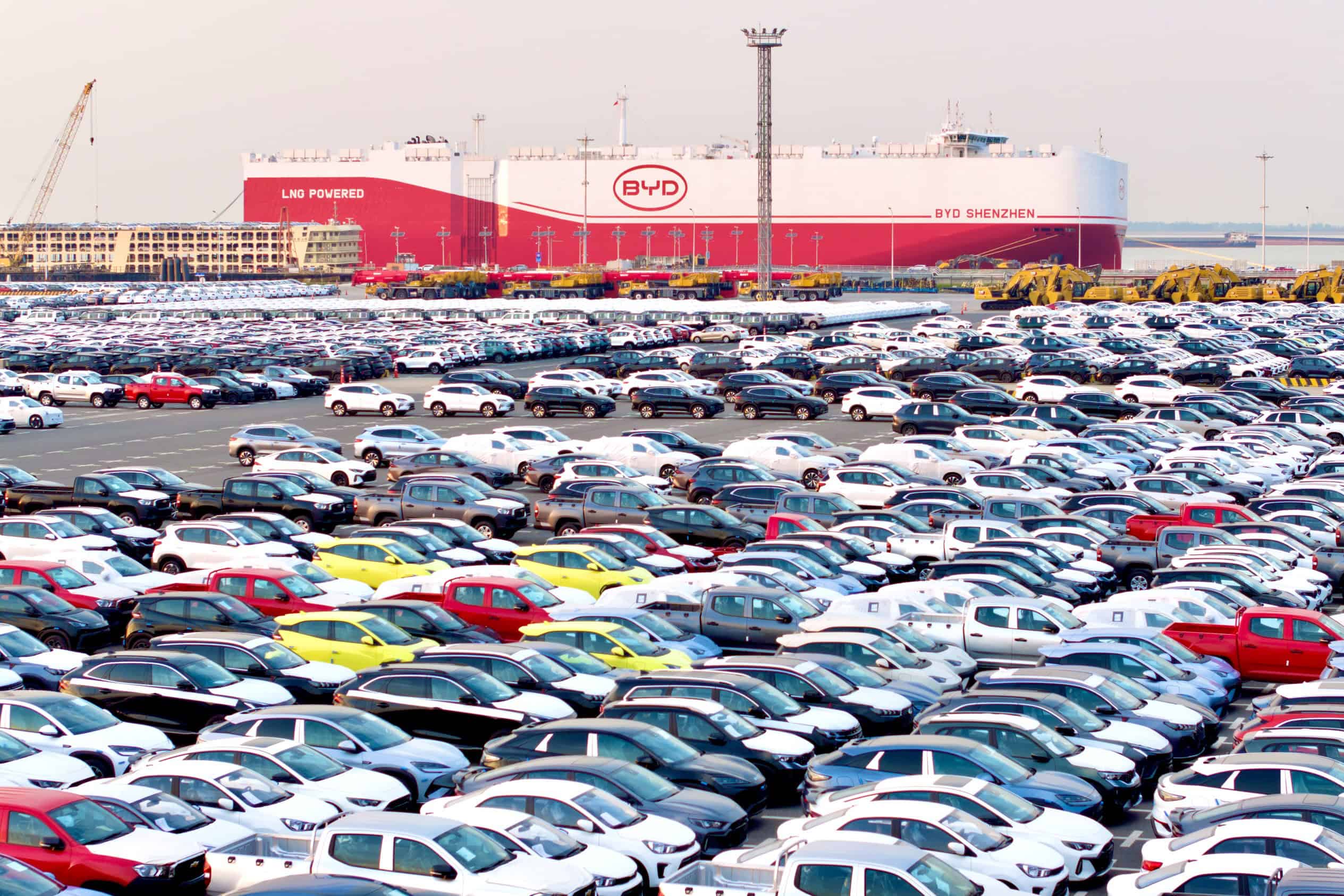
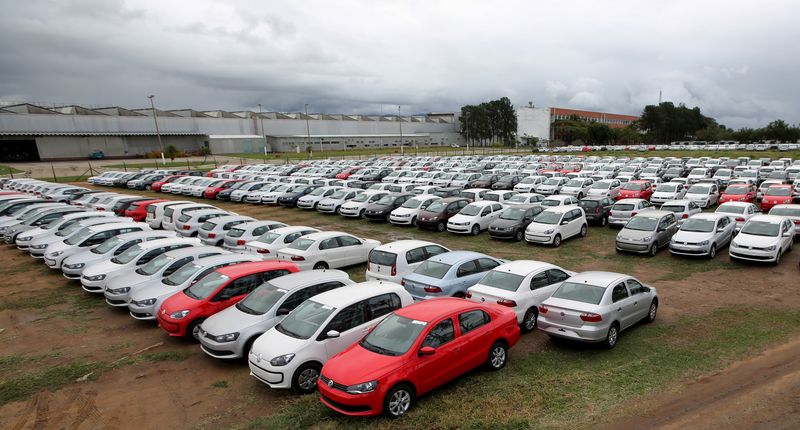
Numerous new electric vehicles from BYD are parked in a parking lot in the port area. Hauke-Christian Dittrich/dpa

Numerous new electric vehicles from BYD are parked in a parking lot in the port area. Hauke-Christian Dittrich/dpa

The balance of power in the global car market is shifting, with imports of cars and automotive parts from China into the European Union surpassing EU exports to China for the first time, according to an analysis by consultancy EY.

Exports of cars and parts from the EU to China fell by 34% last year to €16 billion ($18.5 billion), the report said. Since 2022, exports have more than halved.

At the same time, imports from China rose by 8% to €22 billion, turning an export surplus into a deficit within just a few years.

A similar trend is visible at the national level. In Germany, Europe's automotive powerhouse, China was only the sixth most important export market for the country's manufacturers in 2025.

Although German exports still exceeded imports, the gap has narrowed significantly. Since the peak in 2022, German exports to China have more than halved from around €30 billion to €13.6 billion, while vehicle imports from China rose by two-thirds to €7.4 billion.

If current trends continue, imports and exports could reach parity in 2026, the EY analysis said.

Competition expected to intensify

According to EY expert Constantin Gall, Chinese carmakers currently face challenges in Germany, where Volkswagen, Mercedes-Benz and BMW have so far successfully defended their market shares.

In other European markets, however, Chinese manufacturers have already made notable gains.

Competition is expected to intensify further in 2026, increasing pressure on Germany as an automotive production hub, Gall said.


Some US car buyers envy what they cannot have - affordable Chinese EVs​

By Nora Eckert
March 23, 20261:03 PM GMT+8
  • Summary
  • Companies
  • Survey shows 40% of US consumers support Chinese auto imports
  • Political opposition in U.S. remains strong
  • Average cost of new autos in the U.S. nears $50,000
DETROIT, March 23 (Reuters) - Sooren Moosavy wants to buy an affordable electric car in the U.S., motivated by environmental concerns and a preference for the EV's smoother ride. But the 28-year-old Baltimore resident's search has brought him to a trio of vehicles that are essentially unavailable - because they're from Chinese automakers.

“I would love the opportunity to be able ‌to get one in or even test-drive one,” said Moosavy, who has narrowed his wish list to three models from BYD (002594.SZ), opens new tab, Geely (0175.HK), opens new tab and Zeekr, attracted to their compactness, plush interiors, and above all, the price.

Moosavy isn't alone. As the average price of a new car in the U.S. approaches $50,000, more of the car-buying public is open to buying cheaper Chinese cars, despite resistance from the industry and both major U.S. political parties. While Chinese autos hit the highways of Europe, Latin America and even Canada, the U.S. government has effectively banned the cars with tariffs exceeding 100%, out of concerns over data security and protecting American jobs.

In places like Europe, a number of Chinese EVs sell at ⁠prices under $30,000. Some of those cars include amenities like advanced driving assistance software, a built-in mini fridge, and the option to sing karaoke with your fellow passengers.

“The technology they offer for those lower price tags was astounding,” said Clint Simone, senior features editor for car-shopping website Edmunds, who drove several Chinese vehicles while at the CES trade show earlier this year.

CHINA'S EXPORT SURGE​

China has surged past Japan in recent years to become the world’s top vehicle exporter. Canada became the latest country to open its doors to the cars, agreeing to cut tariffs to 6.1% on an initial allowance of 49,000 Chinese EVs annually. The cars are already being exported en masse to Mexico, where Chinese automakers are eyeing factory space.

U.S. President Donald Trump reiterated during an appearance in Detroit in January that he’s receptive to Chinese automakers opening stateside, as long as they employ U.S. workers.

But earlier this month, major auto trade groups submitted a letter urging the U.S. government to keep Chinese carmakers out of the country, citing competitiveness concerns. Republican Senator Bernie Moreno of Ohio said in January at an event at a Ford Motor ‌plant that "as ⁠long as I have air in my body, there will not be Chinese vehicles sold in the United States of America."

China's embassy in Washington has rejected the automakers' criticism, saying Chinese-made cars are popular because of their quality and technological innovation.
Total export values jumped by $21 billion from 2024, and 66 different countries reported sales of over $100 million in 2025.

Total export values jumped by $21 billion from 2024, and 66 different countries reported sales of over $100 million in 2025.

THE CURIOUS U.S. CONSUMER​

Consumers have some concerns over allowing Chinese car imports, though, including over data security and protecting U.S. businesses, survey results from The Harris Poll as well as Cox show.

Rhett Ricart, an Ohio car dealer who sells several brands, including Ford, Chevrolet and Hyundai, said he has no doubt customers would snap up Chinese models if they became available.

He and other ⁠dealers don’t want that to happen yet, according to a recent Cox Automotive survey, which found that just 15% of dealers supported the entry of Chinese auto brands into the U.S., and just 26% trust that they would comply with U.S. safety standards.

Not meeting U.S. safety standards is one reason Chinese EVs cannot yet be owned permanently in the U.S.


Chinese EVs Go From Rejects to Most Wanted in North America​

Competition is brewing between the U.S. and its neighbors to attract China’s automaking giants.

March 22, 2026

BYD-Shenzhen-Port.jpg
The BYD Shenzhen car carrier sets off on its maiden voyage from Suzhou, China, with more than 7,000 BYD EVs, April 27, 2025.

anadian Prime Minister Mark Carney made waves in January when he dropped the country’s 100 percent tariffs on Chinese electric vehicles, breaking with the United States. Starting this year, Canada will allow a limited quota of imported Chinese EVs, and is actively courting Chinese automakers to set up factories in the country.

At the time, critics warned Canada to brace for blowback from Washington. Instead, as the U.S. and China prepare for Donald Trump’s visit to Beijing, Ottawa faces a specter of a different kind: competition.

The U.S. has not yet agreed to drop its own 100 percent tariff on Chinese autos. But the automotive industry is on tenterhooks over whether the two governments will strike a deal to bring a Chinese auto factory to the U.S. when Trump eventually visits Beijing. The president has previously expressed enthusiasm about the prospect. And a trickle of rumors suggests that U.S. automakers are already in talks about partnerships with Chinese rivals.

For Chinese automakers like BYD and Geely, such an agreement would reshape the North American landscape, opening up a market four and a half times larger by vehicles sold annually than Canada and Mexico combined. An arrangement that obliges them to set up a factory in America in exchange for market access may be hard to resist. But analysts say a series of practical questions remain.

Among them: will Chinese automakers be forced to enter into joint ventures? How much manufacturing would actually happen on North American soil? And will Chinese automakers be willing — or required — or work with powerful automotive unions?

“North America is on the table,” says Bill Russo, chief executive of Automobility, a Shanghai-based automotive advisory firm. “Governments recognize that Chinese carmakers will bring jobs and industrial relevance. There could be a bidding war, and if I’m China, I want that.”

Among the three countries in the U.S.-Mexico-Canada free trade agreement (USMCA), Mexico, with its low labor costs and mature auto industry, is a clear favorite for automakers looking to set up plants. But Mexico’s government has had to tread carefully, slow-walking approvals for new Chinese plants in a likely attempt to avoid the perception in Washington that it is poaching U.S. jobs.

That has created an opening for Ottawa. Canada has long had an automaking industry, and is home to two well-reputed vehicle parts suppliers, Magna International and Linamar Corp. It’s also a valuable proving ground for newcomers to the North American market, with consumers with similar tastes and spending habits to the U.S. and who are open to Chinese EVs.

Three Chinese automakers — BYD, Geely and Chery — are currently preparing to enter the Canadian market, their company executives and local dealership networks have said.

The Carney government had courted BYD to set up a factory in the months leading up to the prime minister’s January visit to China. Stella Li, BYD’s executive vice president, confirmed in an interview with Bloomberg last week that the company has been considering a plant there.

But Ottawa’s pressure on Chinese automakers to enter into joint ventures could be a sticking point. Both Carney and Canadian industry minister Melanie Joly have emphasized that JVs are a priority to support the buildout of a local EV supply chain. But BYD’s Li has said she doesn’t think a JV “will work.”

“For a company like BYD that has an advantage, all a JV does is give someone half of the pizza they’d rather keep for themselves,” says Russo.

Really the smart thing would be for the members of the USMCA to get together and discuss how to present a unified face to China. China has a long history of leveraging the strategy of divide and conquer. But it’s unlikely they’re going to do that.

Bill Russo, chief executive of Automobility, a Shanghai-based automotive advisory firm
If the U.S. were to join the fray, it would reduce any leverage Canada has in setting the conditions under which Chinese companies could enter its market.

“If the U.S. signals openness, there’s not really any question that it would win the location competition,” says Gregor Williams, an associate director focused on EV policy at Rhodium Group, an advisory firm. “But if the U.S. opens up, it would highly likely only be open to local production and with a joint venture partner.”

“The U.S. has enormous bargaining leverage as the second largest automotive market in the world,” says Russo. A former Chrysler executive, he draws a comparison to Beijing’s requirement that U.S. automakers form JVs with local companies when they sought to set up in China in the 1990s and early 2000s.

“If I’m a U.S. policymaker, I’d be telling [the Chinese], you did it to us, we’re doing it right back,” he says. “And the Chinese companies, of course they’ll do it.”

Other Chinese automakers may be open to entering into partnerships. Geely, for example, already has a JV in Europe with French automaker Renault and experience with the western automotive ecosystem through its ownership of the Volvo and Lotus brands. Chery has a JV with Spanish automaker Ebro.

A second vital question is to what extent Chinese automakers would manufacture locally as opposed to using imported components from China. Chinese EVs are cheap in part because of Chinese automakers’ vertical integration — an advantage they could lose if required to source components from local third parties.

“The [U.S.’s] Section 301 tariffs on auto parts and batteries make it hard to import those parts,” says Williams, referring to the tariffs imposed by both the Biden and Trump administrations to counter China’s allegedly unfair trade practices. “That may be easier in Canada. Chinese carmakers could feasibly do only final assembly there [in Canada] for the time being.”

“Canada says they want Canadian suppliers involved. But the tricky part is that there’s not much of a LFP [battery] ecosystem in Canada,” he adds.

Some Chinese automakers have already begun the process of quality-checking non-Chinese components for their cars. BYD this week announced it would partner with Nvidia on its autonomous driving system. That could be a first step to complying with U.S. regulations that currently ban cars with Chinese connected vehicle technology from American roads.

“They’re ensuring they have a qualified supplier that is in compliance with U.S. rules,” says Tu Le, founder of Detroit-based Sino Auto Insights. “I think [Chinese automakers] are happy to work with suppliers that are not Chinese as long as their prices are reasonable.”

A third factor is the role of the unions. Almost 30 percent of Canada’s automotive assembly industry is unionized, a rate twice as high as the U.S., where large segments of auto manufacturing have shifted to so-called “right to work” states like Alabama and Tennessee. Unifor, Canada’s main union for autoworkers, has opposed Carney’s move to open the door to imported Chinese EVs, warning it would cost Canadian jobs across the auto supply chain and stall domestic investment.

A spokesperson for Unifor did not respond to questions about its position on Chinese auto factories in Canada.

“The Chinese aren’t going to want that,” says Le. “Meanwhile, Trump might say we can get you online in two years and we’ll give you free land in Alabama and tax abatements for the next 10 years. Can Canada do that?”

Trump himself has signaled his openness to Chinese auto investment. “If they want to come in and build the plant and hire you and hire your friends and your neighbors, that’s great. Let China come in,” he told the Detroit Economic Club in January. That month, the administration pushed out a key Commerce Department official whose office issued the Chinese connected vehicle ban.

Surveys suggest that many U.S. consumers are also open to buying Chinese-made cars. Cox Automotive, a market research firm, found in a February survey that 38 percent of Americans would be “extremely” or “very likely” to consider a Chinese brand. That number soared to 69 percent among cost conscious Gen Z buyers.

U.S. auto industry groups have lobbied hard against allowing in Chinese automakers, including in a letter to the administration last week. In February, some Democrats also called on the administration to crack down on Chinese EVs in USMCA negotiations. But faced with the possibility of losing that investment to Mexico or Canada, the administration may find it hard to resist striking a deal first.

“Really the smart thing would be for the members of the USMCA to get together and discuss how to present a unified face to China,” says Russo. “China has a long history of leveraging the strategy of divide and conquer. But it’s unlikely they’re going to do that.”


EU car imports from China overtake exports for first time

Fri, March 20, 2026 at 5:29 AM PDT

Numerous new electric vehicles from BYD are parked in a parking lot in the port area. Hauke-Christian Dittrich/dpa

Numerous new electric vehicles from BYD are parked in a parking lot in the port area. Hauke-Christian Dittrich/dpa

The balance of power in the global car market is shifting, with imports of cars and automotive parts from China into the European Union surpassing EU exports to China for the first time, according to an analysis by consultancy EY.

Exports of cars and parts from the EU to China fell by 34% last year to €16 billion ($18.5 billion), the report said. Since 2022, exports have more than halved.

At the same time, imports from China rose by 8% to €22 billion, turning an export surplus into a deficit within just a few years.

A similar trend is visible at the national level. In Germany, Europe's automotive powerhouse, China was only the sixth most important export market for the country's manufacturers in 2025.

Although German exports still exceeded imports, the gap has narrowed significantly. Since the peak in 2022, German exports to China have more than halved from around €30 billion to €13.6 billion, while vehicle imports from China rose by two-thirds to €7.4 billion.

If current trends continue, imports and exports could reach parity in 2026, the EY analysis said.

Competition expected to intensify

According to EY expert Constantin Gall, Chinese carmakers currently face challenges in Germany, where Volkswagen, Mercedes-Benz and BMW have so far successfully defended their market shares.

In other European markets, however, Chinese manufacturers have already made notable gains.

Competition is expected to intensify further in 2026, increasing pressure on Germany as an automotive production hub, Gall said.

Chinese Automakers Surpass Japan’s Global Vehicle Sales For The First Time


March 24, 2026

byd-696x364.jpg

Chinese automakers have surpassed their Japanese counterparts in global vehicle sales for the first time, according to a recent report by Nikkei.

The report said that total global sales by Japanese automakers fell slightly to around 25 million units in 2025, causing Japan to lose its long-held top position for the first time since 2000. Meanwhile, Chinese car manufacturers recorded nearly 27 million units in global sales last year, rising to the top spot worldwide.

The conclusion was based on data released by major automakers and research conducted by automotive data platform MarkLines, Nikkei said.

Among individual companies, BYD surpassed Ford to rank sixth globally in 2025, while Geely overtook Honda to secure the eighth place, the report said.

Six Chinese automakers entered the global top 20 rankings, including Chery, Changan Automobile, SAIC Motor, and Great Wall Motors, outnumbering Japan’s five.

In the electric vehicle segment, BYD also exceeded Tesla to become the world’s leading EV seller, it added.

Tang Jin, a senior researcher at Japan’s Mizuho Bank and an expert in the automotive sector, noted that China’s rise to the top is more than a simple change in rankings. It signals a restructuring of the global automotive landscape, driven by China’s strengths in advanced technology, cost efficiency, and rapid research and development.

He added that Japan needs to reassess its strategies in vehicle electrification and global market positioning in response to the evolving competition

 
Mile stone after mile stone for the Chinese auto industry in the first 3 month of 2026.
Iran war will definitely facilitate global EV expansion rapidly.
 

China's e-trucks poised to dominate nascent EU market

Lack of ecosystem a hindrance but BYD, Sany and others are expanding capacity

https%3A%2F%2Fcms-image-bucket-productionv3-ap-northeast-1-a7d2.s3.ap-northeast-1.amazonaws.com%2Fimages%2F5%2F8%2F3%2F3%2F12273385-4-eng-GB%2F6e4c79fe1c3f-Screenshot-2026-03-18-162506.png

Windrose CEO Han Wen, center, poses with Port of Antwerp-Bruges CEO Jacques Vandermeiren, left, and Antwerp Vice Mayor Johan Klaps earlier this year. (Port of Antwerp-Bruges)

JENS KASTNER
March 23, 2026 13:54 JST

HAMBURG, Germany -- The electric-truck market may be the next frontier in Europe's transition to green vehicles, but Chinese manufacturers are once again at the forefront of the revolution.

 
BYD EU sales triple in Jan-Feb 2026 as electric cars hit 18.8% market share

Battery-electric vehicles (BEVs) captured 18.8% of the market share, with BYD Company BYDDY leading the charge with a 179% increase in sales.


BYD Extends German Car Sales Lead Over Tesla With 1,000% Surge​

BYD Co.’s German sales surged more than ten-fold last month as the Chinese automaker continues to expand in Europe’s largest electric-vehicle market.
 
Last edited:

Users who are viewing this thread

Latest Posts

Back
Top