China Auto Thread


EU imposes additional tariffs on Chinese EVs: BYD 17.4%, Geely 20%, SAIC 38.1%​


Reading Time: 4 minutes

Jiri Opletal

June 12, 2024


8
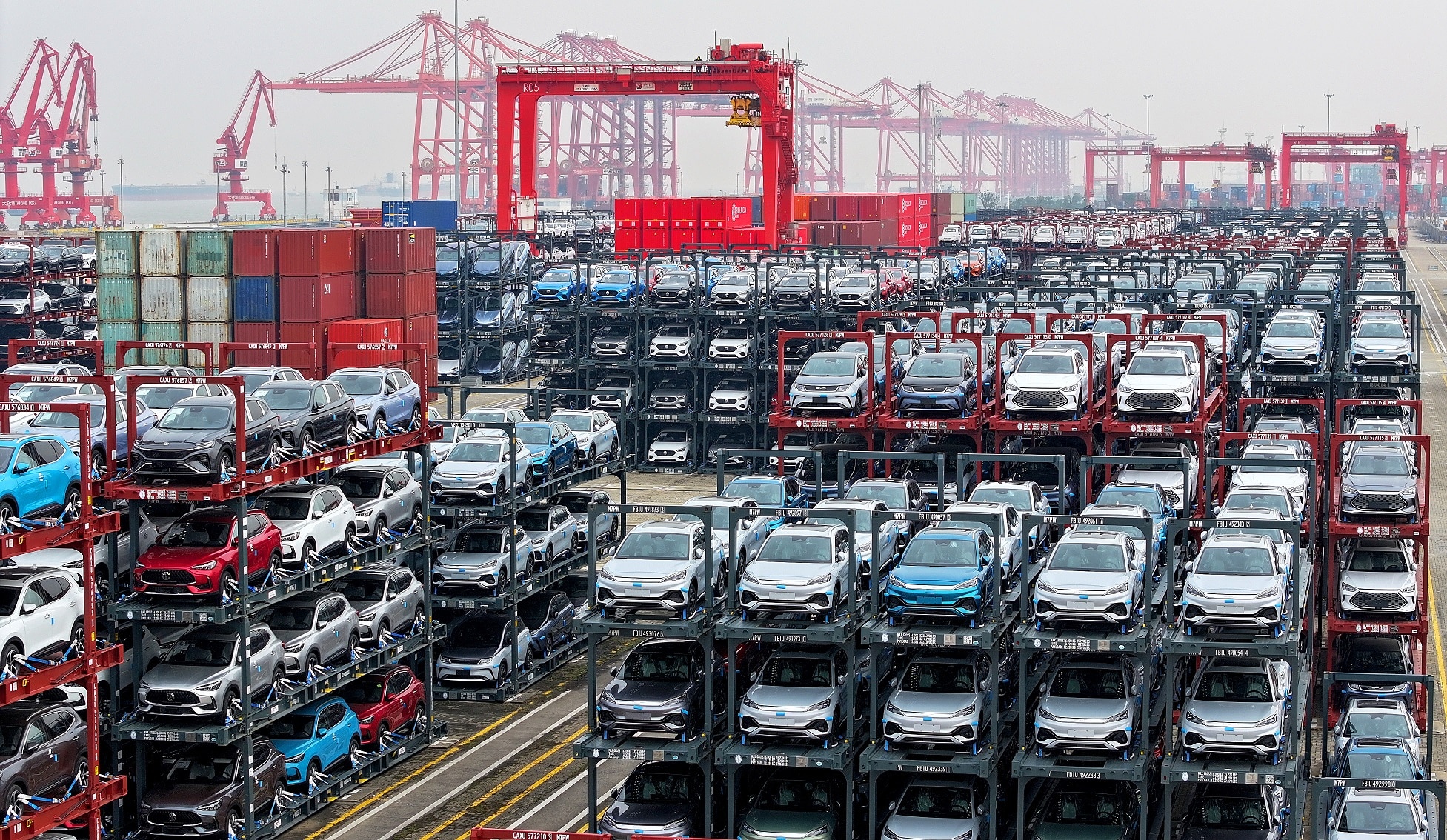
A batch of China's EVs wait to be exported at an terminal of Taicang Port, east China. Credit: CFP

News like this to your inbox or phone?​


Weekly summary to your inbox
I want this

Never miss and important news
Get Instant notification once the news is published.
Follow Us

On Wednesday, the European Commission (EC) concluded that battery electric vehicles (BEVs) and their supply chains in China benefit from unfair subsidies. As a result, EC announced provisional import duties on China-made EVs ranging from 17.4% to 38.1%, depending on the automaker. Those duties are on top of existing 10% tariffs.

The Commission has contacted Chinese authorities to discuss these findings and explore possible ways to resolve the issues. If ongoing discussions with Chinese authorities do not lead to a resolution, these duties will take effect on July 4. The duties will initially be guaranteed by a method determined by customs in each Member State and will only be collected if definitive duties are later imposed.
The individual duties the Commission would apply to the three sampled Chinese producers would be:

  • BYD: 17.4%
  • Geely: 20%
  • SAIC: 38.1%
Other BEV producers in China that cooperated in the investigation but have not been sampled would be subject to the following weighted average duty: 21%. All other BEV producers in China that did not cooperate in the investigation would be subject to the following residual duty: 38.1%.
All mentioned duties are on top of existing 10% tariffs, EC confirms.
The Chinese automakers that cooperated with the European Commission’s investigation but didn’t sample are (alphabetically) Aiways, BMW Brilliance, Changan, Chery, Dongfeng, FAW, Great Wall Motor (GWM), JAC, Leapmotor, Nio, and Xpeng. Those will receive an additional 21% duty, combined with the current 10% import duty; the new import tariff will be 31% starting from July.

Import tariffs on China-made Teslas imported into the EU will also face an additional 21% hike, the weighted average applied to all companies that cooperated in the investigation but have not been sampled.
However it might change as Tesla applied for individual examination. EC responded to CarNewsChina’s request for comment as follows:
“One BEV producer in China, Tesla, has made a substantiated request for a so-called individual examination in order to receive its duty level depending on the subsidies it received individually. This request is currently under examination, and a final assessment may be reflected in duty levels at the definitive stage (starting in November).”
The only EU-made Tesla car is Model Y, which was assembled in Giga Berlin. Tesla Model 3s sold in the EU are China-made.
The Chinese EV builders who import their vehicles into the EU and will be affected include the following brands:
  • MG (SAIC)
  • Smart (Geely)
  • Polestar (Geely)
  • Ora (GWM)
  • BYD
  • Nio
  • Lotus (Geely)
  • LEVC (Geely)
  • Maxus (SAIC)
  • Aiways
  • Lynk&Co (Geely)
  • Dongfeng
  • Voyah (Dongfeng)
  • Changan
  • Xpeng (backed by Volkswagen)
  • Zeekr (Geely)
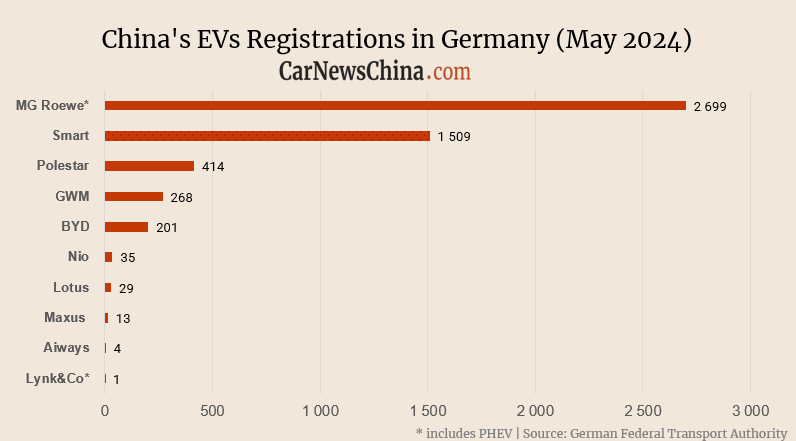
For context, here are the China EV brand sales in Germany in May.
China’s EV registrations in Germany in May: Nio 35, BYD 201, MG 2,699. Data source: KBA, Compiled: CNC
On October 4, 2023, the European Commission started an anti-subsidy investigation into Chinese battery electric vehicle (BEV) imports. Any investigation shall be concluded within a maximum of 13 months of initiation. Provisional tariffs may be published by the Commission within nine months after initiation, meaning by July 4 at the latest. The definitive measures would be decided four months later.
Tesla could receive a unique duty rate, while other Chinese producers can request a review, according to EC report. The proposed duties will be shared with all stakeholders and publicized on the Commission’s website.

Editor’s comment​

The EC investigation implies that BYD and its supply chain received the fewest subsidies from the Chinese government; thus, the provisional tariffs are the lowest – 17.4%. BYD is a privately owned company known for its extreme vertical integration, as it tries to handle as much as possible in-house. For example, it owns lithium mines, builds its own batteries, develops its own e-motors, owns large ocean carriers, and even owns a vehicle insurance company.
Geely Group is another privately owned company. Think of it as China’s Volkswagen, with a dozen brands such as Lotus, Zeekr, Volvo, Polestar, Lynk&Co, or London Electric Vehicle Company (LEVC). EC concluded their use of unfair subsidies was similar to the BYD case, however bit higher, resulting in 20% additional tariffs.
Shanghai Automotive Industry (SAIC) is the largest of the “Big Four,” the four largest Chinese state-owned automakers, established in 1955. It owns several brands, such as MG, IM, Maxus, and Rising Auto, and with American GM, it operates the Wuling brand in the SGMW joint venture. SAIC participated in the investigation, even providing samples; however, despite its effort, it received the highest tariff, 38.1%, suggesting that the investigation concluded that it used many unfair state subsidies.
At today’s regular press conference, Chinese Foreign Ministry spokesman Lin Jian criticized the EU’s investigation as a typical example of protectionism. However, despite many harsh words and strong statements that will come in China today and in the following days, tariffs are much milder than expected.
Many EU automakers have lobbied against the EC investigation, and it is no wonder their stakes are high. For Volkswagen, China is the biggest market, and Mercedes-Benz is 20% controlled by Chinese companies (10% belongs to state-owned Beijing Auto, and 10% belongs to Geely founder Li Shufu). Volvo, for example, is wholly owned by Geely.
Moreover, EU automakers have growing ties to Chinese EV makers as Audi will use SAIC’s IM electric vehicle platform for its new Audi EVs as its PPE takes too long to develop. Volkswagen established joint ventures with Chinese firms for lithium production and will build a couple of EVs based on Xpeng platform and Stellantis acquire a stake in Leapmotor to produce their EVs globally.
Thus, it is not surprising Germany, Sweden, and Hungary have said they disapprove of the new tariffs, fearing Chinese retaliation.
Moreover, tariffs might soon not be enough to protect the EU’s Chinese EV competition. Many have already built or prepared vehicle factories in the EU. BYD plans a plant in Hungary, Chery chose Barcelona for its first EU EV plant, Great Wall Motor is choosing between Poland, Germany, Czechia, and Hungary, and Leapmotor vehicles will be assembled in Stellantis Polish plant.
When the Chinese build cars in the EU, how will the EU protect itself from potential Chinese government subsidies? We will keep an eye on this.
 

Xpeng makes debut in Egypt marking another milestone in global expansion​


Reading Time: 2 minutes

Naveed Rastegar

June 12, 2024


0


News like this to your inbox or phone?​


Weekly summary to your inbox
I want this

Never miss and important news
Get Instant notification once the news is published.
Follow Us

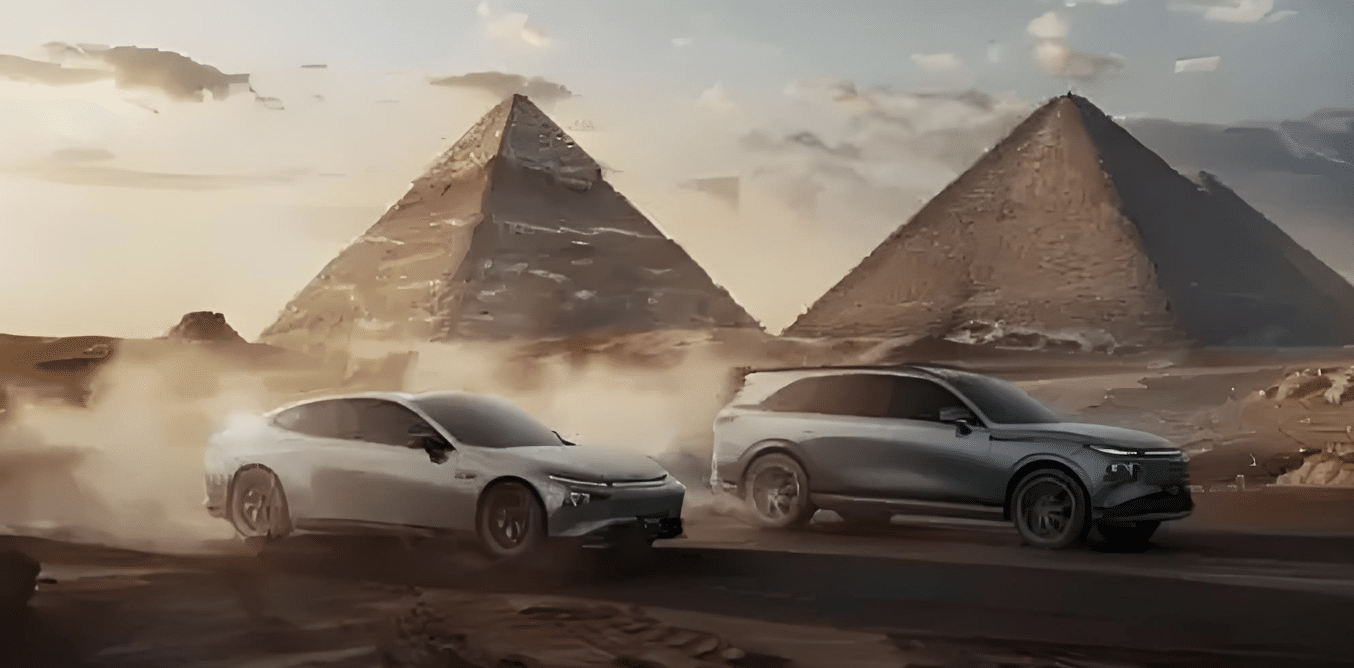
On June 11th, Chinese electric vehicle manufacturer Xpeng held a launch event at the Grand Egyptian Museum in Cairo to introduce its G9 SUV and P7 sedan to the Egyptian market. The company announced that these two models will begin deliveries to Egyptian consumers later this month. Unlike the many countries announcing tariffs on Chinese imports, Egypt has a zero-tariff policy for Chinese EV vehicles.

Raya Auto, a subsidiary of Raya Holding, has been appointed as Xpeng’s exclusive distributor and partner in Egypt. Raya Auto plans to provide after-sales support for Xpeng owners in the Egyptian market by ensuring quality standards and delivering a customer experience. Many would-be buyers are concerned about after-sales support for Chinese EVs, so the partnership with Raya Auto as a local provider could allay these concerns.
As one of the first Chinese pure electric vehicle brands to venture into the African market, Xpeng aims to establish a new benchmark for EVs in Egypt. With its strengths in areas like intelligent driving, fast charging, and OTA updates, the Xpeng G9 and P7 are a solid choice to lead Egypt’s transition towards vehicle electrification and sustainable mobility. It is noteworthy that Xpeng chose the G9 and P7 in its recent launch in Germany.

“We are proud to bring Xpeng’s advanced, environmentally-friendly EV technologies to Egyptian consumers,” said Wang Ke, Xpeng’s General Manager for the Middle East region. “We are confident in the Egyptian market’s immense opportunities and look forward to achieving success here.”
According to Statista, Egypt is “experiencing a rapid growth in the electric vehicle market, driven by government incentives and a growing awareness of environmental sustainability.” So Xpeng’s entry into the market helps spur further growth in the sector.
Mohamed El Naggar, the CEO of Raya Auto, emphasized the necessity of Egypt’s automotive industry transitioning to electrification. “By delivering a zero-emission, smart mobility experience, we can help build a greener future for the next generation,” he said.

Earlier this year, Xpeng announced expansion plans in Europe, and just last month, revealed it will begin selling vehicles in the Australian market. The Chinese electric vehicle manufacturer stated its international expansion is gathering pace, with breakthroughs being made across regional markets. Xpeng aims to establish a presence in key regions like Europe, ASEAN, the Middle East, Latin America, and Oceania.
Source: Xpeng
 

BYD Seal 06GT, Europe-bound electric hot hatch, exposed in China​


Reading Time: 3 minutes

Mark Andrews

June 12, 2024


6


News like this to your inbox or phone?​


Weekly summary to your inbox
I want this

Never miss and important news
Get Instant notification once the news is published.
Follow Us

BYD likes to keep the media on its toes. Last month with the listing of the production version of the Ocean M concept shown at the Beijing Auto Show we referred to the car as the Seal X. As noted at the time the ‘X’ we believed was just a placement holder as the names “Seal 06GT”, “Seal MINI” and “Seal 05EV” all appeared in the MIIT declaration. Chinese media are now referring to the car as the Seal 06GT and we have pictures of the car minus camouflage but with the badges still covered over.

It is probable that the Seal 06GT was largely developed with exports, particularly the European market, in mind. SAIC seems to have done far better with the MG4 in Europe than they have with its Chinese version, the Mulan, domestically and BYD may well have similar fortunes with the Seal 06GT. Nonetheless, sales will initially commence in China in the third quarter.
As the latest all-electric member of the Ocean series, it uses the new e-platform 3.0 Evo which was first used with the Seal Lion 07. The new e-platform has five key technology clusters and BYD positions it as safer, more efficient, and smarter.

Thanks to the MIIT listings we know there are both single and dual-motor versions of the Seal 06GT. For the single motor version power comes from a 160 kW motor most likely on the rear axle. In the case of the dual-motor version it doesn’t simply add a motor to the front but also introduces a more powerful motor to the rear so having maximum available power of 110 kW at the front and 200 kW at the back.
Buyers will have a choice between 59.52 and 72.96 kWh battery packs. For the single-motor versions this means a range of either 505 or 605 km (CLTC) dependent on the size. The dual-motor version is only available with the larger battery pack and has a range of 550 km.
With a length of 4630 mm it is a relatively large hatchback, the other dimensions being 1880 mm width and 1490 mm height while the wheelbase is 2820 mm. Indications are that the Seal 06GT will be positioned as an electric hot-hatch slotting into the Ocean range between the Dolphin and Seal. Buyers will have a choice between 18 and 19-inch wheels and the car features a split roof spoiler at the back similar to the one on the Sea Lion 07.

At the front the Seal 06GT looks in line with other members of the Ocean series such as the Seal with a sculpted hood and lower black grille. There are concealed door handles on the sides and black pillars give a floating roof effect.
From a relatively poor spy shot of the interior we can see that it is similar to in the electric Seal sedan. Colors are light with a blue nautical theme prevalent. There is a floating central screen which almost certainly will rotate, an LCD instrument display, integrated sports seats, and a three-spoked flat-bottomed steering wheel.
Prices should be in the 150,000 to 200,000 yuan range (20,700 – 27,600 USD) and sales in China should commence during the next few months. Exports are unlikely much before early 2025.

Editor’s note:​

It remains to be seen how today’s announcement of tariffs of 17.4% on BYD cars imported into the EU will affect plans for the Seal 06GT. It might make the model a prime candidate for production within the EU. BYD has a factory under construction in Hungary which should be begin production next year.
Source: Fast Technology
 

Lynk & Co unveils its first all-electric model Z10 in Gothenburg, Sweden​


Reading Time: 4 minutes

Adrian Leung

June 12, 2024


4


News like this to your inbox or phone?​


Weekly summary to your inbox
I want this

Never miss and important news
Get Instant notification once the news is published.
Follow Us

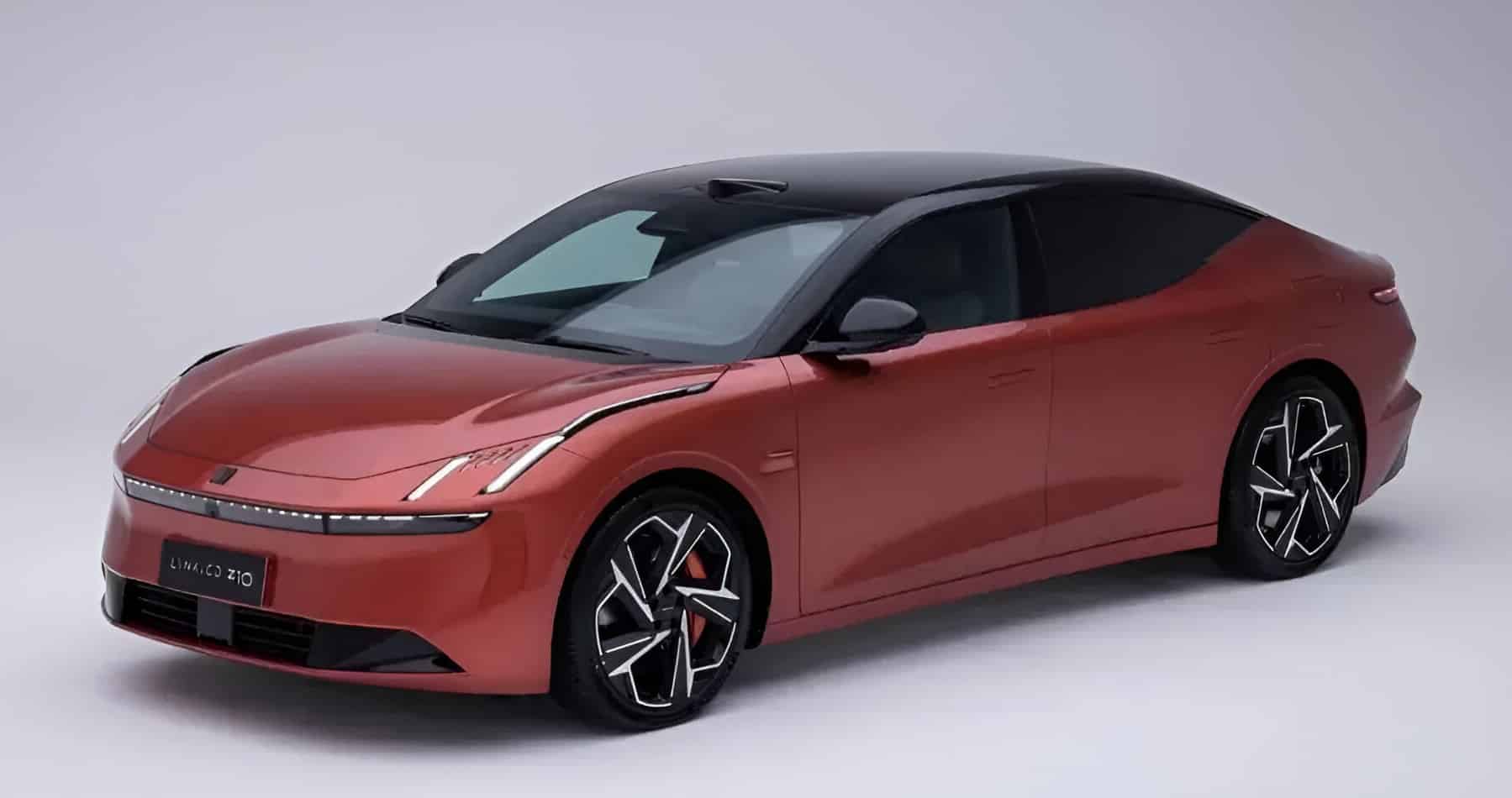
Lynk & Co, winner of multiple WTCR titles, unveiled its first all-electric vehicle at its global premiere event in Gothenburg, the Lynk & Co Z10 (pronounced z-one-zero). Previously known by the codename E371 and Lynk & Co Zero, the Z10 is positioned as the brand’s flagship sedan. It measures 5028/1966/1468 mm and has a wheelbase of 3005 mm.

Lynk & Co’s “The Next Day” concept car inspires the new car’s design. The Z10’s headlights retain Lynk & Co’s signature design of separate daytime running lights, while its side profile is reminiscent of the Lotus Emeya, as we reported earlier. It has hidden door handles and frameless doors. The rear design complements the front, featuring a continuous taillight strip similar to the Lynk & Co 07 EM-P PHEV. It has an electrified rear spoiler. It boasts a drag coefficient of only 0.198cd. The design team includes over 100 designers from more than 20 countries.
The Next Day concept car
Lynk & Co Z10 is built on an 800V architecture and equipped with a high-strength battery with a grid-like anti-collision structure capable of withstanding forces of up to 65 tons impact force. The Z10 has a range of over 800 kilometers on a single charge and can replenish 573 kilometers of range in 15 minutes. It has dual silicon carbide motors, achieving 0-100 km/h acceleration in 3.5 seconds.

Lynk & Co Z10 uses the SEA (Sustainable Experience Architecture) platform, also used in various models from Lotus, Smart, Zeekr, and Volvo, all in association with Geely. The chassis features a high-strength body, with 84.65% of the structure made from high-strength steel and aluminum, achieving a torsional rigidity of 45,000 Nm/deg. Additionally, the Z10 is equipped with dual-chamber air springs and electromagnetic suspension to provide a comfortable ride.
The Lynk & Co Z10 is not just about performance but luxury and comfort. The center console boasts a 15.4-inch floating touchscreen complimented by a heads-up display (HUD). The vehicle features a flat-bottomed, two-spoke, multifunction steering wheel with a minimalistic center console. The intelligent cabin features the Flyme Auto system, developed in partnership with Meizu and powered by the Qualcomm Snapdragon 8295. Both front and rear seats have ventilation, heating, and massage features, ensuring a genuinely indulgent driving experience.
The Lynk & Co Z10 supports autonomous driving with lidar and an Nvidia Orin-X chip. It offers highway NOA (Navigation on Autopilot) and urban NOA, which does not heavily rely on high-precision maps.

Lynk & Co is a joint venture between Geely Auto and Volvo, while Zeekr is owned by Geely Auto. Geely also owns Lotus. It is important to note that the original Lynk & Co Zero concept from four years ago has evolved into what is now known as the Zeekr 001. The Lynk & Co Z10 differentiates itself from Zeekr 001 with a distinct brand direction and style. However, the price of the Lynk & Co Z10 was not announced during the event. Our sources indicated it will start north of 200,000 yuan (27,600 USD). Stay tuned for future updates.
Updated: 14 June 2024
 

Chinese brands dominate May car sales in China​


Reading Time: 2 minutes

Mark Andrews

June 12, 2024


1
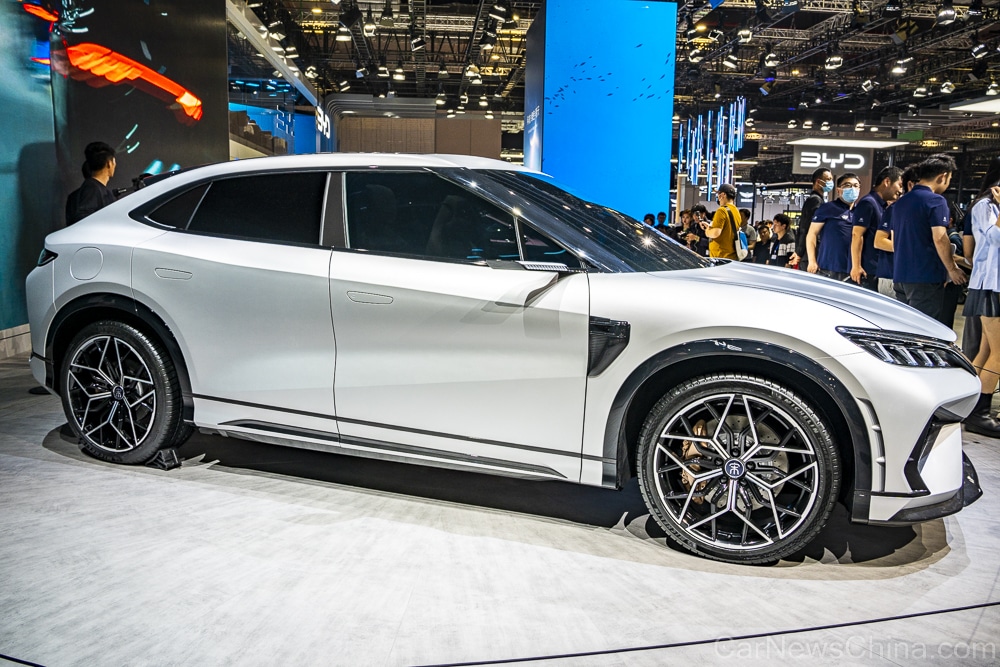
BYD Song L electric SUV on display at the 2023 Shanghai Auto Show.

News like this to your inbox or phone?​


Weekly summary to your inbox
I want this

Never miss and important news
Get Instant notification once the news is published.
Follow Us

May saw Chinese brands make up four out of the five top-selling brands in the China market according to data from the China Passenger Car Association (CPCA). The market for a long time was dominated by joint ventures with BYD last year becoming the first Chinese producer to ever take first place for sales. Thanks to the rapid electrification of the market Chinese brands are prospering as evidenced by both the figures for May and the year to date. The figures come just days after Li Yunfei, GM of BYD’s brand and PR department, predicted at the 2024 China Automobile Forum in Chongqing that the share of Chinese brands would reach 80% within the next two years, currently it‘s around 60%.

BYD continued to dominate in May with retail sales of 268,226 a year-on-year increase of 21.5% meaning that BYD alone made up 15.7% of the Chinese car market. The only joint venture in the top five was FAW Volkswagen which with sales of 124,029 was down -17.5% giving a market share of 7.3%. Geely is within striking distance of the number two spot selling under 300 cars less. Sales for Geely were up 31.6% year-on-year and the Zhejiang-based private company now controls 7.2% of the market. Changan secured the number four spot despite a decline of -12.7% and it had a 5.6% market share. Rounding out the top five was the top climber Chery which saw sales increase by 59.3%, with the Anhui company now controlling 5.2% of the market. The top 10 is then rounded out by Shanghai Volkswagen, GAC Toyota, Dongfeng Nissan, BMW Brilliance, and Tesla China.
PositionBrandSalesYOY ChangeShare
1BYD268,22621.5%15.7%
2FAW Volkswagen124,029-17.5%7.3%
3Geely123,76831.6%7.2%
4Changan95,739-12.7%5.6%
5Chery88,87359.3%5.2%
6Shanghai Volkswagen83,713-11.9%4.9%
7GAC Toyota69,593-10.2%4.1%
8Dongfeng Nissan61,725-0.9%3.6%
9BMW Brilliance55,301-3.2%3.2%
10Tesla China55,21529.9%3.2%
Retail sales in May for the top ten brands in China
May sales showed a total of 1,710,000 cars, down -1.9% year-on-year. However, new energy vehicle sales show no sign of abating with sales up by 38.6% for a total of 804,000.

These rankings are not a May anomaly with the figures for January to May showing a very similar pattern. The only difference was that Shanghai Volkswagen managed to squeeze into fifth place ahead of Chery by around 20,000 sales and that tenth position belongs to the Shanghai GM Wuling joint venture rather than Tesla. Chery again is the star of the figures showing a 75.7% increase in sales year-on-year with Geely also showing a very respectable 40.2% rise.
PositionBrandSalesYOY ChangeShare
1BYD1,108,36320.0%13.7%
2FAW Volkswagen638,327-3.3%7.9%
3geely628,17140.2%7.8%
4Changan562,9559.7%7.0%
5Shanghai Volkswagen427,775-1.4%5.3%
6Chery407,73675.7%5.1%
7GAC Toyota292,377-14.8%3.6%
8Dongfeng Nissan271,2790.0%3.4%
9BMW Brilliance263,868-4.0%3.3%
10SAIC GM Wuling261,9030.2%3.2%
Top 10 brands in China January to May
BYD’s dominance is even more apparent when looking at sales of new energy vehicles where BYD’s market share is larger than the next five producers combined.
PositionBrandSalesYOY ChangeShare
1BYD268,22621.5%33.4%
2Geely56,172148.3%7.0%
3Tesla China55,21529.9%6.9%
4Changan48,777100.3%6.1%
5SAIC GM Wuling42,49117.2%5.3%
6GAC Aion37,148-17.5%4.6%
7Li Auto35,02023.8%4.4%
8Seres32,226491.3%4.0%
9Chery30,630300.2%3.8%
10Great Wall21,6443.8%2.7%
Top 10 brands in China for NEV sales in May
Sources: Autohome, Fast Technology
 

BYD, CATL to launch battery with 6C fast charging this year, report says​


Reading Time: 2 minutes

Jiri Opletal

June 13, 2024


0
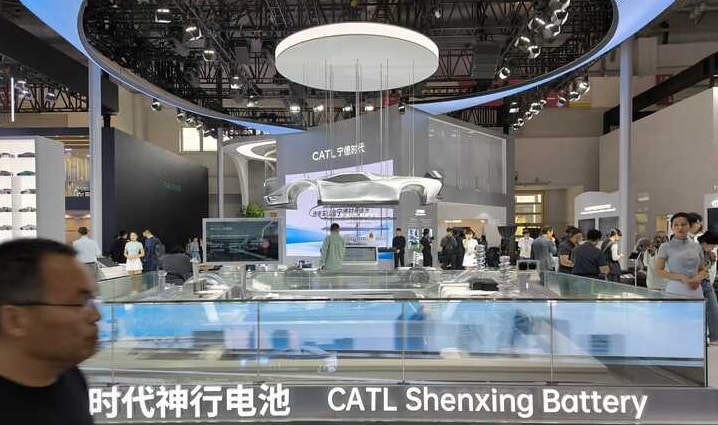
CATL's Shenxing battery at 2024 Beijing Auto Show. Credit: CarNewsChina

News like this to your inbox or phone?​


Weekly summary to your inbox
I want this

Never miss and important news
Get Instant notification once the news is published.
Follow Us

BYD will launch the lithium iron phosphate (LFP) Blade battery 2.0 in the second half of the year, which will support the 6C charge rate, according to local media. CATL plans to launch Qilin Battery 2.0, which also has LFP chemistry, with 6C fast charging by the end of the year.

CATL only launched batteries with 5C charging a few months ago. On February 27, 2024, Zeekr 001 hit the market in China with the CATL’s new Shenxing battery, which supports 5C charging. New Zeekr 001 can be charged from 10 to 80% in 11.5 minutes, adding a 472 km range based on CLTC.
Shenxing is also an LFP battery, and later in April, CATL introduced Shenxing Plus with 205 Wh/kg energy density, enabling EVs range 1000 km. Interestingly, Shenxing Plus only charges 4C.

On March 1, Li Auto launched its first BEV, Li Mega. The futuristic MPV featured a Qilin Battery with 5C charging and can reach a 500 km range in 12 minutes.
READ ALSO
Li Mega showed a 552 kW peak charging capacity thanks to CATL's 5C battery

Li Mega showed a 552 kW peak charging capacity thanks to CATL’s 5C battery​


BYD, however, seems quite behind as none of its models support charging above 4C. However, the Shenzhen-based company is already well-equipped technologically, with BYD typically ensuring its technology is production-ready before making any announcements, according to a 36k report.

6C charging explained​

C refers to the battery charging multiplier and 6C means “six times the capacity.” For example, if you have a 1000 mAh battery, you can charge it with a 6000 mA current.

If we oversimplify, the charge rate tells us how many times the battery can be fully charged in one hour. In the case of the 6C charge rate, it is six times. So, in theory, you can charge the entire battery in 10 minutes with a 6C charge rate.
Analogically, a 5C battery can be fully charged five times in one hour, so having a full battery would take 12 minutes.

Infrastructure​

The charging speed needs to be complemented by sufficient charging infrastructure. Huawei launched its 600 kW ultrafast EV charger in February, and Li Auto plans to plant 5000 supercharging stations supporting 5C by 2025.
However, the Chinese common reality is charging piles with a power of 120 kW. To achieve a 4C or 5C charging multiplier, the power needs to be at least 360 kW.
A 4C supercharging connector can reach a maximum power of 480 kW and a maximum current of 615 A. However, such high-powered charging stations are quite rare, and those capable of supporting a 5C multiplier are even scarcer, 36kr concludes.
As a result, even if a user purchases a vehicle that supports 4C or 5C charging, finding suitable charging facilities to fully utilize these capabilities remains a challenge.
 

New Chery iCar 03 with DJI’s intelligent driving system launched in China​


Reading Time: 3 minutes

Dong Yi Chen

June 13, 2024


3


News like this to your inbox or phone?​


Weekly summary to your inbox
I want this

Never miss and important news
Get Instant notification once the news is published.
Follow Us

Recently, Chery’s iCar brand launched two new models of its iCar 03 hardcore off-road SUV called Intelligent Driving Edition, priced at 149,800 yuan (20,700 USD) and 159,800 yuan (22,100 USD), respectively. As the name suggests, the major upgrades are in the intelligent driving functions via DJI’s level 2 advanced driving assistance system.

iCar is a new energy vehicle brand under Chery launched in 2023, aimed at young people aged 25-35 who are pursuing new careers. With the addition of the two new models, the iCar 03 series has expanded to eight models.
The exterior continues the square box design featuring a rear external storage unit, vertical headlights and taillights, roof luggage racks, and 19-inch rims. The new iCar 03 also adopts an all-aluminum body with a torsional stiffness of 31812 Nm/deg.

The size of the new iCar 03 remains unchanged, measuring 4406/1910/1715 mm with a wheelbase of 2715 mm. It has a ground clearance of 200 mm, an approach angle of 28°, and a departure angle of 32°. Six exterior colors are offered for consumers to choose from, namely, white, black, gray, silver, blue, and green.
The main highlight of the new models is DJI’s pure vision level 2 advanced driving assistance system that does not rely on lidar and high-precision maps, but via seven cameras, which integrates level 2 assisted driving in urban and high-speed environments, autonomous parking, and memory parking assist. The level 2 assisted driving features include full-speed adaptive cruise control, front collision warning, lane departure warning, lane departure assist, lane change assist, blind spot monitoring, rear collision warning, door opening warning, traffic sign recognition, automatic emergency braking, and lane keeping assist. Furthermore, its city memory navigation function can support 10 routes, with a maximum length of 150 km for each route.
The interior adopts a symmetrical T-shaped layout, equipped with a D-shaped steering wheel, a 9.2-inch LCD instrument panel, and a 15.6-inch central control screen powered by a Qualcomm Snapdragon 8155 chip. Vehicle configurations such as integrated dual-screen interaction, voice recognition, 4G network, GPS navigation, FOTA updates, and remote control via mobile phone are supported.

In addition to the intelligent driving upgrade, the new iCAR 03 has also made numerous configuration improvements, including a new Infinity brand audio system, 64-color rhythmic ambient lights, and seat/steering wheel heating functions.
Power for both models comes from a dual-motor four-wheel drive system with a maximum power of 205 kW (279 hp) and a peak torque of 385 Nm, paired with a 65.69 kWh lithium iron phosphate battery pack. The 0 – 100 km/h acceleration time is 6.5 seconds, the top speed is 150 km/h, and the pure electric range is 501 km, according to Chinese media AutoHome. Under fast charging, it takes 30 minutes to charge from 30% to 80%). Additionally, 8+X all-road driving modes are supported.
Source: DongCheDi, AutoHome
 

BYD profit in EU is 10x higher than in China and even with new 30% tariffs, still makes 5,000 USD per vehicle, report says​


Reading Time: 3 minutes

Jiri Opletal

June 13, 2024


3
BYD booth at Auto China 2024 in Beijing. Credit: CNC

News like this to your inbox or phone?​


Weekly summary to your inbox
I want this

Never miss and important news
Get Instant notification once the news is published.
Follow Us

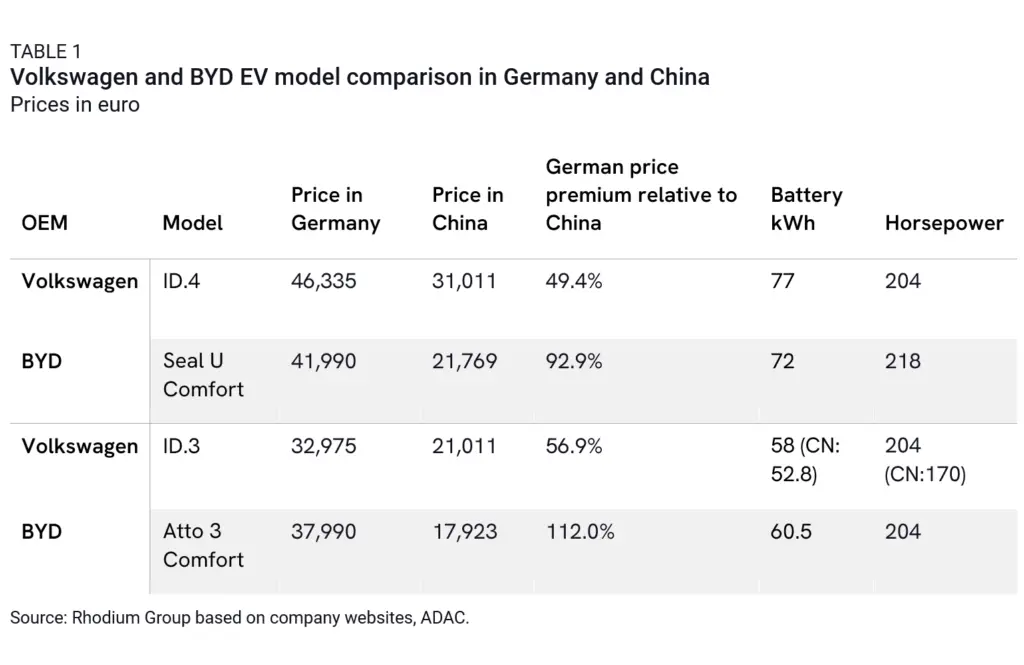
BYD makes a profit of 15,400 USD on BYD Seal U in Europe, compared to 1,400 USD in China. This means BYD makes 14,000 USD more profit, referred as EU premium, on every Seal U model sold in the EU, according to a report by Rhodium Group.

On June 12, the European Commission (EC) investigation revealed that China’s battery electric vehicles (BEVs) and supply chains receive unfair subsidies. As a result, the EC has introduced provisional import duties on Chinese-made EVs, ranging from 17.4% to 38.1%, depending on the manufacturer. These new duties are in addition to the existing 10% tariffs.
According to Rhodium Group, the 30% duty on the BYD Seal U (see specs) would not be enough to make the profits on the car equal between the EU and China, meaning the playing field would still be uneven. A 30% duty would still leave the company with a 15% (5,080 USD) EU premium in relation to its China profits. This means BYD would still make over 5,000 USD more on Seal U sold in the EU than in China. That would keep the exports to Europe highly attractive.

Moreover, duties at this level would provide BYD with space to lower its prices in order to gain market share in Europe. “Our analysis of several other models sold in China and Germany indicates that even after a 30% duty, many Chinese EV models would still enjoy a strong EU profit premium,” Rhodium notes.
The report suggests that higher tariffs, possibly as high as 45% or even 55% for very competitive producers like BYD, might be needed to make exporting to Europe less attractive.
However, the tariffs might have an unwanted effect on Western automakers. Duties ranging from 15% to 30% could harm the business models of foreign companies like BMW or Tesla, which use China to export to Europe. For BMW’s iX3 SUV, the EU premium (after considering costs like shipping) is just 9%. This means that if duties exceed 9%, BMW would earn less from selling in Europe than in China. Higher duties could also disrupt the plans of companies like BMW, Honda, and Volkswagen to increase their use of China as an export hub for the EU market.

BMW-Brilliance (BMW’s Chinese joint venture) and Tesla are subjected to additional tariffs of 21% as they cooperated with EC during an investigation. Moreover, Tesla applied for further individual evaluation.
The price difference between foreign and Chinese producers is because Chinese producers get more subsidies than foreign ones, even though both get support from the Chinese government. Also, Chinese companies are more vertically integrated, meaning they handle more parts of the production process themselves, which lets them buy things at lower prices than foreign companies.
For example, BYD not only makes cars but also owns lithium mines, builds its own batteries, develops its own e-motors, owns large ocean carriers for export, and even owns a vehicle insurance company.
Comparison of China vs EU prices. Source: Rhodium Group.
Moreover, the fierce price war is pushing the EV price down in China for all automakers, especially legacies that struggle to compete with new Chinese EV startups. Volkswagen ID.4 is 50% more expensive in Europe than in China, as the German price is 46,335 EUR (50,000 USD), while in China, it is 33,500 USD for an 80 kWh version. However, Rhodium calculated only with MSRP, the real price for which VW dealers sell ID.4 in China is 182,400 yuan (USD 25,150), as can be seen here, which makes the gap even wider.
Chinese EV makers are poised to ramp up exports despite potential EU duties. Factors driving this trend include slowing growth and tighter profit margins in China’s NEV market, as well as incentivizing exports. China is eyeing the EU as a primary export destination due to its attractive market conditions and ambitious targets set by companies like BYD and SAIC-owned MG to capture a significant market share in Europe.
 

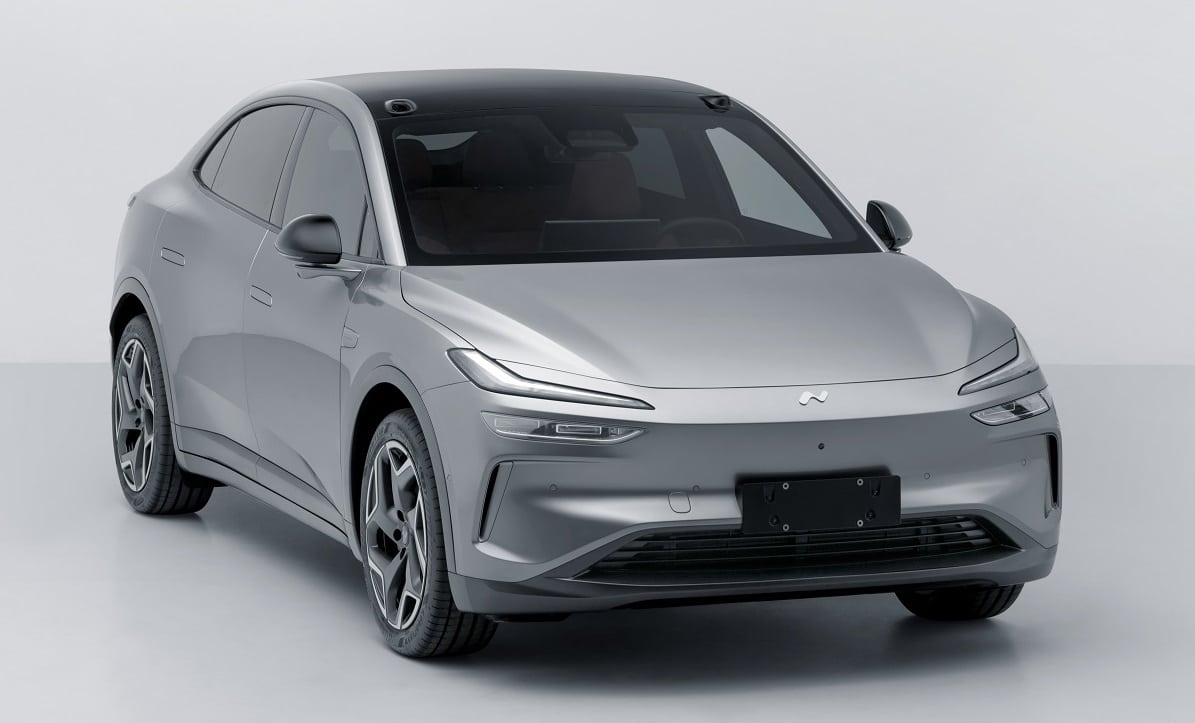
Nio’s Onvo L60 revealed 455 hp motor power, to be equipped with BYD battery​


Reading Time: 3 minutes

Jiri Opletal

June 13, 2024


1


News like this to your inbox or phone?​


Weekly summary to your inbox
I want this

Never miss and important news
Get Instant notification once the news is published.
Follow Us

The key specs of the Onvo L60 electric SUV were revealed in China by the regulator as Nio applied for a sales license. The new EV will start deliveries in September to take on the Tesla Model Y.

Every car in China needs to apply for homologation fillings at the Ministry of Industry and Information Technology (MIIT), as no car can be sold in China without their approval. The ministry publishes the application list monthly. Automakers are not happy about this, as it reveals pictures, specs, and other secrets of cars they haven’t yet launched. But we don’t mind.
Onvo is Nio’s entry-level brand, and the Chinese name is 乐道 (Ledao). L60 dimensions are 4828/1930/1616mm (length/width/height), and the wheelbase is 2950 mm. Based on the powertrain option, the curb weight is 1,885 kg – 1,970 kg. The L60 SUV’s drag coefficient is 0.229Cd.

Onvo L60 will have two power train options. The RWD version will feature a single-motor TZ188S001 in-house developed by Nio Power Technology in Hefei with an output of 240 kW (322 hp). Top speed is 200 km/h.
The AWD version will have dual motors – front YS198S001 with 100 kWh power and the same rear with 240 kW, providing a combined output of 340 kW (455 hp). The curb weight of the AWD version is nearly two tons, and the top speed is capped at 203 km/h.
Onvo L60 tire specification: 245/50R19,245/45R20

The homologation filing revealed that the L60 will be manufactured in Nio’s second Hefei factory, commonly called F2, located at 299 Baita Road, Hefei Economic and Technological Development Zone.

The regulator also revealed that the L60 would be powered by a swappable LFP Blade battery from FinDreams, a wholly-owned subsidiary of BYD. All Nio-badged models have NMC batteries, mostly from CATL. Onvo previously announced that the L60 will offer 550 km, 730 km, and “1000+ km” range variants. The last one will likely be with WeLion’s semi-solid-state 150 kWh battery. Nio advertises an exceptionally low energy consumption rate of 12.1kWh/100km for the Onvo L60.
The capacity of BYD packs has yet to be revealed, but CarNewsChina learned that it will have 60 kWh and 90 kWh variants. Nio-badge cars always have 75 kWh and 100 kWh options.
Onvo L60 started pre-sale on May 15 for 219,900 yuan (30,500 USD), and deliveries are planned for September. It is positioned as a family car to take on Tesla Model Y in China. As a rule, Nio doesn’t reveal the pre-order numbers for its vehicles, and Onvo is no exception.
 

BYD Song L DM-i revealed specs in China as it’s ready for launch​


Reading Time: 3 minutes

Denis Bobylev

June 13, 2024


1
byd song l dm-i specs china launch miitBYD Song L DM-i applied for the sales license in China

News like this to your inbox or phone?​


Weekly summary to your inbox
I want this

Never miss and important news
Get Instant notification once the news is published.
Follow Us

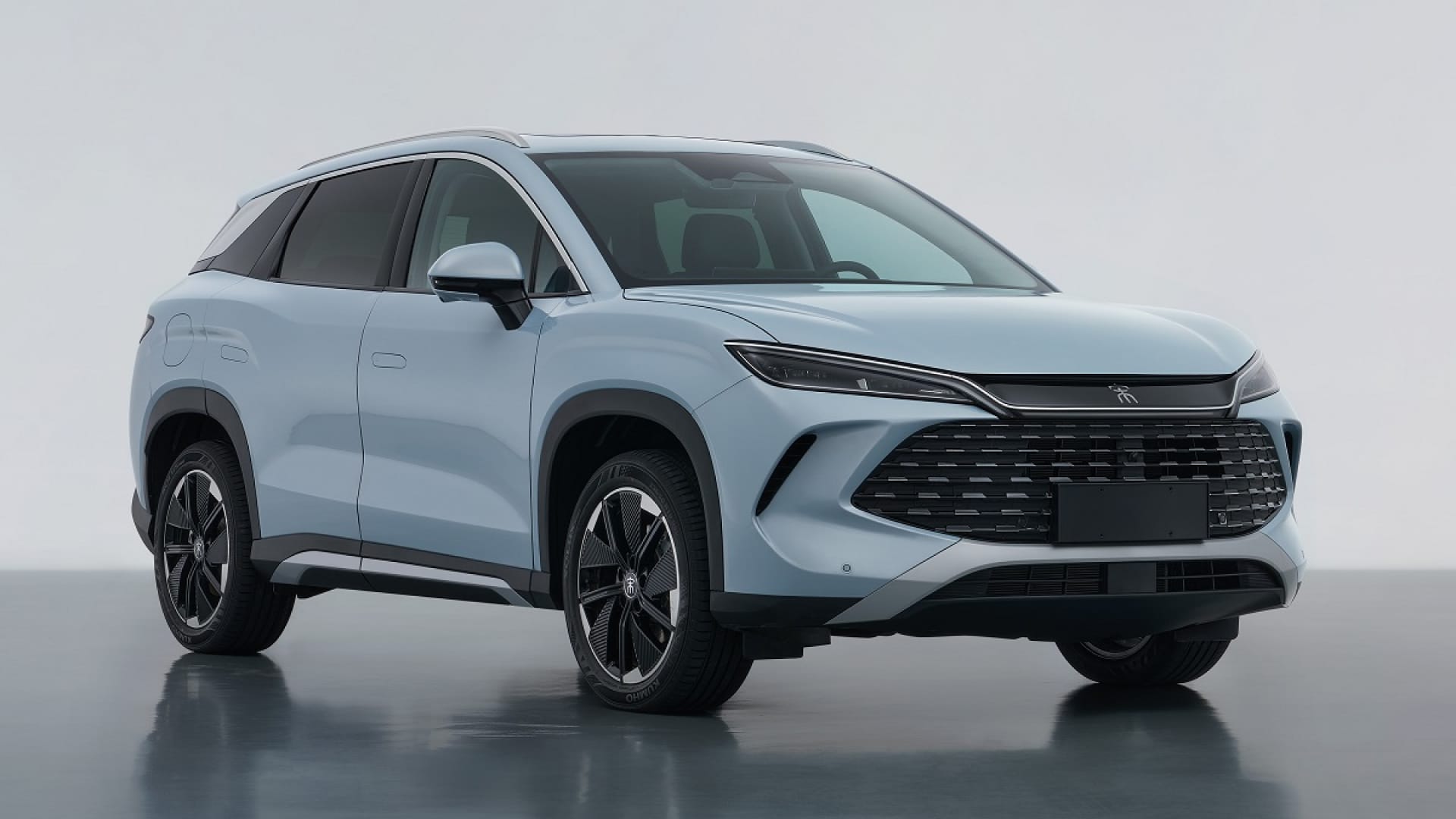
The BYD Song L DM-i crossover has applied for a sales license in China, revealing its specs. It is equipped with BYD’s fifth-gen DM-i plug-in hybrid system. Interestingly, the Song L DM-i was previously announced as “Big Song” by the head of the BYD Dynasty sales division. However, it appears that the Song L DM-i is 5mm longer than the current Song Plus (Seal U, see specs).

The BYD Song L DM-i was previously spotted several times in China. There were some speculations about the final name of this model. However, the GM of the BYD Dynasty sales division solved this polemic by sharing that the official name of this car was Song L DM-i. Nowadays, the new crossover revealed specs in China as it has applied for the sales license.

BYD Song L DM-i exterior and size​

It is worth noting that it is the first time we see the BYD Song L DM-i without camouflage. It follows the distinguishing BYD’s Dragon Face design language. Specifically, the Song L DM-i follows the exterior styling of the recently launched Qin L sedan (see specs). Its front end has a large blackened grille representing a “dragon’s mouth.” It also has thin LED lights and a trapeze-shaped air intake.

The wheel arches of the Song L DM-i have plastic trim on them, adding a bit of sturdiness to this SUV. Other features of the Song L DM-i are retractable door handles and tinted rear windows. From the back, the Song L DM-i adopts the BYD’s distinguishing taillight unit with an integrated Chinese knot pattern. Moreover, the BYD’s new crossover has a roof spoiler and independent rear suspension.
The BYD Song L DM-I represents the mid-size SUV segment. Its exact dimensions are 4780/1898/1670 mm with a wheelbase of 2782 mm. For comparison, the current Song Plus (Seal U in Europe) measures 4775/1890/1670 mm with a wheelbase of 2765 mm. So, the model with the L badge is just 5 mm longer and 8 mm wider than the ‘small’ one. They are definitely too close in terms of sizing. It hints the BYD Song L DM-i is simply a replacement for the current Song Plus.
Back to specs, the Song L DM-i’s front and rear tracks are 1637 and 1641 degrees, respectively. Its approach and departure angles are 18 and 22 degrees. The Song L DM-i rides on 225/60 R18 or 235/50 R19 wheels. Its curb weight lies in the 1930-2000 kg range. Inside, the PHEV crossover has two rows of seats with a 2+3 layout.

BYD Song L DM-i powertrain​

The Song L DM-i adopts the fifth generation of BYD’s PHEV system. Under the hood, it has a 1.5-liter BYD472QC self-aspirated ICE for 99 hp (74 kW). It is paired with a TZ210XYC permanent magnet electric motor for 215 hp (160 kW). The rated power of this e-motor is 94 hp (70 kW). The battery pack is LFP and is made by FinDreams, a BYD subsidiary. Song L DM-i clearly has two battery options. However, their details have yet to be revealed.
We will remind you the BYD fifth-generation DM-i system has a thermal efficiency of 46.06%, 2.9 L/100km fuel consumption, and a mixed range of 2,100 km. Previously, BYD Qin L and Seal 06 sedans were equipped with this system. Now, the Song L DM-i is also ready to hit the market with this tech. It will start sales in H2 this year. Its starting price will be around 120,000 – 130,000 yuan (16,550 – 17,900 USD).
Source: MIIT
 

Xpeng M03 (Mona) electric sedan exposed in China​


Reading Time: 3 minutes

Mark Andrews

June 13, 2024


0


News like this to your inbox or phone?​


Weekly summary to your inbox
I want this

Never miss and important news
Get Instant notification once the news is published.
Follow Us

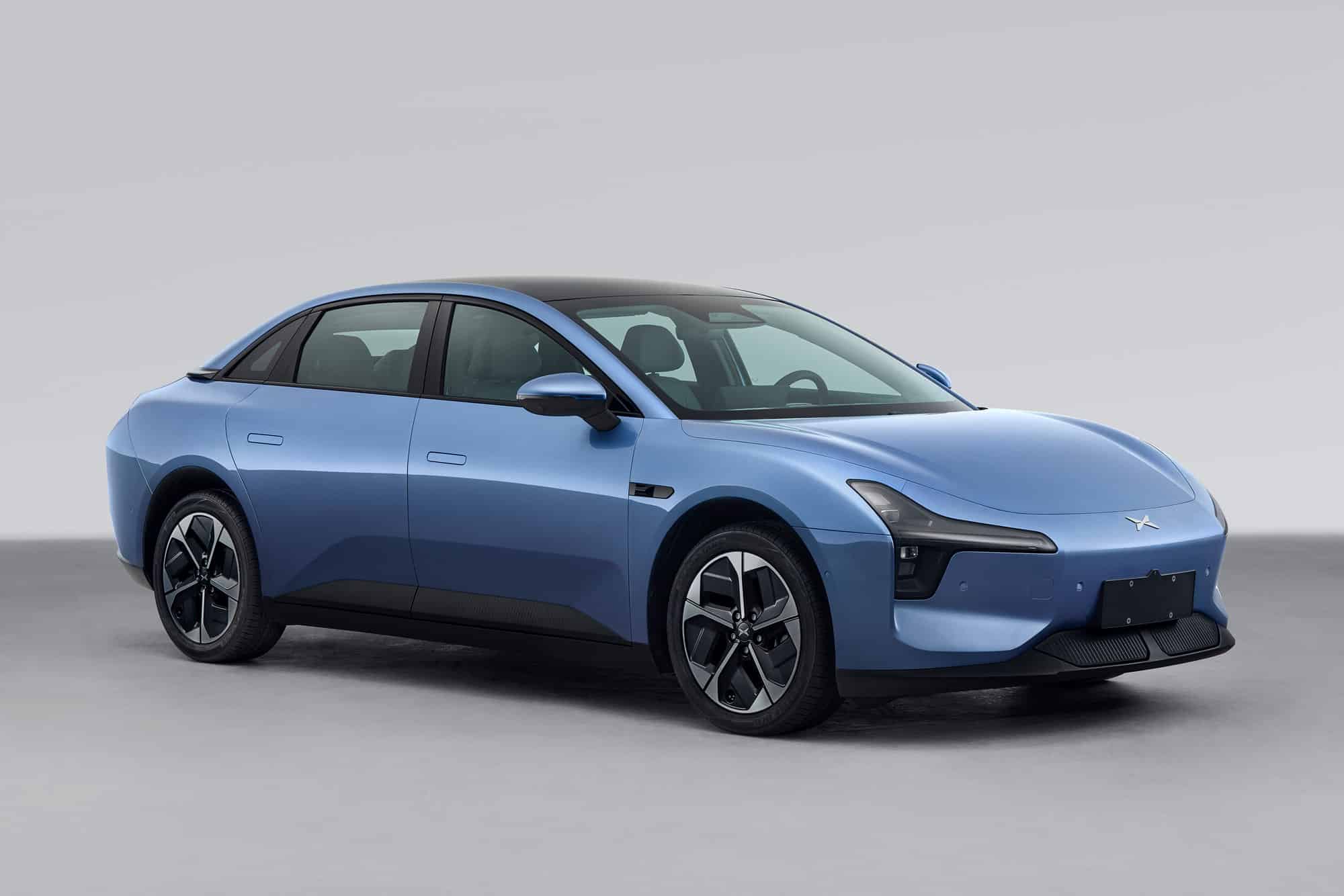
The Xpeng M03 has been revealed by a government regulator in China. This car was previously known as Mona and it had been expected that it would be a sub-brand under Xpeng. However, as we reported days ago the car is now a new series under Xpeng.

Significantly we now know that the M03 is the smallest sedan from Xpeng to date. Dimensions are 4780, 1896 and 1445 mm (l/w/h) with a wheelbase of 2815 mm. However, although the length is shorter than the Xpeng P5 (see specs) the wheelbase is longer – for reference, the P5 is 4860 mm in length and has a wheelbase of 2768 mm. Also significant is the weight with the M03 coming in by EV standards as quite a light car. There are two separate listings for the Xpeng M03 and one of the listings has two weights so the car depending on specifications weighs in at 1631, 1661 or 1739 kg.
Thanks to details of the Xpeng M03 revealed today by the Ministry of Industry and Information Technology (MIIT) we also have pictures and other critical specifications. The car will be available with 17, 18 and 19-inch wheels.

Lower spec versions, which account for the 1631 and 1661 kg weight models, will come with a TZ180XS120 electric motor that can deliver 140 kW maximum power. Reading through the specifications it seems that this version will be available without external cameras and radar which could well account for the 1631 kg version.
Higher spec versions only have a choice between 18 and 19-inch wheels while also benefiting from a more powerful TZ190XS01D01X 160 kW electric motor. Batteries pack sizes are currently unknown but the batteries are sourced from BYD’s Nanning battery factory and so will be lithium iron phosphate blade batteries. Earlier indications suggest the range is over 550 km (CLTC).
Although pure speculation it would seem that the two versions might mean the less powerful version is aimed at Didi and ride-sharing usage while the more powerful car is the one aimed at consumers.

Options as listed by MIIT. The lower spec version is on the left while the heavier (higher spec) version is on the right
Previously Xpeng has said that the M03 would be unveiled in June and so we should soon have more information. We also know that the car will officially launch in the third quarter and be priced below 200,000 yuan (27,600 USD).
The Mona series started life as a collaboration between Didi and Xpeng with responsibilities divided between the two companies. According to the teaser poster Mona stands for “Made Of New AI” and significantly the poster states it’s “promoting AI-powered smart EVs worldwide” which could mean the car is destined for exports.
Source: MIIT
 

Smart #5 revealed with massive 638 hp, developed by Geely and Mercedes-Benz​


Reading Time: 3 minutes

Jiri Opletal

June 13, 2024


1


News like this to your inbox or phone?​


Weekly summary to your inbox
I want this

Never miss and important news
Get Instant notification once the news is published.
Follow Us

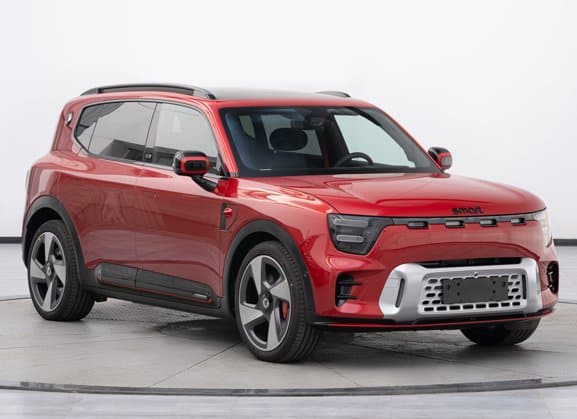
On Thursday, the Chinese regulator revealed the production version of Smart #5, an all-electric SUV. Its concept was first revealed at the Beijing Auto Show in April, and now key specifications have been unveiled as the EV applies for a sales license in China.

The Ministry of Industry and Information Technology (MIIT) published the homologation filling of Smart #5, which shows four color options and four powertrain variants.
The mid-size SUV is not small – its dimensions are 4705/1920/1705mm (length/width/height), wheelbase is 2900mm. It is a 5-door 5-seater and can be equipped with 18″ to 21″ wheels. The curb weight is 2,450 kg for the top trim level with 638 horsepower.

Smart #5 has four powertrain options:
  • RWD, single motor, 250 kW (335 hp)
  • RWD, single motor, 267 kW (358 hp)
  • AWD, dual motors. Front motor 165 kW (221 hp), rear motor 267 kW (358 hp), providing combined power 432 kW (579 hp)
  • AWD, dual motors. Front motor 165 kW (221 hp), rear motor 310 kW (416 hp), providing combined power 475 kW (638 hp)
The RWD versions are equipped with lithium iron phosphate (LFP) batteries, while the AWD trims will have a nickel manganese cobalt (NMC) battery pack. Capacity has yet to be published. The top speed of all variations is capped at 200 km/h, while the top trim has 210 km/h.
Smart #5 front.
According to previous reports, Smart #5 will feature 800 V architecture and 4C-rated charging, meaning the car can theoretically be charged four times in an hour or, in other words, fully charged in 15 minutes. The trim level will have a 100 kWh battery, which is good for a 700 km CLTC range.

Smart #5 is a sporty-looking EV, and it is not an ugly car. There is a lot going on in the front; it has black arches and rugged fenders. The launch date is unknown, but CarNewsChina expects it will launch in Q4.
Smart #5 rear.
Smart is a joint venture between Geely Group and Mercedes-Benz. All cars are produced in China. Smart also sells in Europe, selling 1,509 EVs in Germany in May, making it the number one Chinese brand behind MG. However, in China, it is not doing so well, selling only about 3,000 units in May and not making it to the top 50 brands.
 

OPINION Will the EU tariffs have any effect?​


Reading Time: 6 minutes

Mark Andrews

June 13, 2024


8
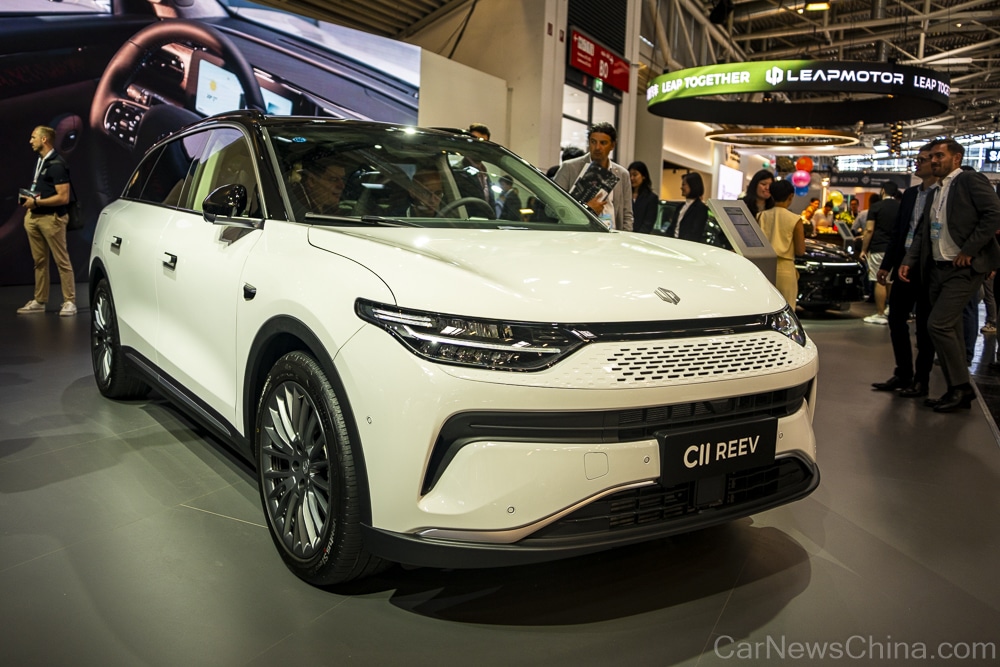
The range extended version of the Leap Motors C11 at IAA Mobility 2023, Munich Germany.

News like this to your inbox or phone?​


Weekly summary to your inbox
I want this

Never miss and important news
Get Instant notification once the news is published.
Follow Us

Last year China became the world’s largest car exporter by volume but putting a dampener on the party has been the EC’s probe into Chinese EV subsidies which was launched last September. Finally yesterday (June 12) the European Commission (EC) concluded that battery electric vehicles (BEVs) and their supply chains in China benefit from unfair subsidies. Imports of Chinese EVs into the EU were already subject to 10% tariffs but unless a resolution can be found with Chinese authorities new tariffs of between 17.4% and 38.1% will be added from July 4.

It would be easy to conclude that SAIC is the biggest loser because it is subject to the biggest tariff of 38.1% and is the only producer to attract a tariff of over 21%. However, while SAIC does indeed stand to be a big loser they are not the only company and many of the knock-on effects from the tariffs might be quite surprising.
Between 2020 and 2023 there has been a huge increase in EV imports from China into the EU, up from 57,000 to around 437,000 last year according to the US-based Peterson Institute for International Economics. However, much of the increase has been via stealth with many of the cars imported not readily identifiable as Chinese. Since 2021 and into the first four months of this year the penetration rate of Chinese made BEVs has stagnated at around 20% according to data from Schmidt Automotive Research. The only thing that has changed over that time is the mix of Chinese versus foreign branded cars made in China with Chinese brands increasing over that time to around half the total (10%) up from around 4%. A chart by Merics albeit up to March 2022 showed that in fact only 2% of Chinese EV imports into the EU carried a Chinese brand name with 35% being Chinese-owned European brands such as MG and Polestar. That chart showed that nearly half (49%) of imports were accounted for by Tesla, although it would seem that this proportion has since dropped.

Seres 5 and Seres 7 electric SUVs from China on display at IAA Mobility 2023, Munich Germany.
And Tesla may still be one of the biggest losers from the EU tariffs. Although the Model Y is now produced at the German factory all Model 3 cars are imported into Europe from China. Last year Tesla produced 947,000 cars at its Shanghai factory with around 600,000 being delivered to the Chinese market and the rest exported. Under the EU tariffs Tesla will be subject to a 21% tariff on imports from China and Tesla has already indicated that it is likely to raise prices in the EU from July 1 to take into account the tariffs, but has yet to say the actual increase. Last year the Model 3 was the second best-selling BEV in the EU, the Model Y took the top spot, and sales were 101,313 units. As we reported Tesla has requested an individual examination to set the tariff, no doubt in the hopes of reducing the level from the current 21%.
Coming in at number 6 on the top 10 best-selling BEVs in the EU last year was the MG4 with sales of 72,421. It is unclear exactly how many EVs SAIC sold in the EU last year although the company did sell a total of over 200,000 cars (including ICE) in Europe. SAIC issued a letter on June 13 stating its displeasure with the ruling and reiterating its commitment to the principles of free trade and fair competition. SAIC says that it is planning to start production in the EU, ironically SAIC did previously do CKD assembly at the Longbridge plant in the UK up until 2016. The EU hit SAIC with the highest tariff of 38.1% as it concluded that as a state-owned enterprise it was privy to some of the highest subsidies. Last month we reported that SAIC together with CATL, BYD, FAW, Geely, and WeLion were allegedly recipients of a 6 billion yuan (827 million USD) subsidy for solid-state battery R&D.
MG Cyberster electric sports car on the MG stand at IAA Mobility 2023, Munich Germany.
The tenth best-selling BEV last year in the EU, the Dacia Spring, is also made in China. It is typical of the many cars that are not obviously Chinese that are now sold in the EU and include cars from brands such as BMW, Volvo and Polestar.

European production​

Early indications are that foreign-owned OEMs are abandoning China as a production base from which to export EVs. Earlier this year Autocar reported that production of the Dacia Spring might relocate to Europe due to the changing environment. Currently, the car is made by Dongfeng with whom Renault previously had a joint venture.
The highest profile repatriation though might be the BMW iX3. Production of the existing generation began in 2020. At the time BMW had a choice to produce it at any of three plants: Shenyang in China, Spartanburg in the US, or Pretoria in South Africa. Given the way the EV market was developing in China, it made perfect sense to concentrate production of the electrified version of the X3 at the Chinese plant. However, the next generation iX3 will initially be produced at BMW’s new factory in Hungary before later also being produced in China. The Hungary plant will obviously handle EU and US-destined cars and may well mean that Chinese production is once again relegated to China only.
BYD Han and BYD Atto 3 electric vehicles displayed outside at the BYD brand evening event, part of the IAA Mobility 2023 event in Munich, Germany.
Only three Chinese producers, SAIC, Geely and BYD attracted sampled tariffs with the remainder being hit with a fixed 21%. Geely who control brands including Volvo, Polestar, and Zeekr is subject to a 20% rate. According to Schmidt Automotive Research the Volvo EX30 was one of the biggest contributors to exports to the EU from China in April but this model will switch production to Ghent, Belgium in 2025.
Even Chinese producers are looking at European production which would certainly avoid the tariff issue. BYD, which has attracted a 17.4% tariff, has plans to build a factory in Hungary with a 200,000 a year capacity. Chery has picked Barcelona for its factory and Leapmotor models will be produced at the Stellantis plant in Poland. Meanwhile, Great Wall is currently actively choosing a location from a shortlist and as mentioned earlier SAIC is also considering production.
Tesla may also be pushed into producing the Model 3 in Europe to get around the tariff issue if it is unable to work out a deal with the EU.

Business as usual​

AFP reported that Germany’s Kiel Institute for the World Economy estimated that a 20% tariff would result in 125,000 less Chinese electric cars to Europe. We are not so readily convinced and think that although there will be some shift in production to the EU over the next few years neither Chinese companies nor EU producers will be put off from using China as an export base to the EU en masse.
Currently, the Volkswagen Group doesn’t seem to be changing from its plan to export the Cupra Tavascan from China. Equally, there is no news that BMW’s joint venture with Great Wall producing electric Mini models to export will be affected.
Denza D9 electric MPV on the BYD stand at IAA Mobility 2023, Munich Germany.
Furthermore, as we reported previously Chinese producers are currently making much larger profits on the cars they sell in the EU than the ones sold in China, partly due to the extreme competition in China driving down prices. If the Rhodium Group is correct BYD can easily swallow the 17.4% tariff and still make more profit than on a sale in China. It should also be noted that BYD sales in Europe are still tiny with only 9,970 registrations in the EU during the first four months of 2024.
Another factor that many don’t seem to have talked about is that many of the figures people are using for the European market include the UK which is no longer part of the EU and so is not subject to the tariffs. The UK in 2022 became one of top importers of Chinese cars, including EVs partly thanks to the connection to the Chinese car industry through brands such as MG and Lotus.
Sources: SAIC, Rhodium Group, Fast Technology,
 

Norway won’t join EU on Chinese EV tariffs​


Reading Time: 2 minutes

Jiri Opletal

June 14, 2024


1


News like this to your inbox or phone?​


Weekly summary to your inbox
I want this

Never miss and important news
Get Instant notification once the news is published.
Follow Us

Norway, a pioneer in electric vehicle adoption, will not align with the EU’s decision to impose higher tariffs on Chinese electric cars, according to Finance Minister Trygve Slagsvold Vedum.

“Introducing tariffs on Chinese cars is neither relevant nor desirable for this government,” Vedum emailed Bloomberg.
With the highest density of electric vehicles globally, Norway saw 24% of its cars being electric last year, and over 80% of new vehicles sold in 2022 were EVs, as reported by Statistics Norway.

According to The Norwegian Road Federation (OFV), more than 12% of EVs imported into Norway come from Chinese manufacturers, a figure that includes Polestar but excludes Volvo Car vehicles.
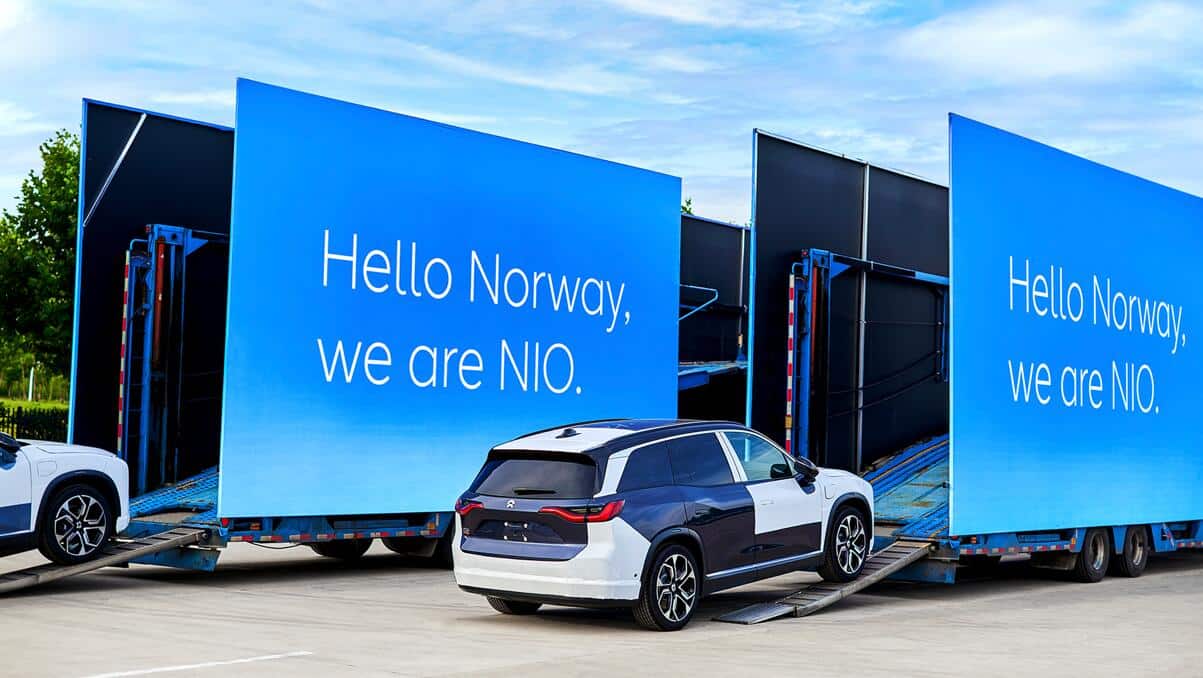
Norway, which is not part of the European Union, was the first European market for many Chinese EV startups. Nio entered Norway in May 2021, a year before officially launching in the EU. Xpeng launched in Norway even earlier, in 2020. Norway is also home to some Chinese brands that are very rare in Europe, such as Dongfeng’s brand Voyah, which has been selling its SUV Free there since 2022.
Xpeng sold 67 cars, and Nio sold 66 cars in Norway in May. For comparison, Tesla sold 830 EVs in the same month, while Volkswagen sold 1,372 units of its electric ID. series.

The China EV leaders in Norway are SAIC and Geely Group. MG delivered 497 EVs in Norway last month. MG, a former British brand, belongs to state-owned SAIC, which has been subjected to an additional 38.1% tariffs in the EU since July 4, on top of the 10% tariffs already in place. Polestar, which is Geely Group owned, sold 328 EVs in May. All MG and Polestar EVs are China-made.
The UK, another European non-EU member, hasn’t yet hinted if it will follow EU policy on hiking tariffs on China-made EVs.
On June 12, the European Commission (EC) concluded that China-made EVs benefit from unfair state subsidies. As a result, EC announced additional import duties on China-made EVs ranging from 17.4% to 38.1%, depending on the automaker.
 

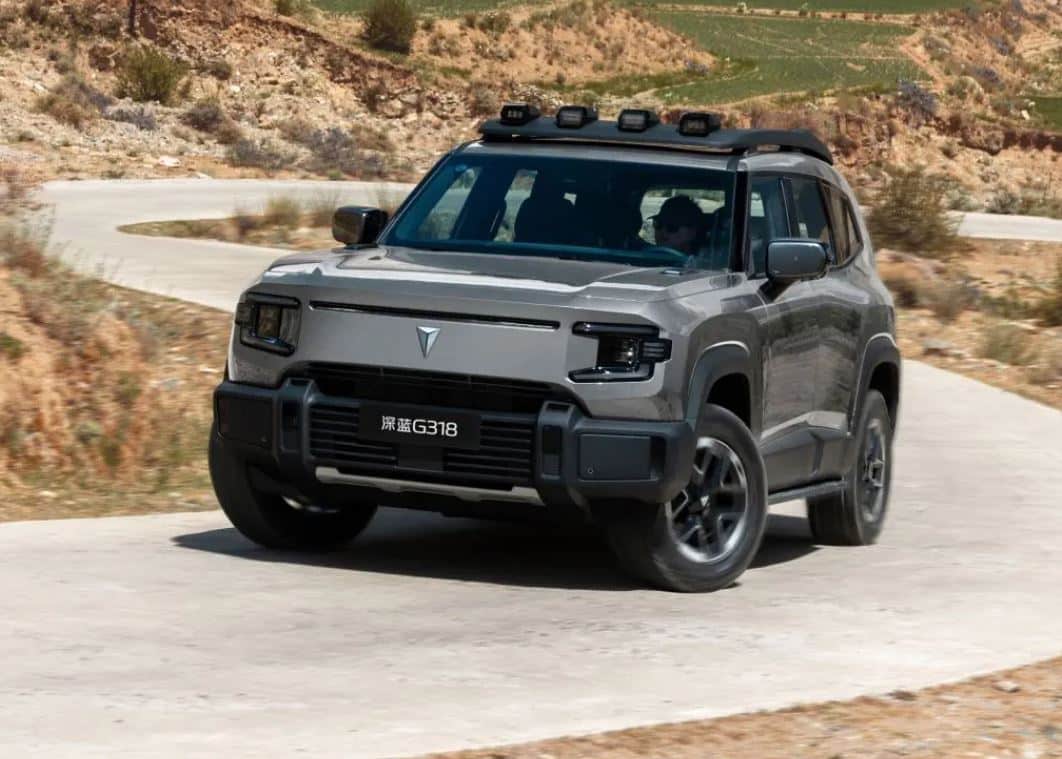
Changan’s Deepal G318 range-extender off-road SUV launched in China​


Reading Time: 4 minutes

Dong Yi Chen

June 14, 2024


0


News like this to your inbox or phone?​


Weekly summary to your inbox
I want this

Never miss and important news
Get Instant notification once the news is published.
Follow Us

On June 13, Changan’s Deepal brand officially launched its G318 off-road SUV with a price range of 175,900 – 318,000 yuan (24,300 – 43,900 USD). Consumers can choose from a total of six versions, available in two-wheel and four-wheel drives.

It is worth noting that the two-wheel drive standard version will not be delivered until August and the high-end “Worry-Free Crossing Edition” is currently on pre-sale and is expected to start delivery in 2025.
The Deepal G318 measures 5010/1985/1895 (1960) mm, and the wheelbase is 2880 mm. Its torsional rigidity is 45000 Nm/°, minimum ground clearance (including the battery pack) is 278 mm, approach angle is 27°, and departure angle is 31°.

The rear adopts the ‘Gate of Space’ design theme, according to Deepal. The external spare tire further highlights the car’s off-road identity. In addition, the four-wheel drive version is qualified for towing, with a maximum towing capacity of 1,600 kg.
The interior is covered in a large area of suede materials and decorated with metallic trims, available in three color schemes: Dense Forest Black, Glacier Blue, and Holy Lake Green. There is a dual-screen consisting of a 10.25-inch instrument panel and a 14.6-inch central control screen LCD, a D-shaped steering wheel, and a large number of physical buttons, especially under the central control screen. The vehicle operating system comes from the Deepal OS.
The gear lever on the center console is wide. Other configurations include voice recognition, mobile phone Bluetooth/NFC/RFID key, a built-in driving recorder, 50W mobile phone wireless charging, front seat heating/ventilation, and level 2 advanced driving assistance functions.

Moreover, the Deepal G318 offers a one-touch flat seat design to lay the front seats flat to form a bed. At the same time, the trunk volume can be expanded from 818 L to 1747 L after folding down the rear seats. There are also 31 storage spaces throughout the interior.
Power comes from a range-extender system consisting of a 112 kW (150 hp) 1.5T engine and electric motor(s), paired with the Golden Bell Battery 2.0. The top speed is 175 km/h, the fastest 30% – 80% charging time is 30 minutes, and the comprehensive range is 1,000 km (CLTC).
Two-wheel drive
  • rear electric motor: 110 kW (148 hp)
  • maximum power 185 kW (248 hp), peak torque 310 Nm
  • fuel consumption (CLTC): 6.1L/100km
  • fastest 0 – 100 km/h acceleration time: 8.3 seconds
  • lithium iron phosphate battery pack capacity options: 18.99 kWh and 35.07 kWh; correspond to 100 km, 184 km & 190 km pure electric ranges (CLTC)
Four-wheel drive
  • front electric motor: 131 kW (176 hp)
  • rear electric motor: 185 kW (248 hp)
  • maximum power 316 kW (424 hp), peak torque 572 Nm
  • fuel consumption (CLTC): 6.7L/100km
  • 0 – 100 km/h acceleration time: 6.3 seconds
  • lithium iron phosphate battery pack capacity: 35.07 kWh; offering 174 km & 184 km pure electric ranges (CLTC)
Furthermore, the Deepal G318 supports 16 driving modes, including 5 daily modes, 5 terrain modes (wading, snow, rugged, mud, sand), 3 special scenes (tank turn, steep slope descent, off-road crawling), and 3 energy management modes.
Source: Deepal, Sohu
 

Users who are viewing this thread

Pakistan Defence Latest

Country Watch Latest

Back
Top