China Auto Thread


Chinese EV makers proposed a 25% tariff on large European ICE cars, state media reports​


Reading Time: 2 minutes

Jiri Opletal

June 19, 2024


0
Cars ready for export at port in Jiangsu. Credit: ChinaDaily

News like this to your inbox or phone?​


Weekly summary to your inbox
I want this

Never miss and important news
Get Instant notification once the news is published.
Follow Us

Chinese electric vehicle (EV) makers are calling for imposing a 25% tariff on large European cars with internal combustion engines (ICE), according to a report by state media outlet CCTV. This proposal responds to the European Union’s decision to increase import tariffs on China-made EVs by up to 38.1%.

The request was made during a closed-door meeting in Beijing on Tuesday between China’s Ministry of Commerce and representatives from six European and four Chinese auto manufacturers, as well as various industry and research bodies, CCTV says.
Around 250,000 ICE cars with engines 2.5 liter and more were imported to China in 2023.

The EU announced last week that it plans to increase tariffs on Chinese EVs following an investigation. State-owned automaker SAIC Motor (formerly Shanghai Automotive) is the most affected, being hit by combined tariffs of 48.1%. SAIC includes brands such as MG and IM. The MG was the best-selling Chinese EV brand in Germany in May.
During the meeting, a Chinese trade representative also accused the EU of using the investigation as a pretext to appropriate business secrets from Chinese EV manufacturers.
The suggestion to raise the temporary import tariff on cars with engines larger than 2.5 liters was initially proposed in an article by the state-controlled Global Times in May, preceding the EU’s probe.

According to the European Commission (EC), the new tariffs aim to ensure fair competition. Chinese increased their EV market share in the EU to 8.2% in 2023, up from 0.5% in 2019. They have also been preparing to build locally in Europe for a long time.
BYD is constructing a car plant in Hungary, Szeged, which should start production in 2025. Meanwhile, the Chinese Leapmotor T03 rolled off the production line in the Stellantis Polish plant on Tuesday. Great Wall Motor (GWM) is seeking a car plant location in Europe, and it was reported that it is deciding between Germany, Czechia, Poland, and Hungary. State-owned Chery Auto announced a car plant in Barcelona, Spain, which will help it mitigate the 31% tariffs it is facing, according to the company.
Despite the tariffs, some Chinese EV manufacturers, such as BYD, might be able to absorb the additional costs. BYD was subjected to extra duties of 17.4%, the lowest rate among the three Chinese manufacturers scrutinized by the European Commission and lower than the industry average of 21%. Those figures are on top of the existing 10% import duties.
Source: CCTV via ChinaDaily [CN]

Wow, that is very kind.

And it's just for the ICE.

2.5 litre engine, basically it's almost meaningless, since only a very small part of the population buy large engine car.
 

Li Auto inks deal with China’s largest oil company to expand charging network​


Reading Time: 2 minutes

Naveed Rastegar

June 19, 2024


0


News like this to your inbox or phone?​


Weekly summary to your inbox
I want this

Never miss and important news
Get Instant notification once the news is published.
Follow Us

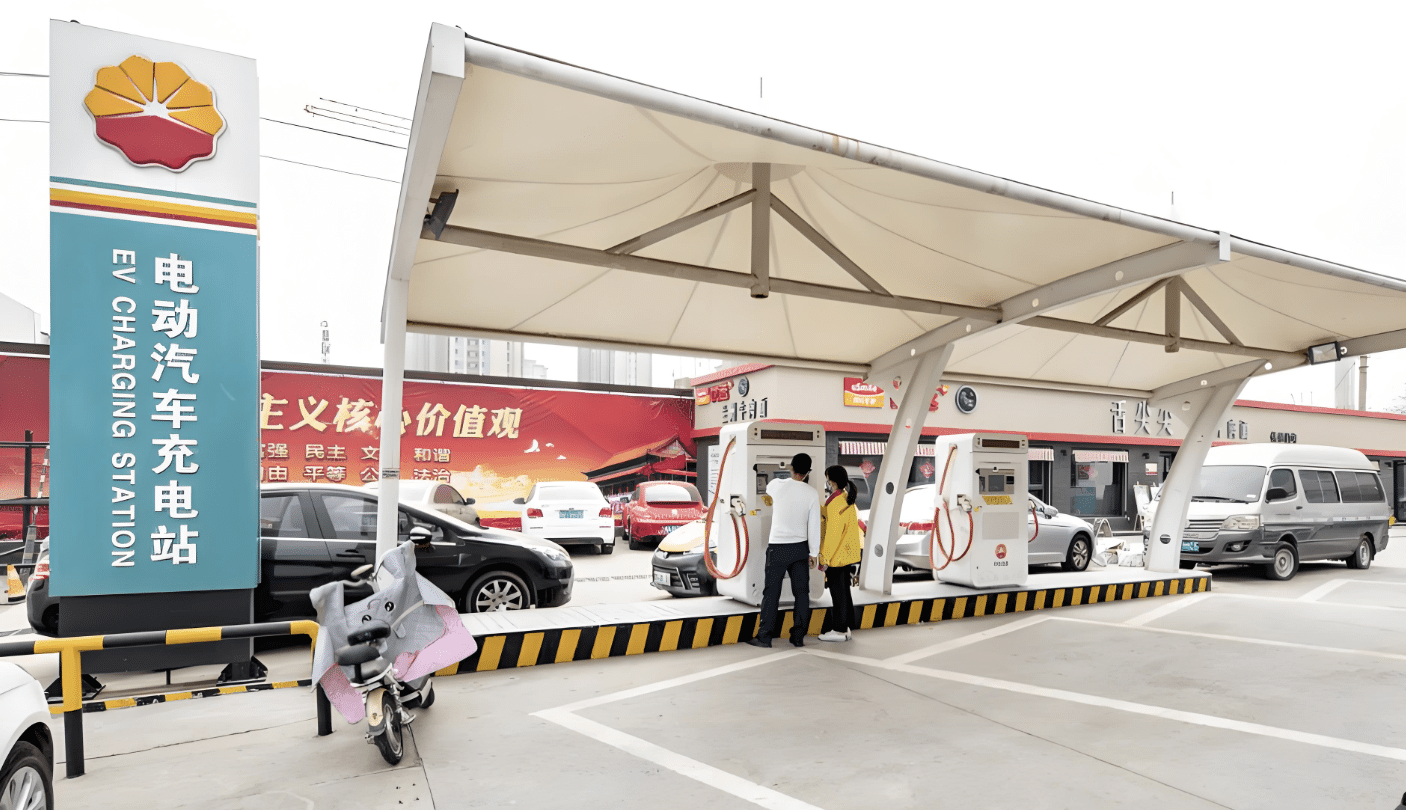
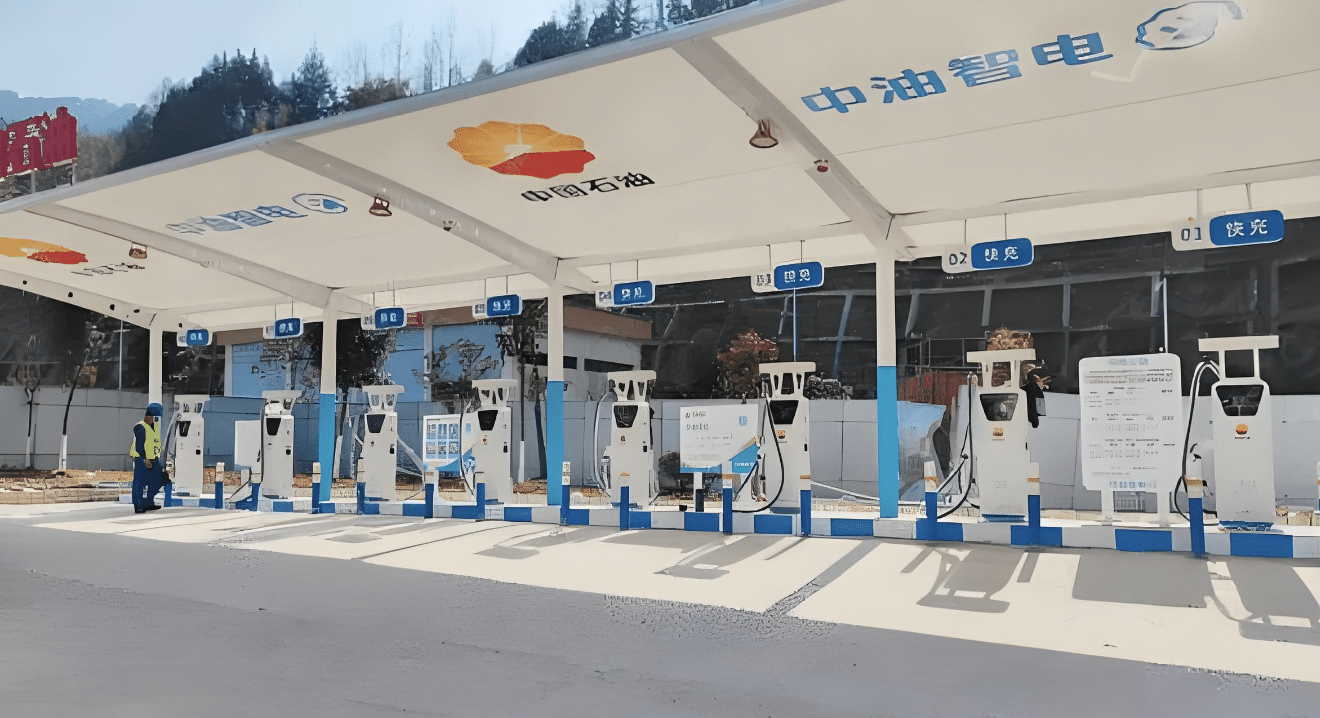
In a strategic move to bolster its charging infrastructure, Chinese electric vehicle manufacturer Li Auto has inked an agreement with China National Petroleum Corporation (CNPC), the country’s largest oil company.

The partnership will further accelerate the buildout of Li Auto’s rapidly expanding charging network, which already covers over 70% of China’s major economic hubs and national highway corridors. As of June 17th, Li Auto has constructed 448 “supercharging stations” with a total of 2,016 charging piles nationwide. By the end of 2024, the company plans to install over 2,000 Li’s charging stations and 10,000 charging piles at CNPC service stations, achieving coverage of more than 90% in tier-one and tier-two city centers and over 70% along national highways.

Under the new agreement, Li Auto and CNPC will collaborate to develop charging infrastructure along highways and urban areas. While the aim is to optimize the charging experience for Li vehicle owners, the two parties will also work to enable interconnectivity between their respective charging platforms as well.

“Our partnership with Li reflects the strategic shift towards green and low-carbon development. It will also accelerate the deployment of our ‘oil-gas-hydrogen-electricity’ sales and service network,” said Xue Guoxing, a CNPC representative.
Li Auto’s Head of Charging Network, Sun Guangmin, added, “The collaboration will further drive the expansion of our Li 5C supercharging network, bringing a convenient charging experience akin to refueling for our customers.” Last year, Li Xiang announced that the company plans to invest 10 billion yuan (1.4 billion USD) to build a network of 3000 superchargers around China by 2025. The 5C basically represents the idea that the battery can be charged five times within an hour.

This strategic partnership marks a milestone in Li Auto’s quest to build a robust charging network that addresses range anxiety, a key barrier to mass EV adoption. By tapping into CNPC’s extensive resources and nationwide footprint, Li Auto is poised to enhance the accessibility and convenience of its charging solutions for customers across China. Car owners of other makes and models can also benefit from these improvements, particularly during the busy holiday travel seasons.

Editors Note:
Li is not the first or only company to partner with an oil company for charging infrastructure. Nio started back in 2021, and other manufacturers, including Tesla, BYD, and Xpeng, have similar agreements.
Source: Sohu

I wonder if this charging station is only for Lixiang car?

There's no universal charging station in China???
 

Volvo has abandoned S60 sedan for a new electric crossover SUV​


55994908-670-0.jpg

Volvo will end production of S60 sedan at its South Carolina plant by the end of June, leaving Volvo V60 station wagon on the assembly line. But in China the production of S60 sedan will continue, but only for the domestic and Australian markets.
According to Motor.ru, sales of Volvo S60 in the U.S. in May 2024 jumped almost fourfold, but in absolute terms circulation has always been small. Even in the most successful years, Swedish brand did not sell more than 20 thousand sedans per year, while BMW 3-Series and Mercedes-Benz C-Class found 1.5 - 2 times more buyers.
The retirement of Volvo S60 is due to the start of production of flagship EX90 electric crossover, which should be a more marginal and numerous model. The price speaks for itself: the base Volvo EX90 costs from $78,000, while the S60 can be purchased for $43,600.
About the successor to the Volvo S60 is out of the question, that is, the 24-year history of model is close to completion. This means that one sedan will remain in the range - the business model S90. However, the bestsellers of the brand both in the U.S. and around the world are crossovers, for example, in North America "makes the cash" unfading XC90 (sales of 40 thousand vehicles at the end of 2023).
 

Volvo has abandoned S60 sedan for a new electric crossover SUV​


55994908-670-0.jpg

Volvo will end production of S60 sedan at its South Carolina plant by the end of June, leaving Volvo V60 station wagon on the assembly line. But in China the production of S60 sedan will continue, but only for the domestic and Australian markets.
According to Motor.ru, sales of Volvo S60 in the U.S. in May 2024 jumped almost fourfold, but in absolute terms circulation has always been small. Even in the most successful years, Swedish brand did not sell more than 20 thousand sedans per year, while BMW 3-Series and Mercedes-Benz C-Class found 1.5 - 2 times more buyers.
The retirement of Volvo S60 is due to the start of production of flagship EX90 electric crossover, which should be a more marginal and numerous model. The price speaks for itself: the base Volvo EX90 costs from $78,000, while the S60 can be purchased for $43,600.
About the successor to the Volvo S60 is out of the question, that is, the 24-year history of model is close to completion. This means that one sedan will remain in the range - the business model S90. However, the bestsellers of the brand both in the U.S. and around the world are crossovers, for example, in North America "makes the cash" unfading XC90 (sales of 40 thousand vehicles at the end of 2023).

Volva car is boring.

Unlike Mercedes and BMW.
 

New Huawei-backed Aito M7 Ultra delivers 10,000 cars in 18 days​


Reading Time: 4 minutes

Mark Andrews

June 20, 2024


0


News like this to your inbox or phone?​


Weekly summary to your inbox
I want this

Never miss and important news
Get Instant notification once the news is published.
Follow Us

Right at the beginning of the month we reported that the Aito M7 Ultra had entered the market. Earlier today Aito, a joint project between Huawei and Seres, announced it had delivered more than 10,000 of the new model in 18 days. This is claimed to be a record for new energy vehicles.

At the launch press conference Yu Chengdong, chairman of the Huawei car business unit, said that 10,000 cars had been pre-produced and that the company would deliver more than 4,000 in the first week. This was not an empty promise with deliveries in the first week reaching 4,349 cars.
The Aito M7 originally launched in 2022 but wasn’t popular until it had a refresh and price cut last September. This suddenly made the car a bestseller while also angering existing owners who had waited a long time for the old model and had been told there wouldn’t be a new version for at least a year.

The M7 Ultra (see specs) is another new version although the 2024 year Plus and Max versions currently remain on sale. Aito’s M7 Ultra is a higher level version which along with looking slightly different externally has an upgraded equipment level. On the Ultra version there is a new enclosed grille and there is also the option of a new blue color. More importantly, the car gets the same Lidar unit as the Aito M9. A 192-line unit it has a 250 meter detection range which is further than 150 meters provided by the 126-line unit on Max models. Initially, the M7 Ultra uses the Huawei ADS 2.0 system for driving assistance but Car News China believes the hardware is compatible with the more advanced Qiankun ADS 3.0 system, likely to debut on the Stelato S9. Also forming part of the sensor suite are three millimeter-wave radars, 11 high-definition cameras, and 12 ultrasonic radars.
Although at first glance the interior largely seems the same, again behind the scenes there are various upgrades. The M7 Ultra retains the 10.25-inch full LCD instrument panel and 15.6-inch 2K central infotainment screen. Running it all is the Huawei HarmonyOS giving access to a super desktop, multi-person and multi-device collaboration, front and rear screen linkage, Schroeder acoustic diffuser technology, and rear MagLinks that can adapt to 13.2-inch screens. Along with gaining Nappa leather seats the Ultra version has better space optimization including 5 mm more headspace in the third row.
Available in both five and six-seat configurations the M7 Ultra measures in at 5020, 1945 and 1760 mm (l/w/h) while having a wheelbase of 2820 mm. It retains the same range-extended EV powertrain as earlier versions based around a 112 kW 1.5T engine. Rear wheel drive versions have a 200 kW electric motor which can deliver 360 Nm of torque. All wheel drive versions add a 130 kW motor to the front axle with an additional 300 Nm torque.

The Ultra comes with CDC continuous variable damping which is linked to ADS preview which can make adjustments to the shock absorbers allowing the car to achieve a 75.5 km/h moose test speed.
Prices for the Aito M7 Ultra range from 289,800 to 329,800 yuan (39,900 – 45,400 USD). From the beginning of the year up until June 16 Aito managed to sell 100,900 units of the M7 making it so they claim the first new energy vehicle this year to exceed 100,000 units in China.

Editor’s note:​

Claiming the 10,000 as a record for new energy vehicles seems a bit of a stretch as really the car is a new version of an existing model rather than a whole new car meaning that production ramp-up was likely considerably easier.
Sources: Fast Technology, Dongchedi
 

Xpeng claims Mona M03 is most aerodynamic mass-produced electric sedan​


Reading Time: 3 minutes

Mark Andrews

June 20, 2024


2


News like this to your inbox or phone?​


Weekly summary to your inbox
I want this

Never miss and important news
Get Instant notification once the news is published.
Follow Us

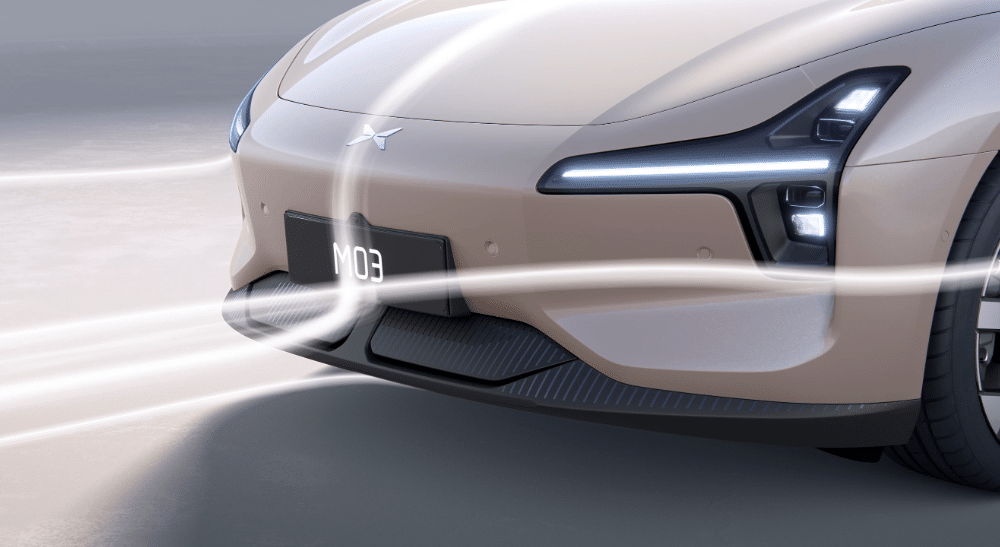
Xpeng today announced that the new Mona M03 has the lowest wind resistance for a mass-produced pure electric sedan with Cd 0.194. Also noteworthy is that on the poster to announce this, Xpeng is calling the car Mona M03 and not simply M03 as we previously thought the car was named.

Xpeng has published a chart showing the differences various elements of the Mona M03 design make to the aerodynamics of the car along with the corresponding increase in range. It should be remembered that there are a number of ways to increase the range without installing a larger battery pack, which leads to a weight spiral issue. The best ways to do this are by either reducing weight or by making the car more aerodynamic to cut the drag, meaning the car needs less energy to move.
Aerodynamic measures result in a Cd 0.085 reduction in the wind resistance of the Xpeng Mona M03 and this is claimed to increase range by 60 km. This also means 15% lower energy consumption per 100 km. The single biggest contributor to this is a nearly 1-meter long active air intake grille system (AGS) which alone accounts for 0.023 Cd and a 15.6 km increase in range. Other measures include a wind guide plate at the rear, low wind resistance arc air dam, low wind resistance rims, and a pneumatic streamlined ducktail.

It should also be noted that thanks to the MIIT listings we also know that the Mona M03 is quite light for an EV. The listing information quotes three different weights of 1631, 1661 and 1739 kg depending on version. As yet we still don’t have any definitive information about range with only an early indication suggesting 550 km (CLTC). However, based on the low drag and weight a figure of around 600 km would seem more than likely unless the battery pack capacity is low.
The smallest Xpeng sedan to date it measures in at 4780, 1896 and 1445 mm (l/w/h) and has a wheelbase of 2815 mm. The car has an aspect ratio of 1.31, a length to height ratio of 3.31, and a tire height ratio of 0.47, Xpeng has recently publicized how these are ideal ratios for a design.
Xpeng poster announcing the Cd 0.194 result for the Mona M03
At launch, there will be a choice between electric power from a 140 kW or 160 kW electric motor. Juice will come from lithium iron phosphate blade batteries from BYD subsidiary FinDreams. Prices is expected to come in at around 150,000 yuan (20,650 USD). The car will launch today with the official launch in the third quarter.

The Mona series started life as a collaboration between Didi and Xpeng with responsibilities divided between the two companies. According to the teaser poster Mona stands for “Made Of New AI” and significantly the poster states it’s “promoting AI-powered smart EVs worldwide” which could mean the car is destined for exports.
Source: Fast Technology
 

Second-gen GAC Aion V all-electric SUV interior revealed, will launch in July​


Reading Time: 4 minutes

Dong Yi Chen

June 20, 2024


0


News like this to your inbox or phone?​


Weekly summary to your inbox
I want this

Never miss and important news
Get Instant notification once the news is published.
Follow Us

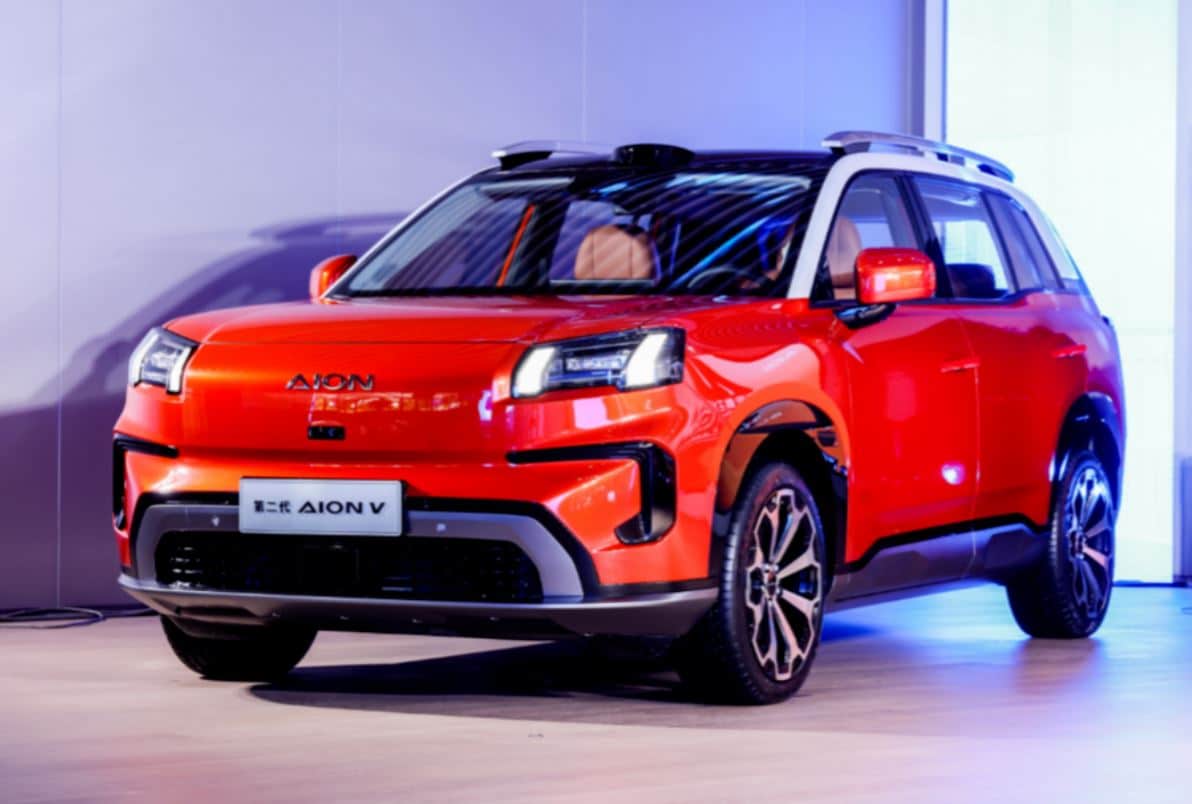
On June 20, GAC revealed the interior of its upcoming second-generation Aion V all-electric SUV under its Aion brand, which is expected to go on sale in July. It is also GAC Aion’s first global model to use the Aion letter logo to face the international markets.

The second-generation Aion V is built on the brand’s AEP platform. GAC Aion calls it the “pure electric Tyrannosaurus Rex” and officially positions it as a “hard-core smart driving SUV”. The front face adopts a closed grille design, and the headlights are integrated with the “dragon claw” element. Similarly, the LED taillights also use the dragon claw element and have been blackened. The “AION” letter logo is displayed on both the front and rear.
In terms of hardware, the second-generation Aion V comes with five millimeter-wave radars, 11 high-definition cameras, solid-state lidars, and the NVIDIA Orin-X chip.

Positioned as a compact SUV, the second-gen Aion V measures 4605/1854 (1876)/1660 (1686) mm, with a 2775 mm wheelbase. Power comes from an electric motor, providing two different power options: 150 kW and 165 kW. The cruising range is 750 km (assuming it’s under CLTC conditions) and the battery can be replenished to 370 km via 15 minutes of fast charging on a 400V platform. At this time, other powertrain specifications have not been revealed.
The interior is based on the traditional symmetrical design, featuring a rectangular instrument panel with a 14.6-inch central control screen. The vehicle operating system comes from GAC’s ADiGO 5.0 system and supports CarPlay, HiCar, as well as CarLife. The ADiGO Sense AI model is also present. Some of its capabilities include telling stories with a mother’s voice.
In the cabin, a remote airbag is available in the middle of the front seat to reduce secondary collision impacts, according to GAC Aion. The side airbags can be triggered instantly in 0.008 seconds and have a 6-second pressure retention time to provide continuous protection when the vehicle rolls over.

The front and rear seats can be folded down with one button click to form a bed. The seats are equipped with five massage modes, 8-point massage, and three massage intensities. The driver and co-pilot seats are both ventilated and heated.
The trunk has a removable partition built in, divides into three layers, and has a maximum capacity of 427 L. With the rear seats folded down, the trunk volume can be expanded to 987 L. In addition, there are 30 storage areas throughout the interior.
The second-generation Aion V’s onboard refrigerator supports three modes: freezing, cooling, and heating. The lowest temperature can reach -15°C and the heating temperature can reach 50°C. At the same time, the refrigerator has a capacity of 6.6 L and consumes 0.5 kWh of electricity per day.
The 2.14 m² panoramic sunroof brings in plenty of natural light.
Furthermore, the audio system adopts a three-way design with independent high, medium, and low-frequency bands. It is equipped with an 8-inch subwoofer and can reach as low as 45 Hz.
Source: GAC Aion, 163, AutoHome
 

2024 New Zeekr X Ev Range 560km Only $27k | Geely | Zeekr​


To view this content we will need your consent to set third party cookies.
For more detailed information, see our cookies page.
 

2024 OMODA E5 - POV TEST DRIVE​


To view this content we will need your consent to set third party cookies.
For more detailed information, see our cookies page.
 

BYD plans to take over Australia's auto market - and that's a good thing​


To view this content we will need your consent to set third party cookies.
For more detailed information, see our cookies page.
 

OMODA C5 Full Review | Exciting and Informative​


To view this content we will need your consent to set third party cookies.
For more detailed information, see our cookies page.
 

Electric shock: Is China overtaking car country Germany?​

Jun 20, 2024
92,883 views • Jun 20, 2024 •
Is Germany losing its mojo? Europe’s biggest economy is steadily sliding downward in international rankings, and now, its leading industry looks to be losing speed.Germany’s formerly venerable auto industry –once responsible for more exports, turnover and jobs than any other branch of the economy– risks being surpassed by electric vehicles…made in China. Were carmakers asleep at the wheel? And are punitive tariffs like those imposed by Washington the answer, or could they put globalization into reverse?
To view this content we will need your consent to set third party cookies.
For more detailed information, see our cookies page.
 

Second-gen GAC Aion V all-electric SUV interior revealed, will launch in July​


Reading Time: 4 minutes

Dong Yi Chen

June 20, 2024


0


News like this to your inbox or phone?​


Weekly summary to your inbox
I want this

Never miss and important news
Get Instant notification once the news is published.
Follow Us

On June 20, GAC revealed the interior of its upcoming second-generation Aion V all-electric SUV under its Aion brand, which is expected to go on sale in July. It is also GAC Aion’s first global model to use the Aion letter logo to face the international markets.

The second-generation Aion V is built on the brand’s AEP platform. GAC Aion calls it the “pure electric Tyrannosaurus Rex” and officially positions it as a “hard-core smart driving SUV”. The front face adopts a closed grille design, and the headlights are integrated with the “dragon claw” element. Similarly, the LED taillights also use the dragon claw element and have been blackened. The “AION” letter logo is displayed on both the front and rear.
In terms of hardware, the second-generation Aion V comes with five millimeter-wave radars, 11 high-definition cameras, solid-state lidars, and the NVIDIA Orin-X chip.

Positioned as a compact SUV, the second-gen Aion V measures 4605/1854 (1876)/1660 (1686) mm, with a 2775 mm wheelbase. Power comes from an electric motor, providing two different power options: 150 kW and 165 kW. The cruising range is 750 km (assuming it’s under CLTC conditions) and the battery can be replenished to 370 km via 15 minutes of fast charging on a 400V platform. At this time, other powertrain specifications have not been revealed.
The interior is based on the traditional symmetrical design, featuring a rectangular instrument panel with a 14.6-inch central control screen. The vehicle operating system comes from GAC’s ADiGO 5.0 system and supports CarPlay, HiCar, as well as CarLife. The ADiGO Sense AI model is also present. Some of its capabilities include telling stories with a mother’s voice.
In the cabin, a remote airbag is available in the middle of the front seat to reduce secondary collision impacts, according to GAC Aion. The side airbags can be triggered instantly in 0.008 seconds and have a 6-second pressure retention time to provide continuous protection when the vehicle rolls over.

The front and rear seats can be folded down with one button click to form a bed. The seats are equipped with five massage modes, 8-point massage, and three massage intensities. The driver and co-pilot seats are both ventilated and heated.
The trunk has a removable partition built in, divides into three layers, and has a maximum capacity of 427 L. With the rear seats folded down, the trunk volume can be expanded to 987 L. In addition, there are 30 storage areas throughout the interior.
The second-generation Aion V’s onboard refrigerator supports three modes: freezing, cooling, and heating. The lowest temperature can reach -15°C and the heating temperature can reach 50°C. At the same time, the refrigerator has a capacity of 6.6 L and consumes 0.5 kWh of electricity per day.
The 2.14 m² panoramic sunroof brings in plenty of natural light.
Furthermore, the audio system adopts a three-way design with independent high, medium, and low-frequency bands. It is equipped with an 8-inch subwoofer and can reach as low as 45 Hz.
Source: GAC Aion, 163, AutoHome

GAC Aion creates the world most efficient drivetrain or engine.

I don't know whatever this model will get that engine.

Since this is their latest model.
 
To view this content we will need your consent to set third party cookies.
For more detailed information, see our cookies page.


I'm hugely disappointed with the Indonesian edition of this car.

Indonesian version doesn't have auto park, valet features, limited ASD, and stupid voice command.

I feel like it uses old version of software from the old model of Wuling, and not yet being updated like those in Chinese version.

It's not the same as in the video above.

Many people love and want Chinese car, but the international version is so boring as hell.

Despite all the news about Chinese car invasion around the world, as well as all the noises from Western politicians, the truth, Chinese car manufacturers are not so serious about the international market.

It's a hype in the media, especially Western media, but the reality is different.
 

Geely’s Zeekr to launch 7 car by 2026: 4 SUVs, 2 MPVs and 1 wagon​


Reading Time: 4 minutes

Denis Bobylev

June 21, 2024


0
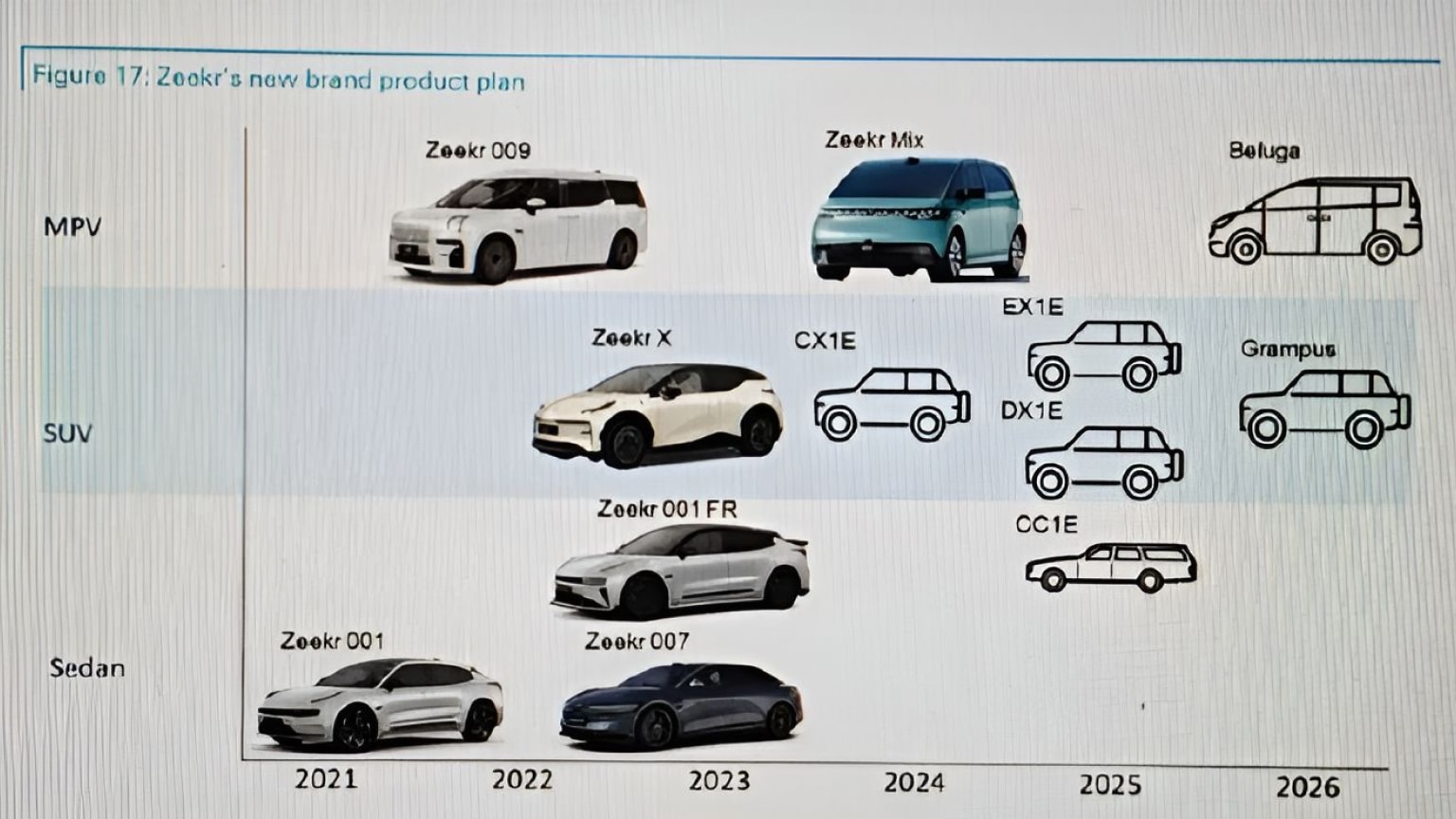
zeekr product planning deutsche bank leaked 2026Zeekr's product planning revealed by Deutsche Bank

News like this to your inbox or phone?​


Weekly summary to your inbox
I want this

Never miss and important news
Get Instant notification once the news is published.
Follow Us

Geely-baked Zeekr’s product planning was exposed by Deutsche Bank. This high-end EV brand aims to launch seven vehicles by 2026, including four crossovers, two minivans, and one wagon. One of the upcoming cars is the Zeekr 007 Station Wagon, designed for European markets.

Zeekr raised 441 million USD on New York IPO
Zeekr is a high-end EV brand under Geely Group launched in 2021. It has delivered over 67,000 cars to its owners in the first five months of 2024. The current Zeekr model line includes X crossover, 001 liftback, 007 sedan, and 009 minivan. Soon, the high-end brand from Geely will broaden the model line by seven cars.

More on Zeekr product planning​

According to the leaked product planning, Zeekr will launch two vehicles this year. The first one is the Zeekr Mix MPV. It has already applied for a sales license in China. This funky multi-purpose vehicle made its official debut at the Beijing Auto Show 2024. This year, Zeekr will also launch the CX1E (Zeekr Ark) crossover.

In 2025, three more Zeekr-branded cars will launch in China. One of them is the Zeekr 007 Station Wagon (CC1E), designed for European markets. It is currently in the pre-production stage. The other two cars are SUVs with codenames EX1E and DX1E. There is no information about them. However, the first letter in these models’ codenames can refer to their size class. In other words, the DX1E is a mid-size D-SUV, and the EX1E is a large E-SUV.
In 2026, Zeekr plans to launch two more models. The first one is a minivan codenamed Beluga. And the second car is the crossover codenamed Grampus. Information about them has yet to be revealed. Meanwhile, we will remind you of some general info about the upcoming Mix, Ark, and 007 Station Wagon.

Zeekr Mix​

The Zeekr Mix is a compact minivan with dimensions of 4688/1995/1755 mm. Despite being small, it boasts a sizable wheelbase with a length of 3008 mm. As a result, it has a spacious interior with a 3+3 seat layout. There also will be options with five (2+3) and four (2+2) seats.

The styling of the Zeekr Mix follows the brand’s latest design language, first introduced by Zeekr 007 sedan. It has a distinguishing Zeekr Stargate interactive LED light strip at the front end. It can project images and text. The Mix has a bulky body shape, which helps it to stand out.
The powertrain of the Zeekr Mix comprises a silicon carbide synchronous permanent magnet electric motor for 310 kW and 440 Nm on the rear axle. Its entry-level variant is powered by a 77-kWh LFP battery suitable for 550 km of range. The long-range version offers a ternary NMC battery for 102.7 kWh and up to 712 km range. Both of these packs are CATL-made.

Zeekr Ark​

The Zeekr Ark (also known by its codename CX1E) is an SUV that stands on the PMA2 platform that also underpins the 007 sedan. This architecture derives from the SEA modular platform created by Geely. The Ark follows the Hidden Energy design language of the mentioned Zeekr sedan. Even the interior of this vehicle stays in line with the 007.
Because of lots of similarities, the Zeekr Ark is often called an SUV-variant of the Zeekr 007. The CX1E’s specs have yet to be revealed. However, CarNewsChina knows its body length reaches 4.7 meters. It will likely adopt the same powertrain system as the 007 sedan. Its peak power output reaches 475 kW (636 hp). The 100-kWh ternary NMC battery pack from CATL supplies power to e-motors.

Zeekr 007 Station Wagon​

The Zeekr 007 SW (code name CC1E) was previously confirmed to have entered the pre-production stage. There are no official images nor spy shots of this car. However, car enthusiasts made some unofficial render images of the 007 SW. This car is designed specifically for the European market, since station wagons aren’t popular in China. This move from Zeekr underlines how serious their overseas is.
More on Zeekr as we get it!
Source: WeChat, Deutsche Bank
 

Users who are viewing this thread

Country Watch Latest

Latest Posts

Back
Top