China Auto Thread


Neta S wagon arrives in showroom ahead of launch​


Reading Time: 3 minutes

Adrian Leung

August 2, 2024


3


News like this to your inbox or phone?​


Weekly summary to your inbox
I want this

Never miss and important news
Get Instant notification once the news is published.
Follow Us

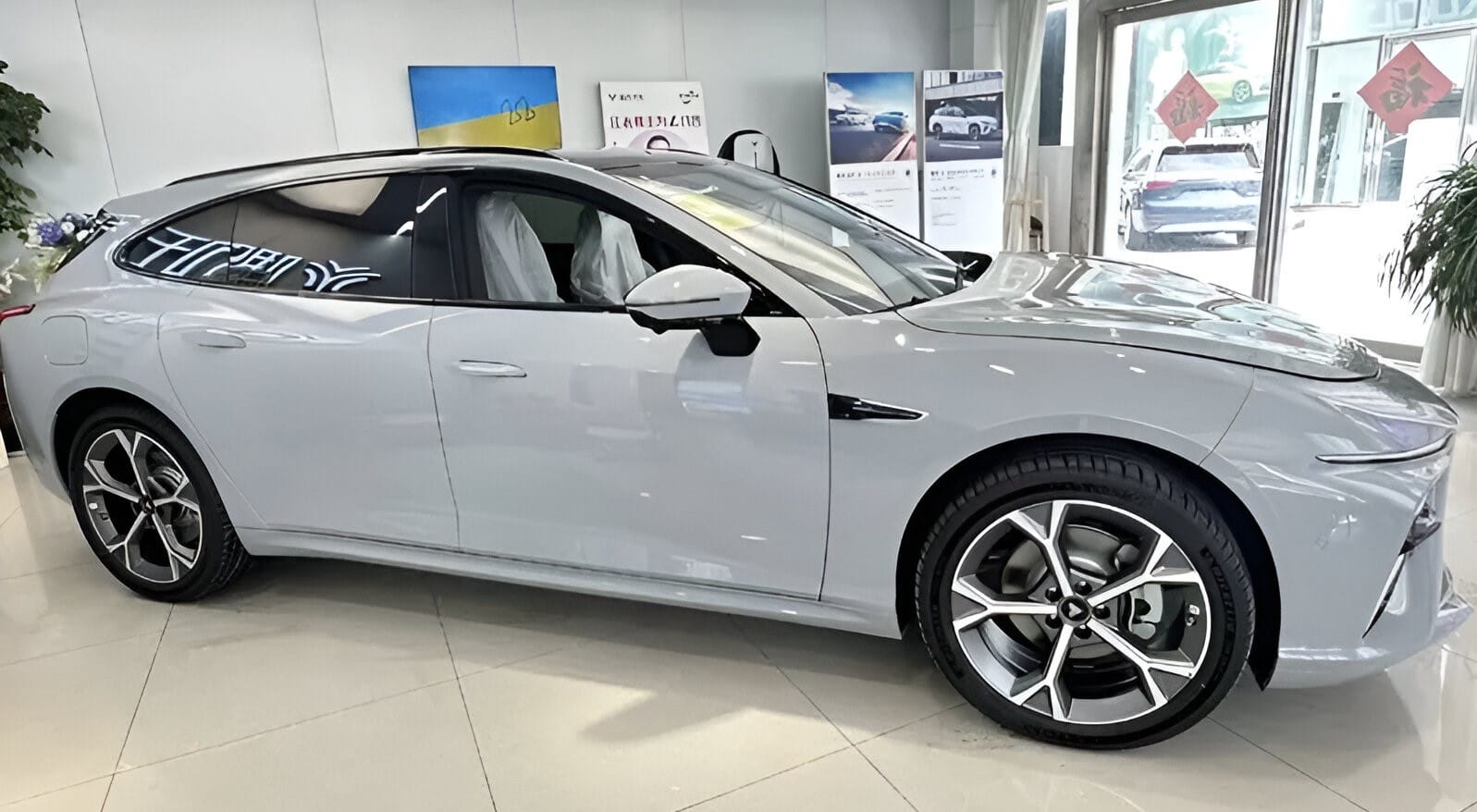
In response to fierce NEV market competition, car manufacturers are diversifying their offerings, including the rise of the station wagon segment. Neta, a brand under Hozon Auto known for its affordable and youthful models, is joining this trend by introducing the Neta S station wagon, an extension of their popular Neta S electric sedan (see specs). As the Neta S wagon nears its official launch, spy shots of the vehicle have surfaced.


The Neta S wagon shares its front-end design with the Neta S sedan. It features a forward-leaning sports car-like nose, sharp split headlights, and a multi-segmented air intake grille. This combination creates a sleek, modern look with a sporty vibe. The Neta S wagon boasts a two-box layout with a sleek, sloping roofline at the C-pillar, enhancing its dynamic and stylish appearance. It features unique petal-shaped hollow rims, hidden door handles, frameless doors, a ducktail spoiler, and full-width taillights, giving it a distinctive, sporty look.

The interior of the Neta S wagon epitomizes luxury and technology. It mirrors the sedan variant with a full-length LCD instrument panel, a large portrait-oriented central control screen, and an electronic gear lever. Suede materials on the dashboard and central armrest enhance the premium feel, while carbon fiber-like material on the console adds a sporty flair. Additionally, it features a 6.6L smart car refrigerator, ideal for long journeys.


The Neta S wagon measures 4980mm in length, 1980mm in width, and 1480mm in height, with a wheelbase of 2980mm. It stands 30mm taller than the sedan variant, and thanks to its station wagon design, it provides more headroom in the second row and increased cargo space.

The Neta S wagon offers both extended-range and all-electric variants. The extended-range version has a 1.5L range extender and options for a single 200kW motor or a 270kW dual-motor setup. 31.71kWh or 43.88kWh batteries provide electric ranges of 125km, 130km, and 185km. The all-electric version includes a 200kW single-motor and a 370kW dual-motor variant.

The original Neta S uses the Shanhai 1.0 platform, but the wagon will debut on the new Shanhai 2.0 platform, which was not expected to be available until next year. The Neta S wagon benefits from improved comfort and intelligence features and an 800V charging system for faster charging times.


The Neta S wagon will enter the Chinese market in August with an expected starting price of 150,000 yuan (approximately 20,800 USD). Deliveries are expected to begin in September. The top-tier model could cost up to 250,000 yuan (about 34,700 USD). While it will initially be available domestically, Neta plans to export the model.

The Neta S wagon merges station wagon practicality with cutting-edge EV technology and performance. Its sleek design, roomy interior, and powerful drivetrain options make it appealing for those seeking a versatile, modern electric vehicle. It will be an excellent alternative to the Nio ET5T wagon (see specs) with a significantly lower price tag.
 

New BYD Seal EV revealed with LiDAR in official images​


Reading Time: 3 minutes

Denis Bobylev

August 2, 2024


6
byd seal ev 2025 purple side frontThe new BYD Seal will keep its original name

News like this to your inbox or phone?​


Weekly summary to your inbox
I want this

Never miss and important news
Get Instant notification once the news is published.
Follow Us

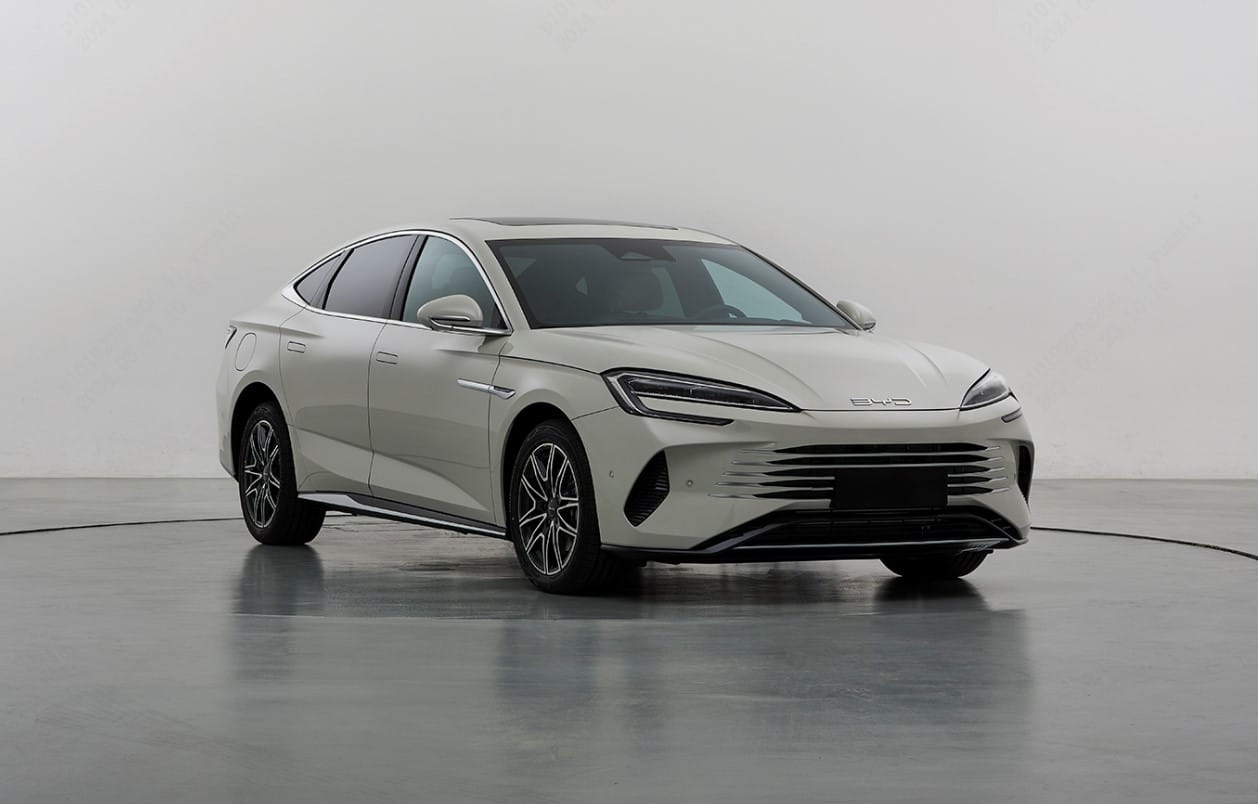
The new 2025 model year BYD Seal electric sedan was revealed in official images. It adopts a LiDAR sensor and a few exterior enhancements. BYD Ocean Series GM said the new Seal won’t be renamed to Seal 07 EV due to feedback from BYD fans. The new Seal enters the market on August 8.


BYD once again brings chaos to its naming​

BYD is doing something interesting with the Ocean series’ naming strategy. Previously, they used marine animal names for BEVs and warship names for PHEVs. This year, they switched to using only marine animals’ names. According to the initial plan, sedans of the given series will bear the Seal name with a digit number that indicates the car’s market positioning (Seal 06, Seal 07 DM-i). SUVs will be called Sea Lions with the same digit numbers.

Zhang Zhuofa, BYD Ocean Series GM
The mentioned rule should have been used for renaming the Seal EV sedan to Seal 07 EV. But on August 2, BYD Ocean series GM Zhang Zhuofa said on Weibo social media that the 2025 model year Seal will retain its name. He explained that lots of BYD clients asked for it. The biggest NEV maker heard this call. So, the electric variant of the BYD Seal will keep its original name.


Spy shot of the new BYD Seal
Interestingly, Ocean series GM underlined that the Seal DM-i PHEV sedan (see specs) will be launched this month under the Seal 07 DM-i name. Previously, another car for the Seal series was exposed in China as the Seal 05 DM-i. It means the Seal series will soon comprise four models: Seal 05 DM-i, Seal 06 (see specs), Seal 07 DM-i, and just Seal. And the latter car looks like a black sheep in this row.

New BYD Seal official images​

The new BYD Seal will enter the Chinese market on August 8. It stays in line with the current model (see specs) in terms of appearance. However, the distinguishing feature of the 2025 model year Seal is a LiDAR on the roof. Robosense (backed by BYD and Xiaomi) is a supplier of these sensors. A LiDAR sensor on board will enhance the ADAS functions of the new Seal.

The Seal 2025 has a new light purple body color. The “Build Your Dreams” inscription on its trunk was replaced with a red BYD logo. Otherwise, it is similar to the current model.


The front end of the BYD’s electric sedan has thin headlights with recognizable day running lights. It also has a sloped bonnet and a trapeze-shaped air intake. The new Seal adopts conventional side-view mirrors and pop-out door handles. From the back, it has a single taillight unit.

More on the new BYD Seal​

Spy of the new BYD Seal
The dimensions of the new BYD Seal remained unchanged at 4800/1875/1460 mm with a wheelbase of 2920. The entry-level Seal has a single e-motor in the rear axle for 170 kW (228 hp). A more powerful variant adopts an electric motor for 230 kW (308 hp). And the top-trim BYD Seal offers 4WD for 390 kW (523 hp). This sedan has two battery options: 61.44 kW and 80.64 kW. The CLTC range is 510 – 650 km.

The new Seal stands on the e-Platform 3.0 Evo architecture. It supports a high-voltage 800 system that improves charging efficiency. It also includes a 12-in-1 electric drive system. Inside, the new Seal adopts a simpler style similar to the Sea Lion 07 EV (see specs).

Source: BYD
 

SGMW’s Wuling Starlight S pre-sale starts at 14,100 USD​


Reading Time: 3 minutes

Dong Yi Chen

August 2, 2024


0


News like this to your inbox or phone?​


Weekly summary to your inbox
I want this

Never miss and important news
Get Instant notification once the news is published.
Follow Us
On August 2, Wuling officially opened its Starlight S SUV for presale starting at 102,800 yuan (14,100 USD), available in plug-in hybrid and pure electric variants. The plug-in hybrid variant offers 60 km and 130 km pure electric ranges (CLTC) as well as a 1,100 km comprehensive range under a full fuel tank and full charge. The pure electric variant offers a 510 km cruising range. The official launch is expected to be later this month.


The Wuling Starlight has body dimensions of 4745/1890/1680 mm and a 2800 mm wheelbase, adopting a five-seater layout, positioned as a medium-sized SUV based on the Tianyu D platform.

Consumers can choose from four exterior paints: Star White, Interstellar Blue, Star Gray, and Star Gold; and three color options for interior: Coconut Brown, Dark Black, and Light Sand.


At the same time, the vehicle’s drag coefficient is 0.277Cd. The official claimed that the Wuling Starlight S has 19 low-drag design features, which increase the cruising range by 20 km.

Furthermore, the vehicle’s level 2 driving assistance functions can realize automatic emergency braking, forward collision warning, lane departure warning, traffic sign recognition, and full-speed adaptive cruise control.

Inside, the cockpit comes with an 8.8-inch full LCD instrument panel and a 15.6-inch floating central control screen. The vehicle operating system is supported by the Ling OS. The entire series is equipped with six airbags, an electronic stability control system, and Auto Hold.


In addition, consumers can choose from an optional package that includes front seat ventilation and heating, rear seat heating, and an electric tailgate. The front seats can be laid flat at 180° to form a flat bed with the rear row. At the same time, the total area of the panoramic sunroof is 1.18㎡, of which the openable area is 0.6㎡.

Wuling Lingxi hybrid system
The plug-in hybrid variant is powered by the Wuling Lingxi hybrid system with a fuel consumption of 3.9L/100km (NEDC) or 4.98L/100km (WLTC), equipped with a 78 kW (105 hp) 1.5L naturally aspirated engine with a maximum power of 78 kW (105 hp) and a 150 kW (201 hp) electric motor. Two battery pack capacities are offered: 9.5 kWh and 20.5 kWh, providing a corresponding pure electric range of 60 km and 130 km, respectively. The battery capacities still need to be confirmed officially.

The pure electric variant is powered by a 150 kW electric motor and a lithium iron phosphate battery pack, providing a 510 km range. Under the vehicle’s 2C charging technology, the official claimed that charging for 15 minutes can increase the range by 200 km. Additionally, the power consumption of 14kWh/100km.

Source: DongCheDi, ITHome, AutoHome
 

GAC Aion Hyper brand becomes Hyptec as exports of SSR supercar set to begin​


Reading Time: 4 minutes

Mark Andrews

August 1, 2024


0


News like this to your inbox or phone?​


Weekly summary to your inbox
I want this

Never miss and important news
Get Instant notification once the news is published.
Follow Us

Recently, the first export-bound versions of the Hyptec SSR car rolled off the GAC production line. Hyptec is the latest English name for the brand, which originally started out as the Aion Hyper brand before dropping the Aion element. Hyptec appears to stand for ‘hyper technology life’ according to the official pictures. GAC refers to the SSR as China’s first EV supercar.


Launched on October 9, 2023, it is one of China’s most expensive domestically produced cars, with prices starting at 1,286,000 yuan (178,110 USD) and ranging up to 1,686,000 yuan (233,510 USD) in China. First export deliveries will be in the Southeast Asian market later this month. GAC plans to expand further sales to the Middle East, South America and European markets. The Hyptec SSR is expected to be shown at the Paris Motor Show in October.

SSR apparently stands for Super, Sport, Race and the car was designed jointly between GAC’s Guangzhou and Los Angeles-based design centers. At the front, the car has an imposing look thanks to the lights, which take up much of the width and are outlined by LED daytime running lights. This aggressive look is further enhanced by the black air inlet and splitter plate at the bottom. The SSR features scissor doors and it’s claimed that the body covering parts are made completely from high-strength carbon fiber, produced using an aviation-grade autoclave molding process. This, along with extensive use of aluminium alloys, helps reduce weight. There is an active rear wing which adjusts to the driving dynamics to improve aerodynamic performance and downforce. Paintwork is done using a 6C4B spraying process.


Inside the car, it’s surprisingly bright, thanks to the red interior. The SSR gains a racing car-type steering wheel, and instrumentation consists of a 14.6-inch infotainment screen and a dedicated 8.8-inch instrument cluster. Surprisingly given the performance the car does not have a head-up display, however, the instrument panel is located about halfway between the steering wheel and the base of the windshield meaning that it is easy to see while driving. The center console is largely open and tubular, reminiscent of the interior of the GAC Enpulse concept. Air vents are incorporated into the design of the center console, along with being on the extremes of the dashboard. The steering wheel has paddle shifts, although it is unclear exactly what these control.

The car has an all-aluminium alloy front and rear double wishbone suspension structure. This is matched with SDC intelligent variable damping shock absorbers and electronic limited slip differential (ELSD) to improve handling stability.

Powering the Hyptec SSR (see specs) are three electric motors giving a combined power of 900 kW with 1230 Nm of torque. One motor is mounted on the front axle with 320 kW, and two motors on the rear axle where the combined power is 580 kW. The car uses a 74.69 kWh battery pack, which gives it up to a range of 506 km using CLTC measurements. The batteries themselves use ternary lithium (NMC) chemistry and use GAC’s own magazine battery technology, but are produced by CALB. As with many high-performance, high-end EVs, the car features a two-speed gearbox. Depending on the variant, acceleration is as fast as 1.9 seconds 0-100 km/h, and the top speed is listed as 251 km/h. Curb weight is 1990 kg.


The Hyptec SSR has a 2-speed 4-in-1 high-performance motor. This is equipped with a 900V high voltage silicon carbide chip and uses a full stack self-developed e-drive 3.0 intelligent control system. Efficiency of the electric drive assembly is claimed to be 94.5%.

It is unclear which market in Southeast Asia the first cars are destined for as currently the export version is only available in left-hand drive. The car, however, was displayed just days ago at GIIAS 2024 in Jakarta, Indonesia, under the Hyptec name. Differences between the export version and the domestic version are believed to be minimal.

Sources: Autohome, Fast Technology, Eseni
 

Xpeng Mona M03 official interior shots show Tesla Model 3 like layout​


Reading Time: 5 minutes

Mark Andrews

August 1, 2024


0


News like this to your inbox or phone?​


Weekly summary to your inbox
I want this

Never miss and important news
Get Instant notification once the news is published.
Follow Us

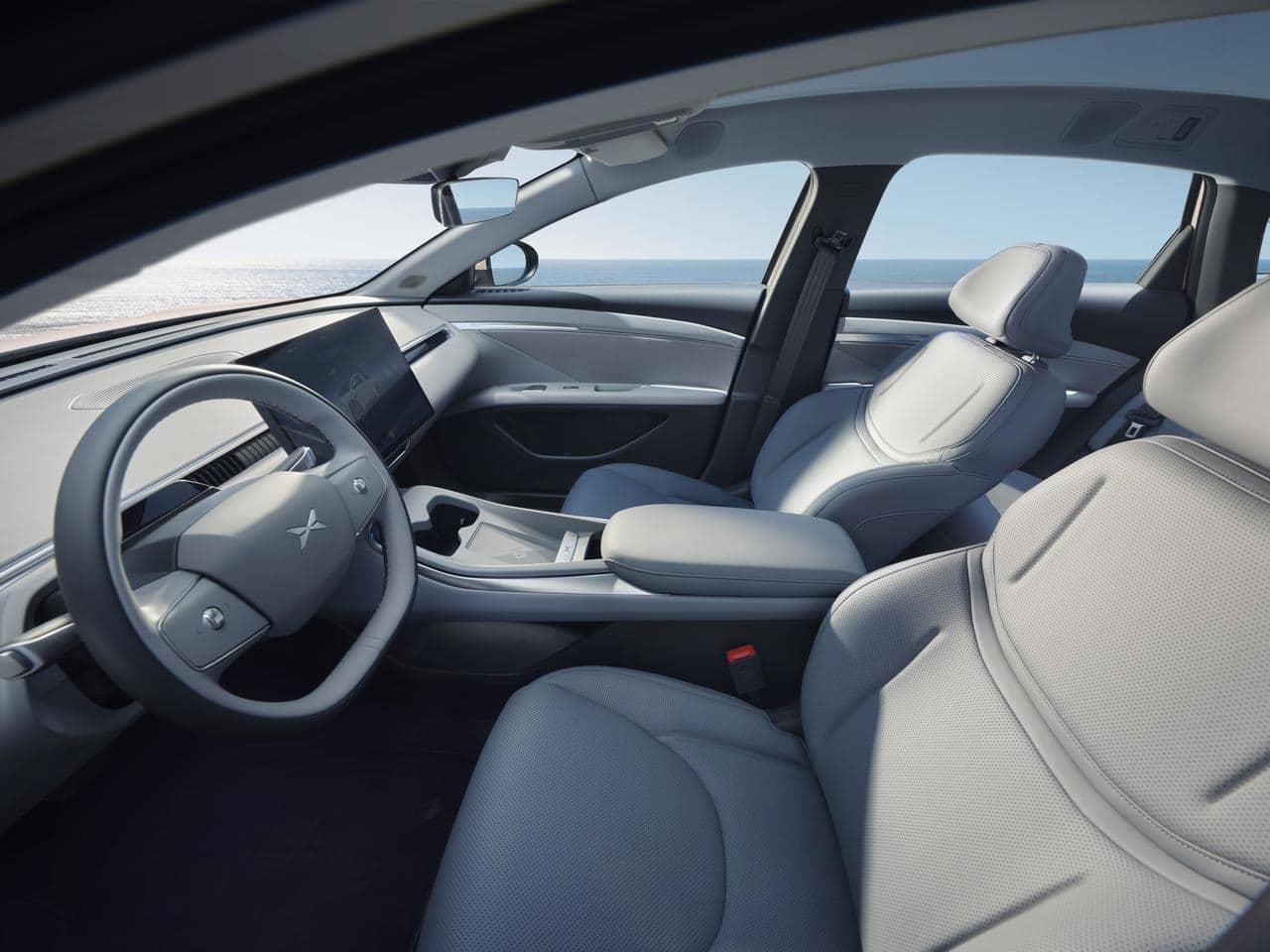
Days ago, an interior shot of the Xpeng Mona M03 was leaked. Now, there are official interior shots ahead of the car’s launch later this month. Buyers appear to have the choice between three interior colors: dark gray, light gray, and blue.


Overall, the interior layout is very similar to the Tesla Model 3, with a lack of physical buttons and everything concentrated on one central infotainment screen—there is no separate instrument panel or head-up display. Furthermore, the Mona M03 interior takes a minimalistic approach with clean, unfussed lines. The flat-bottomed steering wheel is a two-spoke design featuring two scroll wheel controls. Drive selection is via a steering column-mounted stalk.

The center console has two side-by-side drink holders at the join with the dashboard, and that a space for mobile phone charging. The previous spy shots made it look like the wireless phone charging pad was quite long, however, the new more official shots show it really only can fit one phone. There is then an opening cubbyhole with a shallow tray at the front with both USB Type A and USB Type C Charging ports.


Both the front seats are electrically adjustable and have heating, ventilation, and memory functions. The front passenger seat can be changed to a comfortable and spacious rear mode with one click. With spacious rear mode, the front seat is moved forward by 50%. The seats themselves are covered with perforated leather material. The rear bench folds down but maintains quite a high angle, meaning it is not particularly useful for carrying cargo. The trunk itself can hold 621 liters, and the seats are split folding with a maximum storage space of 1603 liters.

Other cabin features include a panoramic roof and LED mirrors in the sun shades. The Mona M03 has 18 speakers with a maximum power of 840 W and an acoustic experience created by 7.1.4 panoramic sound management. There is 256-color ambient lighting, and in front, this is via a 1.35-meter wrap-around system.

Powering the car’s systems is a Qualcomm Snapdragon 8155 chip with 16GB of memory. Users will likely control most car functions using voice commands, however, the screen does support multi-finger operation. Furthermore, it can display 360-degree panoramic images and 3D perception-rendered maps.


Available in a choice of five colors, the car (see specs) measures in at 4780, 1896, and 1445 mm (l/w/h), and the wheelbase is 2815 mm. It is equipped with an active grille system, which is one of the features that keeps the drag coefficient down to a world-beating Cd 0.194. Depending on the version, the car uses either 18 or 19-inch wheels. If leaked information is to be believed, the Mona M03 will be available in three different versions: Plus, Pro, and Max. Weights, according to the leak, are 1631 or 1661 kg depending on the configuration for the Plus version, while the Pro and Max come in at 1739 kg.

The Xpeng Mona M03 will use lithium iron phosphate blade batteries from BYD subsidiary FinDreams. According to the leak, the Plus version gets a 51.8 kWh pack, while the Pro and Max use a 62.2 kWh pack. Using CLTC measurement, these are good for 515 and 620 km of range. The Plus uses a 140 kW electric motor, while the Pro and Max both gain a 160 kW motor.

Driving assistance capability will be highest in the Max version which will feature dual Nvidia Orin X chips with 508 TOPS computing power. This is the same computing solution that has been used in other Xpeng Max versions to enable XNGP, however, these cars were also equipped with Lidar which the Mona M03 does not have. Xpeng is meant to be switching to a vision-based system, so presumably, the new car, despite its lack of Lidar, should have the same XNGP capability as Max versions of other Xpeng models.

If Internet leaks are correct, then the prices range from 129,800 yuan (17,900 USD) for the Plus to 159,800 yuan (22,000 USD) for the Max. Prices will be confirmed when the car launches later this month.

Sources: Autohome, Fast Technology, Huanghe News Outlet,
 

New Voyah Dream from Dongfeng & Huawei says bye-bye to traditional MPVs​


Reading Time: 3 minutes

Denis Bobylev

August 1, 2024


0
voyah dream minivan

News like this to your inbox or phone?​


Weekly summary to your inbox
I want this

Never miss and important news
Get Instant notification once the news is published.
Follow Us

On August 1, the new Voyah Dream minivan (see specs) was spotted near the Huawei facility wearing heavy camouflage. This MPV is developed jointly by Dongfeng and Huawei. The new Dream will have air suspension, a LiDAR sensor, and a PHEV powertrain for over 1,000 km of range.


The Voyah Dream was initially launched domestically under the Chinese name 梦想家 (Mengxiangjia, Dreamer). However, the international name of this minivan was revealed later as Voyah Dream. It is a full-size minivan available in BEV and PHEV variants. In April 2024, Voyah announced it was working on the new MPV jointly with Huawei. This MPV has appeared to be the new Dream.

New Voyah Dream spotted in China​

The new Voyah Dream was spotted in China wearing heavy camouflage. However, we can easily recognize this model by distinguishing bonnet shape and A-pillars. The new variant of the Voyah Dream has a LiDAR sensor made by Huawei on the roof. It has conventional side-view mirrors and power-sliding rear doors.


Interestingly, the camouflage film of the Voyah Dream has a lot of inscriptions in Chinese language. Some only contain PR speech like “say bye-bye to traditional MPV”. However, a few inscriptions reveal some useful information about the car. It was revealed the new Voyah Dream has air suspension. Moreover, it is a PHEV with a mixed range of over 1,000 km.

Inside, the Dream has a high-end sound system, first-class seats, and a refrigerator. We can also see the new car has a different center console layout. It has a single cluster made of two screens.

More on the new Voyah Dream​

Voyah revealed more technical details about the new Dream minivan in April this year. The Dongfeng-Huawei-developed car has a third-generation PHEV system. It stands on the all-electric architecture and comprises a 4WD system, a high-capacity battery pack, and a petrol engine.


Voyah mentioned they reduced the size of electric motors and batteries. It led to lower energy consumption and higher efficiency. The electric range of the new Voyah Dream is 260 km. The peak power output is 420 kW (563 hp) and 840 Nm. The fuel consumption rate is 5.36 L/100km. The mixed range is around 1200 km. The new Voyah Dream will have a Huawei ADS 3.0 system and HarmonyOS.

We will remind you that the current Voyah Dream boasts hefty dimensions of 5315/985/1820 mm with a wheelbase of 3200 mm. It has both PHEV and BEV variants. The price range of the Voyah Dream is 339,900 – 639,900 yuan (46,900 – 88,300 USD).

Voyah Courage (Zhiyin)
The current Voyah model line comprises three cars: Free crossover (see specs), Dream minivan and Passion sedan (see specs). In August, Voyah will launch the fourth model called Courage (Chinese name is Zhiyin). It is a mid-size SUV. In July 2024, Voyah sold 6,501 cars in China. Its domestic sales in January-July reached 36,391 units.

Source: Weibo
 

Nio posts sales of 20,498 cars in July​


Reading Time: 2 minutes

Jiri Opletal

August 1, 2024


0


News like this to your inbox or phone?​


Weekly summary to your inbox
I want this

Never miss and important news
Get Instant notification once the news is published.
Follow Us

Nio delivered 20,498 cars in July, mostly flat from last year and about 3% down from the previous month. It is also the first time Nio has held over 20,000 deliveries for three months in a row.


July sales were down 3.35 % from the previous month when Nio sold a record 21,209 cars, and 0.18% up from the previous year, when it sold 20,462 EVs.

Year to date, between January and July, Nio delivered 107,924 EVs, up 43.9% from the same period in the previous year. As of July 31, the company’s cumulative deliveries are 557,518 cars.


Nio reportedly ended the purchase incentives in the last week of July. The Shanghai-based company sells eight models in China; however, most of its sales are attributed to two models only – SUV ES6 and ET5 or its station wagon variant ET5T.

Nio didn’t disclose the sales breakdown by model, only stating that 11,964 delivered cars were SUVs and 8,534 were sedans. That shows 60% of sales were SUVs and 40% sedans.

Based on the dealer’s sales data estimate monitored by CarNewsChina, about 7,600 Nio ES6 SUVs were sold, marking a 37% share of the company’s portfolio. Meanwhile, 36% of sales – 7,400 cars – were contributed by the ET5 sedan and its wagon variant ET5T.


The company held the Nio In 2024 event on July 27, during which it unveiled a new Nio Phone 2, a 5nm intelligent driving chip, and updates to the assisted driving system.

The Nio lineup will increase by one new model in the second half of the year. Deliveries of the Onvo L60 SUV (see full specs), a Tesla Model Y competitor, will start in September. Onvo is a new entry-level brand under Nio with separate operations and battery swap support.

Next year, in the first quarter, a new model under the Nio brand will launch – the flagship sedan Nio ET9, which was unveiled last September. The car started presales for 800,000 yuan (110,000 USD) and will be the most expensive Nio-badged mass-produced car.
 

BYD Seal 05 DM-i spotted in China as rebadged BYD Chaser 05​


Reading Time: 3 minutes

Denis Bobylev

August 1, 2024


1
BYD Seal 05 DM-i sedan china carnewschinaBYD Seal 05 DM-i spotted in China

News like this to your inbox or phone?​


Weekly summary to your inbox
I want this

Never miss and important news
Get Instant notification once the news is published.
Follow Us

The BYD Seal 05 DM-i sedan with plug-in hybrid powertrain was seen in China for the first time. It is a rebadged Destoryer 05 (Chaser / Chazor / King DM-i) with adjusted exterior styling and the fifth-gen DM system. The Seal 05 DM-i will enter the Chinese market in late 2024 or early 2025.


BYD naming explained​

BYD’s model line has been too complex lately. So, we will comment on it. Currently, the BYD brand comprises two series: Dynasty and Ocean. The first consists of cars named after Chinese ruling dynasties like Han, Tang, etc. The Ocean series comprises cars with marine names.

BYD Seal DM-i will be relaunched as Seal 07 DM-i in August 2024
This distribution seems simple enough. However, BYD went further by splitting the Ocean series into two lines. The first one comprised electric cars called after marine animals like Seal and Dolphin. The second line included plug-in hybrids named after warships (e.g. Destroyer 05, Frigate 07). Things became inconsistent when BYD launched the Seal DM-i sedan. It was a PHEV belonging to the so-called EV line.


Nowadays, BYD has refused to use warship naming for cars that belong to the Ocean series. Both PHEVs and BEVs under the Ocean series will be called after marine animals. However, another new rule has appeared. Every Ocean-series sedan is known as Seal, with a digit number showing its market positioning. And crossovers bear the name of Sea Lion. BYD has started a huge rebadging strategy, slowly aligning cars’ names with new rules. At the same time, some models get new exterior styling. The Seal 05 DM-i is among those models.

BYD Seal 05 DM-i spy shot​

The BYD Seal 05 DM-i was seen in China in camouflage. Its front end has thin headlights similar to the previously launched Seal 06 DM-i sedan (see specs). The Seal 05 DM-i has a sporty bumper with a trapeze-shaped air intake. The spotted car has conventional door handles and side-view mirrors. It also has five-spoke blackened rims.

BYD Destroyer 05 (Chaser / Chazor / King DM-i)
The proportions and the glass line of the BYD Seal 05 DM-i are in line with the Destroyer 05 sedan (see specs). We will remind you that the latter car sells internationally as Chaser, Chazor, or King DM-i. Its dimensions are 4780/1837/1495 mm with a wheelbase of 2718 mm. Most likely, the Seal 05 DM-i will be similar in terms of size.


AI-generated image of Seal 05 DM-i
Another feature of the Seal 05 DM-i is the BYD’s fifth-gen DM powertrain. It comprises a 1.5-liter ICE for 74 kW (99 hp) and a 120 kW (161 km) e-motor. The Seal 05 DM-i will get a larger fuel tank for 65 liters (compared to the 48-liter tank of the Destroyer 05). The more efficient powertrain system and a bigger fuel tank will lead to an increased mixed range of up to 2,100 km.

The Seal 05 DM-i will enter the Chinese market in late 2024 or early 2025. Its price tag will be in line with the current Destroyer 05 sedan. We will remind you its price range is 79,800 – 136,800 yuan (11,000 – 18,900 USD).

Source: Weibo
 

2025 BYD Seagull hatchback launched, price starting at 9,700 USD​


Reading Time: 3 minutes

Dong Yi Chen

August 1, 2024


1


News like this to your inbox or phone?​


Weekly summary to your inbox
I want this

Never miss and important news
Get Instant notification once the news is published.
Follow Us

On August 1, the 2025 BYD Seagull pure electric hatchback was launched in three trims with a price range of 69,800 – 85,800 yuan (9,700 – 12,000 USD) in China:


  • 305KM Vitality Edition (30.08 kWh battery pack): 69,800 yuan (9,700 USD)
  • 305KM Freedom Edition (30.08 kWh battery pack): 75,800 yuan (10,500 USD)
  • 405KM Flying Edition (38.88 kWh battery pack): 85,800 yuan (12,000 USD)
As an annual facelift model, the 2025 BYD Seagull has subtle changes in styling, and some trims have added new configurations such as electric adjustment of the front seats.

The new car is available in four exterior colors: Arctic Blue, Warm Sun White, Polar Night Black, and Peach Pink; as well as two interior colors: Deep Ocean Blue and Dune Pink.


The 2025 BYD Seagull adopts the BYD e-Platform 3.0 with a length, width, and height of 3780/1715/1540 mm, and the wheelbase is 2500 mm, which is consistent with the previous version (see spec here).

2024 BYD Seagull Honors Edition2025 BYD Seagull
For the exterior, most noticeably, in the rear, the “BUILD YOUR DREAMS” logo has changed to just “BYD”. The front design remains unchanged.

The Vitality Edition runs on 15-inch rims (left) while the other two Editions run on new 16-inch aluminum alloy rims (right).


The interior also continues the design of the previous version, featuring a 7-inch floating instrument panel and a 10.1-inch rotatable central control screen, paired with the BYD DiLink platform. The Freedom Edition and Flying Edition are equipped with a mobile phone wireless charging panel and support front seat heating as well as six-way electric adjustment of the driver seat.

Other standard configurations include OTA updates, four speakers, Bluetooth, voice interaction, in-car WiFi, 4G network, and keyless entry.

Power continues to come from a permanent magnet synchronous motor with a maximum power of 55 kW (74 hp) and a peak torque of 135 Nm, paired with the BYD Blade battery. The Vitality and Freedom Editions are equipped with a 30.08 kWh battery pack, providing a CLTC range of 305 km; the Flying Edition is equipped with a 38.88 kWh battery pack, providing a CLTC range of 405 km. The 0 – 50 km/h acceleration time is 4.9 seconds across the entire series. Under DC fast charging, it takes 30 minutes at room temperature to replenish the battery from 30% to 80%.

In the first half of 2024, BYD Seagull sold 191,037 vehicles.

Source: BYD, DongCheDi, Sohu
 

BYD Seal 07 to launch on August 8 in both EV and PHEV forms​


Reading Time: 3 minutes

Mark Andrews

July 31, 2024


5


News like this to your inbox or phone?​


Weekly summary to your inbox
I want this

Never miss and important news
Get Instant notification once the news is published.
Follow Us

2024 has been a busy year for new car releases from BYD, and the pace seems to be showing no signs of abating. On August 8, BYD will launch both the EV and DM-i versions of the Seal 07.


Although the EV and DM-i versions of the Seal 07 share the same name and similar styling, it is currently unclear how closely they are related. Visually, they are easy to tell apart, thanks to the EV version’s closed front and the DM-i version’s 5-slat grille.

The Seal 07 DM-i has dimensions of 4980, 1890, and 1495 mm and a wheelbase of 2900 mm. When filed with MIIT, there were three individual listings for the car, each with a different weight of 1795 kg, 1900 kg, and 1960 kg, respectively.


BYD Seal 07 DM-i
The car can be seen as a replacement for the car currently known as the Seal DM-i, and the 07 DM-i will come with BYD’s new DM 5.0 technology. It is the first car with this technology to veer away from being reliant on the naturally aspirated 1.5-liter engine, which delivers 74 kW of power. Although this engine is offered on low-spec versions, higher-spec versions base the PHEV system around a 1.5T engine with 115 kW of power. There are also two electric motor options of 160KW and 200KW respectively.

As yet, we do not have any news about the battery capacities or what the powertrain means in terms of range or fuel economy. However, given the larger size of the car and the more powerful engine and motor offered, we can expect range and fuel economy to be worse than in the Seal 06 DM-i, which was one of the two cars that launched BYD’s fifth-generation PHEV system.

The EV version of the Seal 07 is understood to be an update to the original BYD Seal, which was fully electric. Changes outwardly seem minimal, and the dimensions (see specs) remain unchanged at 4800, 1875, and 1460 mm (l/w/h), and the wheelbase is 2920 mm. As with the existing Seal there are both single and dual-motor versions. For the single-motor version, buyers have a choice between 170 kW and 230 kW electric motors. Dual-motor versions use the rear-mounted 230 kW motor and add a 160 kW motor to the front axle. Top speed is 225 km/h.


Battery capacities are believed to be 61.44 kWh and 80.64 kWh, respectively, in the single-motor version, providing CLTC ranges of 510 km and 650 km. Range for the dual motor is 600 km. The batteries are lithium iron phosphate blade batteries, and the Seal 07 utilizes cell-to-body technology.

Underneath the Seal 07 EV is the new e-platform 3.0 Evo which has 800V architecture giving improved charging efficiency and the car will support 240 kW fast charging. The e-platform 3.0 Evo debuted in May with the Sea Lion 07. Highlights include a 12-in-1 electric drive system.

Spy shots of the BYD Seal 07 EV’s interior show that it has a simpler style than the current car and that it is similar to that seen in the Sea Lion 07 EV.

Both the DM-i and EV versions of the car are expected to have a Lidar option. This should considerably increase driver assistance capability.

Sources: Autohome, Mountains talk about cars
 

New BYD Han spied in China, but is it a new generation or just an update?​


Reading Time: 2 minutes

Mark Andrews

July 31, 2024


1


News like this to your inbox or phone?​


Weekly summary to your inbox
I want this

Never miss and important news
Get Instant notification once the news is published.
Follow Us

A blogger in China has exposed a new BYD Han. Whether the car is a completely new generation or a facelift of the existing Han is not clear.


Little can be ascertained from the two pictures that were published, which show a sedan in very typical BYD camouflage. The front face of the car is much the same as the existing Han, and the overall shape is largely unchanged, which suggests the pictures show a facelift rather than the next-generation car.

Many of the apparent changes may be centered around improving the car’s aerodynamics. There is a new U-shaped hood, and the blogger claims that the B-pillar is flatter, thereby cutting drag.


The car will use a version of BYD’s DiSus suspension. The current Han is equipped with DiSus-C, but it is unknown whether this will be carried over or whether the new Han might gain air suspension, which would mean it using DiSus-A.

Fast Technology speculates that the car will use the new DM 5.0 powertrain. However, from the pictures, it is far from apparent whether the car in the spy shots is the EV or PHEV version. Recently an MIIT listing shows that the existing Han is about to get the DM 5.0 treatment. The PHEV system in that car is based around a 1.5T BYD472ZQB engine, which has 115 kW of power. This is coupled with a 200 kW peak power TZ210XYD electric motor. Notably, this version has a lidar option and it is probable the spied car also has such an option.

EV versions of the Han (see specs) come in single-motor and dual-motor versions. For the single-motor versions, there is a choice of 150, 168, or 180 kW motors mounted on the front axle. The all-wheel-drive version uses the 180 kW motor on the front axle and adds an additional 200 kW motor on the rear axle.


The BYD Han launched in 2020 and has been one of the company’s bestselling models – sales were 21,866 units in June. Prices for the existing model range from 169,800 to 259,800 yuan (23,500 – 36,000 USD).

Editor’s note:​

Given that there is already a new Han DM-i version about to be released, we are inclined to believe that the spy shots show an EV version of the Han, and it is likely an update rather than a new generation. With the DM-i Han likely to be released in August or perhaps September we should see this new version of the Han on sale before the end of the year.

Source: Fast Technology
 

Uber and BYD teams up to bring 100,000 EVs to its ride-hailing platform​


Reading Time: 2 minutes

Jiri Opletal

July 31, 2024


0


News like this to your inbox or phone?​


Weekly summary to your inbox
I want this

Never miss and important news
Get Instant notification once the news is published.
Follow Us

Uber and Chinese automaker BYD have announced a multi-year partnership to introduce 100,000 new electric vehicles to Uber’s ride-hailing platform worldwide.


This collaboration, set to begin in Europe and Latin America, will provide Uber drivers with affordable pricing and financing options for BYD’s electric vehicles, with plans to expand to the Middle East, Canada, Australia, and New Zealand. The partnership excludes the United States.

Additionally, Uber and BYD plan to integrate BYD’s vehicles with self-driving technologies into the ride-hailing platform and work together to develop autonomous driving vehicles.


“Together with Uber, we want to make green transportation accessible and affordable for everyone. This collaboration marks a new era in the electrification of urban mobility,” commented Stella Li, CEO of BYD Americas, on the newly forged partnership.

Uber and BYD’s partnership will support the EV transition by offering drivers discounts on vehicle maintenance, charging, financing, and leasing, varying by market, the companies said in a joint statement. Uber CEO Dara Khosrowshahi highlighted the environmental benefits, noting that an Uber driver switching to an EV can deliver up to four times the emissions reductions compared to a regular driver due to their increased time on the road.

Meanwhile, BYD’s U.S. rival, Tesla, is set to unveil its robotaxi product in October following a dip in EV sales in the first half of the year. Despite BYD surpassing Tesla as the world’s largest electric vehicle maker last year, Tesla has since reclaimed the top position.


In January, Uber announced its collaboration with Tesla to encourage the use of EVs by its drivers in the U.S., aiming to achieve emission-free operations in U.S. and Canadian cities by 2030.

BYD delivered over 3 million electric vehicles in 2023 and aims to increase that to 4 million in 2024. In the first half of the year (January – June), BYD sold 1.6 million EVs.
 

Chinese car producers call for the end of weekly sales figures and criticize Li Auto​


Reading Time: 3 minutes

Mark Andrews

July 31, 2024


0


News like this to your inbox or phone?​


Weekly summary to your inbox
I want this

Never miss and important news
Get Instant notification once the news is published.
Follow Us

Regular readers of Car News China will know that every week, we publish a listing of the sales of new energy vehicles in China. This information is largely based on the number of cars insured in a given week and has been popularized as a metric by Li Auto. Over the last few days, a growing number of Chinese car producers have taken aim at the weekly list and said it is detrimental to the development of the new energy vehicle market.


Kicking off the move, Ma Lin, assistant vice president of brand communications at Nio, tweeted on Weibo, “The high-level tone should not engage in low-level involution, and the weekly list is more or less a bit of a low-level involution.” This he followed up with a message directed at Li Xiang the CEO of Li Auto saying “Brother Xiang, stop it, the current mission of Chinese car companies is to achieve technological breakthroughs through research and development, isn’t it?”

The general idea is that weekly sales can vary due to many factors, and also, with the data largely dependent on insurance registrations, this doesn’t accurately reflect sales. Furthermore, the fixation means that companies spend too much time focusing on this area rather than sustained growth for the future.


Xpeng CEO He Xiaopeng at the Xpeng Motors AI Intelligent Driving Technology Conference on July 30
Ma Lin believes that audited monthly delivery volumes far more accurately reflect the business situation and says they are “more effective for users to understand the market situation and help consumers make consumption decisions.” He goes on to criticize that products at different price points, with or without fuel tanks, are put into the same list and that it cannot show an objective situation of the market. However, how this is meant to differ from a monthly sales list is difficult to know as, generally, these also clump such cars together.

Yang Xueliang, senior vice president of Geely Group, was one of the first to lend support, saying, “I’m also against the weekly list.” He was joined by Mu Feng, president of Great Wall Motor, who, along with giving support, added, “Great Wall Motor welcomes all allies who uphold high-quality development, stick to the bottom line side by side, and jointly build a Chinese auto brand.”

William Li, founder and CEO of Nio, and Qin Lihong, co-founder and president of Nio at the Nio in 2024 Nio Innovation and Technology Day
He Xiaopeng, Xpeng’s CEO, spoke at the Xpeng Motors AI Intelligent Driving Technology Conference on July 30 and joined the chorus. Citing his trip to the US in June, he favorably compared the current situation, saying in the US, people were talking about the technology to do with smart driving and how to make it better, while people in China were still talking about weekly sales lists and trying to find ways of making money. “China’s technology companies are still working on the “weekly sales list” and are trying to find ways to make money. That’s not what tech competition should be. Xpeng is a technology company, and it should be deep enough to make the technology,” said He.


Speaking at the Nio in 2024 Nio Innovation and Technology Day held on July 27, William Li, founder and CEO of Nio, strongly supported monthly sales figures, while Qin Lihong, co-founder and president of Nio, attacked weekly sales figures due to their inaccuracy and likelihood of being misinterpreted.

Editor’s note:​

The possible reason for Li Auto’s emphasis on the weekly sales figures might come from Li Xiang being also the founder of Chinese car website, Autohome.

The recent backlash against the weekly sales figures is interesting and perhaps indicates a more widespread change in the way Chinese car companies operate. What will be interesting to see is whether this will extend to the constant price discounting in the industry, which is hurting the profitability of many companies. A number of joint venture companies have already indicated that they are exiting the race for the bottom. One of the first to announce this was BMW earlier this month.

Source: Autohome
 

Changan’s Deepal S05 SUV revealed interior before the launch​


Reading Time: 3 minutes

Denis Bobylev

July 31, 2024


1
deepal s05 changan crossover interior brownInterior of the Deepal S05

News like this to your inbox or phone?​


Weekly summary to your inbox
I want this

Never miss and important news
Get Instant notification once the news is published.
Follow Us

The Changan-backed Deepal S05 crossover revealed its interior before the market launch. It will enter the market as the brand’s entry-level model with BEV and EREV powertrain variants. The S05 is the Deepals’ chance to achieve its ambitious sales goal. Currently, it is far away from the annual target of 280,000 units.


Deepal current model line
Deepal is a new energy vehicle brand under Changan established in 2022. Its current model line comprises three cars: the L07 sedan (see specs), the S07 crossover (see specs), and the G318 SUV (see specs). Last year, Deepal announced its global strategy. In early 2024, Deepal launched two vehicles (L07 and S07) in Thailand. This year, the Changan brand aims to sell 450,000 units globally and 280,000 cars in China. However, Deepal’s domestic sales volume in H1 2024 is only 83,858 cars.

Deepal S05 interior​

Previously, the interior of the Deepal S05 was seen in spy shots. Official images revealed more details of the car’s cabin. The S05 adopts the brown and black color scheme. Its overall design stays in line with that of other Deepal-branded vehicles. The center console of the S05 has a large floating screen. Its center tunnel adopts two wireless phone charging pads and a pair of cup holders.


The Deepal S05 has a D-shaped steering wheel with three spokes. The gear shifter hides behind the wheel. Another feature of the Deepal S05 is the absence of a conventional instrument cluster. Instead, it has a head-up display.

Doors of the Deepal S05 use buttons instead of handles. The second row of this crossover has an air vent, two USB ports, and a center headrest. Overall, the Deepal S05 has lots of interesting features.

More about Deepal S05​

The Deepal S05 is a compact NEV crossover with dimensions of 4620/1900/1600 mm with a wheelbase of 2880 mm. Its front end has thin headlights, a trapeze-shaped air intake, hidden door handles, and a single taillight unit. The SUV adopts R18 or R20 wheels.


The Deepal S05 adopts a 175 kW (238 hp) electric motor powered by a 56.12 kWh LFP battery pack, suitable for the 510 km range. Its curb weight reaches 1,720 kg. The EREV variant has a 160 kW (218 hp) e-motor paired with 17.08 and 27.28 kWh LFP batteries. The range is 100 – 150 km. Under the hood, the S05 has a naturally aspirated ICE for 72 kW (98 hp). The curb weight of this variant is 1,497 kilos.

Deepal S05 will enter the market this year. It will become the entry-level SUV in the brand’s line. Deepal desperately needs to launch this model as it is still far away from achieving its annual sales goal of 280,000 units. In the first six months of 2024, Deepal sold just 83,858 cars. It is clear Deepal won’t reach this ambitious target. However, the S05 launch can boost the sales volume.

Source: Deepal
 

Baojun Yunhai more interior and configuration details revealed​


Reading Time: 3 minutes

Dong Yi Chen

July 31, 2024


0


News like this to your inbox or phone?​


Weekly summary to your inbox
I want this

Never miss and important news
Get Instant notification once the news is published.
Follow Us

On July 30, Baojun released more interior and configuration details of its upcoming SUV called the Baojun Yunhai. The new car will be offered in both pure electric and plug-in hybrid variants. The official launch will be in the third quarter of this year.


The Baojun Yunhai is based on the Tianyu D platform. For the exterior, the closed front grille is equipped with a camera and three-banner headlights, coupled with a lower mouth-shaped design. The rear window is enhanced by a semi-enclosed spoiler shape.

The Baojun Yunhai runs on 18-inch petal-shaped rims, paired with traditional door handles. The dimensions of the pure electric variant are 4541/1880/1608 mm, with a wheelbase of 2750 mm. The length of the plug-in hybrid variant is 4590 mm, and the other dimensions remain the same.


The interior is available in two colors: Morning White and Night Black. The minimalistic cockpit features an 8.8-inch LCD instrument panel, a 15.6-inch floating central control screen, a D-shaped steering wheel, and two wireless charging panels as well as two cupholders on the center console. The audio system is supported by eight speakers.

The steering wheels, air-conditioning vents, door trims, and front area of the armrest are supplemented with golden details.

The headroom in the front and rear rows are 1008 mm and 987 mm, respectively. The legroom in the front and rear rows is 949 mm and 876 mm, respectively.


The standard trunk volume is 567 L, which can be expanded to 1570 L after the rear seats are folded down, similar to storing five 28-inch suitcases, two 26-inch suitcases, and two 20-inch suitcases simultaneously. At the same time, the tailgate opening height is 1795 mm.

Furthermore, there are 29 storage spaces throughout the vehicle.

The pure electric variant will be equipped with a 150 kW (201 hp) electric motor, mated with battery packs with capacities of 56.7 kWh and 69.2 kWh, corresponding to two CLTC range options of 500 km and 600 km. 2C fast charging will also be available.

The plug-in hybrid variant will be powered by the Wuling Lingxi hybrid system comprised of a 78kW (105 hp) 1.5L engine and an electric motor, matched with battery packs with capacities of 9.5 kWh and 20.5 kWh, corresponding to two pure electric ranges of 45 km and 100 km (assuming CLTC conditions). The comprehensive cruising range is 1,100 km and the WLTC fuel consumption is as low as 4.96L/100km.

Source: Baojun Weibo, DongCheDi
 

Users who are viewing this thread

Back
Top