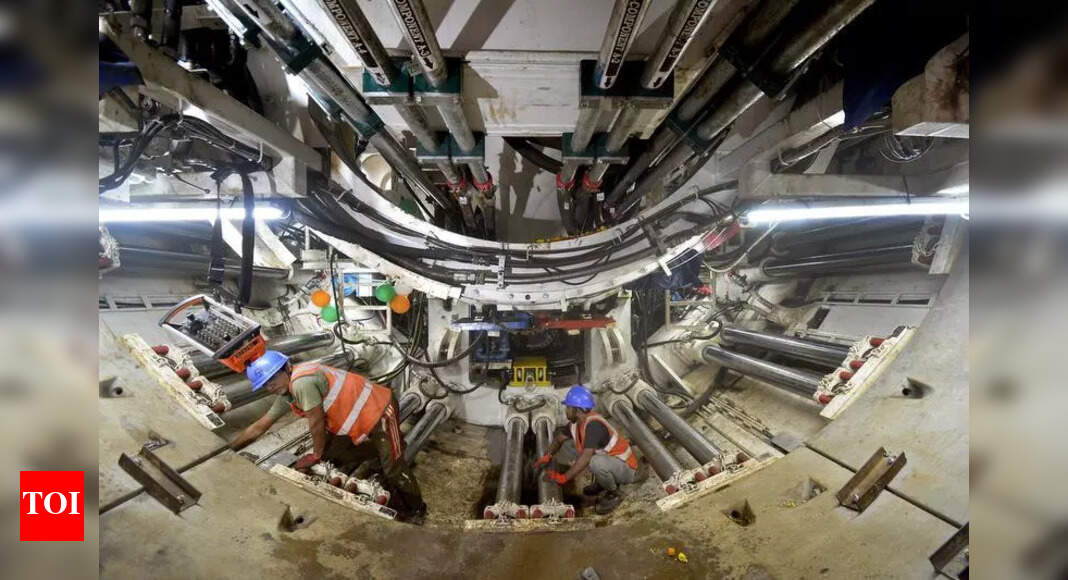
India's metro and tunnel projects may face a new hurdle as China tightens export rules
What other equipment will face restrictions?
The new controls extend beyond tunnel boring machines.
They cover certain walking excavators, which are designed to operate on uneven and difficult terrain, and plateau-type wet shotcrete machines used to spray concrete or similar materials onto surfaces at high altitudes.
These machines can be used in challenging construction conditions, including mountainous areas where specialised equipment is needed to build tunnels and other infrastructure.
China has also revised controls on specified dredging equipment and components, including slurry pumps, dragheads and cutterheads that meet technical thresholds.
Dredging equipment is used to remove sand, silt and other material from riverbeds, harbours and waterways. The restrictions could therefore have implications for projects that depend on the covered equipment, although the actual impact will depend on the products and shipments involved.
India's dependence on imported machinery
The restrictions bring renewed attention to India's efforts to develop domestic manufacturing capacity for specialised construction equipment.
India is expanding its metro networks, highways and railway infrastructure, creating demand for machinery that can carry out complex excavation work. Dependence on a limited pool of overseas suppliers can leave projects exposed to export restrictions, customs delays and changes in trade policy.
Developing domestic manufacturing and diversifying suppliers could help reduce these risks over time. But replacing specialised imported equipment may require investment, technical expertise and time.