China Science And Technology News

China makes crucial breakthroughs in pursuit of limitless energy source: 'Moving very, very fast'

"China is practiced at building really big things."

by Joseph Clark November 21, 2025

1763964574691.png

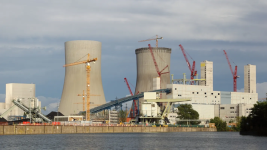
China is rapidly cornering the market on nuclear power, building reactors at a pace that is stunning Western nations while leaving the U.S. looking befuddled.

According to The New York Times, China has nearly as many reactors under construction as the rest of the world combined. It's on track to surpass U.S. nuclear capacity by 2030. The contrast is stark. While the first new U.S. reactors in a generation became a $17 billion punchline after being seven years late, China built 13 similar reactors in that same time frame.

How? A report from The Breakthrough Institute notes that nearly every Chinese project since 2010 has been built in seven years or less. This shatters the myth that reactors must take a decade. As consultant David Fishman told the Times, "China is practiced at building really big things... and those project management skills are transferable."

This matters because nuclear fission, the current standard, is a complicated tool. Think of it like a controlled demolition: It splits heavy atoms to release massive amounts of energy. This can produce huge amounts of low-carbon electricity 24/7, but it also creates long-lasting radioactive waste and carries safety risks.

The real prize is fusion, the "holy grail" of energy. This is the Iron Man arc reactor of energy. It smashes two tiny nuclei together to make one, releasing nearly unlimited power, just like the sun. This could one day slash utility bills. A fusion plant, for example, would need only 250 kilograms of fuel a year, while a coal plant needs nearly 3 million tons.

China is already moving on this. One Chinese fusion facility just installed a massive 400-ton component, speeding toward its 2027 goal.

The U.S. is innovating, too. One firm, Oklo, formerly chaired by OpenAI CEO Sam Altman, is building America's first privately funded nuclear fuel recycling center to turn old waste into new fuel for advanced microreactors.

Other researchers are developing more efficient fuel rods that last longer and create less waste. These clean energy advances are key to curbing air pollution, which research shows could prevent millions of premature deaths by improving human health.

"The Chinese are moving very, very fast," said Mark Hibbs, a senior fellow at the Carnegie Endowment for International Peace.

Source
 

The same technology is also being look to be utilized in other projects:

China has successfully achieved the first-ever thorium to uranium nuclear fuel conversion in a Thorium Molten Salt Reactor (TMSR), and obtained valid experimental data following thorium fuel loading, confirming the technical feasibility of thorium utilization in a molten-salt reactor nuclear energy system, according to the Chinese Academy of Sciences' Shanghai Institute of Applied Physics (SINAP) on Saturday: Xinhua
To view this content we will need your consent to set third party cookies.
For more detailed information, see our cookies page.


and,


and,

1764046175347.png
 
China’s AI-Robotics Boom Revolutionizes Manufacturing Amid Tariffs

In the heart of Shanghai’s industrial sprawl, a transformation is underway that could redefine global manufacturing. At Baosteel’s “dark factory,” a handful of operators monitor screens displaying real-time data streams, where artificial intelligence has slashed human intervention from every three minutes to once every half-hour. This isn’t science fiction; it’s the frontline of China’s aggressive push to integrate AI and robotics into its economic backbone. As President Trump’s tariffs loom large, threatening to reclaim manufacturing jobs for the U.S., Chinese leaders are betting on technology to maintain their dominance as the world’s factory floor. The Wall Street Journal article, Robots and AI Are Already Remaking the Chinese Economy, inspired the writers at WebProNews to take a deeper look at how China is doubling down on technology in order to drive its massive industrial economy.
The stakes are immense. China’s population is shrinking, with projections indicating a drop of 200 million people over the next three decades, while young workers increasingly shun grueling factory jobs. Average factory wages have soared, surpassing those in emerging competitors like India, and a skilled labor shortage could hit 30 million by this year, according to Beijing’s own disclosures. Amid rising global pushback against Chinese exports, AI emerges as a strategic lifeline, enabling faster, cheaper production with fewer hands on deck.
This isn’t mere experimentation. China installed 295,000 industrial robots last year—nearly nine times the U.S. figure and more than the rest of the world combined, as reported by the International Federation of Robotics. The country’s operational robot stock exceeded two million in 2024, the highest globally. Of the 131 factories recognized by the World Economic Forum for pioneering productivity through advanced tech, 45 are in mainland China, dwarfing the U.S.’s three.
The AI Lifeline Amid Geopolitical Tensions
For Xi Jinping, robust manufacturing isn’t just economic policy; it’s a pillar of national power in the contest with the U.S. Manufacturing contributes a quarter of China’s value-added GDP, far above the global average. Leaders like Hu Wangming, chairman of a major steel group, have declared embracing AI as essential for invincibility in this revolution. Baosteel, his Shanghai-listed unit, identified 125 AI applications by last year and aims for 1,000.
Yet, risks abound. AI could accelerate job losses, but officials wager the demographic decline will balance this, boosting productivity without spiking unemployment. Vice Minister Zhang Yunming calls it a “necessary task,” not optional. This mindset contrasts with global skepticism about AI’s transformative speed, but China charges ahead, deploying available tech faster to secure edges over rivals.
The evolution traces back to China’s economic opening in the 1970s, when cheap labor fueled growth. Millions migrated to coastal assembly lines. Today, that’s flipped: labor costs rise, and youth prefer other paths. AI steps in to fill gaps, though it won’t fix everything—China lags in frontier AI and chips, and U.S. firms like Amazon and Walmart automate similarly.
Factory Brains and Humanoid Helpers
China’s edge lies in scale and ambition, extending beyond tech hubs to places like Jingzhou, home to Midea’s vast facilities. The appliance giant, rivaling Whirlpool and LG, acquired German robotics firm Kuka nearly a decade ago to turbocharge automation. Today, Kuka’s robots operate under Midea’s AI “factory brain,” a central system coordinating 14 virtual agents for optimal task execution.
This brain ingests data and optimizes processes, as explained by Xi Wei, director of Midea’s Humanoid Robot Innovation Center and a University of Maryland Ph.D. who honed skills in Silicon Valley. In Jingzhou’s washing-machine plant, humanoid robots transport components to 3D inspection stations. If issues arise, AI devises fixes on the fly.
On assembly lines, the system identifies dryer models and directs robots for precise tasks, mimicking human flexibility. AI-powered glasses for remaining workers spot errors in seconds, down from 15 minutes. Midea’s revenue per employee jumped nearly 40% from 2015 to 2024, a testament to tech-driven efficiency.
From Apparel to Cement: AI’s Broad Reach
Over 500 miles east, Bosideng, a down jacket behemoth founded by billionaire Gao Dekang, leverages AI for design acceleration. Starting with 11 villagers in the 1970s, it now out-earns Canada Goose fourfold. Partnering with Zhejiang University, Bosideng’s AI model conceptualizes and virtualizes garments, cutting sample production from 100 days to 27 and costs by 60%. Their first AI-designed jacket hit markets last year.
Huawei, the sanctioned tech titan, anchors these efforts with its Pangu AI models, named after a mythical creator. Embedded with Conch Group in Wuhu, Huawei engineers optimize cement production. At Conch’s facility, used in landmarks like the Three Gorges Dam, AI predicts clinker strength with 85% accuracy—up from 70% manually—adjusting materials to avoid waste.
This precision trims coal use by 1%, saving $300,000 annually per line, with aims for 2% by 2026, potentially yielding tens of millions in savings company-wide. Developing these tools involved grueling trial and error, highlighting AI’s gradual global impact, even in China.
Ports of the Future: Automation at Sea
Xi’s priorities include upgrading ports to solidify export dominance. Tianjin Port, a giant, collaborates with Huawei on unmanned trucks and the OptVerse AI Solver, optimizing scheduling from 24 hours to 10 minutes. PortGPT, another Huawei joint, analyzes visuals to potentially replace human safety roles.
Half the world’s top-20 ports for efficiency are in China, per the World Bank and S&P Global Market Intelligence. Tianjin’s operations need 60% fewer workers, aided by no independent unions—unlike U.S. dockworkers who negotiated against full automation until 2030. Only one of 10 major U.S. ports uses driverless vehicles, per the Government Accountability Office.
A promotional video at Tianjin declares, “We are the future,” encapsulating China’s AI confidence. Posts on X echo this sentiment, highlighting Tianjin’s zero-carbon, AI-driven automation with minimal human presence, powered by 5G and Beidou navigation.
Trump’s Tariffs and China’s Counterplay
President Trump’s 2025 tariffs target China’s trade surplus, aiming to repatriate manufacturing. A Reuters report details tariffs on billions in imports to curb the deficit and fentanyl trade, as seen in Trump’s trade war with China in 2025. The Tax Foundation estimates an average $1,200 tax hike per U.S. household.
China responds by accelerating AI and robotics to produce more efficiently, blunting tariff impacts. An Economist piece notes tariff uncertainty disrupting Chinese manufacturing, yet trade with Asia grows, per Tariff uncertainty is throwing Chinese manufacturing into chaos.
Emerging markets thrive despite tariffs, outpacing AI stocks, as Inkl reports in Emerging Markets Are Crushing AI Stocks And Trump Tariffs—Here’s Why. China’s clustered ecosystems, like the Yangtze River Delta, fuel robotics gains under Made in China 2025, according to The AI Insider.
The Global Robotics Race Heats Up
China leads in robot density, surpassing Taiwan and the U.S., with 470 units per 10,000 workers—a 861% jump since 2015, as X posts note. The International Federation of Robotics reports China accounting for 52% of global installations in 2023.
ABC News warns of economic dilemmas from humanoids that walk, talk, and operate in human environments, sparking a global race, in Humanoid robots present an unprecedented dilemma for the economy.
Economic Transformations and Workforce Shifts
AI cuts apparel sample times by 70%, reduces steel mill oversight, and shortens port scheduling, as echoed in X posts and LiveMint’s Robots and AI are already remaking the Chinese economy. Factories export more with fewer workers, countering Trump’s push.
Yet, job displacement looms. ABC News discusses tax and UBI needs as robots remake labor. China’s shrinking population may absorb this, but globally, it’s a dilemma.
U.S. tariffs threaten AI innovation by raising costs, per AEI’s The Tariff Threat to America’s AI Moment. They tug against abundant energy and talent needed for AI growth.
Huawei’s Pivotal Innovations
Huawei’s 5G and AI enable Tianjin’s full automation, requiring just 25% of traditional workforce, as per their X post. This aligns with The Verge’s China’s robotic lead, noting China’s ninefold U.S. robot installations.
In steel, Baosteel’s AI integrations exemplify broader trends. Midea’s post-Kuka acquisition yields staggering robot density growth.
Challenges in AI Adoption

How Automation, Robotics, and AI Are Transforming China’s Economic Future
 
www.scmp.com

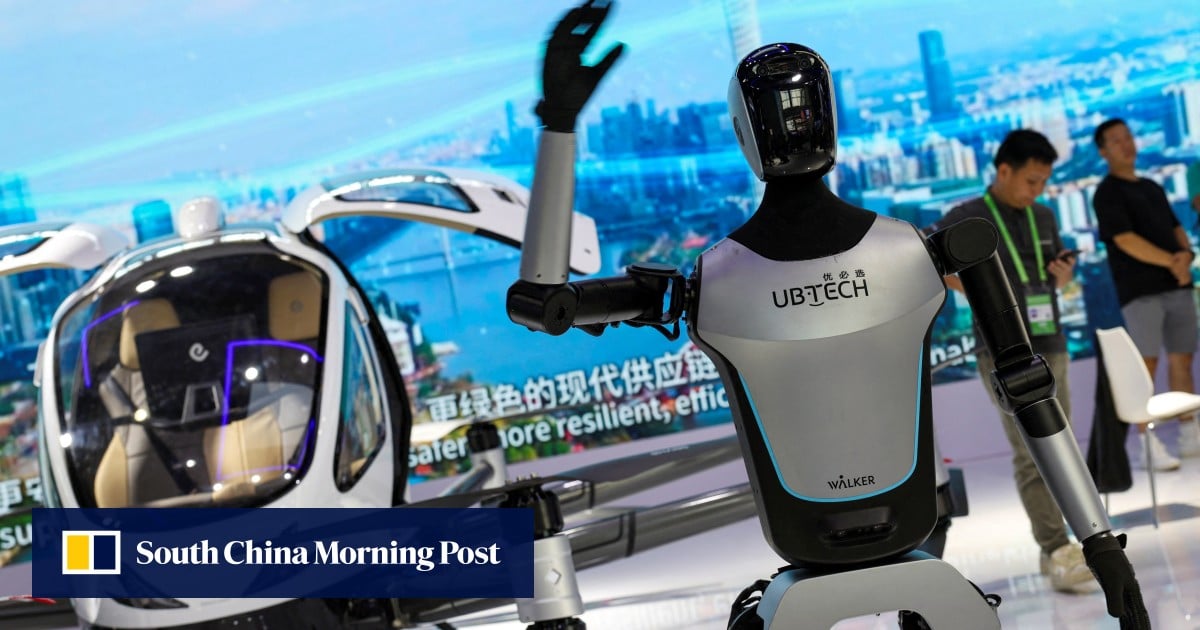
UBTech humanoid robots to patrol China-Vietnam border crossings

The initiative features the industrial-grade Walker S2, billed as the world’s first humanoid robot capable of replacing its own battery.

Published: 8:00pm, 25 Nov 2025

UBTech Robotics, one of China’s top robot manufacturers, said on Tuesday it had secured a major contract to deploy humanoids at border crossings to perform tasks such as guiding travellers, conducting inspections and handling logistics, as the country intensified efforts to apply robotics in the real world.

The company has struck a 264 million yuan (US$37 million) deal with a humanoid robot centre in Fangchenggang, a coastal city in the southern autonomous region of Guangxi, which shares a border with Vietnam. The project features the industrial-grade Walker S2, a model launched in July that was billed as the world’s first humanoid robot capable of replacing its own battery.

The pilot initiative would see humanoid robots deployed at borders to assist with traveller guidance, personnel flow management, patrols, logistics operations and commercial services. The robots would also conduct inspections at manufacturing sites for steel, copper and aluminium. Deliveries are expected to begin in December.

Cumulative orders for the Walker series, which started shipping this month, totalled 1.1 billion yuan so far, according to UBTech.

To view this content we will need your consent to set third party cookies.
For more detailed information, see our cookies page.

China unveils world’s first humanoid robot that can change its own batteries

The company was on target to deliver 500 industrial humanoid robots by year-end, with plans to increase production tenfold by next year, aiming for 10,000 units by 2027, said chief branding officer Michael Tam in an interview with the Post. The company also aimed to reduce manufacturing costs.

UBTech’s shares fell less than 1 per cent to HK$110.60 on Tuesday, following the announcement of a share placement plan to raise HK$3.11 billion (US$399.6 million) in Hong Kong.

The deployment is part of a broader national trend, as China’s robotics industry races to commercialise embodied artificial intelligence, supported by government policies. In addition to enterprise clients, government agencies across provinces are increasingly incorporating robots into their daily operations.

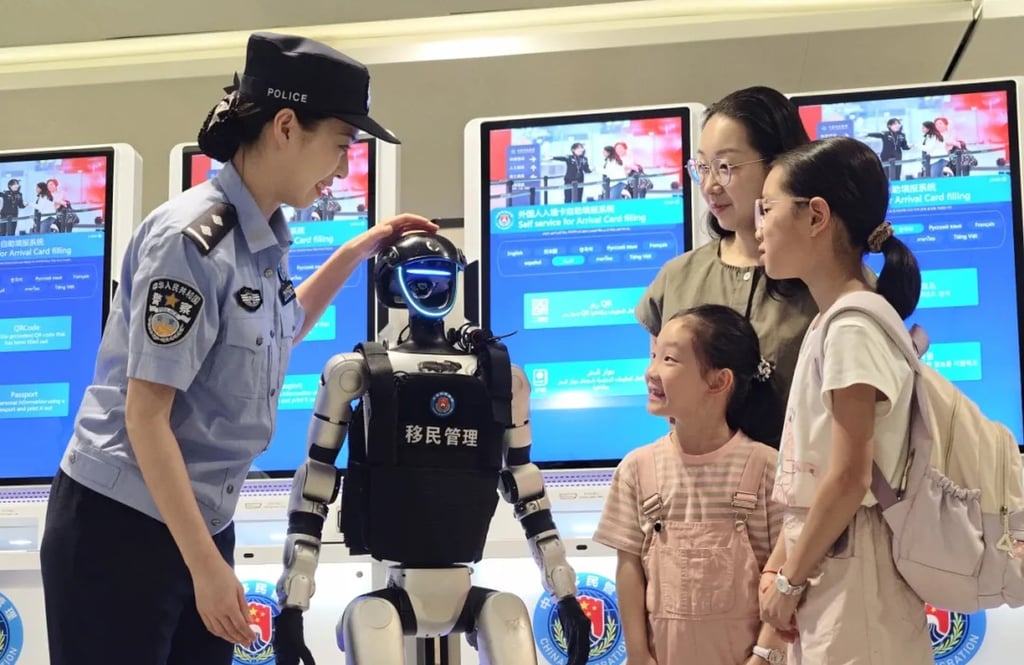
In July, the immigration department of eastern China’s Zhejiang province published a WeChat post highlighting its adoption of humanoids and four-legged robots, including those from Hangzhou-based Unitree Robotics. The agency said these machines could “perform repetitive and tedious daily duties” to help “save manpower”.

At Hangzhou Xiaoshan International Airport, a similar robot had been deployed to handle routine tasks such as answering passenger inquiries, according to a China Central Television report.

A Unitree robot seen at the Hangzhou immigration checkpoint. Photo: Handout

A Unitree robot seen at the Hangzhou immigration checkpoint. Photo: Handout

During this year’s Shanghai Cooperation Organisation Summit in the northern port city of Tianjin, immigration authorities deployed a multilingual robot developed by Beijing-based iBen Intelligence.

Earlier this year, Shenzhen Customs said it integrated leading AI start-up DeepSeek’s large language model into an inspection robot designed to identify and verify cargo information.

Police patrol robots have also been spotted on the streets of Shenzhen, Shanghai and Chengdu. They are frequently showcased in Chinese media as symbols of the nation’s growing embodied intelligence industry and its commitment to advancing “new quality productive forces”.

On Monday, China’s Ministry of Industry and Information Technology released a list of members for its national humanoid robotics committee, led by the regulator’s chief engineer Xie Shaofeng.

Unitree founder Wang Xingxing, AgiBot co-founder Peng Zhihui and UBTech technology chief Xiong Youjun, as well as Jiang Lei, chief scientist at Shanghai’s National and Local Co-built Humanoid Robotics Innovation Centre, were appointed as vice-directors.
 

World record: China’s flexible perovskite-silicon tandem solar cell hits 33.35% efficiency​

Perovskite tandem solar cells have emerged as promising candidates for next-generation photovoltaic technology.

Nov 27, 2025 11:18 AM EST

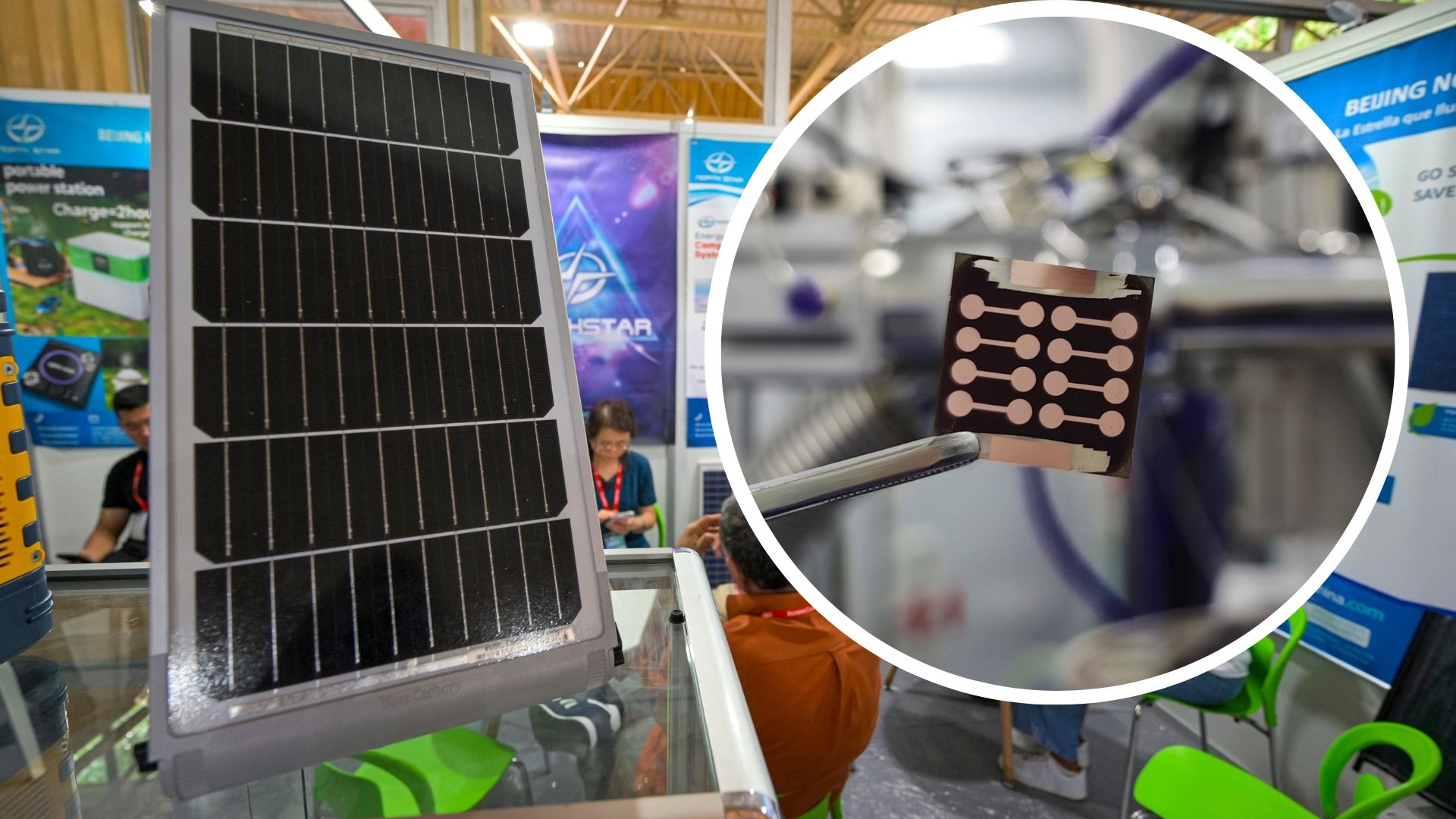
A Chinese company’s flexible perovskite-silicon tandem solar cell has achieved a power conversion efficiency of 33.35%. Longi’s solar cells’ performance result was certified by the United States’ National Renewable Energy Laboratory (NREL).

This marks the first and only world record efficiency for a flexible crystalline silicon-perovskite tandem solar cell certified by an international authoritative body in the global photovoltaic field, according to Longi.

This breakthrough lays a solid foundation for the commercial development of flexible silicon-based tandem cells in lightweight/flexible high-power photovoltaic applications such as space photovoltaics and vehicle-integrated photovoltaics, according to Longi.

Next-generation photovoltaic technology​

The company’s cells’ high efficiency comes at a time when perovskite tandem solar cells have emerged as promising candidates for next-generation photovoltaic technology due to their ultra-high power conversion efficiency.

A dual-buffer-layer strategy with a stress-release mechanism was implemented to synergistically mitigate ion bombardment during subsequent sputtering deposition and enhance interfacial adhesion while preserving efficient charge extraction.

The flexible tandem solar cell, based on this dual-buffer-layer, constructed on a 60-micron-thick ultra-thin silicon bottom cell, achieves a certified PCE of 33.4% on a 1-cm2 area, and a certified PCE of 29.8% on a wafer-sized area of 260-cm2 with a power-per-weight of up to 1.77 W/g.

Modified tandem solar cells demonstrate good durability​

The modified tandem solar cells demonstrate good durability, retaining over 97% of their initial power conversion efficiencies after 43000 bending cycles under a maximum curvature radius of around 40 mm in air, and around 97% after thermal cycling testing (−40 °C to 85 °C) for 250 cycles, according to the work published in Nature.

The resulting top cell features a SnOx bilayer contact structure, the C60 layer, a transparent back contact made of indium zinc oxide (IZO), a silver (Ag) metal contact, a perovskite absorber, a lithium fluoride (LiF) layer, and a self-assembled monolayer hole transport layer composed of ethylenediammonium diiodide (EDAI). Longi did not disclose whether the bottom silicon cell uses a heterojunction (HJT) or TOPCon design, as reported by PV Magazine.

Dual-buffer layer strategy improves interfacial adhesion​

Longi has maintained that the dual-buffer layer strategy improves interfacial adhesion while maintaining efficient charge extraction. The company claims that the interfacial adhesion is particularly critical in flexible tandem devices, which endure greater mechanical stress from bending compared to rigid cells.

Longi team applied a first tin oxide (SnOx) buffer layer to protect the perovskite and transport layers during the transparent conducting oxide sputtering process, performed via atomic layer deposition (ALD).

A second SnOx layer was then deposited through chemical vapor deposition (CVD) to enhance charge extraction and reduce resistive losses at the interface with the buckminsterfullerene (C60) layer, which is prone to delamination under environmental stress.

This double-layer structure design precisely resolves the conflict between the needs for stress buffering and efficient transport at the micro-nano scale. It ensures the tandem device achieves excellent bending durability while maintaining compatible and outstanding power generation capability.
 
1764310300399.png
@Michael is this true? also xiaomi Xring 01 chip (3nm) ? did they make all of them indegenously? or they manufactured them from TSMC?
 
Yes.

TSMC

Xiaomi does not have its own chip manufacturing factory.
They only design the chips; they don't manufacture them themselves.

Currently, the main gap between chip factories in mainland China and TSMC lies in the chip Wafer Yield.
I heard they will start producing EUV in next couple of years? currently they are testing them made using Laser-induced Discharge Plasma (LDP) method. What are you opinion in EUV machine and then in fab like TSMC?
 
I heard they will start producing EUV in next couple of years? currently they are testing them made using Laser-induced Discharge Plasma (LDP) method. What are you opinion in EUV machine and then in fab like TSMC?
Currently, the gap between us still exists.
There isn't much publicly available information, and I'm not a professional in this industry, so I can't answer your questions.

In the chip field, we are currently using some special methods to address the gap in chip manufacturing processes, such as chip stacking technology.

Xiaomi is a technology company known for its integration and marketing capabilities. They excel at integrating cutting-edge technology into the daily lives of ordinary people. However, core technology research and development is not their strong point. In this respect, the gap between them and Huawei is very, very large.

Huawei is currently investing massive amounts of capital and technical personnel in the chip field. However, due to political factors related to US sanctions, they rarely disclose specific technical information. Their latest chip, the "Kirin 9030," has already been released. This chip is entirely manufactured in mainland China and is unrelated to TSMC.
 

China has 3 reusable rockets lined up for launch as they vie to make history​

The Long March 12A, Zhuque-3 and Tianlong-3 are expected to be used to build the country’s massive internet satellite constellations
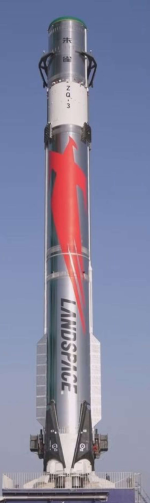
(From left) The state-owned Long March 12A, LandSpace’s Zhuque-3 and Space Pioneer’s Tianlong-3 are lined up at a launch site in northwest China. Photos: Handout

Ling Xin in Ohio
Published: 1:59pm, 27 Nov 2025

The race to launch China’s first reusable rocket is heating up, with three contenders now lined up at the Jiuquan Satellite Launch Centre in the country’s northwest for flights that could make history.

On the pads stand the state-owned Long March 12A, LandSpace’s Zhuque-3, and Space Pioneer’s Tianlong-3 – all three of which are expected to be used to build China’s massive internet satellite constellations and to compete internationally on low-cost, rapid-turnaround missions.

Both the Long March 12A and Zhuque-3 are aiming for December lift-offs that will try to reach orbit and bring their first stages back to Earth about 400km downrange. Tianlong-3 is also designed for reuse, but is not expected to attempt a landing on its debut flight.

The Long March 12A is aiming for a December launch. Photo: Handout

A Beijing-based rocket engineer familiar with the matter said the Long March 12A’s technical readiness was “on par” with Zhuque-3’s. But he said there had been “internal considerations” about which rocket should get the historic first attempt.
The Long March 12A is aiming for a December launch. Photo: Handout


“Pulling off China’s first rocket landing would be huge,” the person said, speaking on condition of anonymity. “State-owned contractors may try to leverage their influence to go first.”

In October, LandSpace announced that Zhuque-3 had completed fuelling rehearsals and a full-duration engine firing at Jiuquan. Its launch was later delayed after the Tiangong space station’s debris incident in early November, and moved to the final weekend of the month.

“Pulling off China’s first rocket landing would be huge,” the person said, speaking on condition of anonymity. “State-owned contractors may try to leverage their influence to go first.”
In October, LandSpace announced that Zhuque-3 had completed fuelling rehearsals and a full-duration engine firing at Jiuquan. Its launch was later delayed after the Tiangong space station’s debris incident in early November, and moved to the final weekend of the month.“But it has been postponed again,” the source said.

“But it has been postponed again,” the source said.

Meanwhile, photos shared by space enthusiasts on social media show the Long March 12A being rolled out and raised on the pad, apparently in preparation for a major engine test.

If either rocket – similar in size and both powered by liquid methane and liquid oxygen – manages to reach orbit and land safely, China will become the second country after the United States to do so with an orbital-class booster.

Texas-based SpaceX achieved the world’s first such landing nearly a decade ago with its Falcon 9 rocket, which remains the only rocket that routinely returns and reuses its booster. Earlier this month, Blue Origin’s New Glenn became the second rocket capable of landing after an orbital mission.

Meanwhile, photos shared by space enthusiasts on social media show the Long March 12A being rolled out and raised on the pad, apparently in preparation for a major engine test.
If either rocket – similar in size and both powered by liquid methane and liquid oxygen – manages to reach orbit and land safely, China will become the second country after the United States to do so with an orbital-class booster.

Texas-based SpaceX achieved the world’s first such landing nearly a decade ago with its Falcon 9 rocket, which remains the only rocket that routinely returns and reuses its booster. Earlier this month, Blue Origin’s New Glenn became the second rocket capable of landing after an orbital mission.


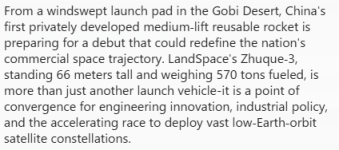
Zhuque-3 is 66 metres tall (216.5 feet), 4.5 metres wide, built from stainless steel and powered on its first stage by nine Tianque-12A engines. The first stage is designed to fly at least 20 times.

In reusable mode, Zhuque-3 can carry 18 tonnes – roughly 18 satellites at a time – to help build China’s planned mega-constellations, including the state-owned Guowang and Shanghai’s Qianfan project, which are both expected to involve more than 10,000 satellites.

The Long March 12A, developed by the Shanghai Academy of Spaceflight Technology under the China Aerospace Science and Technology Corporation, can lift 12 tonnes to low-Earth orbit. It is derived from the kerosene-fuelled Long March 12 but upgraded to run on methane and designed with reuse in mind.

Zhuque-3 is 66 metres tall (216.5 feet), 4.5 metres wide, built from stainless steel and powered on its first stage by nine Tianque-12A engines. The first stage is designed to fly at least 20 times.

In reusable mode, Zhuque-3 can carry 18 tonnes – roughly 18 satellites at a time – to help build China’s planned mega-constellations, including the state-owned Guowang and Shanghai’s Qianfan project, which are both expected to involve more than 10,000 satellites.

The Long March 12A, developed by the Shanghai Academy of Spaceflight Technology under the China Aerospace Science and Technology Corporation, can lift 12 tonnes to low-Earth orbit. It is derived from the kerosene-fuelled Long March 12 but upgraded to run on methane and designed with reuse in mind.

Elon Musk commented on Zhuque-3 on social media last month, saying it surpassed the Falcon 9 on multiple key metrics. “They have added aspects of Starship – such as stainless steel and methalox – to a Falcon 9-like architecture, which would enable it to beat Falcon 9,” he wrote.

But he said Starship itself was “in another league”, adding that “if they are lucky, it might outperform Falcon in five years, by which time SpaceX will be launching Starship”.

Landspace is also working on a Starship-scale rocket known informally as Zhuque-X. Zhuque-X will be powered by a new, more powerful engine called Lanyan-20. As of September, the 200-tonne Lanyan-20 had conducted over 30 test firings, reaching about half of its planned thrust.

Elon Musk commented on Zhuque-3 on social media last month, saying it surpassed the Falcon 9 on multiple key metrics. “They have added aspects of Starship – such as stainless steel and methalox – to a Falcon 9-like architecture, which would enable it to beat Falcon 9,” he wrote.

But he said Starship itself was “in another league”, adding that “if they are lucky, it might outperform Falcon in five years, by which time SpaceX will be launching Starship”.
Landspace is also working on a Starship-scale rocket known informally as Zhuque-X. Zhuque-X will be powered by a new, more powerful engine called Lanyan-20. As of September, the 200-tonne Lanyan-20 had conducted over 30 test firings, reaching about half of its planned thrust.
 

China has 3 reusable rockets lined up for launch as they vie to make history​

The Long March 12A, Zhuque-3 and Tianlong-3 are expected to be used to build the country’s massive internet satellite constellations
(From left) The state-owned Long March 12A, LandSpace’s Zhuque-3 and Space Pioneer’s Tianlong-3 are lined up at a launch site in northwest China. Photos: Handout

Ling Xin in Ohio
Published: 1:59pm, 27 Nov 2025

The race to launch China’s first reusable rocket is heating up, with three contenders now lined up at the Jiuquan Satellite Launch Centre in the country’s northwest for flights that could make history.

On the pads stand the state-owned Long March 12A, LandSpace’s Zhuque-3, and Space Pioneer’s Tianlong-3 – all three of which are expected to be used to build China’s massive internet satellite constellations and to compete internationally on low-cost, rapid-turnaround missions.

Both the Long March 12A and Zhuque-3 are aiming for December lift-offs that will try to reach orbit and bring their first stages back to Earth about 400km downrange. Tianlong-3 is also designed for reuse, but is not expected to attempt a landing on its debut flight.

The Long March 12A is aiming for a December launch. Photo: Handout

A Beijing-based rocket engineer familiar with the matter said the Long March 12A’s technical readiness was “on par” with Zhuque-3’s. But he said there had been “internal considerations” about which rocket should get the historic first attempt.
The Long March 12A is aiming for a December launch. Photo: Handout


“Pulling off China’s first rocket landing would be huge,” the person said, speaking on condition of anonymity. “State-owned contractors may try to leverage their influence to go first.”

In October, LandSpace announced that Zhuque-3 had completed fuelling rehearsals and a full-duration engine firing at Jiuquan. Its launch was later delayed after the Tiangong space station’s debris incident in early November, and moved to the final weekend of the month.

“Pulling off China’s first rocket landing would be huge,” the person said, speaking on condition of anonymity. “State-owned contractors may try to leverage their influence to go first.”
In October, LandSpace announced that Zhuque-3 had completed fuelling rehearsals and a full-duration engine firing at Jiuquan. Its launch was later delayed after the Tiangong space station’s debris incident in early November, and moved to the final weekend of the month.“But it has been postponed again,” the source said.

“But it has been postponed again,” the source said.

Meanwhile, photos shared by space enthusiasts on social media show the Long March 12A being rolled out and raised on the pad, apparently in preparation for a major engine test.

If either rocket – similar in size and both powered by liquid methane and liquid oxygen – manages to reach orbit and land safely, China will become the second country after the United States to do so with an orbital-class booster.

Texas-based SpaceX achieved the world’s first such landing nearly a decade ago with its Falcon 9 rocket, which remains the only rocket that routinely returns and reuses its booster. Earlier this month, Blue Origin’s New Glenn became the second rocket capable of landing after an orbital mission.

Meanwhile, photos shared by space enthusiasts on social media show the Long March 12A being rolled out and raised on the pad, apparently in preparation for a major engine test.
If either rocket – similar in size and both powered by liquid methane and liquid oxygen – manages to reach orbit and land safely, China will become the second country after the United States to do so with an orbital-class booster.

Texas-based SpaceX achieved the world’s first such landing nearly a decade ago with its Falcon 9 rocket, which remains the only rocket that routinely returns and reuses its booster. Earlier this month, Blue Origin’s New Glenn became the second rocket capable of landing after an orbital mission.


Zhuque-3 is 66 metres tall (216.5 feet), 4.5 metres wide, built from stainless steel and powered on its first stage by nine Tianque-12A engines. The first stage is designed to fly at least 20 times.

In reusable mode, Zhuque-3 can carry 18 tonnes – roughly 18 satellites at a time – to help build China’s planned mega-constellations, including the state-owned Guowang and Shanghai’s Qianfan project, which are both expected to involve more than 10,000 satellites.

The Long March 12A, developed by the Shanghai Academy of Spaceflight Technology under the China Aerospace Science and Technology Corporation, can lift 12 tonnes to low-Earth orbit. It is derived from the kerosene-fuelled Long March 12 but upgraded to run on methane and designed with reuse in mind.

Zhuque-3 is 66 metres tall (216.5 feet), 4.5 metres wide, built from stainless steel and powered on its first stage by nine Tianque-12A engines. The first stage is designed to fly at least 20 times.

In reusable mode, Zhuque-3 can carry 18 tonnes – roughly 18 satellites at a time – to help build China’s planned mega-constellations, including the state-owned Guowang and Shanghai’s Qianfan project, which are both expected to involve more than 10,000 satellites.

The Long March 12A, developed by the Shanghai Academy of Spaceflight Technology under the China Aerospace Science and Technology Corporation, can lift 12 tonnes to low-Earth orbit. It is derived from the kerosene-fuelled Long March 12 but upgraded to run on methane and designed with reuse in mind.

Elon Musk commented on Zhuque-3 on social media last month, saying it surpassed the Falcon 9 on multiple key metrics. “They have added aspects of Starship – such as stainless steel and methalox – to a Falcon 9-like architecture, which would enable it to beat Falcon 9,” he wrote.

But he said Starship itself was “in another league”, adding that “if they are lucky, it might outperform Falcon in five years, by which time SpaceX will be launching Starship”.

Landspace is also working on a Starship-scale rocket known informally as Zhuque-X. Zhuque-X will be powered by a new, more powerful engine called Lanyan-20. As of September, the 200-tonne Lanyan-20 had conducted over 30 test firings, reaching about half of its planned thrust.

Elon Musk commented on Zhuque-3 on social media last month, saying it surpassed the Falcon 9 on multiple key metrics. “They have added aspects of Starship – such as stainless steel and methalox – to a Falcon 9-like architecture, which would enable it to beat Falcon 9,” he wrote.

But he said Starship itself was “in another league”, adding that “if they are lucky, it might outperform Falcon in five years, by which time SpaceX will be launching Starship”.
Landspace is also working on a Starship-scale rocket known informally as Zhuque-X. Zhuque-X will be powered by a new, more powerful engine called Lanyan-20. As of September, the 200-tonne Lanyan-20 had conducted over 30 test firings, reaching about half of its planned thrust.
The launch plan for ZQ-3 has been changed. CCTV reporters have already left the scene.
1764399707772.png
 

Zhuque‑3’s Reusable Methane Rocket Poised to Reshape China’s Space Economy

Story by William Harrison • 16h

1764639437377.png
1764639494689.png

So far, China's private launch sector has been confined mostly to small‑lift vehicles with payloads under one ton, enough for technology demonstrations but far short of what is needed for large-scale constellation deployment. Zhuque‑3's five‑ton LEO payload capacity in reusable mode rising to 21 tons expendable changes that equation. A single launch can carry over ten broadband satellites, directly matching the needs of China SatNet's planned 13,000‑satellite Guowang network and private mega‑constellations such as Qianfan. This capacity is critical for meeting International Telecommunication Union deployment milestones and for lowering per-satellite launch costs in face of global competition from Starlink.
 

China Green Development Wuhai Semi-Solid-State Battery ESS Power Station Commences Operation​

Dec 1, 2025 17:45

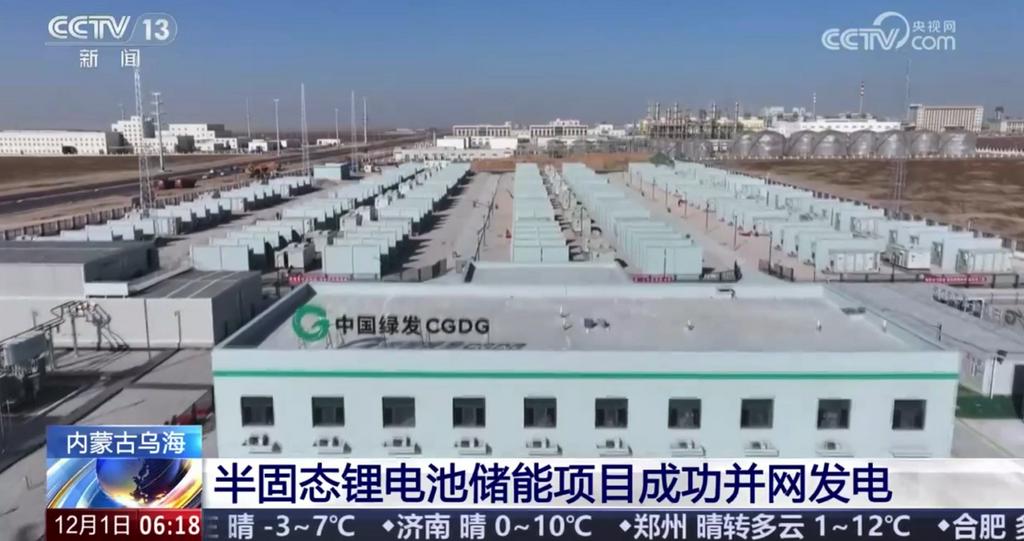
Highlights: On November 30, 2025, a semi-solid-state battery energy storage power station with a capacity of 200 MW/800 MWh was successfully connected to the grid in Wuhai, Inner Mongolia. Utilizing Qingtao Energy's technology, the station achieves a cycle life of up to 12,000 cycles. This marks the first successful large-scale commercial application of semi-solid-state battery energy storage.

On December 1, 2025, according to CCTV News, China Green Development Group's 200 MW/800 MWh semi-solid-state battery energy storage project in Wuhai, Inner Mongolia, was connected to the grid, signaling the beginning of large-scale commercial operation for semi-solid-state energy storage technology. The project covers an area of approximately 100 mu and is equipped with 160 ESS battery cabins and 40 integrated converter and step-up cabins.

imagessgqcI20251201171730.jpeg


At 21:59 on November 30, at the site of China Green Development Group's Wuhai ESS power station project, the completion of the return command marked the successful grid connection of China's largest grid-side independent new-type energy storage project using semi-solid-state lithium batteries.

Liu Xiaofei, Assistant General Manager of China Green Development Group's Inner Mongolia Branch: The project provides peak shaving and frequency regulation capabilities with a power of 200 MW and a capacity of 800 MWh, delivering 189 million kWh of clean electricity to the grid annually.

Qin Lei, Project Manager of the Wuhai ESS Project at China Green Development Group's Inner Mongolia Branch: The project adopts semi-solid-state LFP battery technology independently developed by Qingtao Energy. Thanks to the solid-liquid hybrid electrolyte technology, the cycle life reaches 12,000 cycles.

The "Implementation Rules for Independent New-Type Energy Storage Power Station Projects" issued by the autonomous regional government specify a capacity compensation mechanism. The compensation standard for 2025 is 0.35 yuan/kWh, with a compensation period of 10 years, providing stable revenue expectations for ESS project investments. As of H1 2025, the total scale of new-type energy storage in Inner Mongolia reached 11.08 million kW (i.e., 11.08 GW), making it the first province in China to exceed 10 million kW (i.e., 10 GW) in new-type energy storage installations.

Layout of Wuhai Solid-State Battery ProjectWuhai's Natural Advantages: The arid climate is suitable for solid-state battery production; electricity prices are low, and supporting industries provide strong backing.

Wuhai's Policy Strengths: The "Wuhai Investment Guide" outlines four key industry chains for investment promotion, with the solid-state battery section as follows.
In the integrated solid-state battery industry chain, Wuhai City focuses on attracting projects such as silicon carbon anode materials for solid-state batteries, cathode materials like LFP and LMO, solid-state electrolyte materials including sulphides, polymers, and oxides, battery cell and battery module processing, battery application support, and solid-state lithium battery recycling. It also aims to develop supporting industries for NEVs, drones, electric vertical take-off and landing aircraft (eVTOL), and more.

Wuhai's comprehensive solid-state battery industry system is gaining momentum. With new projects gradually commencing production, the city is expected to achieve a capacity of 200,000 mt for solid-state battery cathode and anode materials and 30 GWh for solid-state batteries by 2030.

Semi-solid-state battery (solid-liquid battery) ESS applications may find significant markets in high-latitude scenarios. Domestically, integrating with wind and solar power generation in north China could create commercial profitability. Overseas regions such as Mongolia, Russia, Northern Europe, and North America will also be potential application areas.

According to SMM forecasts, all-solid-state battery shipments will reach 13.5 GWh by 2028, while semi-solid-state battery shipments will reach 160 GWh. Global lithium-ion battery demand is projected to reach approximately 2,800 GWh by 2030, with the EV sector's lithium-ion battery demand showing a CAGR of around 11% from 2024 to 2030, ESS lithium-ion battery demand at a CAGR of about 27%, and consumer electronics lithium battery demand at a CAGR of roughly 10%. Global solid-state battery penetration is estimated at about 0.1% in 2025, with all-solid-state battery penetration expected to reach around 4% by 2030, and global solid-state battery penetration potentially approaching 10% by 2035.


EngineAI T800 Full-Size General Humanoid Robot Officially Launched to Disrupt!

To view this content we will need your consent to set third party cookies.
For more detailed information, see our cookies page.


Streamlined Aesthetics and High-Strength Alloy Chassis​

Aviation-grade aluminum alloy panels, offering a combination of lightweight properties and impact resistance to perform in complex environments
The streamlined design features sharp, clean lines.

Sustained High-Performance Cooling System​

The leg joint active cooling system ensures sustained peak performance at all times.
Allowing the robot to thrive under heavy loads and high temperatures.

Multi-modal Dexterous Hand​

With 7 degrees of freedom (DOF) per hand, a payload capacity of 5 kg, and integrated tactile sensing.
It enables fine grasping and flexible manipulation, adapting to diverse object handling requirements.

Omnidirectional Sensor Fusion System​

360° LiDAR for multi-dimensional perception;
millisecond-level data processing for precise obstacle avoidance.

Modular Solid-State Battery Architecture​

With its modular solid-state lithium battery, it achieves a significant increase in energy density.

Delivers up to 4 hours of powerful endurance, easily handling various high-intensity, long-duration operation scenarios.

Coordinated movement of high-degree-of-freedom joints.​

Full-stack in-house developed with 29 degrees of freedom (DOF) for the whole body (excluding dexterous hands), capable of performing martial arts, dexterous manipulation, grasping, and other tasks with precision.

High-degrees-of-freedom (DOF) joints and anthropomorphic motion design enable seamless transitions between complex actions.

Basic Version : 180000¥
Open Source Version : 240000¥
Pro Version : 280000¥
Max Version :360000¥
 
EngineAl T800 BTS Footage: Setting the Record Straight on CGI Rumors

To view this content we will need your consent to set third party cookies.
For more detailed information, see our cookies page.
 
Last edited:

Users who are viewing this thread

Country Watch Latest

Back
Top