China’s AI-Robotics Boom Revolutionizes Manufacturing Amid Tariffs
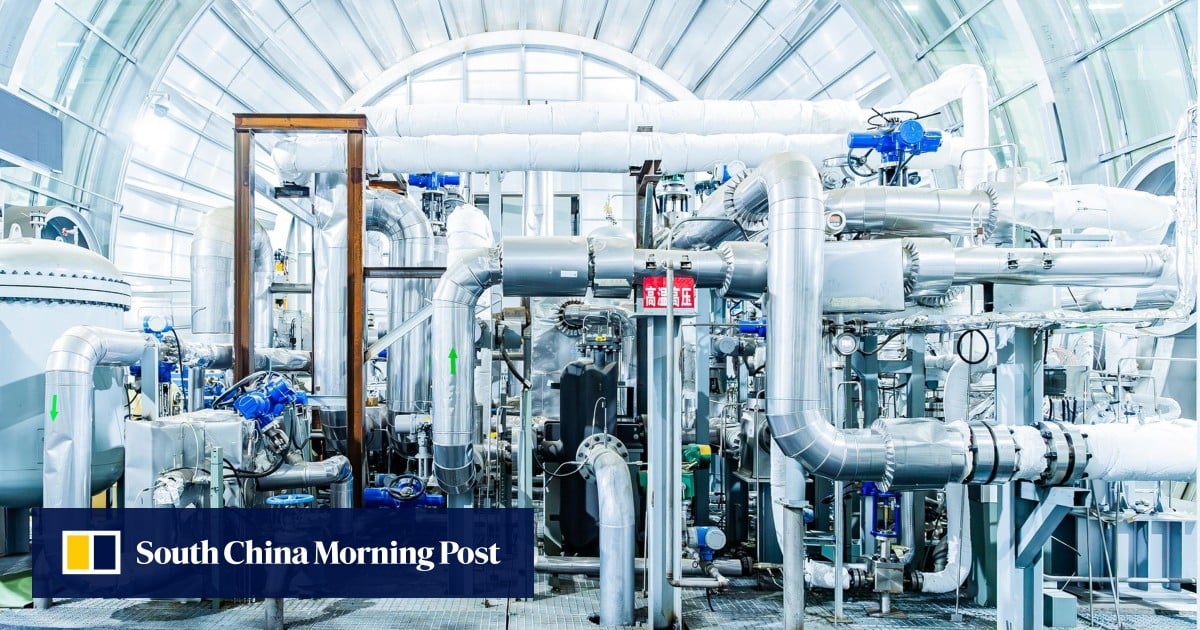
In the heart of Shanghai’s industrial sprawl, a transformation is underway that could redefine global manufacturing. At Baosteel’s “dark factory,” a handful of operators monitor screens displaying real-time data streams, where artificial intelligence has slashed human intervention from every three minutes to once every half-hour. This isn’t science fiction; it’s the frontline of China’s aggressive push to integrate AI and robotics into its economic backbone. As President Trump’s tariffs loom large, threatening to reclaim manufacturing jobs for the U.S., Chinese leaders are betting on technology to maintain their dominance as the world’s factory floor. The Wall Street Journal article, Robots and AI Are Already Remaking the Chinese Economy, inspired the writers at WebProNews to take a deeper look at how China is doubling down on technology in order to drive its massive industrial economy.
The stakes are immense. China’s population is shrinking, with projections indicating a drop of 200 million people over the next three decades, while young workers increasingly shun grueling factory jobs. Average factory wages have soared, surpassing those in emerging competitors like India, and a skilled labor shortage could hit 30 million by this year, according to Beijing’s own disclosures. Amid rising global pushback against Chinese exports, AI emerges as a strategic lifeline, enabling faster, cheaper production with fewer hands on deck.
This isn’t mere experimentation. China installed 295,000 industrial robots last year—nearly nine times the U.S. figure and more than the rest of the world combined, as reported by the International Federation of Robotics. The country’s operational robot stock exceeded two million in 2024, the highest globally. Of the 131 factories recognized by the World Economic Forum for pioneering productivity through advanced tech, 45 are in mainland China, dwarfing the U.S.’s three.
The AI Lifeline Amid Geopolitical Tensions
For Xi Jinping, robust manufacturing isn’t just economic policy; it’s a pillar of national power in the contest with the U.S. Manufacturing contributes a quarter of China’s value-added GDP, far above the global average. Leaders like Hu Wangming, chairman of a major steel group, have declared embracing AI as essential for invincibility in this revolution. Baosteel, his Shanghai-listed unit, identified 125 AI applications by last year and aims for 1,000.
Yet, risks abound. AI could accelerate job losses, but officials wager the demographic decline will balance this, boosting productivity without spiking unemployment. Vice Minister Zhang Yunming calls it a “necessary task,” not optional. This mindset contrasts with global skepticism about AI’s transformative speed, but China charges ahead, deploying available tech faster to secure edges over rivals.
The evolution traces back to China’s economic opening in the 1970s, when cheap labor fueled growth. Millions migrated to coastal assembly lines. Today, that’s flipped: labor costs rise, and youth prefer other paths. AI steps in to fill gaps, though it won’t fix everything—China lags in frontier AI and chips, and U.S. firms like Amazon and Walmart automate similarly.
Factory Brains and Humanoid Helpers
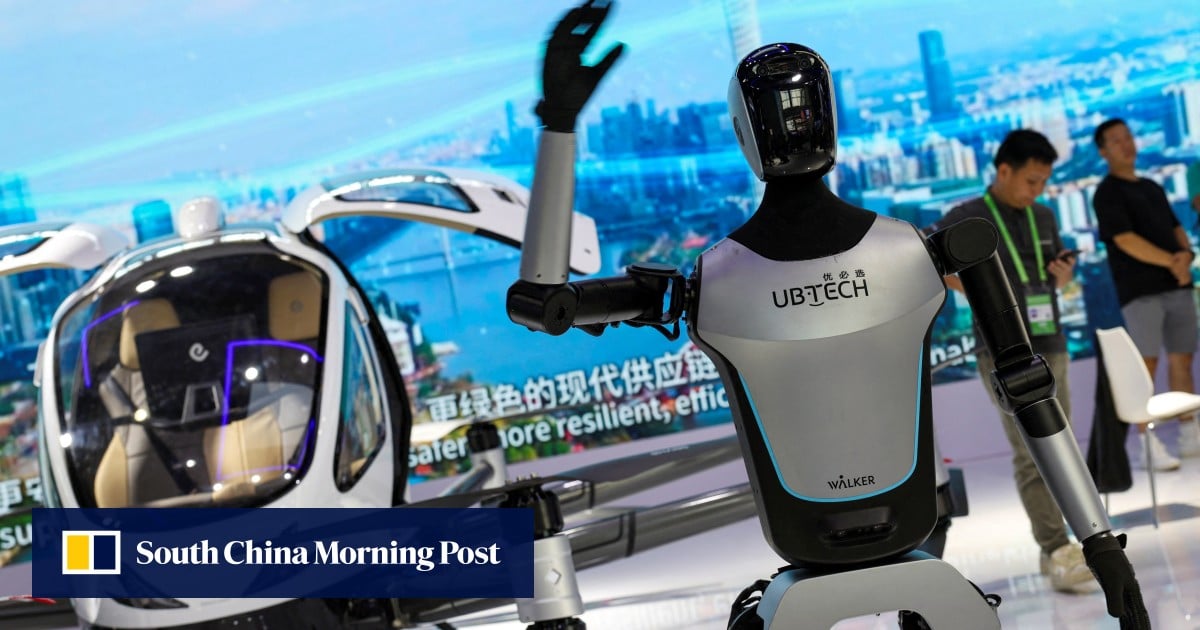
China’s edge lies in scale and ambition, extending beyond tech hubs to places like Jingzhou, home to Midea’s vast facilities. The appliance giant, rivaling Whirlpool and LG, acquired German robotics firm Kuka nearly a decade ago to turbocharge automation. Today, Kuka’s robots operate under Midea’s AI “factory brain,” a central system coordinating 14 virtual agents for optimal task execution.
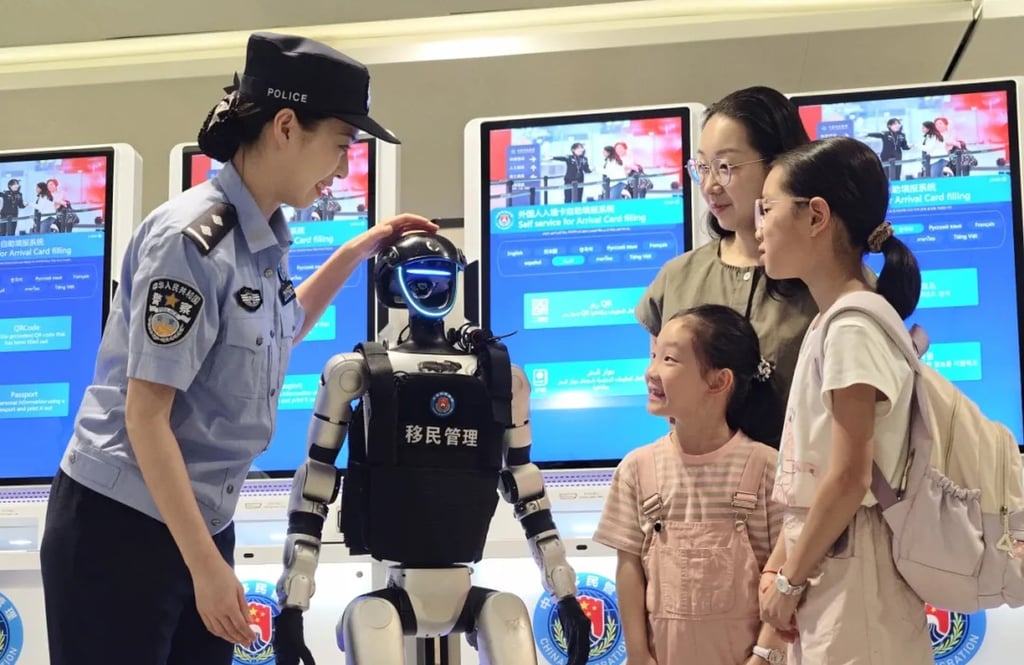
This brain ingests data and optimizes processes, as explained by Xi Wei, director of Midea’s Humanoid Robot Innovation Center and a University of Maryland Ph.D. who honed skills in Silicon Valley. In Jingzhou’s washing-machine plant, humanoid robots transport components to 3D inspection stations. If issues arise, AI devises fixes on the fly.
On assembly lines, the system identifies dryer models and directs robots for precise tasks, mimicking human flexibility. AI-powered glasses for remaining workers spot errors in seconds, down from 15 minutes. Midea’s revenue per employee jumped nearly 40% from 2015 to 2024, a testament to tech-driven efficiency.
From Apparel to Cement: AI’s Broad Reach
Over 500 miles east, Bosideng, a down jacket behemoth founded by billionaire Gao Dekang, leverages AI for design acceleration. Starting with 11 villagers in the 1970s, it now out-earns Canada Goose fourfold. Partnering with Zhejiang University, Bosideng’s AI model conceptualizes and virtualizes garments, cutting sample production from 100 days to 27 and costs by 60%. Their first AI-designed jacket hit markets last year.
Huawei, the sanctioned tech titan, anchors these efforts with its Pangu AI models, named after a mythical creator. Embedded with Conch Group in Wuhu, Huawei engineers optimize cement production. At Conch’s facility, used in landmarks like the Three Gorges Dam, AI predicts clinker strength with 85% accuracy—up from 70% manually—adjusting materials to avoid waste.
This precision trims coal use by 1%, saving $300,000 annually per line, with aims for 2% by 2026, potentially yielding tens of millions in savings company-wide. Developing these tools involved grueling trial and error, highlighting AI’s gradual global impact, even in China.
Ports of the Future: Automation at Sea
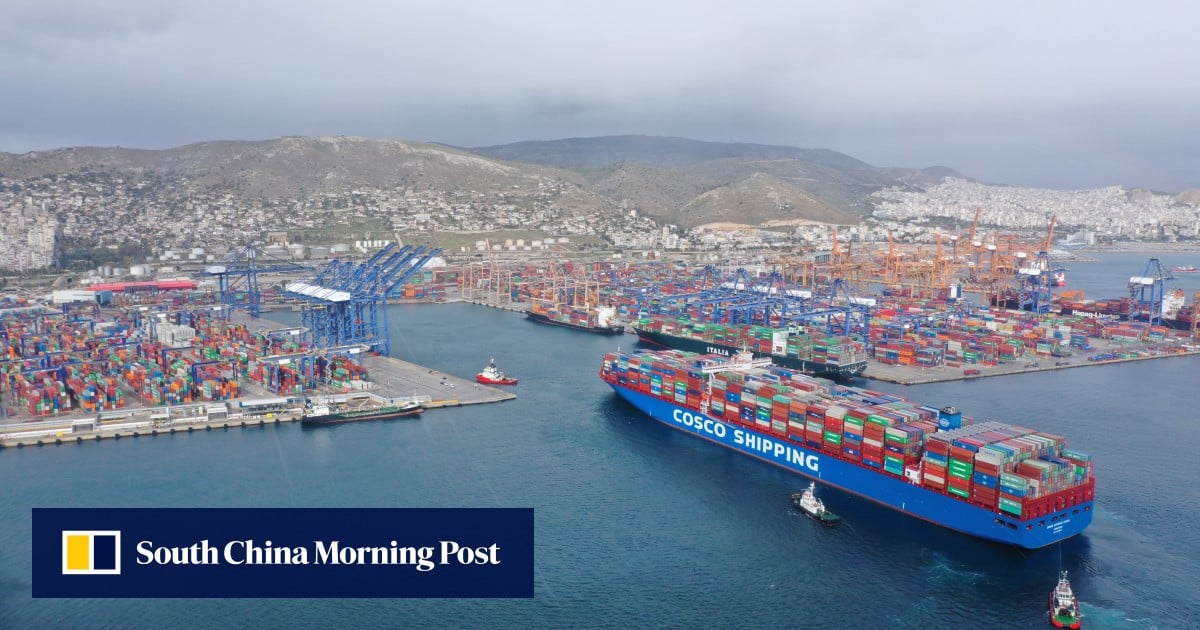
Xi’s priorities include upgrading ports to solidify export dominance. Tianjin Port, a giant, collaborates with Huawei on unmanned trucks and the OptVerse AI Solver, optimizing scheduling from 24 hours to 10 minutes. PortGPT, another Huawei joint, analyzes visuals to potentially replace human safety roles.
Half the world’s top-20 ports for efficiency are in China, per the World Bank and S&P Global Market Intelligence. Tianjin’s operations need 60% fewer workers, aided by no independent unions—unlike U.S. dockworkers who negotiated against full automation until 2030. Only one of 10 major U.S. ports uses driverless vehicles, per the Government Accountability Office.
A promotional video at Tianjin declares, “We are the future,” encapsulating China’s AI confidence. Posts on X echo this sentiment, highlighting Tianjin’s zero-carbon, AI-driven automation with minimal human presence, powered by 5G and Beidou navigation.
Trump’s Tariffs and China’s Counterplay
President Trump’s 2025 tariffs target China’s trade surplus, aiming to repatriate manufacturing. A Reuters report details tariffs on billions in imports to curb the deficit and fentanyl trade, as seen in Trump’s trade war with China in 2025. The Tax Foundation estimates an average $1,200 tax hike per U.S. household.
China responds by accelerating AI and robotics to produce more efficiently, blunting tariff impacts. An Economist piece notes tariff uncertainty disrupting Chinese manufacturing, yet trade with Asia grows, per Tariff uncertainty is throwing Chinese manufacturing into chaos.
Emerging markets thrive despite tariffs, outpacing AI stocks, as Inkl reports in Emerging Markets Are Crushing AI Stocks And Trump Tariffs—Here’s Why. China’s clustered ecosystems, like the Yangtze River Delta, fuel robotics gains under Made in China 2025, according to The AI Insider.
The Global Robotics Race Heats Up
China leads in robot density, surpassing Taiwan and the U.S., with 470 units per 10,000 workers—a 861% jump since 2015, as X posts note. The International Federation of Robotics reports China accounting for 52% of global installations in 2023.
ABC News warns of economic dilemmas from humanoids that walk, talk, and operate in human environments, sparking a global race, in Humanoid robots present an unprecedented dilemma for the economy.
Economic Transformations and Workforce Shifts
AI cuts apparel sample times by 70%, reduces steel mill oversight, and shortens port scheduling, as echoed in X posts and LiveMint’s Robots and AI are already remaking the Chinese economy. Factories export more with fewer workers, countering Trump’s push.
Yet, job displacement looms. ABC News discusses tax and UBI needs as robots remake labor. China’s shrinking population may absorb this, but globally, it’s a dilemma.
U.S. tariffs threaten AI innovation by raising costs, per AEI’s The Tariff Threat to America’s AI Moment. They tug against abundant energy and talent needed for AI growth.
Huawei’s Pivotal Innovations
Huawei’s 5G and AI enable Tianjin’s full automation, requiring just 25% of traditional workforce, as per their X post. This aligns with The Verge’s China’s robotic lead, noting China’s ninefold U.S. robot installations.
In steel, Baosteel’s AI integrations exemplify broader trends. Midea’s post-Kuka acquisition yields staggering robot density growth.
Challenges in AI Adoption
How Automation, Robotics, and AI Are Transforming China’s Economic Future


 www.thecooldown.com