China Science And Technology News

Recently I had this vujà dé—the opposite of déjà vu—where familiar sights suddenly offer a new perspective.

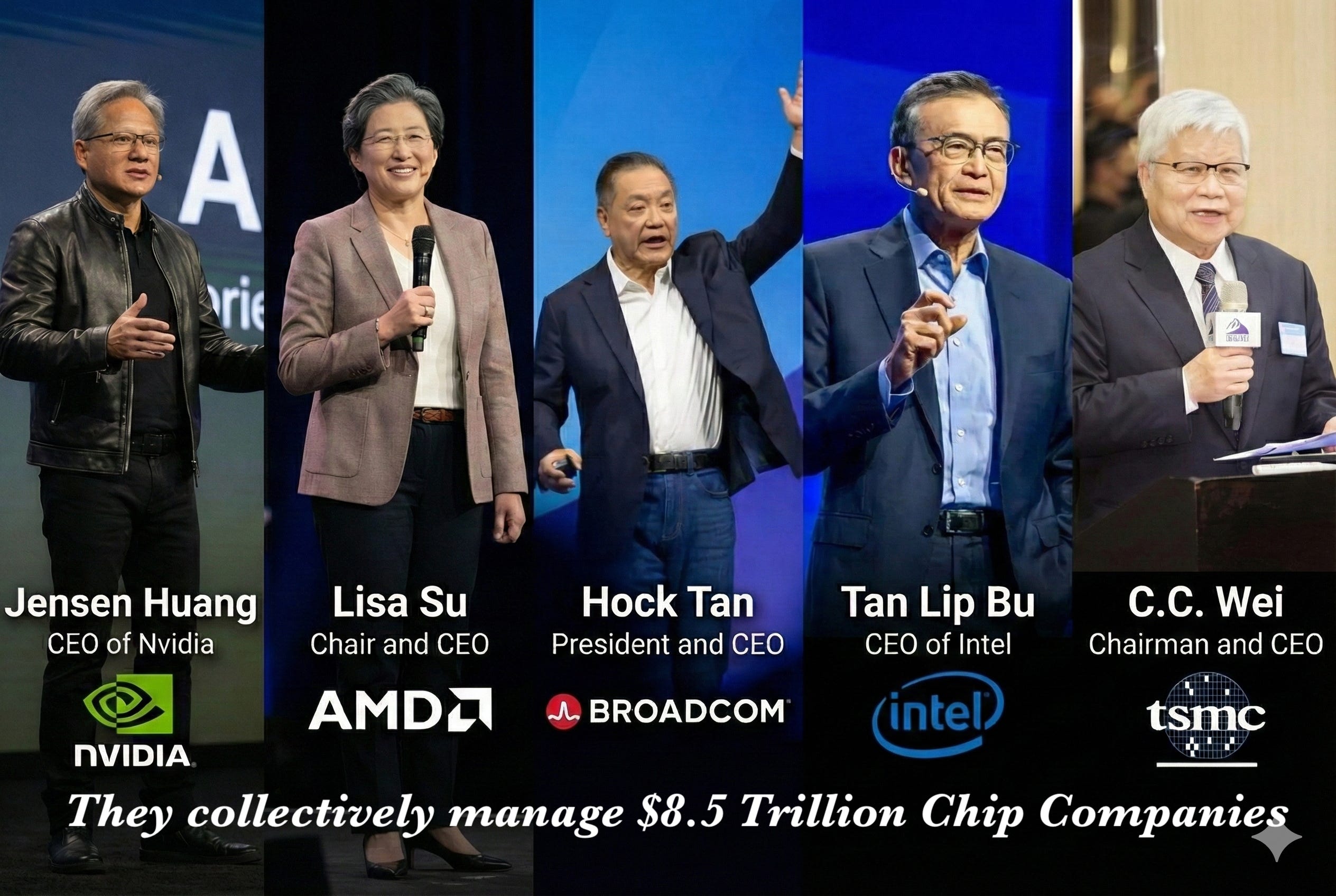
We’ve seen Jensen Huang and Lisa Su all over the media. But when you zoom out to look at other critical chip companies in the world, a pattern emerges: these firms are helmed by people of Chinese ethnicity. Collectively, they manage companies worth $8.5 trillion in market cap.
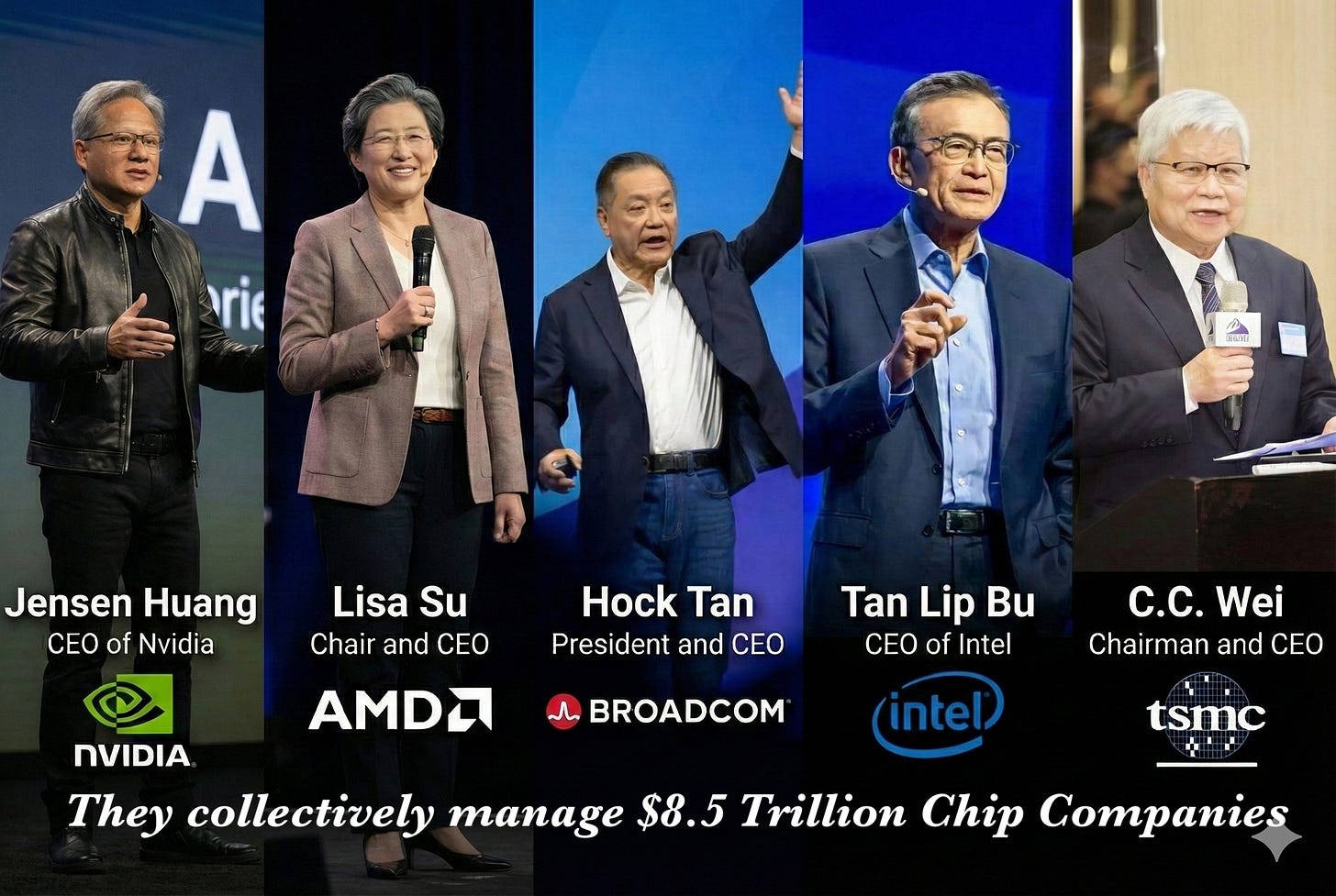
  1. Jensen Huang, Nvidia (market cap: $4.569T)
  2. Lisa Su, AMD ($422.76B)
  3. Hock Eng Tan, Broadcom ($1.517T)
  4. Lip-Bu Tan, Intel ($214.98B)
  5. C.C. Wei, TSMC ($1.736T)


Though of Chinese ethnicity, they’re not from China. In fact, Jensen, Lisa, Hock, and Lip-Bu are American citizens. Wei is Taiwanese. Jensen and Lisa were born in Taiwan, while Hock and Lip-Bu were born in Malaysia.

So no, this isn’t some claim that “the Chinese are controlling the chip industry.” Far from it—their allegiance is with the U.S.

I just find it more than coincidence that there’s such clear overrepresentation of ethnic Chinese at the helm of these companies.

Why So Many Asians?​

One factor: these companies have an overwhelming number of Asians (not necessarily ethnic Chinese) compared to a typical U.S. company. About 6.5% of the total U.S. workforce is Asian, and in tech, that figure rises to 18.1% (2022, Equal Employment Opportunity Commission).

But Asian representation at these four U.S. companies (excluding TSMC, which is Taiwanese) is way above average, according to DiversIQ:

  • NVIDIA: ~52.4% Asian
  • AMD: ~48.3% Asian
  • Broadcom: ~42.3% Asian
  • Intel: ~37% Asian
So it’s more likely an Asian would get promoted from within. The next question: why is there more Asian representation in these companies?

First, Asians are well-trained in STEM, and many graduates have flowed into these technical jobs. The talent pool is there.

Second, TSMC is a Taiwanese company with many ethnic Chinese employees. As the most important foundry manufacturing what the Americans design, it might be easier to build trust and deep business relationships if American companies’ top echelons are also ethnic Chinese.

The differences are in the details. So let’s look at the story of each of these five ethnic Chinese chip bosses.
 
Marvell technology, lam research, Kingston technology and many more are founded by ethnic Chinese.
 

China fires up world’s biggest superconducting magnet for nuclear fusion project​

The device, part of the CRAFT artificial sun reactor, sets new international benchmark in push for clean energy​

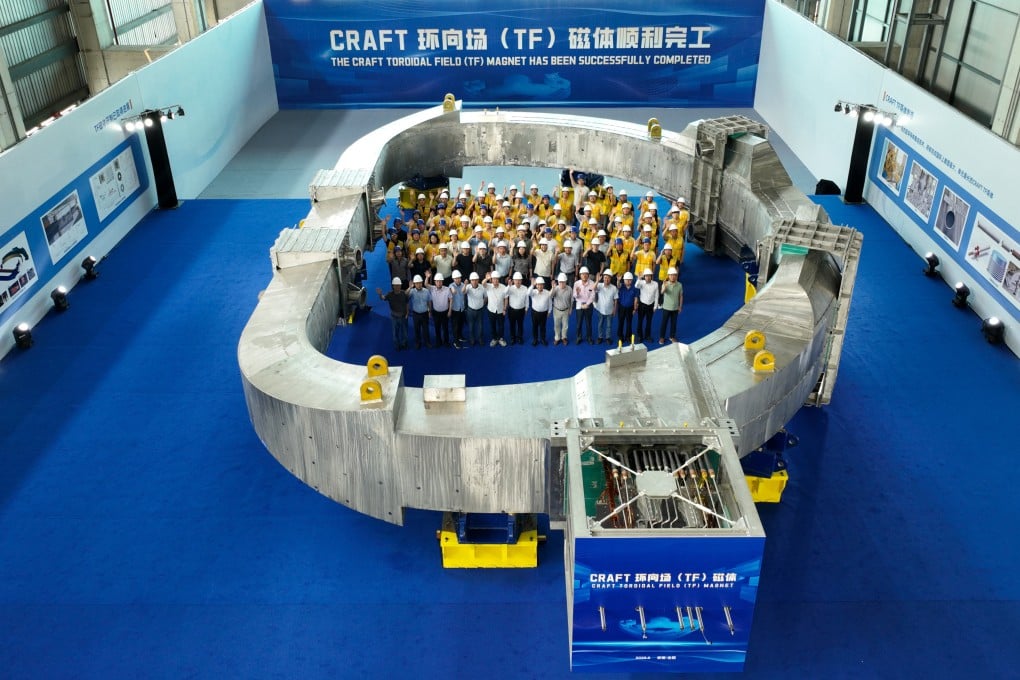
The team behind the superconducting magnet project celebrate the success of their tests on Saturday, capping years of work. Photo: Xinhua

Zhang Tongin Beijing
Published: 6:00pm, 28 Jun 2026

The world’s biggest superconducting magnet for a nuclear fusion reactor has passed final tests as part of China’s CRAFT “artificial sun” project, eclipsing international performance benchmarks.

The assembly comprises two coils: a toroidal-field magnet that acts as a magnetic cage, and a central solenoid that serves as the igniter.

The results, achieved by researchers with the Institute of Plasma Physics, Chinese Academy of Sciences, clear a major engineering hurdle on the path to confining a plasma hotter than the sun’s core, state news agency Xinhua reported on Saturday.

The project – the Comprehensive Research Facility for Fusion Technology – aims to create a miniature sun at over 100 million degrees Celsius (over 180 million Fahrenheit) and trap it inside a doughnut-shaped metal cage to generate electricity.

The magnetic cage, known as the CRAFT toroidal field coil, is a core component of the reactor.

It uses a strong magnetic field to prevent the container of the miniature sun from melting as the plasma inside reaches hundreds of millions of degrees.


China surpassing Europe in Drug Innovation and Development, Pfizer Inc. (PFE) Executive says​

Fatima Gulzar
Mon, June 29, 2026 at 3:58 AM GMT

On June 23, Reuters reported that Pfizer Inc. (NYSE:PFE) 's Chief International Commercial Officer, Alexandre de Germay, said China has moved ahead of Europe in pharmaceutical innovation and drug development.
De Germay commented that China now has "40% of all clinical studies in oncology" globally. He pointed out that the biopharma firm believes clinical development can move three times faster in China and at roughly half the cost compared with Europe.

De Germay said that back in 2024, China produced 28 innovative medicines, while Europe produced 18. "We have to compete with the U.S., but we also have to compete with China," he said, and "the threat of China is reality."


China’s first AI-powered cancer vaccine production line set to launch in Beijing​

Likang Life Sciences says it has developed a personalised vaccine using advanced tech to identify tumour-specific mutations​


The project reflects a global shift in the pharmaceutical sector towards harnessing artificial intelligence. Photo: Shutterstock


Julie Zhang
Published: 11:00am, 29 Jun 2026

China has broken ground on what developers say is the country’s first production line for AI-assisted personalised tumour vaccines, raising hopes for millions of new cancer patients every year – a disease that ranks as the nation’s second-leading cause of death.

By October, Beijing-based Likang Life Sciences is expected to complete a new drug research and manufacturing centre in the Beijing Economic and Technological Development Zone, with a total investment of about 110 million yuan (US$16.1 million), according to the district government.
The facility will house cell therapy research laboratories together with a production line of the company’s flagship product, LK101, a personalised cancer vaccine that analyses each patient’s tumour DNA to pinpoint the specific genetic mutations driving the disease. With AI, the company said the procedure could be completed in a day.

The project reflects a global shift in the pharmaceutical sector towards harnessing artificial intelligence. The technology was widely used in drug discovery and clinical trials, as well as areas such as data analysis, data monitoring and medical writing, said Grace Wang, a partner based in L.E.K. Consulting’s Shanghai office, in a video posted in early June.

The global AI healthcare market could exceed US$1 trillion by 2035, according to Bank of America, highlighting the commercial potential of such technologies.

“AI offers a compelling solution by automating manual workflows, improving diagnostic accuracy and enabling personalised treatment strategies,” said Alec Stranahan, senior research analyst of small- and mid-cap biotechnology at Bank of America, in a note on January 21. “Current adoption, however, is still in its early stages.”


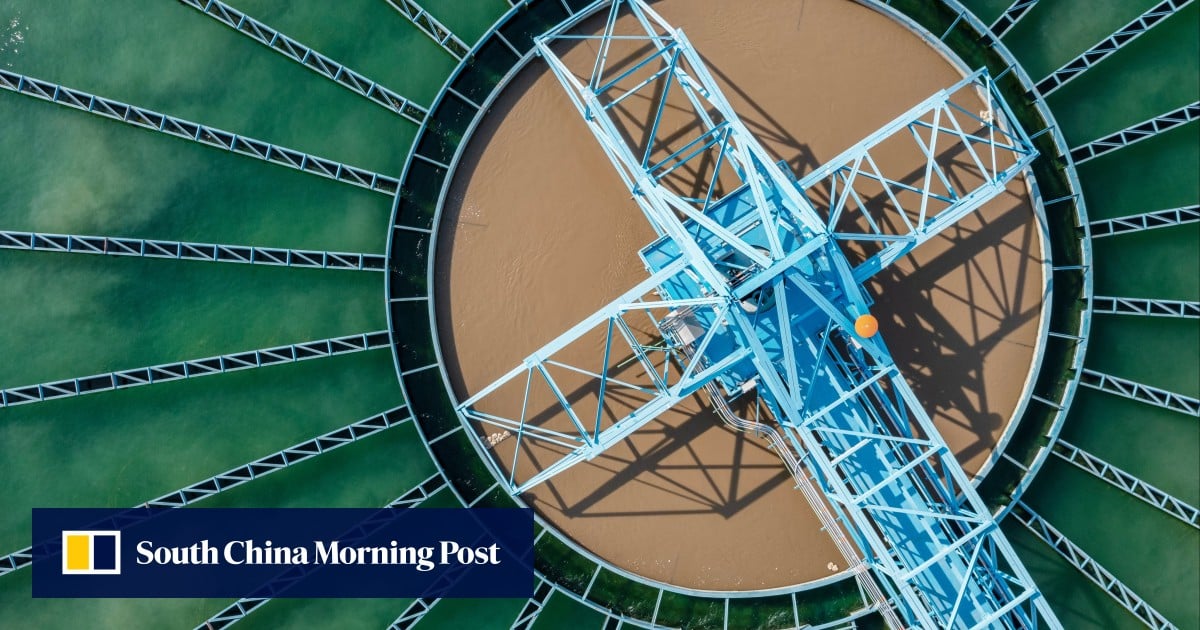
Chinese tech makes desalinating seawater cheaper than producing bottled water

Solar-powered innovation has shown year-long stability with zero utility energy costs, thanks to a new type of photothermal material​


The researchers developed a method to weave nanoparticles into a three-dimensional photothermal evaporation material, significantly boosting the efficiency of converting solar energy to drive desalination. Photo: Shutterstock


Dannie Pengin Beijing
Published: 1:00pm, 29 Jun 2026Updated: 3:20pm, 29 Jun 2026

Desalination has always been an energy-hungry way of turning salt water into fresh water, making it largely the preserve of wealthy countries with abundant fossil fuel reserves.

Yet, an outdoor demonstration prototype in China has managed to exhibit year-long stability with zero utility energy costs, thanks to a new type of photothermal material.

The researchers developed an innovative method to weave nanoparticles into a three-dimensional photothermal evaporation material, significantly boosting the efficiency of converting solar energy to drive desalination.

Experiments showed that the structure achieved a solar absorption rate of as much as 90.2 per cent, while cutting the energy needed to evaporate the same volume of seawater by 45.7 per cent.

At a small trial site, the device was successfully used for desalination, helping to irrigate 5 square metres (nearly 54 square feet) of farmland for a full growth cycle using only natural sunlight and requiring no external power grid infrastructure.

Based on a projected two years of operation, the team noted that the cost of producing water would fall below that of bottled water and that the economic advantage “would become even more pronounced if the system were scaled up or used over the long term”.


Nvidia’s AI chip sales in China stall, as local chipmakers like Huawei take the lead

Jun 28, 2026, 9:39 PM
BY ASSOCIATED PRESS

HONG KONG (AP) — In the race between the U.S. and China to develop artificial intelligence, the battle over hardware and computing power is heating up as Chinese companies like Huawei overtake global industry leaders like Nvidia in their home market.

Jensen Huang, the CEO of computer chip giant Nvidia, was mobbed by onlookers as he hit the streets for the “zhajiangmian” noodles while visiting Beijing during U.S. President Donald Trump’s May summit with Chinese leader Xi Jinping. But his celebrity status has not translated into success in selling Nvidia’s advanced chips in China.


Users who are viewing this thread

Back
Top