Navigation
Install the app
How to install the app on iOS
Follow along with the video below to see how to install our site as a web app on your home screen.
Note: This feature may not be available in some browsers.
More options
Style variation
You are using an out of date browser. It may not display this or other websites correctly.
You should upgrade or use an alternative browser.
You should upgrade or use an alternative browser.
Chinese 6th Generation Aircraft News & Discussions
- Thread starter SiliconBit (silicon0000)
- Start date
More options
Who Replied?


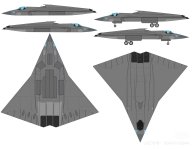
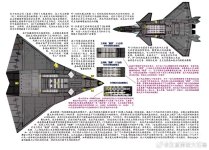
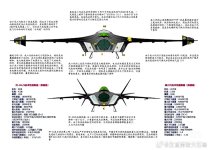

maxpane
Elite Member

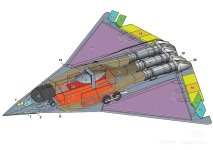
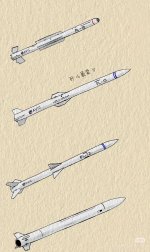
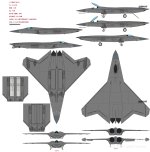
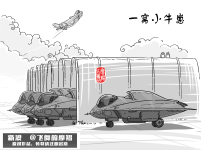
i love that type of fan art. its beautiful with full of story. Amazing jet and amazing workMaybe an early Christmas surprise?
Maybe hinting of more than 2x and up to 4x J-36 prototypes in existence right now?
Made by @飞舞的摩羯 on Weibo.
View attachment 162838


Tariq Habib Afridi
Registered Member

I believe the main reason both Chinese 6th-gen prototypes (J-36 and J-50) went tailless is to achieve true all-aspect broadband stealth, minimizing RCS from the front, sides, and rear. Traditional vertical and horizontal tails create 90° corners and strong specular reflections—major RCS contributors even on the F-22. Tailless flying-wing designs, with their smooth blended shaping, edge alignment, serrated edges, and heavy use of RAM, can reduce RCS dramatically (potentially 10–20 dB lower than the J-20). AVIC’s own 2023 concept papers explicitly linked diamond/lambda planforms to scattering X-band energy forward or away from the threat.
Beyond stealth, tailless designs offer other big advantages:
It looks extremely stealthy and cool, but everyone knows tailless aircraft are inherently unstable in all three axes—no vertical stabilizer for yaw, no horizontal stabilizer for pitch, easy departure, pitch breaks, etc. So the big question: do the stealth and drag benefits really outweigh the enormous stability and control challenges?
For the J-50, I kind of get it: the lambda planform plus all-moving wingtips (AMWT) can provide both stability and insane maneuverability (though mastering AMWT for primary control is still insanely hard). But the J-36? Just a big diamond wing and a third central engine. No lambda, no obvious AMWT. How does that thing stay controllable in a hard dogfight? The third engine adds thrust, not stability. It looks risky as hell.
Also, people say “tailless = maximum stealth,” yet the J-50 adds moving wingtips—doesn’t that reintroduce gaps, actuators, and discontinuities that hurt stealth again? We removed the tail to eliminate corners, then immediately add new ones?
History isn’t encouraging either: the F-16XL in the 1980s, the X-36, Boeing’s tailless studies in the 90s, and various USAF/NASA programs all eventually gave up because they couldn’t simultaneously achieve stability, supercruise, and high-g maneuverability with the flight-control technology of the time.
If China actually makes the J-36 and J-50 work reliably, that would mean they’ve leapfrogged everyone in advanced aerodynamics, multivariable flight-control systems, and actuation technology by a huge margin.
What do you guys think—are the benefits worth the risks, or is this still too ambitious? or maybe they are public for deception and their actual 6th gen has been completely secret?
@Deino @Michael @FHN @yusheng @Quwa @Ak01 @JamD @Bilal @Oscar
@HemlockKhalid/AeronautIR
P.S. Here’s an excellent video by an aeronautics professor that explains very clearly why the J-50 combines a lambda wing with all-moving wingtips:
Beyond stealth, tailless designs offer other big advantages:
- Very low parasitic drag
- Better structural efficiency (distributed loads reduce bending moments, cutting empty weight ~10–15% compared to tailed deltas, which allows larger internal bays—reportedly 8–12 missiles on the J-36)
- Superior supersonic performance (blended shapes push drag divergence past Mach 2.5)
It looks extremely stealthy and cool, but everyone knows tailless aircraft are inherently unstable in all three axes—no vertical stabilizer for yaw, no horizontal stabilizer for pitch, easy departure, pitch breaks, etc. So the big question: do the stealth and drag benefits really outweigh the enormous stability and control challenges?
For the J-50, I kind of get it: the lambda planform plus all-moving wingtips (AMWT) can provide both stability and insane maneuverability (though mastering AMWT for primary control is still insanely hard). But the J-36? Just a big diamond wing and a third central engine. No lambda, no obvious AMWT. How does that thing stay controllable in a hard dogfight? The third engine adds thrust, not stability. It looks risky as hell.
Also, people say “tailless = maximum stealth,” yet the J-50 adds moving wingtips—doesn’t that reintroduce gaps, actuators, and discontinuities that hurt stealth again? We removed the tail to eliminate corners, then immediately add new ones?
History isn’t encouraging either: the F-16XL in the 1980s, the X-36, Boeing’s tailless studies in the 90s, and various USAF/NASA programs all eventually gave up because they couldn’t simultaneously achieve stability, supercruise, and high-g maneuverability with the flight-control technology of the time.
If China actually makes the J-36 and J-50 work reliably, that would mean they’ve leapfrogged everyone in advanced aerodynamics, multivariable flight-control systems, and actuation technology by a huge margin.
What do you guys think—are the benefits worth the risks, or is this still too ambitious? or maybe they are public for deception and their actual 6th gen has been completely secret?
@Deino @Michael @FHN @yusheng @Quwa @Ak01 @JamD @Bilal @Oscar
@HemlockKhalid/AeronautIR
P.S. Here’s an excellent video by an aeronautics professor that explains very clearly why the J-50 combines a lambda wing with all-moving wingtips:
Last edited:
niubi
Registered Member


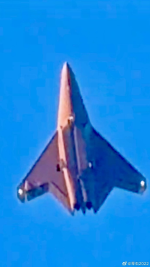
j-50 from yesterday.
That's not the J-50. Very obvious different planform.
That's one of the smaller UADFs or one of the CCAs.
niubi
Registered Member
I believe the main reason both Chinese 6th-gen prototypes (J-36 and J-50) went tailless is to achieve true all-aspect broadband stealth, minimizing RCS from the front, sides, and rear. Traditional vertical and horizontal tails create 90° corners and strong specular reflections—major RCS contributors even on the F-22. Tailless flying-wing designs, with their smooth blended shaping, edge alignment, serrated edges, and heavy use of RAM, can reduce RCS dramatically (potentially 10–20 dB lower than the J-20). AVIC’s own 2023 concept papers explicitly linked diamond/lambda planforms to scattering X-band energy forward or away from the threat.
Beyond stealth, tailless designs offer other big advantages:
- Very low parasitic drag
- Better structural efficiency (distributed loads reduce bending moments, cutting empty weight ~10–15% compared to tailed deltas, which allows larger internal bays—reportedly 8–12 missiles on the J-36)
- Superior supersonic performance (blended shapes push drag divergence past Mach 2.5)
It looks extremely stealthy and cool, but everyone knows tailless aircraft are inherently unstable in all three axes—no vertical stabilizer for yaw, no horizontal stabilizer for pitch, easy departure, pitch breaks, etc. So the big question: do the stealth and drag benefits really outweigh the enormous stability and control challenges?
For the J-50, I kind of get it: the lambda planform plus all-moving wingtips (AMWT) can provide both stability and insane maneuverability (though mastering AMWT for primary control is still insanely hard). But the J-36? Just a big diamond wing and a third central engine. No lambda, no obvious AMWT. How does that thing stay controllable in a hard dogfight? The third engine adds thrust, not stability. It looks risky as hell.
Also, people say “tailless = maximum stealth,” yet the J-50 adds moving wingtips—doesn’t that reintroduce gaps, actuators, and discontinuities that hurt stealth again? We removed the tail to eliminate corners, then immediately add new ones?
History isn’t encouraging either: the F-16XL in the 1980s, the X-36, Boeing’s tailless studies in the 90s, and various USAF/NASA programs all eventually gave up because they couldn’t simultaneously achieve stability, supercruise, and high-g maneuverability with the flight-control technology of the time.
If China actually makes the J-36 and J-50 work reliably, that would mean they’ve leapfrogged everyone in advanced aerodynamics, multivariable flight-control systems, and actuation technology by a huge margin.
What do you guys think—are the benefits worth the risks, or is this still too ambitious? or maybe they are public for deception and their actual 6th gen has been completely secret?
@Deino @Michael @FHN @yusheng @Quwa @Ak01 @JamD @Bilal @Oscar
@HemlockKhalid/AeronautIR
P.S. Here’s an excellent video by an aeronautics professor that explains very clearly why the J-50 combines a lambda wing with all-moving wingtips:
I suspect X-36 RC sized concept plane did not have the available technology in that era to produce results that are still valid today. It must be possible to create tailless supersonic dogfighting capable fighters otherwise the J-50 would not be a program.
The J-36 however is probably not for dogfighting. It can maybe turn about as well as JH-7 but can turn well enough in supersonic speeds. I just don't see the J-36 being a capable dogfighter at all with so much weight. To me, the J-36 is intended as a fast dasher with great range and available energy. Basically carry a lot more fuel, a lot more missiles, larger longer ranged missiles and power more capable electronic warfare equipment.
With an additional engine, it can perform dashes like interceptors, tactical bombers or use the additional generated power for next generation electronics that fry through opposition equipment. On top of that, it offers payload that no other fighter has. It offers turning capability no bomber has. It is supersonic cruise capable (possibly mach 2+ supercruise with 3rd engine and VCE). Oh and basically the next gen J-20S for close MUM-T UADF and CCA coordination.
Tariq Habib Afridi
Registered Member
That make sense to me.. J-36 is the new 6th generation bomber but kind a fast.. J-50 though still confuses me how it will stabilize and fly normally.. its testing will take a lot of time until it is cleared for production. Oh and its fly by wire will be one hell of problem to make it right i guessI suspect X-36 RC sized concept plane did not have the available technology in that era to produce results that are still valid today. It must be possible to create tailless supersonic dogfighting capable fighters otherwise the J-50 would not be a program.
The J-36 however is probably not for dogfighting. It can maybe turn about as well as JH-7 but can turn well enough in supersonic speeds. I just don't see the J-36 being a capable dogfighter at all with so much weight. To me, the J-36 is intended as a fast dasher with great range and available energy. Basically carry a lot more fuel, a lot more missiles, larger longer ranged missiles and power more capable electronic warfare equipment.
With an additional engine, it can perform dashes like interceptors, tactical bombers or use the additional generated power for next generation electronics that fry through opposition equipment. On top of that, it offers payload that no other fighter has. It offers turning capability no bomber has. It is supersonic cruise capable (possibly mach 2+ supercruise with 3rd engine and VCE). Oh and basically the next gen J-20S for close MUM-T UADF and CCA coordination.
Last edited:

Shui
Registered Member
It is J-50, you have to looks at the altitude and light reflection man.That's not the J-50. Very obvious different planform.
That's one of the smaller UADFs or one of the CCAs.
Shui
Registered Member
I just love this bird with her wing tips...

Michael
VIP Member
I believe the main reason both Chinese 6th-gen prototypes (J-36 and J-50) went tailless is to achieve true all-aspect broadband stealth, minimizing RCS from the front, sides, and rear. Traditional vertical and horizontal tails create 90° corners and strong specular reflections—major RCS contributors even on the F-22. Tailless flying-wing designs, with their smooth blended shaping, edge alignment, serrated edges, and heavy use of RAM, can reduce RCS dramatically (potentially 10–20 dB lower than the J-20). AVIC’s own 2023 concept papers explicitly linked diamond/lambda planforms to scattering X-band energy forward or away from the threat.
Beyond stealth, tailless designs offer other big advantages:
- Very low parasitic drag
- Better structural efficiency (distributed loads reduce bending moments, cutting empty weight ~10–15% compared to tailed deltas, which allows larger internal bays—reportedly 8–12 missiles on the J-36)
- Superior supersonic performance (blended shapes push drag divergence past Mach 2.5)
It looks extremely stealthy and cool, but everyone knows tailless aircraft are inherently unstable in all three axes—no vertical stabilizer for yaw, no horizontal stabilizer for pitch, easy departure, pitch breaks, etc. So the big question: do the stealth and drag benefits really outweigh the enormous stability and control challenges?
For the J-50, I kind of get it: the lambda planform plus all-moving wingtips (AMWT) can provide both stability and insane maneuverability (though mastering AMWT for primary control is still insanely hard). But the J-36? Just a big diamond wing and a third central engine. No lambda, no obvious AMWT. How does that thing stay controllable in a hard dogfight? The third engine adds thrust, not stability. It looks risky as hell.
Also, people say “tailless = maximum stealth,” yet the J-50 adds moving wingtips—doesn’t that reintroduce gaps, actuators, and discontinuities that hurt stealth again? We removed the tail to eliminate corners, then immediately add new ones?
History isn’t encouraging either: the F-16XL in the 1980s, the X-36, Boeing’s tailless studies in the 90s, and various USAF/NASA programs all eventually gave up because they couldn’t simultaneously achieve stability, supercruise, and high-g maneuverability with the flight-control technology of the time.
If China actually makes the J-36 and J-50 work reliably, that would mean they’ve leapfrogged everyone in advanced aerodynamics, multivariable flight-control systems, and actuation technology by a huge margin.
What do you guys think—are the benefits worth the risks, or is this still too ambitious? or maybe they are public for deception and their actual 6th gen has been completely secret?
@Deino @Michael @FHN @yusheng @Quwa @Ak01 @JamD @Bilal @Oscar
@HemlockKhalid/AeronautIR
P.S. Here’s an excellent video by an aeronautics professor that explains very clearly why the J-50 combines a lambda wing with all-moving wingtips:
This has been a very popular topic since the J-36/J-50 first appeared last year.
How do they fly?
On the internet, many experts and "self-proclaimed experts" have been conducting extensive analysis and research.
Many aviation model enthusiasts have also built scale models and attempted to fly them. Some succeeded, others failed......
You can find many videos like this on YouTube.
If you want to obtain authoritative, professional, and academic knowledge, you can try searching for information here.

Professional websites for aviation/aerospace technology:

This website is a professional academic website in this field in China. It requires visitors to have a certain level of professional knowledge.
=====================================================
This website offers both Chinese and English versions. However, the vast majority of the papers on it are in Chinese and do not have English versions. These Chinese texts contain a large number of technical terms that cannot be accurately translated by translation...
This website is a professional academic website in this field in China. It requires visitors to have a certain level of professional knowledge.
=====================================================
This website offers both Chinese and English versions. However, the vast majority of the papers on it are in Chinese and do not have English versions. These Chinese texts contain a large number of technical terms that cannot be accurately translated by translation...

Shui
Registered Member
Actually this is something that Chinese enthusiasts worried the least, both J-20 and J-36' chief designers were aerodynamic experts before they became the leader of the projects and has a nickname 气动仙人(aerodynamic God/master).Oh and its fly by wire will be one hell of problem to make it right i guess
Users who are viewing this thread
Total: 4 (members: 0, guests: 4)


