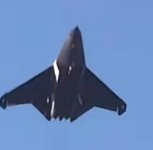
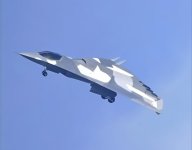
The BVR combat concept has always assumed that combat would be dominated by internal sensors, external sensors, weapons and electronic warfare, while close combat was dominated by the power-to-weight ratio and wing loading that determine the maneuverability of a fighter.
Air superiority is the primary mission of a modern Air Force. That is why AAM missiles are a critical factor that can determine the outcome of an air battle. Even the most agile fighter equipped with excellent systems is of little use if it is not equipped with the appropriate weapons.
The air superiority paradigm is driven by advances in technology. A change in one technology leads to adaptations in others. Back when fighters were equipped with only one cannon, it was better to have a better cannon, and a better aircraft with a more powerful engine to hit the target. This was the pattern until the end of World War II and the Korean War. With the advent of AAM missiles, everything began to change.
The advent of missiles prophesied the end of fighters in the 1960s, but this concept was hasty. As early as World War II and the Korean War, it was anticipated that aerial combat would be based on pressing buttons and firing missiles. The Vietnam War showed that maneuverability was still important to evade missiles. This resulted in the evolution of the airframe, propulsion, sensors and tactics to keep up with the evolution of missiles.
Long-range air-to-air missiles are now the centerpiece of air superiority operations. They entered operations on large fighters with large radars such as the F-15 and MiG-25 and, together with SAMs, led to the development of stealth.
BVR combat is divided into five sequential phases: detection, approach, maneuver, attack and disengagement. All are important and depend on appropriate tactics. The most important, by a wide margin, is detection. Everything depends on the success or failure of detection. The range of the radar itself and of support assets becomes important. In each phase, specific tactics are used and depend on several factors.
What was the best way to try to reduce detection by enemy aircraft and cancel the kill chain?
The stealth concept.
The tests of the YF-22 prototype against an F-15 piloted by a veteran have already shown the clear superiority of the F-22A.
The operational evaluation (OPEVAL) of the F-22A Raptor began in April 2004. The requirement was to be twice as effective as the F-15C it would replace. The F-22A Raptor was tested in five scenarios with variations in each:
- First: one vs one against the F-16.
- Second: two F-22As had to destroy an E-3 Sentry defended by four F-15s or F-16s.
- Third: two F-22As had to protect a B-2 against four F-15s or F-16s.
- Four: four F-22As defending an E-3 being attacked by 8 F-15s or F-16s. - Fifth: four F-22As protecting four F-117s against eight F-15s or F-16s.
The scenarios were tested several times and could include support from EA-6Bs or SAM missiles. The F-22A prevailed in all engagements against superior numbers of adversaries. The F-22 consistently outnumbered the enemy, detecting and firing without being seen, and flew more in a day. Sometimes it flew with an 8 to 1 disadvantage. Against 2 to 1, victory is assured. Usually four F-16s can defeat six enemies while the F-22A reduced the ratio to two to six. In one scenario, there were five F-15s against one Raptor. The battle lasted 3 minutes with all F-15s being shot down and no F-15 saw the Raptor. In a mission with two F-22As against six F-16s, the adversaries were shot down in 3.5 minutes.
A total of 188 sorties were flown with six F-22As during the evaluation. There were typically four aircraft plus one spare on each mission. Reliability, sortie rate, availability, and weapons required to shoot down enemy fighters were tested. The results were used to simulate the performance of an F-22A squadron and then compare against requirements. The F-22A was not tested against ground targets. Lockheed calculated that a combination of F-22As and F-35s is five times more effective than previous-generation fighters in most scenarios and can destroy the same number of targets with 50 to 70 percent fewer aircraft. Air superiority can be achieved more quickly by rapidly destroying air superiority-related targets. A longer war means more casualties.
Note that all scenarios are always a 5th generation fighter against previous generation fighters, which largely explains this superiority of the 5th generation fighter, but hardly any report will emphasize the aerial combat of a 5th generation against another 5th generation fighter, because both benefit from stealth, an important technology that allows to reduce detection, increasing the degree of difficulty in engaging in a BVR aerial combat, because there will be a gap in the reduction of detection that will only be feasible to allow all phases of the kill chain when both fighters are close to each other. The same thing can happen with the 6th generation against another 6th generation fighter, so I still think it is premature to say that there will be no close-range combat between 6th generation fighters, this remains to be seen, considering what we will be seeing in terms of counter-stealth being implemented to increase the detection range of stealthy targets within an aerial combat.


 www.airandspaceforces.com