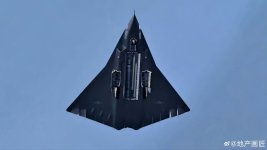
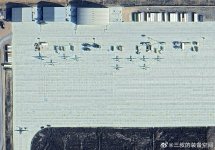
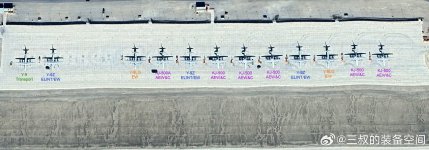
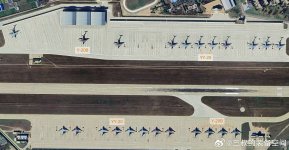
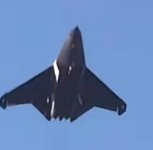
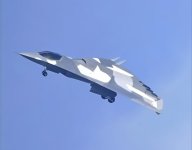
Chinese 6th Generation Aircraft News & Discussions

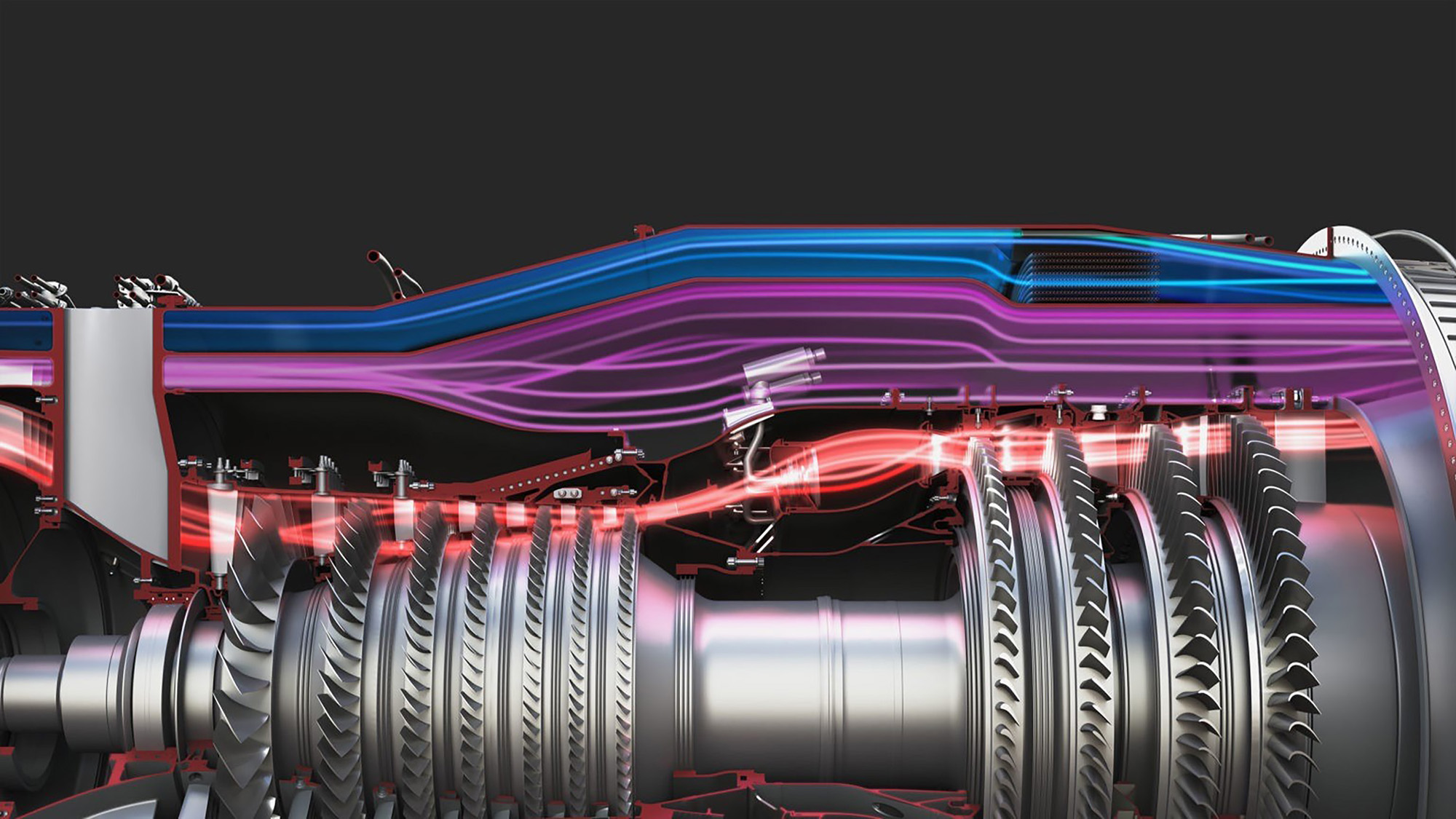
Did this engine start testing on the ground (bench testing)? nobody knows the current status of this project, USA First develop variable cycle engine (F-120) for YF-23 in late 80s and start a project to further refine and improve its performance, this project name is ADAPTIVE CYCLE ENGIINE TRANSTION PROGRAM GE and P&W prototypes just start testing on the ground (Bench testing), did Chinese variable cycle engine start testing on the ground (Bench testing)?
They canceled the AETP program a long time ago. What are you talking about here?

Air Force Skips AETP Engines for F-35, Presses on with NGAP​

March 14, 2023 | By John A. Tirpak
After a year’s deliberation, the Air Force has decided not to develop Adaptive Engine Technology Program (AETP) powerplants for its F-35s, deeming the cost too high in light of other demands.

Instead, the service will go with a suite of upgrades for the existing F135 engine and press ahead with the Next Generation Advanced Propulsion project meant to power its next fighter, Air Force Secretary Frank Kendall said in a March 10 budget briefing.

“We needed something that was affordable and that would support all variants” of the F-35, Kendall said.

The upgrades to the F135, deemed the “Engine Core Upgrade” by contractor Pratt & Whitney, will deliver improvements to the engine necessary to meet the demand for additional power and cooling on advanced Block 4 versions of the F-35. Those specific Block 4 requirements have not been made public.
 
and how can you be so sure it CANT? just because it isnt yankees or western...
where are the image of so call NGAD? nonsense PPT
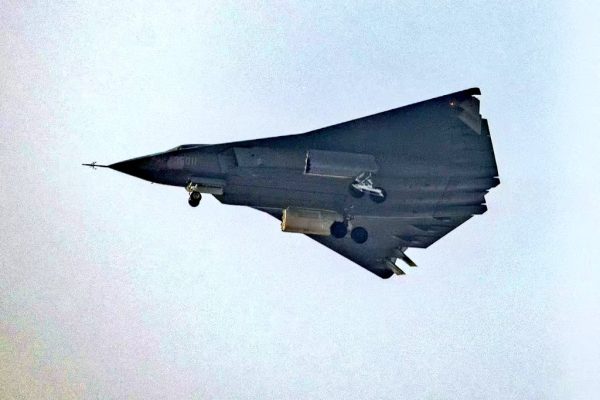
It too early to predict it to assume that J-36 will have a cruising speed of Mach 2 and top speed of Mach-3.5 nobodies knows and stick to the topic this thread is for Chinese 6th gen not NGAD, you're trolling right now
 
They canceled the AETP program a long time ago. What are you talking about here?

Air Force Skips AETP Engines for F-35, Presses on with NGAP​

March 14, 2023 | By John A. Tirpak
After a year’s deliberation, the Air Force has decided not to develop Adaptive Engine Technology Program (AETP) powerplants for its F-35s, deeming the cost too high in light of other demands.

Instead, the service will go with a suite of upgrades for the existing F135 engine and press ahead with the Next Generation Advanced Propulsion project meant to power its next fighter, Air Force Secretary Frank Kendall said in a March 10 budget briefing.

“We needed something that was affordable and that would support all variants” of the F-35, Kendall said.

The upgrades to the F135, deemed the “Engine Core Upgrade” by contractor Pratt & Whitney, will deliver improvements to the engine necessary to meet the demand for additional power and cooling on advanced Block 4 versions of the F-35. Those specific Block 4 requirements have not been made public.
My question remains do Chinese ground tested variable cycle engine? GE tested it XA100 Adaptive engine in 2021, there video on YouTube?
 
My question remains do Chinese ground tested variable cycle engine? GE tested it XA100 Adaptive engine in 2021, there video on YouTube?

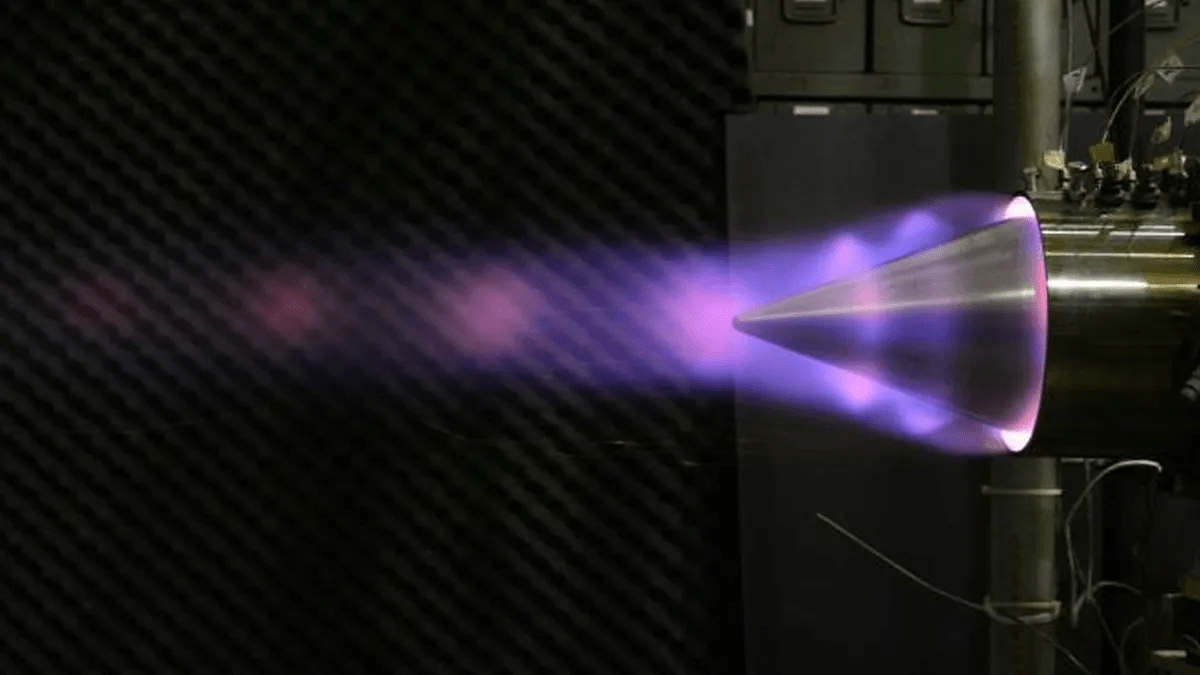
China may not have ground tested variable cycle engine, but she has tested rotating detonation engine.


RDE (rotating detonation engine) offers greater advantage compared to variable cycle engine/Adaptive cycle engine (ACE) such as more thrust and more efficiency. And RDE enable 6th gen fighter to operate near space.

To view this content we will need your consent to set third party cookies.
For more detailed information, see our cookies page.
 
This guy is washed out. He seems to know Chinese, but I am unsure if he is Chinese. He again wrote a washout article. He pretends he is not surprised, but he is astonished for sure. He is always skeptical of Chinese advancement in Aerospace and can be harsh to anyone who promotes the Chinese narrative. But very deferential to the Westerner poster. He pretends to be impartial, but he is not. Look, he always defers to the US to define what is 6th gen fighter
 
Last edited:
This guy is washed out. He seems to know Chinese, but I am unsure if he is Chinese. He again wrote a washout article. He pretends he is not surprised, but he is astonished for sure. He is always skeptical of Chinese advancement in Aerospace and can be harsh to anyone who promotes the Chinese narrative. But very deferential to the Westerner poster. He pretends to be impartial, but he is not. Look, he always defers to the US to define what is 6th gen fighter
Who cares of what people wrote, a lots of them out there are still at stage one denial, we shall just devote to the program and keep advancing.
 
All I can say is Spend less time worrying about what others are doing and saying and do your own thing.
 
The BVR combat concept has always assumed that combat would be dominated by internal sensors, external sensors, weapons and electronic warfare, while close combat was dominated by the power-to-weight ratio and wing loading that determine the maneuverability of a fighter.

Air superiority is the primary mission of a modern Air Force. That is why AAM missiles are a critical factor that can determine the outcome of an air battle. Even the most agile fighter equipped with excellent systems is of little use if it is not equipped with the appropriate weapons.

The air superiority paradigm is driven by advances in technology. A change in one technology leads to adaptations in others. Back when fighters were equipped with only one cannon, it was better to have a better cannon, and a better aircraft with a more powerful engine to hit the target. This was the pattern until the end of World War II and the Korean War. With the advent of AAM missiles, everything began to change.

The advent of missiles prophesied the end of fighters in the 1960s, but this concept was hasty. As early as World War II and the Korean War, it was anticipated that aerial combat would be based on pressing buttons and firing missiles. The Vietnam War showed that maneuverability was still important to evade missiles. This resulted in the evolution of the airframe, propulsion, sensors and tactics to keep up with the evolution of missiles.

Long-range air-to-air missiles are now the centerpiece of air superiority operations. They entered operations on large fighters with large radars such as the F-15 and MiG-25 and, together with SAMs, led to the development of stealth.

BVR combat is divided into five sequential phases: detection, approach, maneuver, attack and disengagement. All are important and depend on appropriate tactics. The most important, by a wide margin, is detection. Everything depends on the success or failure of detection. The range of the radar itself and of support assets becomes important. In each phase, specific tactics are used and depend on several factors.

What was the best way to try to reduce detection by enemy aircraft and cancel the kill chain?

The stealth concept.

The tests of the YF-22 prototype against an F-15 piloted by a veteran have already shown the clear superiority of the F-22A.

The operational evaluation (OPEVAL) of the F-22A Raptor began in April 2004. The requirement was to be twice as effective as the F-15C it would replace. The F-22A Raptor was tested in five scenarios with variations in each:
- First: one vs one against the F-16.
- Second: two F-22As had to destroy an E-3 Sentry defended by four F-15s or F-16s.
- Third: two F-22As had to protect a B-2 against four F-15s or F-16s.
- Four: four F-22As defending an E-3 being attacked by 8 F-15s or F-16s. - Fifth: four F-22As protecting four F-117s against eight F-15s or F-16s.

The scenarios were tested several times and could include support from EA-6Bs or SAM missiles. The F-22A prevailed in all engagements against superior numbers of adversaries. The F-22 consistently outnumbered the enemy, detecting and firing without being seen, and flew more in a day. Sometimes it flew with an 8 to 1 disadvantage. Against 2 to 1, victory is assured. Usually four F-16s can defeat six enemies while the F-22A reduced the ratio to two to six. In one scenario, there were five F-15s against one Raptor. The battle lasted 3 minutes with all F-15s being shot down and no F-15 saw the Raptor. In a mission with two F-22As against six F-16s, the adversaries were shot down in 3.5 minutes.

A total of 188 sorties were flown with six F-22As during the evaluation. There were typically four aircraft plus one spare on each mission. Reliability, sortie rate, availability, and weapons required to shoot down enemy fighters were tested. The results were used to simulate the performance of an F-22A squadron and then compare against requirements. The F-22A was not tested against ground targets. Lockheed calculated that a combination of F-22As and F-35s is five times more effective than previous-generation fighters in most scenarios and can destroy the same number of targets with 50 to 70 percent fewer aircraft. Air superiority can be achieved more quickly by rapidly destroying air superiority-related targets. A longer war means more casualties.

Note that all scenarios are always a 5th generation fighter against previous generation fighters, which largely explains this superiority of the 5th generation fighter, but hardly any report will emphasize the aerial combat of a 5th generation against another 5th generation fighter, because both benefit from stealth, an important technology that allows to reduce detection, increasing the degree of difficulty in engaging in a BVR aerial combat, because there will be a gap in the reduction of detection that will only be feasible to allow all phases of the kill chain when both fighters are close to each other. The same thing can happen with the 6th generation against another 6th generation fighter, so I still think it is premature to say that there will be no close-range combat between 6th generation fighters, this remains to be seen, considering what we will be seeing in terms of counter-stealth being implemented to increase the detection range of stealthy targets within an aerial combat.
Your theory is based on the analysis of English-language media and military observers.
I cannot say that it is completely right or completely wrong. However, what we can say for sure is that it certainly lags behind the actual tactical research of the military.

Tactics change based on weapon systems and the quality of soldiers. When any one of these elements changes, the tactics change with it.

Within the last 20 years, China has been in a prolonged confrontation with the United States and its allies in the East and South China Seas. This includes head-to-head confrontations between the J-20 and the F-35. So, I believe that both China and the US have a deep understanding of each other's weapon systems, or at least, the military knows far more than the media and military observers analyze.
However, the newly revealed J-35A/J-20A/J-20S is still not equipped with a machine gun. Their operational center of gravity remains the BVR. of course, if anyone thinks it's because China can't build a better fighter machine gun, please ignore me.

The biggest difference between 5th Gen fighters and earlier fighters is stealth. But because of this, the 5th Gen's bomb load was drastically reduced, and it couldn't sustain high intensity air combat. In more analyses, the 5th Gen fighter is seen as primarily tasked with stealthy raids on high-value targets.
It is analogous to special forces in traditional warfare operating deep behind enemy lines. Its purpose is not to tangle with the enemy or destroy large numbers of them. After penetrating deep into the enemy's hinterland in a covert manner, it uses sneak attacks to destroy high-value enemy targets, decapitate senior enemy commanders, and reconnoitre core intelligence, among other things. Once it is discovered by the enemy force, it will immediately find a way to disengage from the battle and abscond. ------ This is the purpose of Super Sonic Cruise and Super Maneuverability in the 5th Gen Fighter 4S standard.
China and the U.S. are still producing and serving large numbers of 4/4.5th Gen fighters even after the 5th Gen fighters are in mass service. Publicly available information from China and the United States shows that the 5th Gen fighter has no advantage in simulated conventional air combat combat training against the 4/4.5th Gen fighter. They have completely different tactical positioning.

Analyzing the information so far, The 5th Gen fighter sacrificed too many elements that a fighter should have for extreme stealth. These elements were already present in the 4th/4.5 gen fighters.
It's like the difference between a sniper rifle and an assault rifle.
 
Did this engine start testing on the ground (bench testing)? nobody knows the current status of this project, USA First develop variable cycle engine (F-120) for YF-23 in late 80s and start a project to further refine and improve its performance, this project name is ADAPTIVE CYCLE ENGIINE TRANSTION PROGRAM GE and P&W prototypes just start testing on the ground (Bench testing), did Chinese variable cycle engine start testing on the ground (Bench testing)?
250kn ground test platform a few years ago.
 
1735626789193.jpeg
1735626798014.jpeg
To view this content we will need your consent to set third party cookies.
For more detailed information, see our cookies page.
 
According to Yankeesama, a well respected defence vlogger with a lots of first hand information stated our loyal wing man is not expendable/cost saving concept like the US counterpart but more of a real sixth gen fighter without a pilot, thus providing more possibility, reduce human error during engagement in the air and the parts are interchangeable with manned version in order to cut down maintenance cost/hours.

https://www.guancha.cn/yangji/2024_12_29_760435_2.shtml
You don't need to refer to his article, just refer the top designer of AVIC - Wang Haifeng.

His article made it very clear that the new aircraft of Shenyang is not loyal wing man, it will be an unmanned fighter.
 

Users who are viewing this thread

Country Watch Latest

Back
Top