Chinese 6th Generation Aircraft News & Discussions

And don't expect J50 come face to face with Taiwan's F-16V, J50 and J36 is for facing NGAD/F/A XX and GCAP (global combat aircraft project) not for have a fight with Taiwan's F-16V

Taiwan won't ever get F-35 let along NGAD.
 
Taiwan won't ever get F-35 let along NGAD.
Why you're trolling if you have nothing to say about the topic, always speaks nonsense

And NGAD is not in production and F35 production items are already booked for various customers USAF/USN/US marine and for NATO countries

And why you always bringing J50 and J36 to the perspective of Taiwan issue?

J50 and J36 are not for Taiwan issue but for to have fight with much stronger opponents like USAF/USN and Japan (NGAD/ F/A XX and GCAP) respectively
 
Last edited:

Canopy Seen Clearly On China’s Next Gen Tailless Stealth Fighter For First Time​

The smaller of China's two new next generation stealth fighters is now flying often and we are getting new insights into its design.

TYLER ROGOWAY
PUBLISHED APR 16, 2025 4:43 PM EDT

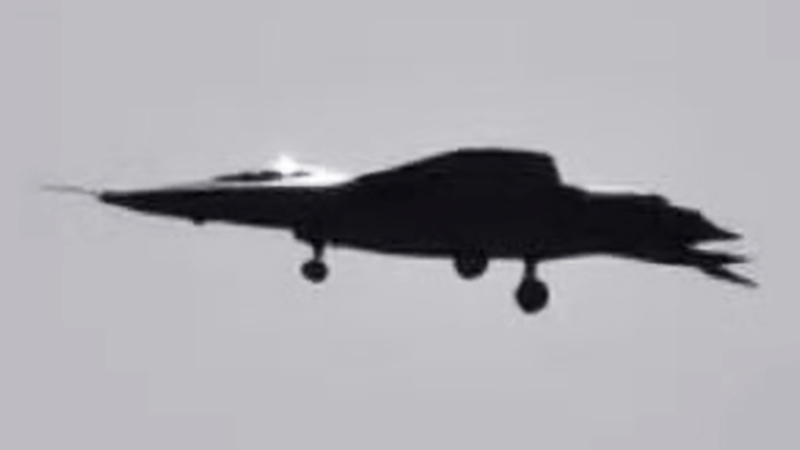
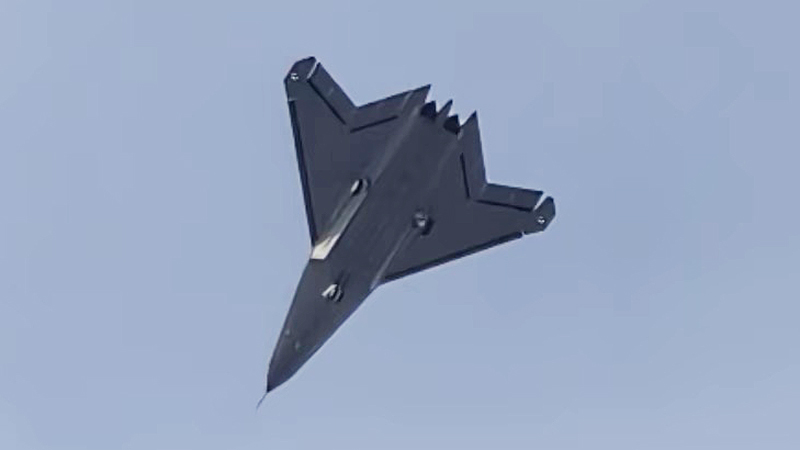
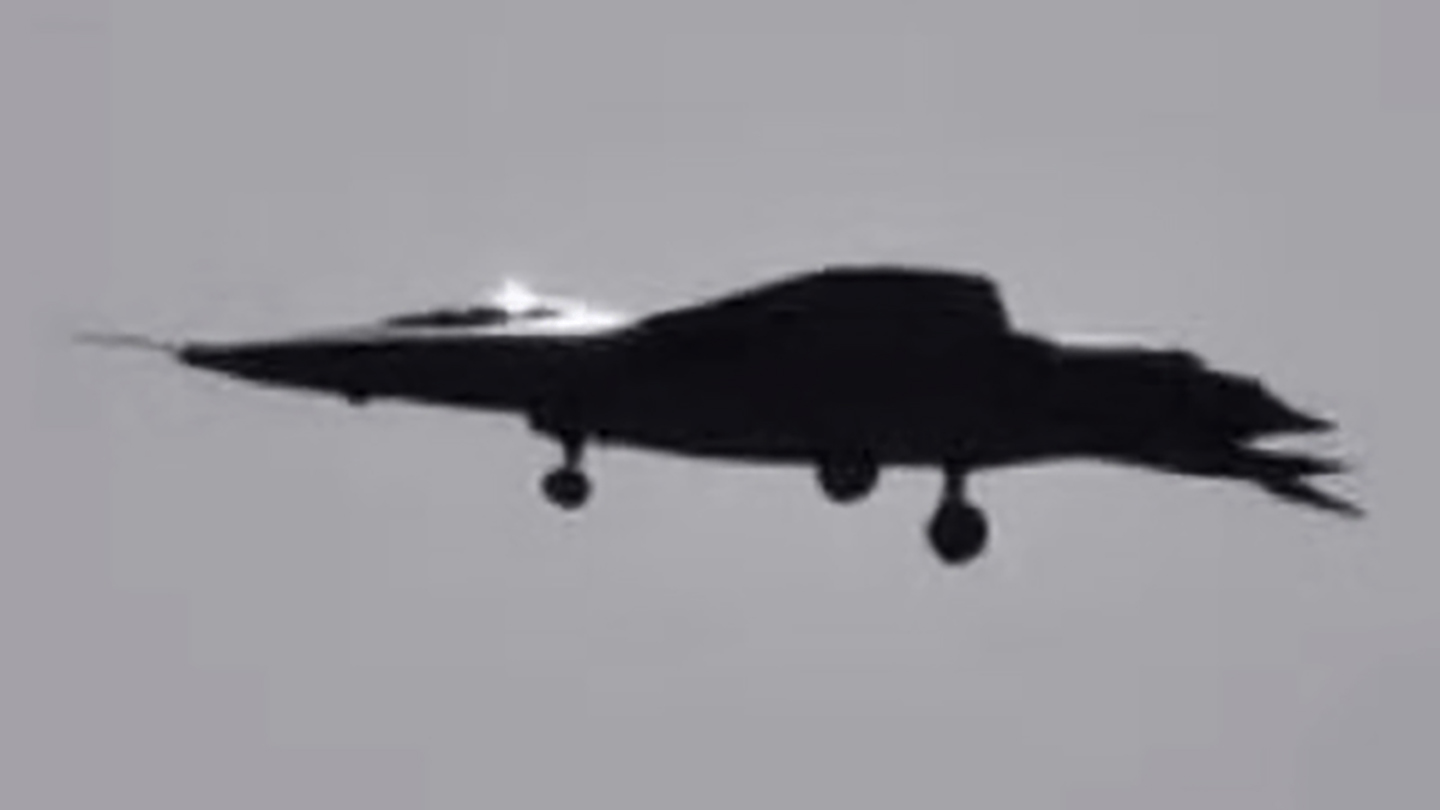
China’s next-generation tailless heavy fighter from the Shenyang Aircraft Corporation seemed to have taken a months-long hiatus between its first known flight and its second. Since then, it has been seen in the skies at an increasing rate. New images and video coming out of China show the jet – referred to unofficially by a number of designations, including J-XDS and J-50 – on another recent test sortie, with clearer shots of the enigmatic stealth fighter than ever before. This includes what appears to be our first real view of its cockpit canopy.

The aircraft’s canopy has been of particular interest since the plane first appeared to the public on Dec. 26, 2024. Up until now, no images have clearly shown it. The plane’s broad nose, paired with the ground-based perspective of the photos and their low quality, previously made only what may have been a part of a canopy visible in imagery. This led to the question of whether the heavy fighter-sized aircraft was crewed at all.

Our very in-depth analysis on this aircraft, and its larger tri-engined Chengdu Aircraft Corporation counterpart, came to the conclusion that the aircraft was almost certainly crewed. With this latest imagery, we can finally put that question to rest conclusively.

J50-AAA.jpg
A shot circulating today of the aircraft on a test flight. (Chinese Internet via X)
One image shows a side-on view of the aircraft, providing a new perspective to analyze. Above all else, it depicts a very streamlined bubble canopy that blends closely with the upper fuselage. Canopies and cockpits can be a major hot spot for radar reflections. Minimizing their return is critical to the survivability of a low-observable crewed aircraft. In this case, for the same reasons that the canopy was so hard for us to see until now — it is difficult to view from lower aspects — also helps with keeping it out of line-of-sight of radar systems positioned below it. These can be on the surface or lower-flying aircraft. The service ceiling of the fighter is unknown, but it should be quite high in order to maximize its performance, as well as its sensor and weapons reach.

It remains unknown if the jet has one or two crew. The canopy does look quite long, which could possibly accommodate a tandem crew layout.

J50_11b200.jpg
(Chinese Internet via X)

To view this content we will need your consent to set third party cookies.
For more detailed information, see our cookies page.


This side view also provides a bit better sense of scale and form of the new jet. Its diamond-shaped forward fuselage with a prominent chine line high up near the cockpit is also readily visible. The blister under the nose that could represent a faceted aperture for an electro-optical targeting and/or infrared search and track (IRST) system, similar to what’s found on the J-20 and the U.S. F-35 Joint Strike Fighter, is also visible.

j50A.jpg
(Chinese Internet via X)

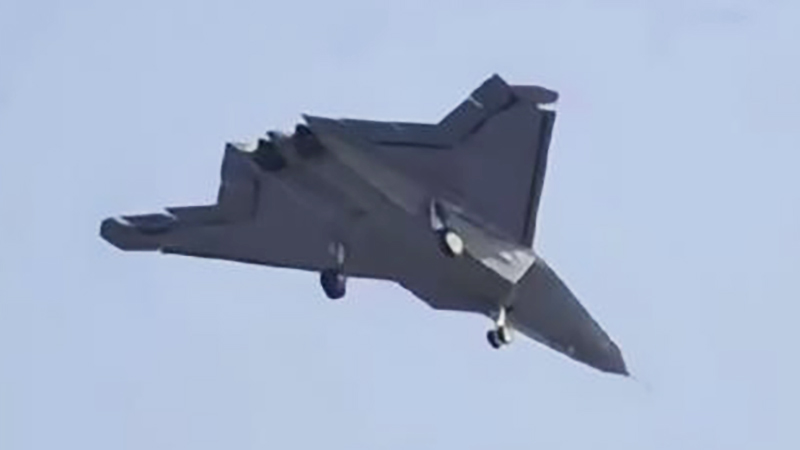
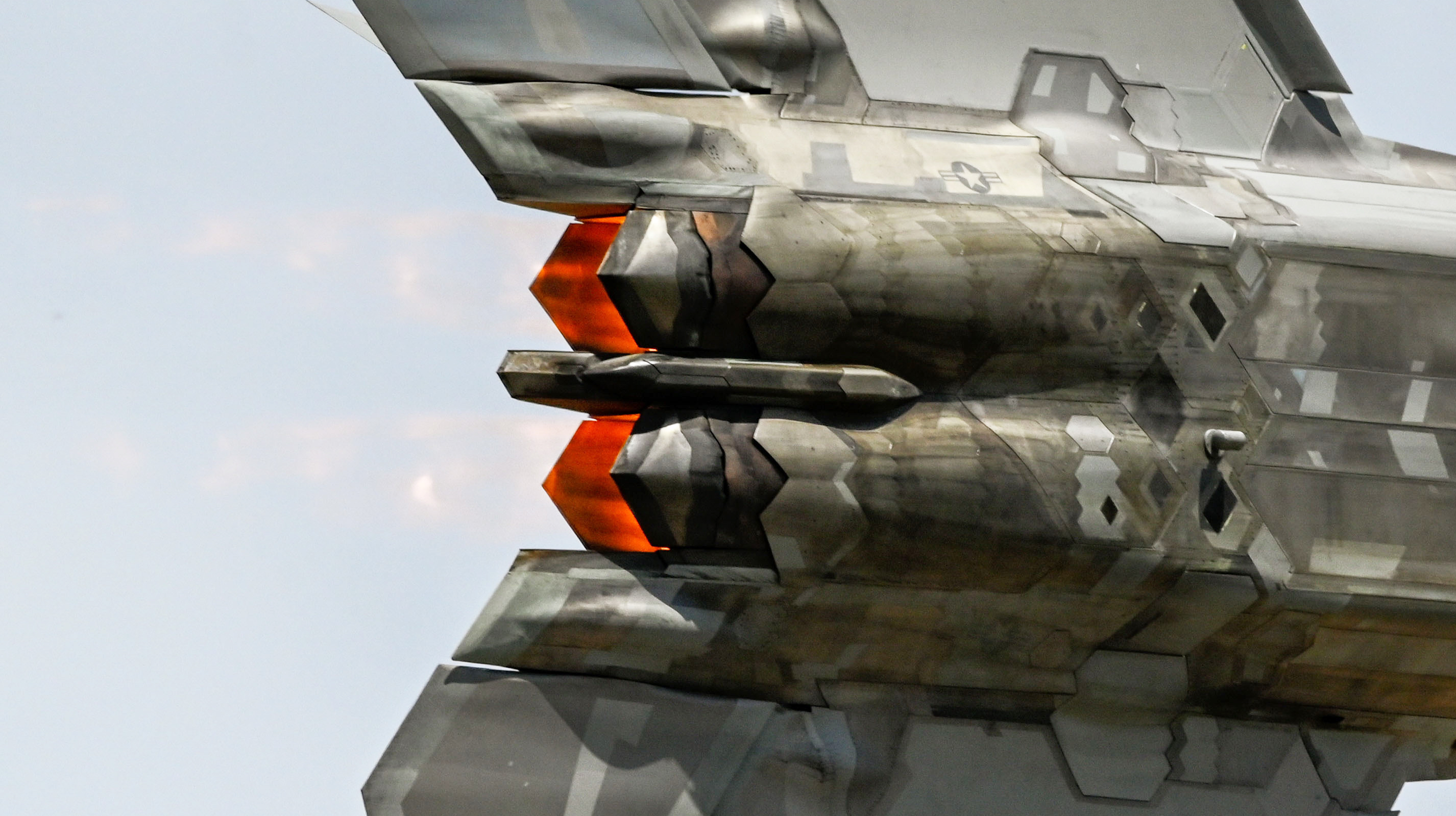
Another angle from the lower rear gives us a clearer view of the aircraft’s exhausts. As expected, they are 2-D and likely thrust vectoring types, very similar to the U.S. F-22 Raptor’s arrangement. This configuration would balance low observability, performance, agility, and especially stability, considering just how unstable a tailless tactical jet like this would be.

j50-A.jpg
(Chinese Internet via X)
A U.S. Air Force F-22 Raptor aircraft assigned to the F-22 Demonstration Team soars overhead with afterburners lit during a performance at the Altus Airpower Stampede Open House and Air Show at Altus Air Force Base, Oklahoma, April 13, 2025. The demonstration showcased the Raptor’s unmatched thrust and maneuverability. (U.S. Air Force photo by Airman 1st Class Jonah Bliss)
F-22’s F119s in afterburner. (U.S. Air Force photo by Airman 1st Class Jonah Bliss) Airman 1st Class Jonah Bliss

China has been displaying its thrust vectoring engine concepts since at least 2022, with the one subscale model on the show floor at Zhuhai looking very similar to what we see in the latest imagery. We also see the unique swiveling wingtip control surfaces in action here, with the right side one highly deflected.

To view this content we will need your consent to set third party cookies.
For more detailed information, see our cookies page.


With each passing week, we are getting more and more detailed imagery of Shenyang’s tailless stealth fighter, just as expected. If the flights continue, we should have a much better understanding of the aircraft’s observable features by summer.


Here’s the clearest glimpse yet of China’s J-50 stealth jet

On Apr 16, 2025

On April 16, 2025, a striking new image surfaced online, offering the clearest view yet of China’s mysterious J-XDS, also referred to as the J-50, a prototype fighter jet developed by the Shenyang Aircraft Corporation.

Here’s the clearest glimpse yet of China’s J-50 stealth jet


Photo credit: X

This sleek, futuristic aircraft, spotted during a test flight near Shenyang, Liaoning province, has captured the attention of military analysts and aviation enthusiasts alike. What sets this jet apart is its radical design: a tailless configuration with lambda-shaped wings and movable wingtips, marking a bold departure from traditional fighter jet layouts.

Unlike conventional designs that rely on vertical stabilizers for stability, the J-XDS appears to prioritize stealth and aerodynamic innovation, raising questions about China’s approach to next-generation air combat technology.

To view this content we will need your consent to set third party cookies.
For more detailed information, see our cookies page.


This development underscores China’s accelerating ambitions in military aviation, as the nation seeks to challenge long-standing Western dominance in the skies with what many believe to be a sixth-generation fighter.

The J-XDS’s most striking feature is its aerodynamic configuration, particularly its lambda wing design—a sharply swept, triangular shape with a trailing-edge extension that connects to the engine bay.

This design enhances the aircraft’s aerodynamic efficiency by increasing the aspect ratio compared to traditional trapezoidal wings, a feature noted in earlier reports about the jet. The lambda wing allows for greater lift at lower speeds, which is advantageous during takeoff and landing, while also providing stability at supersonic speeds, potentially exceeding Mach 2.

To view this content we will need your consent to set third party cookies.
For more detailed information, see our cookies page.


However, the absence of traditional horizontal stabilizers and the use of sharply angled vertical stabilizers introduce significant engineering challenges. Without conventional tail surfaces, the J-XDS likely relies on an advanced fly-by-wire system to maintain stability, compensating for the inherent aerodynamic instability of a tailless design.

This approach, while innovative, may limit the jet’s maneuverability in certain scenarios, such as close-range dogfights, where rapid directional changes are critical. The trade-off appears to be a deliberate one, prioritizing stealth and high-speed performance over traditional agility, a choice that reflects a shift in design philosophy for modern air combat.

Stealth is at the heart of the J-XDS’s design, and every aspect of its airframe seems engineered to minimize detection by enemy radar systems. The aircraft features a smooth, unbroken surface with sharp edges and no protruding elements, a hallmark of low-observable technology.

To view this content we will need your consent to set third party cookies.
For more detailed information, see our cookies page.


The lambda wings and angled vertical stabilizers are designed to deflect radar waves away from their source, reducing the jet’s radar cross-section—a critical factor in evading advanced air defense systems. The fuselage itself appears to be coated with radar-absorbent materials, a common practice in stealth aircraft to further diminish reflectivity.

Additionally, the air inlets, positioned on the sides of the fuselage, are diverters supersonic inlets, a modern design that eliminates mechanical diverters and reduces radar reflections while ensuring efficient airflow to the engines.

Reports from earlier this year on the Chinese social media platform Weibo noted the jet’s streamlined shape and absence of vertical stabilizers, suggesting a focus on minimizing both radar and infrared signatures.

To view this content we will need your consent to set third party cookies.
For more detailed information, see our cookies page.


This raises an intriguing possibility: could the J-XDS be the first fighter optimized to evade low-frequency radars, which have historically posed a challenge to older stealth designs like the F-117 Nighthawk? Such an advancement would mark a significant leap in stealth technology, potentially giving China an edge in contested airspace.

The J-XDS’s propulsion system is another area where engineering innovation is evident, particularly in its efforts to reduce its infrared signature—a key factor in evading heat-seeking missiles. The aircraft is equipped with twin engines, integrated closely into the fuselage, with exhaust nozzles that appear flat and two-dimensional, a design choice that minimizes thermal emissions.

This configuration, often seen in advanced stealth fighters like the U.S. F-22 Raptor, suggests the use of thrust-vectoring technology, which enhances maneuverability by directing engine thrust.

The flat nozzles likely reduce the jet’s infrared signature by dispersing heat more effectively than traditional round nozzles, though this may come at the cost of reduced thrust efficiency at supersonic speeds.

Speculation among analysts points to the use of domestically produced engines, possibly the WS-19, a turbofan engine that represents China’s push for independence from foreign propulsion technology.

Historically, China has relied on Russian engines, such as the AL-31F used in the J-20 stealth fighter, but the country has made significant strides in engine development over the past decade.

The WS-15, another advanced engine, was reported to be ready for mass production in April 2023, and its adoption in the J-20 marked a milestone in China’s aerospace capabilities. If the J-XDS indeed uses a variant of the WS-19 or WS-15, it would indicate a maturing of China’s engine technology, addressing a long-standing challenge in its military aviation programs.

However, the integration of such engines into a tailless design poses engineering hurdles, particularly in maintaining thermal efficiency without compromising the jet’s stealth profile.

The aircraft’s sensor suite and potential weapons systems further highlight its cutting-edge design, though much remains speculative due to the lack of official confirmation from Chinese authorities.

To view this content we will need your consent to set third party cookies.
For more detailed information, see our cookies page.


The long, pointed nose of the J-XDS, combined with a bulge beneath the cockpit, suggests the integration of advanced sensors, such as an active electronically scanned array radar and an electro-optical targeting system.

These systems, similar to those found on China’s J-20 and J-35 fighters, would enable the J-XDS to detect and engage targets at long ranges, even in environments with heavy electronic interference.

A January 2025 report from Army Recognition noted the jet’s potential to incorporate cutting-edge subsystems, including advanced avionics and sensor fusion, aligning with global trends in sixth-generation fighter development.

https://youtu.be/5xjUfVTN4EI

The smooth surface of the fuselage and the absence of external protrusions indicate that sensors are likely embedded into the aircraft’s skin, a technique that reduces radar reflectivity while maintaining functionality. This approach represents an evolution over earlier Chinese designs like the J-20, which, despite its stealth capabilities, has visible external sensors that slightly compromise its low-observable profile.

The J-XDS also appears to feature internal weapons bays, a logical inclusion for a stealth fighter, as external weapons would increase its radar cross-section. While the images do not clearly show these bays, their presence is inferred from the jet’s design and the trend among modern stealth fighters to carry munitions internally, ensuring that its stealth characteristics remain intact during missions.

Comparing the J-XDS to its Western counterparts provides a clearer picture of its design philosophy and potential capabilities. The U.S. F-22 Raptor, introduced in 2005, remains a benchmark for fifth-generation stealth fighters, with its combination of low-observable technology, supercruise capability, and thrust-vectoring engines.

The F-22’s airframe, like that of the J-XDS, prioritizes stealth through smooth surfaces and internal weapons bays, but it retains traditional vertical stabilizers for stability—a feature the J-XDS sacrifices for enhanced stealth. The F-22’s Pratt & Whitney F119 engines allow it to supercruise at Mach 1.5 without afterburners, a capability that the J-XDS may also possess if equipped with advanced Chinese engines.

However, the F-22’s design reflects a balance between stealth and agility, whereas the J-XDS appears to lean more heavily toward stealth, potentially at the expense of maneuverability in dogfights. Another point of comparison is the U.S. F-35 Lightning II, a multirole stealth fighter known for its sensor fusion and network-centric warfare capabilities.

The F-35’s single-engine design contrasts with the J-XDS’s twin-engine configuration, which offers greater thrust and redundancy but may increase its infrared signature if not carefully managed. The F-35 also uses a diverterless supersonic inlet, similar to the J-XDS, but its design prioritizes versatility over pure air superiority, a role the J-XDS seems tailored for based on its aerodynamic profile.

China’s history of fighter jet development provides context for understanding the J-XDS’s design choices. The Chengdu J-20, introduced in 2017, marked China’s entry into the stealth fighter arena, becoming the second nation after the U.S. to field an operational stealth aircraft.

The J-20’s development, which began in the 1990s, faced challenges, particularly with its engines, as early models relied on underpowered Russian AL-31F engines. Over time, China introduced the domestically produced WS-10C and later the WS-15, which enabled the J-20 to achieve supercruise and improved stealth characteristics through serrated engine nozzles.

The J-20’s airframe, with its canard wings and leading-edge root extensions, was designed to reduce radar cross-section, though some analysts have noted that its rear-aspect stealth is less robust than that of the F-22. The J-XDS builds on these lessons, adopting a tailless design to further minimize radar reflectivity, but it also inherits the challenges of China’s rapid development cycle.

The J-20 took six years from its first flight to operational service, a relatively short timeline compared to the F-22’s 15-year development, but early J-20 models faced reliability issues that required iterative improvements. The J-XDS, as a prototype, may follow a similar path, with its ambitious design potentially leading to unforeseen technical hurdles.

The engineering challenges of the J-XDS’s design are significant, particularly given its radical departure from conventional fighter layouts. The tailless configuration, while enhancing stealth, introduces stability issues that must be addressed through advanced flight control systems.

The movable wingtips, which act as control surfaces, provide roll and pitch authority, but their jointed surfaces may slightly compromise stealth by creating radar-reflective edges. A January 2025 article in The War Zone noted that low articulation or locking these controls during cruise could minimize detection risks, but this solution adds complexity to the jet’s design.

The integration of twin engines into a stealth airframe also poses challenges, as the exhaust nozzles must balance thermal management with thrust efficiency—a problem that has historically plagued stealth fighters.

The F-35, for example, faced issues with its stealth coatings peeling under high heat, a problem that required costly maintenance solutions. If the J-XDS uses similar coatings, it may encounter comparable issues, particularly given the harsh thermal environment of supersonic flight.

Additionally, the production of such a complex airframe requires precision manufacturing and quality control, areas where China has made strides but still lags behind its Western counterparts. The rapid pace of China’s development, while impressive, may lead to reliability concerns, as seen with early J-20 models, raising questions about the J-XDS’s readiness for operational deployment.

The J-XDS represents a bold step forward in China’s military aviation ambitions, showcasing a design that prioritizes stealth and aerodynamic efficiency over traditional maneuverability. Its lambda wings, tailless configuration, and advanced propulsion system reflect a maturing aerospace industry, one that is no longer content to follow Western designs but seeks to innovate on its own terms.

The jet’s stealth features, from its radar-absorbent materials to its diverter supersonic inlets, position it as a formidable contender in the realm of sixth-generation fighters, potentially challenging the dominance of U.S. aircraft like the F-22 and F-35.

However, the engineering compromises inherent in its design—particularly the trade-offs between stealth and agility—suggest that its path to operational status may be fraught with challenges.

As China continues to refine this prototype, the J-XDS could set a new standard for fighter jet design, encouraging the adoption of tailless configurations and embedded sensor systems in future aircraft.

Yet, its success will depend on China’s ability to overcome the technical hurdles that have historically plagued ambitious aerospace programs. Will the J-XDS prove to be a practical solution for modern air combat, or will its radical design remain a technological experiment? Only time will tell.


Here’s the clearest glimpse yet of China’s J-50 stealth jet

On Apr 16, 2025

On April 16, 2025, a striking new image surfaced online, offering the clearest view yet of China’s mysterious J-XDS, also referred to as the J-50, a prototype fighter jet developed by the Shenyang Aircraft Corporation.

Here’s the clearest glimpse yet of China’s J-50 stealth jet


Photo credit: X

This sleek, futuristic aircraft, spotted during a test flight near Shenyang, Liaoning province, has captured the attention of military analysts and aviation enthusiasts alike. What sets this jet apart is its radical design: a tailless configuration with lambda-shaped wings and movable wingtips, marking a bold departure from traditional fighter jet layouts.

Unlike conventional designs that rely on vertical stabilizers for stability, the J-XDS appears to prioritize stealth and aerodynamic innovation, raising questions about China’s approach to next-generation air combat technology.

To view this content we will need your consent to set third party cookies.
For more detailed information, see our cookies page.


This development underscores China’s accelerating ambitions in military aviation, as the nation seeks to challenge long-standing Western dominance in the skies with what many believe to be a sixth-generation fighter.

The J-XDS’s most striking feature is its aerodynamic configuration, particularly its lambda wing design—a sharply swept, triangular shape with a trailing-edge extension that connects to the engine bay.

This design enhances the aircraft’s aerodynamic efficiency by increasing the aspect ratio compared to traditional trapezoidal wings, a feature noted in earlier reports about the jet. The lambda wing allows for greater lift at lower speeds, which is advantageous during takeoff and landing, while also providing stability at supersonic speeds, potentially exceeding Mach 2.

To view this content we will need your consent to set third party cookies.
For more detailed information, see our cookies page.


However, the absence of traditional horizontal stabilizers and the use of sharply angled vertical stabilizers introduce significant engineering challenges. Without conventional tail surfaces, the J-XDS likely relies on an advanced fly-by-wire system to maintain stability, compensating for the inherent aerodynamic instability of a tailless design.

This approach, while innovative, may limit the jet’s maneuverability in certain scenarios, such as close-range dogfights, where rapid directional changes are critical. The trade-off appears to be a deliberate one, prioritizing stealth and high-speed performance over traditional agility, a choice that reflects a shift in design philosophy for modern air combat.

Stealth is at the heart of the J-XDS’s design, and every aspect of its airframe seems engineered to minimize detection by enemy radar systems. The aircraft features a smooth, unbroken surface with sharp edges and no protruding elements, a hallmark of low-observable technology.

To view this content we will need your consent to set third party cookies.
For more detailed information, see our cookies page.


The lambda wings and angled vertical stabilizers are designed to deflect radar waves away from their source, reducing the jet’s radar cross-section—a critical factor in evading advanced air defense systems. The fuselage itself appears to be coated with radar-absorbent materials, a common practice in stealth aircraft to further diminish reflectivity.

Additionally, the air inlets, positioned on the sides of the fuselage, are diverters supersonic inlets, a modern design that eliminates mechanical diverters and reduces radar reflections while ensuring efficient airflow to the engines.

Reports from earlier this year on the Chinese social media platform Weibo noted the jet’s streamlined shape and absence of vertical stabilizers, suggesting a focus on minimizing both radar and infrared signatures.

To view this content we will need your consent to set third party cookies.
For more detailed information, see our cookies page.


This raises an intriguing possibility: could the J-XDS be the first fighter optimized to evade low-frequency radars, which have historically posed a challenge to older stealth designs like the F-117 Nighthawk? Such an advancement would mark a significant leap in stealth technology, potentially giving China an edge in contested airspace.

The J-XDS’s propulsion system is another area where engineering innovation is evident, particularly in its efforts to reduce its infrared signature—a key factor in evading heat-seeking missiles. The aircraft is equipped with twin engines, integrated closely into the fuselage, with exhaust nozzles that appear flat and two-dimensional, a design choice that minimizes thermal emissions.

This configuration, often seen in advanced stealth fighters like the U.S. F-22 Raptor, suggests the use of thrust-vectoring technology, which enhances maneuverability by directing engine thrust.

The flat nozzles likely reduce the jet’s infrared signature by dispersing heat more effectively than traditional round nozzles, though this may come at the cost of reduced thrust efficiency at supersonic speeds.

Speculation among analysts points to the use of domestically produced engines, possibly the WS-19, a turbofan engine that represents China’s push for independence from foreign propulsion technology.

Historically, China has relied on Russian engines, such as the AL-31F used in the J-20 stealth fighter, but the country has made significant strides in engine development over the past decade.

The WS-15, another advanced engine, was reported to be ready for mass production in April 2023, and its adoption in the J-20 marked a milestone in China’s aerospace capabilities. If the J-XDS indeed uses a variant of the WS-19 or WS-15, it would indicate a maturing of China’s engine technology, addressing a long-standing challenge in its military aviation programs.

However, the integration of such engines into a tailless design poses engineering hurdles, particularly in maintaining thermal efficiency without compromising the jet’s stealth profile.

The aircraft’s sensor suite and potential weapons systems further highlight its cutting-edge design, though much remains speculative due to the lack of official confirmation from Chinese authorities.

To view this content we will need your consent to set third party cookies.
For more detailed information, see our cookies page.


The long, pointed nose of the J-XDS, combined with a bulge beneath the cockpit, suggests the integration of advanced sensors, such as an active electronically scanned array radar and an electro-optical targeting system.

These systems, similar to those found on China’s J-20 and J-35 fighters, would enable the J-XDS to detect and engage targets at long ranges, even in environments with heavy electronic interference.

A January 2025 report from Army Recognition noted the jet’s potential to incorporate cutting-edge subsystems, including advanced avionics and sensor fusion, aligning with global trends in sixth-generation fighter development.

https://youtu.be/5xjUfVTN4EI

The smooth surface of the fuselage and the absence of external protrusions indicate that sensors are likely embedded into the aircraft’s skin, a technique that reduces radar reflectivity while maintaining functionality. This approach represents an evolution over earlier Chinese designs like the J-20, which, despite its stealth capabilities, has visible external sensors that slightly compromise its low-observable profile.

The J-XDS also appears to feature internal weapons bays, a logical inclusion for a stealth fighter, as external weapons would increase its radar cross-section. While the images do not clearly show these bays, their presence is inferred from the jet’s design and the trend among modern stealth fighters to carry munitions internally, ensuring that its stealth characteristics remain intact during missions.

Comparing the J-XDS to its Western counterparts provides a clearer picture of its design philosophy and potential capabilities. The U.S. F-22 Raptor, introduced in 2005, remains a benchmark for fifth-generation stealth fighters, with its combination of low-observable technology, supercruise capability, and thrust-vectoring engines.

The F-22’s airframe, like that of the J-XDS, prioritizes stealth through smooth surfaces and internal weapons bays, but it retains traditional vertical stabilizers for stability—a feature the J-XDS sacrifices for enhanced stealth. The F-22’s Pratt & Whitney F119 engines allow it to supercruise at Mach 1.5 without afterburners, a capability that the J-XDS may also possess if equipped with advanced Chinese engines.

However, the F-22’s design reflects a balance between stealth and agility, whereas the J-XDS appears to lean more heavily toward stealth, potentially at the expense of maneuverability in dogfights. Another point of comparison is the U.S. F-35 Lightning II, a multirole stealth fighter known for its sensor fusion and network-centric warfare capabilities.

The F-35’s single-engine design contrasts with the J-XDS’s twin-engine configuration, which offers greater thrust and redundancy but may increase its infrared signature if not carefully managed. The F-35 also uses a diverterless supersonic inlet, similar to the J-XDS, but its design prioritizes versatility over pure air superiority, a role the J-XDS seems tailored for based on its aerodynamic profile.

China’s history of fighter jet development provides context for understanding the J-XDS’s design choices. The Chengdu J-20, introduced in 2017, marked China’s entry into the stealth fighter arena, becoming the second nation after the U.S. to field an operational stealth aircraft.

The J-20’s development, which began in the 1990s, faced challenges, particularly with its engines, as early models relied on underpowered Russian AL-31F engines. Over time, China introduced the domestically produced WS-10C and later the WS-15, which enabled the J-20 to achieve supercruise and improved stealth characteristics through serrated engine nozzles.

The J-20’s airframe, with its canard wings and leading-edge root extensions, was designed to reduce radar cross-section, though some analysts have noted that its rear-aspect stealth is less robust than that of the F-22. The J-XDS builds on these lessons, adopting a tailless design to further minimize radar reflectivity, but it also inherits the challenges of China’s rapid development cycle.

The J-20 took six years from its first flight to operational service, a relatively short timeline compared to the F-22’s 15-year development, but early J-20 models faced reliability issues that required iterative improvements. The J-XDS, as a prototype, may follow a similar path, with its ambitious design potentially leading to unforeseen technical hurdles.

The engineering challenges of the J-XDS’s design are significant, particularly given its radical departure from conventional fighter layouts. The tailless configuration, while enhancing stealth, introduces stability issues that must be addressed through advanced flight control systems.

The movable wingtips, which act as control surfaces, provide roll and pitch authority, but their jointed surfaces may slightly compromise stealth by creating radar-reflective edges. A January 2025 article in The War Zone noted that low articulation or locking these controls during cruise could minimize detection risks, but this solution adds complexity to the jet’s design.

The integration of twin engines into a stealth airframe also poses challenges, as the exhaust nozzles must balance thermal management with thrust efficiency—a problem that has historically plagued stealth fighters.

The F-35, for example, faced issues with its stealth coatings peeling under high heat, a problem that required costly maintenance solutions. If the J-XDS uses similar coatings, it may encounter comparable issues, particularly given the harsh thermal environment of supersonic flight.

Additionally, the production of such a complex airframe requires precision manufacturing and quality control, areas where China has made strides but still lags behind its Western counterparts. The rapid pace of China’s development, while impressive, may lead to reliability concerns, as seen with early J-20 models, raising questions about the J-XDS’s readiness for operational deployment.

The J-XDS represents a bold step forward in China’s military aviation ambitions, showcasing a design that prioritizes stealth and aerodynamic efficiency over traditional maneuverability. Its lambda wings, tailless configuration, and advanced propulsion system reflect a maturing aerospace industry, one that is no longer content to follow Western designs but seeks to innovate on its own terms.

The jet’s stealth features, from its radar-absorbent materials to its diverter supersonic inlets, position it as a formidable contender in the realm of sixth-generation fighters, potentially challenging the dominance of U.S. aircraft like the F-22 and F-35.

However, the engineering compromises inherent in its design—particularly the trade-offs between stealth and agility—suggest that its path to operational status may be fraught with challenges.

As China continues to refine this prototype, the J-XDS could set a new standard for fighter jet design, encouraging the adoption of tailless configurations and embedded sensor systems in future aircraft.

Yet, its success will depend on China’s ability to overcome the technical hurdles that have historically plagued ambitious aerospace programs. Will the J-XDS prove to be a practical solution for modern air combat, or will its radical design remain a technological experiment? Only time will tell.


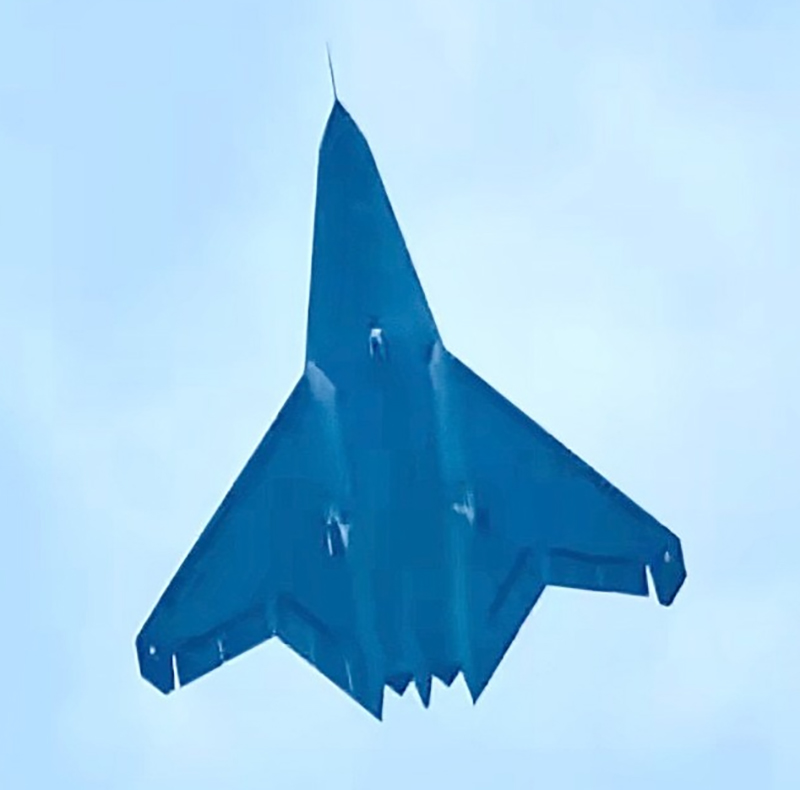
No pitot means serial production is close.
 

Users who are viewing this thread

Back
Top