Chinese assistances to Pakistan - CPEC

New China-Pakistan training centre launched in Islamabad​

By Tahir Ali | Gwadar Pro
Nov 15, 2025

ISLAMABAD - PowerChina International Group Limited have formally launched the Centre of Excellence for Engineering Capacity Building in Islamabad, the first such hub in Pakistan dedicated to training engineers for the China-Pakistan Economic Corridor (CPEC).

According to a statement issued by the Chinese Society of Engineers (CSE) Secretariat, “CSE and PowerChina signed a cooperation agreement on Monday, committing to use the centre to deepen technical exchanges, share Chinese construction know-how, and certify engineers for large-scale clean-energy and water projects across Pakistan.” The agreement was formally concluded on November 10.

The move builds on a mutual-recognition accord reached in June between the CSE and the Pakistan Engineering Council (PEC), a step expected to ease labour bottlenecks for Chinese contractors operating in the South Asian nation.

PowerChina, one of the world’s largest hydropower builders, will host the facility and provide on-site instructors, training modules, and pilot projects, according to a joint statement released after the signing ceremony in Beijing.

Islamabad is now the fourth city, after Johannesburg, Rio de Janeiro and Cairo, to host a CSE-branded training centre, part of China’s broader push to standardize engineering practices across Belt and Road Initiative partner countries.

The initiative aims to produce qualified local engineers to accelerate progress on several power and transport schemes.
 
In a separate statement issued by POWERCHINA on Friday, the company said the new centre will act as a platform for knowledge sharing, skills development and standards alignment, helping cultivate a new generation of engineers for key bilateral projects. It added that through training programs in China, on-site learning in Pakistan and joint workshops, both countries will leverage their respective strengths to support the professional growth of engineers and deepen technical cooperation.
 

China to set up agricultural machinery plants in Punjab


Recorder Report
November 22, 2025

LAHORE: A high-level Chinese delegation visiting Punjab on the invitation of Punjab agriculture minister has announced to establish plants for manufacturing of state-of-the-art agricultural machinery in the province.

According to the delegation, Chinese machinery manufactured locally will match the purchasing power of farmers, and equipment produced in Chinese company plants in Punjab will be tailored to local needs. The delegation further shared that locally produced machinery will also be exported, and Chinese agricultural experts will play an active role in capacity building of Punjab’s agricultural scientists.

The Chinese delegation disclosed this during a meeting with the officials of the agriculture department on Friday. Punjab Secretary Agriculture Iftikhar Ali Sahoo, Secretary Livestock Punjab Ahmad Aziz and other high officials also attended the meeting.

Speaking on the occasion, Iftikhar Ali Sahoo said that during the visit to China, five important Memorandums of Understanding (MoUs) were signed, which included satellite-based crop monitoring, revival of cotton and seed R&D, technical assistance for establishing a centre of excellence and high-tech farm mechanization program.

He added that the recommendations for implementing these MoUs have been finalized. He stated that there is a vast scope for high-tech farm mechanization in Punjab, and according to the vision of the Chief Minister Punjab, China’s cooperation is essential for materializing farm mechanization in the province. The Chief Minister is providing generous resources to transform agriculture in Punjab.

He further said that China is a global leader in modern agricultural technology, and the Government of Punjab will provide full facilitation to Chinese companies manufacturing advanced agricultural machinery.

The Chinese delegation stated that practical steps have already begun to adopt China’s agricultural model in Punjab, and cooperation for promoting farm mechanization in the province will be further strengthened.
 

Chinese tech support spurs Pakistan’s IT export surge​

By Fatima Javed | Gwadar Pro
Nov 19, 2025

Pakistan’s information technology (IT) exports climbed to a historic $386 million in October 2025, marking a 17% year-on-year and 5% month-on-month increase, according to official figures released on Monday. The performance stands well above the 12-month average of $332 million and marks the fifth consecutive month of annual growth, reflecting rising global demand and Pakistan’s expanding international client base.

Economists and analysts believe this impressive momentum is closely linked to China’s expanding role in Pakistan’s digital transformation, especially under CPEC Phase II, which prioritizes technology, connectivity, human-resource development, and innovation partnerships.

As Pakistan works to deepen its presence in software development, global outsourcing, and cloud-based services, Chinese support has emerged as a central pillar. New digital infrastructure, enhanced connectivity, and strengthened talent pipelines created through Sino-Pak cooperation are increasingly viewed as key drivers of export growth.

Chinese tech leaders, including Huawei and ZTE, have played a fundamental role in shaping Pakistan’s next-generation IT workforce. Through AI training labs, cloud-computing programs, and long-standing university collaborations, they have trained thousands of young Pakistani professionals in advanced digital skills that are in growing global demand.
 
China’s digital contribution extends far beyond training. “China’s involvement is not limited to hardware projects. The new fiber-optic corridor, cloud-computing initiatives, and data-center development have given Pakistani IT firms the bandwidth, speed, and reliability they need to compete internationally.”

He highlighted the 820-kilometre CPEC fiber-optic cable from Khunjerab to Rawalpindi as a major breakthrough, improving data quality and significantly reducing latency—critical for software exports and global outsourcing operations.

A major contributor to this transformation is China Mobile Pakistan (CMPAK–Zong), now one of the country’s most active digital enablers. Zain ul Abdin, Senior Executive at CMPAK, said the company continues to support Pakistan’s IT growth by nurturing local talent and developing advanced digital infrastructure.
 
Zong’s nationwide graduate program annually recruits top students from major universities, providing hands-on training, mentorship, and exposure to state-of-the-art technologies. The company is also building high-standard data centers and encouraging Pakistani firms to develop cloud solutions, digital tools, and hardware innovations.

According to Abdin, these efforts are helping local companies improve product quality, strengthen competitiveness, and secure more international clients. “This ecosystem-building approach is enabling Pakistan’s IT exports to expand steadily,” he noted.

Government officials point to recently signed Sino-Pak MoUs on artificial intelligence, cybersecurity frameworks, 5G deployment, and digital-economy cooperation. These agreements form part of the 2025–2029 Pakistan-China Innovation Corridor, designed to attract more Chinese investment into software parks, data-industry zones, and joint R&D centers.

A senior Ministry of IT official said these steps will “accelerate Pakistan’s transition from basic outsourcing to high-value digital exports.”

Industry analysts share this view. “Chinese-backed cloud platforms and cybersecurity frameworks are enhancing Pakistan’s credibility with international clients,” said tech market researcher Omar Khan. “This is improving contract volumes, service quality, and overall client confidence.”
 
Economists broadly agree that China’s strategic digital cooperation has been a major factor behind Pakistan’s record export performance. With stronger talent pipelines, improved connectivity, and expanding bilateral technology initiatives, Pakistan’s IT sector is well positioned to sustain its upward trajectory as the country aims to cross $5 billion in annual IT exports in the coming years.
 
The figures highlight the sustained impact of the Mobile Device Manufacturing Policy and the increasingly leading role of Chinese companies in the country’s mobile production landscape.

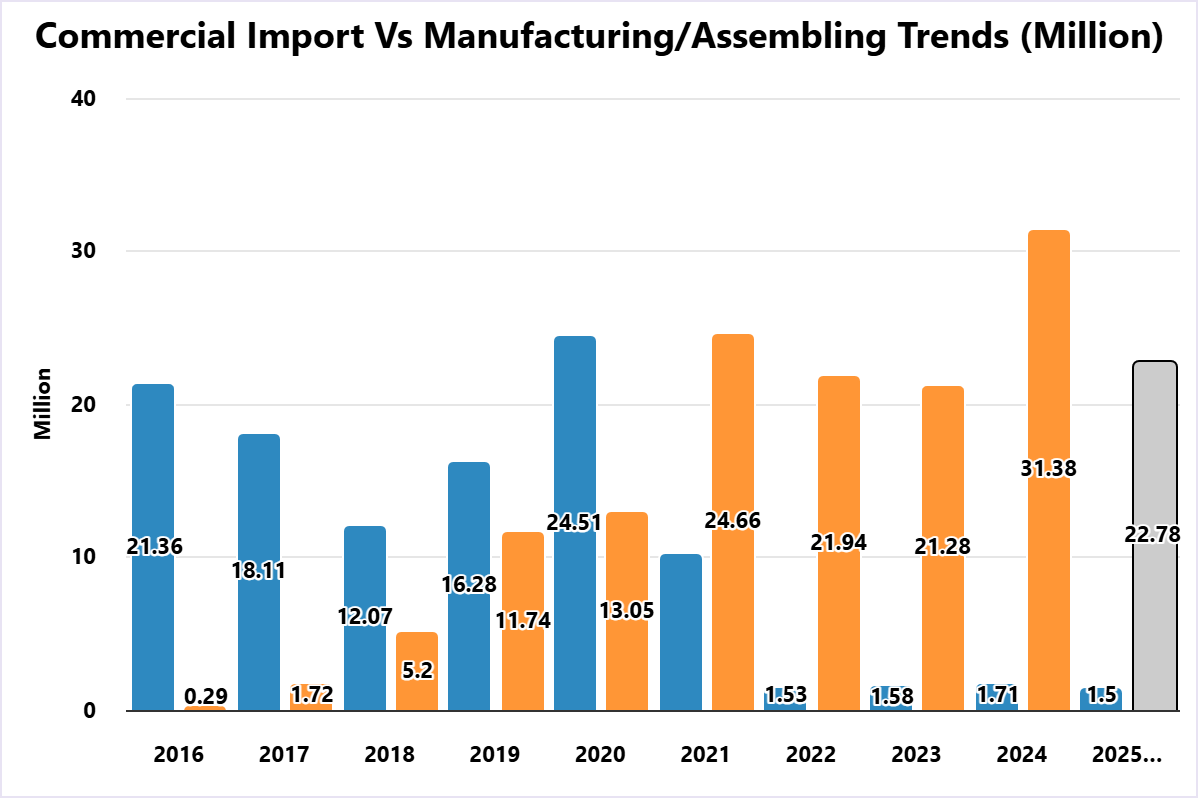
Chinese Brands Push Pakistan’s Jan–Sep 2025 Mobile Output to 22.8M Units


[Source PTA]

The change from previous years is striking. In 2016 Pakistan imported more than 21 million handsets commercially, while local manufacturing stood at only 0.29 million units.

Imports remained high through 2020 when they peaked at 24.51 million units, but a combination of local assembly incentives, tariff adjustments, and growing Chinese industrial participation gradually reversed the trend.

By 2022 commercial imports had dropped to 1.53 million units while domestic production rose to nearly 22 million.

The shift accelerated in 2024 as local manufacturing climbed to 31.38 million units and imports declined to 1.71 million, marking a near-complete turnaround from the pre-policy environment.
 
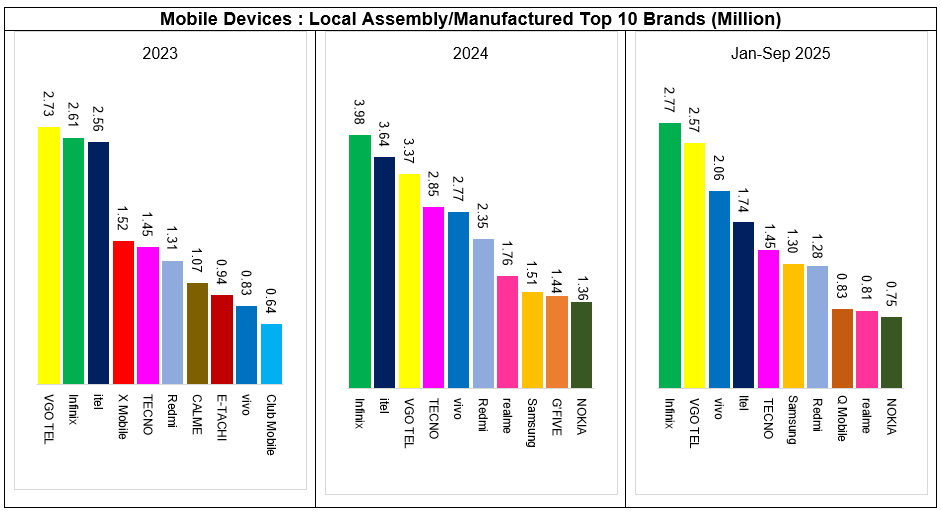
PTA’s top ten manufacturing chart for 2025 underscores the depth of Chinese involvement.

Infinix leads production with 2.77 million units, followed by VGO TEL at 2.57 million and itel with 2.06 million devices.
Vivo recorded 1.74 million units, TECNO reached 1.45 million, and Xiaomi’s Redmi brand produced 1.28 million handsets.
Realme manufactured and assembled 0.81 million mobile sets.
Brans such as QMobile, which depend heavily on Chinese original device manufacturers, also remain in the top tier, further strengthening China’s overall footprint in Pakistan’s mobile manufacturing sector.

Chinese Brands Push Pakistan’s Jan–Sep 2025 Mobile Output to 22.8M Units


Chinese manufacturers hold the top positions in the list. [source/PTA]
the dominance of Chinese tech firms reflects both Pakistan’s demand for competitively priced smartphones and China’s long-term industrial integration with Pakistan under broader economic cooperation frameworks.

With almost half of all handsets produced in 2025 classified as smartphones, 11.92 million units out of the total 22.78 million, the role of Chinese manufacturers is becoming even more central to Pakistan’s digital transformation.
 

China-operated Metro Train completes more than 270 million ridership in 5 years​

By Yasir Habib Khan | Gwadar Pro
Nov 17, 2025

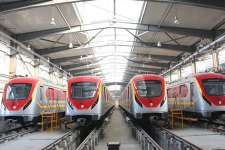
LAHORE - Orange Line Metro Train (OLMT), first electric railway transportation project under China Pakistan Economic Corridor, has completed milestone of more than 270 million ridership during five years since its operation in 2020 till November 2025.

Putting healthy impacts on local transportation facility, traffic easiness and environment protection in the provincial metropolis, China-operated metro train has also executed 512180 trips with safe operation of 1800 days.

The OLMT is providing urban travelling experience to more than 2,50,000 commuters daily keeping punctuality and trip efficiency at rate of 99 percent successfully.

1763934349086.png
 

Pakistan pushes Digital Silk Road vision as centerpiece of next CPEC phase​

By Shafqat Ali | Gwadar Pro
Nov 17, 2025

ISLAMABAD - Pakistan has placed the China-led Digital Silk Road at the heart of the next stage of the China–Pakistan Economic Corridor (CPEC), signalling a major strategic shift from conventional infrastructure to high-technology cooperation.

According to a statement issued by the Ministry of Information Technology on Monday afternoon, Islamabad has formally proposed a broad spectrum of next-generation digital partnerships with Beijing, including joint ventures in 5G/6G technologies, hardware manufacturing, semiconductor components, cloud systems and advanced ICT infrastructure.

CPEC, launched in 2015 as a flagship project of China’s Belt and Road Initiative, has already delivered major energy plants, highways, power transmission lines and the deep-sea port of Gwadar.

With investments valued at nearly US $60 billion, the corridor has long served as China’s main connectivity route linking western Xinjiang to the Arabian Sea.

As both countries transition into CPEC Phase-II, cooperation is expanding into areas that China has become globally competitive in, digital governance, smart manufacturing, automation, fiber connectivity, and technology-driven economic modernization.
 

PC Hospitality and China’s Shiji Group sign deal to modernize hotel technology​

By Fatima Javed | Gwadar Pro
Nov 25, 2025

ISLAMABAD - In a move that further strengthens Pakistan–China cooperation in the services and technology sectors, PC Hospitality has entered a strategic partnership with Shiji Group, a leading Chinese provider of hospitality technology systems. The agreement aims to modernize PC Hospitality’s operational infrastructure and support its long-term plan for digital transformation across its hotel portfolio.

As per the announcement on Monday, under the partnership, Shiji Group will provide cloud-based platforms, including Daylight PMS, Horizon Distribution, and Infrasys POS to PC. The technology shift is intended to centralize data, streamline operations, and introduce more efficient and transparent decision-making across properties.

Key objectives of the partnership include greater visibility across hotels and distribution systems, faster commercial decision-making using real-time data, and scalable digital infrastructure for upcoming developments.
 

Pakistan, China move toward joint EV technology diploma under CPEC 2.0​

By Fatima Javed | Gwadar Pro
Nov 25, 2025

ISLAMABAD - A high-level three-member delegation from Punjab Technical Education & Vocational Training Authority (TEVTA) reached China on Monday to formalize agreements on cooperation for Electric Vehicle (EV) Technology Diploma Programs for Pakistani students.

This initiative is being launched under the China-Pakistan Digital Corridor (CPEC 2.0), marking a significant step forward in advancing technical education and future-ready skills in Pakistan.

The collaboration has been made possible through joint efforts between Punjab TEVTA, Xiangyang Polytechnic Vocational College, ITMC Technology Co., Ltd, and UNI Services International Pvt Ltd. The agreements will pave the way for Pakistani students to access specialized EV technology training, aligning with global industry trends and Pakistan’s growing need for skilled professionals in sustainable mobility.
 

Pakistani agriculture graduates complete advanced training in China​

By Mariam Raheem | Gwadar Pro
Nov 25, 2025

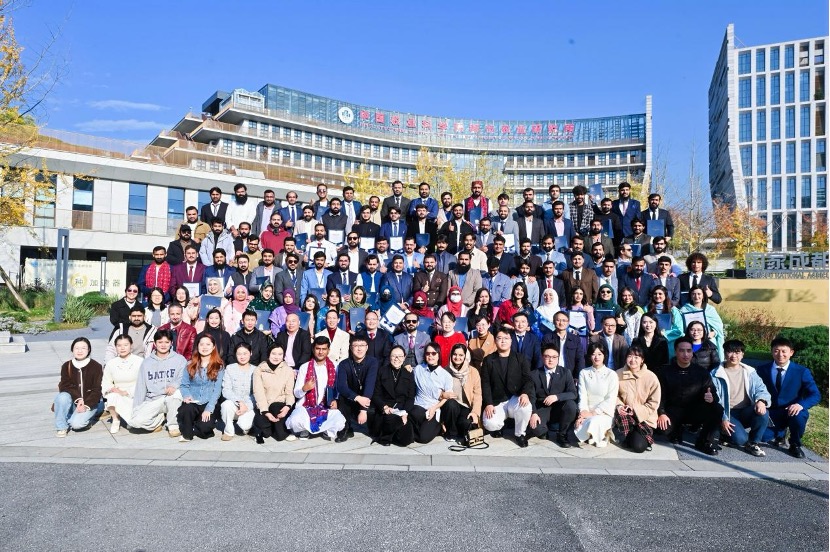
CHENGDU-China’s Institute of Urban Agriculture under the Chinese Academy of Agricultural Sciences (CAAS) on Nov. 20 held a graduation ceremony for the second batch of 1,000 Pakistani agriculture specialists trained under the Pakistani prime minister’s capacity-building initiative in Chengdu, China’s southwest province of Sichuan.

Pakistani agriculture graduates complete advanced training in China


The graduation ceremony for the second batch of 1,000 Pakistani agriculture specialists in Chengdu, China [Photo provided to GP]

The three-month programme, designed around Pakistan’s agricultural development needs, focused on agricultural mechanisation and fruit and vegetable processing technologies. It also included training in “low-altitude + agriculture” applications – the use of drones and other aerial technologies in farming – aimed at building skills in smart machinery R&D and digital farm management.

Tanvir A. Bhatti, Pakistan’s consul general in Chengdu, thanked CAAS and the institute for hosting the programme and congratulated the graduates. He said the specialists, carrying “the agricultural wisdom of Sichuan and the achievements of China-Pakistan cooperation,” would help advance bilateral agricultural collaboration.
 

China ready to ‘organically integrate’ Pakistan’s development plans, says Chinese envoy​

https://www.dawn.com/news/1957526/c...development-plans-says-chinese-envoy#comments
https://whatsapp.com/channel/0029VaMc238IiRov8okfYy3n
China is ready to work with Pakistan to organically integrate the country’s development plans and the action plan on building a closer China-Pakistan community with a shared future in the new era, Chinese Ambassador in Islamabad Jiang Zaidong said on Wednesday.

Pakistan and China share a longstanding strategic partnership with ties that span various sectors, including trade, energy, defence, and infrastructure.

Ambassador Jiang was speaking at the Policy Dialogue on “Redefining Regional Connectivity: Pakistan-China Friendship in the New Geo-Economic Paradigm.”

“Guided by the important consensus of our leaders, centered on building a closer China-Pakistan community with a shared future in the new era, using the advancement of CPEC 2.0 as a platform, and focusing on deepening cooperation in industry, agriculture, and mining, we will continuously consolidate, deepen, and expand our all-round partnership,” the Chinese envoy said while speaking via video link.


He said the approach will tangibly serve the modernisation drives of both countries and better benefit the two peoples.

“We will promote the inclusion of more Pakistani agricultural products under contract farming cooperation and facilitate the export of more high-quality agricultural products to China. Furthermore, we will continue to support industrial park cooperation, making new and greater contributions to Pakistan’s export expansion and foreign exchange earnings,” he said.

The day-long dialogue brought together senior policymakers, including the Chinese ambassador, alongside leading experts who discussed the transformative potential of the Belt and Road Initiative (BRI) and the China-Pakistan Economic Corridor (CPEC) in fostering regional stability, connectivity, and economic interdependence.

The Chinese envoy said his country will support the Chinese company Haier’s investment of US $400 million to establish a new home appliance industrial park in Pakistan, which is expected to achieve an annual production capacity of approximately 10 million units. “We will also support Chinese company Challenge Group’s investment of US $150 million to build a new textile industrial park, aiming to achieve an annual export value of US $400 million.”

“Looking to the future, CPEC will help Pakistan expand regional cooperation. Pakistan is a hub connecting South Asia, Central Asia, and the Middle East, possessing many unique advantages for development, one of which is its critical geographical location,” he said.

Ambassador Jiang said Beijing is also willing to accelerate the Karakoram Highway realignment, promote the modernisation of the Khunjerab-Sost Port, advance the comprehensive development of Gwadar Port, and transform it into a hub for regional connectivity.

“We are ready to actively and steadily advance third-party cooperation under CPEC, promoting its extension towards Central Asia and the Middle East to leverage Pakistan’s geographic advantages,” he added.

Jiang elaborated that CPEC has brought Pakistan a cumulative total of US $25.93 billion in direct investment, 510 kilometers of highways, over 8,000 megawatts of power generation, and 886 kilometers of core grid networks, significantly improving Pakistan’s infrastructure and industrial transformation.

“Taking the flagship Gwadar Port and its supporting projects as an example, the upgraded China-Pakistan Friendship Hospital has greatly enhanced the modernisation of local medical services, with cumulative patient visits exceeding 340,000.”

About the Gwadar seawater desalination plant, he said the plant is now officially operational with a daily output of over 2,000 tons, effectively alleviating local water supply shortages.

He also mentioned the Lahore Orange Line Metro train and said he has personally taken a ride during a tour and found it as smooth and comfortable as the urban rail transit in Beijing, adding that its cumulative passenger traffic has exceeded 270 million.

The envoy pointed out that CPEC has created a total of 261,000 jobs in Pakistan, improving the lives of countless families and building a solid foundation of public support for CPEC.

Talking about the Pakistani government’s policies, he said Pakistan’s economic indicators have significantly improved.

“In the last fiscal year, GDP grew by 3.04 percent, and per capita income increased from US $1,663 to US $1,824. Pakistan is also advancing its “Uraan Pakistan” five-year plan, prioritising digital transformation and technology empowerment, emphasising an export-oriented strategy, and aiming to achieve high-speed, sustainable growth in key industries through opening up, to become an upper-middle-income country by 2035,” said Jiang.

Pakistan’s former National Security Adviser, Moeed Yusuf, in his address highlighted regional connectivity with special reference to Afghanistan.

Yusuf, said, “things with Afghanistan are messy, but we need to expand and work on regional cooperation, and expand such partnerships to Central Asia”.

While endorsing Pakistan’s security concerns, he favoured the approach of separating economic issues from political matters and said others would find alternatives and “would not wait”. He also mentioned the idea of CPEC’s to Afghanistan and stated that China and Pakistan are interested in achieving this goal.
 

Users who are viewing this thread

Latest Posts

Back
Top