China Commissions 35th Type 052D Destroyer as PLAN Chinese Navy Warship Production Outpaces U.S. Navy
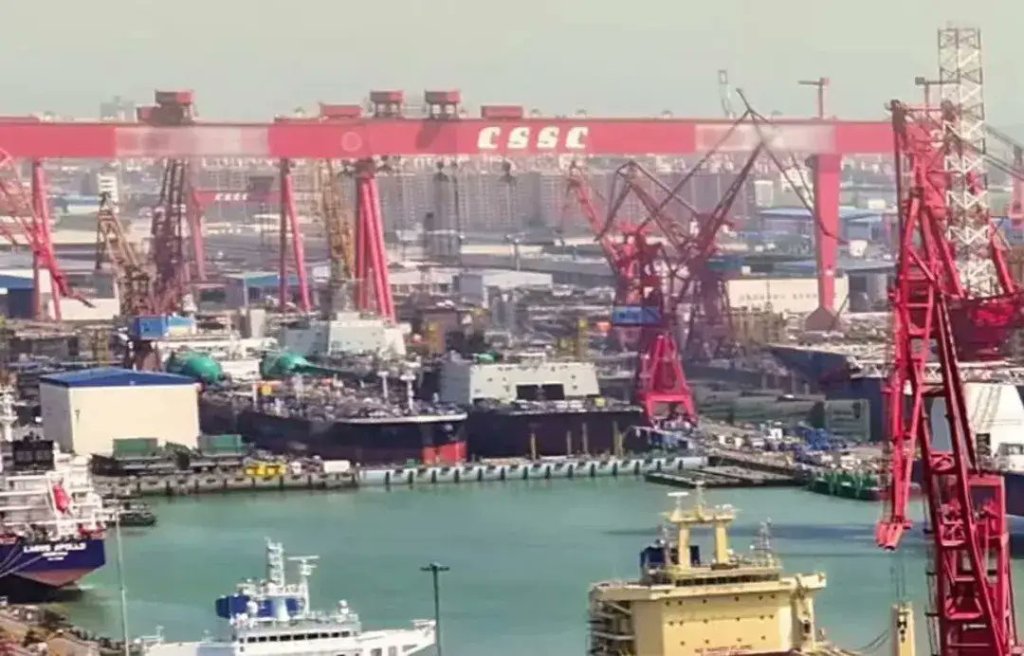
China has commissioned another advanced guided-missile destroyer, but the arrival of the PLAN's 35th Type 052D-series warship highlights a development drawing increasing attention in Washington: Beijing is expanding its modern destroyer fleet at a pace the U.S. Navy currently struggles to match. As reported by Chinese sources, the new destroyer Tongchuan has entered service with the South Sea Fleet, providing further evidence of how China's vast shipbuilding industry is rapidly translating industrial capacity into frontline naval power across the Indo-Pacific.
Equipped for air defense, anti-submarine warfare, anti-ship operations, and long-range strike missions, Tongchuan strengthens China's ability to project military power in the South China Sea and around Taiwan. Its commissioning comes as U.S. defense officials continue to warn that China's growing numerical advantage in warship production could become a decisive factor in any future regional conflict, raising new questions about the long-term balance of naval power in the Indo-Pacific.
Related Topic: China Reinforces Naval Combat Superiority with New Type 052D Destroyer Equipped with AESA Radar
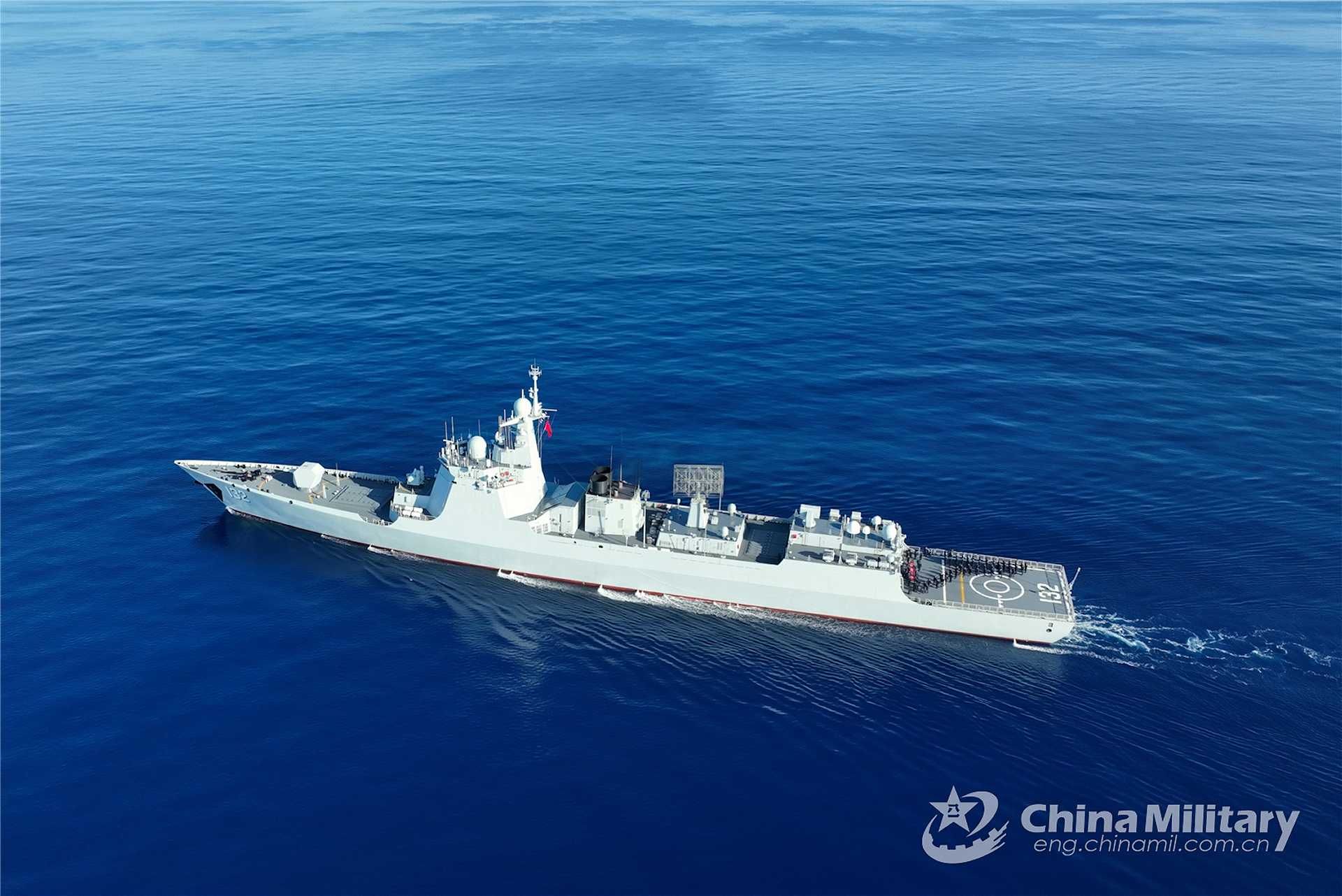
China's Type 052D guided-missile destroyer represents the backbone of the PLAN's modern surface fleet. With 35 vessels now commissioned, the class has become a symbol of Beijing's rapid naval expansion and growing challenge to U.S. Navy dominance in the Indo-Pacific. (Picture source: China MoD)
Assigned to the People's Liberation Army Navy's (PLAN - Chinese Navy) 9th Destroyer Flotilla of the South Sea Fleet, Tongchuan strengthens China's ability to conduct air-defense, anti-submarine warfare, anti-surface warfare, and long-range strike missions in some of the world's most strategically contested waters. The commissioning comes as U.S. defense officials continue to warn that China's vast shipbuilding industry is becoming one of Beijing's most significant advantages in a potential high-intensity conflict with the United States.
The new warship belongs to the
Type 052DL subclass, an improved version of the Type 052D destroyer that has become the backbone of China's modern surface fleet. The Type 052DL incorporates a hull extension of approximately 4 meters, increasing the overall length to about 162 meters and allowing the installation of a larger flight deck. This modification enables the operation of the Harbin Z-20F naval helicopter, which offers substantially greater range, endurance, sensor capabilities, and anti-submarine warfare performance than the smaller Z-9 helicopter used by earlier Chinese destroyers.
Although the commissioning of a single destroyer may appear routine, *Tongchuan* represents a much larger strategic trend. Since the first
Type 052D entered service in 2014, China has commissioned approximately 35 ships of the class while simultaneously fielding eight Type 055 large destroyers. In just over a decade, Beijing has transformed what was once a largely regional navy into a force possessing one of the world's largest concentrations of modern guided-missile destroyers.
The pace of Chinese naval construction stands in sharp contrast to that of the United States. During the same period in which China commissioned approximately 35 Type 052D destroyers, the
U.S. Navy added roughly 18 to 20
Arleigh Burke-class destroyers. Chinese shipyards have therefore produced modern destroyers at nearly double the American rate over the last decade. While U.S. shipbuilders continue to deliver highly capable warships, production has been constrained by rising costs, workforce challenges, industrial bottlenecks, and the transition to the more sophisticated Flight III Arleigh Burke configuration.
This disparity is increasingly viewed in Washington as a strategic concern. Recent Pentagon assessments and congressional hearings have repeatedly highlighted China's overwhelming shipbuilding advantage. According to U.S. defense officials, Chinese shipyards possess significantly greater capacity than their American counterparts, allowing Beijing to convert industrial strength into naval combat power at a pace unmatched by any other navy.
The Type 052D was specifically designed to provide the PLAN with a modern area-air-defense destroyer capable of escorting aircraft carriers, amphibious task groups, and surface action forces. Displacing approximately 7,500 tons, the warship is equipped with a 64-cell universal vertical launch system capable of deploying HHQ-9B long-range surface-to-air missiles, YJ-18 anti-ship cruise missiles, CJ-10 land-attack cruise missiles, and anti-submarine rocket-delivered torpedoes. Combined with an active electronically scanned array radar suite and advanced combat management system, the destroyer provides a versatile multirole capability across the full spectrum of naval warfare.
The
Type 052D is often compared to the U.S. Navy's Arleigh Burke-class destroyer, particularly the latest Flight III variant. While both warships perform similar operational roles, important differences remain in their capabilities, sizes, and combat systems.
The newest Arleigh Burke Flight III destroyers displace nearly 9,800 tons and carry 96 Mk 41 vertical launch cells, giving them a significantly larger missile inventory than the Chinese destroyer. The U.S. warship can simultaneously deploy a broad combination of SM-2, SM-3, SM-6, Tomahawk land-attack missiles, Evolved Sea Sparrow Missiles, and anti-submarine weapons, providing greater flexibility across multiple mission sets.
Perhaps the most significant American advantage lies in radar performance and integrated air and missile defense. Flight III destroyers are equipped with the AN/SPY-6(V)1 Air and Missile Defense Radar, regarded as one of the most advanced naval radar systems currently deployed. The radar dramatically improves detection range, target tracking capacity, ballistic missile defense performance, and engagement of low-observable threats. It was specifically designed to address emerging challenges posed by advanced cruise missiles, ballistic missiles, and future hypersonic weapons.
By comparison, China's Type 052D employs a modern active electronically scanned array radar that provides strong air-defense capabilities and supports long-range missile engagements. However, publicly available information indicates that the PLAN has yet to demonstrate a destroyer-based ballistic missile defense capability comparable to the SPY-6-equipped Flight III. In a high-end missile defense scenario, the U.S. destroyer continues to maintain a significant technological advantage.
Operational experience also remains an important differentiator. The U.S. Navy has spent decades refining carrier strike group operations, ballistic missile defense missions, long-range precision strike campaigns, and multinational coalition deployments. Arleigh Burke destroyers have participated in combat operations from the Middle East to the Western Pacific and routinely operate across multiple theaters simultaneously. While the PLAN has dramatically expanded its global reach, Chinese destroyers have comparatively limited operational experience in sustained high-end naval operations.
Nevertheless, the strategic challenge facing the United States increasingly revolves as much around quantity as around quality. China's destroyer fleet now includes approximately 35 Type 052D/052DL vessels, six Type 052C destroyers, and eight Type 055 large destroyers, bringing the total number of destroyers in service to roughly 50 ships. More importantly, over 40 of these vessels are modern combatants equipped with advanced radar systems and vertical launch missile batteries.
The U.S. Navy retains a larger destroyer force, operating approximately 74 Arleigh Burke-class destroyers and three Zumwalt-class destroyers, for a total of around 77. However, China's fleet has grown far more rapidly, steadily narrowing the gap while concentrating its forces in the Western Pacific, where any future conflict involving Taiwan would likely occur.
For Pentagon planners, this trend carries significant implications. A larger number of modern Chinese destroyers enables the PLAN to maintain persistent patrols in the South China Sea, expand operations around Taiwan, escort aircraft carrier strike groups, and create overlapping air-defense networks extending beyond the First Island Chain. Additional warships also increase China's capacity to generate larger missile salvos and sustain combat operations during a prolonged regional conflict.
The commissioning of
Type 052D Tongchuan, therefore, represents more than the addition of a single destroyer. It serves as another indicator of China's ability to rapidly translate industrial capacity into naval power. While the
U.S. Navy continues to field some of the world's most capable surface combatants through the Arleigh Burke Flight III program, Beijing's ability to produce modern destroyers at scale is emerging as a defining factor in the naval arms race that is shaping the future balance of power in the Indo-Pacific. As tensions continue around Taiwan and the South China Sea, the competition between American technological superiority and Chinese production capacity is becoming increasingly central to regional deterrence and maritime security.
Written by Alain Servaes – Chief Editor, Army Recognition Group
Alain Servaes is a former infantry non-commissioned officer and the founder of Army Recognition. With over 20 years in defense journalism, he provides expert analysis on military equipment, NATO operations, and the global defense industry.
China adds its 35th Type 052D destroyer as PLAN fleet expansion highlights a growing naval production gap with the U.S. Navy

www.armyrecognition.com