Chinese Economy: General News, Updates and Discussions

that’s pure fantasy.

new strategy? what strategy?

VW has no future in China. the market is dead for VW. same for all other foreign brands. time to go home.

Germans aren't productive anymore after decades of socialism since the end of the Cold War. They aren't efficient compared to Chinese who are free market.
 
  • Haha
Reactions: FHN

All set for future mobility: Volkswagen Group and SAIC Strengthen Long-Standing Partnership with New Joint Venture Agreement​


The Volkswagen Group is consistently advancing its “In China, for China” strategy. The company is strengthening its successful 40-year partnership with SAIC Motor for the long term. In Shanghai, both companies signed an extension of their joint venture agreement until the year 2040. By extending the agreement, the partners are creating early planning security beyond 2030 in a very dynamic development phase of the Chinese automotive market. At the same time, Volkswagen and SAIC are accelerating the transformation of their joint venture company, SAIC VOLKSWAGEN, in the areas of product portfolio, production, and decarbonization. The shared goal of the partners is to achieve a leading market position for SAIC VOLKSWAGEN with the Volkswagen Passenger Cars and Audi brands in the era of intelligent, fully connected electric vehicles.

“Volkswagen and SAIC are pioneers of individual mobility in China. Together, we established one of the first international joint ventures in the region 40 years ago. Since its establishment, SAIC VOLKSWAGEN has earned the trust of more than 28 million customers. With the long-term contract extension, we underline the importance of this collaboration and the significance of the Chinese market for the Volkswagen Group. We are accelerating the transformation of SAIC VOLKSWAGEN in line with our 'In China, for China' strategy on all levels, bringing a new generation of electrified vehicles onto the road by 2026. This ensures that our partnership is economically and technologically future proof," said Ralf Brandstätter, Member of the Board of Management of Volkswagen AG for China. “China is a driver of innovation for autonomous driving and electric mobility. With the new agreement, we are intensifying our integration into the Chinese ecosystem and consistently leveraging local innovation strength. This also creates a strategic competitive advantage for the Volkswagen Group worldwide.”

Wang Xiaoqiu, Chairman of SAIC Motor, said: “Electrification and the transformation of the car into an intelligent vehicle are the defining trends in the automotive industry. In view of the highly dynamic market, SAIC Motors, the first Chinese carmaker to sell more than one million vehicles in the electric segment and in overseas markets, is deepening and expanding its cooperation with Volkswagen. The focus for SAIC VOLKSWAGEN is on the development of new, intelligent electric vehicles in order to maintain an industry-leading position in the field of smart technologies. The decisive factors here are consistent customer orientation, quality management and the use of our own innovative strength. We will break new ground with ‘China Speed’. The aim of the joint venture is to achieve sustainable and steady sales growth and a leading market position. In this way, we are contributing to the further positive development of the Chinese and global automotive industry.”

The original joint venture agreement was valid until 2030. However, due to the multi-year planning cycles of new products and the associated investments, fundamental agreements are typically extended several years before their end date.

With the new agreement, both partners are now creating a strong and timely foundation for the successful development of SAIC VOLKSWAGEN beyond 2030. With this in mind, Volkswagen and SAIC have identified three key areas to accelerate the transformation of the SAIC VOLKSWAGEN joint venture with the Volkswagen Passenger Cars and Audi brands:

1.Expansion of Product Offensive with New E-Models, Range-Extender Variants, and Plug-In Hybrids

By 2030, SAIC VOLKSWAGEN will introduce a total of 18 new models to the market. In light of the dynamic market development, the joint venture partners are particularly focusing on an accelerated electrification strategy. This includes eight new electric models. As early as 2026, two electric vehicles based on the newly locally developed “Compact Main Platform” (CMP) - equipped with a state-of-the-art zonal electric architecture used for the first time across the Group - will be launched. Additionally, the still highly profitable internal combustion engine offering will be transitioned into the electric mobility world by 2026 with three plug-in hybrid models and, for the first time, two range-extender variants. This will rapidly further strengthen the company's position in the fast-growing market for fully electric and partially electrified vehicles. At the same time, the new vehicles will be consistently tailored to customer needs as part of the “In China, for China” strategy. Of the 18 models that SAIC VOLKSWAGEN will introduce to the market by 2030, 15 vehicles are being developed exclusively for the Chinese market.

2. Gradual Optimization of the Production Network with a Focus on Efficiency and Productivity

Given the rapidly growing market demand for electric vehicles and increasing competitive pressure, the joint venture partners will also accelerate the transformation of SVW's production network with a focus on cost-effectiveness and productivity. In this context, existing production capacity for internal combustion vehicles will be gradually reduced in the coming years. While many SVW sites are being, or have already been, converted to produce electric vehicles based on customer demand, alternative economic solutions will be examined in individual cases. This also applies to the joint venture site in Urumqi. Due to economic reasons, the site has now been sold by the joint venture as part of the realignment. The same applies to the test tracks in Turpan and Anting.

3. Consistent Decarbonization Initiatives with Ambitious Goals

As part of the extension of the joint venture agreement, both partners have agreed on ambitious decarbonization goals for sustainability. SAIC VOLKSWAGEN aims to reduce its CO2 emissions by 25 percent by 2030 compared to 2018 levels and is actively pushing forward its transformation towards carbon neutrality at the corporate level. Thereby, SAIC VOLKSWAGEN is following the Group’s objective of achieving carbon neutrality by 2050. This positions the company as a pioneer in decarbonization within the Chinese automotive industry.

SAIC and Volkswagen Continue 40-Year Success Story

Over the past four decades, the Volkswagen Group, together with its Chinese partner SAIC, has precisely aligned its strategy to meet the needs of Chinese customers. With the Santana, millions of customers were enabled to enter the world of individual mobility. Later, the first China-specific models like the Lavida were introduced, becoming multi-million-sellers and continuing to enjoy great success in the market today. Since 2007, ŠKODA models have also been produced by SAIC VOLKSWAGEN. The electrification strategy in China was launched as early as 2017. The ID.3 is currently one of the best-selling pure electric vehicles in the Chinese market and leads the segment of compact hatchbacks.

Group Drives Transformation with “In China, For China” Strategy

As part of its “In China, for China” strategy, the Volkswagen Group is determined to drive forward its transformation in China. The Group is strengthening its local development skills in e-mobility, digitalization, and autonomous driving. This involves both enhanced collaboration with its Chinese partners and the consistent expansion of its own additional development capacities. A key role in this context is played by the new development and innovation center in Hefei, where around 3,000 developers are working on the next generation of fully connected intelligent electric vehicles. This also accelerates the Group's decision-making and development processes in the region, contributing to a reduction in the development cycles of new products by 30 percent. This enables the company to respond more quickly to market-defining trends in China and to optimally leverage the market's growth dynamics.

Over the next three years alone, the Group and its brands will bring 40 new models to the Chinese market, half of which will be electrified. By 2030, the Group will offer more than 30 electric models in China.
 
Last edited:
Germans aren't productive anymore after decades of socialism since the end of the Cold War. They aren't efficient compared to Chinese who are free market.
that´s problem when people are fat then they become lazy.
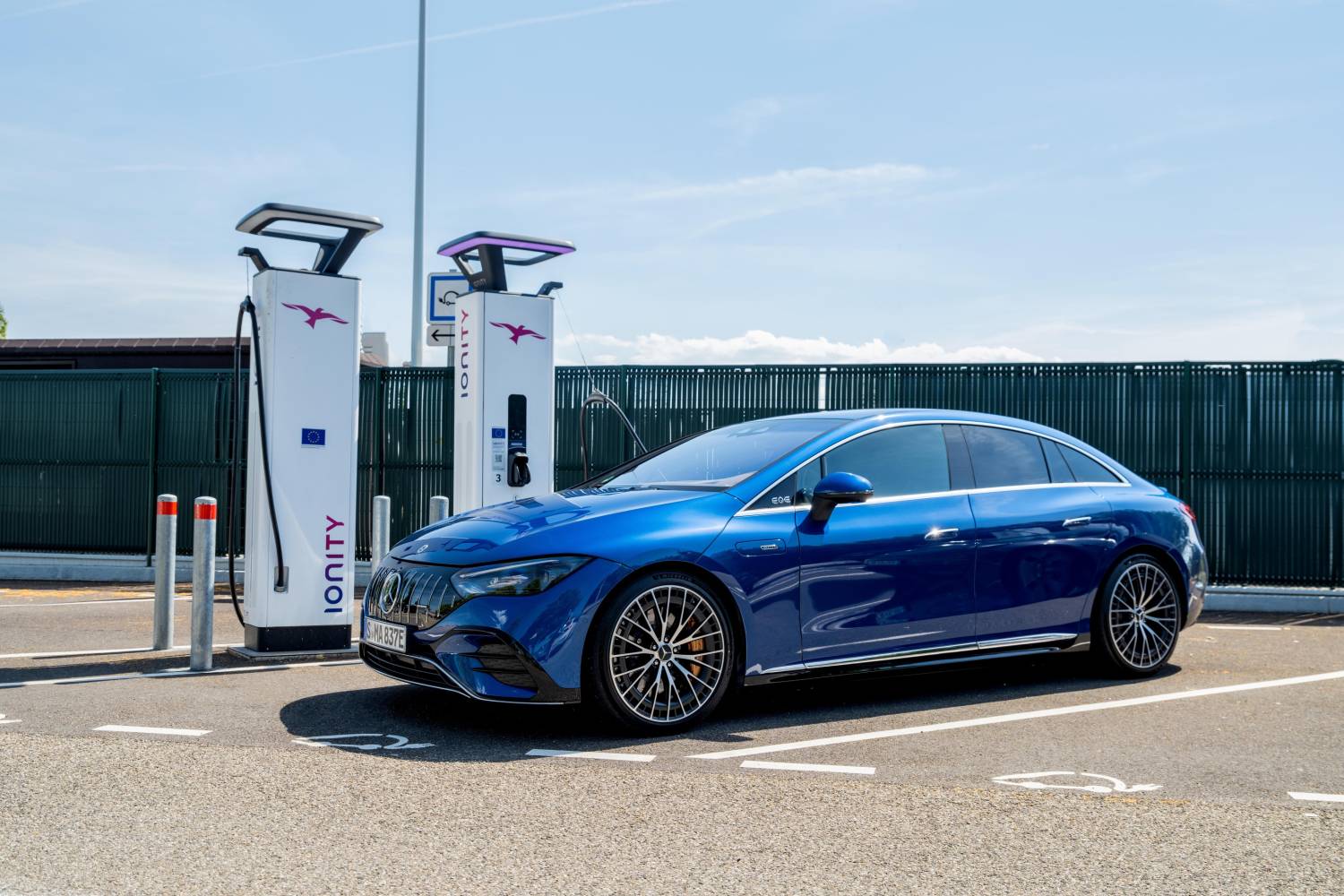
look at Mercedes car sales in China. nobody buys its electric models. the sales is 0. yes, 0. even with 40% discount. hopeless.
 
that´s problem when people are fat then they become lazy. l
ook at Mercedes car sales in China. nobody buys its electric models. the sales i 0. yes, 0.

Unlike Germany ditches socialism and go free market, Germany will lose competitiveness.
 
Unlike Germany ditches socialism and go free market, Germany will lose competitiveness.
Scholz lost the majority in the bundestag. he is finished. who knows the nazi will win the next election in 2 months. will be interesting.
 
To view this content we will need your consent to set third party cookies.
For more detailed information, see our cookies page.
 

Quake in China's Tibet kills 95 with tremors felt in Nepal, India​

Pakistan extends heartfelt condolences over tragic loss of lives in earthquake​


By AFP
January 07, 2025


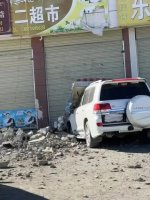
A damaged car lies amidst rubble on the street following an earthquake in Lhatse County, Shigatse City, Tibet Autonomous Region, China, January 7, 2025, in this screengrab obtained from a social media video. — Reuters
BEIJING/KATHMANDU: A devastating earthquake in China's remote Tibet region killed at least 95 people and collapsed "many buildings" on Tuesday, state media reported, with tremors also felt in neighbouring Nepal´s capital Kathmandu and parts of India.

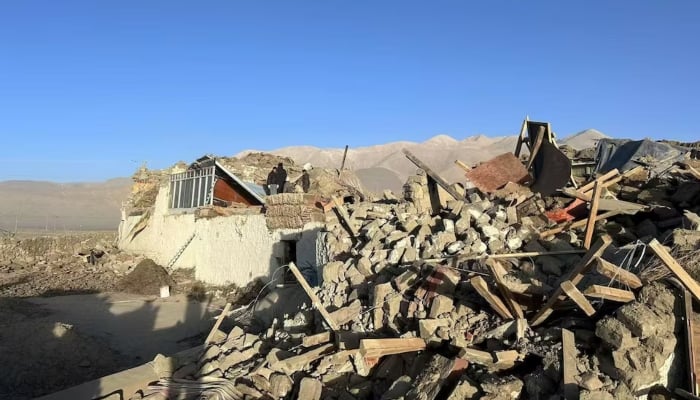
Videos published by China's state broadcaster CCTV showed houses destroyed with walls torn apart.

People stand amidst damaged houses in the aftermath of an earthquake in Tonglai Village, Changsuo Township of Dingri in Xigaze, Chinas Tibet Autonomous Region on January 7, 2025. — Xinhua/ Reuters
People stand amidst damaged houses in the aftermath of an earthquake in Tonglai Village, Changsuo Township of Dingri in Xigaze, China's Tibet Autonomous Region on January 7, 2025. — Xinhua/ Reuters

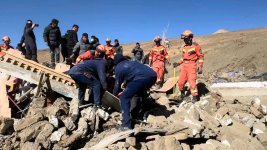
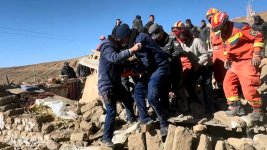
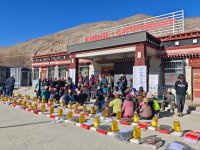
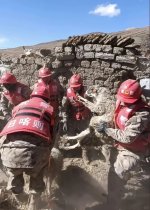
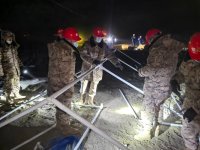
Rescue workers waded through rubble strewn across the ruins in the aftermath of the earthquake, footage showed, while some gave locals thick blankets to keep warm in subzero temperatures.

Surveillance images published by CCTV showed people running through a store's aisles as shelves shook violently, sending objects like toys tumbling to the ground.


vid


Play Video

"A total of 95 people have been confirmed dead and 130 others injured as of 3pm (0700 GMT)," Xinhua news agency said.

More than a thousand houses have been damaged, Xinhua reported earlier.

Quake in Chinas Tibet kills 95 with tremors felt in Nepal, India

The powerful quake struck Tingri county with a magnitude of 6.8 near the border with Nepal at 9:05am, according to the China Earthquake Networks Center (CENC). The US Geological Survey reported the tremor as magnitude 7.1.

Sangji Dangzhi, whose supermarket in Tingri county suffered considerable damage, described the situation as "very serious" with ambulances taking people to hospital throughout the day.

"Here the houses are made from dirt so when the earthquake came... lots of houses collapsed," the 34-year-old, who returned home from Shigatse after the quake struck, told AFP by phone.

'Very strong tremors'​

CCTV reported that Tingri county and its surrounding areas "experienced very strong tremors, and many buildings near the epicentre have collapsed".

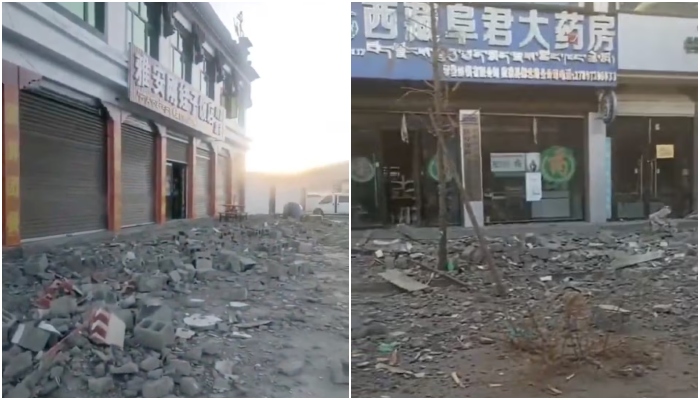
In the town of Lhatse, videos geolocated by AFP showed debris scattered in front of streetside eateries.

People come out from their houses during an earthquake in Kathmandu, Nepal, on January 7, 2025. — Reuters
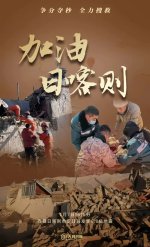
Chinese President Xi Jinping emphasised "the all-out search and rescue efforts, minimizing casualties to the greatest extent possible, properly resettling affected residents, and ensuring their safety and warmth through the winter", CCTV added.

Xinhua said that "local authorities are reaching out to various townships in the county to assess the impact of the quake".

Temperatures in Tingri are around minus 8 degrees Celsius (17.6 degrees Fahrenheit) and will drop to minus 18 this evening, according to the China Meteorological Administration.

Disaster relief aid, including cotton tents, quilts and items for high-altitude and frigid areas, had been dispatched by central authorities to areas impacted by the quake, Xinhua said.

The high-altitude county in the Tibet region is home to around 62,000 people and situated on the Chinese side of Mount Everest.

Tuesday's quake was the most powerful recorded within a 200-kilometre (124-mile) radius in the last five years, the CENC added.

Pakistan has expressed heartfelt condolences over the tragic loss of lives in the earthquake.

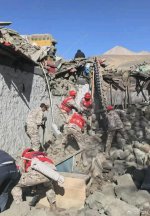
This collage of pictures shows rubble in Shigatse City of Tibet, China, on January 7, 2025. —Reuters

This collage of pictures shows rubble in Shigatse City of Tibet, China, on January 7, 2025. —Reuters
In a statement, the Foreign Office said Pakistan extends its support to the Chinese people and government their relief efforts.

"Our thoughts remain with the injured and those still missing," it added.

'Shook quite strongly'​

As well as Kathmandu, areas around Lobuche in Nepal in the high mountains near Everest were also rattled by the tremor and aftershocks.

"It shook quite strongly here, everyone is awake," said government official Jagat Prasad Bhusal in Nepal''s Namche region, which lies nearer to Everest.

But no damage or deaths had been reported so far and security forces have been deployed, Nepali home minister spokesman Rishi Ram Tiwari said.

Nepal lies on a major geological faultline where the Indian tectonic plate pushes up into the Eurasian plate, forming the Himalayas, and earthquakes are a regular occurrence.

In 2015, nearly 9,000 people died and more than 22,000 were injured when a 7.8-magnitude quake struck Nepal, destroying more than half a million homes.

Some tremors were felt in Bihar state in India but no injuries were reported.

Three people were killed and dozens injured after a 7.0-magnitude earthquake struck along the mountainous China-Kyrgyzstan border in January last year.

A quake in December 2023 in northwest China killed 148 people and displaced thousands in Gansu province.

That quake was China's deadliest since 2014, when more than 600 people were killed in southwestern Yunnan province.

In the December 2023 earthquake, subzero temperatures made the aid operation launched in response even more challenging, with survivors huddled around outdoor fires to keep warm.


Single-lane traffic restored on five roads after earthquake in Dingri County

To view this content we will need your consent to set third party cookies.
For more detailed information, see our cookies page.
 
PLA Tibetan Garrison troops reached the quake hit regions first

de690c27ly1hxd6m8br9ij20zk0p1tdx.jpgde690c27ly1hxd6m8orafj20zk0qon7h.jpgde690c27ly1hxd6m93v30j20zk0qogub.jpg
 

Users who are viewing this thread

Latest Posts

Back
Top