Chinese Economy: General News, Updates and Discussions

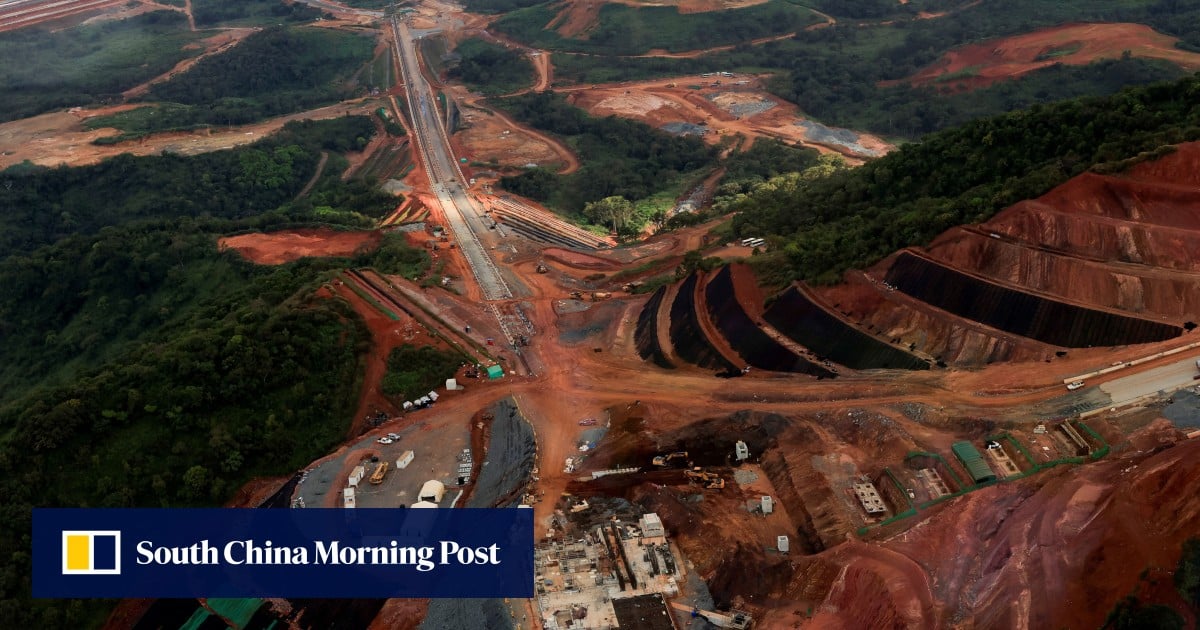
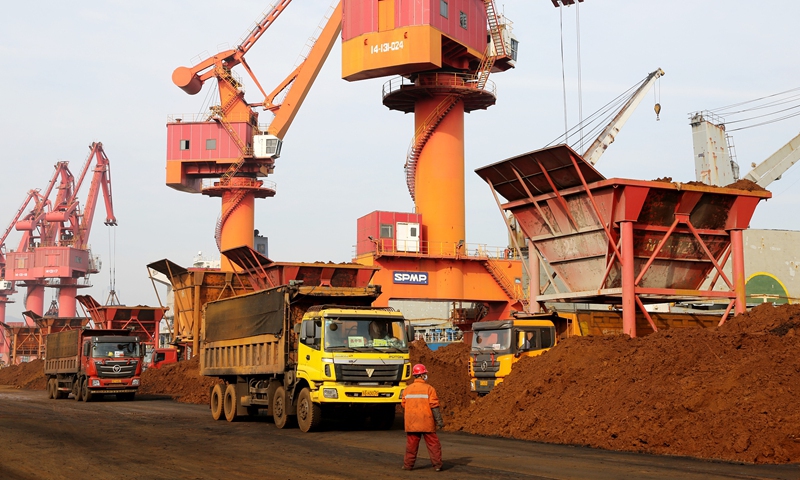
Iron Ore Shakeup Begins as Simandou’s First Boat Heads for China


Simandou iron ore: Guinea’s mega project set to transform global mining


Why first Simandou iron ore shipment to China marks a global milestone

The West was trying to screw this project up for almost a decade. Now the first load is heading to China, amazing.
 

ByteDance’s TikTok to invest more than US$37 billion in Brazil data centre​

Published: 10:45am, 4 Dec 2025

ByteDance’s TikTok will invest more than 200 billion reais (US$37.7 billion) to build a data centre in Brazil, marking its first project in Latin America.

TikTok would partner with data centre developer Omnia and Casa dos Ventos, one of Brazil’s leading renewable energy providers, in a data centre in the northeastern state of Ceara, Monica Guise, head of public policy at TikTok Brazil, said on Wednesday.

The project, which would be developed near the industrial port of Pecém, would fully rely on clean energy from wind energy parks, she added.

“This is a historic investment for the company in Brazil,” Guise said at an event in Ceará with President Luiz Inacio Lula da Silva. “It’s a key step that reflects the company’s commitment to Brazil, one of the most dynamic digital markets in the world.”
 

Kazakhstan reports rise in oil product exports through Dostyk station to China​

Kazakhstan Materials 6 December 2025 12:55 (UTC +04:00)

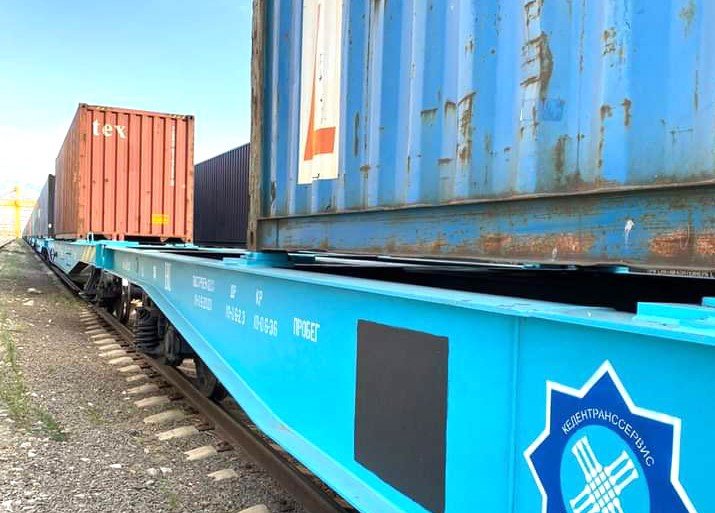
ASTANA, Kazakhstan, December 6. Oil product exports from Kazakhstan through the Dostyk station to China reached 322,800 tons from January through November 2025, which is a 35.6% increase compared to the same period in 2024, Trend reports via Kazakhstan Temir Zholy.

The export of other goods also saw growth. For example, chemical products totaled 70,600 tons, which is a 1% increase, while the export of compound feed surged 3 times to 522,400 tons compared to the same period of 2024

During the specified timeframe of January to November 2025, the aggregate throughput of railway freight transiting the Dostyk-Alashankou junction along the China-Kazakhstan frontier reached a substantial 17.8 million tons, reflecting a 6% uptick relative to the corresponding interval in 2024.

The Dostyk-Alashankou corridor was commissioned in 1991, marking a significant milestone in cross-border connectivity and facilitating transcontinental logistics operations. In the fiscal year 2024, the throughput at the crossing reached an impressive 18.266 million tons of cargo, reflecting a substantial 14.6% uptick relative to the preceding year, 2023.
 

China's exports top expectations on strong sales to non-US markets​

BEIJING, Dec 8 (Reuters) - China's exports topped forecasts in November, driven by a surge in shipments to non-U.S. markets as manufacturers deepen trade ties with the rest of the world in light of President Donald Trump's prohibitively high tariffs.
The world's second-largest economy has ramped up efforts to diversify its export markets since Trump won last November's presidential election, pursuing closer trade ties with Southeast Asia and the European Union, and leveraging Chinese firms' global footprint to establish new production hubs for low-tariff access.

China's exports grew 5.9% year-on-year, customs data showed on Monday, reversing from a 1.1% contraction a month prior, and beating a 3.8% forecast in a Reuters poll.
Imports were up 1.9%, compared to a 1.0% uptick in October. Economists had expected a 3.0% increase.
"The tariff cuts agreed under the U.S.-China trade truce didn't help to lift shipments to the U.S. last month, but overall export growth rebounded nonetheless," said Zichun Huang, China economist at Capital Economics. "We expect China's exports will remain resilient, with the country continuing to gain global market share next year."

"The role of trade rerouting in offsetting the drag from U.S. tariffs still appears to be increasing," she added.
The average U.S. tariff on Chinese goods stands at 47.5%, well above the 40% threshold that economists say erodes Chinese exporters' profit margins.
Chinese shipments to the U.S. dropped 29% in November year-on-year, the data shows, even though the month began with news that the United States and China had agreed to scale back some of their tariffs and a raft of other measures after Trump and his Chinese counterpart Xi Jinping met in South Korea on October 30.
Exports to the European Union grew an annual 14.8% last month, while shipments to Australia surged 35.8%, and the fast-growing Southeast Asian economies took in 8.2% more goods over the same period.
That boosted China's trade surplus to $111.68 billion in November, the highest since June, from $90.07 billion recorded the previous month, and above a forecast of $100.2 billion.

The trade surplus for the 11 months of the year topped $1 trillion for the first time.
"Electronic machinery and semiconductors seem to be key," said Dan Wang, China director at Eurasia Group. "There is a shortage in lower-grade chips and other electronics, which meant prices jumped, and Chinese companies going global have been importing all kinds of machinery and other inputs from China."

KEY MEETINGS EYED AMID US-CHINA TRADE UNCERTAINTY​

China's yuan firmed on Monday, off the back of the stronger-than-expected export data, with investors also awaiting policy signals from key year-end meetings.
The Politburo, a top decision-making body of the ruling Communist Party, pledged on Monday to take steps to expand domestic demand, a shift analysts say is crucial for weaning the $19 trillion economy away from reliance on exports.
Top officials are also expected to convene for the annual Central Economic Work Conference in the coming days to set key targets and outline policy priorities for next year.

Economists estimate that diminished access to the U.S. market since Trump returned to the White House has reduced China's export growth by roughly 2 percentage points, equivalent to around 0.3% of GDP.
October's unexpected downturn, following an 8.3% surge the month prior, signalled that Chinese exporters' tactic of front-loading U.S.-bound shipments to beat Trump's tariffs had run its course.
Although Chinese factory owners reported an improvement in new export orders in November, they were still in contraction, underscoring continued uncertainty for manufacturers as they struggle to replace demand in the absence of U.S. buyers.

An official survey tracking broader factory activity showed that the sector contracted for an eighth consecutive month.

DOMESTIC DEMAND STILL SOFT​

China's rare earth exports jumped 26.5% month-on-month in November, the first full month after Xi and Trump agreed to speed up shipment of the critical minerals from the world's largest refiner.
The nation's soybean imports are also poised for their best-ever year, as Chinese buyers, who had shunned U.S. purchases for the majority of this year, stepped up purchases from American growers in addition to large purchases from Latin America.
Overall, China's domestic demand remains soft due to a prolonged property downturn.
That weakness was seen in a decline in imports of unwrought copper, a key material in construction and manufacturing.
"China's pivot to establishing domestic demand as a key driver of growth will take time, but it’s essential for China to move into the next phase in its economic development," said Lynn Song, ING's chief economist for Greater China.
Reporting by Joe Cash Editing by Shri Navaratnam
Our Standards: The Thomson Reuters Trust Principles.

https://www.reuters.com/world/asia-...expectations-imports-underperform-2025-12-08/
 
According to data from the General Administration of Customs, China's chip exports from January to October 2025 reached $162.1 billion, surpassing the total of $159.6 billion for the entire year of 2024.
The export value has increased by over $100 billion compared to 2016, before the trade war began.

lt111.png
 
Has Chinese GDP officially cross the $20 trillion this year?
 
EXPLAINER
News|Business and Economy

How did China’s trade surplus hit $1 trillion?​

Donald Trump’s trade tariffs have failed to hold back China’s export dominance, which scaled new heights in November.

2025-11-18T101402Z_1059330294_RC2L3EAFLD85_RTRMADP_3_XIAOMI-RESULTS-1765291080.jpg

A Chinese Xiaomi SU7 Ultra electric vehicle is displayed during a media day for the Auto Shanghai show in Shanghai, China April 23, 2025. Electric vehicles are among China's largest exports around the world [File: Go Nakamura/Reuters]

By Alex Kozul-Wright
Published On 9 Dec 20259 Dec 2025

China’s trade surplus – the difference between the value of goods it imports and exports – has hit $1 trillion for the first time, a significant yardstick in the country’s role as “factory of the world”, making everything from socks and curtains to electric cars.

For the first 11 months of this year, China’s exports rose to $3.4 trillion while its imports declined slightly to $2.3 trillion. That brought the country’s trade surplus to about $1 trillion, China’s General Administration of Customs said on Monday.

Shipments overseas from China have boomed despite US President Donald Trump’s global trade war, largely consisting of sweeping “reciprocal” tariffs on most countries, which were launched earlier this year in a bid to reduce US trade deficits.

But China, which was initially hit with US tariffs of 145 percent before they were lowered to allow for trade talks, has emerged largely unscathed from the standoff by stepping up shipments to markets outside the US.

Following Trump’s 2024 election win, China began diversifying its export market away from the US in exchange for closer ties with Southeast Asia and the European Union. It also established new production hubs, outside of China, for low-tariff access.

Why does China have such a large trade surplus?​

China’s exports returned to growth last month following an unexpected dip in October, rising to 5.9 percent more than one year earlier and far outpacing a 1.9 percent rise in imports, according to China’s General Administration of Customs.

China’s goods surplus for the first 11 months of 2025 was up 21.7 percent from the same period last year. Most of the surge was driven by strong growth in high-tech goods, which outpaced the increase in overall exports by 5.4 percent.

Auto exports, especially for electric vehicles, rallied as Chinese firms muscled in on Japanese and German market share. Total car shipments jumped by more than one million to approximately 6.5 million units this year, according to data from China-based consultancy Automobility.

And although China still trails US leaders like Nvidia in advanced chips, it is becoming dominant in the production of semiconductors (used in everything from electric cars to medical devices). Semiconductor exports rose by 24.7 percent over the period.

China’s technological advances have also boosted shipbuilding, where exports rose 26.8 percent compared with the same period in 2024.


So, given the hostile global trade backdrop, how has China achieved this?

Rerouting and diversifying​

Though Washington has lowered tariffs on Chinese imports in recent months, they remain high. Average import duties on Chinese goods currently stand at 37 percent. For this reason, Chinese shipments to the US have dropped by 29 percent year-on-year to November.

Some Chinese companies have shifted their production facilities to Southeast Asia, Mexico and Africa, enabling them to bypass Trump’s tariffs on goods arriving directly from China. Despite this, overall trade between the two countries remains down.

In the first eight months of this year, for instance, the US imported roughly $23bn in goods from Indonesia, an increase of nearly one-third on the same period in 2024. It is widely understood that the rise is down to Chinese goods being redirected via Indonesia.

“The role of trade rerouting in offsetting the drag from US tariffs still appears to be increasing,” Zichun Huang, an economist at Capital Economics, wrote in a note to clients on Monday. Huang added that “exports to Vietnam, the top [Chinese] rerouting hub, continued to grow rapidly.”

As trade with the US has slackened, China has doubled down on developing ties with other major trading partners. That includes a 15 percent surge in Chinese shipments to the EU, compared with the year before, and an 8.2 percent rise in exports to countries in Southeast Asia.

Weaker currency​

Another reason for China’s trading success is that its currency has been cheap, compared with others, in recent years. A lower renminbi makes exports relatively inexpensive to produce, and imports relatively expensive to consume.

China maintains a “managed float” of the renminbi – meaning the central bank intervenes in foreign exchange markets to maintain its value against other currencies – with the aim of keeping the price stable.

For years, many economists have argued that China’s currency is undervalued. In their view, that gives exporters a competitive edge by boosting the appeal of cheap Chinese products at the expense of other countries, leading to large imbalances in trade.

Indeed, taking into account global inflationary dynamics, the real effective exchange rate – a measure of the competitiveness of Chinese goods – is actually at its weakest level since 2012.

How has China got here?​

China’s eye-watering $1 trillion trade surplus – never before recorded in economic history – is the culmination of decades of industrial policies that have enabled China to emerge from a low-income agrarian society in the 1970s to become the world’s second-largest economy today.

China established itself as a dependable producer of low-cost manufactured goods, like T-shirts and shoes, in the 1980s. Since then, it has climbed the industrial ladder to higher-value goods, such as electric vehicles and solar panels.

By far its largest sector in terms of exports is electronics. China exported a total of more than $1 trillion-worth of electronic goods around the world in 2024. This follows the pattern of other industrialised countries by starting with simple, labour-intensive goods and then moving into more complex sectors. However, China has done so with unusual scale and speed to cement its dominance across numerous global supply chains.

It also dominates trade in rare-earth metals, which are crucial for the manufacture of a wide range of goods from smartphones to fighter jets.

Twelve of the 17 rare earth metals on the periodic table can be found in China, and it mines between 60 percent and 70 percent of the world’s rare-earth resources. It also carries out 90 percent of the processing of these metals for commercial use.

INTERACTIVE- What are China biggest exports trade 2024 world-1765285569
[Al Jazeera]
For historical context, China’s trade surplus in factory goods is larger as a share of its economy than the US ran in the years after World War II, when most other manufacturing nations were emerging from the ruins of war.

How are other countries responding to China’s expanding dominance?​

Many are looking for ways to redress the balance.

French President Emmanuel Macron, who visited China last week, warned the EU may take “strong measures”, including imposing higher tariffs, should Beijing fail to address the imbalance.

The EU already imposes additional tariffs on Chinese-made electric vehicles (EVs), which range from 17 percent to 35.3 percent, for example, on top of its existing 10 percent import duty.
Germany’s foreign minister, Johann Wadephul, arrived in China for a two-day trip on Monday this week, becoming the latest senior European official to visit for talks amid the country’s rapidly expanding goods trade with Europe.

Before his trip, Wadephul said he planned to raise the issue of tariffs with his Chinese counterparts, particularly those involving rare earths, in addition to concerns about industrial “overcapacities”, which he said are distorting global prices for industrial goods.


image.jpg


Play Video
2:31

Will China’s exports continue to grow?​

Despite efforts by the US and other wealthy countries to diversify away from China, few economists expect the country’s broad-based trade momentum to slow anytime soon.

Economists at Morgan Stanley predict China’s share of global goods exports will reach 16.5 percent by the end of the decade, up from 15 percent now, reflecting China’s ability to adapt quickly to shifting global demand.

More immediately, China’s strong trade performance means the annual growth target – set by Beijing to guide economic policy and to align regional governments – of about 5 percent is likely to be met.


image.jpg


Play Video
 
@admins @mods
@hyperman
This should have gone in the US - China Tariff wars but I couldn't find the thread, please merge
 
Inevitable.

I said this would happen, that the US would lose the second trade war worse than the first time.

And not just me, everyone with a brain said the same thing.

After Trump's first term, the Chinese prepared for the eventuality that the Americans would engage in another trade war. Unlike the American system, the Chinese system allows them to be more practical and pragmatic, rather than having to worry about political backlash.

Trump screwed America.GB__YW-XoAAreld.jpg
 
Inevitable.

I said this would happen, that the US would lose the second trade war worse than the first time.

And not just me, everyone with a brain said the same thing.

After Trump's first term, the Chinese prepared for the eventuality that the Americans would engage in another trade war. Unlike the American system, the Chinese system allows them to be more practical and pragmatic, rather than having to worry about political backlash.

Trump screwed America.View attachment 164616
China didn't win the trade war, no one won except Vietnam and other trans shipment countries. Their goods are still being transit shipped via ASEAN countries to the US and EU. If you look at the data the largest increase of exports is to ASEAN countries lead by Vietnam. This increases corresponds to a huge spike in imports from China into Vietnam and Vietnamese exports to the US and EU, The only upside is the US government gets to collect taxes on imports and call it tariff. The trade war has only increased the number of hops from factory to consumer. The more hops in a supply chain, the lower the margins for all concerned and everyone pays more from the consumer to the factory and everyone in between.
 
How did China’s trade surplus hit $1 trillion?
Finding the answer to this question isn't complicated. You don't need to read any analyses or studies by politicians, economists, or commentators.

You could try producing this disposable lighter anywhere outside of China, completely without using Chinese supply chains or raw materials.
1765336172415.png
Its retail price in China is 1 RMB per unit. If you can sell it at that price and still make a profit, you'll understand the answer to this question.
 

China’s Fosun Pharma unit strikes US$2.1 billion obesity drug deal with Pfizer

Published: 12:15pm, 10 Dec 2025Updated: 4:39pm, 10 Dec 2025

US pharmaceutical behemoth Pfizer has agreed to pay up to US$2.1 billion to Shanghai-based Fosun Pharma’s unit Yao Pharma for an experimental oral obesity drug.


Researchers report ‘astounding’ obesity surge in U.S.

October 15, 2025 4 min read

The prevalence of obesity in the U.S. could rise sharply under a new definition of the condition released earlier this year by the Lancet Diabetes and Endocrinology Commission, according to research co-authored by Harvard-Mass General specialists.

Investigators from Harvard and Mass General Brigham found that when applying the new criteria, which expand upon the traditional use of body mass index (BMI) to include measures of body fat distribution, the prevalence of obesity increased from about 40 percent to about 70 percent among more than 300,000 people included in the study. The rise was more pronounced among older adults.
 

Users who are viewing this thread

Pakistan Defence Latest

Back
Top