EU demands 'serious reform' of the WTO to stop flood of Chinese exports
Maroš Šefčovič to demand “new balance” of international trade rules to rein in Beijing
Mar 27, 2026 - 07:52
European Commissioner for Trade Maroš Šefčovič. (Photo by Omar Havana/Getty Images)
European fears over the impact of a surge in imports from China on the bloc’s faltering industrial base will be raised during World Trade Organisation (WTO) talks in the coming days.
“Overcapacity and non-market policies must be better tackled than in the past,” Maroš Šefčovič, the EU’s trade chief said on Monday.
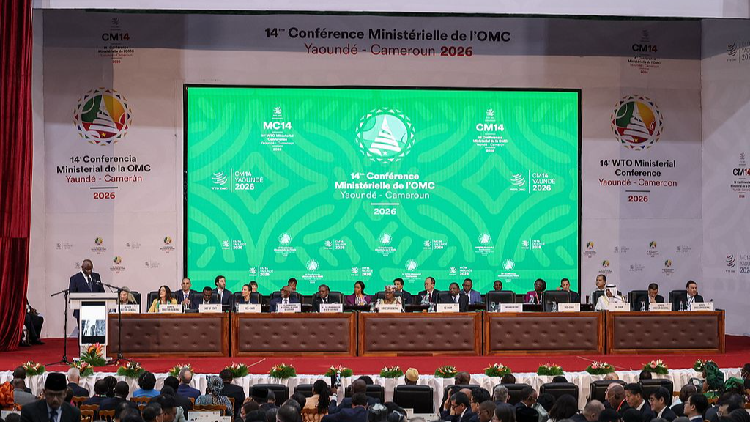
Šefčovič will demand “serious reform” of the WTO during a meeting in Cameroon this Thursday and make it “crystal clear” that China’s economic rise has meant the global trade environment has “dramatically changed” in recent decades.
“We very much [will] be insisting on serious reform of the WTO, where level playing field, overcapacity, and non-market policies must be better tackled than in the past,” he told journalists.
China, the world’s second-largest economy and the EU’s third-largest trading partner, joined the WTO in 2001, six years after the Geneva-based international trade organisation was created.
Šefčovič’s case is that “a new balance” is now required with the rise of China to adjust the “rights and obligations” of WTO members, which he said is necessary to combat the “overcapacities” that “are creating a lot of problems in the European economy”.
The Slovak commissioner’s remarks come amid a surge of Chinese exports to the EU, at a time when US President Donald Trump’s
sweeping tariffs are already hurting the bloc’s exporters and causing vast quantities of cheap Chinese manufactured goods to be re-directed toward Europe.
Brussels’ trade deficit with Beijing surged from $335 billion in 2024 to $375 billion in 2025, according to data collected by
Bruegel, an EU policy think tank. Beijing’s global trade surplus also hit a record $1.2 trillion last year – a figure it is set to far surpass in 2026.
In addition to confronting China, Šefčovič also called for “new governance models” to facilitate trade disputes between member states. The US has long hobbled the WTO court system by blocking the appointment of judges to its appellate body – thus allowing WTO members to effectively obviate court rulings by ‘appealing into the void’.
Šefčovič said Brussels will invite more countries to join the
Multi-Party Interim Appeal Arbitration Arrangement, a 2020 mechanism involving more than 60 of the WTO’s 166 members that have pledged respect for the rulings of an alternative dispute settlement mechanism.
“We are all for multilateralism,” Šefčovič said. “But if we see that in certain areas like the dispute settlement mechanism, this is not possible, we will be also proposing this plurilateral approach.”
WTO members spanning 70 percent of global trade — including Australia, China, Britain and the EU — will implement the agreement among themselves in their domestic legislation.

www.politico.eu
Countries sidestep WTO deadlock to implement e-commerce deal
WTO members spanning 70 percent of global trade — including Australia, China, Britain and the EU — will implement the agreement among themselves in their domestic legislation.
March 28, 2026 4:20 pm CET
YAOUNDE, Cameroon — Sixty-six members of the World Trade Organization have decided to forge ahead with a new path to bring an e-commerce agreement into force, with consensus among all WTO members still to be reached.
The plurilateral Joint Statement Initiative (JSI) on e-commerce includes provisions on digital flows, electronic contracts and privacy and consumer protection. India has consistently blocked the plurilateral deal from being adopted into the WTO framework, arguing that such arrangements undermine consensus.
Now, members spanning 70 percent of global trade — including Australia, China, Britain and the European Union — will implement the agreement among themselves in their domestic legislation.
“Today, ministers decided to, let’s just move on,” South Korean Trade Minister Yeo Han-koo told POLITICO. “Don’t wait until everybody agrees on everything. Because time is of the essence.”
Han-koo labeled it a “practical approach,” under which “when the time comes more members join … and consensus is formed to integrate this into the WTO.” Meanwhile, however, the deal should be implemented “as soon as possible [where] members can reap the benefit,” he said.
WTO Director-General Ngozi Okonjo-Iweala said: "By moving forward with the E-commerce Agreement, participating economies are ... demonstrating that the multilateral trading system can respond, and is responding, to new challenges."
However, many delegates on the ground are not convinced.
“This is effectively an admission that the WTO is not capable of delivering multilateral or plurilateral agreements for the foreseeable future,” said Chris Southworth, Secretary General of the International Chamber of Commerce UK. “Countries and blocs will have to negotiate large scale deals on their own.”
WTO members "have tried six times for integration of the [JSI] in the WTO. … It's not possible anymore,” said Pascal Kerneis, managing director of the European Services Forum.
“So [members] looked for alternatives with a legal expert to say what about an international treaty which would use the WTO Secretariat as a depository of the signature,” he added. “And then hopefully, we will use a dispute settlement system of the WTO when a dispute occurs.”
Members will now proceed with their respective domestic procedures to implement the legislation.
WTO members bypass opposition to introduce world's first baseline digital trade rules
By
Olivia Le Poidevin
March 28, 202610:22 PM GMT+8
YAOUNDE, March 28 (Reuters) - A group of World Trade Organization members agreed on Saturday to sidestep adoption hurdles for the world's first baseline on digital trade rules, opting to bring the agreement into force among consenting participants, the WTO said.
In recent years, efforts by a group of countries to fold the E-Commerce Agreement into the WTO rulebook were twice blocked by dissenting members. The pact aims to foster an open environment for digital trade.
The push to accelerate entry into force, among members who represent 70% of global trade, stems from mounting frustration over those obstructions, a senior diplomat told Reuters. Under WTO rules, plurilateral agreements among subsets of members require consensus.
At the
14th WTO Ministerial Conference in Cameroon, 66 members settled on an interim arrangement to activate the deal within their countries while pursuing broader incorporation into the WTO framework.
Japan's State Minister of Economy, Trade and Industry, Yamada Kenji, hailed it as a "historic step" toward global digital trade rules.
UK Business and Trade Secretary Peter Kyle also hailed the move.
"As the first global digital trade deal, this will make trade cheaper, faster and more secure for businesses around the world," Kyle said.
India has been one of the main countries blocking a deal, arguing that trade agreements should be adopted multilaterally by consensus.
The United States is not among the 66 countries to sign up for the agreement, with the issue currently under review by the U.S. administration.
Sixty-six members, covering approximately 70% of global trade, have adopted a pathway to bring into force the WTO Agreement on Electronic Commerce through interim arrangements while continuing to work towards its incorporation into the WTO legal framework of rules, co-convenors announced on 28...
www.wto.org
Members adopt a pathway to bring E‑Commerce Agreement into force via interim arrangements
Sixty-six members, covering approximately 70% of global trade, have adopted a pathway to bring into force the WTO Agreement on Electronic Commerce through interim arrangements while continuing to work towards its incorporation into the WTO legal framework of rules, co-convenors announced on 28 March at the 14th Ministerial Conference taking place in Yaoundé, Cameroon. The joint press release is below.
JOINT PRESS RELEASE
ADOPTION OF THE WTO AGREEMENT ON E-COMMERCE WITH INTERIM ARRANGEMENTS
Jointly issued by the Department of Foreign Affairs and Trade, Australia; Ministry of Foreign Affairs, Japan; Ministry of Economy, Trade and Industry, Japan; and Ministry of Trade and Industry, Singapore
28 March 2026
……
……
Chinese Commerce Minister Wang Wentao has expressed support for the adoption of the WTO agreement on e-commerce with interim arrangements announced on Saturday.

news.cgtn.com
Chinese commerce minister: China welcomes WTO interim arrangements on e-commerce agreement
China09:11, 29-Mar-2026
CGTN
Chinese Commerce Minister Wang Wentao has expressed support for the adoption of the World Trade Organization (WTO) agreement on e-commerce with interim arrangements announced on Saturday.
In his written remarks, Wang highlighted that the WTO Agreement on Electronic Commerce (E-Commerce Agreement) establishes global rules for digital trade, which will effectively promote more inclusive and sustainable digital growth.
China supports the timely implementation of the agreement and hopes the WTO can play a greater role in shaping digital trade rules in the future, Wang added.
On Saturday, the co-conveners of the WTO negotiations on e-commerce – Australia, Japan and Singapore – issued a joint statement in Yaounde, the capital of Cameroon, announcing the establishment of interim arrangements for the E-Commerce Agreement.
At the 14th WTO Ministerial Conference (MC14), 66 WTO members, including China, announced that the interim arrangements would provide a pathway to bring the E-Commerce Agreement into force, while continuing to work towards its incorporation into the WTO legal framework of rules.
The E-Commerce Agreement, a significant milestone for the WTO in recent years, will enter into force for those members that have accepted it, after 45 members have deposited their instruments of acceptance, according to the joint statement.


 www.scmp.com