Chinese Economy: General News, Updates and Discussions

China, Tanzania pay tribute to fallen Chinese nationals in TAZARA railway construction​

Xinhua
April 4, 2026


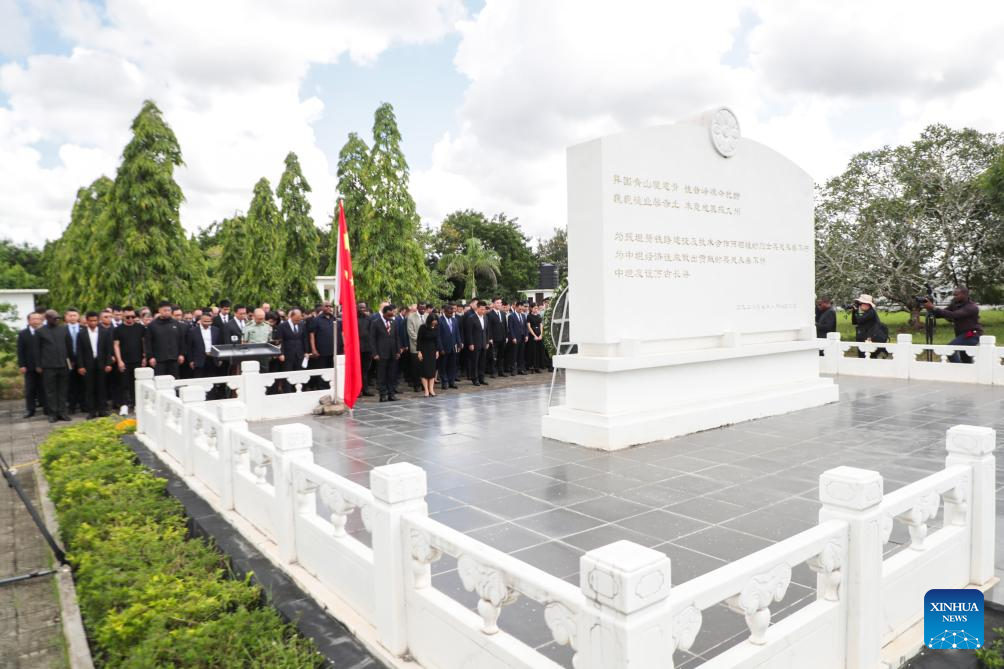
Participants observe a moment of silence during a joint commemoration at the Chinese Expert Cemetery in Dar es Salaam, Tanzania, on April 4, 2026. China and Tanzania on Saturday jointly commemorated Chinese experts who sacrificed their lives during the construction of the Tanzania-Zambia Railway (TAZARA), marking 50 years since the railway's commercial operations began. (Xinhua/Emmanuel Herman)

China and Tanzania on Saturday jointly commemorated Chinese experts who sacrificed their lives during the construction of the Tanzania-Zambia Railway (TAZARA), marking 50 years since the railway's commercial operations began.

Dignitaries from both countries gathered at the Chinese Expert Cemetery in Dar es Salaam, where they solemnly laid wreaths at the graves of the fallen heroes in a gesture of remembrance and respect during the Qingming Festival, a traditional Chinese occasion for paying tribute to the deceased and remembering ancestors.

Speaking at the ceremony, Tanzania's Minister of Home Affairs Patrobas Katambi hailed the TAZARA railway as "a living testament to South-South cooperation" and a symbol of the enduring friendship between Tanzania and China.

He emphasized the need to safeguard and modernize the railway as part of its revitalization agenda.

Chinese Ambassador to Tanzania Chen Mingjian noted that more than 50,000 Chinese workers participated in the railway's construction in the 1970s, with 70 losing their lives in the process.

"They are heroes who built a monument of China-Tanzania and China-Africa friendship," she said.

Also at the ceremony, Tanzania-Zambia Railway Authority Managing Director Bruno Ching'andu and Tanzania's Deputy Minister of Foreign Affairs and East African Cooperation James Kinyasi Millya expressed gratitude to China, praising the traditional friendship between the two countries.

 
So, the super-sized supa powa Bharat is literally in the same category as the tiny city state Singapore. What a disgrace,
Still far ahead of Vietnam, and a lot of other countries. More than 3 times of Russia's patent filings number (827), twenty times of Hungary's (169) For such a poor country, it is a real achievement. Give India their due respect.
 
Last edited:

This Is Not China’s War, but Beijing Started Preparing for It Years Ago​

Long concerned about geopolitical crises, China redoubled efforts to secure energy security when President Trump started raising the stakes in his first term.

April 6, 2026, 12:01 a.m. ET

The energy shock caused by the war in the Middle East caught China, the world’s top buyer of oil, by surprise. But Beijing has been preparing for a crisis like this for years.

China has stockpiled increasingly large amounts of oil. It has pursued renewable sources of energy like solar, wind and hydropower so aggressively that its demand for refined oil, diesel and gasoline is falling. And it has harnessed technology to reduce its reliance on the foreign-sourced raw materials that go into the massive output of its factories.

China’s ruling Communist Party has long viewed its industries as the foundation of its national security strategy. It has sharpened — and expanded — that approach since President Trump’s first term. China has doubled down on policies to build up local industries, in turn strengthening its global dominance over resources and supply chains.

“You have seen more top-down industrial policy, more guidance from the central government to develop certain strategic sectors that China believes they need to strengthen in order not to be controlled by a Western power,” said Heiwai Tang, director of the Asia Global Institute at the University of Hong Kong.
Advertisement

Energy was the linchpin.

A decade ago, China was the world’s biggest market for internal combustion engine cars. Today, it is the top market for electric vehicles. China used to be the largest buyer of foreign-sourced petrochemicals, the raw materials derived from oil that are used to make plastic, metal, rubber components and other crucial ingredients in the goods its factories churn out. Now it uses mostly domestic coal to make certain chemicals, like methanol and synthetic ammonia. Government planning and investment were crucial to those advances.

A dry, grassy hill in the foreground. Behind it, large gray cooling towers and a tall smokestack emit white vapor.

A coal-fired power plant, in Weifang, China, in 2023.Credit...Gilles Sabrié for The New York Times

As the Strait of Hormuz, the passageway for virtually all of the oil that flows to Asia, remains largely shut off, China has so far proved more resilient than much of the rest of the world.

China can now power many of its cars and trains with electricity, greatly reducing its reliance on oil. China has also honed the use of coal — and not oil — to produce its own petrochemicals. This technology, developed by Germany and used to sustain its economy during World War II, gives Beijing an alternative to oil to make the raw materials its factories need.

Vietnam and the Philippines, facing severe shortages of oil and other energy sources, appealed to China for help last month. “China stands ready to strengthen coordination and collaboration with Southeast Asian countries and jointly address energy security issues,” a spokesman for China’s foreign ministry said.

Beijing has long been fixated on addressing its reliance on foreign sources of energy and materials.

At the turn of the century, officials worried about another narrow passageway through which oil traveled to China: the Strait of Malacca, which separates Indonesia and Malaysia from Singapore. In 2004, China created an emergency petroleum stockpile to address those concerns. In recent months, it has been expeditiously adding to its stockpile.

As China was becoming a factory powerhouse for the world in the late 1990s, it needed foreign chemical companies like DuPont, Shell and BASF to set up plants to supply the chemicals its factories needed. In recent years, Chinese companies have come to dominate much of the world’s chemical supplies. Three-quarters of the world’s polyester and nylon, for example, are made in China.

A vast field of blue solar panels covers a wide area. Dirt paths and small white buildings punctuate the rows, with distant hills visible.

Photovoltaic solar panels, which convert sunlight directly into electricity, in Qinghai Province, China, last year.Credit...The New York Times

China is still the world’s largest buyer of oil and gas, and three-quarters of its oil is imported. While Beijing does not disclose the size of its reserves, its crude oil imports increased 4.4 percent in 2025 over the previous year, while its consumption grew 3.6 percent, according to the Chinese government. But after billions of dollars in direct subsidies to electric vehicle makers and hundreds of billions invested in renewable sources of energy, China’s efforts have paid off. Demand for refined oil, gasoline and diesel has fallen two years in a row, prompting experts to forecast that China’s oil and gas consumption has peaked.

At the same time, China’s oil consumption is growing in the petrochemicals industry as it further secures its supply chains.

China’s industry boomed as the government invested heavily, provided cheap loans and encouraged universities to cater to chemical engineering, said Joerg Wuttke, who served as the chief representative in China for BASF, the German chemical company, for 27 years.

These efforts accelerated under Xi Jinping, China’s top leader, and during Mr. Trump’s first presidency.

“Everything that Trump does triggers even more self-reliance from Beijing,” said Mr. Wuttke, who is now a partner at DGA-Albright Stonebridge Group, a consultancy firm.

During his first term, Mr. Trump confronted China on economic and business issues, setting off a trade war and a technology showdown.

Mr. Trump’s confrontational approach to China set off alarms.

A tall white wind turbine, featuring red text on its base and red-tipped blades, stands in a dry field. Other turbines and power lines appear in the distance under a blue sky.

China has pursued wind and other renewable sources of energy aggressively. Credit...The New York Times

Chinese leaders began to send out signals. In 2019, Li Keqiang, the premier at the time, called for China to use coal to make both electricity and chemicals as part of an effort to reduce its dependence on seaborne oil. It was a deviation from China’s focus on eliminating coal.

By late 2020, as the pandemic raged, causing major disruptions to shipping and global trade, and tensions with the United States reached new heights, China put out an official road map, attributed to Mr. Xi, for how to get through the period of turbulence.

Published in Qiushi, the Communist Party’s leading theoretical journal, the text was a call to arms for Chinese industries to hunker down. They were told to develop technologies faster than competitors overseas to achieve self-reliance and insulate China from supply chain disruptions.

“Trump 1.0 was a very clear rupture that changed China’s geopolitical calculus, and it reactivated old fears,” said Lauri Myllyvirta, a co-founder of the Center for Research on Energy and Clean Air, an independent research organization, who has tracked China’s growing use of coal to make petrochemicals.
Advertisement

“Xi himself had spoken about supply chain resiliency,” Mr. Myllyvirta said. “All of this just enabled a petrochemicals boom to gain steam.”

The signals from the top allowed the industry to expand and build plants to use coal instead of oil to make petrochemicals.

In 2020, China used 155 million tons of standard coal equivalent to make chemicals. By 2024, it was using 276 million tons. By 2025, that figure increased another 15 percent, eclipsing the total coal consumption in the United States of 230 million tons.

Chinese officials have said using coal is a temporary bridge to being more reliant on renewables, and they have also invested in technology that uses electricity to make petrochemicals. But using coal as an alternative to oil for now is paying off as shortages of oil and gas have sent prices surging.

Take nitrogen fertilizer. China produces a third of the global supply, and 80 percent of it is made with coal instead of oil. Since the war in the Middle East began, international prices for urea, the main chemical in fertilizer, have surged by over 40 percent, while China’s domestically produced equivalent has stayed at less than half of the global rate.

Even before the American and Israeli militaries started exchanging combat fire with Iran, threatening one of the world’s most important regions for resources that power countries, China had a dominant position, said Johanna Krebs, an analyst at the Mercator Institute of Chinese Studies, a German think tank.

“The Chinese,” she said, “most likely will see this as encouragement on the path to self-sufficiency.”
 
Chinese leadership has always been very far-sighted, planning usually years and even decades ahead.
 
China vs. Japan
Comparison of Global Market Shares:
① NEV (Electric Vehicles): 70% vs Less than 1%
② Drones: 90% vs Less than 1%
③ Solar Power Generation: 90% vs Less than 1%
④ Crude Steel: 54% vs 5%
⑤ Rare Earths: 90% vs 0%
⑥ Shipbuilding: 69% vs 10%
⑦ Smartphones: 75% vs Less than 1%
⑧ Wind Turbines: 65% vs 0%
⑨ High-Speed Rail: 70% vs Less than 10%
⑩ Industrial Robots: 54% vs 45%
⑪ 5G Base Stations: 65% vs Less than 1%
⑫ Humanoid Robots: 90% vs Nearly 0% → Bigger than the industrial power gap between Japan and the US during the Pacific War.
 
To view this content we will need your consent to set third party cookies.
For more detailed information, see our cookies page.
 
To view this content we will need your consent to set third party cookies.
For more detailed information, see our cookies page.
 
China’s Absence Draws America Deeper Into Risky Wars

April 6, 2026, 6:00 AM
Several military personnel in camouflage gear and helmets run through shallow ocean water toward a beach at dusk. They carry rifles and have large diving fins hanging from their gear. The sky is overcast with a faint glow on the horizon.

A handout photo shows U.S. Marines conducting a simulated reconnaissance and surveillance mission at a naval support facility in Diego Garcia, British Indian Ocean territories, on March 24. Lance Cpl. Victor Gurrol/U.S. Marine Corps via Getty Images

My FP: Follow topics and authors to get straight to what you like. Exclusively for FP subscribers. Subscribe Now | Log In

Given the superpower rivalry between the United States and China, any U.S. administration’s decision to go to war should be guided by an assessment about whether it strengthens the U.S. position relative to China. During the Cold War, the United States fought the Korean and Vietnam wars to counter Soviet influence, and it forced the British and French to pull back their troops during the 1956 Suez Crisis to avoid Soviet intervention.


Iran War
Analysis and news.

Hence, the United States’ massive air war—perhaps followed by a ground campaign—against Iran is an obvious case where one would expect the China calculus to play a major role. In fact, the Trump administration’s 2025 National Security Strategy highlights the U.S.-China rivalry, emphasizing the importance of balancing China in Asia and denying it access to the Western Hemisphere. Various analysts and strategists have put the Iran war in the context of pushing back against China by denying it its regional partners.
 

China, Ukraine sign protocol on Ukrainian wheat flour exports to deepen agricultural trade cooperation: Chinese embassy

By Global TimesPublished: Apr 07, 2026 09:17 AM

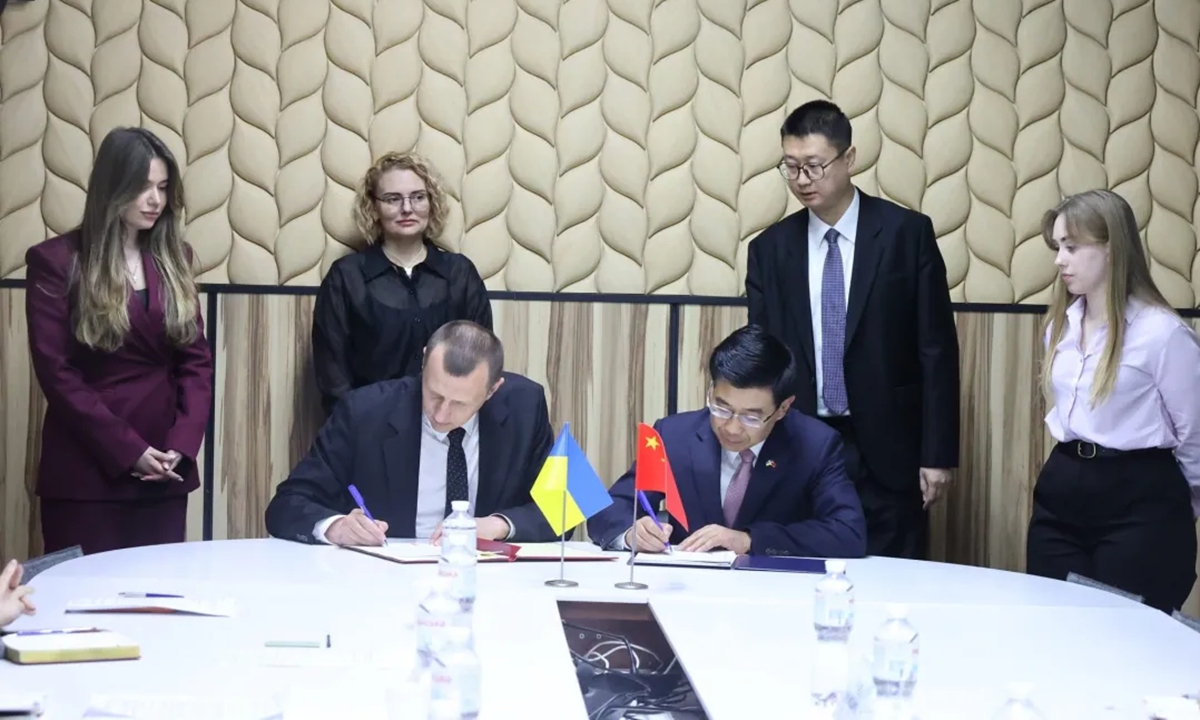
Photo: Chinese Embassy to Ukraine

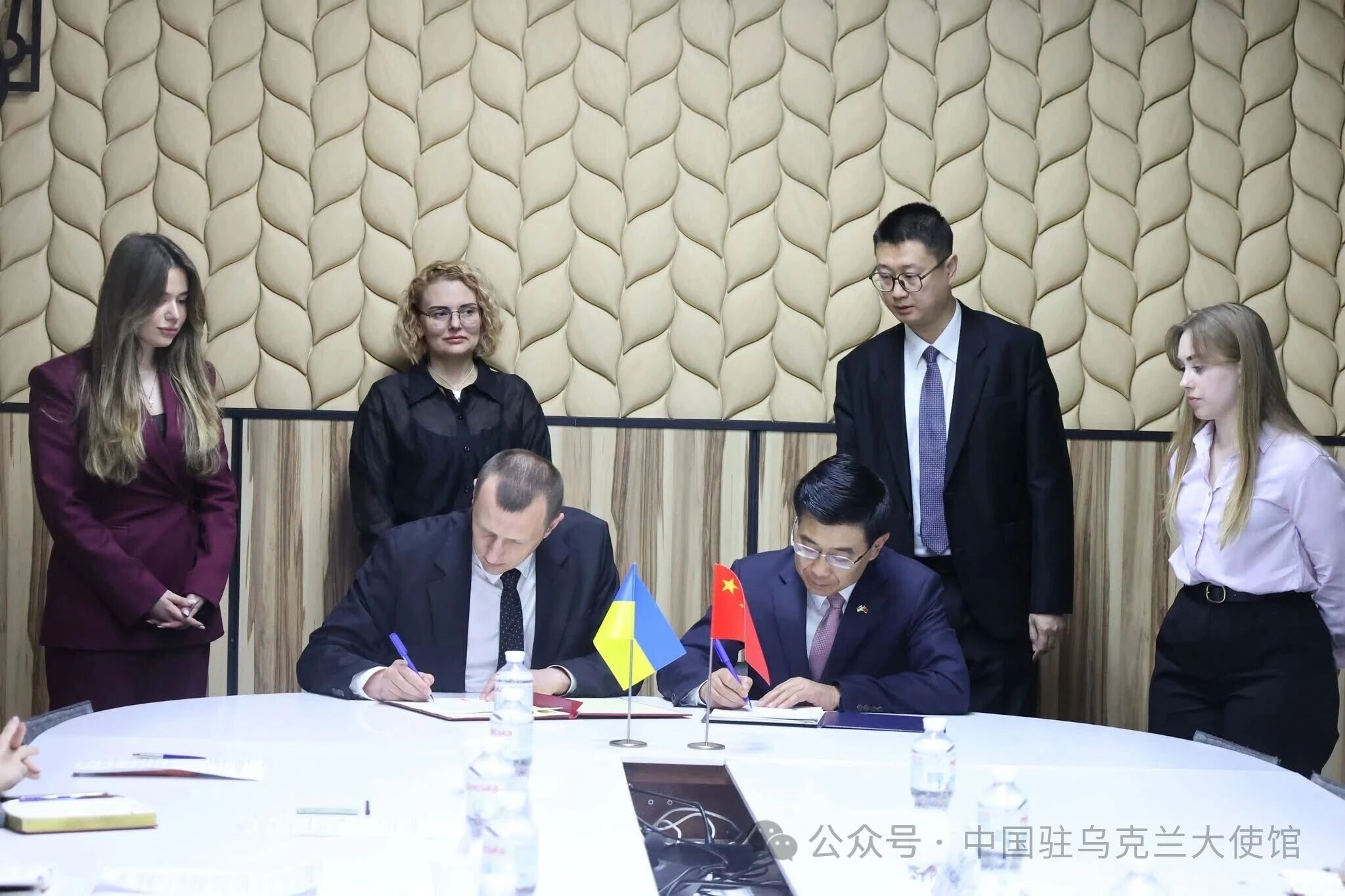
Photo: Chinese Embassy to Ukraine

Chinese Ambassador to Ukraine Ma Shengkun met with Iryna Ovcharenko, Deputy Minister of Economy, Environment, and Agriculture of Ukraine, and Serhii Tkachuk, head of the State Service of Ukraine on Food Safety and Consumer Protection on Monday. On behalf of China's General Administration of Customs, Ambassador Ma signed with Tkachuk the protocol on inspection, quarantine and sanitary requirements for Ukrainian wheat flour exported to China.

Ambassador Ma spoke positively about China-Ukraine cooperation in agriculture, saying the signing of the protocol will further expand bilateral cooperation in agricultural trade and enrich the content of the China-Ukraine strategic partnership. He said agricultural cooperation between the two countries is highly complementary and holds great potential, and that China is willing to further strengthen relevant cooperation with Ukraine for the benefit of both peoples, according to a release from the Chinese Embassy in Ukraine.

Ovcharenko said that China is Ukraine's largest trading partner and an important destination for Ukrainian agricultural exports, expressing confidence that the protocol will create a new growth point for bilateral agricultural trade. She thanked the teams on both sides for their long-term efforts in negotiating bilateral protocols on market access for agricultural products, and said Ukraine is willing to continue expanding the range of agricultural products it exports to China, according to the release.

Tkachuk said Ukraine will ensure the quality and standards of agricultural products exported to China, and is willing to work with the Chinese side to further strengthen cooperation in agricultural trade and enhance the position of both countries' agricultural products in the international market, per the release.
 

Taiwan opposition leader pledges reconciliation at memorial for founding father in China​

By Andrew Silver and Nicoco Chan
April 8, 202611:09 AM GMT+8

000_a72m9ke.jpg


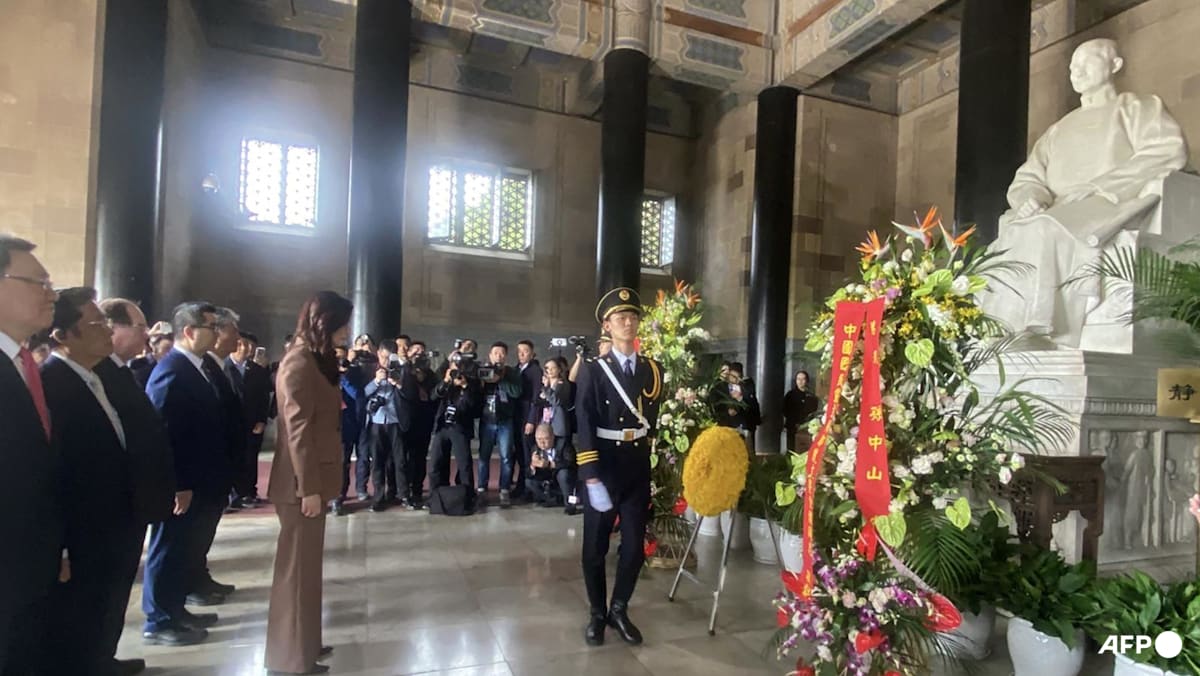
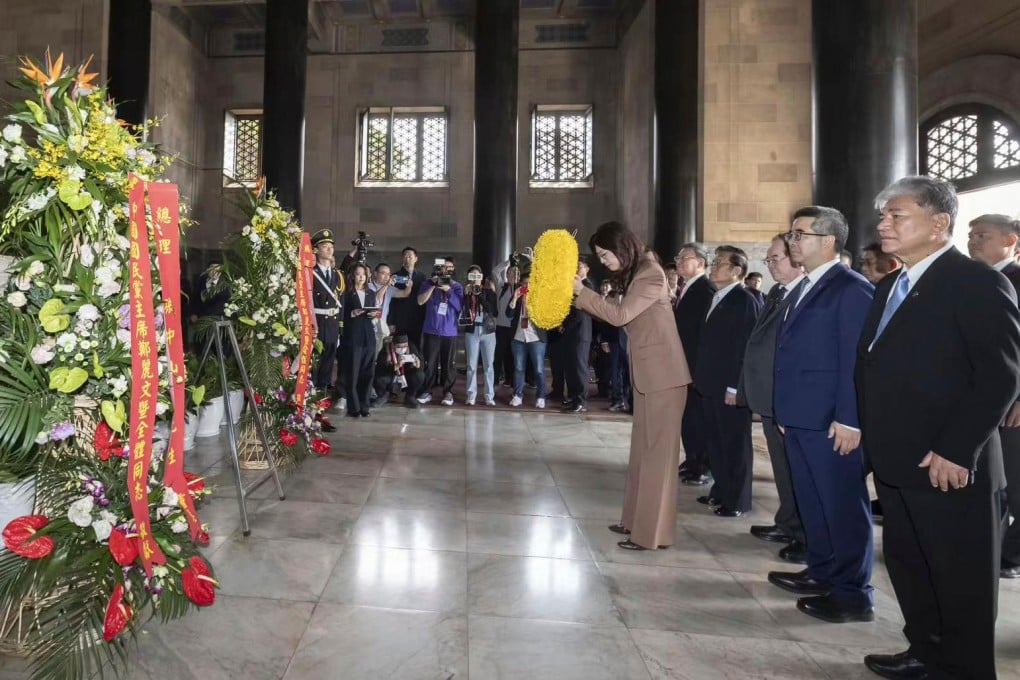
NANJING, China, April 8 (Reuters) - Taiwan opposition leader Cheng Li-wun pledged on Wednesday to channel the spirit of her party's founder Sun Yat-sen and seek reconciliation with China, offering praise at his tomb for the country's achievements ‌following the communist revolution.

Cheng, chairwoman of the Kuomintang (KMT), Taiwan's largest opposition party, is in China at a time of increased Chinese military pressure on Taiwan, which Beijing views as its own territory, and as the opposition-dominated parliament stalls a government plan for $40 billion in extra defence spending.

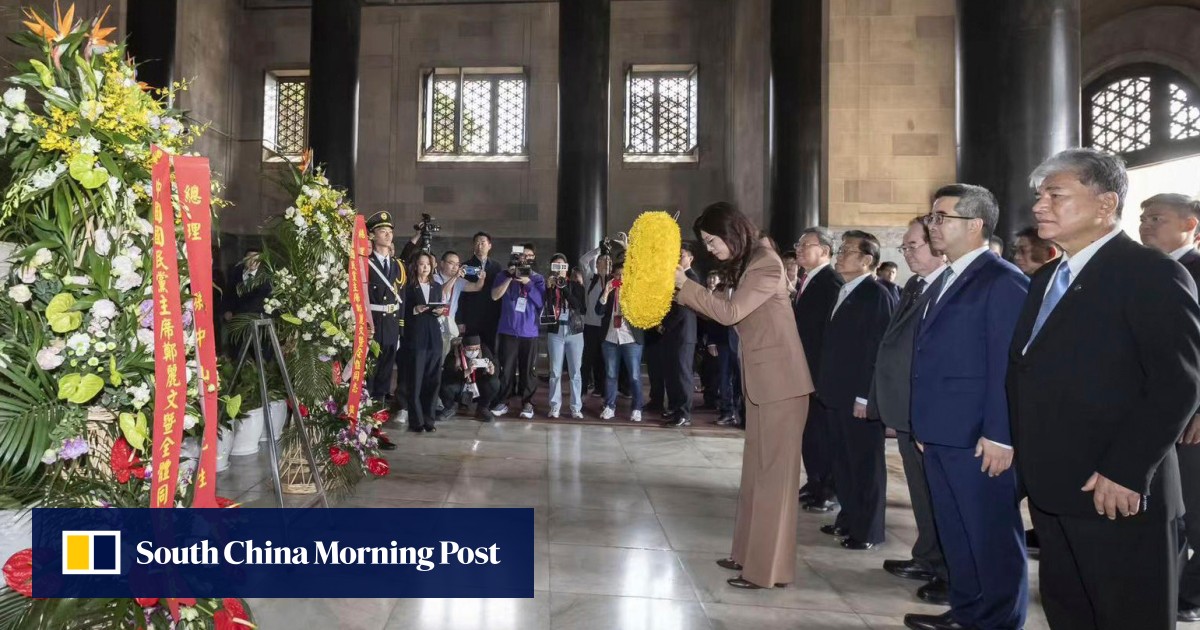
In a moment filled with symbolism on her first full day in the country, Cheng laid a wreath at Sun's mausoleum in the eastern city of Nanjing, also the capital of the KMT-led Republic of China government before it fled to Taiwan in 1949 having lost a civil war with Mao Zedong's communists.

"The core values of Sun Yat-sen's ideal ⁠that 'all under heaven are equal' have always been equality, inclusiveness, and unity," Cheng said, in footage carried live on Taiwanese television channels.

"We should work together to promote reconciliation and unity across the (Taiwan) Strait and create regional prosperity and peace."

FOUNDER OF REPUBLIC OF CHINA​

Sun, who overthrew the last imperial dynasty and founded the Republic of China in 1912, died of cancer in 1925.

He is still officially venerated in Taiwan as the founder of the Republic of China, but also in China by the Communist Party as a Chinese national hero. Mao declared him the "great revolutionary forerunner".

Cheng said the KMT had eventually honoured Sun's founding principles and made Taiwan into a free and democratic society, though she also mentioned the "white terror" of the 38 years of martial law the island lived under until 1987.

"Likewise, on the mainland, we have also seen and witnessed progress and development that exceeded everyone's expectations and imagination," she added.
 
  • Like
Reactions: Waz

Japan’s ‘imperialist forces’ divided Taiwan from mainland, KMT’s Cheng Li-wun says​

In a speech delivered at Sun Yat-sen Mausoleum in Nanjing, Kuomintang chair says cross-strait divisions are rooted in historical wounds​


Kuomintang leader Cheng Li-wun lays a floral wreath at the Sun Yat-sen Mausoleum in Nanjing, Jiangsu province, on Wednesday. Photo: AP

Lawrence Chungin Taipei
Published: 5:14pm, 8 Apr 2026Updated: 5:49pm, 8 Apr 2026

Taiwanese opposition leader Cheng Li-wun blamed Japanese “imperialist forces” for dividing mainland China and Taiwan, as she paid tribute to Chinese revolutionary Sun Yat-sen at his mausoleum in Nanjing on Wednesday.

In a speech delivered after the Kuomintang (KMT) chairwoman laid a floral wreath before a statue of the founder of modern China, Cheng said Taiwan became a Japanese colony at a time of national weakness, following the 1895 defeat of China in the first Sino-Japanese war.

She said that after the 1911 revolution that overthrew the Qing dynasty (1644-1911), Taiwanese people were “filled with excitement”, with intellectuals hoping “a revitalised China would one day recover Taiwan and end Japanese colonial rule”.

Cheng added that China’s suffering over the past century had also been driven by internal conflicts.

“To this day, cross-strait divisions remain rooted in the wound created 130 years ago by the first Sino-Japanese war – a wound carved through the Taiwan Strait that has yet to heal,” she said.

“China’s suffering has not only stemmed from external imperialist forces, but also from internal divisions and conflicts that led to mutual destruction, with ordinary people bearing the brunt of the consequences.”

The visit has been steeped in historical symbolism. Before laying the wreath, she led a 14-member delegation up the long stone staircase of the Sun Yat-sen Mausoleum in a tightly choreographed ceremony amid heavy security.
She was visibly emotional as she addressed a crowd at the adjacent Boai Square.

Her visit to the mainland comes amid a heated debate on the self-governed island over how Taiwan should understand its history and how Taipei should manage ties with Beijing while balancing relations with Washington.

In her speech, Cheng also highlighted mainland China’s transformation, saying its development had “exceeded all expectations”. At the same time, the KMT had built Taiwan into “a society defined by democracy, freedom, the rule of law and shared prosperity”.

She also invoked Communist Party leader Xi Jinping’s emphasis on environmental protection and tree planting, saying she hoped to “plant the seeds of peace” for people on both sides of the Taiwan Strait and beyond.

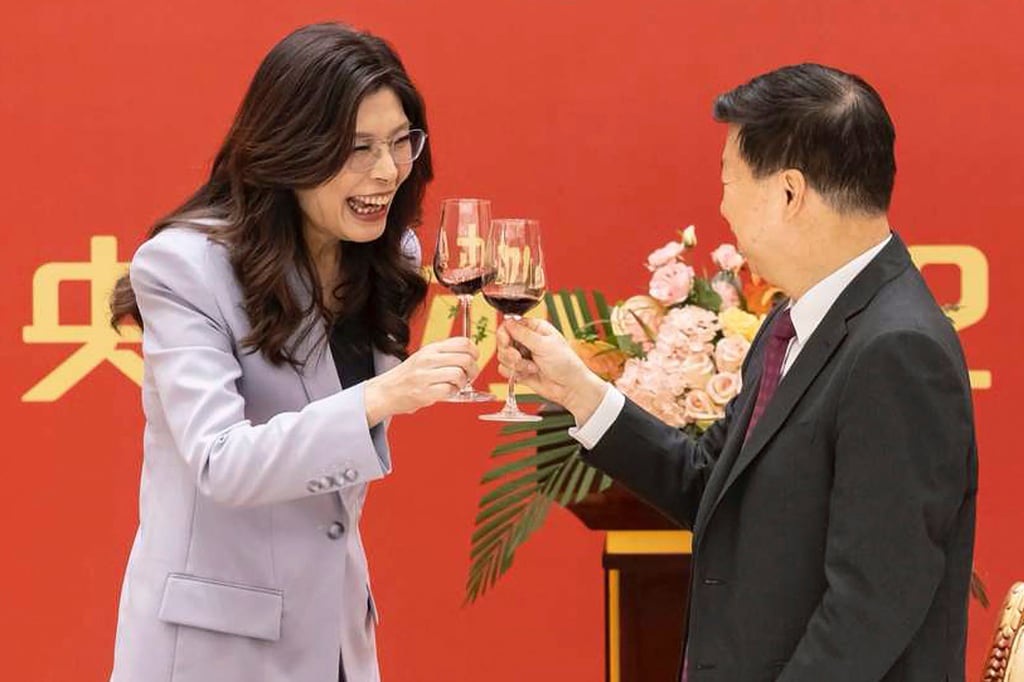
It echoed a message sent a day earlier at a dinner in Nanjing hosted by Song Tao, head of Beijing’s Taiwan Affairs Office (TAO), where both sides stressed the importance of the “1992 consensus” and opposition to Taiwan independence.

Kuomintang leader Cheng Li-wun raises her glass during a Nanjing dinner gala with Song Tao, director of China’s Taiwan Affairs Office on Tuesday. Photo: AP

Kuomintang leader Cheng Li-wun raises her glass during a Nanjing dinner gala with Song Tao, director of China’s Taiwan Affairs Office on Tuesday. Photo: AP

The 1992 consensus refers to a verbal understanding reached in that year between the then-ruling KMT and Beijing that both sides agree there is “one China”, but have different interpretations.

Cheng told the banquet that her visit showed that political differences “do not inevitably lead to conflict” and that the two sides “are not destined for war”.

She said the KMT and the Communist Party had the “ability, determination and wisdom” to resolve issues peacefully, while reaffirming the 1992 consensus as a still-relevant foundation for engagement.

Taiwan should not become a “pawn” or even an “abandoned piece” in geopolitical competition, she said, arguing that the KMT was offering a choice between “war and peace” and between “destruction and prosperity”.

In his speech at the banquet, Song described the visit as “a major event” for both party-to-party ties and cross-strait relations, saying the two sides “share a common responsibility” towards the Chinese nation.

He reiterated Beijing’s position that the 1992 consensus was the cornerstone of peaceful cross-strait development, warning that abandoning the framework would lead to instability.

“The two sides have the ability and wisdom to handle their own affairs,” Song said, echoing Beijing’s long-standing position that cross-strait issues should be resolved without external interference.

He also criticised Taiwan’s ruling Democratic Progressive Party (DPP), accusing it of seeking independence with the backing of external forces.

Cheng’s visit has drawn criticism from Taipei.

Tsai Ming-yen, head of the island’s National Security Bureau, said Beijing continued to pursue a dual-track strategy of “pressuring through both peace and war”, combining “military intimidation and grey-zone tactics with cross-strait exchanges aimed at shaping public opinion.

These tactics were intended to deepen divisions within Taiwan, in part by promoting pro-Beijing narratives against procurement of US arms. They were also meant to weaken Taipei’s cooperation with Washington by promoting the perception that support for peaceful unification remained widespread in Taiwan, he said.

Separately, DPP legislative caucus head Chuang Jui-hsiung said Cheng’s repeated emphasis on the 1992 consensus was “deeply concerning”, arguing that accepting it amounted to an endorsement of the “one country, two systems” framework that Beijing had applied to Hong Kong and Macau.

He said most people in Taiwan did not believe the 1992 consensus would allow them to determine their own future, adding that the island’s destiny could not be decided by political parties or by Beijing.

Beijing defended the visit, with TAO spokeswoman Zhu Fenglian saying that “both sides of the Taiwan Strait belong to one China” and cross-strait relations were a matter for “one family”.

She said Beijing was willing to work with political parties in Taiwan, including the KMT, on the basis of the 1992 consensus to promote peaceful development and improve people’s livelihoods.

Zhu dismissed criticism from the DPP as politically motivated, saying such attacks lacked public support. She added that Cheng’s visit aligned with what she described as mainstream opinion in Taiwan favouring exchanges and cooperation, and would help advance cross-strait ties.

Cheng’s six-day trip, which began on Tuesday in Shanghai, is expected to culminate in a meeting with Xi in Beijing later this week, although the mainland authorities have not formally confirmed this.

Beijing sees Taiwan as part of China, to be reunited by force if necessary. The United States, like most countries, does not recognise Taiwan as an independent state. However, it opposes any attempt to take the self-governed island by force and is committed to supplying it with defensive weapons.

 
Cheng Li-wen lays flowers at Sun Yat-sen Mausoleum, choking back tears

To view this content we will need your consent to set third party cookies.
For more detailed information, see our cookies page.
 
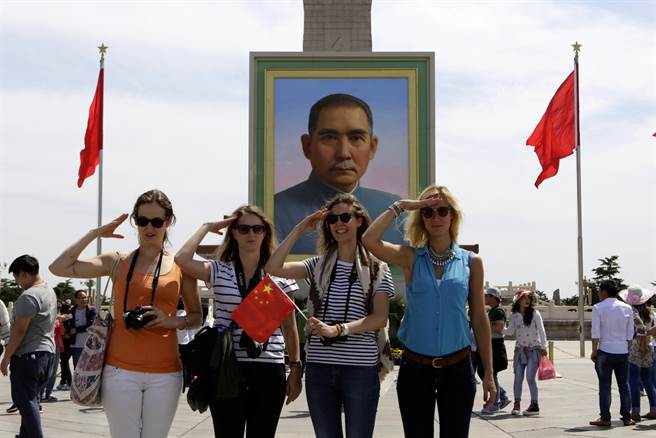
Sun Yat-sen's portrait in Tiananmen Square. Beinjing.
c4b59ffeaf52dc2_size360_w1024_h683.jpg

662f06b8d5deb0579cd66aef.jpg

20201002000705.jpg
 

Users who are viewing this thread

Country Watch Latest

Latest Posts

Back
Top