Chinese Economy: General News, Updates and Discussions

China expands RMB clearing network to Indonesia, boosting yuan's global use​

China has announced the Jakarta branch of Bank of China (Hong Kong) as the renminbi clearing bank in Indonesia, extending the RMB clearing network to one of Asia's largest emerging economies.

China approves Standard Bank, ICBC for Africa yuan clearing​

JOHANNESBURG, June 26 (Reuters) - China's central bank has authorised Standard Bank and Industrial and Commercial Bank of China to clear Renminbi across Africa, as Beijing steps up efforts to promote the global ‌use of its currency.
 
Still a horrible accident even if the aircraft was the size of a car.
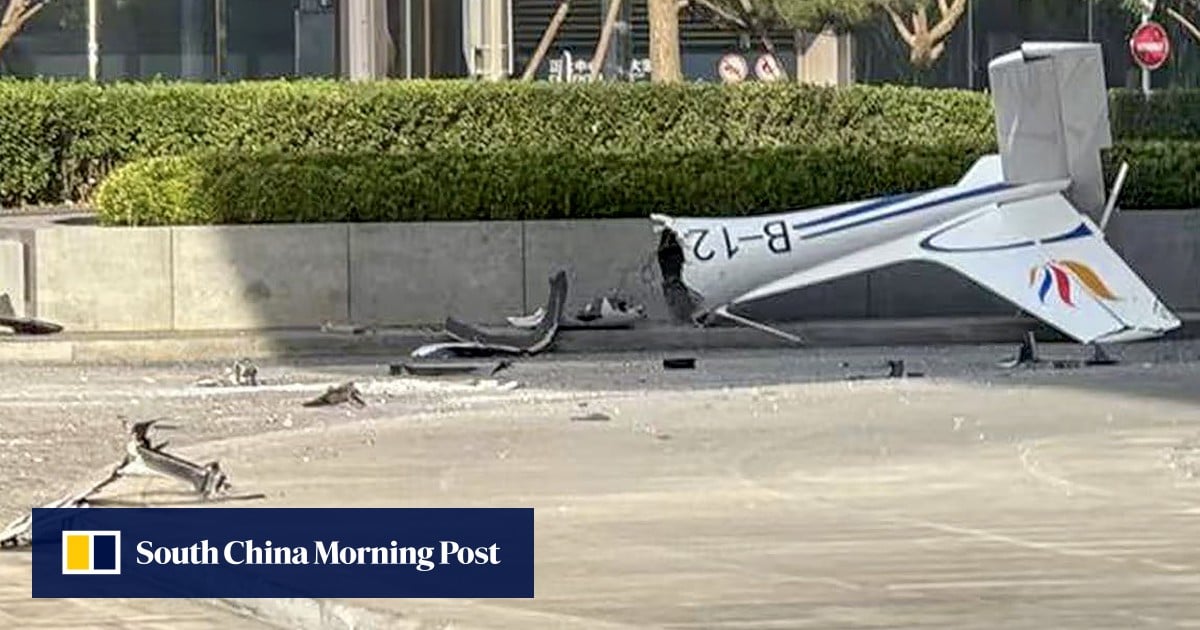
China confirms death of pilot in Citic Tower plane crash​

District authorities say that only one person was in the two-seater light aircraft at the time of the incident​


The pilot of a light sport aircraft that hit Beijing’s tallest skyscraper on Friday died.

In a statement on Saturday, the Chaoyang district government said that only the pilot was in the two-seater plane when it hit Citic Tower.

In addition, 13 people were injured in the incident.

The statement, issued after hours of silence, said the crash took place at 5:55 pm Saturday and that the circumstances surrounding the crash were still under investigation. It did not name the building and only referred it as a skyscraper near to the East third ring road.

The incident triggered the building’s evacuation and scattered debris across the Chinese capital’s central business district.


Hong Kong media

Translated:

A small plane reportedly crashed into the east side of the CITIC Tower in Chaoyang District, Beijing, on Friday evening (26th). The fuselage broke apart, crashed, caught fire, and emitted thick smoke. The glass facade of the CITIC Tower was damaged, and people inside were evacuated. On Saturday afternoon (27th), Beijing's Chaoyang District government issued a statement saying that at 5:55 PM on Friday, a single-engine, two-seat light sport aircraft collided with a high-rise building near the East Third Ring Road in Chaoyang District. The pilot, the only person on board, died, and 13 people were injured at the scene. The injured are currently receiving intensive care. The relevant authorities are further investigating the incident. However, the statement did not mention the name of the building involved.

Previously, data from a flight tracking website circulated online, indicating that the small aircraft involved took off from Beijing Pinggu Shifosi Airport at 5:30 PM on Friday, originally scheduled to return 10 minutes later, but suddenly deviated from its flight path and lost signal near the East Fifth Ring Road in Beijing. Witnesses stated that the small aircraft was about the size of a car.
bkn-20260627100411275-0627_00822_001_05b.jpg

Online reports show that the wreckage of the small aircraft bore the registration number "B-12PP," and the model was a domestically produced light sport aircraft, the "Aurora SA60L," belonging to Dongshi Shuangyue (Beijing) General Aviation Company. The "Aurora SA60L" is a two-seat aircraft, weighing approximately 590 kg, with a wingspan of approximately 8.5 meters. Dongshi Shuangyue (Beijing) General Aviation Company provides services such as aerial sightseeing, performance flights, and license training.

Foreign media reported that police cars and fire trucks were parked near the CITIC Tower after the incident, and traffic control measures were implemented. Police officers prevented people from taking photos in the direction of the building. On Saturday morning, police continued to block the streets leading to the CITIC Tower and searched the belongings of people entering the surrounding streets. When asked why the streets were blocked, a police officer stated there was no particular reason, only traffic control.

CITIC Tower, located in the Central Business District of Chaoyang District, Beijing, is the headquarters of CITIC Group and currently the tallest skyscraper and city landmark in Beijing. With 108 floors above ground and a total height of 528 meters, it is the tallest building in Beijing. Its architectural design is inspired by the ancient Chinese wine vessel "zun," earning it the nickname "China Zun."
 
Last edited:
Some additional information:Status of Changxin Storage's Shanghai 12-inch DRAM super factory currently under development.Entering substantive construction phase in 2026;Equipment move-in expected to begin in the second half of 2026;Mass production expected to start in 2027;Gradually reaching full production in 2028.Planned monthly capacity of approximately 400,000 to 600,000 wafers, far exceeding existing single bases, with product directions including ➤DDR5, LPDDR5X, HBM, and other high-end DRAM.
To view this content we will need your consent to set third party cookies.
For more detailed information, see our cookies page.


Europe's heatwave is a great booster for this Chinese product

As record-breaking heatwaves sweep across Europe, Chinese air conditioner makers are running factories around the clock to meet a sharp rise in demand for portable cooling units. Manufacturers are rushing shipments to Europe in an effort to capitalise on what remains of the peak summer season, as soaring temperatures push consumers to seek alternatives to traditional air-conditioning systems.

Chinese home appliance giant Midea told the Global Times that its air conditioner plant in Shunde, Guangdong Province, is operating around the clock to increase production of its PortaSplit models. The units are being transported to Europe via China-Europe freight trains to ensure they arrive before the end of the summer.

"We have seen robust sales growth in parts of Western Europe. Our air conditioner sales in markets with relatively low air conditioner penetration, including France, Spain, Germany and the UK all posted a year-on-year increase of more than 70 percent," Midea said.

Midea is not alone. Chinese appliance makers Gree and TCL have also stepped up production of similar portable air conditioners, according to Chinese business outlet Yicai.
 

China factory activity grows faster than expected in June on tech export demand

Published Mon, Jun 29 20269:40 PM ED

Key Points
  • The official purchasing managers' index edged up to 50.3 in June, returning to the expansionary territory.
  • Non-manufacturing PMI, which covers construction and services activity, edged up to 50.2 in June.
  • Chinese policymakers have refrained from meaningful easing to boost demand this year, with economists largely ruling out stimulus in the near term.

China's manufacturing activity expanded faster than expected in June, with high-tech production climbing on demand tied to the global artificial-intelligence investment boom while real estate development and consumer goods production remained under pressure.

The official purchasing managers' index edged up to 50.3 in June from 50.0 in May, beating economists' forecast of 50.1 and returning to expansionary territory above the 50-mark threshold.

China's manufacturing engine has remained resilient this year, with surging demand for AI technology offsetting the drag from Middle East turmoil, even as domestic demand remains weak.


China confirms death of pilot in Citic Tower plane crash​

District authorities say that only one person was in the two-seater light aircraft at the time of the incident​


The pilot of a light sport aircraft that hit Beijing’s tallest skyscraper on Friday died.

In a statement on Saturday, the Chaoyang district government said that only the pilot was in the two-seater plane when it hit Citic Tower.

In addition, 13 people were injured in the incident.

The statement, issued after hours of silence, said the crash took place at 5:55 pm Saturday and that the circumstances surrounding the crash were still under investigation. It did not name the building and only referred it as a skyscraper near to the East third ring road.

The incident triggered the building’s evacuation and scattered debris across the Chinese capital’s central business district.


Hong Kong media

Translated:

A small plane reportedly crashed into the east side of the CITIC Tower in Chaoyang District, Beijing, on Friday evening (26th). The fuselage broke apart, crashed, caught fire, and emitted thick smoke. The glass facade of the CITIC Tower was damaged, and people inside were evacuated. On Saturday afternoon (27th), Beijing's Chaoyang District government issued a statement saying that at 5:55 PM on Friday, a single-engine, two-seat light sport aircraft collided with a high-rise building near the East Third Ring Road in Chaoyang District. The pilot, the only person on board, died, and 13 people were injured at the scene. The injured are currently receiving intensive care. The relevant authorities are further investigating the incident. However, the statement did not mention the name of the building involved.

Previously, data from a flight tracking website circulated online, indicating that the small aircraft involved took off from Beijing Pinggu Shifosi Airport at 5:30 PM on Friday, originally scheduled to return 10 minutes later, but suddenly deviated from its flight path and lost signal near the East Fifth Ring Road in Beijing. Witnesses stated that the small aircraft was about the size of a car.
bkn-20260627100411275-0627_00822_001_05b.jpg

Online reports show that the wreckage of the small aircraft bore the registration number "B-12PP," and the model was a domestically produced light sport aircraft, the "Aurora SA60L," belonging to Dongshi Shuangyue (Beijing) General Aviation Company. The "Aurora SA60L" is a two-seat aircraft, weighing approximately 590 kg, with a wingspan of approximately 8.5 meters. Dongshi Shuangyue (Beijing) General Aviation Company provides services such as aerial sightseeing, performance flights, and license training.

Foreign media reported that police cars and fire trucks were parked near the CITIC Tower after the incident, and traffic control measures were implemented. Police officers prevented people from taking photos in the direction of the building. On Saturday morning, police continued to block the streets leading to the CITIC Tower and searched the belongings of people entering the surrounding streets. When asked why the streets were blocked, a police officer stated there was no particular reason, only traffic control.

CITIC Tower, located in the Central Business District of Chaoyang District, Beijing, is the headquarters of CITIC Group and currently the tallest skyscraper and city landmark in Beijing. With 108 floors above ground and a total height of 528 meters, it is the tallest building in Beijing. Its architectural design is inspired by the ancient Chinese wine vessel "zun," earning it the nickname "China Zun."
WTF they even allowed small planes to fly near the outskirts of the Capital. The small planes are the most prone to malfunction and crash.

Shouldn't such small scale aviation activities be located in some remote region?
 
China tourism industry that targets overseas Chinese needs a major overhaul. The first two times I went to China I got a cold exactly after 1 week in. And I was still coughing phlegm three weeks later on the return flight home.

Now, I'm averse to traveling to China thru any kind of tour package you book with a travel agent in North America. It's the group meals that's the main source of infection. Everyone on the shared van to the HSR station or airport after the first week was showing symptoms of being infected.

Most Chinese restaurants in China don't share the same concept of hygiene as the Chinese restaurants in North America. In North America, if you eat as a group, they always provide extra chopsticks and spoons for you to get the food from the shared plate onto your own plate. You never use your own chopsticks nor spoon to get the food onto your own plate. That's just gross.

In China, they expect you to use the same chopsticks that's been in your mouth already covered in your own saliva to get food from the shared plate. They don't have the concept that there should be two kinds of chopsticks and spoons often of different colors or shapes: the personal ones and the shared ones.

After they catch a cold in the first week of their month long stay in China, most overseas Chinese are scared to book any subsequent trips to China that involves group meals together with other overseas Chinese.

In essence, most tour package tourists to China are usually noobs that don't know better. The veterans will simply shun this channel to drive China's tourism industry. This is a problem China needs to address at the national level, if they want repeat business not just from overseas Chinese that on their first time to China.

If you must travel to China. Avoid prebooking tour packages at all costs. Go free style and book your own hotels. Eat only with other family members not forced together with some 10-20 other overseas tourists at the same dining table. When you spend 3/4th of the time in China dealing with a preventable cold instead of enjoying yourself, what is even the point of traveling to China?

China cleaned up her act when she's hosting a major international (sports) events (ie. no dog meat, no gross sounding delicacies). Why can't she do something simple for her tourism industry by mandating all tour packages to book only state-sponsored restaurants that serve individual meals to their clients instead of group meals?
I just beat President Xi. It's been over 1 week since I got back from China. This is the first time I stayed for a month in China and didn't get sick.

MAIN CULPRIT: Transmission of infectious agents through tour group meals with shared food plates.

Travels agents outside of China have at most 2 chances to earn commissions from would-be travelers before they run away from booking group tour packages for good (1st chance they thought getting a cold or flu while on group tour in China was a fluke, 2nd chance they never come back). This kind of business model is NOT sustainable!

(BTW, I also think it had to do with the travel month. Lost track how many times I encountered ppl sneezing and held my breath as I passed the place where they sneezed. Fortunately they were only sneezing becoz of dust particles in the air. I can imagine during peak flu season, even a brisk encounter with ppl sneezing can be deadly...)
 
WTF they even allowed small planes to fly near the outskirts of the Capital. The small planes are the most prone to malfunction and crash.

Shouldn't such small scale aviation activities be located in some remote region?

there is suspicion this was a suicide
 

America 250: China Will Enjoy A Big Day In The U.S. On July 4th, Too​

ByRussell Flannery,
Jun 30, 2026, 05:17pm EDTJun 30, 2026, 07:31pm EDT
Macy's Independence Day Fireworks in New York City

Fireworks lit up the sky in New York during the Macy's Fourth of July fireworks show on July 4, 2025. Fireworks used in the U.S. are largely imported from China. (Photo by Gary Hershorn/Getty Images)

July 4th will be a big day for celebration among millions of Americans owing to the 250th anniversary of the nation’s independence. It will also be a particularly happy day for the U.S. fireworks industry, many of whose members are family owned and have been in the business for generations. Revenue from consumer fireworks sales is likely to rise to a record $2.5 billion as individuals spend more on anniversary fun, according to an estimate by Julie L. Heckman, executive director the American Pyrotechnics Association, or APA, a leading fireworks industry group.

“I think we’re going to see a big surge,” Heckman said in a recent interview. “We are anticipating with America 250, it’s going to be a blockbuster year for the fireworks industry, both on the consumer side and with more first-time users. The fourth falls on a Saturday, which also is always good for the consumer side. And you’re going to see an increase on the (aerial) display side as well, because every show is going to be bigger than it’s ever been before. Everything is going to be bigger, bolder, better,” she predicted. A hot spot to watch out for: Washington, D.C., which is expected to host the largest fireworks display in its history.

Ironically, China – widely seen as a big economic and geopolitical rival of the U.S. – will also have a big day in the country on July 4th. It supplies for 70-75% of aerial display fireworks sold in the U.S.; for consumer fireworks, it holds an even larger 90% share, according to APA estimates.

Revenue will grow this year despite continuing – though lower -- Trump administration tariffs on Chinese fireworks. “Even if we wanted to, we certainly couldn’t bring manufacturing back to the U.S. in any volume or capacity to replace what China produces for us,” Heckman said. “China has perfected fireworks manufacturing, in particular for the U.S. market. They manufacture to our specifications. And that's not something that you can shift very easily. There isn't any change in the works either,” said the leader of the 280-member industry group. “It's an excellent partnership.”

“It’s going to be a blockbuster year for the fireworks industry,” says American Pyrotechnics Association Executive Director Julie L. Heckman.

Fireworks sales that rose modestly in the 2010 decade got a big boost during Covid. Spending on consumer fireworks nearly doubled between 2019 and 2020, according to APA figures, and hasn’t fallen back to pre-Covid levels since.

“Everything was shut down. You couldn't go to a movie theater or a ballpark or a concert or a fair. For some reason, Americans went out and started purchasing fireworks on Memorial Day weekend. And they just didn't stop. All year they were purchasing fireworks to the point that the industry for the first time pretty much depleted their supply, which is very rare,” she said

Trump’s tariffs of as much as 145% on Chinese imports last year raised havoc. “Last year, it was all about the tariffs, “ said Heckman. "This fireworks industry always faces multiple challenges, and has learned to weather and prepare for these challenges,” however, she added.

One industry member hurt last year was Seattle-based United Pyrotechnics, which distributes fireworks imported from China. “We were affected by the fact that we shipped out less last season” from China, said Vice President Herb Chan. “The good news is that we had the factories continue making the product. We just basically stored them in China. And so it kind of relieved the supply issue this year, because a lot of that inventory was able to be shipped out early” with tariffs now down to lower levels, he said.

United Pyrotechnics’ strategy was representative of the industry as a whole, Heckman said. “At the time that the tariffs hit the all-time high of 145%, most U.S. companies told their China suppliers to hold their shipments and wait until the tariffs come down. And thankfully, they had enough product. That product was able to get on the water for the U.S. for this fourth of July. So tariffs really have not had a major impact on the price of fireworks this year. Retailers have tried to do their best to manage the cost to make it so that it would not really have an impact on the consumer.”

Fireworks spending and trends in any given U.S. state always depend on local laws, though some trends this year are predictable, she noted. This year, “we're going to see more patriotic packaging. The colors will be more patriotic. The names of devices will be more patriotic. That's part of the marketing. That's going to be a big draw for this 4th of July.”

What is the same as ever is the family culture of the U.S. industry, Heckman said. “It's a community -- very family-oriented industry, in particular because they are all multi-generational family businesses. The fireworks industry is very passionate about what it does. They bring communities together to celebrate.”

Those multigenerational ties also hold when it comes to in China sourcing. “Those relations translate from next-generation big display companies in the U.S. having to the same generational relationships with the factories in China,” she said.

Flying into the fireworks industry skyline in new ways, however, are drones. “Drones can certainly enhance a firework show. I have been reading more articles about the America 250 firework shows and drones being combined, so I think that will continue,” Heckman said.

“Yet drones in and of themselves only hold your attention for about 60 seconds, whereas fireworks are a multisensory experience,” she believes. "You visually see the colors, you can feel them in your chest. If you’re lucky enough, you're going to be able to smell the smoke. It's a multisensory experience."

Like Heckman, Chan said drone shows will make progress but won’t displace fireworks. “They have great technology, and they’ve created great opportunities for certain cities and municipalities who don’t want the noise of fireworks. But that being said, I personally think fireworks deliver a better sensory experience," he said.

“When you get good choreographed music to fireworks, that feeling is great. I’ve been fortunate enough to experience fireworks shows at a much closer vantage point than certain spectators because I worked on certain shows. When you get to the finale and all of those shells are breaking at the same time, you just feel it in your body. That’s just a great feeling. I think drones and fireworks can coexist," Chan believes.
 

America 250: China Will Enjoy A Big Day In The U.S. On July 4th, Too​

ByRussell Flannery,
Jun 30, 2026, 05:17pm EDTJun 30, 2026, 07:31pm EDT
Macy's Independence Day Fireworks in New York City's Independence Day Fireworks in New York City

Fireworks lit up the sky in New York during the Macy's Fourth of July fireworks show on July 4, 2025. Fireworks used in the U.S. are largely imported from China. (Photo by Gary Hershorn/Getty Images)

July 4th will be a big day for celebration among millions of Americans owing to the 250th anniversary of the nation’s independence. It will also be a particularly happy day for the U.S. fireworks industry, many of whose members are family owned and have been in the business for generations. Revenue from consumer fireworks sales is likely to rise to a record $2.5 billion as individuals spend more on anniversary fun, according to an estimate by Julie L. Heckman, executive director the American Pyrotechnics Association, or APA, a leading fireworks industry group.

“I think we’re going to see a big surge,” Heckman said in a recent interview. “We are anticipating with America 250, it’s going to be a blockbuster year for the fireworks industry, both on the consumer side and with more first-time users. The fourth falls on a Saturday, which also is always good for the consumer side. And you’re going to see an increase on the (aerial) display side as well, because every show is going to be bigger than it’s ever been before. Everything is going to be bigger, bolder, better,” she predicted. A hot spot to watch out for: Washington, D.C., which is expected to host the largest fireworks display in its history.

Ironically, China – widely seen as a big economic and geopolitical rival of the U.S. – will also have a big day in the country on July 4th. It supplies for 70-75% of aerial display fireworks sold in the U.S.; for consumer fireworks, it holds an even larger 90% share, according to APA estimates.

Revenue will grow this year despite continuing – though lower -- Trump administration tariffs on Chinese fireworks. “Even if we wanted to, we certainly couldn’t bring manufacturing back to the U.S. in any volume or capacity to replace what China produces for us,” Heckman said. “China has perfected fireworks manufacturing, in particular for the U.S. market. They manufacture to our specifications. And that's not something that you can shift very easily. There isn't any change in the works either,” said the leader of the 280-member industry group. “It's an excellent partnership.”

“It’s going to be a blockbuster year for the fireworks industry,” says American Pyrotechnics Association Executive Director Julie L. Heckman.

Fireworks sales that rose modestly in the 2010 decade got a big boost during Covid. Spending on consumer fireworks nearly doubled between 2019 and 2020, according to APA figures, and hasn’t fallen back to pre-Covid levels since.

“Everything was shut down. You couldn't go to a movie theater or a ballpark or a concert or a fair. For some reason, Americans went out and started purchasing fireworks on Memorial Day weekend. And they just didn't stop. All year they were purchasing fireworks to the point that the industry for the first time pretty much depleted their supply, which is very rare,” she said

Trump’s tariffs of as much as 145% on Chinese imports last year raised havoc. “Last year, it was all about the tariffs, “ said Heckman. "This fireworks industry always faces multiple challenges, and has learned to weather and prepare for these challenges,” however, she added.

One industry member hurt last year was Seattle-based United Pyrotechnics, which distributes fireworks imported from China. “We were affected by the fact that we shipped out less last season” from China, said Vice President Herb Chan. “The good news is that we had the factories continue making the product. We just basically stored them in China. And so it kind of relieved the supply issue this year, because a lot of that inventory was able to be shipped out early” with tariffs now down to lower levels, he said.

United Pyrotechnics’ strategy was representative of the industry as a whole, Heckman said. “At the time that the tariffs hit the all-time high of 145%, most U.S. companies told their China suppliers to hold their shipments and wait until the tariffs come down. And thankfully, they had enough product. That product was able to get on the water for the U.S. for this fourth of July. So tariffs really have not had a major impact on the price of fireworks this year. Retailers have tried to do their best to manage the cost to make it so that it would not really have an impact on the consumer.”

Fireworks spending and trends in any given U.S. state always depend on local laws, though some trends this year are predictable, she noted. This year, “we're going to see more patriotic packaging. The colors will be more patriotic. The names of devices will be more patriotic. That's part of the marketing. That's going to be a big draw for this 4th of July.”

What is the same as ever is the family culture of the U.S. industry, Heckman said. “It's a community -- very family-oriented industry, in particular because they are all multi-generational family businesses. The fireworks industry is very passionate about what it does. They bring communities together to celebrate.”

Those multigenerational ties also hold when it comes to in China sourcing. “Those relations translate from next-generation big display companies in the U.S. having to the same generational relationships with the factories in China,” she said.

Flying into the fireworks industry skyline in new ways, however, are drones. “Drones can certainly enhance a firework show. I have been reading more articles about the America 250 firework shows and drones being combined, so I think that will continue,” Heckman said.

“Yet drones in and of themselves only hold your attention for about 60 seconds, whereas fireworks are a multisensory experience,” she believes. "You visually see the colors, you can feel them in your chest. If you’re lucky enough, you're going to be able to smell the smoke. It's a multisensory experience."

Like Heckman, Chan said drone shows will make progress but won’t displace fireworks. “They have great technology, and they’ve created great opportunities for certain cities and municipalities who don’t want the noise of fireworks. But that being said, I personally think fireworks deliver a better sensory experience," he said.

“When you get good choreographed music to fireworks, that feeling is great. I’ve been fortunate enough to experience fireworks shows at a much closer vantage point than certain spectators because I worked on certain shows. When you get to the finale and all of those shells are breaking at the same time, you just feel it in your body. That’s just a great feeling. I think drones and fireworks can coexist," Chan believes.

It’s only recently that consumer fireworks started being banned in tier 1 Chinese cities. In the US there has been a ban across entire high population states for a long time causing a drop in demand from local production.

The states where consumer fireworks are basically illegal are:
  • Massachusetts
  • New Jersey
  • Delaware
  • New York (for most common types)
  • Plus parts of California (locally restricted rather than fully banned


Europe's heatwave is a great booster for this Chinese product

As record-breaking heatwaves sweep across Europe, Chinese air conditioner makers are running factories around the clock to meet a sharp rise in demand for portable cooling units. Manufacturers are rushing shipments to Europe in an effort to capitalise on what remains of the peak summer season, as soaring temperatures push consumers to seek alternatives to traditional air-conditioning systems.

Chinese home appliance giant Midea told the Global Times that its air conditioner plant in Shunde, Guangdong Province, is operating around the clock to increase production of its PortaSplit models. The units are being transported to Europe via China-Europe freight trains to ensure they arrive before the end of the summer.

"We have seen robust sales growth in parts of Western Europe. Our air conditioner sales in markets with relatively low air conditioner penetration, including France, Spain, Germany and the UK all posted a year-on-year increase of more than 70 percent," Midea said.

Midea is not alone. Chinese appliance makers Gree and TCL have also stepped up production of similar portable air conditioners, according to Chinese business outlet Yicai.

Europe wants to rebalance trade with Beijing, but can’t quit Chinese air conditioners​

Published Wed, Jul 1 202610:55 PM EDTUpdated 35 Min Ago

Europe wants to narrow its record trade deficit with China by October, but the bloc’s worst-ever heat wave is driving unprecedented demand for imports of Chinese-made air conditioners, a telling tale illustrating how hard it will be for Brussels to address the trade imbalance.
 

Europe wants to rebalance trade with Beijing, but can’t quit Chinese air conditioners

Published Wed, Jul 1 202610:55 PM EDT

Key Points
  • Brussels aims to reduce its trade deficit with China by October, just as an historic heat wave sends locals rushing to buy Chinese-made air conditioners.
  • Analysts see little in Beijing’s pledges that would meaningfully reduce the surplus.
  • European leaders must balance consumers’ desire for cheaper Chinese goods with the aim of maintaining industrial inputs in strategic categories.
Europe wants to narrow its record trade deficit with China by October, but the bloc’s worst-ever heat wave is driving unprecedented demand for imports of Chinese-made air conditioners, a telling tale illustrating how hard it will be for Brussels to address the trade imbalance.

The European Union and China released a rare joint statement on Monday aimed at balancing trade between the two economies and addressing market access issues.


Disputes over trade imbalances, export controls and intellectual property must deliver “tangible results” by October, European trade chief Maros Sefcovic told reporters after meeting with China’s Commerce Minister Wang Wentao. The two sides agreed to set up a bilateral working group to monitor trade flows, with “reassurance” from Beijing that existing export controls on rare earths and permanent magnets will not disrupt EU supply chains.

“Not everything will be solved, not everything will be fixed, but we think that between now and October, our teams have sufficient time to deliver the tangible results,” Sefcovic said. Chinese exports to the EU “keep rising, while our market share in China keeps shrinking,” he said, calling the trend “not sustainable.”

Beijing has made it clear that it would not hesitate to retaliate against any new trade curbs designed to tackle the overcapacity issue.

But the timing is awkward. The pair met in Brussels just as an historic heat wave has Europeans rushing to buy air conditioners — mostly made in China. Europe has long resisted air conditioning as noisy, an eyesore on architectural facades and unnecessary, as brutal summer heat has been relatively short-lived. It also fears widespread adoption of the energy-hungry technology risks undermining the fight against climate change.

The bloc’s goods deficit with China grew 15% to €360 billion ($410 billion) last year, with all 27 member states experiencing a shortfall, and expanded to €98 billion in the first quarter, the highest since 2022. Electrical equipment and machines are among the most imported goods.


“The sense of urgency over [China’s] threat to European industry appears to have reached a tipping point,” said Gabriel Wildau, managing director at consultancy Teneo, while China’s leadership has shown “little appetite for placating Europe.”

“There is no sign of policy action forceful enough to materially reduce the trade surplus with Europe,” Wildau noted.
Air conditioners are adding to that imbalance this summer.

Midea Group reportedly said orders for its PortaSplit unit — a portable split system engineered for Western Europe’s fragmented building rules — have topped 200,000 this year as of Monday, double 2025′s pace.

A website built by German software developer Adrian Kübel to track real-time inventory of Midea units across the country went viral on social media and showed the air conditioners were mostly out of stock.

Air-conditioning ownership in Europe stands at around 20% of households, far below the nearly 90% penetration rate in the U.S., according to the International Energy Agency, a gap Midea and Asian home appliance makers Samsung and Mitsubishi Electric are all racing to close.

None of Europe’s five best-selling air-conditioner brands is owned in the EU. Haier Group, Gree Electric Appliances Inc. of Zhuhai and Midea Group Co. — all Chinese — together hold about 32% of the European market by retail volume in 2025, according to Euromonitor International. Turkey’s Beko Corp. and Japan’s Daikin Industries Ltd. round out the top five.

Midea’s air-conditioning design illustrates the kind of engineering tailored to crack Europe’s fragmented and layered regulatory and market barriers.

PortaSplit’s outdoor unit clips onto a window bracket, needs no drilling, and is classified as furniture rather than a fixture — sidestepping facade-modification bans in cities like Paris. Its refrigerant charge is also capped at 1.99 kilograms, just under France’s 2-kilogram limit.

The absence of a homegrown European name among leading air-conditioning suppliers underscores the industrial gap that EU leaders are trying to address.

Half of the EU’s imports from China are technology products, from cars to sophisticated machinery, said Denis Depoux, global managing director at Roland Berger. “This is an inversion of the past decades and is scary for European industries, and can be a financial systemic problem for the Union,” Depoux said. He acknowledged the joint statement as positive progress, as “it is the first one in several years.”
The soaring demand for Chinese-made cooling technology also reflects an economic reality underlying analysts’ skepticism that Beijing has conceded much in trade talks, as Brussels struggles to boost its own exports.

“China has made no real commitment in setting an actual [import] quota or actual implementation mechanism,” said Alicia García Herrero, chief economist at French investment bank Natixis, calling the progress simply “smoke” from China to deter Europe from launching more protectionist measures.

European leaders are balancing consumers’ desire for cheaper Chinese household goods, such as air conditioners, and maintaining their industrial inputs in strategic categories and employment.

The European Commission, which has long criticized the excessive subsidies Beijing uses to support its companies and has alleged it dumps cheap goods in the bloc, said after talks on Monday that “the status quo is not an option.” The bloc has recently turned up the heat on Chinese companies operating in Europe, including restricting funding to solar projects using Chinese-made components and ending a tax exemption for low-value parcels used by companies like Temu and Shein.

“Any measures would be targeted in areas where either Chinese competition risks causing serious harm to critical industrial sectors, or where there is a major dependency risk that China may weaponize,” said Andrew Small, director at the European Council on Foreign Relations, with a particular focus on rare earths, chemicals, autos and heavy machinery.

“There is no discussion about across-the-board tariffs,” he added.

For business in Europe, trade negotiations carry existential consequences.

“Europe, too, needs a common understanding to avoid escalation of tit-for-tat responses,” Depoux said.

″‘Delayed reciprocity’ is the concept that should be at play here” — one that could eventually see Chinese and European firms merge to compete globally rather than clash over market share, he added.


Feds Seize Bugatti Chiron, Lamborghini Aventador SVJ Among Other Cars in Billion-Dollar Racketeering Case​

Chinese businessman Miles Guo has been sentenced to 30 years in a U.S. prison.
By Emmet WhitePublished: Jul 01, 2026 11:39 AM EDT

two luxury sports cars parked indoors, one dark, one red.

DOJ Southern District of NY
On Tuesday, Chinese businessman Guo Wengui, also known as Miles Guo, was sentenced to 30 years in a United States prison after being found guilty of racketeering conspiracy, conspiracy to commit wire fraud, securities fraud, and money laundering. But before his fraud empire was broken up, Guo had purchased a Lamborghini, a Rolls-Royce, and a Bugatti—all of which are now in federal custody.

U.S. District Judge Analisa Torres said during sentencing that Guo schemed to solicit over $1 billion through "false statements and misrepresentations" of programs and initiatives sold to his thousands of online followers. Guo had been initially convicted on July 16, 2024, but wasn't sentenced until June 30, 2026.

Court documents and evidence admitted at trial claim that the fraud began in 2018, when the exiled businessman used charitable funds to launch an unregistered stock in his media venture, GTV; Guo, 55, amassed significant wealth through various bait-and-switch schemes, and was quick to purchase the accompanying material symbols.


Pictures provided by the U.S. Attorney's Office of the Southern District of New York show what appear to be a mint-condition Lamborghini Aventador SVJ and a Bugatti Chiron stored inside one of Guo's properties. Federal prosecutors claim the Lamborghini was priced upwards of $832,000, while the base price for a Bugatti Chiron at launch sat around $3 million. Aftermarket values have since climbed upwards of $5 million. Authorities also say Guo purchaed "two multimillion-dollar sports cars" for his son, but does not specify their make or model

A $26.5 million mansion in New Jersey owned by Guo was also seized, alongside the luxury vehicles. All told, a total of $889 million in proceeds from Guo's illegal schemes were forfeited to the federal government.

"Miles Guo led a massive scheme to steal more than $1 billion through lies and deception from thousands of Americans and victims around the world," said Sean Buckley, attorney for the United States. "After immigrating to this country, rather than being satisfied with the many legitimate opportunities afforded to him, Guo exploited the trust that thousands had placed in him for his own greed. This sentence shows that fame and wealth do not place you above the law, and that fraudsters who victimize families to enrich themselves will be met with significant consequences."
 

Users who are viewing this thread

Country Watch Latest

Latest Posts

Back
Top