Chinese Economy: General News, Updates and Discussions

While we're on the topic of clean energy, I read an article a while back that China was launching the world's first viable Thorium NPP. But, I haven't heard any follow-up on it since. I've given up hope on nuclear fusion, but I'm very excited on the future of Thorium nuclear energy
1. China's first nuclear fusion demonstration power station (CFETR) project is currently under construction in Sichuan. It is expected to be connected to the national grid and begin power generation in 2028. This is a semi-research, semi-commercial project with an output power of only 2 million kW.

2. Nanchang City, Jiangxi Province, China, is currently undertaking a project called “星火一号.” It is the world's first dual-engine power station combining nuclear fusion and nuclear fission. This is a purely commercial project with a total investment of 20 billion RMB. The project is scheduled to be completed and put into operation before 2030.

3. Last month (July 2025), China Nuclear Fusion Energy Co., Ltd. was officially established. This is not an ordinary company. In China, we call such companies “national teams.” Behind them stands the entire country of China.

This information is rarely covered in English-language media. If you want to know more about China, you need to follow Chinese media.
 
Last edited:
1. China's first nuclear fusion demonstration power station (CFETR) project is currently under construction in Sichuan. It is expected to be connected to the national grid and begin power generation in 2028. This is a semi-research, semi-commercial project with an output power of only 2 million kW.

2. Nanchang City, Jiangxi Province, China, is currently undertaking a project called “星火一号.” It is the world's first dual-engine power station combining nuclear fusion and nuclear fission. This is a purely commercial project with a total investment of 20 billion RMB. The project is scheduled to be completed and put into operation before 2030.

3. Last month (July 2025), China Nuclear Fusion Energy Co., Ltd. was officially established. This is not an ordinary company. In China, we call such companies “national teams.” Behind them stands the entire country of China.

This information is rarely covered in English-language media. If you want to know more about China, you need to follow Chinese media.
Good for China. But I'm not holding my breath. I'm more hopeful of Thorium.
btw any good English-language Chinese media? I see SCMP occassionally but I heard its not very reliable.
 

Updated: 2025-08-21 16:37

BEIJING -- China's electricity consumption, a key barometer of economic activity, surpassed the 1-trillion-kilowatt-hours mark in July, according to the National Energy Administration on Thursday.

Power use hit 1.02 trillion kilowatt-hours in July, representing an 8.6-percent increase from the same period last year, driven by a combination of multiple rounds of heat waves and steady industrial activity.

In July, power consumed by the primary and secondary industries rose 20.2 percent and 4.7 percent year-on-year to 17 billion kilowatt-hours and 593.6 billion kilowatt-hours, respectively, and power consumed by the tertiary sector increased 10.7 percent to 208.1 billion kilowatt-hours.

The electricity consumption of the country's residents also saw strong growth last month due to prolonged high temperatures and humidity, with total power use reaching 203.9 billion kilowatt-hours, a year-on-year increase of 18 percent.
 
To view this content we will need your consent to set third party cookies.
For more detailed information, see our cookies page.
 

China crushes U.S. in robot race, putting 7x more droids to work: Report​

Beijing working to reduce reliance on foreign parts to dominate emerging market

A robot competes in a race during the World Humanoid Robot Games in Beijing, China, Friday, Aug. 15, 2025. (AP Photo/Mahesh Kumar A.)

By Vaughn Cockayne - The Washington Times - Thursday, August 21, 2025

Beijing is rapidly upscaling its robotics development strategy in an attempt to dominate the nascent market.

A new report published this month by The Jamestown Foundation details China’s decade-long effort to dominate the field of intelligent robotics using a “whole-of-nation” approach, which involves independent industry actors, academic institutions and government institutions coordinating their activities to achieve Beijing’s goals. This includes massive state subsidies for robotics startups and strict government guidelines for developers.

Beijing tagged robotics as an emerging industry to focus on as early as 2015 in the Chinese government’s Made in China 2025 policy report, according to the report from The Jamestown Foundation, a nonpartisan nonprofit that provides global research and analysis.

The Made in China 2025 policy report indicated structural weaknesses that were holding China back in the robotics industry, including heavy reliance on foreign-made parts such as servo motors. The policy report advocated for improved domestic sourcing to reduce supply chain bottlenecks.

Following the release of its Made in China 2025 policy, Beijing has intensified its focus on humanoid and industrial robotics. China’s 14th Five-Year Robotics Industry Plan, launched in 2021, aims to establish the country as a global leader in robotics by the close of 2025.

Beijing’s Robotics+ plan in 2023 further integrated robotics development into the Chinese economy. The plan promoted the widespread use of robotics in various industries, including education, health care and logistics.

Many of China’s most productive provinces are in lock-step with Beijing’s humanoid robotics goals. According to The Jamestown Foundation, manufacturing powerhouse provinces like Zhejiang quickly adopted a focus on humanoid robotics in the last decade, publishing blueprints and policy papers. Smaller provinces such as Anhui, Guangdong, Jiangsu and Hebei quickly followed suit with their own blueprints, reflecting national alignment on robotics in China.

China has heavily invested in humanoid robot development, but the technology is still in its early stages and expensive to deploy. Nevertheless, Beijing’s focus on robotics over the past decade has enabled China to deploy industrial, or non-humanoid, robots at a faster rate than any other nation.

According to the International Federation of Robotics, China has deployed more industrial robots than any other country in the world. As of 2023, China has deployed more than 276,000 robots across various industries. Japan stands in second place with 46,000 deployed robots, while the U.S. has reportedly deployed 37,600.

China’s long-term focus on humanoid robotics comes as Western firms push the envelope. In particular, Tesla’s humanoid robot project Optimus has captured headlines as the company works to pivot from electric vehicles to artificial intelligence and robotics. Tesla CEO Elon Musk has said the Optimus robots will be designed to take over dangerous industrial work and will be deployed by the end of 2025.

Chinese research firms still trail behind well-established Japanese and Korean companies in the intellectual property sphere. As of 2023, the Chinese firm UBTECH is leading in total valid patents with 763, but the company trails behind other players like Honda, Samsung, Toyota and Kawasaki. Collectively, the top Japanese and Korean firms following UBTECH account for 1,777 humanoid robotics patents.

The gap is closing, with Japan and Korea accounting for 7,337 total humanoid robotics patent applications between 2015 and 2022, compared to China’s 6,618. The Jamestown Foundation report maintains that the sheer number of patents, combined with Beijing’s comprehensive industrial policy regarding robotics, illustrates China’s desire to dictate the industry’s destiny.

“As of 2025, the [People’s Republic of China] accounts for nearly 60 percent of global AI-driven robotics patent filings, signaling not only dominance in output, but also growing influence over the future trajectory of embodied AI,” the report states.
 
Inside China's Race for Robot Domination

Aug 21, 2025

The world’s great superpowers are in a race for robot supremacy and the stakes have never been higher. The first country to achieve this will control an army of tireless workers, unlocking huge economic advantages and raw military power.
To view this content we will need your consent to set third party cookies.
For more detailed information, see our cookies page.
 
Bitcoin’s worth lies in serving as a store-of-value hedge against fiat-currency debasement—much like gold—not in functioning as an everyday medium of exchange. A national currency demands controllable inflation, sovereign-credit backing, technical efficiency, and regulatory compliance—conditions Bitcoin inherently violates. As the European Central Bank’s 2024 report states: “Bitcoin’s design philosophy is fundamentally at odds with the very purpose of state money.”
Trump is gonna try to make it the new global currency to back or replace the dollar.

Those without bitcoin are gonna to be very desperate. Epstein preyed on vulnerable families and vulnerable girls. Epstein and fellow predators would brag how these families would give their daughters to Epstein for a model career for a price. The amount of desperation for bitcoin would rival desperation in WWII. There is gonna be so many families and young girls/women that sell themselves for about 0.000001 BTC. Misery breeds predators that exploit the situation. During the Ukraine War, British dudes on top of the geopolitical power structure of anglos at the top of geopolitics demanded s*x from Ukrainians for a bed to sleep on.

British men offering female refugees a home in exchange for sex


In 2010 I knew bitcoin was a US government op to replace the federal reserve if a dollar collapsed happened (or back the dollar as gold would), and knew it would go to 1 million and beyond per bitcoin since there are no good parties around the globe to stop it. China did not go to gold to stop bitcoin.

I am so glad I did not get involved in bitcoin.
 

BEIJING, Aug. 18 -- China saw steady railway freight growth in the first seven months of 2025, with more efficient network operation and improved services, the national railway operator said Monday.

The national railway system transported an accumulated volume of over 2.33 billion tonnes of cargo in the period, marking a year-on-year increase of 3.3 percent, according to China State Railway Group Co., Ltd. The daily average number of loaded freight cars reached 183,300, up 4.1 percent from the same period last year.

During the January-July period, coal transport reached over 1.19 billion tonnes, and the freight volume for mineral construction materials and grain rose 13.6 percent and 12.7 percent year on year, respectively.

International freight also posted a stable performance. A total of 8,526 Central Asia freight train trips were operated, a 23.2-percent increase from a year ago. The China-Laos Railway transported over 3.44 million tonnes of cross-border cargo, up 6.4 percent year on year.
 

How China’s advanced power network eclipses that of other countries​

24 August 2025 02:29

Rui Ma, a leading expert in Chinese technology and founder of Tech Buzz China, recently returned from a research trip across China with a stark warning for Silicon Valley: the US power grid is so weak that the race over AI dominance may already be over.

While not an energy expert, Ma told Fortune magazine that after numerous meetings with insiders, she concluded that in China, building sufficient power for data centers “is no longer up for debate.” She emphasized this point with a statement published on her social media: “This is a stark contrast to the US, where AI growth is increasingly tied to debates over data center power consumption and grid limitations.”

The issue is critical because data centers are the backbone of AI. McKinsey estimates that between 2025 and 2030, companies worldwide will need to invest $6.7 trillion in new capacity to meet AI’s soaring demand.

However, the US faces a major bottleneck: its grid. A Deloitte survey cited grid stress as the primary barrier to US data center growth. Cities’ power systems are so overburdened that some firms are building private plants. Meanwhile, household electricity bills in states like Ohio have surged—up $15 a month this summer—sparking public backlash.

The article looks at an analysis by Goldman Sachs, which summed up the challenge: “AI’s insatiable power demand is outpacing the grid’s decade-long development cycles, creating a critical bottleneck.” Stifel Nicolaus even warned of an S&P 500 correction, arguing this boom in data center investment is a one-off event while consumer spending weakens.

China, however, faces no such limitation. “Electricity isn’t even a question,” said David Fishman, a Chinese energy expert who has tracked the sector for years. He noted that China adds more new demand annually than the total electricity consumption of Germany. Entire rural provinces are covered in solar panels, and one province alone matches India’s total power supply.

“US policymakers should be hoping China stays a competitor and not an aggressor,” Fishman warned. “Because right now they can’t compete effectively on the energy infrastructure front.”
According to the article, it is decades of overbuilding and investment that have given China vast energy reserves. Fishman said the country’s reserve margin has “never dipped below 80%–100% nationwide,” meaning it always has double the capacity it needs. Instead of fearing AI’s energy drain, China views it as a way to “soak up oversupply.” By contrast, US grids typically operate at 15% reserve margins—or less—leaving little room for surging AI loads. In states like Texas and California, authorities routinely issue red alerts when demand peaks.

Even if China’s AI demand outpaces renewable growth, Fishman said, the country can easily “tap idle coal plants” while scaling up sustainable sources. “It’s not preferable,” he admitted, “but it’s doable.”

Underlying this advantage is a fundamental governance difference. China’s energy planning follows long-term, state-driven policies that anticipate demand before it arises. “They’re set up to hit grand slams,” Fishman said. “The US, at best, can get on base.”

In America, major infrastructure projects depend on private capital, which typically expects returns within three to five years—far too short for decade-long power projects.

“Capital is really biased toward shorter-term returns,” Fishman observed, noting that billions flow into “the nth iteration of software as a service” while energy projects struggle.

By contrast, China directs state funds to strategic sectors ahead of need, accepting failures but ensuring capacity when required. Without similar public investment, Fishman warned, the US will fall further behind.

“The gap in capability is only going to continue to become more obvious—and grow in the coming years,” he concluded.


How China’s advanced power network eclipses that of other countries​

24 August 2025 02:29

Rui Ma, a leading expert in Chinese technology and founder of Tech Buzz China, recently returned from a research trip across China with a stark warning for Silicon Valley: the US power grid is so weak that the race over AI dominance may already be over.

While not an energy expert, Ma told Fortune magazine that after numerous meetings with insiders, she concluded that in China, building sufficient power for data centers “is no longer up for debate.” She emphasized this point with a statement published on her social media: “This is a stark contrast to the US, where AI growth is increasingly tied to debates over data center power consumption and grid limitations.”

The issue is critical because data centers are the backbone of AI. McKinsey estimates that between 2025 and 2030, companies worldwide will need to invest $6.7 trillion in new capacity to meet AI’s soaring demand.

However, the US faces a major bottleneck: its grid. A Deloitte survey cited grid stress as the primary barrier to US data center growth. Cities’ power systems are so overburdened that some firms are building private plants. Meanwhile, household electricity bills in states like Ohio have surged—up $15 a month this summer—sparking public backlash.

The article looks at an analysis by Goldman Sachs, which summed up the challenge: “AI’s insatiable power demand is outpacing the grid’s decade-long development cycles, creating a critical bottleneck.” Stifel Nicolaus even warned of an S&P 500 correction, arguing this boom in data center investment is a one-off event while consumer spending weakens.

China, however, faces no such limitation. “Electricity isn’t even a question,” said David Fishman, a Chinese energy expert who has tracked the sector for years. He noted that China adds more new demand annually than the total electricity consumption of Germany. Entire rural provinces are covered in solar panels, and one province alone matches India’s total power supply.


According to the article, it is decades of overbuilding and investment that have given China vast energy reserves. Fishman said the country’s reserve margin has “never dipped below 80%–100% nationwide,” meaning it always has double the capacity it needs. Instead of fearing AI’s energy drain, China views it as a way to “soak up oversupply.” By contrast, US grids typically operate at 15% reserve margins—or less—leaving little room for surging AI loads. In states like Texas and California, authorities routinely issue red alerts when demand peaks.

Even if China’s AI demand outpaces renewable growth, Fishman said, the country can easily “tap idle coal plants” while scaling up sustainable sources. “It’s not preferable,” he admitted, “but it’s doable.”

Underlying this advantage is a fundamental governance difference. China’s energy planning follows long-term, state-driven policies that anticipate demand before it arises. “They’re set up to hit grand slams,” Fishman said. “The US, at best, can get on base.”

In America, major infrastructure projects depend on private capital, which typically expects returns within three to five years—far too short for decade-long power projects.

“Capital is really biased toward shorter-term returns,” Fishman observed, noting that billions flow into “the nth iteration of software as a service” while energy projects struggle.

By contrast, China directs state funds to strategic sectors ahead of need, accepting failures but ensuring capacity when required. Without similar public investment, Fishman warned, the US will fall further behind.

“The gap in capability is only going to continue to become more obvious—and grow in the coming years,” he concluded.

But if the US invests in its own infrastructure, how will they send billions to Israel?
 
Does China use tidal power out of curiosity?
 

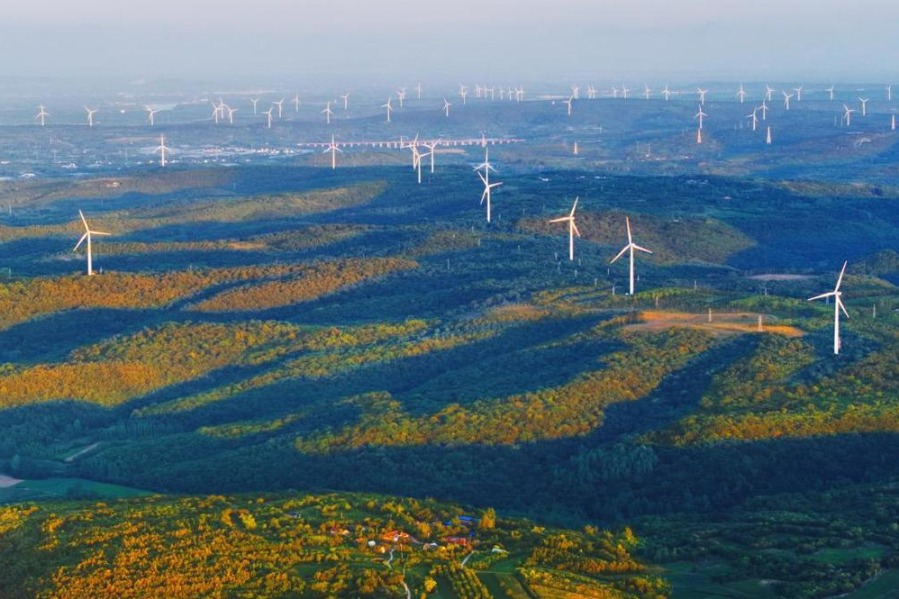
China now accounts for 64% of world’s renewable energy output​

BERTRAND: China now accounts for 64% of world’s renewable energy output

China now accounts for two thirds of all renewable power generation and as the cost of renwable generating capacity tumbles 87% of all capital expenditure on renewables in 2024 was made in the Global South. / bne IntelliNews

By Arnaud Bertrand in Switzerland April 25, 2025

According to the latest report by the International Renewable Energy Agency (IRENA), an extraordinary 64%—nearly two-thirds—of all renewable energy capacity added globally in 2024 was installed in China.

At this point, China is almost single-handedly driving the global energy transition.

For comparison, the United States—still the world’s second-largest emitter of CO₂—was responsible for just 7% of new renewable capacity in 2024, and now accounts for only 9% of total global renewable energy, compared to China’s 41%. This gap is likely to widen further under a potential second Trump administration, given his continued dismissal of climate change as a “hoax.”

Even if one shares such scepticism, these numbers should provoke serious reflection.

Why is China investing so heavily in renewable energy? It’s not out of ideology or “wokeness.” There are several strategic reasons behind this effort.

First, China’s leadership recognises the global perception advantage. Even if some in the West question climate change, 86% of the world’s population believes it is a real and urgent issue, according to Our World in Data (OWID). From their perspective, China is positioning itself as a responsible global power—particularly in contrast to the US.

Second, economics play a major role. Solar power is now significantly cheaper than electricity generated from fossil fuels. According to IRENA, global solar PV costs in 2023 were 56% lower than fossil fuel and nuclear options. Onshore wind is even more competitive, with costs now 67% lower than fossil-fuel-based alternatives.

Most importantly, there’s a long-term strategic calculus at play. Imagine a future where countries like the US persist with fossil-fuel-based economies while China dominates clean energy production. Those holding on to legacy systems will be at a disadvantage—paying premium prices for increasingly expensive fossil fuels while China benefits from near-zero marginal energy costs.

Beyond price, China also secures energy independence and positions itself for technological and industrial leadership in the dominant energy systems of the future.

Here’s another striking statistic: in 2024, 87% of capital expenditure on electricity generation in the Global South was directed toward renewables.

This places China in a dominant position as a supplier of energy infrastructure to the region that will drive 85% of global electricity demand growth over the coming years, according to the International Energy Agency (IEA).

This region is home to the vast majority of humanity—where billions are gaining access to reliable electricity for the first time.

Belief in climate change is not required to see the strategic and economic significance of China’s approach—or the risk of ideological opposition to renewable development in countries choosing a different path.
I have a vision of a future where we use zero emission energy i.e. fusion.
 
I have a vision of a future where we use zero emission energy i.e. fusion.
I'm not sure its possible. Yes, we can significantly reduce fossil fuels, but we also need crude oil and gas for manufacturing many things in today's world that we can't manufacture with anything else.
 
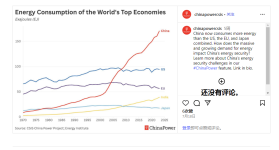
China now consumes more energy than the US, the EU, and Japan combined
微信图片_20250828233428.png


To view this content we will need your consent to set third party cookies.
For more detailed information, see our cookies page.
 

Users who are viewing this thread

Latest Posts

Back
Top