Chinese Economy: General News, Updates and Discussions

Indian entrepreneur in China travelled 1600km in single day without exhaustion, lauds China’s high-speed trains​

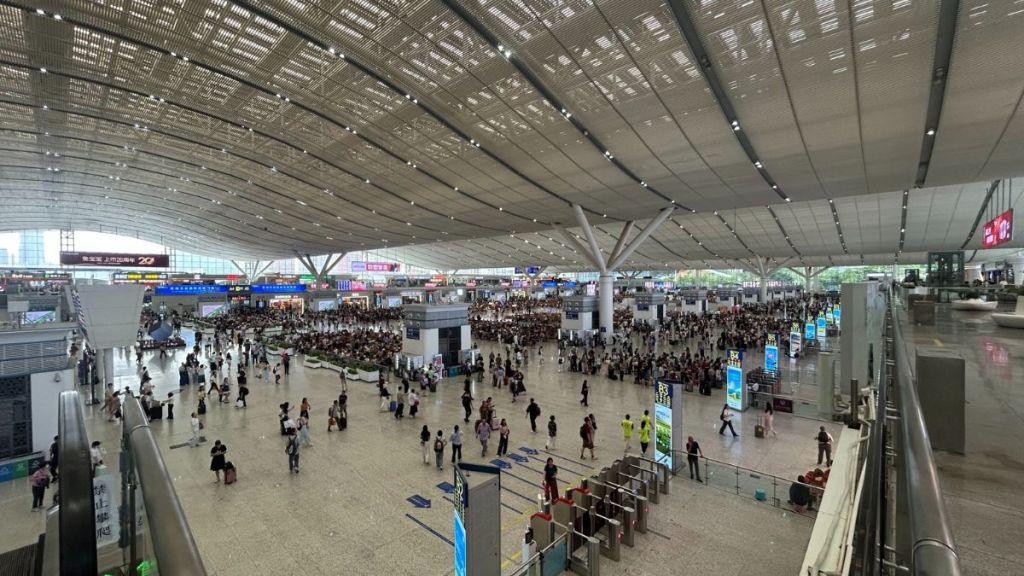
Bansal compared Indian stations to Chinese ones, where 30% of waiting area seats have built-in massage features.

Written by FE Online
June 26, 2025 10:26 IST

china bullet train


Rs 8000 for 1600km is what Akash Bansal paid for his journey in China. (Image: X)

Akash Bansal, the founder of Skyvik, took to social media and shared his experience of travelling in trains in China. Pointing out the “convenient life in China”, he shared how he “travelled 1600 km in a single day for a 3-hour meeting and wasn’t dead by the end.”

This post lauding the public transport system in China, especially the trains, comes after a series of anecdotes from Bansal. In previous posts he mentions how passengers, if they arrive early, can reschedule their ticket for an earlier train. With no additional commute cards required, Bansal shared, a traveller’s national ID secures entry to the train stations. Comments from Bansal reveal that his 1600km journey costed him Rs 8000 in total.

To view this content we will need your consent to set third party cookies.
For more detailed information, see our cookies page.


Making a stark comparison to Indian railway stations where massage lounges have become an attractive feature on major stations, Bansal shared that nearly 30% of the seats in the waiting area in Chinese train stations are massage-equipped. More on the price point, another user noted that the 130 km travel from Shanghai to Suzhou in a high-speed train cost him nearly Rs 500 one way.

‘Don’t behave like we Indians are in stone age’: Social media reacts​

Users on social media slammed Bansal’s narrative and trolled his claims, while others came at him just for praising China. Some of the users also pointed out that it wasn’t such a big feat. “So what’s your point here? Delhi-Mumbai is 1300KM. We take flight in morning do full day work and reach back delhi by 10PM. Same is for Delhi-chennai and many other cities across India. Don’t behave like we Indians are in stone age…,” a user wrote on X.

Another user commented, “I did a bit of research. Average speed of Artrack in America is 50mph. To travel 1,600km in America would take 22 hours.” Others said that it wasn’t fair to compare China’s Bullet Trains with other means of transport found in the US or India.

“These trains are definitely a big missing piece here in the US. Having a car is great but driving distances is inconvenient,” express another user under the post.

On the other hand, some even slammed China and highlighted their lack of democracy, pensions and other policy frameworks for their population. “The root cause of all development in China is the single-party dictatorship,” opined a user. Another wrote, “Please stop comparing India with China.”the mammoth difference between the polity and context.


an indian coming to China would be like the caveman who encountered fire for the first time....

1760328971016.png
 
Last edited:

Chinese Exports Surge, Giving Xi Stronger Hand in Trade Fight

By Bloomberg News

October 13, 2025 at 11:00 AM GMT+8

Chinese shipments overseas grew at the fastest in six months, far exceeding forecasts in a sign of resilience that’s giving Beijing a stronger hand in the latest trade war with the US.

Exports rose 8.3% in September from a year earlier to $328.6 billion, the biggest monthly total so far in 2025, according to data from the General Administration of Customs on Monday. That was faster than the 6.6% median estimate in a Bloomberg survey of economists and shows there’s no slowdown yet in the record-breaking flood of goods leaving China’s shores.

Shipments to the US plunged 27% — the sixth month of double-digit declines — a slump more than offset by strong growth in sales to regions like the European Union. In total, exports to non-US destinations grew 14.8%, the fastest since March 2023.

“China’s exports have remained resilient despite US tariffs, thanks to a diversified export market and strong competitiveness,” said Michelle Lam, Greater China economist at Societe Generale SA. “The limited impact from US tariffs on overall trade so far has likely emboldened China to take a tougher stance in US-China trade negotiations.”

The strength of demand from markets other than the US means that Chinese firms should be less affected by the further increase in tariffs threatened by President Donald Trump. Higher sales overseas are also providing a boost to a domestic economy in deflation and still struggling to reverse a decline in housing demand and prices.


China is set to announce third-quarter data for economic activity on Oct. 20, with most analysts predicting a slowdown from the first half of the year. Still, a strong showing in the first two quarters put China on track to reach the official growth target of around 5%.

What Bloomberg Economics Says...​

“China’s faster export growth in September shows shipments to markets outside the US are countering the deep slump in US-bound exports under higher tariffs. That probably reflects both increased expansion into non-US markets and transshipments via third countries to take advantage of their relatively lower tariffs.”

— Eric Zhu. For full analysis, click here
Companies have responded to higher US tariffs by trying to seek out alternative markets or routing goods indirectly to the world’s biggest economy. Shipments to Africa surged 56% last month — the fastest since February 2021 — with exports to Latin America rebounding 15.2% from declines in June and August.

Exports to the EU rose by more than 14%, the most in over three years, and those to the 10-nation Southeast Asian trading bloc grew almost 16%.

Vietnam was among major trade partners seeing the biggest increases, with China’s exports there jumping almost 25% even as growth moderated. Capital Economics called Vietnam “the top rerouting hub” and said the latest figures suggested “rerouting remains a key offset against US tariffs.”

Imports grew 7.4% in September, far more than forecast, as China increased purchases from countries like Japan, South Korea, the Netherlands and Taiwan. That brought China’s overall trade surplus to $90.5 billion — an almost 11% rise from the same month in 2024.

And as China holds back from buying American goods like soybeans, its trade surplus with the US actually widened slightly from August to near $23 billion in September. China’s exports to the EU exceeded its imports by almost $23 billion, resulting in the smallest trade surplus with the bloc since March.

“The current external environment remains grim and complex,” Wang Jun, deputy head of the customs authority, told reporters in Beijing. “Foreign trade faces rising uncertainty and difficulties. Taking into consideration a high base from last year, we need hard work to stabilize trade development in the fourth quarter.”

China unveiled wide-ranging global export controls on products containing even traces of certain rare earths last week, prompting Trump to fire back by threatening to cancel a planned in-person meeting with President Xi Jinping — their first in six years. The US leader also announced plans to put an additional 100% tariff on Chinese goods, along with sweeping curbs on “any and all critical software.”

The Trump administration later signaled openness to a deal with China to quell fresh trade tensions while also warning that recent export controls announced by Beijing were a major barrier to talks.

Last month, Treasury Secretary Scott Bessent said the two sides would hold another round of talks in Frankfurt, Germany, before the Nov. 10 expiration date for the tariff trade truce.

Bloomberg Economics estimates that a 100% US tariff hike would lift effective rates on Chinese goods to around 140% — a level that shuts down trade. While the current rate is 25 percentage points above the world average, China’s dominance of manufacturing has kept its exports flowing.

But the limited exposure to the US of China’s fastest-growing exports — ranging from lithium batteries to ships and electric vehicles — should make it easier for Beijing to contain any further disruption in trade, according to Lynn Song, chief Greater China economist at ING Bank NV.

“So far this year, China has shown that while it does not wish for a trade war, it is willing to retaliate to escalations as needed,” he said. “The export resilience will likely strengthen confidence in this approach ahead of the talks later this month.”


China's exports to US drop in September, while rise in global shipments hits a 6-month high

Updated: 11:08 PM CDT Oct 12, 2025

By Associated Press

China's exports to the United States fell 27% in September from the year before, even though growth in its global exports hit a six-month high.

Customs figures released Monday showed that China’s worldwide exports were 8.3% higher than a year earlier, at $328.5 billion, surpassing economists’ estimates. That was markedly better than the 4.4% year-on-year increase in August.

China’s exports to the United States have fallen for six straight months. In August, they dropped 33%.

The outlook is cloudy as a truce between Beijing and Washington unravels and both sides hit out with new tariffs and other retaliatory measures.

As exports to the United States have come under pressure from U.S. President Donald Trump's policies aimed at trying to get manufacturers to shift factories to America, China has expanded markets for its products in other regions.


China's September dollar-denominated exports rise 8.3% y/y

By Reuters
October 13, 202511:11 AM GMT+8

Containers at a port in Tianjin

A gantry crane lifts a container at a port in Tianjin, China February 8, 2025. REUTERS/Florence Lo

BEIJING, Oct 13 (Reuters) - China's export growth picked up pace in September, expanding 8.3% from a year earlier in dollar value terms, while imports grew 7.4%, customs data showed on Monday.

Outbound shipments were expected to have risen an annual 6.0%, according to a Reuters poll of economists, up from a 4.4% gain in August. Imports were forecast to have grown 1.5%, against a 1.3% increase previously.

 
US is becoming irrelevant in China's overall foreign trade.
 

China's exports surge to six-month high, driving September trade surplus to $90.45B

Oct. 13, 2025 12:59 AM ET

image_2174166012.jpg


China's trade surplus for September 2025 totaled $90.45 billion. Although this result came in below analyst expectations of $98.96 billion, it marks an increase over the $81.69 billion recorded in September of the previous year. The surplus was sustained as exports continued to significantly outpace imports.

Exports from China increased by 8.3% y/y to a seven-month high of USD 328.6 billion in September 2025, surpassing expectations for a 6% rise and accelerating from a 4.4% gain in August, marking the fastest pace of outbound shipments since March.

China’s imports surged 7.4% y/y in September 2025, hitting a seven-month high of USD 238.1 billion and easily exceeding market expectations of 1.5%.

China’s trade surplus with the US rose to USD 20.86 billion in September, up from USD 20.32 billion in August, even as both exports and imports to/from the US declined by 16.9% and 11.6%, respectively.

Year-to-date, China posted a total trade surplus of USD 875.1 billion, with exports up 6.1% y/y, while imports fell by 1.1% compared to the same period in 2024.

On Monday, the Shanghai Composite fell 1% to around 3,860 while the Shenzhen Component dropped 2.3% to 13,050 on Monday, extending losses from the previous session after US President Donald Trump threatened to impose an additional 100% tariff on Chinese goods in response to Beijing’s new export controls on rare earth minerals, and the offshore yuan edged higher to around 7.14 per dollar on Monday.


China leads global energy export race as clean tech shipments hit record highs​

China leads global energy export race as clean tech shipments hit record highs

The green tech race is on to see who can produce the clean energy to power the transition to a renewable new century and China is winning. / bne IntelliNews

By bne IntelliNews October 13, 2025

China is outpacing the United States in the global race to dominate energy exports, as demand for clean technology surges and fossil fuel revenues plateau. The country exported $120bn in green technology through July 2025, surpassing the $80bn in US oil and gas exports over the same period, Bloomberg reported on October 12.

With the AI revolution in full swing, the country that masters the supply of cheap, clean and renewable power supplies will win. The Trump administration is betting on boosting fossil fuel supplies and ramping up its LNG gas production and export, while China has thrown everything into the renewables pot and has already emerged as the global green energy champion.

According to Ember, a climate and energy think tank, Chinese exports of solar panels, batteries, electric vehicles and other carbon-cutting equipment reached a record $20bn in August.

“China reached a record value in cleantech exports even as technology prices have fallen sharply,” Euan Graham, a data analyst at Ember, told Bloomberg.

While the US set its own record for oil exports in 2024, China’s clean energy exports were $30bn higher. The US has positioned itself as a dominant fossil fuel supplier in recent years, significantly increasing output under both President Donald Trump and former President Joe Biden. Trump, now in his second term, is seeking to further expand fossil fuel production by rolling back regulations and scaling down support for clean technologies. The US president is openly hostile towards renewables and recently moved to gut the Environmental Protection Agency (EPA) of its Obama-era "endangerment finding” – a scientific conclusion that is the legal basis for US climate regulations.

Despite falling prices for solar equipment, China continues to increase export volumes. In August, it shipped 46,000 megawatts of solar power capacity abroad — a record high in volume, even if revenue remained below the peak set in March 2023.

More recently, Beijing has overseen a second revolution in battery technology that addresses the key renewables problem of covering the baseload demand when the wind is not blowing, or the sun is not shining.

Thanks to more heavy investment and its control over rare earth metals (REMs), China has raced ahead in the production of batteries that are rapidly becoming an integral part of any renewable energy product, fuelled by plunging battery prices. China holds a commanding position in the global battery manufacturing industry, particularly in the production of lithium-ion batteries used in electric vehicles (EVs), consumer electronics, and energy storage systems. China dominates the refining and processing of key battery minerals, including: lithium, cobalt, graphite and nickel.

According to data from BloombergNEF and the International Energy Agency (IEA), China currently accounts for over 75% of global lithium-ion battery production capacity. This includes the production of battery cells as well as upstream components such as cathodes, anodes, and electrolytes. China’s dominance is so complete that Sweden’s battery-maker Northvolt recently went bust, billed as Europe’s battery national champion.

Chinese electric vehicle exports are also expanding rapidly in developing markets. According to Ember, more than half of China’s EV exports in 2025 have gone to countries outside the Organisation for Economic Co-operation and Development, underlining a strategic shift toward emerging economies.

While China remains a significant importer of fossil fuels, it is deploying the majority of its clean technology domestically. In the current quarter, China is expected to sell more electric cars at home than the total number of cars — of any type — sold in the US.

Both China and the US maintain excess capacity in their respective energy sectors, generating significant export revenue. However, analysts suggest that China’s long-term influence may grow due to the enduring utility of clean energy technologies.

“Clean energy exports are hardware, which once a country has bought it, will generate electricity for a decade or two to come,” Greg Jackson, chief executive officer of Octopus Energy told Bloomberg. “Whereas with gas, the day you buy it, you use it, it's gone forever.”

The clean tech/battery-maker combination is giving China a decisive advantage in the green transition. Chinese companies are among the world’s largest battery makers. Contemporary Amperex Technology Co. Limited (CATL), headquartered in Fujian, is the world’s largest EV battery manufacturer, with a market share of over 35% as of 2025. Other key players include BYD, EVE Energy, and CALB.

China is also the largest EV market globally, accounting for over 60% of all electric cars sold worldwide in 2024, according to the International Energy Agency (IEA). Exports of Chinese batteries and electric vehicle components reached $65bn in the first half of 2025, driven by overseas demand for clean energy technologies, Bloomberg reported.

https://www.intellinews.com/china-l...hipments-hit-record-highs-405920/?source=asia
 

Western executives who visit China are coming back terrified

factory_manufacturing_sl_11.jpg
Press quote (The Telegraph)
Sander Tordoir
12 October 2025
From

Sander Tordoir, the chief economist at the Centre for European Reform, a think tank, says Europe and Britain must try to boost their own deployment of robotics if they want to keep up with the pace of innovation in China – while also keeping their manufacturing industries alive.

“Robotics, if deployed well, can lift the productivity of your economy greatly. And if China is extremely good at it, then we should try to catch up because, like China, a lot of Europe is ageing,” he says.

“The second reason to care is because the robotics sector is high value and has spillovers for the military industrial sector, so the fact that China may be ahead is also significant from a security standpoint.

“I think the debate is about how to use industrial policy to build competitive markets, and that will inevitably include some support to offset China’s distortions and advantages, which are not all market-driven.”

 
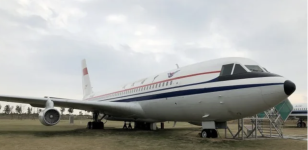
China also has airplanes, but people in China have the luxury of another choice, US is also trying to build its now HSR now, struggling to be more exact.

I think struggling sounds more like your 50+ year quest to build an indigenous commercial jet airliner.

chineseplane.png
The 1970's 运-10 (a reverse engineered 707) was a complete failure so you had to license the
United%20States.png
McDonnell Douglas MD-82 to fly your people around. US tech to your society's rescue yet again...what a shocker!

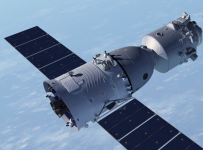
hmm...this also reminds me of when you gave up trying to build your first manned space capsule and decided to use a flag.png Soyuz design instead. Another bailout for your supa-dupa engineers.

shenzhou.png
looks oddly familiar...
 
Last edited:
I think struggling sounds more like your 50+ year quest to build an indigenous commercial jet airliner.

View attachment 153707
The 1970's 运-10 (a reverse engineered 707) was a complete failure so you had to license the
United%20States.png
McDonnell Douglas MD-82 to fly your people around. US tech to your society's rescue yet again...what a shocker!

hmm...this also reminds me of when you gave up trying to build your first manned space capsule and decided to use a View attachment 153713 Soyuz design instead. Another bailout for your supa-dupa engineers.

View attachment 153714
looks oddly familiar...
LOl, everyone struggles at some point, but you are struggling now, to build HSR and by the way, do you have a space station at all?
 
American economist: China has so many HSR and US has none, cause China's economy is to serve the people.

To view this content we will need your consent to set third party cookies.
For more detailed information, see our cookies page.
 
and by the way, do you have a space station at all?

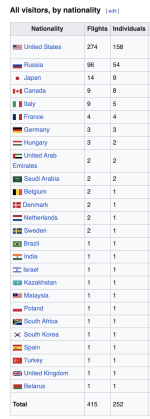
Hey we're all soooooooo sorry nobody lined up to join your tiny space station idea and 25+ countries decided to join our party instead to join the list of "World's Firsts" in space.

13people.jpg
13 people at once. That's over twice the number the tiny Chinese station can handle.

visitors.png

Some of the happy faces of the World:

To view this content we will need your consent to set third party cookies.
For more detailed information, see our cookies page.

Soyeon Yi (South Korea)​


To view this content we will need your consent to set third party cookies.
For more detailed information, see our cookies page.

Sheikh Muszaphar Shukor (Malaysia)


To view this content we will need your consent to set third party cookies.
For more detailed information, see our cookies page.

Alper Gezeravcı (Turkey)


To view this content we will need your consent to set third party cookies.
For more detailed information, see our cookies page.

Aidyn Aimbetov (Kazakhstan)


To view this content we will need your consent to set third party cookies.
For more detailed information, see our cookies page.

Maryna Vasileuskaya (Belarus)


Where's China's long list??

Why are you so hated?

By the way your government let your people down again when it comes to historic space achievements:


Taylor Gun-Jin Wang (simplified Chinese: 王赣骏; traditional Chinese: 王贛駿; pinyin: Wáng Gànjùn; born June 16, 1940) is a Chinese-born Taiwanese-American scientist and in 1985, became the first person of Chinese origin to go into space. While an employee of the Jet Propulsion Laboratory, Wang was a payload specialist on the Space Shuttle mission STS-51-B.
 
Last edited:

Published: Oct 14, 2025 12:21 AM

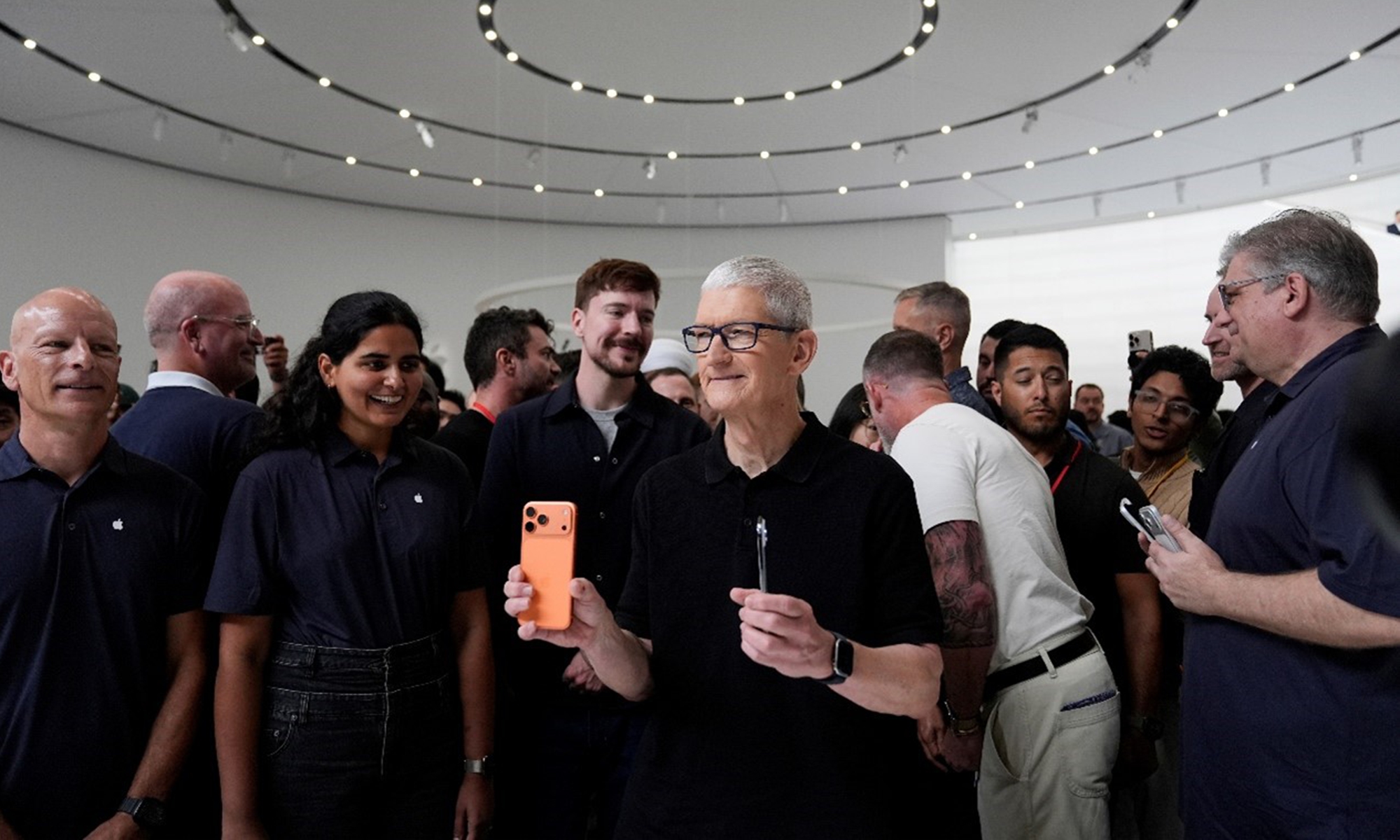
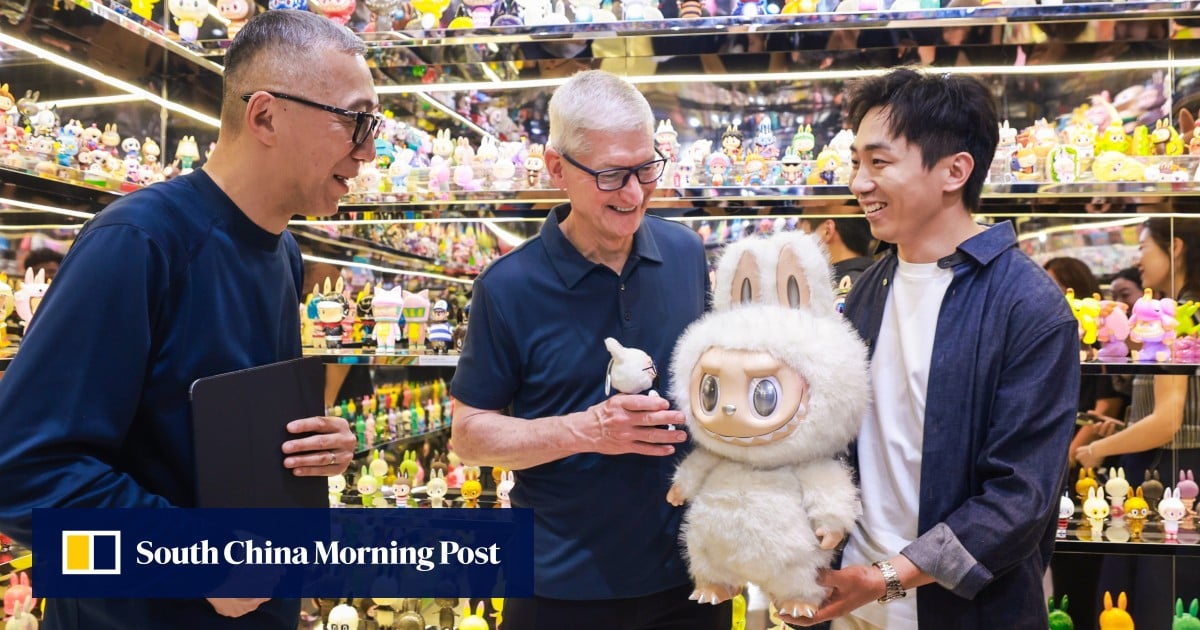
Apple CEO Tim Cook makes a surprise appearance on a Douyin Apple Store livestream on October 13, 2025, announcing preorder and sale dates for the new iPhone Air in China. Photo: Screenshot from the Douyin Apple Store livestream

Apple CEO Tim Cook makes a surprise appearance on a Douyin Apple Store livestream on October 13, 2025, announcing preorder and sale dates for the new iPhone Air in China. Photo: Screenshot from the Douyin Apple Store livestream


Apple CEO Tim Cook made a surprise appearance on a Douyin Apple Store livestream on Monday night, announcing that preorders for the iPhone Air in China will open at 9 am on October 17, with sales starting on October 22.

It marked Cook's first livestream appearance on the platform since Apple's official flagship store joined Douyin Mall in August.

As Apple's first model to rely solely on eSIM, the iPhone Air depends on eSIM services provided by China Mobile, China Telecom, and China Unicom in the Chinese mainland. Apple noted that users should contact their carriers for details on activation and service terms. The design not only enables a slimmer build but is also seen as a key step toward promoting wider eSIM adoption in China, according to media reports.

On October 13, China Unicom announced via its official WeChat account that it had received approval to launch a commercial pilot program for eSIM mobile services and opened a nationwide online reservation channel. On the same day, China Mobile also announced that it had received approval to begin its own eSIM commercial pilot program, allowing users to visit local service centers to activate eSIM mobile services.


39f7e649-73a1-4853-a372-49cf2163c092_66e6da88.jpg


Published: 10:30pm, 13 Oct 2025Updated: 10:43pm, 13 Oct 2025

Apple CEO Tim Cook on Monday said the iPhone Air would make its official debut in China next week, with pre-orders to start on Friday, according to his post on Weibo.

Cook’s announcement was made on the same day that China Unicom said it received government approval to conduct commercial trials for eSIM functions on smartphones.
Cook kicked off his second visit to China this year, meeting the men behind Pop Mart’s Labubu toys.

He met Hong Kong artist Kasing Lung, creator of the popular Labubu toys, and Pop Mart CEO Wang Ning at a Labubu exhibition at The Bund in Shanghai, according to Cook’s post on Weibo and Chinese media reports.

Details about what the three executives discussed at the exhibition were not known.
 

China now leads the U.S. in this key part of the AI race​

Free artificial intelligence technology released by Chinese tech companies appears to be more powerful and popular than that developed by American rivals.

Oct. 13, 2025
by Kevin Schaul
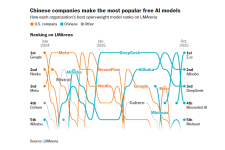
The artificial intelligence boom started in the United States, but companies from China are quietly outcompeting their U.S. rivals when it comes to AI technology that anyone can freely use and build upon, according to a Washington Post analysis of publicly available data.
Last year, the best freely available or “open” AI models were largely made in the United States. Now, they are all made in China.

American companies are widely seen as offering the most powerful proprietary AI tools, such as OpenAI’s ChatGPT and Google’s Gemini chatbots. But by openly sharing AI software, Chinese firms could have a major influence over the trajectory of technology.

Entrepreneurs and researchers often use open software as a cheap and adaptable way to develop and launch new ideas. Trump administration officials have claimed the U.S. must lead in open AI technology to maintain its edge in AI.
微信图片_2025-10-14_095848_389.png

Source: LMArena

Open models from Chinese firms such as e-commerce giant Alibaba are rated higher than those from American companies such as OpenAI and Meta on LMArena, a site that uses blind tests to discover which AI outputs users prefer.

Chinese companies such as Alibaba, the maker of popular Qwen open models, are more prolific than other AI developers, said Irene Solaiman, chief policy officer at Hugging Face, a popular site used by AI developers and researchers to share models and datasets. They are “shipping frequently and shipping well, which is also how you build your user base,” she said.

In previous tech shifts such as the rise of the internet and smartphones, free and open source technology that others can modify has played a crucial role. Much of it originated with U.S. firms, helping establish Silicon Valley’s global dominance.

For some time, U.S.-based Meta offered the world’s best open AI model. Meta founder Mark Zuckerberg argued in an essay last year that the world would be better off if AI companies shared their best models and research for others to use freely. He pledged his company would do so with its Llama series of releases.
But Chinese start-up DeepSeek shocked the tech world in January with its strong open-weight model — the industry term for AI models that can be downloaded and run on any computer. On LMArena, it quickly displaced Meta’s Llama models.

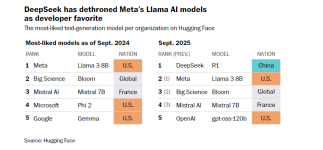
One way to track the influence of a piece of open software is by its popularity with hackers, researchers and entrepreneurs working on new ideas. Hugging Face provides the leading platform for sharing open-weight AI models, where developers click “like” on projects they support.
By this measure, China’s DeepSeek is on top, with twice as many likes (12.8k) as Llama’s top model (6.3k). OpenAI ranks fifth (4.0k).
微信图片_2025-10-14_100022_683.png

No metric is perfect, and others look rosier for the U.S.
Artificial Analysis, a company that tests AI models on such tasks as trivia, math and coding, placed an open model released by ChatGPT maker OpenAI in August a tick ahead of DeepSeek.

OpenAI’s release transformed the company into an American champion for open source alongside Meta, said Solaiman of Hugging Face. But in addition to being more prolific, Chinese competitors are also highly competitive in AI for other use cases, she said, releasing state-of-the-art open software for generating images and videos.
Meta declined to comment. OpenAI did not respond to a request for comment. The Washington Post has a content partnership with OpenAI.
Giving away software might sound counterintuitive for profit-seeking companies, but they can benefit when projects are successful enough to create an ecosystem or become an industry standard. Most smartphones around the world run Google’s Android operating system, which helps drive more users to the company’s search, email and other services.

Releasing AI models free can be more complicated than for other types of technology. Traditional software mostly behaves predictably. AI products can do complex things with serious consequences, many of which are not well understood.

That can be an argument for keeping the technology closed or opening AI models up, depending on a person’s perspective.
Leading American AI companies such as OpenAI and Google have generally chosen to keep their best technology closed and make any open models they release less powerful. Those decisions could shape whose technology the world builds on, and the values built into future AI products and services.
AI makers choose which data guides the technology, which behaviors to reinforce and which outputs are unsafe. If AI becomes foundational to many other technologies and products, the values of the winning models could flow outward.

The popularity of China’s open-weight models concerns some in the U.S., who fear they will spread the values of the country’s government. The Trump administration’s AI strategy urges development of open AI technology “founded on American values” that become global standards with “geostrategic value.”
Other AI experts suggest that focusing on U.S.-China competition can be misleading. The nonprofit AI Now Institute said in a July report that the concept of an “AI arms race” with national security at stake has allowed tech companies to win tax exemptions and avoid scrutiny.
The eagerness of Chinese companies to share their best AI models — and the hesitance of U.S. firms to do the same — raises the question: Will the best open models always be made in China?

Some American executives, investors and academics think they have an answer. The ATOM Project, short for American Truly Open Models, aims to create a U.S.-based AI lab to develop and release open-source AI models that compete with the world’s best.
Without initiatives like that, U.S. firms may be destined to remain on their current course. One year after his original essay arguing for building open models, Zuckerberg shared a new essay. The company would need to be “careful about what we choose to open source,” he wrote. Meta might keep its next model for itself.
 

Users who are viewing this thread

Pakistan Defence Latest

Country Watch Latest

Latest Posts

Back
Top