Chinese Naval Platform & PLAN discussions

China’s super-quiet submarine tech halves engine noise detection range: study

Story by Array

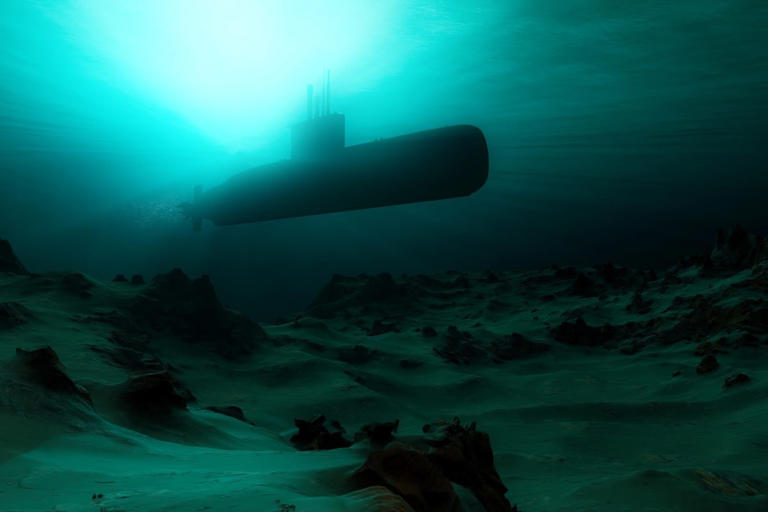
Chinese scientists said that laboratory tests on a scaled-down prototype achieved a striking reduction in the engine noise that makes underwater submarines detectable by sonar systems. Photo: Shutterstock

Chinese scientists said that laboratory tests on a scaled-down prototype achieved a striking reduction in the engine noise that makes underwater submarines detectable by sonar systems. Photo: Shutterstock

A research team in Shanghai has unveiled a vibration-damping technology that could significantly improve the stealth of submarines during covert operations, according to a peer-reviewed study published in the Chinese journal Noise and Vibration Control.

Zhang Zhiyi and his team of researchers, from Shanghai Jiao Tong University's State Key Laboratory of Mechanical Systems and Vibration, said their innovation could theoretically cut the detection range of hostile sonar systems by more than half.

The technology is intended to replace traditional rigid engine mounts with a hybrid active-passive vibration isolation system that would reduce the engine noise transmitted through submarine hulls by up to 26 decibels (dB), according to the paper.

Do you have questions about the biggest topics and trends from around the world? Get the answers with SCMP Knowledge, our new platform of curated content with explainers, FAQs, analyses and infographics brought to you by our award-winning team.

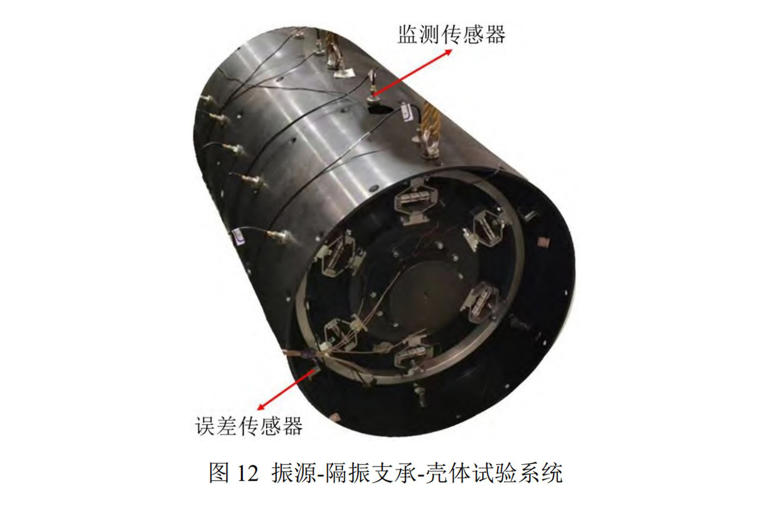
It combined a steel-rubber-steel "sandwich" ring to dissipate vibrations, and an active layer with 12 piezoelectric actuators arranged radially around the engine to further reduce the noise, it said.

These electrically-powered actuators can neutralise the engine's micron-level movements with strong control forces through precision lever mechanisms.

"Research indicates that a mere 10dB reduction in underwater vehicle noise can decrease its detectable range by 32 per cent," according to the paper, published in April.

"During low-speed navigation, mechanical noise generated by power equipment operation constitutes the primary noise source for underwater vehicles, serving as their key acoustic signature for detection - typically manifested as a series of low-frequency tonal components," the researchers said.

"Implementing vibration damping measures to diminish energy transmission from engines through supporting structures is crucial for enhancing underwater vehicles' acoustic stealth performance."


Chinese scientists have developed a way to reduce a submarine's engine noise detection range by more than half, according to a new study. Illustration: Shanghai Jiao Tong University

Chinese scientists have developed a way to reduce a submarine's engine noise detection range by more than half, according to a new study. Illustration: Shanghai Jiao Tong University

Zhang and his team conducted laboratory tests on a scaled-down prototype that showed unprecedented performance with 24dB reduction (12dB passive plus 12dB active) at 100 Hz, and 26dB at 400Hz.

Effective bandwidth went across 10-500Hz, covering most typical engine harmonics, while real-time noise cancellation was possible thanks to the system's extremely short response time, according to the study.

The researchers said the system's smart FX-LMS adaptive algorithm used a multidimensional control matrix to coordinate all 12 actuators, avoiding destabilising feedback loops - a major challenge in real life applications.

While the lab results are striking, hurdles remain. Rubber stiffness, for instance, shifts under changing temperature and pressures, and it is unknown how durable the piezoelectric materials will prove to be in long-term operations.

It is unclear what type of engine noise reduction is used in Chinese submarines, and the the researchers did not specify the overall improvement on a sub's noise profile that would be achieved by the new technology.

China State Shipbuilding Corporation, a major submarine builder, contributed to the study.

 
Like this?

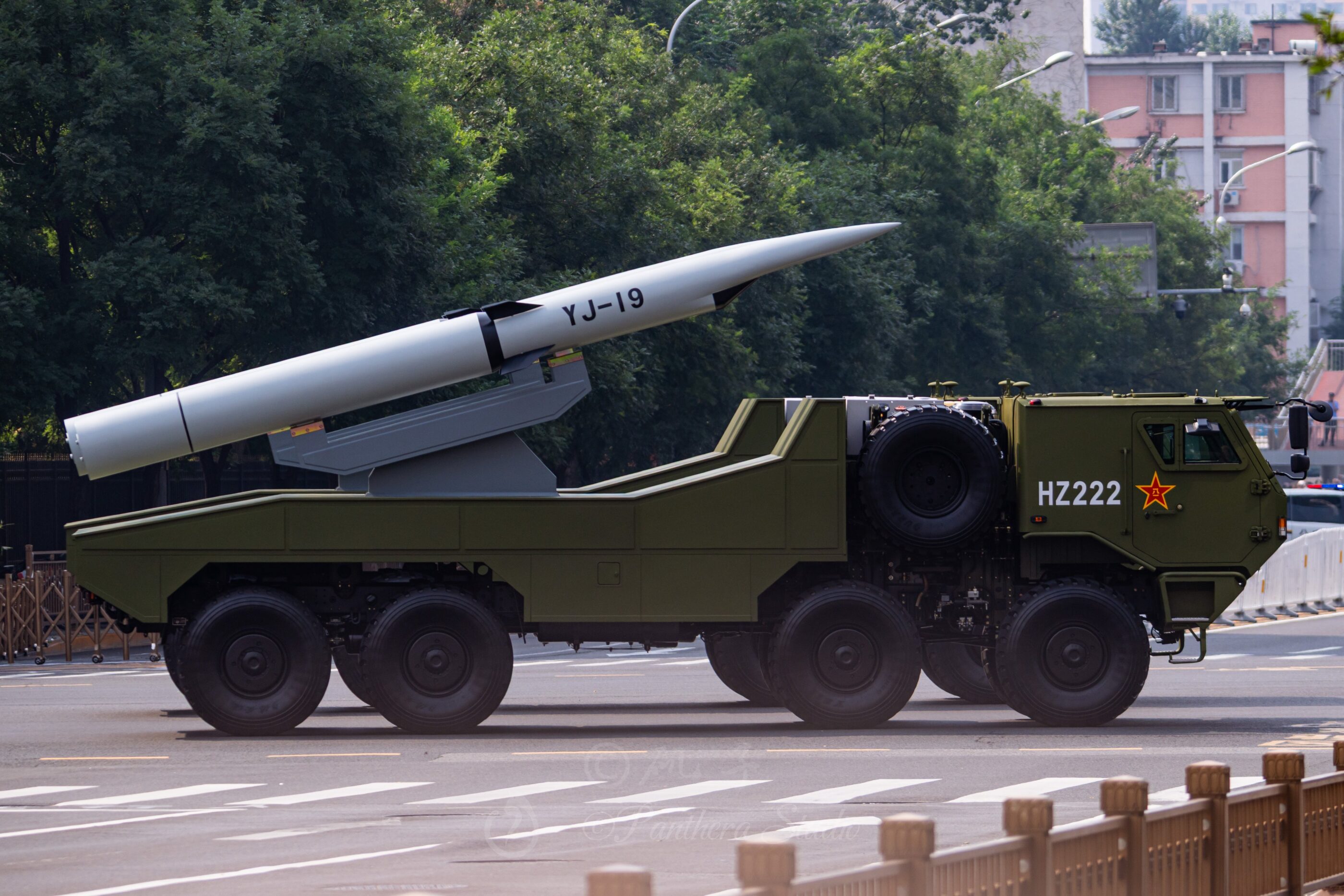
China to arm submarines with new hypersonic missile


What's YJ-19's range?
 
There will be no war between china and the united states anyway. This kind of comparison is pointless now lol
 

The U.S. Navy’s ‘Achilles Heel’: China’s Underwater Drones

BySteve Balestrieri
Published 4 days ago

China UUV Drones

China UUV Drones. Image Credit: X Screenshot.

Key Points and Summary – China unveiled new, massive underwater drone submarines (XLUUVs) at its military parade this week, signaling a new front in the undersea competition with the U.S.

-These semi-truck-sized drones are designed to counter a key American advantage: its sophisticated network of undersea sensors.

-Citing internal Chinese military writings, the piece reveals that Beijing sees this U.S. network as a critical threat to its own submarine fleet.

-The new XLUUVs are the weapon to neutralize it by targeting vulnerable sensor arrays and cables—the system’s “Achilles Heel”—to blind the U.S. in a potential conflict.

What Kind of Threat Do Chinese Underwater Drones Pose For The Navy?

This Wednesday morning, Chinese President Xi Jinping, Russian President Vladimir Putin, and North Korean President Kim Jong-un watched as the People’s Liberation Army and Navy (PLAN) sent an enormous parade of soldiers and military equipment past Tiananmen Square in Beijing.

The three leaders, along with the Presidents of Iran and Azerbaijan, showed a united front against the United States. And it was a huge opportunity for China to showcase its military equipment in a giant sales pitch.

But the most menacing image may have been a new group of weapons China has put on parade, rolling out giant drone submarines to put its undersea ambitions in the open that could one day strike at the US undersea sensor network and tilt the balance of the Pacific’s silent war.

Naval News recently reported that China was expected to unveil two new extra-large uncrewed underwater vehicles (XLUUVs) during a September 3 military parade in Beijing marking the 80th anniversary of the end of the Second World War.

China and Russia always seem to downplay US involvement, despite the fact that both were largely equipped by the US, not to mention the fighting the US did to fight Japan. Russia didn’t even declare war on Japan until after the second atomic bomb was dropped.

The unveiling was the first public appearance of these unmanned assets and will seek to signal China’s rapid progress in underwater drone technology.

China’s New XLUUV Drones

China’s new XLUUVs are about 18-20 meters long (the length of a semi truck) and are generally torpedo-like, with pump jet propulsion. This makes them similar in overall size and shape to the Russian Poseidon nuclear-armed, nuclear-powered torpedo.

China’s Navy (PLAN) has the most extensive XLUUV program of any nation, with at least five types in the water for several years.

It is almost certain that the XLUUVs seen being tested in China are not nuclear-powered. The AJX-002 giant submarine drone could be used to do surveillance and reconnaissance missions.

Chinese developers are pursuing a multi-purpose approach, enabling the AJX-002 to perform reconnaissance, transport, or strike missions. The strategic implications of such a system are far-reaching.

A nuclear-capable Chinese UUV would add an asymmetric layer to its deterrence posture, complicating US and allied naval planning in the Indo-Pacific.

Militarily, it could be used to threaten high-value naval formations and coastal infrastructure, forcing adversaries to consider new layers of anti-submarine defense.

This drone development signals China’s determination to diversify its deterrent beyond ballistic missiles and submarines, reinforcing its ambitions to contest US maritime dominance. The appearance of multiple units at parade rehearsals also suggests a mass-production intent rather than a one-off prototype, underscoring Beijing’s resolve to push forward in autonomous naval warfare.


A second type, the HSU100, is about the same length but significantly wider, roughly 3 meters across. Unlike the AJX002, which has none, the HSU100 is fitted with two masts. It is yet unknown what this drone will be tasked with or what the significance of the masts is.

These large underwater drones are perfectly designed for use in the immense Pacific Ocean, said Mark Montgomery, retired US Navy rear admiral and senior fellow at the Foundation for Defense of Democracies.

“These are pretty damn big. You could put a lot of fuel in them,” he said, adding, “You may or may not see it enter the water in a maritime base, and you don’t really know where it’s at. Ten hours later, it could be almost anywhere.”

In a 2024 report on how a Chinese blockade of Taiwan would unfold, the Center for Strategic and International Studies (CSIS) found that covert mine-laying operations around Taiwanese ports would be crucial to China’s efforts to isolate the island. China’s new XLUUVs could serve that purpose or several others.

The US continues to work on its own XLUUVs.

Targeting The US Undersea Sensor Network

These new drones will be used to target American undersea sensor capability, which the Chinese know is a direct threat to their submarine forces. Defense News recently wrote that during a time of war, the People’s Liberation Army Navy (PLAN) officers are advocating a systematic attempt to destroy America’s undersea sensor network.

This includes destroying, sabotaging, or spoofing underwater microphones using a variety of countermeasures, from undersea drones to China’s massive fleet of commercial fishing vessels.

During the mid-2000s, US undersea surveillance in the western Pacific was centered on the Fish Hook Undersea Defense Line, a modern chain of fixed arrays to monitor Chinese submarines transiting between the East and South China Seas and the Pacific.

This was written by Desmond Ball and Richard Tanter, in their 2015 book “The Tools of Owatatsumi: Japan’s Ocean Surveillance and Coastal Defense Capabilities.”

The Chinese PLAN is building up its submarine fleet for potential deterrence and warfighting. However, this entirely hinges on the PLAN’s submarines being able to operate undetected by US sensors. The Chinese naval officers recognize this.

Writing in the November 2023 issue of Military Art, a journal published by the Chinese Academy of Military Science, three PLAN officers revealed that the peacetime operations of Chinese submarines are highly vulnerable to the US Navy’s undersea surveillance system, raising serious questions about their strategic and operational utility.

Entitled “Effectively Responding to the Threat to China’s Undersea Space Posed by the Powerful Enemy’s Three-Dimensional Surveillance System,” the article deserves special attention for two main reasons. First, while not an official assessment as might appear in a “white paper” or a “five-year plan,” it reflects the opinions of PLAN experts whose views are informed by access to classified intelligence and subject to peer review.

The first author, Senior Captain Zhang Ning, is a faculty member at the Naval University of Engineering, College of Weapons Engineering. He co-authored the piece with Commander Zhang Tongjian, from the 3rd Destroyer Flotilla (Unit 91257), and Lieutenant Fan Zhaopeng of the PLAN Oceanographic and Meteorological Center (Unit 91001).

Second, the publication in which the article appears—Military Art—is an internal PLA journal. This enables the authors to share their expertise with a candor that is rarely, if ever, seen in publicly available PLA sources.

The US Undersea Sensor System

The Chinese authors wrote that the United States, referred to in the article as the “powerful enemy,” has employed an “integrated, three-dimensional surveillance system” within and around the First Island Chain.

The system combines sensors and platforms located ashore, on and below the ocean, and in the air and space.

Under the sea, the system comprises both fixed and mobile surveillance equipment, including unmanned underwater vehicles (UUVs) capable of carrying a range of payloads.

On the surface of the ocean, the system incorporates US Navy ships, especially ocean surveillance vessels. In the air, the system relies on fixed and rotary wing aircraft equipped with anti-submarine warfare (ASW) sensors.

In space, it leverages ocean surveillance satellites, electronic reconnaissance satellites, and imaging reconnaissance satellites in near-earth orbit. The components, or “nodes,” of the system are connected via satellite communications and Raytheon’s real-time submarine communications system, “Deep Siren.”

However, Chinese naval officers believe that “the U.S. undersea surveillance system suffers from a number of vulnerabilities, amplified by the sheer scale of the Western Pacific battlespace,” Ryan Martinson, a professor at the China Maritime Studies Institute at the U.S. Naval War College, wrote in an essay for the Center for International Maritime Security. “If enough nodes are degraded, the system as a whole may lose its functionality.”

US war planners fear that the Chinese Navy will reach 80 submarines by 2035. Chinese officers worry that an intensive American anti-submarine warfare, or ASW, effort has already made Chinese subs too vulnerable.

The Chinese Navy officers fear that Chinese submarines are vulnerable to what they depict as an “integrated, three-dimensional surveillance system.”

This includes warships, subs, aircraft, satellites, underwater drones, the undersea microphones of the Integrated Undersea Surveillance System, or IUSS, and surface ships hauling the Surveillance Towed Array Sensor System, or SURTASS.

Where America sees a Chinese underwater wave of submarines, China sees an American bid to achieve “unilateral transparency” under the waves. As China sees it, this ASW dragnet is so broad that it uses survey ships to map undersea terrain and water conditions for optimal submarine detection, and oceanic surveillance vessels to capture submarine acoustic signatures.

This is where the XLUUVs enter the picture. China recognizes that the individual components of the US ASW puzzle can be easily compromised through kinetic action, drone use, or cyber warfare, and may also exploit another potential aspect of the XLUUVs.

Chinese officers describe this as the US Achilles Heel of their ASW network, because the cables and arrays are easily severed under the ocean.

The Chinese Navy recognizes the threat that the US ASW poses against its submarines. And the XLUUVs are just a part of their solution.


20 meters long: What’s known about the giant underwater drones China unveiled at parade — photos

September 4, 2025, 00:25

AJX002 underwater drones at a military parade in Beijing, China, Sept. 3, 2025 (Photo: REUTERS/Maxim Shemetov)


AJX002 underwater drones at a military parade in Beijing, China, Sept. 3, 2025 (Photo: REUTERS/Maxim Shemetov)
Author: Alex Stezhensky

At a military parade in Beijing on Sept. 3 marking the 80th anniversary of the end of World War II, China for the first time unveiled massive unmanned underwater drones measuring up to 20 meters in length, CNN reported.

The new drones, part of China’s XLUUV project, are the product of three years of testing, according to submarine expert H. I. Sutton.

He said China now leads the field in unmanned underwater vehicles. The XLUUV program includes at least five drone types, some of which have already been in use for several years.

One of the drones shown at the parade, labeled AJX002, measures between 18 and 20 meters long and has a diameter of 1 to 1.5 meters.

413061018b023c3a21979088a5a9740c.png

Photo: REUTERS/Tingshu Wang

A second type, the HSU100, is about the same length but significantly wider, roughly 3 meters across, Sutton said after analyzing photos of the weapons. Unlike the AJX002, which has none, the HSU100 is fitted with two masts.

3d29d866501b8826077603bdeedc087d.png

Photo: REUTERS/Go Nakamura
The role of China’s underwater drones remains unclear. CNN wrote they could be armed with torpedoes or mines, or serve purely in reconnaissance.

be19b38d5f8bdb31e58aa88511835102.png

Photo: REUTERS/Go Nakamura
Also on Sept. 3, Russian dictator Vladimir Putin, North Korean leader Kim Jong Un and more than 20 other foreign leaders attended the large-scale parade in Beijing.

China showcased its new DF-5C intercontinental nuclear ballistic missiles, capable of striking targets up to 20,000 kilometers away, along with DF-61 missiles, laser weapons, new combat drones and other armaments.

Against the backdrop of the parade, US President Donald Trump accused Russia, China and North Korea of a “conspiracy against the United States.”

 
US old legacy weapons stand no chance against the technologically up-to-date Chinese new tech weapons, the latecomers benefits free of old legacy burdens. And unrivaled Chinese industrial capability can churn them out in massive number.
No other countries on this planet can keep pace.
 

China’s super-quiet submarine tech halves engine noise detection range: study

Story by Array

Chinese scientists said that laboratory tests on a scaled-down prototype achieved a striking reduction in the engine noise that makes underwater submarines detectable by sonar systems. Photo: Shutterstock

Chinese scientists said that laboratory tests on a scaled-down prototype achieved a striking reduction in the engine noise that makes underwater submarines detectable by sonar systems. Photo: Shutterstock

A research team in Shanghai has unveiled a vibration-damping technology that could significantly improve the stealth of submarines during covert operations, according to a peer-reviewed study published in the Chinese journal Noise and Vibration Control.

Zhang Zhiyi and his team of researchers, from Shanghai Jiao Tong University's State Key Laboratory of Mechanical Systems and Vibration, said their innovation could theoretically cut the detection range of hostile sonar systems by more than half.

The technology is intended to replace traditional rigid engine mounts with a hybrid active-passive vibration isolation system that would reduce the engine noise transmitted through submarine hulls by up to 26 decibels (dB), according to the paper.

Do you have questions about the biggest topics and trends from around the world? Get the answers with SCMP Knowledge, our new platform of curated content with explainers, FAQs, analyses and infographics brought to you by our award-winning team.

It combined a steel-rubber-steel "sandwich" ring to dissipate vibrations, and an active layer with 12 piezoelectric actuators arranged radially around the engine to further reduce the noise, it said.

These electrically-powered actuators can neutralise the engine's micron-level movements with strong control forces through precision lever mechanisms.

"Research indicates that a mere 10dB reduction in underwater vehicle noise can decrease its detectable range by 32 per cent," according to the paper, published in April.

"During low-speed navigation, mechanical noise generated by power equipment operation constitutes the primary noise source for underwater vehicles, serving as their key acoustic signature for detection - typically manifested as a series of low-frequency tonal components," the researchers said.

"Implementing vibration damping measures to diminish energy transmission from engines through supporting structures is crucial for enhancing underwater vehicles' acoustic stealth performance."


Chinese scientists have developed a way to reduce a submarine's engine noise detection range by more than half, according to a new study. Illustration: Shanghai Jiao Tong University's engine noise detection range by more than half, according to a new study. Illustration: Shanghai Jiao Tong University

Chinese scientists have developed a way to reduce a submarine's engine noise detection range by more than half, according to a new study. Illustration: Shanghai Jiao Tong University

Zhang and his team conducted laboratory tests on a scaled-down prototype that showed unprecedented performance with 24dB reduction (12dB passive plus 12dB active) at 100 Hz, and 26dB at 400Hz.

Effective bandwidth went across 10-500Hz, covering most typical engine harmonics, while real-time noise cancellation was possible thanks to the system's extremely short response time, according to the study.

The researchers said the system's smart FX-LMS adaptive algorithm used a multidimensional control matrix to coordinate all 12 actuators, avoiding destabilising feedback loops - a major challenge in real life applications.

While the lab results are striking, hurdles remain. Rubber stiffness, for instance, shifts under changing temperature and pressures, and it is unknown how durable the piezoelectric materials will prove to be in long-term operations.

It is unclear what type of engine noise reduction is used in Chinese submarines, and the the researchers did not specify the overall improvement on a sub's noise profile that would be achieved by the new technology.

China State Shipbuilding Corporation, a major submarine builder, contributed to the study.

I hope some of this tech is going into the Hangor Subs.
 

20 meters long: What’s known about the giant underwater drones China unveiled at parade — photos

September 4, 2025, 00:25

AJX002 underwater drones at a military parade in Beijing, China, Sept. 3, 2025 (Photo: REUTERS/Maxim Shemetov)


AJX002 underwater drones at a military parade in Beijing, China, Sept. 3, 2025 (Photo: REUTERS/Maxim Shemetov)
Author: Alex Stezhensky

At a military parade in Beijing on Sept. 3 marking the 80th anniversary of the end of World War II, China for the first time unveiled massive unmanned underwater drones measuring up to 20 meters in length, CNN reported.

The new drones, part of China’s XLUUV project, are the product of three years of testing, according to submarine expert H. I. Sutton.

He said China now leads the field in unmanned underwater vehicles. The XLUUV program includes at least five drone types, some of which have already been in use for several years.

One of the drones shown at the parade, labeled AJX002, measures between 18 and 20 meters long and has a diameter of 1 to 1.5 meters.

413061018b023c3a21979088a5a9740c.png

Photo: REUTERS/Tingshu Wang

A second type, the HSU100, is about the same length but significantly wider, roughly 3 meters across, Sutton said after analyzing photos of the weapons. Unlike the AJX002, which has none, the HSU100 is fitted with two masts.

3d29d866501b8826077603bdeedc087d.png

Photo: REUTERS/Go Nakamura
The role of China’s underwater drones remains unclear. CNN wrote they could be armed with torpedoes or mines, or serve purely in reconnaissance.

be19b38d5f8bdb31e58aa88511835102.png

Photo: REUTERS/Go Nakamura
Also on Sept. 3, Russian dictator Vladimir Putin, North Korean leader Kim Jong Un and more than 20 other foreign leaders attended the large-scale parade in Beijing.

China showcased its new DF-5C intercontinental nuclear ballistic missiles, capable of striking targets up to 20,000 kilometers away, along with DF-61 missiles, laser weapons, new combat drones and other armaments.

Against the backdrop of the parade, US President Donald Trump accused Russia, China and North Korea of a “conspiracy against the United States.”

Many have speculated that the propellers on these large UUVs are not the actual propellers, and these were just stand ins for the real pump jet or rim drive propulsion of these unmanned possibly nuclear powered subs.
 
To view this content we will need your consent to set third party cookies.
For more detailed information, see our cookies page.
 

04acc973-c738-468b-a633-a8fb514d8de6_c20216aa.jpg

USS Higgins charted a course through the Taiwan Strait with a British destroyer this week.

China has accused the United States and Britain of undermining peace and stability in the Taiwan Strait with their decision to send warships through the waterway, a mission that the two allies described as routine.

The People’s Liberation Army Eastern Theatre Command said Chinese naval and air forces closely monitored the destroyer USS Higgins and the British frigate HMS Richmond as they transited the strait on Friday.
The passage amounted to “harassment and provocation”, command spokesman Senior Colonel Shi Yi said, adding that the action “sent wrong signals and undermined peace and stability in the Taiwan Strait”.


“The command remains on high alert and is committed to safeguarding national sovereignty and ensuring regional peace and stability,” he said.

A week ago, the Canadian frigate HMCS Ville de Quebec and the Australian guided-missile destroyer HMAS Brisbane also sailed through the strait, prompting a similar warning from Beijing.

China’s third and most advanced aircraft carrier, the Fujian, also passed through the strait, with Beijing announcing early on Friday that the vessel was on its way to conduct scientific research and training exercises in the South China Sea.
The Fujian was spotted heading south after leaving its shipyard in Shanghai on Wednesday.

Asked on Friday if the vessel would soon enter service, the Chinese foreign ministry repeated an earlier statement from the navy.

“The cross-sea tests and training for the Fujian are part of a regular arrangement in the aircraft carrier’s construction process, and it is not aimed at any specific target,” ministry spokesman Lin Jian said.

“The activities of Chinese warships in the relevant waters are fully in line with China’s domestic law and international law.”
 
The United States and Britain come to the South China Sea, China and Russia go to Alaska. And it is foreseeable that there will be more and more muscle show events in the future.
I don't know if the US can keep up with China's pace.
 
The United States and Britain come to the South China Sea, China and Russia go to Alaska. And it is foreseeable that there will be more and more muscle show events in the future.
I don't know if the US can keep up with China's pace.

You've already driven by Alaska in International/US waters and we didn't make a protest fuss.


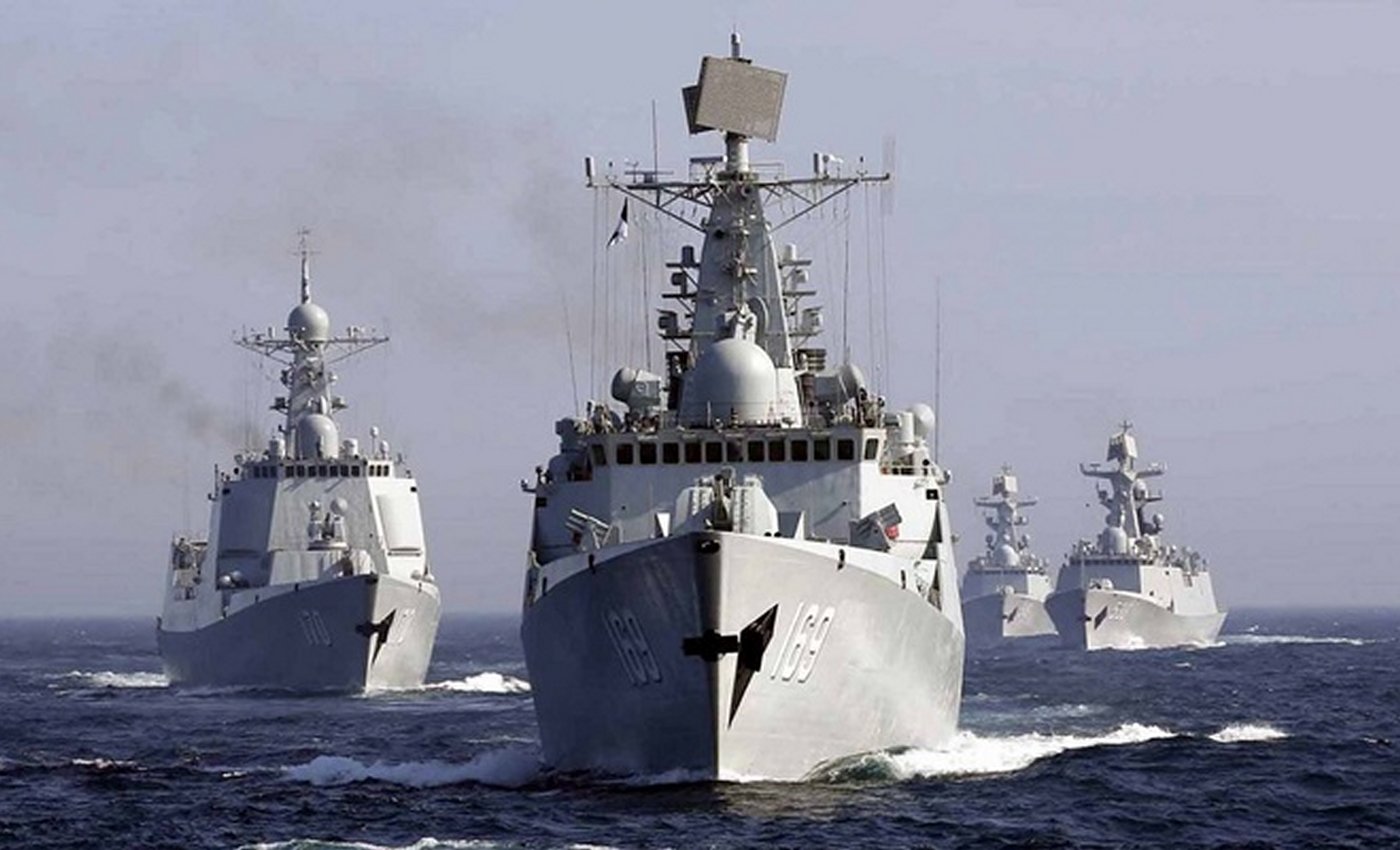
Five Chinese warships crossed into U.S. territorial waters heading south out of the Bering Sea exercising a stipulation in maritime law that allows a warship to cross into another country’s maritime territory legally, U.S. defense officials told USNI News on Thursday.

The People’s Liberation Army Navy (PLAN) flotilla made an “innocent passage” passing within 12 nautical miles of the Aleutian Islands that border the southern edge of the Bering Sea, defense officials told USNI News.

“The five PLAN ships transited expeditiously and continuously through the Aleutian Island chain in a manner consistent with international law,” according to a Thursday statement provided to USNI News by U.S. Northern Command.


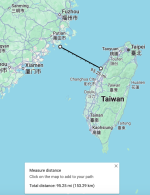
How wide is the Strait between Taiwan and mainland China...what 95+ miles...and you still cry about it compared to the 12??

taiwan.png
 
Last edited:
You've already driven by Alaska in International/US waters and we didn't make a protest fuss.


Five Chinese warships crossed into U.S. territorial waters heading south out of the Bering Sea exercising a stipulation in maritime law that allows a warship to cross into another country’s maritime territory legally, U.S. defense officials told USNI News on Thursday.

The People’s Liberation Army Navy (PLAN) flotilla made an “innocent passage” passing within 12 nautical miles of the Aleutian Islands that border the southern edge of the Bering Sea, defense officials told USNI News.

“The five PLAN ships transited expeditiously and continuously through the Aleutian Island chain in a manner consistent with international law,” according to a Thursday statement provided to USNI News by U.S. Northern Command.


How wide is the Strait between Taiwan and mainland China...what 95+ miles...and you still cry about it compared to the 12??

View attachment 146582

95 miles from Chinas coast tells you how quickly Taiwan will lose a war with China, and how quickly anyone trying to intervene in that war will lose everything they have. Just think about the number of systems that China has, that can target 95 miles from its coast. The MLRS systems alone would devastate every single AD system Taiwan has.
 
You've already driven by Alaska in International/US waters and we didn't make a protest fuss.

Another Indian man trying to act like a White American?

It amazes me to see Indians for their benefits acting all White but having no real loyalty to their host nations, whether in the West or the Middle East. All drama! If this was a comparison between India and something else, you would act so Indian it would be funny watching!
 
95 miles from Chinas coast tells you how quickly Taiwan will lose a war with China,

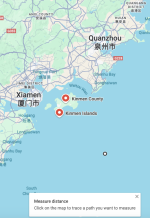
That's actually the exact reason why people were so surprised Taiwan held out back in the 1950s. Communist Troops were simply expected to overrun the island quickly..but they didn't. In fact they couldn't take 2 islands just off their shore and they are still ruled by Taiwan.

Kinmen.png


To view this content we will need your consent to set third party cookies.
For more detailed information, see our cookies page.

The Taiwanese Island That's Less Than 6km From China | Welcome to Kinmen​

 
Last edited:

Users who are viewing this thread

Pakistan Defence Latest

Country Watch Latest

Latest Posts

Back
Top