Chinese Naval Platform & PLAN discussions

Over 70,000 tons? That will be bigger than many aircraft carriers.


Yes . It doesn't make sense, putting 200 VLS and like 3 railguns on a single ship that is 80,000 tons. If you loose one such ship then it would be like loosing an aircraft carrier. Instead China could have gone with something in range of 40000 tons, maybe almost a similar hull like Type 075/76. Even that would be adequate to accommodate like 150 VLS if you remove the deck and internal hangers.
 
Yes . It doesn't make sense, putting 200 VLS and like 3 railguns on a single ship that is 80,000 tons. If you loose one such ship then it would be like loosing an aircraft carrier. Instead China could have gone with something in range of 40000 tons, maybe almost a similar hull like Type 075/76. Even that would be adequate to accommodate like 150 VLS if you remove the deck and internal hangers.
Look at the date of the post. Y’all got April fooled
 
The PLAN will launch some 500000 tons of surface warships and submarines before the end of 2027.
 

China’s drone-laid mines aim to trap US in a Taiwan war

Minelaying drones could turn Taiwan’s waters into a chokehold, denying access, disrupting intervention and forcing costly responses
By GABRIEL HONRADA
APRIL 21, 2026

China-Sea-Drone.jpg
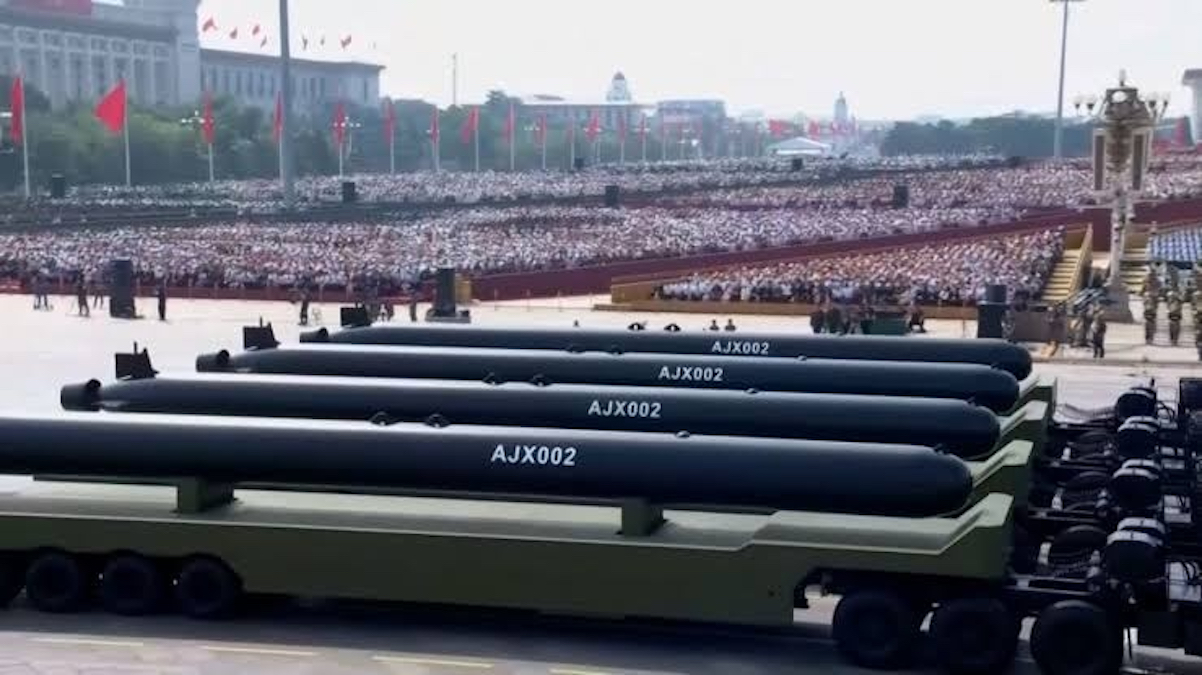
China's AJX002 sea drones on display. Image: Facebook

China’s minelaying drones point to a new way of enforcing a Taiwan blockade, using stealthy, autonomous systems to disrupt maritime access and deny entry to contested waters.

The South China Morning Post (SCMP) reported this month that China’s People’s Liberation Army (PLA) could deploy minelaying drones in a Taiwan conflict, targeting waters around Japan’s Ryukyu Islands and the Philippines, based on an analysis published in the Chinese military magazine Shipborne Weapons.

The report outlines how the PLA would use AJX002 extra-large unmanned underwater vehicles (XLUUVs) for “offensive minelaying” missions aimed at key maritime corridors, ports and shipping lanes along the First Island Chain to disrupt supply routes from potential interveners such as the US and Japan.

Rather than mining Taiwan’s immediate vicinity, the strategy emphasizes isolating the island by cutting off external access through coordinated operations involving missiles, aircraft, submarines and carrier strike groups.

The AJX002, unveiled in Beijing in September 2025, can carry up to 20 naval mines per mission and has an estimated range of up to 1,000 nautical miles, operating autonomously with stealth and networked coordination for optimized deployment.

The objective would be to trap adversary vessels in port or deny entry to blockade zones, severing supply lines and inflicting economic pressure as part of a broader effort to isolate Taiwan.

This points to a strategy focused less on sealing Taiwan itself than on controlling the external arteries that sustain it.

In a Taiwan blockade, offensive mining functions as a layered force multiplier within China’s gray zone and anti-access/area denial (A2/AD) strategy, shaping access, escalation dynamics and intervention decisions.

Bonny Lin and other writers note in an August 2024 Center for Strategic and International Studies (CSIS) report that China could combine covert minelaying with overt signaling, such as live-fire exercises and missile overflights in a blockade scenario.

In implementing such tactics, Lin and others describe a “joint blockade campaign” involving PLA Navy (PLAN) surface action groups positioned around Taiwan, alongside China Coast Guard (CCG) and Maritime Safety Administration (MSA) vessels that enforce the blockade by “interdicting noncompliant ships” under a law-enforcement framing.

In effect, mines extend the reach of this screen, turning compliance enforcement into a physically enforced barrier.

As for which Taiwanese ports may be targeted in offensive minelaying operations, Cheng-kun Ma and K. Tristan Tang note in a November 2024 Jamestown Foundation report that PLA exercise zones were positioned outside key ports including Keelung, Taipei, Taichung, Anping, Kaohsiung, Hualien and Su’ao.

Meanwhile, deployments in eastern waters demonstrated an ability to threaten Taiwan’s force preservation areas and compress its available operational space, reducing Taiwan’s ability to redistribute forces or sustain maritime throughput under pressure, the report said.

Beyond XLUUV deployment, Thomas Hammes notes in a March 2025 Atlantic Council report that sea mines are “easy to transport” and can be covertly deployed by almost any ship, including commercial vessels in China’s naval reserve. He adds that even cleared areas “can easily be reseeded by false-flagged commercial or fishing vessels,” enabling sustained disruption to maritime traffic and making clearance efforts temporary rather than decisive.

This persistence is central to China’s gray-zone approach, in which ambiguity and repetition shape the battlespace without triggering open conflict.

Todd Helmus and co-authors note in a November 2024 RAND report that China layers the PLAN, CCG and maritime militia to “overwhelm opponents and make US or allied responses difficult” while employing gradual escalation to advance its interests and “prepare the battlespace for a potential future conflict.”

Sea mines fit neatly into this model by adding a passive but persistent layer of coercion that does not require continuous force presence. This gray-zone approach is also reflected in how regional actors, particularly Japan, are preparing for a potential blockade of Taiwan.

Yasuhiro Kawakami argues in a February 2022 Sasakawa Peace Foundation (SPF) article that moored mines laid in a Taiwan contingency could drift into waters around Japan if their mooring wires break, disrupting shipping and endangering lives.

He adds that such drift could constrain the Japan Coast Guard and the Japan Maritime Self-Defense Force (JMSDF) in their vigilance activities, particularly around the Senkaku Islands, effectively pulling Japanese territory and forces into the operational envelope of a Taiwan contingency.

This same logic of layered pressure and battlespace preparation also informs China’s conventional warfighting doctrine, particularly in its use of mines for sea denial. Within the First Island Chain, mines could also reinforce China’s South China Sea bastion by creating a defensive envelope around its nuclear ballistic missile submarines (SSBNs) and complicating US submarine access while reinforcing a controlled operating environment for China’s sea-based nuclear deterrent.

While mines enhance survivability within China’s bastion strategy, their broader significance lies in shaping escalation dynamics and intervention decisions in a Taiwan conflict.

At this point, the effect of mines shifts from shaping access to shaping decisions. At the strategic level, Mark Cancian and co-authors note in a July 2025 CSIS report that Chinese submarines and mines impose heavy attrition while accelerating escalation pressures.

They find that without US intervention, “China’s submarines and mines destroyed 40% of inbound ships to Taiwan,” even with maximum Taiwanese resistance. They add that convoys could sustain Taiwan “often at a huge cost,” and that “any blockade creates escalatory pressures that are difficult to contain.”

However, such a strategy would also carry risks for China, including potential disruption to its own commercial traffic, escalation dynamics that could draw in regional powers more quickly and the challenge of sustaining control over contested maritime zones under counterpressure.

Marek Jestrab notes in a December 2023 Atlantic Council report that a coalition response to a Chinese blockade would likely include “escort of merchant shipping through the PRC forces by coalition naval warships” and “mine countermeasure forces identifying minefields for merchant shipping to avoid.” This makes time, rather than firepower alone, a critical variable in any intervention.

However, the effectiveness of these operations hinges on whether the US has reliable mine countermeasure (MCM) capabilities to carry them out under contested conditions. This remains uncertain given the state of the US Navy’s Littoral Combat Ships (LCS), meant to replace the Avenger-class MCM vessels as the primary platform.

A February 2022 US Government Accountability Office (GAO) report finds that the Littoral Combat Ship (LCS) “has not demonstrated the operational capabilities it needs to perform its mission,” citing significant challenges, including mission-essential equipment failures and delays in developing mission modules.

Furthermore, a March 2025 US GAO report attributes these gaps to weak acquisition practices and deficient business cases, noting that immature technologies—particularly for mission systems — delayed capability delivery and reduced the planned capacity of LCS mission packages. The result is not just delayed capability, but reduced capacity to sustain MCM operations at scale.

If these trends persist, a Taiwan conflict may be decided less by fleet engagements than by the ability to sustain access through mined waters, absorb disruption, and manage escalation under sustained maritime denial, where endurance and access—not decisive engagements—determine outcomes.

 
How Many Ships Has China's Navy Added in 2026? (So Far)

May 6, 2026

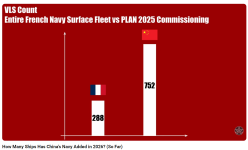
China's PLA Navy is still building warships at a pace no other nation can match. After commissioning nearly an entire French Navy's worth of surface combatants in 2025, how many ships has the Chinese Navy added in 2026 so far — and how many more are coming before year-end?
To view this content we will need your consent to set third party cookies.
For more detailed information, see our cookies page.
 
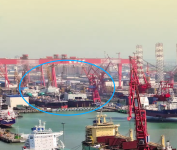
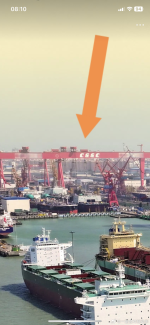
There is a secret hidden within this latest officially released image......
1779359710939.png

1779359783859.png
 
...... XXL ......
LOL.

We usually don't refer to it as "XXL." In Chinese military enthusiast circles, we typically call it "世一奶". This is its exclusive nickname.
“世”------ Meaning: World
“一”------ Meaning: First
“奶”------ Meaning: Wet nurse. A nickname used by Chinese military enthusiasts for replenishment ships. It serves as a "wet nurse" for warships.

If you would like to get the latest information about this via Chinese social media, you can use this keyword to search.
 
China could launch world’s largest naval support ship with over 45,000-ton of displacement: Report
A newly released image from a Chinese state shipbuilder has sparked speculation that Beijing could be preparing to launch the world’s largest naval support ship.

Military
May 23, 2026 09:57 PM EST

A newly released image from a Chinese state shipbuilder has sparked speculation that Beijing could be preparing to launch the world’s largest naval support ship.

Report points to major new naval support ship at Chinese shipyard
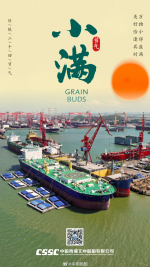
CSSC

A newly shared image from a major Chinese state-owned shipyard has fueled speculation that China may be developing an enormous new naval support vessel.

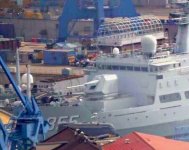
The photo, published by the China State Shipbuilding Corporation during a social media post marking a traditional Chinese solar term, showed a giant hull sitting inside a dry dock in the background. Military analysts and online observers quickly began debating whether the vessel could be a next-generation auxiliary ship designed to expand the logistical reach of the People’s Liberation Army Navy.

Visible sections of the ship, including what appeared to be largely completed upper deck and island superstructures, suggested that construction is already at an advanced stage and that the vessel could soon move on to final outfitting and sea preparations.

Limited overseas bases increase need for support ships
China’s growing focus on long-range naval operations has fueled theories that the newly spotted vessel could be a massive replenishment ship designed to support extended deployments far from home waters. As the People’s Liberation Army Navy expands its presence across the Indo-Pacific and beyond, analysts say Beijing increasingly depends on large auxiliary vessels to sustain fleets at sea.

Unlike the US, China operates only a limited number of overseas military bases, making logistical support ships essential for transporting fuel, ammunition, food, water and other supplies needed for prolonged blue-water missions, the South China Morning Post writes.

China’s carrier strike groups currently rely on a small fleet of fast combat support vessels to sustain operations at sea, including two 45,000-tonne Type 901 Fuyu-class ships alongside the smaller and slower Type 903 Fuchi-class replenishment vessels.

However, growing expectations that Beijing is developing a new “super carrier” have intensified speculation that the People’s Liberation Army Navy will require a larger generation of supply ships capable of supporting more demanding long-range deployments. Analysts believe such vessels would form a critical logistical backbone for future Chinese naval operations across distant waters.

China’s next-generation supply ship
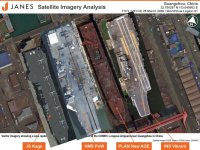
Fresh details about the mysterious vessel emerged last month after defense intelligence firm Janes analyzed commercial satellite imagery captured in March. According to the report, the ship is under construction at the Longxue shipyard in the southern Chinese city of Guangzhou.

Analysts estimated the vessel measures roughly 890 feet in length and about 121 feet in width, making it significantly larger than most existing naval replenishment ships. Janes said the design appears intended to support carrier strike groups by transporting fuel, ammunition and other critical supplies during long-range operations.

Based on the ship’s reported size, defense analysts believe the vessel could displace between 60,000 and 65,000 tons, potentially making it larger than the retired US Navy Sacramento-class fast combat support ships, which displaced about 53,000 tons.

Satellite images captured in March showed the vessel without its superstructure, indicating that major sections were installed within just the past two months. Observers added the rapid pace of construction highlights the speed of China’s naval shipbuilding program.


China’s ‘Bohai Sea Monster’ Ekranoplan Emerges in Clearest Images Yet

Published on: May 25, 2026 at 9:55 PM

China-Ekranoplan-1-860x484.jpg

The Chinese ekranoplan aircraft with two underwing pylons visible under the starboard wing. (Image credit: ‘Tomboy/SDF’ on Chinese internet via Andreas Rupprecht on X)
SHARE

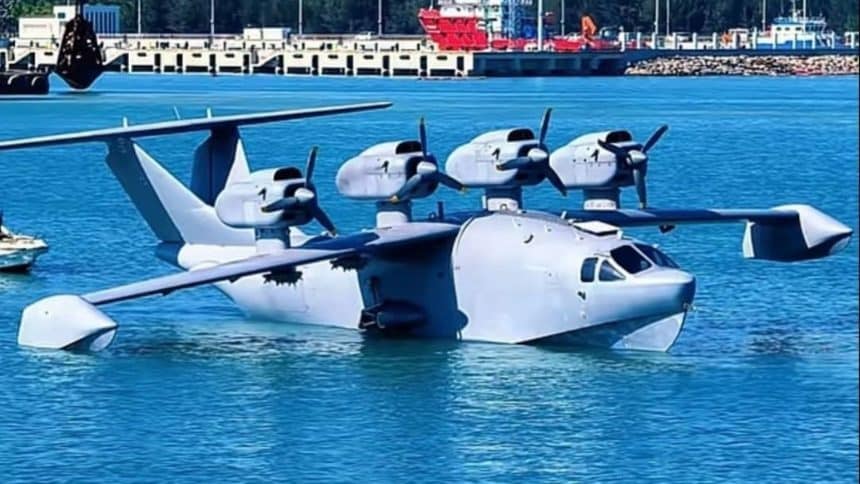
New images of the Chinese ekranoplan show the presence of underwing weapons pylons, suggesting a strike role in addition to rapid support and resupply for amphibious operations in the South China Sea.

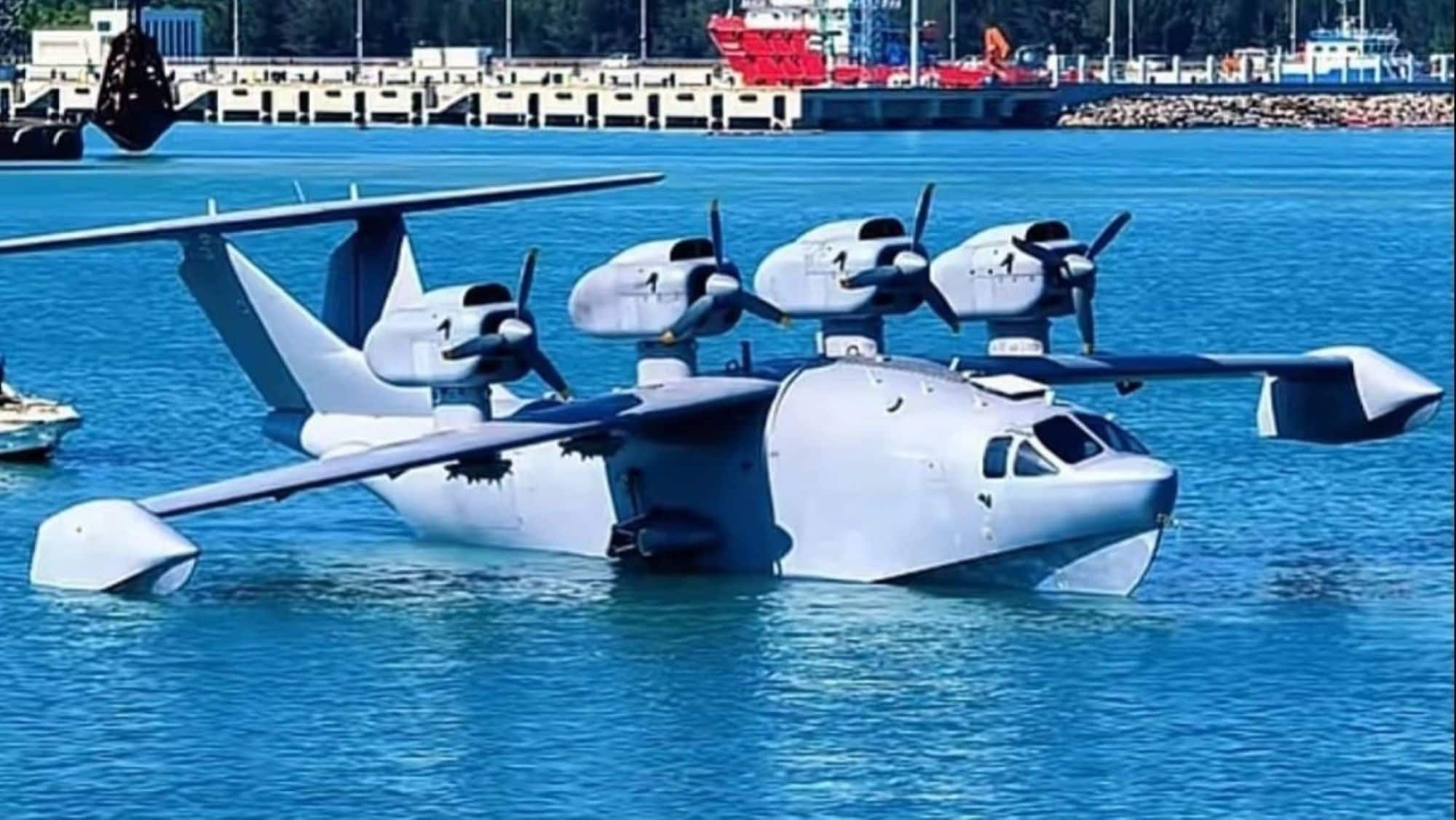
China’s Ekranoplan, the ground effect vehicle that first broke cover in July 2025, has come into full view in new clearer images on Chinese social media, taken at an unspecified seaport. Shared on X by leading Chinese military aviation analyst Andreas Rupprecht, the images shows the aircraft, visibly smaller in size than previously observed, stationary in the water and later being lifted off the water by a crane.

The aircraft was also originally dubbed the “Bohai Sea Monster,” from the name of the location where the aircraft was first photographed in the northwestern part of the Yellow Sea. We can now clearly see the four top-mounted turboprop engines have three-blade propellers, while two hardpoints are visible under the starboard (right-side) wing.

There could also be two more on the port-side wing as well for symmetrical purposes. However these are not visible in the photograph, which captures the aircraft from its left.

Rupprecht said in his post: “New pictures of the new GEV, interestingly it has apparently 4 underwing hardpoints (of which two of them on the left side has been fitted with pylons) for presumably antiship munitions or torpedoes. Also, it appears to be much smaller in size than previously expected.”

To view this content we will need your consent to set third party cookies.
For more detailed information, see our cookies page.


What the new images show

At this stage it is far from being known whether the aircraft will be acquired by the PLA Navy, since its existing warship, aircraft carrier, land, ship, underwater, air-launched missilery, and fighter-bombers can comfortably sustain both a prolonged and short, sharp war in the western Pacific. It nevertheless joins a long line of new, possibly experimental, aircraft that Beijing has produced off late, in a growing display of its aerospace technological prowess.

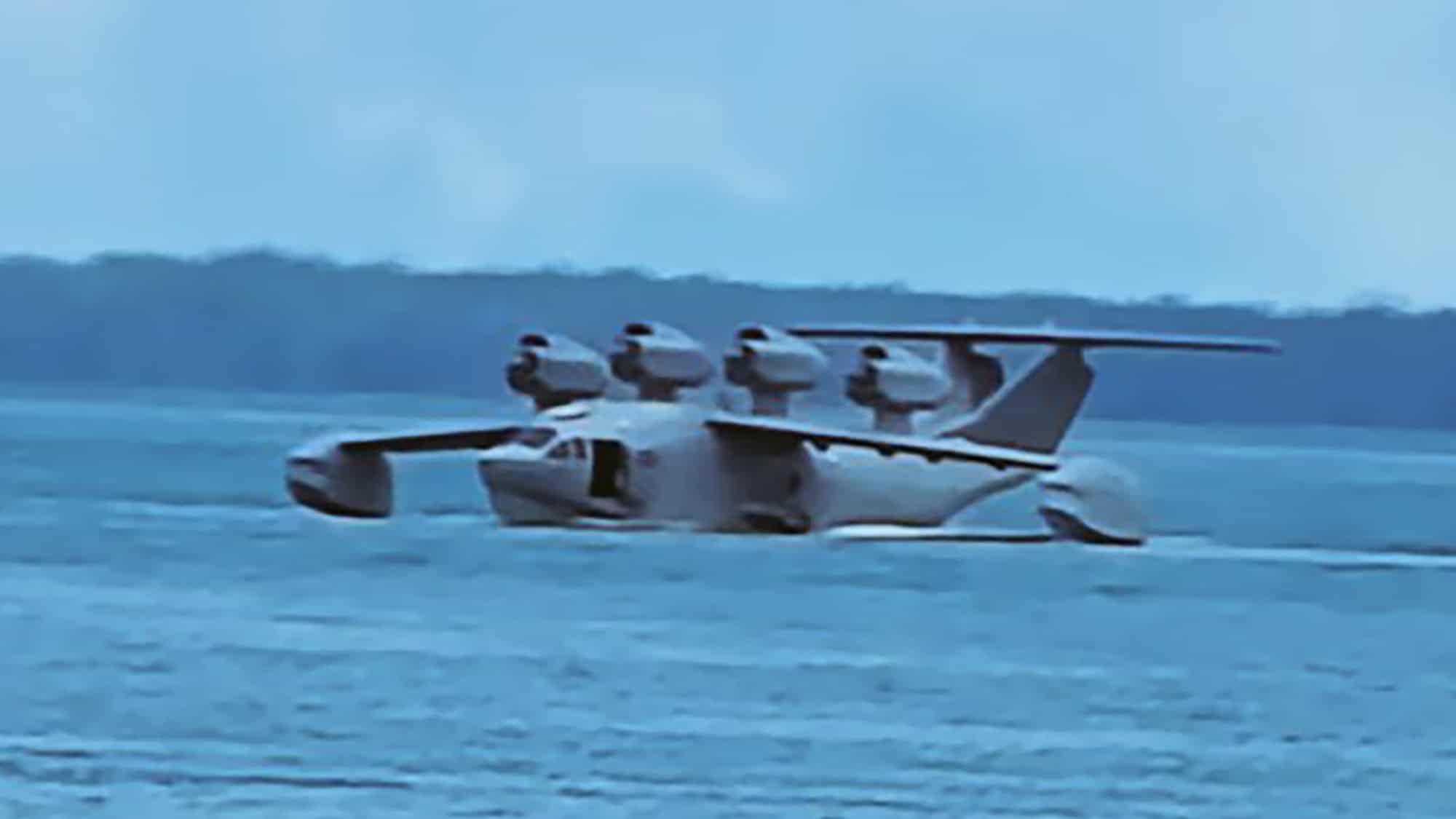
In the July 2025 picture, the aircraft, whose designation remains unknown, appeared to be moving on the water. The port entry door behind the cockpit was visibly open, and we could also see a square-shaped dish above the cockpit and antenna blades on the horizontal stabilizer mounted on top of the V-tail.

China’s Ekranoplan, the ground effect vehicle that first broke cover in July 2025, has come into full view in new clearer images on Chinese social media, taken at an unspecified seaport. Shared on X by leading Chinese military aviation analyst Andreas Rupprecht, the images shows the aircraft, visibly smaller in size than previously observed, stationary in the water and later being lifted off the water by a crane.


The aircraft was also originally dubbed the “Bohai Sea Monster,” from the name of the location where the aircraft was first photographed in the northwestern part of the Yellow Sea. We can now clearly see the four top-mounted turboprop engines have three-blade propellers, while two hardpoints are visible under the starboard (right-side) wing.

There could also be two more on the port-side wing as well for symmetrical purposes. However these are not visible in the photograph, which captures the aircraft from its left.

Rupprecht said in his post: “New pictures of the new GEV, interestingly it has apparently 4 underwing hardpoints (of which two of them on the left side has been fitted with pylons) for presumably antiship munitions or torpedoes. Also, it appears to be much smaller in size than previously expected.”


What the new images show

At this stage it is far from being known whether the aircraft will be acquired by the PLA Navy, since its existing warship, aircraft carrier, land, ship, underwater, air-launched missilery, and fighter-bombers can comfortably sustain both a prolonged and short, sharp war in the western Pacific. It nevertheless joins a long line of new, possibly experimental, aircraft that Beijing has produced off late, in a growing display of its aerospace technological prowess.

In the July 2025 picture, the aircraft, whose designation remains unknown, appeared to be moving on the water. The port entry door behind the cockpit was visibly open, and we could also see a square-shaped dish above the cockpit and antenna blades on the horizontal stabilizer mounted on top of the V-tail.

The dish can now be clearly seen in the new images, surrounded by six slanted blades. These are usually related to High/Very/Ultra Frequency (HF, VHF and UHF) communications.
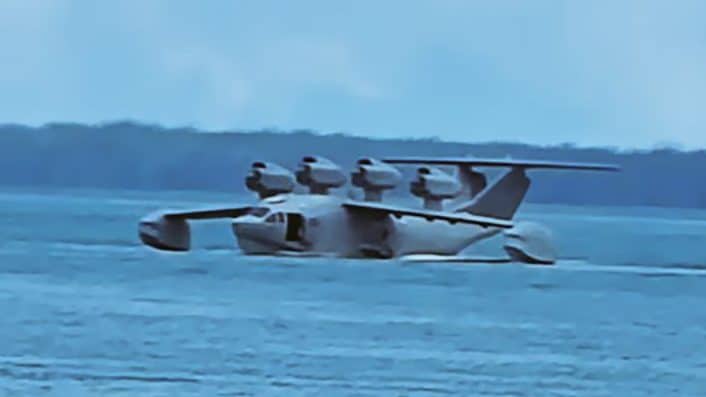
The picture of the Chinese Ekranoplan that had emerged in July 2025. (Image Credit: Chinese internet)

In the image showing the aircraft being picked up by crane, we can see the extended landing gear, suggesting the aircraft might also be amphibian and able to operate from land bases. More images and visuals of the aircraft, possibly in flight, can shed more light on this aspect.

A known Chinese flying boat is the civilian AG600, which has now been adopted in a firefighter role. The aircraft also has a massive market within China, where local governments along the coast can use it for search and rescue, passenger ferry, while also being commandeered by the PLA for resupply in the event of a war.

Coming back to the Bohai Sea Monster, one observer in the comment thread under Rupprecht’s post believes this is only a technology demonstrator aircraft. The actual aircraft could be as large as the new Y-15 turboprop medium tactical lift aircraft, and will be powered by the same four WJ-10/AEP500 turboprop engines.

The powerplants on the final aircraft could however be larger to support the new aircraft’s larger size. A larger number of engines also can’t be excluded.

To view this content we will need your consent to set third party cookies.
For more detailed information, see our cookies page.


Ekranoplans

Ekranoplans, or GEVs, are also called wing-in-ground effect (WIG) craft, which are a hybrid between airplanes and ships. They move over water without actually touching it. The International Maritime Organization classifies them as ships, but the principle behind their operation is entirely unlike one.

The unique high-speed craft attain their kinematics by skimming the water’s surface at a height of between one and five meters (three to 16 feet). It can, therefore, be said that they share some of their characteristics with seaplanes, hovercrafts, and hydrofoils.

They exploit an aerodynamic principle called the “ground effect.” This combination of speed and stealth – their proximity to the surface while flying makes them difficult to detect by radar – got the attention of the Soviet military, which experimented with some variants of the concept during the Cold War.
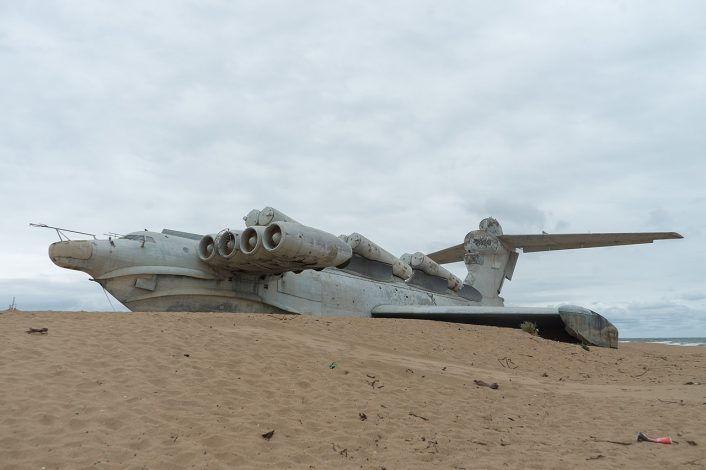
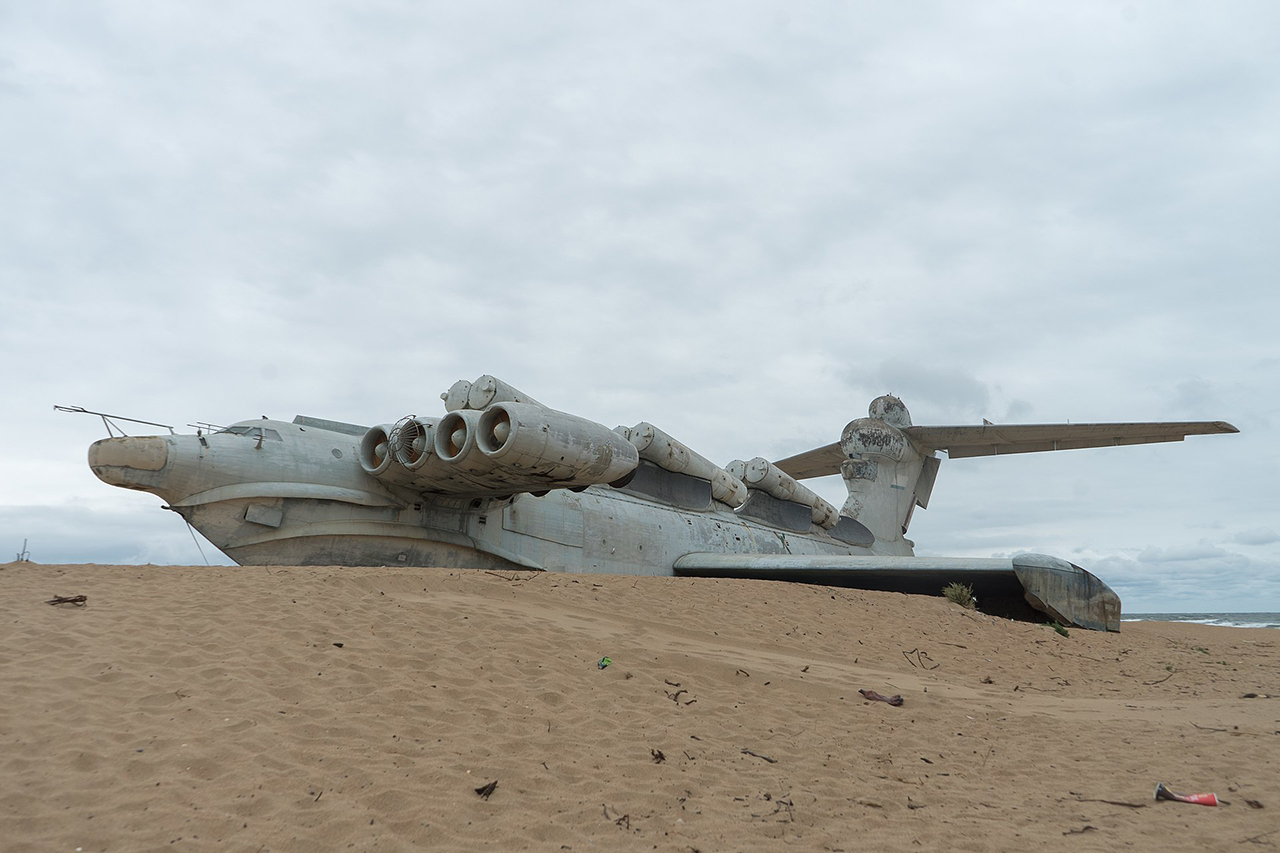
The only completed Lun class ekranoplan, pictured in 2021. (Image Credit: Alexey Komarov/CC BY-SA 4.0)

The most famous Soviet ekranoplan was indeed jet powered, and famously known as the ‘Caspian Sea Monster’. The first ‘Caspian Sea Monster’ was an experimental design that first took flight in 1966, but was later destroyed in a crash in 1980.

The Soviets then built a smaller Lun class ekranoplan, which became the only such vehicle to enter operational service. Carrying six missile tubes on the top fuselage in rows of two, the aircraft had a top speed of 300 knots and could ‘fly’ just three to five meters above the water’s surface.

A similar effort by the U.S. Defense Advanced Research Projects Agency (DARPA) as part of the Liberty Lifter program, was cancelled in July 2025 notably just a few weeks after the Chinese aircraft emerged.

To view this content we will need your consent to set third party cookies.
For more detailed information, see our cookies page.


Use in war

The Chinese aircraft could very well have a role in smaller, low intensity operations in the shallow littoral waters of the South China Sea, transporting materials and weapons to PLA Navy marines on its massive artificial island bases, or even in a Taiwan invasion scenario.

To view this content we will need your consent to set third party cookies.
For more detailed information, see our cookies page.


https://twitter.com/intent/tweet?te...i-sea-monster-ekranoplan/&via=The+Aviationist

New images of the Chinese ekranoplan show the presence of underwing weapons pylons, suggesting a strike role in addition to rapid support and resupply for amphibious operations in the South China Sea.​

China’s Ekranoplan, the ground effect vehicle that first broke cover in July 2025, has come into full view in new clearer images on Chinese social media, taken at an unspecified seaport. Shared on X by leading Chinese military aviation analyst Andreas Rupprecht, the images shows the aircraft, visibly smaller in size than previously observed, stationary in the water and later being lifted off the water by a crane.


The aircraft was also originally dubbed the “Bohai Sea Monster,” from the name of the location where the aircraft was first photographed in the northwestern part of the Yellow Sea. We can now clearly see the four top-mounted turboprop engines have three-blade propellers, while two hardpoints are visible under the starboard (right-side) wing.

There could also be two more on the port-side wing as well for symmetrical purposes. However these are not visible in the photograph, which captures the aircraft from its left.

Rupprecht said in his post: “New pictures of the new GEV, interestingly it has apparently 4 underwing hardpoints (of which two of them on the left side has been fitted with pylons) for presumably antiship munitions or torpedoes. Also, it appears to be much smaller in size than previously expected.”


What the new images show

At this stage it is far from being known whether the aircraft will be acquired by the PLA Navy, since its existing warship, aircraft carrier, land, ship, underwater, air-launched missilery, and fighter-bombers can comfortably sustain both a prolonged and short, sharp war in the western Pacific. It nevertheless joins a long line of new, possibly experimental, aircraft that Beijing has produced off late, in a growing display of its aerospace technological prowess.

In the July 2025 picture, the aircraft, whose designation remains unknown, appeared to be moving on the water. The port entry door behind the cockpit was visibly open, and we could also see a square-shaped dish above the cockpit and antenna blades on the horizontal stabilizer mounted on top of the V-tail.


The dish can now be clearly seen in the new images, surrounded by six slanted blades. These are usually related to High/Very/Ultra Frequency (HF, VHF and UHF) communications.

The picture of the Chinese Ekranoplan that had emerged in July 2025. (Image Credit: Chinese internet)

In the image showing the aircraft being picked up by crane, we can see the extended landing gear, suggesting the aircraft might also be amphibian and able to operate from land bases. More images and visuals of the aircraft, possibly in flight, can shed more light on this aspect.

A known Chinese flying boat is the civilian AG600, which has now been adopted in a firefighter role. The aircraft also has a massive market within China, where local governments along the coast can use it for search and rescue, passenger ferry, while also being commandeered by the PLA for resupply in the event of a war.

Coming back to the Bohai Sea Monster, one observer in the comment thread under Rupprecht’s post believes this is only a technology demonstrator aircraft. The actual aircraft could be as large as the new Y-15 turboprop medium tactical lift aircraft, and will be powered by the same four WJ-10/AEP500 turboprop engines.

The powerplants on the final aircraft could however be larger to support the new aircraft’s larger size. A larger number of engines also can’t be excluded.


Ekranoplans

Ekranoplans, or GEVs, are also called wing-in-ground effect (WIG) craft, which are a hybrid between airplanes and ships. They move over water without actually touching it. The International Maritime Organization classifies them as ships, but the principle behind their operation is entirely unlike one.

The unique high-speed craft attain their kinematics by skimming the water’s surface at a height of between one and five meters (three to 16 feet). It can, therefore, be said that they share some of their characteristics with seaplanes, hovercrafts, and hydrofoils.

They exploit an aerodynamic principle called the “ground effect.” This combination of speed and stealth – their proximity to the surface while flying makes them difficult to detect by radar – got the attention of the Soviet military, which experimented with some variants of the concept during the Cold War.


The only completed Lun class ekranoplan, pictured in 2021. (Image Credit: Alexey Komarov/CC BY-SA 4.0)

The most famous Soviet ekranoplan was indeed jet powered, and famously known as the ‘Caspian Sea Monster’. The first ‘Caspian Sea Monster’ was an experimental design that first took flight in 1966, but was later destroyed in a crash in 1980.

The Soviets then built a smaller Lun class ekranoplan, which became the only such vehicle to enter operational service. Carrying six missile tubes on the top fuselage in rows of two, the aircraft had a top speed of 300 knots and could ‘fly’ just three to five meters above the water’s surface.

A similar effort by the U.S. Defense Advanced Research Projects Agency (DARPA) as part of the Liberty Lifter program, was cancelled in July 2025 notably just a few weeks after the Chinese aircraft emerged.

To view this content we will need your consent to set third party cookies.
For more detailed information, see our cookies page.


Use in war

The Chinese aircraft could very well have a role in smaller, low intensity operations in the shallow littoral waters of the South China Sea, transporting materials and weapons to PLA Navy marines on its massive artificial island bases, or even in a Taiwan invasion scenario.


This would be consistent with the amphibious capabilities China is building with the Type 075 and Type 076 Landing Helicopter Dock (LHD) amphibious assault ships, as well as the Type 728 and Type 726 hovercrafts. The weapons pylons can offer a secondary strike role, releasing either sea-skimming anti-ship missiles or torpedoes, on targets of opportunity based on information received by other platforms.


Users who are viewing this thread

Latest Posts

Back
Top