Chinese PLAAF News

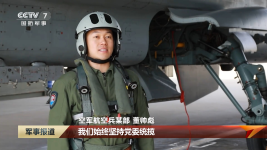
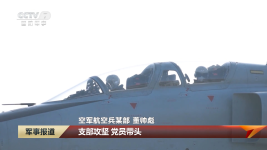
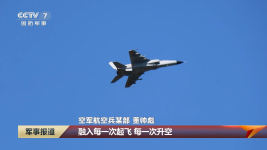
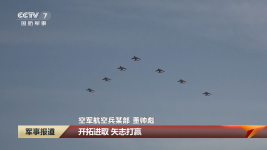
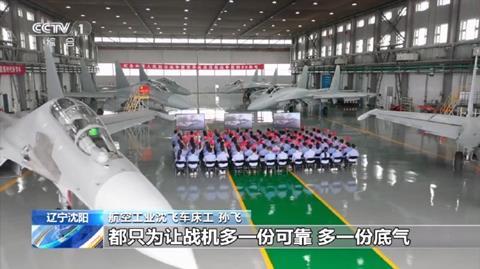
Recent programming on CCTV-7 (CCTV Military Channel) reveals that pilots flying the PLAAF's active-duty JH-7A fighter-bombers are wearing "panda helmets."
1773462254807.png
1773462305471.png
1773462335272.png
1773462357429.png
=========================================================
IMO.
In official Chinese news reports, reference is made only to the modernization upgrade of the JH-7A—specifically, the JH-7A2 variant. However, no technical details have ever been disclosed.
The presence of this "Panda Helmet" indicates that the level of digitalization and information integration on the JH-7A2 has reached a sophisticated standard.
@Deino what you think?
 
Recent programming on CCTV-7 (CCTV Military Channel) reveals that pilots flying the PLAAF's active-duty JH-7A fighter-bombers are wearing "panda helmets."
View attachment 185687
View attachment 185688
View attachment 185689
View attachment 185690
=========================================================
IMO.
In official Chinese news reports, reference is made only to the modernization upgrade of the JH-7A—specifically, the JH-7A2 variant. However, no technical details have ever been disclosed.
The presence of this "Panda Helmet" indicates that the level of digitalization and information integration on the JH-7A2 has reached a sophisticated standard.
@Deino what you think?


I agree, but aren't they using the panda helmet not already since some time? Need to check ...
 
I agree, but aren't they using the panda helmet not already since some time? Need to check ...
My guess is this:
Not all of the JH-7 series fighter-bombers currently in active service with the PLAAF are JH-7A2 variants; there may still be some JH-7A models remaining. These older JH-7A versions likely would not be equipped with the "Panda" helmet.
 
To view this content we will need your consent to set third party cookies.
For more detailed information, see our cookies page.
 

variant of J-35 in production​

  1. Chinese Navy variant of J-35 in production


By Combat Aircraft Journal
11th March 2026
News

On January 6, 2026, the Shenyang Aircraft Corporation began its activities for 2026 with the maiden flight of two factory-fresh naval J-35s.

Several high-quality images were released, together with a brief video showing the J-35s still in green primer. At the same time, state media reported that SAC has completed its new mega-factory located about 25km north of the old facility ahead of schedule.

two Chinese Navy J-35s on ground
Two factory-fresh J-35s soaring into the sky on January 6, during their joint maiden flight Shenyang Aircraft Corporation
The initial production of various types – including the J-35 – is allegedly to start in mid-2026 and, given the aircraft’s sheer size, is comparable to Lockheed Martin’s F-35 assembly plant. A capacity of more than 100 aircraft per year can easily be expected once full rate is achieved. Currently, at least four naval J-35s are operational, conducting flight tests off the PLANS-18 Fujian, which was officially commissioned on November 5, 2025, at Sanya, Hainan.

Meanwhile, much of the focus has now shifted to the Dalian Shipyard, where the PLAN’s fourth aircraft carrier is currently taking shape, likely to be China’s first nuclear aircraft carrier.
 
To view this content we will need your consent to set third party cookies.
For more detailed information, see our cookies page.
 

Satellite images reveal China is surging manufacturing capacity for military aircraft, including J-20 and J-35 stealth fighters​

By Ryan Finnerty
18 March 2026
116236_j20zhuhai2022_445005.jpg


China is aggressively expanding its ability to assemble and deliver new tactical military aircraft, including hundreds of the latest stealth fighters.

That is the conclusion of a research analyst in Washington, DC, who used commercially available satellite imagery to track activity at several key hubs for China’s state-owned aerospace conglomerate – the Aviation Industry Corporation of China or AVIC.

“China’s inventory of fighter and attack aircraft is going to grow significantly over the next five years,” says J Michael Dahm, a senior fellow at the Mitchell Institute for Aerospace Studies.

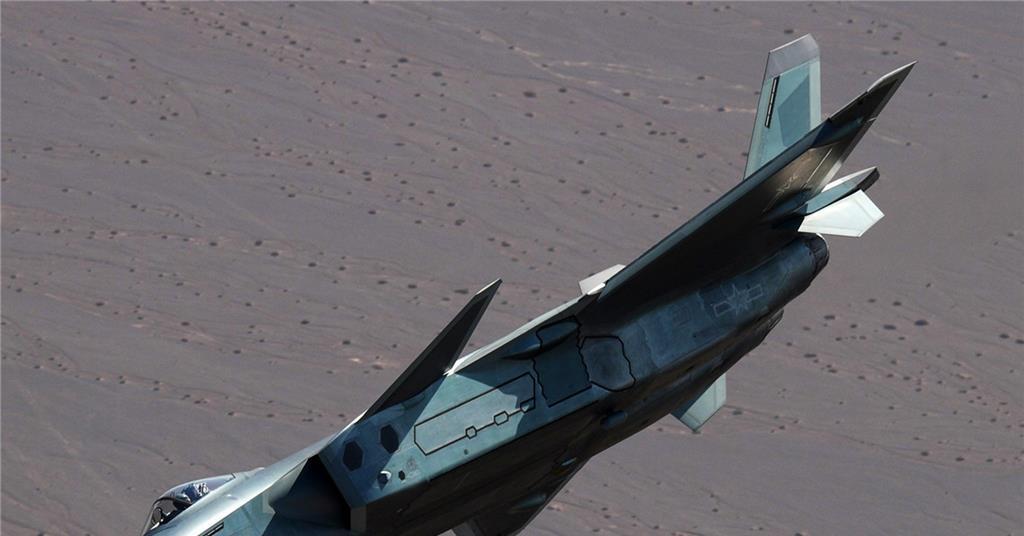
Since 2021, Dahm says AVIC has added some 278,700sq m (3 million sq ft) of manufacturing space at the Chengdu plant that assembles China’s fifth-generation J-20 air superiority fighter. Five J-20 production lines are now active at that facility.

The twin-engined, canard-winged fighter is viewed as China’s domestic attempt to match the American Lockheed Martin F-22.

“Looking back at commercial satellite imagery and substantial infrastructure improvements support the assessment that the Chengdu plant has increased its capacity and could be producing as many as 100 J-20s per year,” says Dahm, who presented his findings at the 2026 Air & Space Forces Association’s recent Warfare Symposium in February.

Other estimates, including one by the Royal United Services Institute, put China’s 2025 J-20 production figure at 120 aircraft.

Chengdu J-20


Source: Chinese defence ministry

The Chengdu J-20 stealth fighter has been flying for more than a decade, but China’s state-owned aerospace corporation has moved to rapidly expand production of the jet in recent years
Dahm’s analysis used images provided by the American firm Planet Labs, one of three major providers of commercial satellite imagery. Although also used for scientific and civil industry purposes, the availability of a high-resolution, unclassified orbital reconnaissance capability is reshaping military and intelligence operations.


The US government published commercially sourced satellite imagery of Russia’s troop build-up around Ukraine in late 2021 and early 2022 – something that would never have been done with photos taken by Washington’s government-owned reconnaissance satellites, owing to concerns about keeping the technical capabilities of those assets secret.

Last month, a private firm with connections to the Chinese government publicly shared commercial satellite images showing the location of US military assets around the Middle East, demonstrating the power of orbiting platforms to provide updates on troop movements in nearly real time.

Using those same tools, Dahm has been examining activity at aircraft production and test sites around China over the past few years.

Similar to the recent expansion at the Chengdu plant, other AVIC locations also show signs of growth. That includes the development of a new factory in Shenyang, which geospatial analysis suggest will include over 370,000sq m of manufacturing space and a dedicated 3,660m (12,000ft)-long runway.


This site, it is hypothesised, will assemble the new Shenyang J-35 and J-35A fifth-generation fighters – China’s answer to the American Lockheed Martin F-35 stealth fighter – respectively for the People’s Liberation Army Navy and People’s Liberation Army Air Force.

A separate 93,000sq m expansion is underway at the Changhe Aircraft Industries plant that assembles military helicopters, including attack and heavy-lift transport varieties. That represents a 30% increase in capacity.

J-35 EMALs Shot


Source: China Ministry of National Defense

China is rapidly advancing the Shenyang J-35 naval strike fighter, to include electromagnetic catapult launches from the People’s Liberation Army Navy’s newest aircraft carrier CNS Fujian. A separate J-35A land-based variant is being developed for the People’s Liberation Army Air Force
Between the three sites in Chengdu, Shenyang and Changhe, AVIC is adding more than 743,000sq m (8 million sq ft) of space, presumably to support additional aircraft production.

“Those 8 million sq ft are more than the entire F-35 manufacturing complex in Fort Worth, Texas,” Dahm says.


Meanwhile, the existing AVIC assembly line in Shenyang is continuing to deliver fourth-generation models, including the J-15 and J-16 fighters.

“Starting next year AVIC will have the capacity to produce 300-400 fourth- and fifth-generation fighters per year for the PLA,” Dahm says.

Beijing may not opt to make use of that full capacity, or could direct some portion of the output toward supporting export sales of its latest fighter types.

Regardless of the exact breakdown, Dahm predicts a minimum volume of at least 250 aircraft per year across AVIC’s entire fighter aircraft enterprise.


By contrast, Lockheed Martin is currently assembling F-35s at a rate of 156 jets per year, while the company’s F-16 Block 70/72 production line has a maximum capacity of 48 aircraft per year, with 16 examples delivered in both 2024 and 2025.

Boeing meanwhile is ramping toward producing its latest F-15EX at a rate of 24 jets per year.

In Europe, France’s Dassault Aviation delivered 26 Rafale fighters in 2025, with annual output of the type rising towards a target of 44.

J-16 Shenyang factory_CCTV


Source: China Central Television

A view from inside the Shenyang factory that is still actively assembling J-16 fourth-generation strike fighters was featured as part of a CCTV documentary in the lead up to a much-watched Chinese military parade in September 2025
While China seems to be taking the lead in raw output compared to the West, senior American figures say they still retain the advantage in terms of quality.


“I don’t believe, just sort of personally, that it’s equivalent to F-35,” Lockheed chief executive James Taiclet said of China’s J-20 during a January 2025 call with investors.

He also noted that Lockheed, which is the only Western company actively delivering fifth-generation fighter aircraft, still maintains an output edge with 156 F-35s assembled annually versus 100-120 J-20s from AVIC.

“We’re ahead of them,” Taiclet said.

That balance looks different, however, when including the new J-35 plant still under construction outside Shenyang and China’s existing capacity for fourth-generation fighters

And quantity has a quality all its own, as goes the famous axiom attributed to the Soviet Union’s military-industrial strategy during the Cold War.

If it makes full use of all that new production capacity, Dahm says China will have the largest fighter force on the planet by 2029. That comes as Beijing is also expanding its fleet of aircraft carriers and maturing its ability to conduct air operations from those naval vessels.

At the same time they are focused on generating mass, AVIC and the Chinese government are also pursuing qualitative advancements in new aircraft designs.

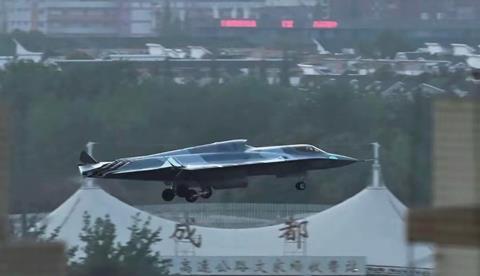
There have been multiple sightings of new tactical jets over the past two years, including a tailless, three-engined aircraft undergoing flight testing in Chengdu that has been unofficially designated the J-36.

A smaller, twin-engined type first seen over Shenyang in 2024 has been tentatively designated the J-50 or J-XDS. The distinctive jet, which is also tailless and appears to feature a thrust vectoring capability, reappeared again on 17 March in social media videos, presumably with the blessing of authorities in Beijing.

J-50 or J-XDS c Chinese social media


Source: Chinese social media

The experimental jet known alternatively as the J-50 or J-XDS has appeared in flight intermittently on social media, presumably with the blessing of government authorities in Beijing
In 2025, US Air Force General Kenneth Wilsbach, who has since been promoted to be the service’s chief of staff, said the Pentagon believes the experimental Chinese jets are meant to fill an air superiority role.

That would make them loosely analogous to the Boeing F-47 sixth-generation currently under development for the US Air Force and the US Navy’s still-unnamed F/A-XX sixth-generation platform.

Signs of China accelerating its next-generation development programmes go beyond sightings of the new aircraft in flight.

Dahm says Planet Labs imagery shows that a remote air base in Xinjiang Province, which he refers to as “China’s Area 51”, has seen an additional 5,570sq m of hangar space and over 27,800sq m of facility space added in just the past year.

“China has effectively doubled the size of this remote testing base, which gives us some indication of where they might be going with test and evaluation and future aircraft development,” Dahm says.

In September 2025, commercial satellites captured the J-50 sitting uncovered on the ramp at the Xinjiang test base, exposed for the world to see.

That was no oversight, according to Dahm’s assessment.

“Someone is always watching from space. If there’s something they want you to see, something they want you to be talking about, they can maybe accidentally leave something out so that we’re talking about that instead of focusing on the big picture,” he says.

That big picture, he suggests, is the rapid expansion of both the new aircraft test site and factory production lines elsewhere in the country.

Chengdu J-36 2


Source: Chinese social media

The experimental jet unofficially dubbed the J-36 has been sighted landing at the Chengdu factory where AVIC assembles the J-20 stealth fighter
Dahm notes the latest satellite images indicate that around 20ha (50 acres) of land have been cleared on the north side of the current Chengdu plant, space previously occupied by Sichuan University. He posits that space could eventually be used to support production of a sixth-generation Chinese fighter or further expand J-20 capacity.

So what will China do with all that firepower?

The obvious answer is be ready to mount an operation to forcibly integrate Taiwan, whether via a protracted blockade or a cross-strait assault.

The famous 2027 “Davidson Window”, so-named for the former commander of US Indo-Pacific Command Admiral Philip Davidson, is rapidly approaching. That is the date by which the Pentagon claims Chinese premier Xi Jinping has ordered the PLA to be ready to seize Taiwan, should the order come.

In 2025, the current commander of INDOPACOM said Chinese forces are actively rehearsing for such a scenario.

It is not yet clear how recent purges of senior leaders in the People’s Liberation Army may have affected Beijing’s plans or the US assessment of Chinese activity.

Besides a Taiwan operation, Dahm predicts that Beijing might do what Washington does with its vast arsenal of combat jets and carriers: project power globally.

“We’re going to start seeing China’s air force in other parts of the world,” Dahm says. “We’re going to be challenged in other places, not just the Taiwan Strait.”

That growing challenge comes as the attention of political leaders in Washington and the US military are currently fixed on another narrow waterway of great strategic importance: the Strait of Hormuz.

The air war launched against Iran by the US and Israel has entered its third week, with little signs of a rapprochement between the three belligerents.

That campaign is showing both strengths and limitations of air power in combat, which we delve into in latest episode of FlightGlobal Focus, which reviews some the war’s major developments and compares Operation Epic Fury to other air-heavy military actions from the past.


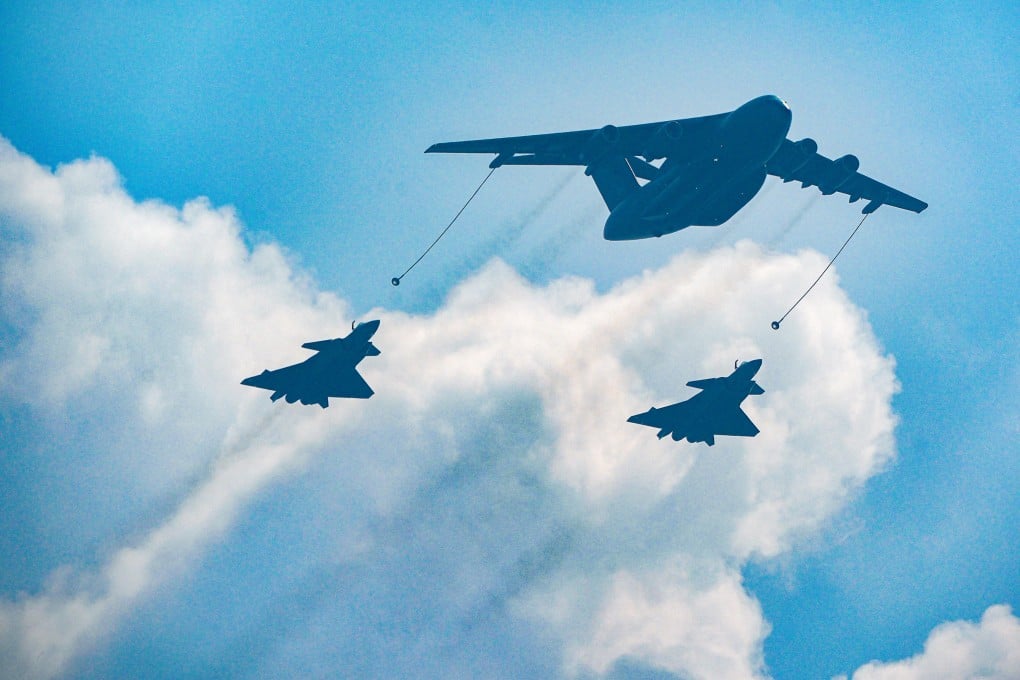
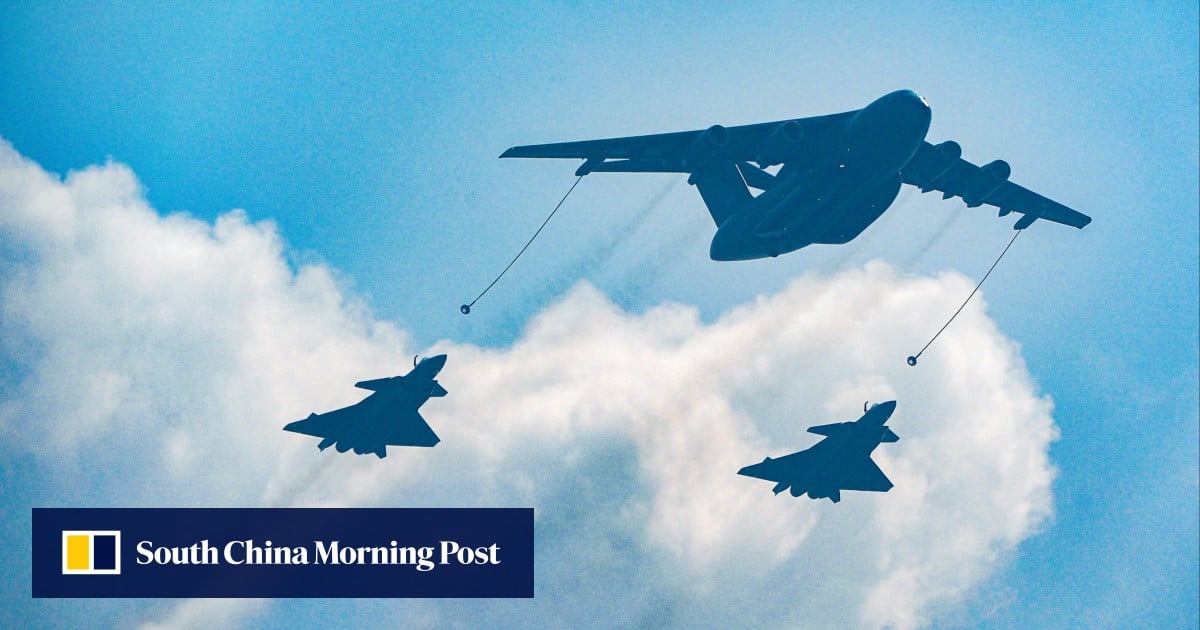
China’s PLA reveals AI-assisted aerial refuelling tech days after US military tanker crash​

PLA Air Force details streamlined operations that pair tankers and fighters, with real-time recommendations for pilots​

Chinese fighter jets soar over Tiananmen Square in Beijing on September 3, 2025, marking the 80th anniversary of the end of World War II. Photo: Eugene Lee

Liu Zhen
Published: 9:00am, 19 Mar 2026

The People’s Liberation Army has announced a new AI-assisted task dispatch system for China’s aerial refuelling tankers, days after a US military tanker crashed in the Middle East.

According to the official PLA Daily, the Chinese air force has streamlined its aerial refuelling operations with a smart artificial intelligence (AI) system to improve efficiency and safety.

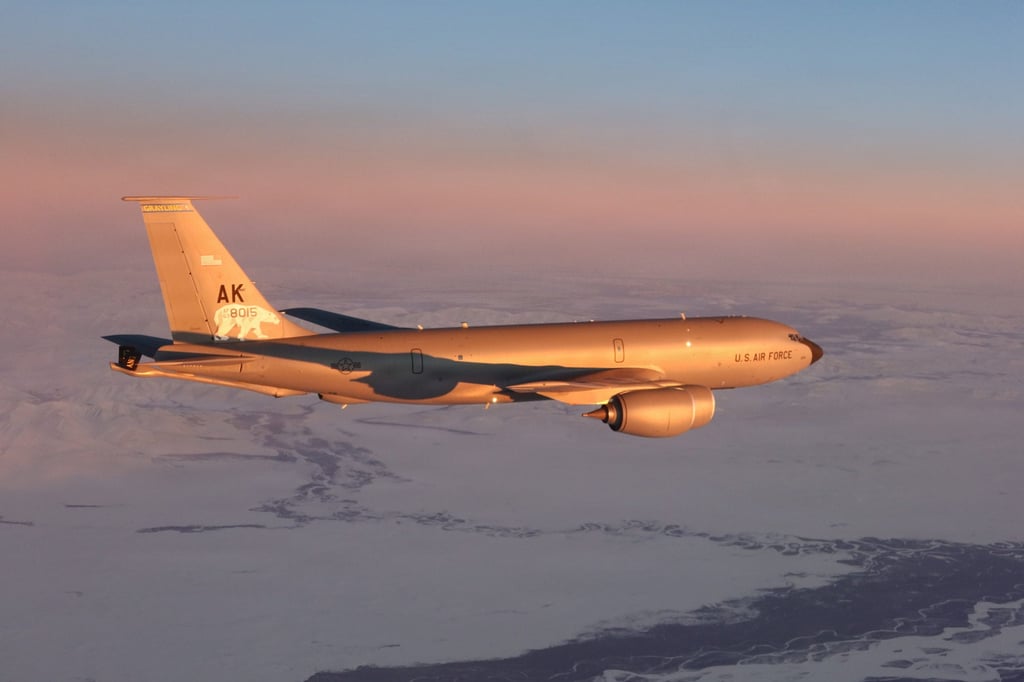
The report on Monday came just days after a US Air Force Boeing KC-135 “Stratotanker” aerial refuelling tanker crashed in western Iraq during America’s Operation Epic Fury against Iran.

According to the PLA Daily report, the “aerial refuelling area management system” – developed by technicians from the PLA Air Force – was first introduced during training at the end of last year.

The system monitors real-time airspace situations and employs built-in algorithms to automatically calculate real-time fuel levels for all participating aircraft within the area.

A US Air Force KC-135 “Stratotanker” flies over northern Alaska on March 4. Photo: Handout

A US Air Force KC-135 “Stratotanker” flies over northern Alaska on March 4. Photo: Handout

Based on the fuel levels, airspace capacity and flight duration of each aircraft, the system generates the most optimised pairing plans between tankers and fighters, issuing recommendations to pilots.

 
China’s J-16D EW Jet Seen Flying with PL-15 Missiles Possibly for the First Time
Published on: March 19, 2026 at 9:04 PM
Parth Satam

J-16D PL-15

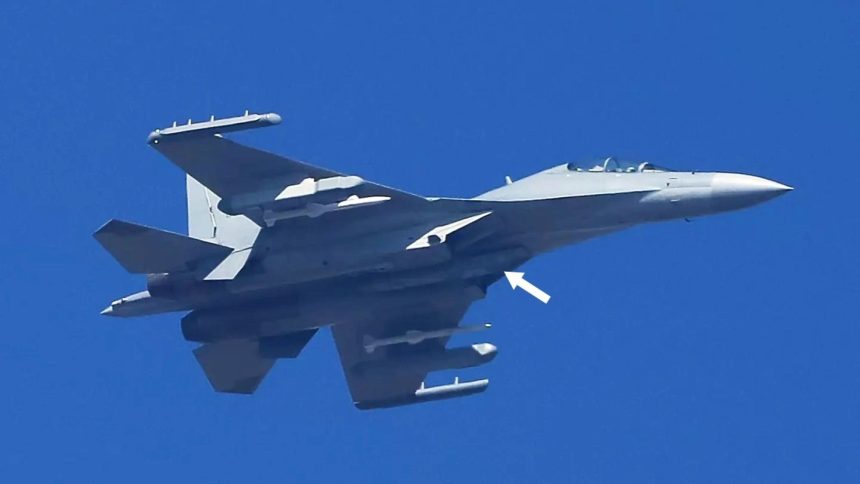
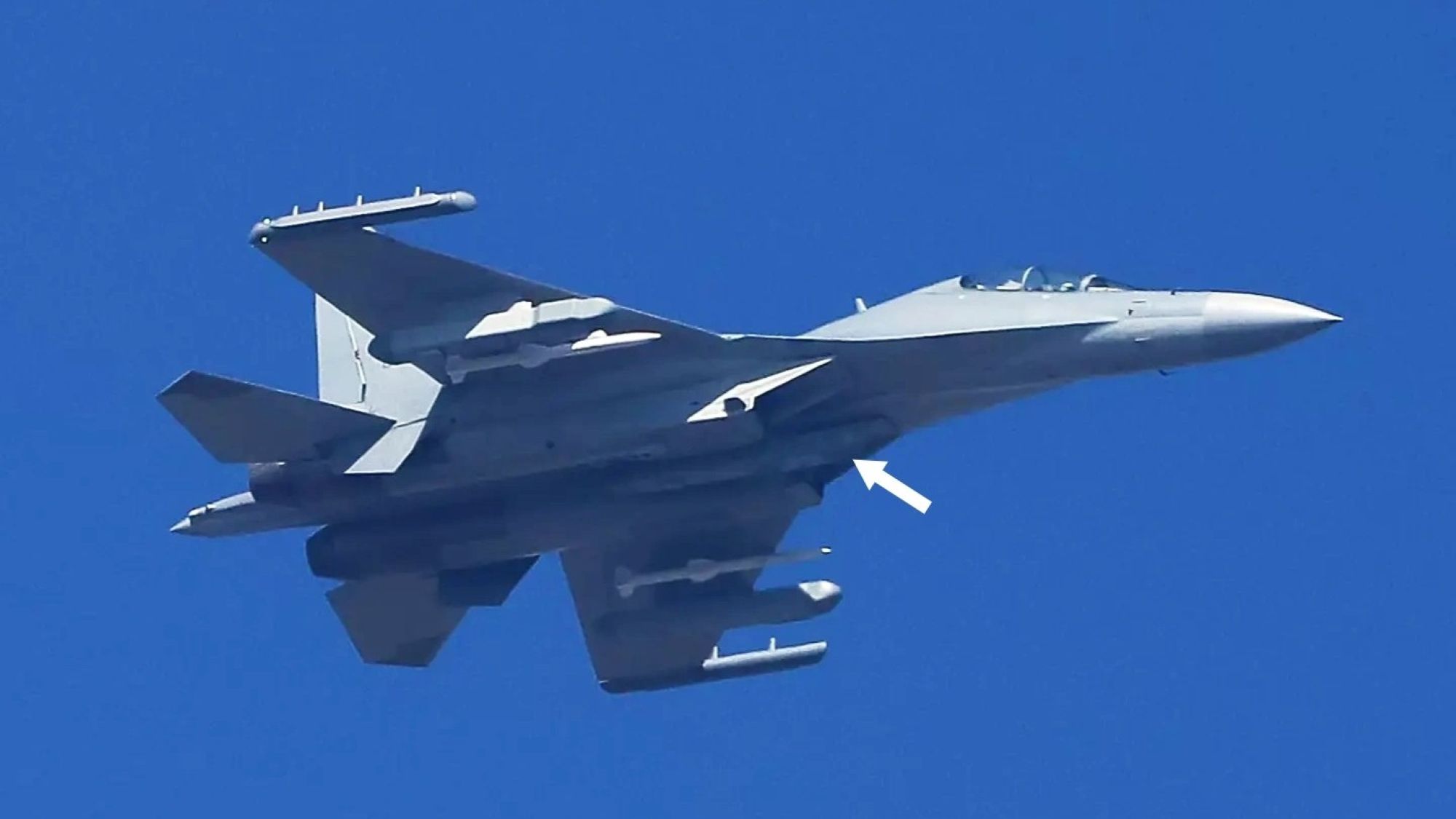
The PLAAF’s J-16D electronic warfare aircraft with the two PL-15 beyond visual-range air-to-air missiles being captured while flying overhead in the image that appeared on Mar. 17, 2026

The J-16D has made possibly its first appearance in flight with PL-15 missiles, after being previously shown with air-to-air weapons only in static displays at airshows.

The People’s Liberation Army Air Force’s (PLAAF) J-16D electronic warfare (EW) aircraft was spotted flying with two PL-15 air-to-air missiles (AAM) for possibly the first time in unofficial images that appeared on Mar. 17, 2026. The J-16D is the specialized variant of the J-16, the heavily modified Chinese derivative of the Russian Su-27, which is notably missing the Infrared Search and Track (IRST) and the internally mounted 30 mm gun and includes wingtip pods for EW equipment.

Leading Chinese military aviation analyst Andreas Rupprecht said this is believed to be the first image “of a J-16D carrying two PL-15 AAMs under its wings and three RKZ930-xx jammer-pods.” A third pod is carried on the centerline between the two engines, as denoted by the arrow in the cover image.

It must be noted however that the aircraft could have been flying with the AAM for a while, and possibly even conducted test fires of the weapon. In fact, the PL-15 is already integrated on the standard J-16 variant and, although there was no indication regarding the specialized EW variant, it is likely the capability was retained.

Moreover, the PL-15 looks nearly identical to the anti-radar LD-8A missile, which has been derived from the AAM, and Rupprecht also wondered if the J-16D has carried that missile in the past. The aircraft has also been spotted with six different types of jamming pods over the last two years, in varying combinations and placements – two pods on the wingtips, two under the wings and two under the engines.

To view this content we will need your consent to set third party cookies.
For more detailed information, see our cookies page.


J-16’s pods and missiles

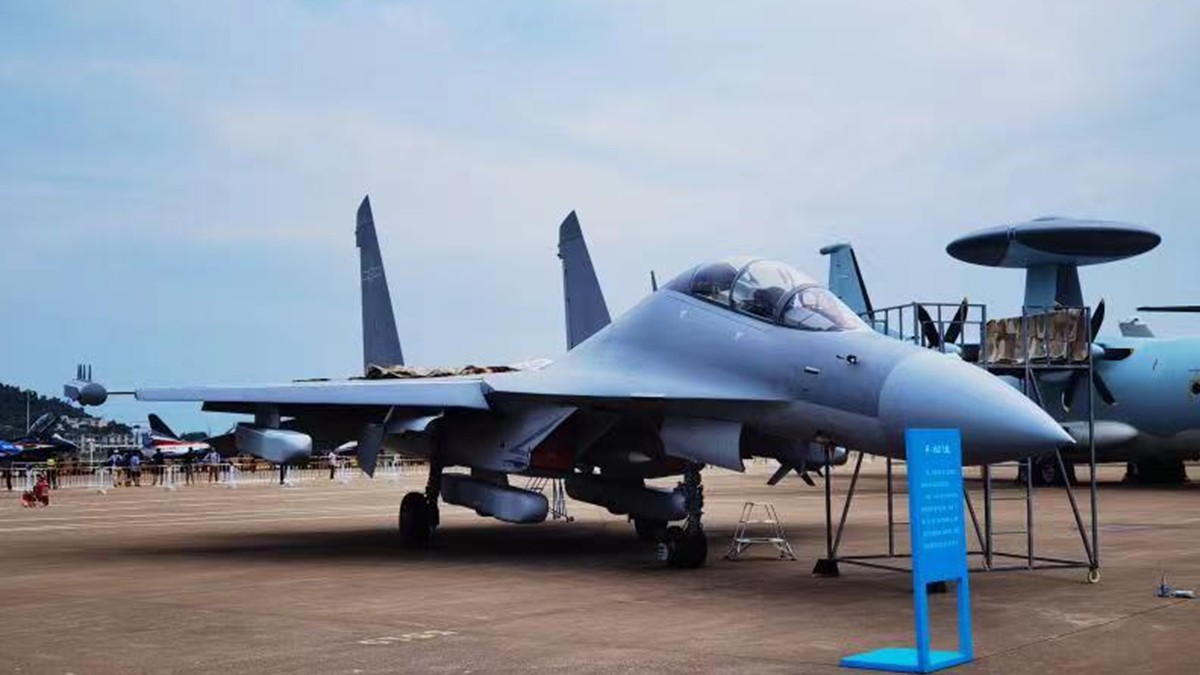
The J-16D was first officially unveiled in the 2021 edition of the Zhuhai Air Show, and since then it has been photographed with multiple types of underwing pods. These belong to the RKZ930 series, which are pods specialized for EW.

In a July 2025 post, ‘Hurin’ shared an image of a J-16D flying overhead with two RKZ930-10s on the middle hardpoints. He also shared an earlier image of the pod, which has tandem pairs of antenna fins on the underside.

To view this content we will need your consent to set third party cookies.
For more detailed information, see our cookies page.


Another image also shows the RKZ930-10 finned pod carried on the port-side wing, along with the older pods under the engines and the starboard wing.

To view this content we will need your consent to set third party cookies.
For more detailed information, see our cookies page.


The same pod with the fins was also seen previously on the J-16D during the 2021 edition of the Zhuhai Air Show, installed under the left wing. This and images of other static displays of J-16Ds have also shown the RKZ930-10 pod with the fins on the left wing, and two PL-15 missiles on the centerline hardpoint between the engines.

However, as we mentioned earlier, so far these appear to be the only publicly documented appearances of the weapon on this specific aircraft. This would thus make the new image possibly the first time the PL-15 was spotted on an airborne J-16.

Moreover, the existence of the highly similar LD-8A anti-radar missile was not yet known in 2021, reducing the possibility of the PL-15 being misidentified on that occasion. In fact, the weapon was first unveiled three years later, at the Zhuhai Airshow 2024.

To view this content we will need your consent to set third party cookies.
For more detailed information, see our cookies page.


The LD-8A anti-radiation missile is considered based on the PL-15 beyond visual range air-to-air missile. The latter is reported to have an Active Electronically Scanned Array (AESA) radar seeker and a range of over 200 km.

A J-16D electronic warfare aircraft on static display at the Airshow China 2021, or Zhuhai Air Show, south China’s Guangdong Province from Sep. 28 to Oct. 3, 2021. (Image credit: Global Times/Yang Sheng)

It is believed the LD-8A exploits the existing long-range design of the PL-15 with a specialized anti-radar seeker, allowing for a quickly deployable SEAD/DEAD weapon. It is likely more advanced variants, comparable to the AGM-88E AARGM, could be in development and might emerge soon.

China’s other EW aircraft

China has two more known specialized EW aircraft. One is the PLA Air Force’s four-engine turboprop Y-9LG EW aircraft, which was first officially captured in clear view in the service’s Falcon Strike exercise with Thailand in 2024. Based on the Shaanxi Y-8/Y-9 aircraft, the Y-9LG has a large ‘balance beam’-type array mounted on the spine, like the KJ-200 Airborne Early Warning and Control (AEW&C) aircraft.

To view this content we will need your consent to set third party cookies.
For more detailed information, see our cookies page.


The other one belongs to the PLA Navy, which exists in two sub-variants. One is the Short Take-Off Barrier Arrested (STOBAR)-configured J-15D, meant to fly off the Liaoning and the Shandong carriers’ ski jumps. The other is the Electro-Magnetic Launch System (EMALS) Catapult-configured J-15DT, operating from the Fujian flattop.

In Chinese nomenclature, the ‘D’ denotes EW and ‘T’ represents CATOBAR-configured aircraft. What is interesting, however, is that none of the pods on the J-16D and the J-15D/DT appear to have ram air turbines, unlike the AN/ALQ-99 pods of the EA-18G Growler.


The RATs help generate a significant amount of power for the massive electromagnetic radiation generation and processing requirements. It is unclear whether this means the pods on the J-16D and the J-15D draw all the required power from the aircraft.

J-16D role and mission profile

Some images and a June 2025 Global Times report have suggested that the J-16D is primarily meant to provide electronic support to the J-20, as some analysts doubt the level of EW payload and capability on the stealth fighter – or the extent to which such equipment could be packed into the jet given its air superiority role. These images also show the finned RKZ930-10s being carried by the J-16 on both the wings, while flying in formation with the J-20.


GT quoted a November 2021 CCTV report, saying “the J-16D electronic warfare aircraft and the J-20 stealth fighter can operate in tandem, forming a comprehensive aviation electronic warfare system.” Wang Ya’nan, editor-in-chief of Beijing-based Aerospace Knowledge magazine, described a classic Suppression/Destruction of Enemy Air Defense (SEAD/DEAD) mission profile for the J-16D for other aircraft, similar to the E/A-18G Growler.

“It is capable of conducting electronic suppression and deception missions, and can also launch missiles to destroy hostile radar installations or early warning aircraft,” said Ya’nan. “[The] J-16D can further enhance the J-20’s stealth capabilities.”


The J-16D “integrates reconnaissance, offensive and defensive capabilities, and is designed to effectively counter advanced air defense systems, including early warning and detection, communication, interception, and strike components,” GT added. The report was in context of the Shenyang Aircraft Corporation’s (SAC) chief designer Wang Yongqing upholding the J-16D as an “indispensable and irreplaceable asset in the PLA Air Force’s arsenal.”


China’s stealth jet surge alarms Pentagon

March 21, 2026

AA1Z6tte.img


The Pentagon is warning that China’s rapid expansion of stealth fighter production, led by the J-20 and upcoming J-35, could soon challenge U.S. air dominance. With sixth-generation prototypes already in flight testing, China’s pace contrasts sharply with U.S. programs that are not expected to be operational until the mid-2030s. This growing capability gap is forcing Washington to stretch the life of current fighters while accelerating modernization and drone integration.

China’s stealth production reaches unprecedented scale​

China has already produced hundreds of Chengdu J-20 Mighty Dragons and is nearing completion of the Shenyang J-35, with additional prototypes spotted in testing. The J-20, now also available in a two-seat J-20S variant designed for maritime strikes and drone control, is being manufactured at a rate that could see 1,000 in service by 2030. This surge directly challenges the U.S. numerical advantage in the Indo-Pacific and positions China as the primary threat to American air supremacy.

Sixth-generation gap widens between US and China​

While China’s sixth-generation prototypes like the J-36 are already undergoing intensive flight testing, U.S. programs such as the Air Force’s F-47 and Navy’s F/A-XX will not be fully operational until the mid-2030s. Representative Rob Wittman has warned that operational availability could slip further, highlighting a strategic disadvantage where the U.S. is still debating timelines while China is flying hardware. This disparity increases pressure on budget allocations and the need to sustain older fleets.

US modernization faces timing and resource strains​

The F-47 and F/A-XX delays mean legacy aircraft like the F-22, F-35, and Super Hornet must remain in service longer, requiring significant maintenance and upgrades. The U.S. is also investing in collaborative drone programs and open architecture designs to ensure future adaptability, but these add complexity and slow near-term delivery. Industrial base constraints, including competition for skilled labor and manufacturing capacity, further complicate the modernization push.

Possible future scenarios for air dominance race​

If China maintains its production pace and introduces sixth-gen fighters before the U.S., it could gain a decisive regional advantage, forcing Washington to rely heavily on alliances and forward-deployed assets. Alternatively, accelerated U.S. investment in drone swarms, stealth upgrades for legacy fighters, and rapid prototyping could narrow the gap before 2035. Both scenarios hinge on budget priorities, industrial capacity, and the pace of technology integration.


Improved version of China’s anti-sub warfare plane spotted on patrol near Okinawa

By BRIAN MCELHINEY AND HANA KUSUMOTO
STARS AND STRIPES • April 2, 2026

Japanese fighter jets scrambled to meet this Chinese military patrol aircraft, a new variant on the Y-9, over the East China Sea approximately 160 miles northeast of Okinawa, March 28, 2026.

Japanese fighter jets scrambled to meet this Chinese military patrol aircraft, a new variant on the Y-9, over the East China Sea approximately 160 miles northeast of Okinawa, March 28, 2026. (Japan Joint Staff)

Japanese fighter pilots recently encountered for the first time an apparently improved version of China’s anti-submarine warfare aircraft, according to an aviation expert.

A variant of China’s Y-9 maritime patrol aircraft was spotted Saturday afternoon over the East China Sea about 160 miles northeast of Okinawa, according to a Japan Joint Staff news release Monday.

The aircraft appears to be the Y-9FQ, first spotted flying from a central Chinese factory in 2022 and officially unveiled last year, according to J. Michael Dahm, senior resident fellow for aerospace and China studies at The Mitchell Institute for Aerospace Studies.

An undated photo shows an older version of a Chinese Y-9 patrol aircraft previously encountered by Japanese fighter jets.

An undated photo shows an older version of a Chinese Y-9 patrol aircraft previously encountered by Japanese fighter jets. (Japan Joint Staff)

The aircraft differs from conventional Y-9s that the Japan Air Self-Defense Force has previously encountered in the area, according to the release. Those differences include the shape of the aircraft’s nose and additional antennas, a Joint Staff spokesman said by phone on Tuesday.

Some Japanese government officials may speak to the press only on condition of anonymity.

Dahm based his observation on photos of the aircraft and a reference photo of a Y-9 that the Joint Staff posted to its account on social media platform X on Monday.

Fighter aircraft from Japan Air Self-Defense Force’s Southwestern Air Command scrambled to meet the aircraft, according to the release.

“The Ministry of Defense and the Self-Defense Forces will continue to collect information and conduct surveillance on military movements around Japan 24 hours a day and will take all necessary measures against airspace violations,” the release said.

China officially unveiled its Y-9FQ anti-submarine variant Sept. 3 during its Victory Day parade in Beijing celebrating the 80th anniversary of the end of World War II, flightglobal.com reported that day. It is the successor to China’s anti-submarine and maritime patrol aircraft, the KQ-200, Dahm said by email Wednesday.
“Other than moving the KQ-200’s chin-mounted surface search radar into the nose of the Y-9FQ, the new anti-submarine warfare aircraft likely has upgraded electronics and combat systems,” he said.

The aircraft’s paint scheme indicates that the variant has reached full operational capability, Dahm wrote. It may belong to China’s naval air force 1st Division, 11th Air Regiment, based in Ningbo, Zhejiang province, he added.

The aircraft shows China’s navy is addressing shortcomings in its anti-submarine and undersea warfare capabilities, Dahm wrote.

While not “a huge leap-forward in technology, the new aircraft represents China’s commitment to improve its anti-submarine warfare technology and address shortcomings across its undersea warfare system-of-systems,” he said.

The sighting shows that China is steadily improving its capabilities, especially in the undersea warfare domain, according to retired Marine Col. Grant Newsham, a senior researcher with the Japan Forum for Strategic Studies in Tokyo.

It provides “further evidence that the Chinese are a serious foe — now, and not someday in the future,” he said by email Tuesday.

 
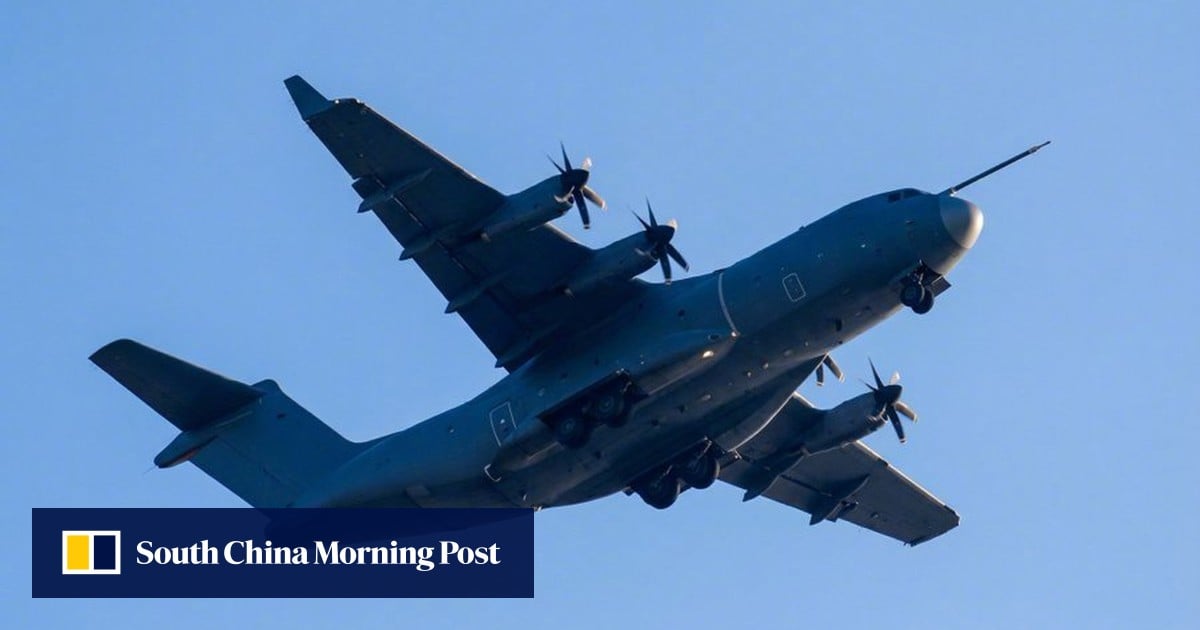
Move over, Hercules: China’s new Y-30 aims to outmuscle America’s best transport aircraft
The Y-30 is powered by four domestically made AEP-500 turboprop engines. Photo: Weibo


Published: 6:00pm, 10 Apr 2026Updated: 11:33pm, 10 Apr 2026

China’s new-generation medium-lift transport aircraft will surpass America’s best counterpart, the C-130J “Super Hercules”, in most performance metrics, according to a Chinese military magazine.

The four-engine turboprop aircraft, frequently referred to as the Y-30 or Y-15, conducted its maiden test flight in December last year. It is developed by Shaanxi Aircraft Industry Corporation, a subsidiary of the Aviation Industry Corporation of China (AVIC).

The Chinese “new medium-lift transporter”, or “Xin Zhong Yun” in Chinese, can easily outperform the C-130J, the “world’s best tactic transport aircraft in service”, in engine power, payload capacity, structure and material, avionics and flight control software, according to an analysis in the latest issue of Aerospace Knowledge magazine put out by Beijing University of Aeronautics and Astronautics, or Beihang University.

A Lockheed Martin C-130 “Hercules” military lifter played a vital role last week in America’s rescue mission involving a downed pilot in Iran.
A Lockheed Martin C-130 “Hercules” drops military equipment during exercises near Vilnius, Lithuania, on May 16, 2025. The aircraft is considered America’s premier medium-lift transport. Photo: AP

A Lockheed Martin C-130 “Hercules” drops military equipment during exercises near Vilnius, Lithuania, on May 16, 2025. The aircraft is considered America’s premier medium-lift transport. Photo: AP

Developed in the 1990s, the C-130J is the newest and most advanced variant of the C-130 series that launched in the 1950s. It has only a small edge in operational range over the Y-30 and is mature enough to have developed many special mission variants.


China carries out test flight of world's first maritime ground-effect vehicle

By Fu Xiaoya | chinadaily.com.cn | Updated: 2026-04-18 21:42

69e4115ba310d68600fbebf5.jpeg
China completes test flight of world's first maritime emergency medical rescue GEV craft this week. [Photo provided to chinadaily.com.cn]

The world's first maritime ground-effect vehicle, led by CSSC Haishen Medical Technology Co Ltd, successfully completed its test flight this week, marking China's comprehensive capability in maritime emergency medical rescue reaching an internationally advanced level.

The craft integrates a range of advanced technologies, including embodied intelligence, biomanufacturing, quantum technology and 6G communications, according to the company.

It builds on four key national medical rescue technologies, namely maritime remote medical rescue equipment, maritime unmanned aerial vehicles, airborne helicopters, and medical evacuation modules.

Mounted on a wing-in-ground effect craft platform and compatible with a Maritime IoT Platform, it enables real-time data transmission, remote operation of medical equipment and online consultations with medical specialists, forming a continuous rescue chain covering on-site treatment, nearby support and medical evacuation, according to Xinhua News Agency.

The craft adopts a carbon-fiber composite structure, with an overall weight of about 2.5 tons, a maximum takeoff weight of 5 tons and an effective payload of around 2.5 tons. It is powered by a 540-ACIA5 six-cylinder piston engine system.

It has a maximum cruising speed of 200 kilometers per hour, operates at a ground-effect flight altitude of 0.5 to 6 meters, with a maximum flight altitude ranging from 30 to 150 meters, and a range of up to 1,000 kilometers.

It can carry up to five seated patients or three stretcher patients, and is equipped with a standard crew of two nurses, one doctor and one pilot.

At the test site, Huang Yuhong, president and chief engineer of Haishen, said the test flight confirmed the craft's performance in typical maritime emergency rescue scenarios, including the stability and reliability of medical rescue equipment and information systems, as well as the control performance of the WIG craft in both navigation and flight.

"In the future, the craft will also be equipped with additional functions such as maritime search, recovery and salvage operations, enabling a full-cycle rescue system covering search, retrieval, treatment and transfer," he said.

 

Users who are viewing this thread

Pakistan Defence Latest

Latest Posts

Back
Top