Navigation
Install the app
How to install the app on iOS
Follow along with the video below to see how to install our site as a web app on your home screen.
Note: This feature may not be available in some browsers.
More options
Style variation
You are using an out of date browser. It may not display this or other websites correctly.
You should upgrade or use an alternative browser.
You should upgrade or use an alternative browser.
Chinese SAC - FC-31/J-35 5th Gen Stealth Aircraft
- Thread starter SiliconBit (silicon0000)
- Start date
More options
Who Replied?

SiliconBit (silicon0000)
Trusted Member

- Thread starter
- #1,577
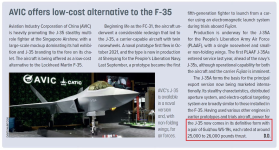
Information about the J-35A in the Singapore Airshow catalog indicates that the WS-19 engine has a thrust of 25,000-26,000 pounds.
View attachment 178180
That's a really big number (if true)

Could you please share the full catalog?

Yasser76
Elite Member

Information about the J-35A in the Singapore Airshow catalog indicates that the WS-19 engine has a thrust of 25,000-26,000 pounds.
View attachment 178180
Michael
How realistic is it for China to sell this plane to a US ally?
For example of Egypt, Oman or say Malaysia asked to but it would China sell?

Michael
VIP Member
I don't have any relevant information. This is an image from Weibo.That's a really big number (if true)
Could you please share the full catalog?
This figure largely matches the figures leaked in relevant Chinese academic papers. One of these papers mentions that the WS-19 engine adopts a "3-5-1-1" configuration.
I cannot make such a political judgment.Michael
How realistic is it for China to sell this plane to a US ally?
For example of Egypt, Oman or say Malaysia asked to but it would China sell?
China's sale of such advanced weapons systems is usually based on internal analyses of the international situation within the Central Military Commission. These analyses differ somewhat from general international analyses and publicly available diplomatic analyses.
However, fighter jets like the J-35 are products of a systems-of-systems air combat mindset. If users want to fully realize its advantages, they must acquire the complete systems-of-systems air combat system. Otherwise, the relevant systems will be forced to be downgraded (this is a user-driven rather than manufacturer-driven decision).
For countries friendly to the United States, fully acquiring a systems-of-systems air combat platform would be an enormous expense. It would also mean a shift towards Chinese air combat systems for decades to come. This is a strong signal of a political shift. These countries are unlikely to withstand pressure from the United States.
Therefore, they can only purchase downgraded versions at best. This would significantly reduce the J-35's actual combat capability. Technically, this is not a good option for them.
Last edited:
SiliconBit (silicon0000)
Trusted Member
- Thread starter
- #1,580
I don't have any relevant information. This is an image from Weibo.
This figure largely matches the figures leaked in relevant Chinese academic papers. One of these papers mentions that the WS-19 engine adopts a "3-5-1-1" configuration.
I cannot make such a political judgment.
China's sale of such advanced weapons systems is usually based on internal analyses of the international situation within the Central Military Commission. These analyses differ somewhat from general international analyses and publicly available diplomatic analyses.
However, fighter jets like the J-35 are products of a systems-of-systems air combat mindset. If users want to fully realize its advantages, they must acquire the complete systems-of-systems air combat system. Otherwise, the relevant systems will be forced to be downgraded (this is a user-driven rather than manufacturer-driven decision).
For countries friendly to the United States, fully acquiring a systems-of-systems air combat platform would be an enormous expense. It would also mean a shift towards Chinese air combat systems for decades to come. This is a strong signal of a political shift. These countries are unlikely to withstand pressure from the United States.
Therefore, they can only purchase downgraded versions at best. This would significantly reduce the J-35's actual combat capability. Technically, this is not a good option for them.
It was previously discussed here and on other forums that there wasn't a significant thrust difference between the WS-21 and the WS-19. Instead, the differences were thought to lie in other areas like integration and power generation etc. If I recall correctly, the general estimates were around 95 kN for the WS-21 and 100 kN for the WS-19 (with a +/- 5 kN margin).
However, according to this new catalog, the figures are closer to 110–115 kN. Additionally, it was initially believed that the WS-19 would be used for the Air Force version, while the WS-21—being more mature—would power the Naval and Export variants. Generally, naval versions require more thrust than land-based ones. I would value your input on these discrepancies.
I heard that the WS-19 has a 3-5-1-1 configuration, while the WS-21 uses a 3-7-1-1 configuration, and the RD-33/93 follows a 4-9-2-1 or 4-9-1-1 configuration. Is this correct?
Also, If possible, could you explain these? I recall you briefly mentioned this before, but could you explain it in a way that is easy to understand for those of us who aren't experts in the field? Thanks for all your valuable input!
Last edited:
Michael
VIP Member
"3511" or other numbers refer to the engine's internal configuration. The first two numbers are the most important.It was previously discussed here and on other forums that there wasn't a significant thrust difference between the WS-21 and the WS-19. Instead, the differences were thought to lie in other areas like integration and power generation etc. If I recall correctly, the general estimates were around 95 kN for the WS-21 and 100 kN for the WS-19 (with a +/- 5 kN margin).
However, according to this new catalog, the figures are closer to 110–115 kN. Additionally, it was initially believed that the WS-19 would be used for the Air Force version, while the WS-21—being more mature—would power the Naval and Export variants. Generally, naval versions require more thrust than land-based ones. I would value your input on these discrepancies.
I heard that the WS-19 has a 3-5-1-1 configuration, while the WS-21 uses a 3-7-1-1 configuration, and the RD-33/93 follows a 4-9-2-1 or 4-9-1-1 configuration. Is this correct?
Also, If possible, could you explain these? I recall you briefly mentioned this before, but could you explain it in a way that is easy to understand for those of us who aren't experts in the field? Thanks for all your valuable input!
The first number indicates the number of stages in the low-pressure compressor, and the second number indicates the number of stages in the high-pressure compressor.
Simply put: the more compressor stages, the more complex the structure and the heavier the engine. Conversely, fewer compressor stages result in a simpler structure and lower weight. However, the internal temperature is also higher, requiring more robust materials and advanced manufacturing processes. It is a choice made after a comprehensive balance of capabilities in multiple fields such as materials science and manufacturing processes.
The RD-33 series engines use a "4-9-1-1" configuration, including the RD-93 and WS-13 series engines.
The WS-21 and F404/414 series engines use a "3-7-1-1" configuration.
The WS-19 and EJ200 series engines use a "3-5-1-1" configuration.
=================================================
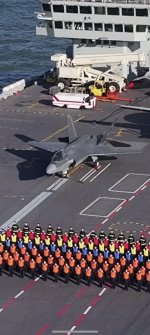
The PLA's own J-35 series fighter jets are all designed for the WS-19 engine. However, the development of the naval version of the WS-19 engine has lagged behind. The PLA Navy, however, cannot wait. Therefore, the WS-21 engine is being used initially to produce the naval version of the J-35 to meet the urgent needs of the Fujian aircraft carrier. The WS-19 engine will be used in the PLA Navy after its development is completed.
SiliconBit (silicon0000)
Trusted Member
- Thread starter
- #1,582
"3511" or other numbers refer to the engine's internal configuration. The first two numbers are the most important.
The first number indicates the number of stages in the low-pressure compressor, and the second number indicates the number of stages in the high-pressure compressor.
Simply put: the more compressor stages, the more complex the structure and the heavier the engine. Conversely, fewer compressor stages result in a simpler structure and lower weight. However, the internal temperature is also higher, requiring more robust materials and advanced manufacturing processes. It is a choice made after a comprehensive balance of capabilities in multiple fields such as materials science and manufacturing processes.
The RD-33 series engines use a "4-9-1-1" configuration, including the RD-93 and WS-13 series engines.
The WS-21 and F404/414 series engines use a "3-7-1-1" configuration.
The WS-19 and EJ200 series engines use a "3-5-1-1" configuration.
=================================================
The PLA's own J-35 series fighter jets are all designed for the WS-19 engine. However, the development of the naval version of the WS-19 engine has lagged behind. The PLA Navy, however, cannot wait. Therefore, the WS-21 engine is being used initially to produce the naval version of the J-35 to meet the urgent needs of the Fujian aircraft carrier. The WS-19 engine will be used in the PLA Navy after its development is completed.
To simplify and easily understand things, I used AI to find some clear and accessible information that might be helpful for anyone looking to understand these concepts better:
The RD-33 series engines use a "4-9-1-1" configuration, including the RD-93 and WS-13 series engines.
The WS-21 and F404/414 series engines use a "3-7-1-1" configuration.
The WS-19 and EJ200 series engines use a "3-5-1-1" configuration.
In aviation turbofan engines, these numerical sequences (e.g., 4-9-1-1) represent the architectural stages of the engine's core components along a single shaft or dual shafts.
Specifically, they describe the number of stages in each section, following the flow of air from the front to the back of the engine.
To understand these configurations, it helps to look at the engine as a two-part machine: the Cold Section (Compressors) and the Hot Section (Turbines).
The goal of the compressor is to squeeze air; the goal of the turbine is to extract energy from that air after it has been heated.
Understanding the Stages
Each number in the sequence typically corresponds to a specific module in the engine:- Low-Pressure Compressor (Fan): The first number. These are the large blades you see at the front.
- High-Pressure Compressor (HPC): The second (usually largest) number. These stages compress air to high pressures before it enters the combustion chamber.
- High-Pressure Turbine (HPT): The third number. This turbine extracts energy from hot gases to drive the HPC.
- Low-Pressure Turbine (LPT): The fourth number. This drives the Fan at the front.
Here is a deeper dive into what is happening at each stage of the sequence.
1. The Low-Pressure Compressor (The Fan)
- Sequence Position: 1st Number (e.g., the 3 in 3-5-1-1)
- Function: This is the engine's primary "propeller." It sucks in massive amounts of air. In a turbofan, this air is split: some goes into the core (burns), and some "bypasses" the core to provide quiet, efficient thrust.
- Engineering Shift: Older engines like the RD-33 (4 stages) needed four rows of blades to get the air moving fast enough. Modern engines like the EJ200 (3 stages) use wider, "scimitar-shaped" blades that move more air with less drag.
2. The High-Pressure Compressor (HPC)
- Sequence Position: 2nd Number (e.g., the 9 in 4-9-1-1 or 5 in 3-5-1-1)
- Function: This is the "workhorse" of the engine. It takes the air from the fan and squeezes it into a tiny volume. By the time the air leaves the HPC, it is extremely hot (due to compression) and under immense pressure.
- The "Stage Count" Rivalry: * In the RD-93 (9 stages), the pressure is increased gradually over nine rows of blades.
- In the WS-19 (5 stages), each row of blades is significantly more aggressive. This requires "Blisk" technology (where the blade and the disk are a single piece of metal) to withstand the aerodynamic loads without breaking.
3. The High-Pressure Turbine (HPT)
- Sequence Position: 3rd Number (Almost always 1 in modern fighters)
- Function: This sits immediately behind the combustion chamber. It is the most tortured part of the engine, facing temperatures higher than the melting point of its own metal. Its job is to spin the shaft that powers the High-Pressure Compressor.
- Details: Engineers prefer a single stage (1) here to keep the engine short and reduce the amount of cooling air needed. Using two stages is rare in small fighter engines because it adds too much weight.
4. The Low-Pressure Turbine (LPT)
- Sequence Position: 4th Number (Usually 1)
- Function: This stage extracts the remaining energy from the exhaust gas to spin the Fan at the very front.
- The Challenge: Because the Fan is much larger than the rest of the core, the LPT has to be very strong. In some massive commercial engines (like the GEnx), you might see up to 7 stages here, but in nimble fighter engines like the F414, a single, highly efficient stage is the gold standard.
Comparing the Configurations
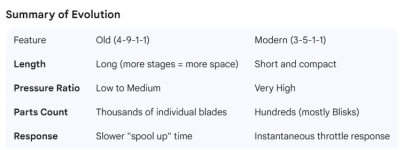
The evolution from 4-9-1-1 to 3-5-1-1 represents a massive leap in aerodynamic efficiency and material science. Modern engines achieve higher compression with fewer blades, which reduces weight and maintenance complexity.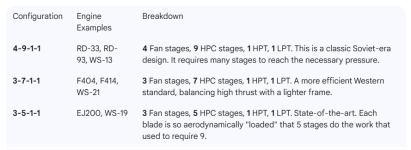
Why does this matter?
- Weight: Fewer stages mean a shorter, lighter engine.
- Efficiency: Modern 3-5-1-1 engines like the EJ200 use "blisks" (integrally bladed disks) and advanced cooling, allowing them to run hotter and faster than the older 4-9-1-1 designs.
- Reliability: Fewer moving parts generally translate to a lower chance of mechanical failure and easier borescope inspections.
Last edited:
Yasser76
Elite Member
I don't have any relevant information. This is an image from Weibo.
This figure largely matches the figures leaked in relevant Chinese academic papers. One of these papers mentions that the WS-19 engine adopts a "3-5-1-1" configuration.
I cannot make such a political judgment.
China's sale of such advanced weapons systems is usually based on internal analyses of the international situation within the Central Military Commission. These analyses differ somewhat from general international analyses and publicly available diplomatic analyses.
However, fighter jets like the J-35 are products of a systems-of-systems air combat mindset. If users want to fully realize its advantages, they must acquire the complete systems-of-systems air combat system. Otherwise, the relevant systems will be forced to be downgraded (this is a user-driven rather than manufacturer-driven decision).
For countries friendly to the United States, fully acquiring a systems-of-systems air combat platform would be an enormous expense. It would also mean a shift towards Chinese air combat systems for decades to come. This is a strong signal of a political shift. These countries are unlikely to withstand pressure from the United States.
Therefore, they can only purchase downgraded versions at best. This would significantly reduce the J-35's actual combat capability. Technically, this is not a good option for them.
Great insight, thank you very much. Explains why the twitter post by Pak PM mentioned AWACs and SAMS as well as J-35 before it got deleted. I imagine PAF want to exploit the full capabilities (that China grants) of the jet
Michael
VIP Member
The PAF is currently the only foreign air force capable of maximizing the potential of Chinese-made fighter jets to near the level of the PLA.Great insight, thank you very much. Explains why the twitter post by Pak PM mentioned AWACs and SAMS as well as J-35 before it got deleted. I imagine PAF want to exploit the full capabilities (that China grants) of the jet
The J-10C is only the weakest fighter jet in the PLAAF's current mainstay fleet, yet the J-10CE can still easily handle the IAF's Rafale fighters.
This is the allure of system-of-systems warfare. However, the cost is that the entire air combat system must be perfectly integrated into a cohesive whole. Purchasing any single fighter jet alone cannot achieve this capability.

Ali_Baba
VIP Member
The PAF is currently the only foreign air force capable of maximizing the potential of Chinese-made fighter jets to near the level of the PLA.
The J-10C is only the weakest fighter jet in the PLAAF's current mainstay fleet, yet the J-10CE can still easily handle the IAF's Rafale fighters.
This is the allure of system-of-systems warfare. However, the cost is that the entire air combat system must be perfectly integrated into a cohesive whole. Purchasing any single fighter jet alone cannot achieve this capability.
This is why anyone wanting to buy the J-35AE, first had to get something like the J10CE(or JF17CE) and build up the entire ecosystem such that the J-35AE will then work as it should.
Yasser76
Elite Member
The PAF is currently the only foreign air force capable of maximizing the potential of Chinese-made fighter jets to near the level of the PLA.
The J-10C is only the weakest fighter jet in the PLAAF's current mainstay fleet, yet the J-10CE can still easily handle the IAF's Rafale fighters.
This is the allure of system-of-systems warfare. However, the cost is that the entire air combat system must be perfectly integrated into a cohesive whole. Purchasing any single fighter jet alone cannot achieve this capability.
Yes, I think PAF is heading that way. I would guess around 50% of PAF used to be Chinese, now closer to 75%
US/French radars and SAMs have given way to Chinese systems and I expect AEW and EW to follow.
As you say not only can Pakistan do this militarily but the relationship with US now means we do not worry about military sanctions from them as even if they were applied effect would be minimal compared to the past effects
Michael
VIP Member
This is why anyone wanting to buy the J-35AE, first had to get something like the J10CE(or JF17CE) and build up the entire ecosystem such that the J-35AE will then work as it should.
What PAF needs most right now is an AEW&C system similar to the KJ-500A. It possesses native CEC capabilities with Chinese fighter jets and weapon systems. This would directly elevate PAF's overall combat capability to a new level.Yes, I think PAF is heading that way. I would guess around 50% of PAF used to be Chinese, now closer to 75%
US/French radars and SAMs have given way to Chinese systems and I expect AEW and EW to follow.
As you say not only can Pakistan do this militarily but the relationship with US now means we do not worry about military sanctions from them as even if they were applied effect would be minimal compared to the past effects
=============================================
I just discovered a minor detail.
In my previous comment, I used the phrase "system of systems." This is US military terminology. I actually typed in the Chinese term "体系化作战" , but the translation software rendered it as "system of systems." While there are some similarities, they are not the same.
Last edited:


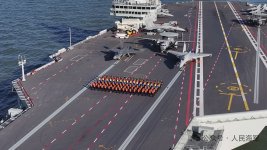
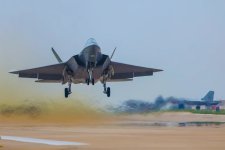
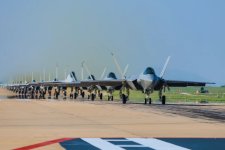


Indeed interesting but I like the older scheme more … is this a number or a marking on its tail?
Users who are viewing this thread
Total: 9 (members: 0, guests: 9)
Pakistan Defence Latest


Country Watch Latest


Latest Posts
-
-
FlyDubai Incident: Pilot was stabbed on flight to Israel - diverted to Saudi Arabia (47 Viewers)
- Latest: Mujahid
-
-
-
