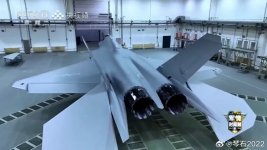
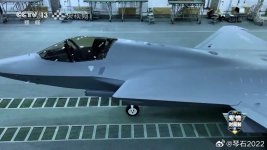
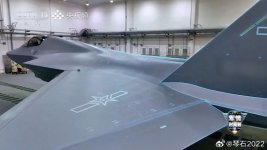
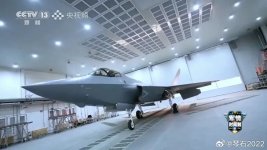
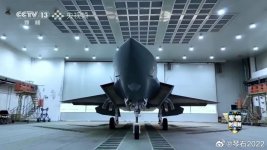
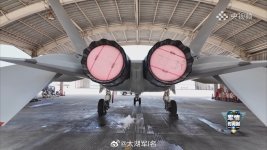
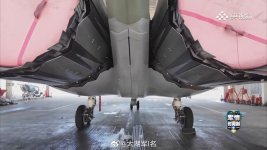
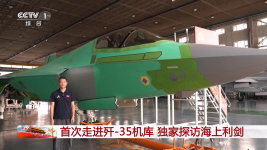
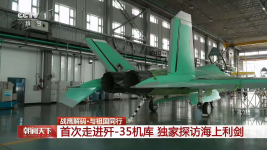
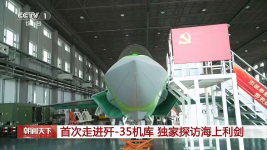
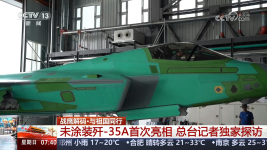
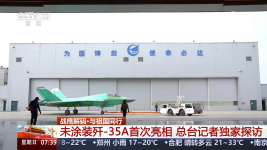
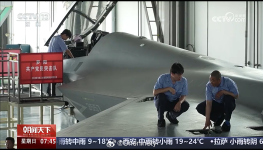
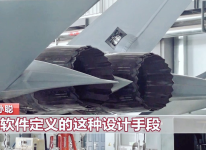
There are two core factors determining stealth performance: one is aerodynamic design, and the other is stealth material technology.
The J-35 features a classic fifth-generation fighter layout, including a diamond-shaped nose, DSI intakes, and internal weapon bays, providing an excellent foundation for shaping-based stealth. However, to achieve greater breakthroughs under a design philosophy similar to that of the F-22, it must rely on "game-changing technologies"—metamaterials.
Metamaterials are artificially engineered composite materials that manipulate electromagnetic waves through designed microstructures, with physical properties surpassing the limits of "non-structure materials".
Unlike traditional stealth coatings, which rely on absorbing radar waves and converting them into heat, the core principle of metamaterials is to actively guide electromagnetic waves around the target, achieving "leaving no trace" stealth and enabling more perfect, all-aspect stealth effects.
China's research in the field of metamaterials is at the forefront internationally, with rapid progress particularly in military applications.
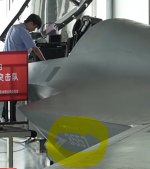
According to public information, the J-35 has extensively applied metamaterial stealth films, covering key areas across the entire airframe, and may even achieve full-surface skin integration.
Compared to traditional stealth coatings, which are prone to aging and require high maintenance costs (such as the B-2 bomber, which requires repainting every seven years at a cost of tens of millions of dollars), metamaterial structures are more durable and offer stable performance, fundamentally enhancing the combat sustainability of the aircraft.
In addition to the revolutionary improvement in stealth performance, other parameters of the J-35 are also remarkable. Official sources reveal that the maximum takeoff weight of the Air Force version, the J-35A, is close to 30 tons, while the naval version exceeds 32 tons, slightly larger than the F-35C's 31.8 tons.
Although classified as a "medium-sized aircraft," its size approaches that of heavy fighter jets. The Air Force variant has a wing area reduced by approximately 10% compared to the naval version, optimizing high-speed performance and range.
The carrier-based version, on the other hand, features a strengthened structure to accommodate electromagnetic catapult launches. In terms of power, it is expected to be equipped with the advanced WS-19 engine, further unlocking the platform's potential.
It is worth noting that CCTV's confidence in publicly disclosing the J-35's stealth metrics reflects the overall leap in China's aviation and defense technology capabilities.
China is not only the only country globally developing two types of sixth-generation fighter aircraft simultaneously but has also made breakthroughs in areas such as high-altitude long-endurance stealth drones and air-space integration. This marks China's transition from "catching up" to "leading" in aerospace technology.
The public debut of the J-35, particularly the large-scale practical application of metamaterial technology, signals the dawn of a new era in China's military stealth technology.
The J-35 not only inherits the optimal configuration of fifth-generation aircraft in stealth design but also achieves a generational leap through cutting-edge technologies like "metamaterials," truly transitioning from "visible but hard to lock onto" to "fundamentally invisible."
Such achievements are undoubtedly the result of the deep integration of materials science, electromagnetics, and manufacturing processes.


 Pakistán has the example of Karrar at one side and Tejas at the other. Think about It.