Why Did the Successful Maiden Flight of the CH-7 Drone Shake the U.S. War Department?
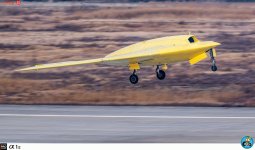
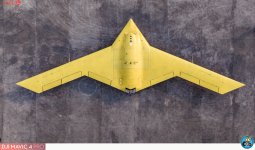
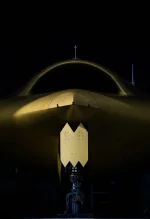
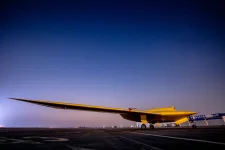
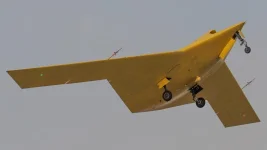
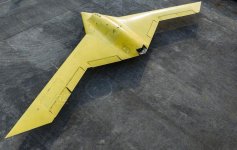
The CH-7 adopts a flying-wing aerodynamic configuration similar to the American B-2 bomber, with a highly integrated wing and fuselage.
This design not only significantly reduces radar cross-section, achieving exceptional stealth performance, but also optimizes aerodynamic efficiency, enhancing range and service ceiling.
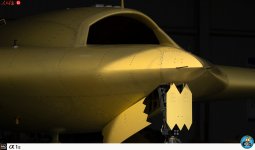
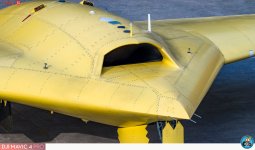
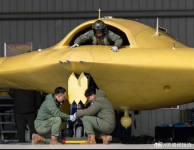
The aircraft's surface is coated with advanced stealth materials. All maintenance access panels, landing gear bay doors, potential weapon bay edges, and even fixed screws are designed with low observability features.
The engine air intake is located on the upper fuselage, and the exhaust nozzle uses a semi-recessed structure, further reducing infrared and radar signatures.
These technical details give the CH-7 very low detectability, allowing it to operate stealthily in high-threat environments.
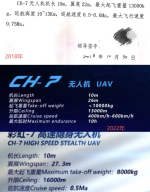
The CH-7 has a wingspan of over 27 meters, a maximum takeoff weight of 8 tons, a maximum payload of 3 tons (9-10 tons of B21), a cruise speed of approximately Mach 0.5, a maximum service ceiling of 16,000 meters, and a maximum range of 11,000 kilometers.
This means that taking off from Hainan Island, it can easily cover the Guam base within the second island chain, achieving long-range strategic projection.
Although its official role emphasizes reconnaissance, surveillance, early warning, and information support, early reports and designs show it is equipped with an internal weapon bay.
It can carry various weapons such as anti-radiation missiles, air-to-ground missiles, long-range guided bombs, or anti-ship missiles.
Compared to traditional reconnaissance-strike drones, the CH-7's scale, stealth, and range are closer to those of a manned strategic bomber, yet it does not risk pilots' lives and has lower costs and higher survivability.
This directly challenges the long-standing U.S. monopoly in stealth strategic aviation.
The U.S. military's RQ-180 stealth reconnaissance drone is highly classified, while China's CH-7 progressed rapidly from concept to maiden flight in just a few years, leading Western media to worry about it "changing the air combat landscape in the Asia-Pacific."
What troubles the U.S. military more is that the CH-7, leveraging advanced datalink capabilities, can conduct coordinated operations with new-generation stealth fighter jets, maximizing the PLA's aerial strike advantages and making defenses difficult.
For example, the CH-7 could operate alongside the Jiutian drone.
First, the stealthier CH-7 would silently penetrate enemy air defense networks, disabling various air defense and anti-missile assets without detection.
Then, the Jiutian drone could release a large number of drones from its heterogeneous hive mission pod, delivering saturation firepower.
Such a combination of "stealth suppression and swarm saturation" completely overturns traditional air defense systems. Which country could withstand it?
China's drone combat platforms for aerial power are already taking shape.
From medium-low altitude reconnaissance-strike integration to high-altitude stealth penetration and heavy mothership drone swarms, China's drone capabilities are rapidly evolving towards a full-spectrum, all-domain force.
The Pentagon's latest China Military Power Report specifically notes that the emergence of the CH-7 gives the PLA a full-spectrum penetration and strike capability for the first time.
Powered by twin turbofan engines, it can achieve an endurance of up to 35 hours.
Even more critically, its cost is remarkably low.
The unit cost of a single CH-7 is only about 1/50th-1/100th of a B-21 bomber, yet it can accomplish 60% of strategic deterrence missions.
This means China, with its strong industrial capacity, could produce CH-7 drones rapidly and in large numbers.
Faced with this new type of "low-cost, high-threat" combat force, the Pentagon is forced to re-evaluate the effectiveness of its "Distributed Kill Chain" theory.
After all, when an adversary has seemingly endless "aerial kamikaze" drones, even the most fortified defenses will eventually be breached.
Simulations by the U.S. Naval War College show that if the PLA deploys 20 CH-7 drones in a Taiwan Strait conflict, the survival probability of a U.S. aircraft carrier strike group could plummet from 65% to 28%.
The U.S. military finds itself in a dilemma.
Using multi-million dollar interceptor missiles to counter large numbers of cheap, stealthy CH-7 drones is unsustainable economically and in terms of inventory.
If left unengaged, its own multi-billion dollar carriers and bases face potential destruction.
It can be said that when the CH-7 completed its maiden flight, the military balance in the Western Pacific was quietly rewritten.
How could that not keep the Pentagon awake at night?
View attachment 165983
from:52赫兹实验室