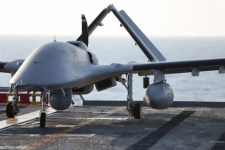
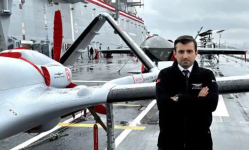
Morocco and Israel discuss establishing a joint defense industrial base and transferring military technology
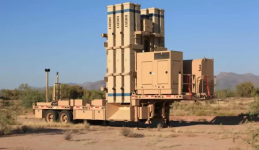
Morocco and Israel are discussing establishing an industrial defense base
On Monday, November 9, the Minister Delegate to the Head of Government in charge of National Defense Administration, Abdellatif Loudiyi, received the Director General of the Israeli Ministry of Defense, Amir Baram, at the Administration's headquarters in Rabat, in accordance with royal instructions. Baram is visiting Morocco on an official visit at the head of a high-level delegation.
During the same day, the Israeli official held two rounds of talks, one at the National Defense Administration headquarters and the other at the General Staff Headquarters of the Royal Armed Forces. These talks addressed various aspects of military cooperation between the two countries, according to a joint statement issued by the two institutions.
The discussions covered the legal framework governing this partnership, military equipment and supplies acquisition deals, the defense industry, and joint action plans.
During the meeting at the National Defense Administration, both Abdellatif Loudiyi and Amir Baram expressed their satisfaction with the level of cooperation achieved in the defense field between the two countries.
This cooperation is based on a legal framework that primarily includes the protection of classified and confidential military information and materials, as well as cybersecurity. This framework also regulates the exchange of expertise and experiences between the two sides, as well as training and qualification programs for personnel.
The two officials affirmed the progress made in the partnership related to the acquisition of military equipment and technologies, as well as in the defense industry. They also exchanged views on ways to deepen various areas of bilateral cooperation, with a particular focus on establishing a defense industrial base.
Developing cooperation in the field of cybersecurity was one of the topics discussed, as it is already covered by the legal framework governing relations between the two countries.
On the same day, the Inspector General of the Royal Armed Forces and Commander of the Southern Zone, Lieutenant General Mohamed Berri, received the Israeli official, Amir Baram, at the General Staff Headquarters of the Royal Armed Forces.
Both sides commended the positive momentum in bilateral military cooperation, particularly in the areas of strengthening military capabilities and equipment. This cooperation also extends to the exchange of expertise and experiences, training, and technical cooperation.
The meeting provided an opportunity to reaffirm the shared commitment of both parties to further deepen this cooperation through the implementation of the action plans adopted by the Joint Military Committee between the two countries.
According to the joint statement, this committee is a mechanism for exchanging information, coordinating efforts, and exploring new avenues for military cooperation between Morocco and Israel.
Morocco is considering acquiring Israeli LORA ballistic missiles and the David's Sling system.
 The German Navy is testing Israel's LORA ballistic missile system in the North Atlantic, as seen in photos released on September 2, 2026. (Deutsche Marine/Instagram
Defense talks between Morocco and Israel are moving towards expanding cooperation in the field of armaments, with reports emerging of advanced negotiations for the acquisition of LORA ballistic missiles from Israel Aerospace Industries (IAI) and the David's Sling air defense system, developed by Rafael Advanced Defense Systems in collaboration with the American company Raytheon.
According to the Israeli newspaper Calcalist on October 8, 2026, negotiations regarding the LORA missiles have reached a very advanced stage, with the two sides nearing a preliminary agreement. The potential financial value of the deal and the number of missiles it might include have not been disclosed.
Reports indicate that the missile has a range of up to 500 kilometers, according to some estimates, while the manufacturer's technical specifications place its range between 90 and 430 kilometers. It is approximately 5.2 meters long, weighs around 1,600 kilograms, and has a declared accuracy of approximately 10 meters.
The LORA missile is distinguished by its ability to carry out long-range precision strikes against strategic targets. It can be launched from land and sea platforms, and an airborne version is also under development. Acquiring it would give the Royal Moroccan Armed Forces an enhanced capability to target military sites and strategic installations at long ranges.
The possibility of combining these missiles with Morocco's existing rocket artillery systems is also noteworthy, particularly the Israeli PULS multiple rocket launchers, some of whose ammunition has a range of up to 300 kilometers, and the American HIMARS systems, which Morocco is preparing to receive.
David's Sling System: Intercepting Ballistic Missiles up to 300 Kilometers
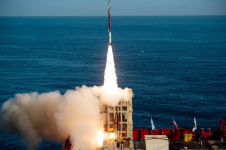
On the defense front, media reports in October 2026 revealed advanced talks between Morocco and Israel regarding the acquisition of the David's Sling system, produced by the Israeli company Rafael in cooperation with the American company Raytheon. No final contract has yet been signed, nor has the number of batteries or the financial value of the deal been announced.
The David's Sling system is capable of intercepting aerial targets at altitudes of up to approximately 75 kilometers.
The system relies on the Stunner interceptor missile, designed to counter ballistic missiles, cruise missiles, and advanced aerial threats. Its declared interception range is approximately 300 kilometers, with an engagement range starting at around 40 kilometers.
The missile utilizes an advanced guidance system that allows it to directly hit the target, instead of relying on a conventional warhead. The system also employs the ELM-2084 radar to provide detection, tracking, and interception guidance capabilities.
If the deal is finalized, the system will complement Morocco's air defense network, which already includes Israeli systems such as the Barak MX with a range of up to 150 kilometers, the medium-range SPYDER system, the Chinese FD-2000B system with a declared engagement range of approximately 200 to 250 kilometers, and the French VL MICA short-range system with a range of approximately 20 kilometers.
Defense Manufacturing and Technology Transfer
These negotiations come within the context of Morocco's move to expand its defense partnership with Israel, moving beyond simply importing ready-made weapons to include local manufacturing, assembly, maintenance, and technology transfer.
In this context, Abdellatif Loudiyi discussed with the Director General of the Israeli Ministry of Defense, Amir Baram, during his visit to Rabat on November 9, 2026, the possibility of establishing a defense industrial base, as well as developing cooperation in the acquisition of military equipment and technologies, cybersecurity, training, and the exchange of expertise.
These talks come amid growing industrial and military cooperation between the two countries, with reports indicating that the value of Israeli defense exports to Morocco has exceeded two billion dollars since the beginning of the current decade, in parallel with the participation of eight Israeli companies specializing in defense industries in the Marrakech Air Show 2026.