Morocco and Egypt are on the cusp of owning the American monster KC-10.. A giant plane changes the capabilities of the two countries' air forces
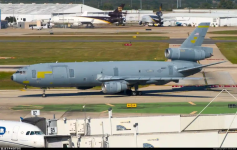
Reports and documents released by the US Air Force have reignited questions about which country will be the first to enter the era of giant refueling aircraft in North Africa: Morocco or Egypt? This comes after the Air Force revealed it has begun assessing the technical requirements of countries shortlisted for a potential deal involving four retired KC-10 Extender refueling aircraft, under the Surplus Defense Equipment Program.
While the identity of the recipient country has not yet been officially announced, sources indicate that Morocco appears to be the frontrunner, given its progress in negotiations to acquire these aircraft. Egypt remains a strong contender, particularly as it currently lacks dedicated strategic fuel tankers.
According to specialized military websites, the significance of the potential deal lies in the KC-10's substantial operational capabilities. With a fuel capacity of approximately 161 tons and a maximum range of around 18,500 kilometers, the aircraft would grant the acquiring air forces greater capacity to conduct long-range air operations with less frequent return to base.
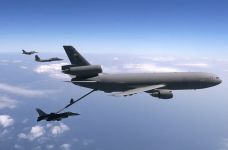
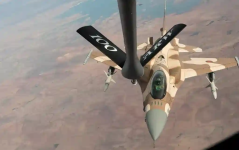
One of the most prominent advantages of this aircraft is its direct compatibility with F-16 fighter jets, which are needed by the air forces of both Morocco and Egypt. The aircraft utilizes a rigid-arm aerial refueling system (a flexible hose ending in a small basket into which the fighter jet inserts the refueling probe), a system compatible with these fighters. This allows for extended flight endurance and a wider range of independent air operations.
A third advantage relates to fleet sustainability and reduced operating costs. The proposed plan calls for operating only two of the four aircraft, with the remaining two designated as spare parts suppliers. This aims to reduce maintenance burdens and extend the operational lifespan of the two operational aircraft.
Egypt and Morocco appear poised to join the ranks of militaries possessing giant refueling aircraft. These strategic assets are not only important for supporting fighter jets but also grant the possessing nations greater capacity to enhance their air power, solidify their logistical depth, and expand their air superiority within their regional sphere of influence.
What will the KC-10 add to the capabilities of the Egyptian and Moroccan air forces?
If the deal goes through, the acquisition of KC-10 aircraft by Egypt and Morocco would represent a significant addition to the Royal Moroccan Air Force's capabilities, particularly in conducting extended air operations and enhancing its ability to manage military missions far from its air bases.
Possessing strategic fuel tankers allows fighter jets and other military aircraft to continue operations for longer periods without having to stop and return to bases for refueling, a time-consuming process that can pose additional risks in complex operational environments.
This capability is especially important for Morocco given its strategic geographic location and the breadth of its security and military interests, stretching from the Atlantic coast in the west and the Mediterranean Sea in the north, to its Sahara Desert in the south and its strategic ties to the Sahel region, which constitutes a vital security and geopolitical depth for the Kingdom.
This capability is also of strategic importance to Egypt, given its geographical location linking Africa and Asia, its control of the Mediterranean and Red Seas, and the extension of its security and military interests to the Eastern Mediterranean, the Red Sea, and the Horn of Africa, reaching as far as the strategic depth of Libya, Sudan, and the Sahel region. Protecting the Suez Canal and securing maritime routes and strategic shipping lanes necessitates long-range air capabilities, enabling the Egyptian Air Force to conduct extended operations and provide air support to forces deployed in widely dispersed theaters of operation, without constant reliance on nearby air bases.
These geographical factors also compel Morocco to develop its air and logistical capabilities to address evolving security challenges, particularly in light of the changing nature of terrorist threats and the adoption by armed groups of new and sophisticated methods and tactics in their operations.
In this context, the importance of possessing advanced military systems that keep pace with the rapid transformations in the nature of regional and international threats is increasing. These systems would grant the armed forces greater mobility and rapid response capabilities, enabling them to conduct military operations over long distances while maintaining continuous air operations without being confined to a limited geographical area.
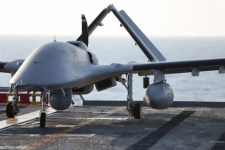
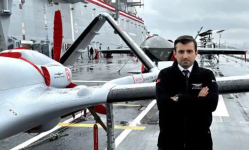
This comes at a time when the Moroccan air force has witnessed remarkable development in recent years, both in terms of fighter jets and drones. Morocco has worked to diversify its fleet of unmanned aerial vehicles (UAVs) and develop its capabilities to conduct advanced operations combining reconnaissance, surveillance, tracking, target identification, and precision strikes.
These capabilities have demonstrated, on more than one occasion, the importance of integrating various operational and technological fields within a comprehensive military system, thereby improving the efficiency of military mission execution.
Morocco's approach is not limited to acquiring advanced military equipment; it extends to developing local aerospace and defense industries. This reflects the Kingdom's desire to acquire the knowledge, expertise, and technology related to this sector, ultimately strengthening its independence in manufacturing and managing military operations.
How will the modernization of the Moroccan air force affect the balance of power in North Africa?
Air superiority is a fundamental element in determining the outcome of modern military operations. Possessing advanced air capabilities gives nations broader options for conducting operations, addressing threats, and countering enemy attacks.
However, the nature of warfare has undergone significant changes in recent years. Traditional armies alone are no longer capable of keeping pace with all emerging threats, especially with the widespread proliferation of drones and the development of their offensive and reconnaissance capabilities.
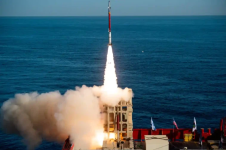
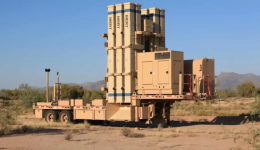
Modern military conflicts have demonstrated that countering low-cost drones with interceptor missiles costing millions of dollars imposes a substantial financial burden on nations, particularly when the targeted drones cost only tens or thousands of dollars.
Consequently, developing more flexible and precise military systems and relying on advanced technology has become essential for enhancing the efficiency of armed forces and reducing the costs of confronting modern threats.
Furthermore, the reliance on unmanned systems empowers militaries to execute missions while minimizing the risks to military personnel.
Conversely, reducing risks to soldiers and pilots alleviates the political and public pressures associated with participation in military operations and grants decision-makers greater latitude in managing military missions.
From this perspective, countries that have successfully developed their smart systems and enhanced their technological capabilities possess additional advantages that extend beyond simply carrying out military strikes. These advantages include expanding their geographical reach, improving their rapid response capabilities, and increasing their flexibility in dealing with evolving threats.
Why is Morocco moving towards manufacturing military equipment locally?
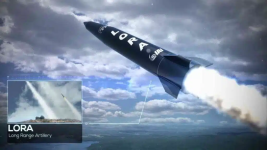
The Moroccan military project is not limited to purchasing equipment and weapons from abroad. It is increasingly focused on building a local defense industrial base, leveraging investments and partnerships that international companies have begun developing within the Kingdom.
Through these partnerships, Morocco seeks more than just financial investments in the military sector. One of its primary priorities is the transfer of technology and industrial expertise, enabling the development of its local capabilities in the areas of manufacturing, maintenance, and military development.
Technology transfer is a crucial element in enhancing Morocco's competitiveness within its regional environment, as it allows the country to gradually shift from relying on imported military equipment to acquiring a greater share of the technical expertise necessary for its production and development.
Furthermore, developing military and defense industrial capabilities strengthens Morocco's international standing, particularly given its partnerships with major powers in the fields of defense and military technology.
Strategically, possessing advanced military capabilities contributes to bolstering deterrence and reducing the likelihood of the country being exposed to threats or engaging in armed conflicts by raising the cost of any potential escalation against it.
This development enhances the Kingdom's ability to protect its territory, national security, and strategic gains, and reinforces its image as a nation with growing military and technological capabilities, capable of safeguarding its interests.
The implications of this transformation are not limited to the military sphere; they extend to foreign policy and diplomacy as well. Possessing more sophisticated instruments of power grants Morocco greater flexibility in addressing regional and international issues and strengthens its ability to defend its positions and contribute to efforts to achieve stability and peace in the region.