Navigation
Install the app
How to install the app on iOS
Follow along with the video below to see how to install our site as a web app on your home screen.
Note: This feature may not be available in some browsers.
More options
Style variation
You are using an out of date browser. It may not display this or other websites correctly.
You should upgrade or use an alternative browser.
You should upgrade or use an alternative browser.
Drones Section
- Thread starter The SC
- Start date
More options
Who Replied?

The SC
INT'L MOD
- Thread starter
- #65
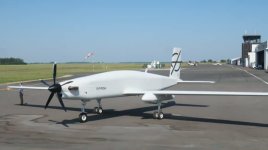
A new medium-altitude long-endurance combat drone, or MALE, which will be presented for the first time at the upcoming Paris Air Show.
The Aarok drone was developed for three years in strict secrecy by the French company Turgis & Gaillard, with the support of the DGA which oversees contracts and armament developments for the French armies.
Information released about this new drone, called Aarok, is relatively limited. At best, we know that the maximum take-off weight of the drone is 5.5 tons, and its payload capacity of 1.5 tons allows it to carry out, for example, 4 guided bombs of 250 kg and 2 medium anti-tank missiles such as Hellfire or Akeron MP (MPP), and its endurance will be about 25 hours.
In terms of propulsion, the Aarok will initially be equipped with a Pratt & Whitney PT6 turboprop, then the new Ardiden turboprop under development by Safran. Above all, the new drone is designed to be rugged, some might say rustic, and doable from 400 to 600 meters of surface terrain.
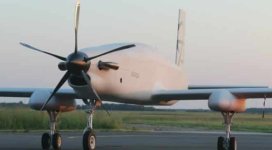
But its most confusing quality is the announced price of “between 5 and 10 million euros”, that is, the unit price is barely higher than lighter drones such as the TB2 Bayraktar from Turkish Baykar, and sometimes much lower than heavy MALE drones. It offers similar performance, as the American MQ-9 Reaper, the Israeli Eitan, or the Turkish Akinci.
In short, the Aarok will be able to offer the performance of a male heavy combat aircraft, such as the MQ-9, at a price very close to the price of a light drone, such as the TB2, in a relatively virgin market of this type of offering in the West, apart from the Turkish Akinci..
Be that as it may, if the initial announcements are to be confirmed, this new drone has the potential not only to provide additional capabilities to those offered by the Patroller and the future Eurodrone RPAS for the French armies, but it is capable, above all. , to redesign the European and even international offer in the field of MALE combat drones.
The SC
INT'L MOD
- Thread starter
- #66
The United States is developing the ORCA underwater drone, the Manta drone for Great Britain, and the ASWUUV drone for South Korea. As for China, it is already deploying the HSU-001 drone in the China Sea..
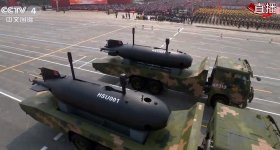
The French demonstrator
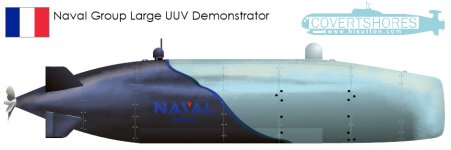
Described as an 'Oceanic Underwater Drone Demonstrator', French defense giant Naval Group's entry into the XLUUV arena is impressive. The innovative design uses sleek whale-like lines, reminiscent of the SMX-31 concept.
The craft can undertake ISR (Intelligence, Surveillance and Reconnaissance) missions. For this it has a comparatively large sonar and a retractable telescopic optronic / radar mast. Missions could include close observation of a hostile coast to improve situational awareness of a mother ship.
In future the craft could be fitted with a payload, such as torpedoes or nines. It could also be doubled in length, from ~10m long to ~20m, to increase endurance. This could involve more batteries, or AIP (air independent power). Naval Group has fuel cell AIP technology which logically could be scaled down to the XLUUV size.
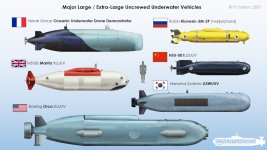
The hull carries a sonar for underwater detection, as well as a radar and electro-optical system on the mast when it develops near the surface. It has several communications systems, including a satellite link, a radio link, and a low-frequency link, allowing it to exchange with a ship, or control station, in the form of compressed encrypted messages to increase the secrecy of the ship's equipment. Finally, it has a navigation, sensor analysis and mission control system based on artificial intelligence that combines machine learning and deterministic analytics to ensure precise control of the drone's actions.
The production version that Naval Group engineers are working on will be longer, 13 meters to displace 20 tons, and will have autonomy at sea, greater discretion and speed than the demonstrator.
Power multiplier and access denial
In fact, the Naval Group's new drone is positioned as a formidable fighter, acting as what the Army calls a “force multiplier,” that is, allowing the operational capabilities of other units to be increased. Like unmanned aerial combat aircraft, this would allow for example to carry out intelligence missions on the opposite coast, or as close as possible to the enemy's maritime system, without having to risk a submarine and its crew in this risky mission.
Not only will it then be able to transmit information to the coalition forces about the enemy's forces, but he will also be able, if necessary, to determine the exact location of potential targets, so as to allow long-range strikes. Such as the MM40 Block 3C anti-ship missile covering more than 160 kilometers, but also the nature of the targets present, in order to allow the missile's intelligent seeker to hit the most important target, thus avoiding unwanted collateral damage in particular.
It can also, if necessary, patrol an underwater sea area to ensure the absence of enemy submarines and, if not, to enhance the effectiveness of anti-submarine warfare units dispatched to eliminate or expel the threat.
But the drone will be able to go much further, moving from the “detector” mission to the “responder” role in its extended version, potentially armed with torpedoes or mines. In fact, the drone, equipped in this way, could become a key player in implementing a maritime and submarine anti-access strategy, by assuming responsibility for interdicting a maritime area, together with other units of the Naval Forces.
However, the cost of such a drone, both to acquire and implement it, is much lower than that of a combat submarine, even if conventionally powered.
The French demonstrator
Described as an 'Oceanic Underwater Drone Demonstrator', French defense giant Naval Group's entry into the XLUUV arena is impressive. The innovative design uses sleek whale-like lines, reminiscent of the SMX-31 concept.
The craft can undertake ISR (Intelligence, Surveillance and Reconnaissance) missions. For this it has a comparatively large sonar and a retractable telescopic optronic / radar mast. Missions could include close observation of a hostile coast to improve situational awareness of a mother ship.
In future the craft could be fitted with a payload, such as torpedoes or nines. It could also be doubled in length, from ~10m long to ~20m, to increase endurance. This could involve more batteries, or AIP (air independent power). Naval Group has fuel cell AIP technology which logically could be scaled down to the XLUUV size.
The hull carries a sonar for underwater detection, as well as a radar and electro-optical system on the mast when it develops near the surface. It has several communications systems, including a satellite link, a radio link, and a low-frequency link, allowing it to exchange with a ship, or control station, in the form of compressed encrypted messages to increase the secrecy of the ship's equipment. Finally, it has a navigation, sensor analysis and mission control system based on artificial intelligence that combines machine learning and deterministic analytics to ensure precise control of the drone's actions.
The production version that Naval Group engineers are working on will be longer, 13 meters to displace 20 tons, and will have autonomy at sea, greater discretion and speed than the demonstrator.
Power multiplier and access denial
In fact, the Naval Group's new drone is positioned as a formidable fighter, acting as what the Army calls a “force multiplier,” that is, allowing the operational capabilities of other units to be increased. Like unmanned aerial combat aircraft, this would allow for example to carry out intelligence missions on the opposite coast, or as close as possible to the enemy's maritime system, without having to risk a submarine and its crew in this risky mission.
Not only will it then be able to transmit information to the coalition forces about the enemy's forces, but he will also be able, if necessary, to determine the exact location of potential targets, so as to allow long-range strikes. Such as the MM40 Block 3C anti-ship missile covering more than 160 kilometers, but also the nature of the targets present, in order to allow the missile's intelligent seeker to hit the most important target, thus avoiding unwanted collateral damage in particular.
It can also, if necessary, patrol an underwater sea area to ensure the absence of enemy submarines and, if not, to enhance the effectiveness of anti-submarine warfare units dispatched to eliminate or expel the threat.
But the drone will be able to go much further, moving from the “detector” mission to the “responder” role in its extended version, potentially armed with torpedoes or mines. In fact, the drone, equipped in this way, could become a key player in implementing a maritime and submarine anti-access strategy, by assuming responsibility for interdicting a maritime area, together with other units of the Naval Forces.
However, the cost of such a drone, both to acquire and implement it, is much lower than that of a combat submarine, even if conventionally powered.

The SC
INT'L MOD
- Thread starter
- #71
“HALCON” employs artificial intelligence in its “Hunter 2S” drone squadrons
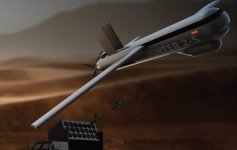
Drones have become an integral part of the work system of many of the world's advanced armies, and reliance on them has increased recently after their remarkable success in performing specific tasks that contributed to achieving progress and rapid victory over the enemy in many armed conflicts in various parts of the world.
The extensive development processes that have affected drones used in the military field, which are no longer limited to the great military powers, have led to the diversification of their uses and the strengthening of their combat capabilities by relying on the latest technological technologies and advanced artificial intelligence systems, as they have today become a lethal weapon that emerges in swarms to ensure victory in... Battles.
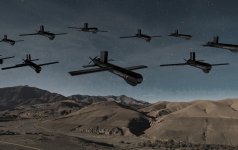
With the acceleration of technological developments and the introduction of artificial intelligence systems into the operating mechanism of drones, defense companies around the world have entered into a major race to develop and innovate defense solutions that are compatible with all variables. In this context, the Emirati company HALCON has emerged, specializing in the field of integrated development and manufacturing of guidance systems. Flour and drones are a key player credited with finding appropriate defense solutions that meet the requirements for victory in wars.
Drones have become an integral part of the work system of many of the world's advanced armies, and reliance on them has increased recently after their remarkable success in performing specific tasks that contributed to achieving progress and rapid victory over the enemy in many armed conflicts in various parts of the world.
The extensive development processes that have affected drones used in the military field, which are no longer limited to the great military powers, have led to the diversification of their uses and the strengthening of their combat capabilities by relying on the latest technological technologies and advanced artificial intelligence systems, as they have today become a lethal weapon that emerges in swarms to ensure victory in... Battles.
With the acceleration of technological developments and the introduction of artificial intelligence systems into the operating mechanism of drones, defense companies around the world have entered into a major race to develop and innovate defense solutions that are compatible with all variables. In this context, the Emirati company HALCON has emerged, specializing in the field of integrated development and manufacturing of guidance systems. Flour and drones are a key player credited with finding appropriate defense solutions that meet the requirements for victory in wars.
The SC
INT'L MOD
- Thread starter
- #72
General Atomics Aeronautical Systems
MQ-9B STOL for small flat tops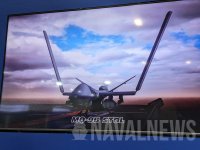
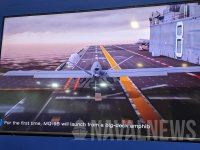
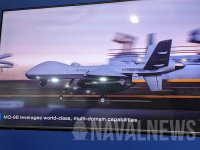
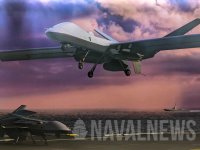
Like the MQ-9B Sea Guardian, the MQ-9B STOL can carry and deploy buoys, allowing it to provide long-range, high-endurance, anti-submarine warfare capabilities to any maritime task force. Promotional videos released by GA-ASI also depict the MQ-9B STOL carrying the AGM-114 Hellfire and AIM-9 Sidewinder missiles.
The SC
INT'L MOD
- Thread starter
- #73
KUS-FS (South Korean Unmanned System–Flight Strategic)
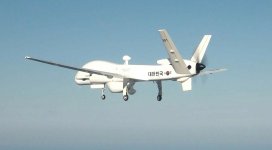
The indigenously developed KUS-FS is designed for armed land and sea Intelligence, Surveillance and Reconnaissance (ISR) missions with endurance of up to 24 hours.
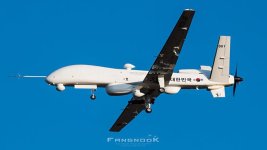
It reportedly has a wider wingspan than the Reaper at 25 m and is powered by a 1200 hp Pratt & Whitney PT6 turboprop engine.
Due to having four underwing pylons (two for each lower wing), the air vehicle has a suspected unmanned combat air vehicle (UCAV) capability meaning it has the inherent ability to carry and launch air-to-surface guided missiles or precision-guided bombs.
Onboard sensors include a chin mounted EO/IR turret, a 360-degree capable belly mounted maritime radar to detect targets at sea and Electronic Support Measures (under fuselage, behind wings) to identify and locate signals from maritime vessels.
Two distinct versions of the MUAV are built for the South Korean military - one whose mission will revolve strictly around intelligence, surveillance and reconnaissance (ISR) and the other that will be fully combat capable. This type can therefore be used to support ongoing ground forces actions by scanning and tracking potential threats and enemy movement. Armed versions will have the ability to attack designated targets.
There remains greater potential for MUAV use in humanitarian-oriented relief efforts and in border surveillance operations.
Last edited:
The SC
INT'L MOD
- Thread starter
- #75
MQ-4C Triton Unmanned Aircraft System
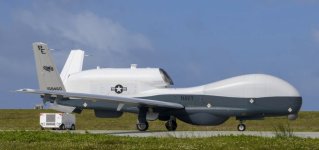
The MQ-4C Triton remotely piloted aircraft system is a high altitude aircraft that will be used for maritime patrol and other surveillance roles.
The endurance of the Triton means that it can stay airborne for longer than a traditional aircraft where the pilot is inside.
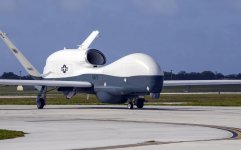
The Triton platform builds on elements of the Global Hawk UAS, with reinforcements to the airframe and wing. It also has de-icing and lightning protection systems, which allow it to descend through cloud layers and gain a closer view of ships and other targets at sea.
Users who are viewing this thread
Total: 1 (members: 0, guests: 1)
Pakistan Defence Latest


Country Watch Latest


Latest Posts
-

-
"Roses Are Red, Violets Are Blue, & Polar Vortex Is Coming For You" (1 Viewer)
- Latest: Davey Crockett
-

-
