Egyptian Armed Forces

To view this content we will need your consent to set third party cookies.
For more detailed information, see our cookies page.

We’re only defending our territory and sovereignty and national security, why do they mine in Egyptian sands instead of Sudanese territory???
 
A military earthquake strikes the accounts of powers in the Middle East and unleashes a storm of shocking questions about the future of regional air sovereignty. The major surprise is no longer just routine maneuvers, but in the behind-the-scenes of accelerated military movements that took place over the past days between Cairo and Ankara, where the two countries broke through the wall of silence.


To view this content we will need your consent to set third party cookies.
For more detailed information, see our cookies page.
 
The Chief of Staff of the Egyptian Armed Forces, Lieutenant General Ahmed Fathi Khalifa, received, with military honors, the Chief of the General Staff of the Turkish Armed Forces, General Selçuk Bayraktaroğlu, who arrived in the Arab Republic of Egypt to participate in the high-level military dialogue meeting.

To view this content we will need your consent to set third party cookies.
For more detailed information, see our cookies page.
 
What Israel Does Not Want For the first time, Turkey hosts an air exercise with Egypt and Azerbaijan. Turkey announced the launch of its first joint air exercise with Egypt and Azerbaijan on its territory, just days after the conclusion of joint air maneuvers between Ankara and Cairo in Egypt.

To view this content we will need your consent to set third party cookies.
For more detailed information, see our cookies page.


Egyptian F-16 fighter jets land in the heart of Turkey, and Erdoğan threatens: You are playing with fire | Turkish Stations

To view this content we will need your consent to set third party cookies.
For more detailed information, see our cookies page.
 
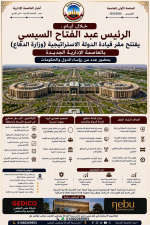
The headquarters of the Egyptian Strategic Command will soon be opened in the Administrative Capital
1782599891943.png
 
Egypt is arming itself with “Meteor”... Israeli concern about Paris supplying Cairo with air-to-air missiles that constitute a challenge to the F35

1783023087772.png

In a strategic development that affects the balance of air power in the Middle East, Israeli reports revealed that France is supplying Egypt with advanced Meteor missiles.

The Israeli "Natsiv Net" platform reported that a photo of a Meteor missile under the wing of a Rafale plane bearing Egyptian Air Force insignia raises serious questions about whether France agreed to supply Cairo with this missile, which Israel requested not to supply in order to preserve its air superiority.

The Hebrew platform added that the issue of Egypt obtaining Meteor missiles for its Rafale aircraft remains a subject of controversy and conflicting reports in recent years, noting that the current picture, updated until May 2026, carries important strategic implications.

The platform said that Israel expressed its concern that the Meteor missiles reduce the advantage of the Israeli F-15 and F-16 aircraft, and even pose a particular challenge to the F-35 Adir aircraft, given that the missile was designed to deal with targets with a low radar signature.

The Hebrew platform added that Egypt's purchase of Meteor missiles from France bypasses American restrictions, which for years refused to sell advanced AMRAAM missiles to Egypt to protect Israel, giving Cairo capabilities that were previously prohibited to it.

The platform said that Israel expressed its concern that the Meteor missiles reduce the advantage of the Israeli F-15 and F-16 aircraft, and even pose a particular challenge to the F-35 Adir aircraft, given that the missile was designed to deal with targets with a low radar signature.

The Hebrew platform added that Egypt's purchase of Meteor missiles from France bypasses American restrictions, which for years refused to sell advanced AMRAAM missiles to Egypt to protect Israel, giving Cairo capabilities that were previously prohibited to it.

It pointed out that the official answer to whether France supplied Egypt with these missiles is still complex, but there is growing evidence that the answer is yes, at least for the most recent deals, as France had previously refused to supply Egypt with Meteor missiles due to heavy Israeli pressure to maintain the “qualitative advantage.” However, reports since 2021 indicated that Egypt had stipulated obtaining this missile in exchange for purchasing 30 additional Rafale aircraft, so Paris agreed to that.

The platform said that in July 2025, it was published that the Egyptian presidency announced an arms deal that included Meteor missiles as part of its modern combat aircraft arsenal, and since late 2024 and during 2025, Egypt began receiving Rafale aircraft of the improved F3R model, equipped with full integration with Meteor missiles.

The Hebrew platform added that some sources indicated that the missiles themselves were included in the delivery packages that were transported, while pictures of Egyptian Rafale aircraft armed with missiles or training missiles were published on social media platforms and international security websites, which reinforced the assessment that political obstacles had been lifted.

She pointed out that providing Egypt with Meteor missiles represents an important change in the balance of air power in the region, as Meteor is one of the most advanced air-to-air missiles in the world, and thanks to its reciprocating jet engine, it is able to maintain a high speed throughout the flight and hit targets at a range of more than 100 kilometers.

She pointed out that this step pushes other countries in the region, such as Turkey or Greece, to try to obtain similar armament in order not to fall behind, explaining that France appears to have agreed to supply Egypt with the missile despite previous Israeli reservations, as part of strengthening strategic and economic relations with Cairo.

The platform said that this step symbolizes a certain erosion in Israel's ability to prevent friendly Arab countries from obtaining first-class military technologies, as the French-European Meteor missile and the American F-120D AMRAAM missile, which forms the backbone of the Israeli Air Force, are the focus of an important comparison.

The Hebrew platform added that the Meteor engine relies on reciprocating jet technology, which allows continuous propulsion throughout the flight, while the AMRAAM relies on a solid rocket engine that provides strong acceleration at the beginning, but turns into a glider after about 10 seconds.

She pointed out that the official range of the Meteor is more than 100 kilometers, with estimates reaching 200 kilometres, while the range of the AMRAAM ranges between 160 and 180 kilometers in use against large targets. Both missiles reach a maximum speed of more than Mach 4, but the Meteor maintains its speed until impact, while the AMRAAM’s speed decreases the farther it gets from the plane.

The platform said that the no-escape zone of the Meteor is three times larger than that of the AMRAAM, and thanks to the continuous engine, it can maneuver strongly even over long ranges, while the no-escape zone of the AMRAAM is relatively smaller in the long range as the missile loses energy and avoids it become easier.

The Hebrew platform added that the dynamics of Meteor flight maintains high maneuverability in the final stage of interception, while AMRAAM is very fast in the short and medium range, but is less effective in intercepting maneuvering targets at the maximum range.

These developments come within the framework of Egypt's endeavor to modernize its military arsenal and enhance its defense capabilities in light of rapid regional transformations, as Cairo's partnerships with Paris represent part of a strategy to diversify arms sources and reduce dependence on one source.

Meteor missiles are among the latest European technologies in the field of air defense, and their ability to reach long-range targets gives Egypt a strategic advantage in protecting its airspace.

On the other hand, Israel closely monitors any transfer of advanced technologies to countries in the region, in order to preserve what it describes as its qualitative advantage, which puts France before a delicate equation between its economic interests with Egypt and its security obligations with Tel Aviv.

https://rtarabic.com/world/1789627-مصر-تتسلح-بـالميتيور-قلق-إسرائيلي-من-تزويد-باريس-القاهرة-بصواريخ-جو-جو-بمدى-200-كلم/?ocid=Nabd_App
 
• The Arab Republic of Egypt
🇪🇬
is preparing to inaugurate the headquarters of the Strategic Leadership for the Egyptian State, "The Octagon," on Saturday, July 4.

To view this content we will need your consent to set third party cookies.
For more detailed information, see our cookies page.
 
A new batch of Egyptian Rafale fighters is in final tests before delivery

1783127488548.png

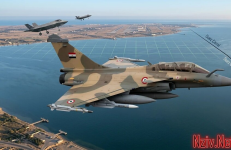
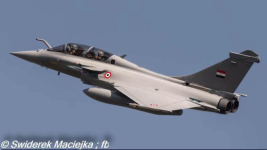
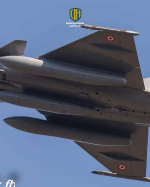
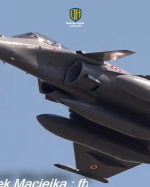
Recent pictures of three Egyptian-made Rafale fighters, bearing the codes DM25, DM27 (dual-seat version) and EM16 (single-seat version), during their flight over the Dassault Aviation factory airport in the city of Bordeaux-Mérignac, western France, as part of the final testing stages that precede the official delivery to the Egyptian Air Force.

1783127552831.png

1783127581715.png

The Rafale F3R fighters that Egypt receives are distinguished by being equipped with the “RBE2” active electronically scanned array (AESA) radar, and long-range “Meteor” air-to-air missiles, in addition to the “SPECTRA” electronic warfare system, and the “Talios” system for visual/infrared reconnaissance and guidance supported by artificial intelligence.
 
Will the issue of developing Egypt's F-16 under #Egypt be resolved after #United_States ' delay due to #Israel For the first time, F-16 Block 52 with #Turkey SDT ACMI systems for engagement simulationEgyptians can adopt the Turkish ÖZGÜR standard with AESA and national systems, munitions, and long-range weapons like GÖKDOĞAN as an AMRAAM alternative.

To view this content we will need your consent to set third party cookies.
For more detailed information, see our cookies page.

On the Turkish level, Ankara continued to prove the maturity of its national air armament system, through field tests in which it used entirely local systems, including the “MURAD” AESA radar of the “ASELSAN” company, and the national air-to-air missile “GÖKDOĞAN” developed by “TUBITAK SAG”, which is seen as a potential Turkish alternative to the American “AMRAAM” missile. This path reflects a Turkish trend towards providing a greater degree of technical cooperation with regional partners, compared to the restrictions imposed by some Western powers, including joint production or development projects in the fields of unmanned aircraft and weapons systems.

In conclusion, it seems that the appearance of the Turkish “SDT ACMI” systems on board the Egyptian “F-16 Block 52” represents a first practical and tangible step in the path of cooperation, more realistic than the scenario of transferring the “secret code”, while the issue of Cairo’s adoption of deeper Turkish standards, such as the “Ozgur” system or munitions such as “Gökdogan”, remains dependent on a complex equation that combines political will, technical restrictions, and existing international obligations.
 
A majestic procession befitting the dear one of Egypt
🇪🇬
At the moment of His Excellency President Abdel Fattah el-Sisi's arrival at the Strategic Command headquarters in the New Administrative Capital.. The symbol of the New Republic and the June 30 State

To view this content we will need your consent to set third party cookies.
For more detailed information, see our cookies page.
 
Wearing the military uniform.. Sisi inaugurates the "Octagon"

To view this content we will need your consent to set third party cookies.
For more detailed information, see our cookies page.
 
To view this content we will need your consent to set third party cookies.
For more detailed information, see our cookies page.
 
Egypt is arming itself with “Meteor”... Israeli concern about Paris supplying Cairo with air-to-air missiles that constitute a challenge to the F35

View attachment 204401

In a strategic development that affects the balance of air power in the Middle East, Israeli reports revealed that France is supplying Egypt with advanced Meteor missiles.

The Israeli "Natsiv Net" platform reported that a photo of a Meteor missile under the wing of a Rafale plane bearing Egyptian Air Force insignia raises serious questions about whether France agreed to supply Cairo with this missile, which Israel requested not to supply in order to preserve its air superiority.

The Hebrew platform added that the issue of Egypt obtaining Meteor missiles for its Rafale aircraft remains a subject of controversy and conflicting reports in recent years, noting that the current picture, updated until May 2026, carries important strategic implications.

The platform said that Israel expressed its concern that the Meteor missiles reduce the advantage of the Israeli F-15 and F-16 aircraft, and even pose a particular challenge to the F-35 Adir aircraft, given that the missile was designed to deal with targets with a low radar signature.

The Hebrew platform added that Egypt's purchase of Meteor missiles from France bypasses American restrictions, which for years refused to sell advanced AMRAAM missiles to Egypt to protect Israel, giving Cairo capabilities that were previously prohibited to it.

The platform said that Israel expressed its concern that the Meteor missiles reduce the advantage of the Israeli F-15 and F-16 aircraft, and even pose a particular challenge to the F-35 Adir aircraft, given that the missile was designed to deal with targets with a low radar signature.

The Hebrew platform added that Egypt's purchase of Meteor missiles from France bypasses American restrictions, which for years refused to sell advanced AMRAAM missiles to Egypt to protect Israel, giving Cairo capabilities that were previously prohibited to it.

It pointed out that the official answer to whether France supplied Egypt with these missiles is still complex, but there is growing evidence that the answer is yes, at least for the most recent deals, as France had previously refused to supply Egypt with Meteor missiles due to heavy Israeli pressure to maintain the “qualitative advantage.” However, reports since 2021 indicated that Egypt had stipulated obtaining this missile in exchange for purchasing 30 additional Rafale aircraft, so Paris agreed to that.

The platform said that in July 2025, it was published that the Egyptian presidency announced an arms deal that included Meteor missiles as part of its modern combat aircraft arsenal, and since late 2024 and during 2025, Egypt began receiving Rafale aircraft of the improved F3R model, equipped with full integration with Meteor missiles.

The Hebrew platform added that some sources indicated that the missiles themselves were included in the delivery packages that were transported, while pictures of Egyptian Rafale aircraft armed with missiles or training missiles were published on social media platforms and international security websites, which reinforced the assessment that political obstacles had been lifted.

She pointed out that providing Egypt with Meteor missiles represents an important change in the balance of air power in the region, as Meteor is one of the most advanced air-to-air missiles in the world, and thanks to its reciprocating jet engine, it is able to maintain a high speed throughout the flight and hit targets at a range of more than 100 kilometers.

She pointed out that this step pushes other countries in the region, such as Turkey or Greece, to try to obtain similar armament in order not to fall behind, explaining that France appears to have agreed to supply Egypt with the missile despite previous Israeli reservations, as part of strengthening strategic and economic relations with Cairo.

The platform said that this step symbolizes a certain erosion in Israel's ability to prevent friendly Arab countries from obtaining first-class military technologies, as the French-European Meteor missile and the American F-120D AMRAAM missile, which forms the backbone of the Israeli Air Force, are the focus of an important comparison.

The Hebrew platform added that the Meteor engine relies on reciprocating jet technology, which allows continuous propulsion throughout the flight, while the AMRAAM relies on a solid rocket engine that provides strong acceleration at the beginning, but turns into a glider after about 10 seconds.

She pointed out that the official range of the Meteor is more than 100 kilometers, with estimates reaching 200 kilometres, while the range of the AMRAAM ranges between 160 and 180 kilometers in use against large targets. Both missiles reach a maximum speed of more than Mach 4, but the Meteor maintains its speed until impact, while the AMRAAM’s speed decreases the farther it gets from the plane.

The platform said that the no-escape zone of the Meteor is three times larger than that of the AMRAAM, and thanks to the continuous engine, it can maneuver strongly even over long ranges, while the no-escape zone of the AMRAAM is relatively smaller in the long range as the missile loses energy and avoids it become easier.

The Hebrew platform added that the dynamics of Meteor flight maintains high maneuverability in the final stage of interception, while AMRAAM is very fast in the short and medium range, but is less effective in intercepting maneuvering targets at the maximum range.

These developments come within the framework of Egypt's endeavor to modernize its military arsenal and enhance its defense capabilities in light of rapid regional transformations, as Cairo's partnerships with Paris represent part of a strategy to diversify arms sources and reduce dependence on one source.

Meteor missiles are among the latest European technologies in the field of air defense, and their ability to reach long-range targets gives Egypt a strategic advantage in protecting its airspace.

On the other hand, Israel closely monitors any transfer of advanced technologies to countries in the region, in order to preserve what it describes as its qualitative advantage, which puts France before a delicate equation between its economic interests with Egypt and its security obligations with Tel Aviv.

https://rtarabic.com/world/1789627-مصر-تتسلح-بـالميتيور-قلق-إسرائيلي-من-تزويد-باريس-القاهرة-بصواريخ-جو-جو-بمدى-200-كلم/?ocid=Nabd_App

If this is true, then Egypt only has 30 jets that can use the meteor as per this report of only integrated with the latest order variants.
 
To view this content we will need your consent to set third party cookies.
For more detailed information, see our cookies page.
 
If this is true, then Egypt only has 30 jets that can use the meteor as per this report of only integrated with the latest order variants.
In the contract of the first 24..it was stipulated that they will be upgraded to this version F3R..which was done around 2 years ago..so they all can fire the Meteor now// ..(All 54 of them)
 

Users who are viewing this thread

Pakistan Defence Latest

Latest Posts

Back
Top