A huge defense complex in the New Administrative Capital
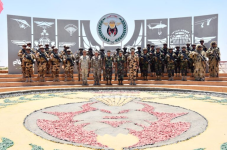
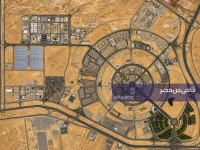
The Octagon Strategic Command Center in Egypt extends over an area of approximately 22,000 acres (about 89 square kilometers), making it one of the largest military and security headquarters in the world.
The complex's architectural design draws its inspiration from ancient Egyptian civilization, while incorporating the latest military planning methods.
The complex consists of 13 main areas and buildings, and its heart consists of eight octagonal headquarters representing the main branches of the Egyptian Armed Forces. These buildings are connected to a central command building that serves as the operational heart of the complex.
The Octagon Strategic Command Complex is located in the heart of Egypt's New Administrative Capital, approximately 45 kilometers east of Cairo, and is designed to unify military command, enhance coordination between various agencies, and support decision-making capabilities to meet the changing regional security challenges in the Middle East and Africa.
The project aims to replace the decentralized command structure with a unified sovereign command system capable of coordinating national military and security responses across various operational areas.
Integrated leadership and advanced operational capabilities
The headquarters brings together several command centers at the national level into one integrated operational environment.
Among its main operational components are:
A unified strategic data center responsible for unifying and synchronizing information from sovereign state institutions.
- A strategic networks control center that supervises national administrative networks.
- The National Services Operations Center coordinates government agencies and essential public infrastructure and facilities.
- A communications control center responsible for maintaining the stability and security of national and military communications.
- The Emergency and Crisis Management Center oversees emergency response, field security, and crisis coordination.
- The Weather Prediction Center supports national preparedness for severe weather events and climate-related emergencies.
The complex also houses advanced C4ISR (command, control, communications, computing, intelligence, surveillance and reconnaissance) systems designed to speed up decision-making on the battlefield and improve coordination between military branches.
 Military branches operating from the Octagon Building
The Octagon Building was designed to be an integrated strategic headquarters for the main military and security organizations in Egypt.

The eight octagonal headquarters house command structures for:
Headquarters of the Egyptian Army
The General Staff oversees regional military commands, including operations related to the Sinai Peninsula, Egypt's western border with Libya, and Southern Command.
Headquarters of the Egyptian Air Force Command
The Air Force Command Center manages combat aviation, air transport, reconnaissance, and air intelligence operations.
Headquarters of the Egyptian Navy Command
Naval commanders oversee both the Mediterranean Fleet and the Southern Fleet, which are responsible for operations in the Red Sea and the Suez Canal.
Headquarters of the Air Defense Forces Command
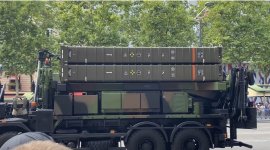
The Egyptian Air Defense Forces, which operate independently of the Air Force, coordinate missile defense systems, radar networks, and protect national airspace.
National integration between intelligence and cybersecurity
The Strategic Command Center in Egypt's Octagon serves as the country's central intelligence coordination center.
This complex includes:
Military intelligence responsible for collecting tactical and strategic intelligence.
A specialized command in cyber defense and electronic warfare, whose mission is to protect the national digital infrastructure and support cyber operations.
National Security Council Coordination Facilities, which facilitate the exchange of information between civilian intelligence agencies and military intelligence organizations during crises.
This structure aims to improve the flow of information and coordination between Egyptian national security institutions.
Special operations forces and strategic support forces
Several specialized military organizations are also expected to operate from the headquarters.
These organizations include:
Special Operations Command, which oversees Egypt's elite commando and airborne units.
The Presidential Guard, which maintains a permanent command presence given the president's role as Commander-in-Chief of the Armed Forces.
The Strategic Logistics Command, which is responsible for managing military supply chains at the state level, storing strategic weapons, and deploying forces.
Advanced C4ISR architecture forms the digital backbone
One of the most notable features of the new headquarters is its integrated infrastructure for C4ISR systems, which acts as a digital nervous system for the Egyptian military command network.
The technological architecture includes several interconnected systems.
National command system RISC3 C5ISR
The RISC3 C5ISR command system developed in Egypt is the core of this network, adding cyber capabilities to the traditional C4ISR framework.
The platform enables real-time data fusion by integrating information collected from radar stations, missile units, naval platforms, combat aircraft, ground forces and air defense systems into a unified operational picture available to commanders.
Unified strategic data centers
The complex houses Egypt's unified strategic data center, where sovereign, intelligence and logistical information is processed via a secure military cloud environment.
The system reduces the need for separate military branches to manually exchange operational data by providing centralized access to synchronized information.
Cybersecurity and national encryption systems
To protect military communications, the headquarters includes national encryption systems designed to protect communications from interception, jamming, or cyber intrusion.
These systems provide communications between headquarters and operational units, including missile batteries, radar installations, and fighter aircraft.
Flexible communications network
Military communications rely on both Egypt's secure underground fiber-optic infrastructure and the TIBA-1 military communications satellite.
The communications infrastructure is designed to continue to function during electronic warfare conditions, including GPS jamming and signal jamming.
Integration of sensors with firing systems
The headquarters also includes sensor-to-fire systems link capabilities, allowing intelligence collection platforms – including satellites and unmanned aircraft systems – to be linked directly to operational weapons platforms such as artillery and fighter aircraft.
The goal is to reduce the time period between target detection and operational response.
The national satellite network supports strategic operations
The Octagon's command infrastructure relies on Egypt's growing national satellite network, providing secure communications and space-based intelligence.
TIBA-1 military communications satellite
The TIBA-1 satellite is the backbone of the Egyptian military communications network.
The satellite is located in geostationary orbit at an altitude of approximately 36,000 kilometers above the Earth’s surface, and operates via 22 secure communications beams in the Ka band, 12 of which cover Egypt and its territorial waters.
The satellite enables wide-area encrypted communications between headquarters and military forces operating in the Western Desert, the Sinai Peninsula, the Mediterranean and the Red Sea.
The TIBA-1 satellite was developed in cooperation with Airbus Defense and Space and Thales Alenia Space, while Egypt continues to explore additional partnerships in the field of satellite communications with Thales.
A constellation of Earth observation satellites
The headquarters also receives intelligence from several Earth observation satellites.
Among them:
MisrSat-2
NEXSAT-1
These satellites provide high- and medium-resolution images for border control and national security surveillance, especially along Egypt's western border with Libya and its southern border with Sudan.
Another component is SPNEX, a nanosatellite launched in December 2025 and developed by the Egyptian Space Agency.
SPNEX monitors the Earth's ionosphere and space weather conditions, providing data intended to help military communications systems anticipate any outages that could affect radio communications and GPS-based operations.
Built-in redundant network architecture
Satellite infrastructure includes redundant communications infrastructure designed to maintain continuity of operations.
The headquarters houses extensive ground-based satellite communications facilities capable of direct transmission to national satellites.
In the event of disruption of satellite communications as a result of electronic warfare or other operational factors, the command system is designed to automatically reroute communications via secure underground fiber-optic networks, or, when necessary, via leased capacity from partner Arab or European satellite systems.
Strategic vision
The establishment of the Octagon Strategic Command Center in Egypt reflects Egypt's broader goal of unifying military command, intelligence coordination, cybersecurity, communications, and national crisis management under one integrated command headquarters.
By combining advanced digital command systems, secure communications infrastructure, satellite-supported intelligence information, and unified military command, this complex aims to enhance Egypt’s ability to coordinate responses to multi-dimensional security challenges, while supporting national defense planning and strategic decision-making.