The SC
INT'L MOD

- Thread starter
- #2,251
Egypt is building a multi-source air defense network: the Russian S-300VM, the Chinese HQ-9B, the American NASAMS, and the German IRIS-T
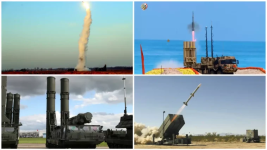
Egypt continues to diversify its air defense arsenal, pursuing a strategy that combines Western and Eastern technologies to enhance its capabilities in detecting and countering aerial threats. In this context, Cairo submitted a request last August to purchase the American NASAMS medium-range air defense system in a deal estimated at approximately $4.67 billion. This coincided with reports of its acquisition of the Chinese HQ-9B long-range system, also known as the FD-2000B in its export version.
According to the US Defense Security Cooperation Agency (DSCA), the proposed package includes four AN/MPQ-64F1 Sentinel radars, along with hundreds of AIM-120 AMRAAM interceptor missiles, which the NASAMS system uses to engage aerial targets.
This deal is of significant importance, given that Egypt has sought for years to acquire AIM-120 missiles to arm its F-16 fighter jets. However, the lack of these missiles in its arsenal has limited its options in beyond-visual-range air combat. In response, Cairo has sought to diversify its air force sources, including studying and acquiring fighter jets from non-American suppliers.
The US agency explained that the proposed deal would enhance Egypt's ability to counter current and future aerial threats by improving its detection and engagement capabilities against a variety of targets.
NASAMS within the Medium Air Defense Layer
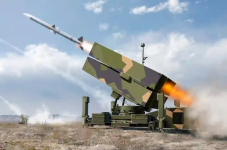
The move toward NASAMS comes after the acquisition of German IRIS-T air defense systems by Egypt, including versions of the IRIS-T SLM and IRIS-T SLS families, according to reports on contracts and deliveries. These systems offer additional options for engaging aircraft, helicopters, drones, and cruise missiles, depending on the capabilities of each variant.
The integration of systems from multiple sources represents a move toward building an air defense network with missions distributed among long-, medium-, and short-range systems, rather than relying on a single system to counter various threats.
NASAMS also holds political and military significance, as the proposed deal could represent a notable shift in the scale of Egyptian air defense purchases from the United States. According to data from the Stockholm International Peace Research Institute (SIPRI) on arms transfers, the last known US deliveries in this area included the AN/TWQ-1 Avenger short-range systems, which use FIM-92 Stinger missiles, in 2008, at an estimated value of $50 million.
In earlier phases, Egypt acquired other American systems, including the medium-range MIM-23 I-HAWK and the short-range M48 Chaparral, which uses MIM-72 missiles derived from the Sidewinder family.
Most previous US air defense deals with Egypt were limited to short- and medium-range systems, without including advanced strategic systems. In 1999, then-US Secretary of Defense William Cohen announced a multi-billion dollar arms package for Middle Eastern countries, which included the Patriot PAC-3 system for Egypt, even though it was still under development at the time. However, there is no evidence to confirm that Cairo received this version, which uses hit-to-kill technology to intercept ballistic missiles by directly impacting the target.
Three years later, reports indicated that the United States and Israel reached an understanding that would prevent the supply of F-15 fighter jets to Egypt, in order to maintain Israel's qualitative military edge. In light of these reports, questions were raised about the chances of Cairo obtaining more advanced American air defense systems, such as the Patriot PAC-3, but there is no direct evidence to prove that this understanding was the reason for excluding the system from Egyptian deals.
Russian and Chinese systems enhance Cairo's options
HQ-9B
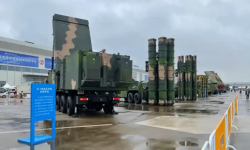
In parallel with its military cooperation with the United States and Europe, Egypt has expanded its reliance on Russian air defense systems in recent years, starting with short- and medium-range systems such as the S-125 Pechora-2M, Tor-M1, and Buk-M2, and culminating in the long-range S-300VM system, which Cairo contracted for in 2014–2015.
The S-300VM provides capabilities to engage aircraft and ballistic missiles and represents a key component of Egypt's long-range air defense layer.
Meanwhile, reports have surfaced regarding Egypt's acquisition of the Chinese HQ-9B system, or its export version, the FD-2000B. If the details of this acquisition are confirmed, it would mean adding a Chinese long-range system alongside the Russian ones, thus expanding the options available to the Egyptian Armed Forces in the field of strategic air defense.
Some published specifications for the HQ-9 family estimate its engagement range at approximately 200–300 kilometers.
Military relations between Egypt and Russia have witnessed periods of expanding arms supplies, while Cairo has sought to diversify its arms sources in subsequent decades. In this context, reports indicate that Egypt has acquired the Chinese HQ-9B air defense system, or its export version, the FD-2000B, which is considered the Chinese equivalent of the Russian S-300 system. With the addition of the Chinese system to the Russian S-300VM, Egypt, according to these reports, possesses two of the most prominent non-Western long-range air defense systems. It should be noted, however, that the HQ-9B does not have a combat experience comparable to the American Patriot PAC-3 and the Russian S-300 systems.
This coincides with Egypt's move to diversify its military arsenal and arms sources, including air defense systems. The request to purchase the American NASAMS system comes after reports concerning the Chinese HQ-9B/FD-2000B system, at a time when Cairo continues to acquire weapons from various sources, including the United States, China, Russia, and European countries.
The growing military ties between Egypt and China have attracted attention in Washington, particularly after the joint air exercises hosted by Egypt in April and May 2015, which were followed by calls to reassess the annual US military aid provided to Cairo.
Egyptian air defense is not limited to long-range systems; it also includes shorter-range systems to engage targets that penetrate outer layers of defenses, including low-flying aircraft, helicopters, and drones.
Systems that have entered service in Egypt include American, French, and Russian systems, such as Chaparral, Crotale, and Tor, as well as the Amoun system, linked to the Skyguard system, which combines anti-aircraft guns and interceptor missiles.
The importance of this layer lies in providing protection for air bases, military installations, and vital sites, and countering threats that long-range systems may find difficult to address efficiently, either economically or operationally.
The IRIS-T systems add modern interception capabilities at shorter and medium ranges, while NASAMS, if the deal is finalized and the system enters service, provides another layer relying on American interceptor missiles and radars.
This deployment, if the systems are integrated effectively, would allow Egyptian forces to build layered defenses, with each layer addressing threats according to their range, altitude, and nature.
An integrated Egyptian air defense network that combines Eastern and Western systems
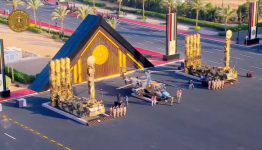
Egypt has not limited itself to building a conventional air defense system, but has worked to develop an integrated network comprising diverse systems whose capabilities range from intercepting low-altitude targets to dealing with long-range aerial threats, utilizing both Eastern and Western technologies.
This system begins with the Chinese HQ-9B air defense system, which reports indicate has been delivered to Egypt. It has a range of approximately 300 kilometers and the ability to track and engage 24 targets simultaneously. The system provides radar coverage for engaging aircraft and missiles. The South China Morning Post discussed the importance of this contract for Egypt's air defense capabilities.
Egypt does not rely solely on Chinese systems. It also possesses various Western systems, including the American Chaparral infrared-guided system, the French Crotale short-range system, and the Amoun system, a modified version of the Skyguard system. Amoun combines 35mm cannons and surface-to-air missiles and is used to counter drones, helicopters, and low-flying aircraft.
According to the Army Recognition website, Egypt possesses more than 40 air defense batteries distributed across 18 brigades, forming a network that integrates systems from multiple sources. Efforts to develop these capabilities include the Saqr system, along with German IRIS-T SLM missiles, which have a range of 40 kilometers and an interception altitude of 27 kilometers. Egypt received export approval for these missiles in 2018.
In the area of early warning and surveillance, Egypt relies on a suite of long-range, three-dimensional radars. This suite includes the American NTPS-78 and SPS-84 long-range radars, with a range of up to 450 kilometers, and the French Grand Master 400 radars, which reportedly have a range of 515 kilometers. Additionally, Egypt utilizes Russian Protivnik-GE early warning radars, designed to detect aerial targets, including those flying at high speeds.

These radars are integrated with command and control systems that link air defense units, exchange information, analyze data, and distribute orders, thus accelerating decision-making and coordinating interception operations between different units.
In the field of airborne early warning, the Chinese KJ-500 aircraft was showcased during joint exercises with Egypt. This aircraft features a radar that provides 360-degree coverage, enabling the tracking of multiple aerial and maritime targets, while transmitting data to command centers to assist in guiding fighter jets and managing air operations.
Regarding directed-energy weapons, reports have discussed potential Egyptian-Chinese cooperation on the LW-30 man-portable laser system. Egypt also recently revealed its possession of the "Ege Hel 01" laser air defense system.
The Egyptian air defense network comprises missile and radar systems from various sources, in addition to command, control, and early warning systems. The range of threats that these systems are designed to deal with includes manned and unmanned aircraft, missiles, and low-flying targets, within a network that combines monitoring, tracking, and interception capabilities.
Egypt continues to diversify its air defense arsenal, pursuing a strategy that combines Western and Eastern technologies to enhance its capabilities in detecting and countering aerial threats. In this context, Cairo submitted a request last August to purchase the American NASAMS medium-range air defense system in a deal estimated at approximately $4.67 billion. This coincided with reports of its acquisition of the Chinese HQ-9B long-range system, also known as the FD-2000B in its export version.
According to the US Defense Security Cooperation Agency (DSCA), the proposed package includes four AN/MPQ-64F1 Sentinel radars, along with hundreds of AIM-120 AMRAAM interceptor missiles, which the NASAMS system uses to engage aerial targets.
This deal is of significant importance, given that Egypt has sought for years to acquire AIM-120 missiles to arm its F-16 fighter jets. However, the lack of these missiles in its arsenal has limited its options in beyond-visual-range air combat. In response, Cairo has sought to diversify its air force sources, including studying and acquiring fighter jets from non-American suppliers.
The US agency explained that the proposed deal would enhance Egypt's ability to counter current and future aerial threats by improving its detection and engagement capabilities against a variety of targets.
NASAMS within the Medium Air Defense Layer
The move toward NASAMS comes after the acquisition of German IRIS-T air defense systems by Egypt, including versions of the IRIS-T SLM and IRIS-T SLS families, according to reports on contracts and deliveries. These systems offer additional options for engaging aircraft, helicopters, drones, and cruise missiles, depending on the capabilities of each variant.
The integration of systems from multiple sources represents a move toward building an air defense network with missions distributed among long-, medium-, and short-range systems, rather than relying on a single system to counter various threats.
NASAMS also holds political and military significance, as the proposed deal could represent a notable shift in the scale of Egyptian air defense purchases from the United States. According to data from the Stockholm International Peace Research Institute (SIPRI) on arms transfers, the last known US deliveries in this area included the AN/TWQ-1 Avenger short-range systems, which use FIM-92 Stinger missiles, in 2008, at an estimated value of $50 million.
In earlier phases, Egypt acquired other American systems, including the medium-range MIM-23 I-HAWK and the short-range M48 Chaparral, which uses MIM-72 missiles derived from the Sidewinder family.
Most previous US air defense deals with Egypt were limited to short- and medium-range systems, without including advanced strategic systems. In 1999, then-US Secretary of Defense William Cohen announced a multi-billion dollar arms package for Middle Eastern countries, which included the Patriot PAC-3 system for Egypt, even though it was still under development at the time. However, there is no evidence to confirm that Cairo received this version, which uses hit-to-kill technology to intercept ballistic missiles by directly impacting the target.
Three years later, reports indicated that the United States and Israel reached an understanding that would prevent the supply of F-15 fighter jets to Egypt, in order to maintain Israel's qualitative military edge. In light of these reports, questions were raised about the chances of Cairo obtaining more advanced American air defense systems, such as the Patriot PAC-3, but there is no direct evidence to prove that this understanding was the reason for excluding the system from Egyptian deals.
Russian and Chinese systems enhance Cairo's options
HQ-9B
In parallel with its military cooperation with the United States and Europe, Egypt has expanded its reliance on Russian air defense systems in recent years, starting with short- and medium-range systems such as the S-125 Pechora-2M, Tor-M1, and Buk-M2, and culminating in the long-range S-300VM system, which Cairo contracted for in 2014–2015.
The S-300VM provides capabilities to engage aircraft and ballistic missiles and represents a key component of Egypt's long-range air defense layer.
Meanwhile, reports have surfaced regarding Egypt's acquisition of the Chinese HQ-9B system, or its export version, the FD-2000B. If the details of this acquisition are confirmed, it would mean adding a Chinese long-range system alongside the Russian ones, thus expanding the options available to the Egyptian Armed Forces in the field of strategic air defense.
Some published specifications for the HQ-9 family estimate its engagement range at approximately 200–300 kilometers.
Military relations between Egypt and Russia have witnessed periods of expanding arms supplies, while Cairo has sought to diversify its arms sources in subsequent decades. In this context, reports indicate that Egypt has acquired the Chinese HQ-9B air defense system, or its export version, the FD-2000B, which is considered the Chinese equivalent of the Russian S-300 system. With the addition of the Chinese system to the Russian S-300VM, Egypt, according to these reports, possesses two of the most prominent non-Western long-range air defense systems. It should be noted, however, that the HQ-9B does not have a combat experience comparable to the American Patriot PAC-3 and the Russian S-300 systems.
This coincides with Egypt's move to diversify its military arsenal and arms sources, including air defense systems. The request to purchase the American NASAMS system comes after reports concerning the Chinese HQ-9B/FD-2000B system, at a time when Cairo continues to acquire weapons from various sources, including the United States, China, Russia, and European countries.
The growing military ties between Egypt and China have attracted attention in Washington, particularly after the joint air exercises hosted by Egypt in April and May 2015, which were followed by calls to reassess the annual US military aid provided to Cairo.
Egyptian air defense is not limited to long-range systems; it also includes shorter-range systems to engage targets that penetrate outer layers of defenses, including low-flying aircraft, helicopters, and drones.
Systems that have entered service in Egypt include American, French, and Russian systems, such as Chaparral, Crotale, and Tor, as well as the Amoun system, linked to the Skyguard system, which combines anti-aircraft guns and interceptor missiles.
The importance of this layer lies in providing protection for air bases, military installations, and vital sites, and countering threats that long-range systems may find difficult to address efficiently, either economically or operationally.
The IRIS-T systems add modern interception capabilities at shorter and medium ranges, while NASAMS, if the deal is finalized and the system enters service, provides another layer relying on American interceptor missiles and radars.
This deployment, if the systems are integrated effectively, would allow Egyptian forces to build layered defenses, with each layer addressing threats according to their range, altitude, and nature.
An integrated Egyptian air defense network that combines Eastern and Western systems
Egypt has not limited itself to building a conventional air defense system, but has worked to develop an integrated network comprising diverse systems whose capabilities range from intercepting low-altitude targets to dealing with long-range aerial threats, utilizing both Eastern and Western technologies.
This system begins with the Chinese HQ-9B air defense system, which reports indicate has been delivered to Egypt. It has a range of approximately 300 kilometers and the ability to track and engage 24 targets simultaneously. The system provides radar coverage for engaging aircraft and missiles. The South China Morning Post discussed the importance of this contract for Egypt's air defense capabilities.
Egypt does not rely solely on Chinese systems. It also possesses various Western systems, including the American Chaparral infrared-guided system, the French Crotale short-range system, and the Amoun system, a modified version of the Skyguard system. Amoun combines 35mm cannons and surface-to-air missiles and is used to counter drones, helicopters, and low-flying aircraft.
According to the Army Recognition website, Egypt possesses more than 40 air defense batteries distributed across 18 brigades, forming a network that integrates systems from multiple sources. Efforts to develop these capabilities include the Saqr system, along with German IRIS-T SLM missiles, which have a range of 40 kilometers and an interception altitude of 27 kilometers. Egypt received export approval for these missiles in 2018.
In the area of early warning and surveillance, Egypt relies on a suite of long-range, three-dimensional radars. This suite includes the American NTPS-78 and SPS-84 long-range radars, with a range of up to 450 kilometers, and the French Grand Master 400 radars, which reportedly have a range of 515 kilometers. Additionally, Egypt utilizes Russian Protivnik-GE early warning radars, designed to detect aerial targets, including those flying at high speeds.
These radars are integrated with command and control systems that link air defense units, exchange information, analyze data, and distribute orders, thus accelerating decision-making and coordinating interception operations between different units.
In the field of airborne early warning, the Chinese KJ-500 aircraft was showcased during joint exercises with Egypt. This aircraft features a radar that provides 360-degree coverage, enabling the tracking of multiple aerial and maritime targets, while transmitting data to command centers to assist in guiding fighter jets and managing air operations.
Regarding directed-energy weapons, reports have discussed potential Egyptian-Chinese cooperation on the LW-30 man-portable laser system. Egypt also recently revealed its possession of the "Ege Hel 01" laser air defense system.
The Egyptian air defense network comprises missile and radar systems from various sources, in addition to command, control, and early warning systems. The range of threats that these systems are designed to deal with includes manned and unmanned aircraft, missiles, and low-flying targets, within a network that combines monitoring, tracking, and interception capabilities.