Electric vehicle ( EV ) Industries

While the NEV market in Pakistan is in its nascent stages, there is a trajectory towards growth and expansion as part of the country’s draft National Electric Vehicle Policy (NEVP). This policy aims to have electric vehicles constitute 30% of new sales for passenger vehicles and heavy-duty trucks by 2030 and 90% by 2040, it said.

Meanwhile, the government remains committed to expanding local EV production. Days ago, it granted licenses to 57 EV manufacturers, 55 for two and three-wheelers, and two for the assembly of four-wheelers.
 

Govt issues EV production licenses to 57 manufacturers:


BR Web Desk
February 4, 2025

04154707e63bf88.jpg


In a bid to expand local electric vehicle (EV) production, the government has granted licenses to 57 EV manufacturers, reported Radio Pakistan Tuesday.

“The government is focusing on expanding local EV production, with licenses issued to 55 manufacturers for two and three-wheelers, and two for the assembly of four-wheelers,” read the report.

As per the report, a plan is also under consideration for establishing charging stations, including fast chargers and battery swapping stations, it said.

“Under the new EV policy, there are offers for free registration and exemption from annual token fees and toll taxes.”

The report added that at least one EV zone is planned for each province, including Islamabad.

Facing limited foreign exchange flows and growing environmental concerns, the government has been rapidly promoting renewable infrastructure.
 
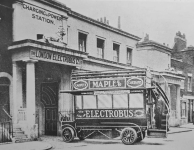
London Electrobus started its service in 1906 and had 20 electrobuses at one point.
The company went into liquidation in January 1910 after accusations of fraud.

London's Charging Station - back than

1740318560108.png
 

Sindh announces ‘free pink EV motorcycles’ for female students, working women


BR Web Desk
February 27, 2025

Photo: AI generated


a statement from the Chief Minister House said that Sindh Chief Minister Syed Murad Ali Shah, while presiding over a cabinet meeting, made several significant decisions, including the procurement of 1,000 pink electric motorcycles for women and the acquisition of double-decker buses and electric vehicles (EVs) for the city.

According to the statement, the cabinet was informed that the Transport and Sindh Mass Transit Authority (T&MTD) plans to launch a programme aimed at enhancing female mobility through sustainable transportation.

This initiative will introduce approximately 1,000 electric motorcycles for women, which will be allocated through an open and transparent balloting process.

“The initiative requires Rs300 million to be obtained outside the budget. The cabinet noted that an increasing number of women worldwide are opting for electric motorcycles as their primary mode of transport for daily commuting,” the statement read.

The main factors driving this demand include greater mobility, cost effectiveness compared to cars or public transport, eco-friendliness, and minimal maintenance, according to the statement.

“These motorcycles significantly contribute to enhanced mobility and independence for women, promote economic empowerment, break gender stereotypes, and improve safety and security.”
 

Sindh govt, Dewan Group look to introduce 500 electric taxis in province


Salman Siddiqui
February 10, 2025
https://www.facebook.com/sharer/sha...er.com/news/40347226&display=popup&ref=plugin
102119402172230.jpg


The Sindh government and Dewan Group are making progress in introducing 500 electric taxis in the province, with the aim to address environmental and transportation issues.

A statement from the Sindh government on Monday said Special Assistant to Chief Minister of Sindh for Investment and Public Private Partnership Syed Qasim Naveed Qamar met prominent industrialist and head of Dewan Group of Industries Dewan Muhammad Yousuf Farooqui in the office of the investment department.


10211804b824a26.jpg


The statement added that in the meeting the head of Dewan Group informed that the company is working towards introducing 500 electric taxis in Sindh, a project that would cost Rs2.5 billion.

The special assistant welcomed the idea, stressing that it will help in solving the problem of public transport and also strengthen the Sindh government’s plan for environment-friendly transport.
 
LAHORE
: The Punjab government has announced a plan to introduce tram-like trackless electric buses as part of a new sustainable public transport initiative.

Chief Minister Maryam Nawaz has directed the provincial transport department to begin preliminary trials for the system.

Additionally, the ART system requires less space compared to traditional buses.

According to the briefing, each ART bus will consist of three coaches, accommodating 250 to 300 passengers. The buses will feature fast-charging, Wi-Fi connectivity, and CCTV surveillance.

Charging will be completed within minutes while stationed at ART smart stations. It was also proposed that the entire ART system would be powered by solar energy, making it an eco-friendly transportation solution.
 
The chief minister of Punjab approved a five-year transport programme aimed at modernising the province's public transit infrastructure.

Officials briefed her on the Automated Rapid Transit (ART) system, which has been successfully implemented in countries such as Abu Dhabi, Malaysia, and Qatar.

The meeting's participants were informed that the ART is among the most sustainable public transport systems globally.

The trackless electric buses used in this system are considered more efficient than conventional public transport, including the articulated buses currently operating in metro services in Lahore, Rawalpindi, and Multan.

These vehicles can operate on standard roads within dedicated lanes, eliminating the need for specialised tracks or rail systems.
 
From fuel to electric—local innovation & global partnerships are driving Pakistan's green mobility shift:

🔋 30% EV target by 2030
🌱 Lower costs, cleaner air
🤝 Local & global players accelerating change

"Pakistan's EV market is ready to surge!


1747145382610.png
 

Pakistan advances NEV policy with Rs100bn subsidy


APP
July 2, 2025

6864694926add.jpg


ISLAMABAD: A high-level meeting on the National Electric Vehicle (NEV) Policy was held today under the chairmanship of the Special Assistant to the Prime Minister (SAPM) on Industries and Production, Haroon Akhtar Khan. The meeting was attended by representatives from the Pakistan Banking Association and leading insurance companies.

During the meeting, an in-depth discussion took place regarding the proposed Rs. 100 billion subsidy package aimed at promoting the use of electric vehicles in Pakistan. Haroon Akhtar Khan highlighted that Prime Minister Shehbaz Sharif’s vision of this substantial subsidy reflects a commitment to the dual goals of public welfare and environmental protection.

The SAPM noted that the successful implementation of the NEV Policy can play a vital role in reducing smog and air pollution across the country. He emphasized that it will not only help improve air quality but also significantly reduce Pakistan’s reliance on imported oil, ultimately decreasing the nation’s multi-billion-dollar oil import bill.

Haroon Akhtar Khan reaffirmed the government’s commitment to a clean and prosperous Pakistan, stating, “Our mission is a smog-free, pollution-free, and prosperous pakistan.” As part of the NEV Policy, he announced that electric vehicle charging stations will be set up nationwide to ensure convenience for the public and to encourage the transition towards clean and sustainable transportation.
 

Pakistan’s textile manufacturer move towards tech & EV sectors amid ongoing operational suspension

BR Web Desk
Amid continued operational suspension, Bilal Fibres Limited, a textile manufacturer, said on Friday that it is now actively engaging with stakeholders, technical experts, and consultants to finalise a comprehensive business plan for its proposed entry into IT, health tech, and Electric Vehicle (EV) sectors.

The Lahore-based listed company disclosed the development in its notice to the Pakistan Stock Exchange (PSX).

“During the quarter ended 30th June 2025, the company’s operations remained suspended, and no business activities were undertaken. However, as a first step towards revival, the Board of Directors (BOD) have approved the proposal to establish IT/health tech/EV division as a potential secondary line of business,” read the notice.

“In pursuance of this decision, we are actively engaged with the stakeholders, including technical experts, consultants, etc., for finalisation of the business plan,” read the notice.

Last month, Bilal Fibres announced plans to diversify into the IT, health tech, and EV sectors as a potential secondary line of business, while reaffirming that textiles remain its core focus.

The company also reported a board change, with Anwaar Abbas resigning as director and Muhammad Usman Saber, an IT professional, appointed in his place.

Established in 1987, Bilal Fibres Limited engages in the manufacture and sale of yarn in Pakistan. It offers poly/cotton, poly/viscose, CVC, viscose, and cotton yarns for weaving or knitting applications.

The company also exports its products to Europe, the Far East, and the Middle East.
 

PM Shehbaz emphasises comprehensive plan to make EVs accessible for all


Promotion of electric vehicles to save billions in fuel imports, says PM

BR Web Desk
July 18, 2025

Prime Minister Shehbaz Sharif on Friday directed to formulate a comprehensive government-level strategy to make electric vehicles (EVs) more accessible to the common citizen, the Prime Minister’s Office said in a press release.

Presiding a meeting in Islamabad regarding encouraging usage of EVs in the country, PM Shehbaz emphasised that encouraging electric vehicles in Pakistan will result in billions of dollars saved in fuel import costs, environmental protection, and the growth of local industry.

He announced that the federal government, including the federal educational board and all other educational boards across the country, will provide electric bikes to top-performing students.

The prime minister further stated that the government will prioritise employment generation by providing electric rickshaws and loaders vehicles to unemployed individuals.

To support the local EV industry, the premier instructed the development of a complete ecosystem for the manufacturing and maintenance of EVs within Pakistan.

He also called for third-party validation of the EV distribution process and government support mechanisms, ensuring transparency and efficiency.

The prime minister emphasised that economically disadvantaged individuals should be given priority in accessing EVs under the government assistance scheme.

He ordered the launch of a public awareness campaign about the EV subsidy scheme and ensured that the electric bikes, rickshaws, and loaders distributed through the initiative meet high-quality and safety standards.

A review meeting, chaired by PM Shehbaz, on promoting EVs and government support for their acquisition was participated by federal ministers Ahsan Iqbal, Attaullah Tarar, Special Assistant to PM Haroon Akhtar, Chief Coordinator Mosharraf Zaidi, and senior officials.

The meeting was briefed on current industrial capacity and the government’s ongoing steps to ensure affordability and accessibility of EVs through low-cost loans and flexible terms.

More than 100,000 electric bikes and over 3,000 rickshaws/loaders will be made available under easy conditions through government support.

Additionally, it was shared that top-performing intermediate students across boards, including the federal board, will receive free electric bikes under the scheme.

A 25% quota has been reserved for women, with remaining provincial quotas to be distributed based on population. The PM directed to increase Balochistan’s quota by 10%.

The scheme is expected to attract at least four new battery manufacturers, which will boost investment, employment, and business opportunities in Pakistan.

The prime minister directed for the swift rollout of the scheme based on these
 

Sindh govt allocates budget for EV taxis, scooters in FY26


BR Web Desk
June 11, 2025

The Sindh government has decided to allocate a significant budget in the upcoming fiscal year 2025-26 for the procurement of additional buses and promotion of electric vehicles, including EV taxis and scooters.

The decision was taken during a high-level meeting of the Sindh Transport and Mass Transit Department held in Karachi, chaired by Sindh Senior Minister and Minister for Information, Transport and Mass Transit, Sharjeel Inam Memon.

The meeting was attended by Secretary Transport Asad Zamin, MD Sindh Mass Transit Authority Kamal Dayo, CEO TransKarachi Fawad Ghaffar Soomro, and other senior officials.

A comprehensive review of ongoing and proposed projects, including the Peoples Bus Service and EV scooters initiative, was presented during the meeting.

Discussions also focused on the development of charging infrastructure for EVs at multiple locations across the province.
 

China’s BYD to assemble EVs in Pakistan from 2026

Reuters
July 24, 2025

1753357083436.png


Chinese electric vehicle giant BYD plans to roll out its first car assembled in Pakistan by July or August 2026 to capture growing demand for electric and plug-in hybrid vehicles in the region, a company executive said on Wednesday.

BYD, the world’s top EV maker, has been expanding rapidly outside its home market, where it is in a strong price war. The Pakistan plant addresses rising demand from emerging markets and allows the company to take advantage of incentives offered by the government.

The plant has been under construction since April near Karachi in a partnership between BYD and Mega Motor Company, a subsidiary of Hub Power, Danish Khaliq, vice president of sales and strategy at BYD Pakistan, told Reuters.

It would initially have the capacity to produce 25,000 units a year on a double shift, he said. He did not elaborate on when the plant would achieve full capacity or say when mass production would begin there.

The plant will start by assembling imported parts, with some local production of non-electric components, Khaliq said, adding it would initially produce vehicles for the domestic market, with potential to export to right-hand drive countries in the region depending on freight costs and business economics.

“We do not foresee excess capacity in our system as demand in Pakistan will catch up,” he said.

BYD started delivering imported EVs in Pakistan in March. Khaliq did not give an exact sales number but said the sales of a few hundred cars had exceeded internal targets by 30 per cent.
 
I've seen EV motorbikes but haven't seen any EV vehicles around in Karachi. Hybrid cars yes.
 

Users who are viewing this thread

Latest Posts

Back
Top