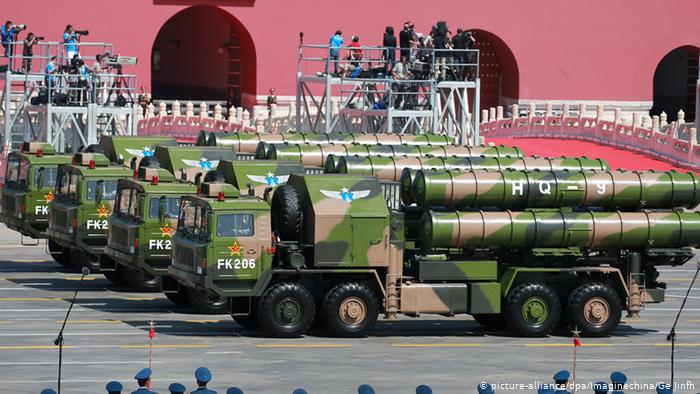
--Germans and Japanese today think the world is still in the WW II era when the Axis powers can beat up the world esp China, lol. Or dreaming that today's
China is similar to 1985 Japan. Sore losers.
Why Germany’s Push for a Plaza Accord with China is a Historical Miscalculation
Nanmoon
2 days ago
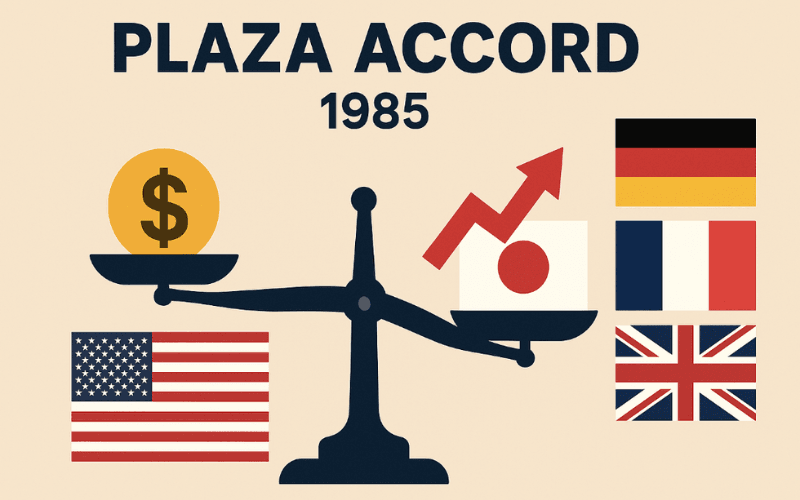
Berlin is apparently feeling nostalgic for the 1980s.
Chancellor Friedrich Merz recently suggested that Europe needs a modern-day Plaza Accord to deal with China. He argues the Renminbi is artificially suppressed by thirty percent. He talks about “overcapacity” flooding European markets. It is a classic move. When you cannot compete, blame the other guy’s currency.
But let us be clear about what the Plaza Accord actually was.
Back in 1985, the United States did not ask Japan nicely to change its exchange rate. It was a demand backed by economic gravity. Japan was a security dependent. It hosted American troops. It needed Washington’s approval to exist as a major power. When the U.S. said jump, Tokyo asked how high.
That is not the world we live in anymore.
China is not a security dependent. It does not host foreign troops. Its central bank does not take calls from Brussels or Berlin telling it how to set monetary policy. Suggesting a coordinated squeeze on the Renminbi today is like suggesting you can hold back the tide with a pitchfork. It is a lot of effort for zero results.
The irony here is thick enough to cut with a knife.
Merz complains about a three-hundred-sixty-billion-euro trade deficit. What he carefully avoids mentioning is the service sector surplus Europe enjoys. In 2025, China actually ran a service trade deficit of forty-eight point three billion dollars with the EU. European firms raked in over ten billion dollars just from licensing patents and intellectual property.
So, the story is not that Europe is losing money. The story is that Europe is buying physical goods but selling high-margin services and technology. That is usually how you want the trade balance to work. But that does not sound as scary as screaming about deficits, so the politicians ignore it.
Then there is the ghost of Japan.
Everyone points to the Plaza Accord as the reason Japan stagnated. That is only half the picture. Japan’s mistake was not just letting the Yen rise. Their mistake was the reaction. To offset the pain of a stronger currency, the Bank of Japan slashed interest rates to the floor. Money poured into real estate and stocks because there was nowhere else to go. They built a house of cards.
Europe seems to think China is just waiting to repeat that mistake.
They are wrong. China watched that happen. They studied it. They have capital controls. They have firewalls. They have an entire playbook dedicated to not becoming Japan. If Europe tries to pop a bubble in China, they will find the Chinese system is designed to absorb external shocks, not amplify them.
Let us talk about this “overcapacity” nonsense.
China makes better and cheaper electric vehicles. They make better and cheaper solar panels. They make better and cheaper batteries. That is called being good at your job. If a German factory cannot compete because its energy costs are triple those of a Chinese rival, that is not a currency problem. That is a European energy policy problem.
It is like losing a race and demanding the winner wear heavier shoes. It does not make you faster. It just makes the sport worse for everyone.
The structural issues in Europe are painful to admit.
Natural gas prices are still sky-high compared to the rest of the world. The workforce is aging rapidly. Labor laws make it nearly impossible to fire anyone, which makes companies terrified to hire anyone new. Regulations pile up like snowdrifts. This is the reality of the European economy.
No amount of currency manipulation will fix a broken regulatory state.
Imagine if Merz actually got his way. Suppose the Renminbi suddenly shot up by thirty percent. What happens on the ground in Munich or Milan?
Everything gets more expensive. The electronics. The appliances. The components that go into European cars and machines. European inflation, which is already a persistent headache, would spike again. The average household would see their purchasing power vanish.
And for what? So that European companies, which have been shielded from competition for decades, can finally face the music? That is not a recipe for a comeback. That is a recipe for a recession.
There is a deeper strategic blindness here.
Europe is trying to use tools from the 20th century to fight a 21st-century competitor. The U.S. could bully Japan because Japan needed the U.S. market more than the U.S. needed Japan. China has the largest consumer market in the world. It does not need Europe the same way Japan needed America.
If Europe pushes too hard, China will simply pivot harder to the Global South. They will sell their EVs in Southeast Asia, Africa, and Latin America. They will build out the infrastructure there. Europe will end up with higher prices and no access to the fastest-growing markets on earth.
It is a self-inflicted wound waiting to happen.
The real tragedy is that this is a distraction. Instead of fixing the energy grid, reforming the pension systems, or investing in AI research, European leaders are playing geopolitical dress-up. They are pretending they are the United States in 1985, when in reality they are more like a wealthy retiree yelling at the neighbors to get off their lawn.
The Plaza Accord was a specific tool for a specific time. It worked because the power dynamic was absolute. Today, that dynamic is gone. The multipolar world does not allow for such simple diktats.
If Europe wants to compete, it needs to build better products. It needs to streamline its bureaucracy. It needs to get its energy costs under control. Blaming the Renminbi is just a way to avoid doing the hard work.
Because at the end of the day, you cannot tariff your way to prosperity. And you definitely cannot devalue your way out of a productivity crisis.