Federal Constitutional Court/ Supreme Court / High Courts of Pakistan, News

‘Only constitutional bench can review constitutionality of laws: Justice Mazhar​


The Frontier Post


supreme-court-judicial-reforms-810x476.jpg


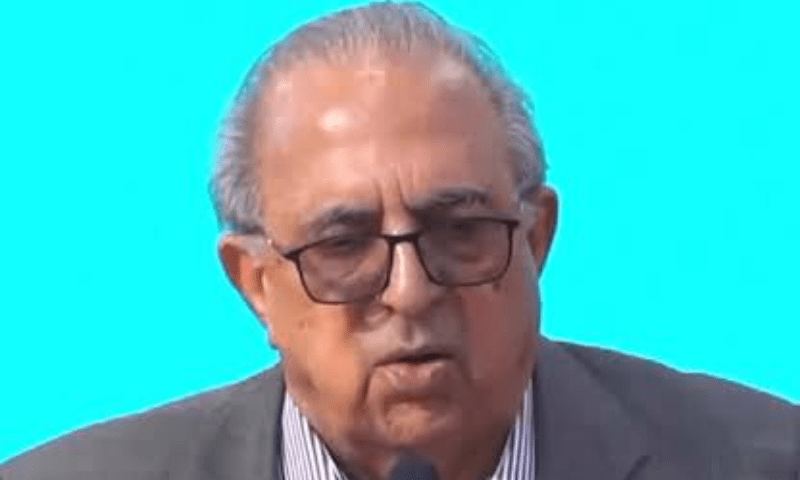
ISLAMABAD: Supreme Court Justice Muhammad Ali Mazhar has stated that only a constitutional bench has the authority to review the constitutionality of laws, while a regular bench does not have the jurisdiction to interpret constitutional matters. His remarks were part of a 20-page note issued in the ongoing case regarding the powers of Supreme Court benches.

In his note, Justice Mazhar emphasized that the constitutional bench had rightly annulled the orders of a two-member bench. He reaffirmed that the 26th Amendment remains a part of the Constitution, highlighting that its provisions are clear and transparent. He further stated that the Supreme Court cannot turn a blind eye to this amendment.

While acknowledging that the amendment has been challenged, and notices have been issued to the relevant parties, Justice Mazhar stressed that any request to refer the case to a full court would be decided on merit. He clarified that the 26th Amendment can only be repealed by Parliament or a Supreme Court ruling, and until such a decision is made, all matters will proceed under its framework.

He asserted that at least a five-member constitutional bench is required for constitutional interpretation, and a regular bench should not exceed its jurisdiction as defined by the Constitution. He also agreed with the constitutional bench’s decision to revoke orders previously issued by Justice Mansoor Ali Shah and Justice Aqeel Abbasi in the matter.

Justice Mazhar concluded that since the fundamental orders of the two-member bench in the tax case had been annulled, all subsequent proceedings based on those orders were now null and void.
 
To view this content we will need your consent to set third party cookies.
For more detailed information, see our cookies page.
 

Towards boosting foreign investment inflows: IMF told how corrupt practices can be eradicated


  • Supreme Court Bar Association of Pakistan president meets representatives from the Governance and Corruption Diagnostic Assessment team of the IMF

Terence J Sigamony
February 15, 2025

ISLAMABAD: Supreme Court Bar Association of Pakistan (SCBAP) president met with representatives from the Governance and Corruption Diagnostic Assessment team of the International Monetary Fund (IMF) in Islamabad.

SCBAP President Mian Muhammad Rauf Atta was accompanied by Hassan Raza Pasha, Member Pakistan Bar Council, Muhammad Aurangzeb Khan, Additional Secretary SCBAP, and Mir Attaullah Langove, president High Court Bar Association, Balochistan.

According to the press release issued by the SCBAP office on Friday, the meeting covered a range of topics, with a primary focus on eradicating corrupt practices to create an inclusive environment for attracting foreign investment into Pakistan.

Additionally, various strategies were discussed to combat corruption in government departments, promote good governance, and implement legal reforms that would benefit the judicial hierarchy, all of which are essential for fostering a stronger and more vibrant economy as well as for the efficient judicial system. In this context, the President emphasized the need for measures to eradicate financial crimes to boost the economy.

At this juncture, President SCBAP noted that a system of punishment and reward is already in place within the judicial system, where the Supreme Judicial Council (as per the constitution) addresses complaints against judges of the higher judiciary, while respective high courts handle issues related to district judges. He cited a recent example of a sitting Supreme Court judge who was removed from office due to a complaint filed with the SJC, last year.

The president SCBAP described the rule of law as a cornerstone of a democratic society and reaffirmed his commitment to uphold it, along with the SCBAP’s dedication to the constitution, the supremacy of institutions, and the independence of the judiciary.

The meeting concluded with both sides expressing gratitude and a desire for more frequent meetings in the future.

Copyright Business Recorder, 2025
 
President SCBAP addressed the shortcomings in the judicial system, such as the backlog of cases in lower and district courts, the insufficient number of judges, inefficiencies within departments, and potential measures like Alternative Dispute Resolution (ADR) to alleviate the burden on the courts and enhance public access to justice.
 

CJP explains what actually constitutes judiciary’s mandate

Terence J Sigamony
ISLAMABAD: The chief justice of Pakistan emphasised the judiciary’s mandate is to interpret the law, underscoring its critical role in maintaining balance among the state organs.

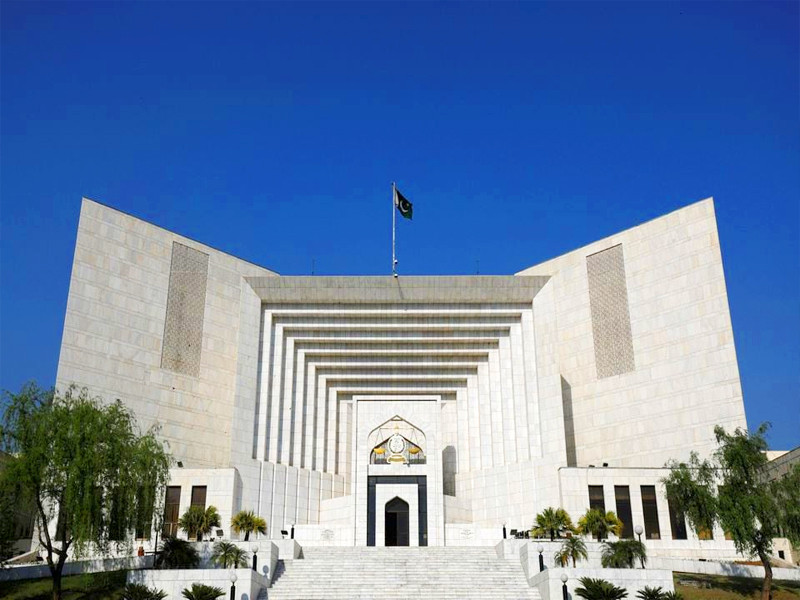
CJP Yahya Afridi was talking to Marilina Armellin, ambassador of Italy to Pakistan, who paid a courtesy call on him, at the Supreme Court Building, here on Monday.

Both the dignitaries discussed matters of mutual interest, focusing primarily on judicial cooperation and the exchange of best practices between the two countries.

The chief justice briefed Ambassador Armellin on Pakistan’s constitutional framework, highlighting the trichotomy of power among the three pillars of the State—Legislature, Executive, and Judiciary.

Ambassador Armellin noted the similarities between Italy’s and Pakistan’s judicial systems, citing opportunities for mutual learning through judicial education and exchange programmes under existing bilateral cooperation frameworks.

Chief Justice Afridi remarked that the exchange programmes facilitated by the Ministry of Foreign Affairs would enrich judicial practices and foster deeper understanding between the institutions. He informed the delegation about the upcoming reforms initiatives, specifically creation of “Commercial Litigation Corridor”. This means dedicated courts at district level and dedicated benches at High Courts level and Supreme Court of Pakistan in order to fast track commercial and trade disputes resolution.

The purpose of creating special corridor is speedy disposal and early resolution of commercial and trade-related cases. This is likely to create most stability in implementation of commercial contracts and boost economic activity.

He also informed that after the meeting National Judicial Policy Making Committee (NJPMC), policy initiative matrix will be shared with development partners to pick up activities of their respective choices and accommodating them within the framework of their ongoing or expected programs.

Ambassador Armellin lauded the proposal, emphasising that efficient commercial dispute resolution would encourage increased investment and help revitalize the national economy.

The meeting concluded on an optimistic note, with both sides expressing readiness to further strengthen cooperation. The chief justice reiterated the judiciary’s commitment to transparency and public engagement in judicial reforms, while Ambassador Armellin underscored Italy’s interest in fostering deeper people-to-people ties—highlighting the significant role of the Pakistani diaspora in Italy.

As a gesture of goodwill, the chief justice presented a souvenir to Ambassador Armellin, who reciprocated by offering a memento to the chief justice, symbolising the strong ties between Pakistan and Italy.
 

Senior lawyer resigns as JCP member citing ‘controversies’ over judicial appointments


Umer Mehtab
February 24, 2025

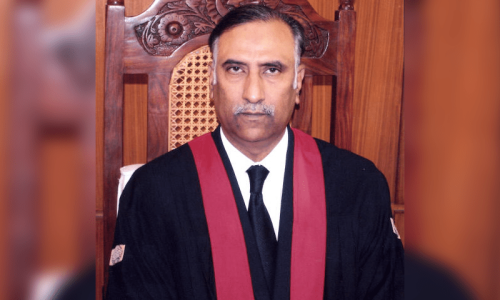
Advocate Akhtar Hussain, member of the Judicial Commission of Pakistan. — Photo via author

Advocate Akhtar Hussain, member of the Judicial Commission of Pakistan. — Photo via author

Advocate Akhtar Hussain has resigned as a member of the Judicial Commission of Pakistan (JCP), citing “present controversies” regarding judicial appointments, it emerged on Monday.

Under the much-debated 26th Constitutional Amendment passed in October last year, the JCP, which approves judicial appointments, was reconstituted to include four members of the parliament.

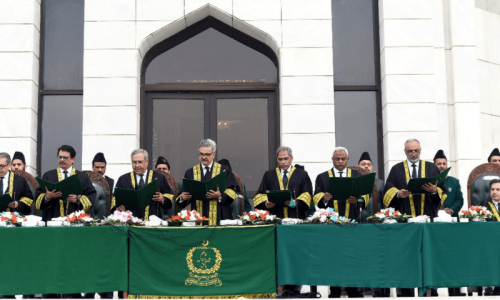
On February 14, six judges of the Supreme Court took oaths following their nomination by the JCP. The commission meeting was boycotted by two PTI members part of it over the ongoing controversy on the transfer of judges to the Islamabad High Court (IHC).

Earlier this month, Justice Sardar Mohammad Sarfraz Dogar from the Lahore High Court (LHC), Justice Khadim Hussain Soomro from the Sindh High Court (SHC) and Justice Muhammad Asif from the Balochistan High Court (BHC) were transferred to the IHC. The controversy centres around the alteration of the seniority list following the appointments.
 

LHC moved for details on SC's rights monument​


Petitioner demands transparency in the project's approval, funding

Hasnaat Malik
March 03, 2025

lhc moved for details on sc s rights monument


LHC moved for details on SC's rights monument

ISLAMABAD: A lawyer has approached the Lahore High Court (LHC), seeking directions for the Supreme Court's registrar to provide details regarding the recently established and inaugurated 'fundamental rights monument' within the apex court premises.

The project was initiated during the tenure of former chief justice of Pakistan Qazi Faez Isa.

Petitioner Abuzar Salman Khan Niazi filed the writ petition in the LHC, naming the SC registrar as the respondent. A single-member bench, led by Justice Shams Mehmood Mirza, is set to hear the petition on Monday (today).

According to the petition, the petitioner had twice approached the SC registrar to obtain the relevant information but received no response.

He had sought answers to six questions from the registrar regarding the project.

The first question pertained to the process adopted for sanctioning the project. The second inquired about the authority responsible for granting approval. The third sought clarification on the law, rule, or regulation under which the project was sanctioned.

The fourth question concerned the firm or company engaged in design and architectural services, while the fifth focused on the procedure followed for procuring such services.

Meanwhile, the sixth question inquired about the firm or company hired for construction and development, along with the project's total cost.

The petition argues that Article 3 of the Constitution imposes a duty on the state and public functionaries to eliminate all forms of exploitation. The refusal to provide the requested information constitutes a violation of this constitutional obligation.

The petition states that Article 3 of the Constitution imposes a positive duty upon the state by extension public functionaries to ensure the elimination of all forms of exploitation as opposed to a discretion to act or not to act. "Thus, the respondent's refusal to provide the requested information constitutes a blatant violation of Article 3 of the Constitution of the Islamic Republic of Pakistan."
 

CJ's first year praised by court, panned by lawyers​


Hasnaat Malik
October 27, 2025


justice yahya afridi photo file

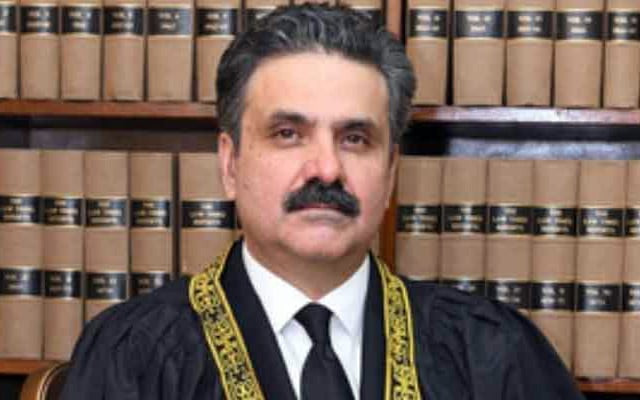
Justice Yahya Afridi.

ISLAMABAD: Despite the Supreme Court's confident claims of sweeping reforms in the justice system, most legal experts remain unconvinced about the judiciary's performance during Chief Justice Yahya Afridi's first year in office.

The 26th Constitutional Amendment, passed in October last year, shortly before Justice Afridi took oath as the country's top judge, remains a point of contention in legal circles.

As the SC a year under his leadership, it has expressed complete satisfaction with its institutional performance, releasing detailed data on Sunday to defend the progress.

CJP Afridi appreciated judges, lawyers and the federal government "for their steadfast dedication and support in advancing the shared vision of a justice system that is accessible, transparent, and efficient" during his tenure.

Reflecting on what he termed a "transformative year," the CJP highlighted that this progress "stems from a united effort and institutional collaboration".

He outlined three core pillars — accessibility, accountability and efficiency — as the driving forces behind what the court described as "measurable improvements and lasting change".

However, former additional attorney general Tariq Mahmood Khokhar dismissed the court's self-assessment, saying it "symbolises institutional impotence rather than constitutional authority; its contents do not reflect judicial authority but inconsequential administrative rhetoric".

"The critical issues remain unmentioned and unresolved: judicial capture at the behest of the executive and legislature lacking constitutional and democratic legitimacy, erosion of the principle of separation of powers, and the rule of law," he said.
 

Users who are viewing this thread

Latest Posts

Back
Top