
Navigation
Install the app
How to install the app on iOS
Follow along with the video below to see how to install our site as a web app on your home screen.
Note: This feature may not be available in some browsers.
More options
Style variation
You are using an out of date browser. It may not display this or other websites correctly.
You should upgrade or use an alternative browser.
You should upgrade or use an alternative browser.
General Economic Updates
- Thread starter Sainthood 2.0
- Start date
More options
Who Replied?

hydrabadi_arab
Trusted Member
India economic terrorism continues. Now after Pakistan rice exports.
/s
ejaz007
Registered Member

0.25% Export Development Surcharge scrapped
- Move is intended to improve Pakistan’s competitiveness in global markets
Comments

1
Follow us
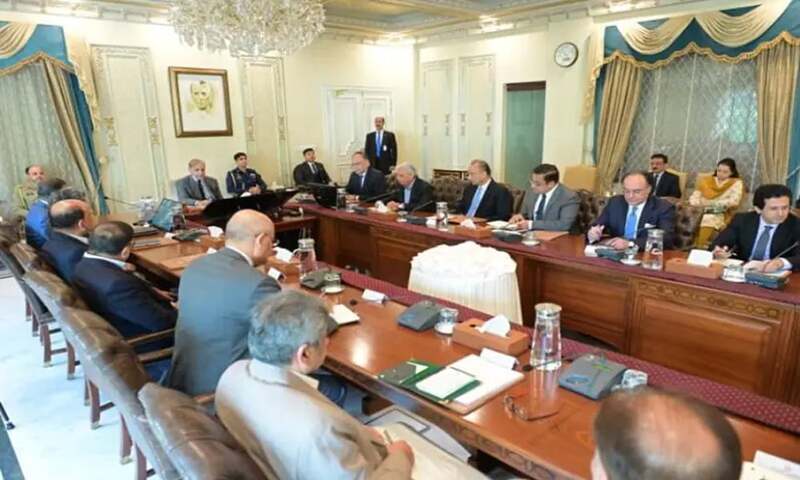
ISLAMABAD: In a major development, the government has decided to withdraw the 0.25 percent Export Development Surcharge (EDS) on exports with immediate effect, providing long-awaited relief to exporters and improving Pakistan’s competitiveness in global markets, sources in Commerce Ministry told Business Recorder.
The decision was taken at ameeting presided over by Prime Minister Shehbaz Sharif which was also attended by the experts.
The Prime Minister had earlier constituted a dedicated Working Group on EDS, chaired by Musadaq Zulqarnain, to reassess the Export Development Fund (EDF) and propose reforms.
Pakistan’s Q1 exports down, imports up YoY
The group included private-sector members along with Secretary Commerce Bilal Azhar Kiyani, EDF Executive Director Mosharraf Zaidi, Shahzad Saleem, Misbah Naqvi, Khurram Mukhtar, Arif Saeed, Ahmad Umair and Sualeh Faruqi.
The working group was mandated to review the effectiveness of ongoing EDF-funded initiatives and recommend measures to strengthen Pakistan’s export competitiveness. After extensive deliberations and evaluation, the Group finalized and submitted its recommendations to the Prime Minister last week.
During a high-level meeting held on Monday, it was decided that the 0.25 percent EDS on exports will be withdrawn immediately — an important step aimed at easing the financial burden on exporters and boosting their global competitiveness.
The Prime Minister also directed the formation of an interim Steering Committee, led by private-sector representatives, to oversee the utilization of the Rs 52 billion currently available in the EDF.
He issued clear instructions that EDF resources must be dedicated exclusively to research and development, skill development, and export competitiveness initiatives, with no allocations for infrastructure projects.
The meeting also discussed the disproportionately high tax burden on export-oriented industries. It was acknowledged that exporters are taxed significantly more than businesses serving the domestic market.
A separate Working Group, led by Shahzad Saleem, has already completed its review of this issue and submitted its recommendations. The Prime Minister is expected to convene a dedicated meeting on the matter soon.
Sources said the EDS is being collected under existing law, which will now be revised after consultations with stakeholders. A mechanism will also be developed to finance the operational needs of the Trade Development Authority of Pakistan (TDAP) and other trade-related bodies following the removal of EDS.
Exporters argued that EDS was originally imposed at a time when the government was offering several incentives to support exports — a situation that no longer exists due to IMF-mandated policy changes. “There is no global precedent where exporters contribute to export development. Relief in EDS is justified,” exporters were quoted as telling the meeting.
Sources said the Prime Minister chaired a highly productive session, attended by domestic and international experts. Some participants suggested that the EDF should be discontinued altogether, but only after a proper analysis of how its resources can be better utilized.
“Exporters are working on extremely thin margins due to heavy taxation and high energy prices. They urgently need relief,” one participant noted.
While exporters demanded permanent relief, the Working Group recommended suspension of the EDS. However, according to sources, the Prime Minister made it clear that the government cannot offer sweeping relief measures at this stage, but added that exporters certainly deserve the immediate withdrawal of EDS.
The Prime Minister directed that a third-party audit of the Export Development Fund (EDF) be conducted. The audit will cover the past five years and will adhere to international standards, with a view to identifying inefficiencies or misuse of funds.
Sharif called for the selection of a private sector professional to chair the EDF, a move intended to bring more industry expertise and efficiency to the management of export development initiatives.
The meeting was attended by Federal Minister for Planning and Development, Ahsan Iqbal, Federal Minister for Finance, Muhammad Aurangzeb, Federal Minister for Commerce, Jam Kamal, Federal Minister for Climate Change, Musaddiq Malik, Federal Minister for Petroleum, Ali Pervez Malik, Minister of State for Finance, Azhar Bilal Kiani, Chairman SIFC and other relevant government officials.
Copyright Business Recorder, 2025
0.25% Export Development Surcharge scrapped
Move is intended to improve Pakistan’s competitiveness in global markets
www.brecorder.com
lightning f57
Trusted Member

IMF saying 6% in GDP being lost due to corruption. I personally think thats conservative figure and the real value is even higher.
Fix governance, tackle corruption i think Pak could add $50bn annual to its GDP, within 10 years breakout of the $1trn range.
Always felt, Pak gets its house in order it can become a major economy with its resources and young population.
Fix governance, tackle corruption i think Pak could add $50bn annual to its GDP, within 10 years breakout of the $1trn range.
Always felt, Pak gets its house in order it can become a major economy with its resources and young population.
hydrabadi_arab
Trusted Member
"The federal government has abolished over 50,000 pending jobs to save money. These are savings of $200 million a year. The provinces need to learn from this. Controlling bloat and raising tax revenue is how they make a case against more provinces and re-drawing of NFC award."
ejaz007
Registered Member
ICI Pakistan, now LCI, rejects claims of exiting pharma manufacturing
- Pharmaceutical business continues to grow, says the company
Comments
Follow us
Amid recent reports suggesting that several global pharmaceutical companies have divested their local operations, Lucky Core Industries Limited (LCI), formerly known as ICI Pakistan Limited, has clarified that it has not sold any of its pharmaceutical manufacturing units in the past three years.
In its notice to the Pakistan Stock Exchange (PSX) on Wednesday, LCI noted that it is continuing to grow its pharmaceutical business, including through a recent asset acquisition from Pfizer Pakistan completed in September 2024.
“With reference to recent media reports that some global pharmaceutical companies, including ICI Pakistan Ltd, now Lucky Core Industries Limited, have divested their local pharmaceutical manufacturing operations to other local manufacturers in Pakistan over the past three years.
“In response to the news reports, we wish to clarify that Lucky Core Industries Limited’s pharmaceutical manufacturing operations continue to operate in the ordinary course of business, and that the company has not divested any of its pharmaceutical manufacturing units in the last three years.
“In fact, the company has expanded its presence in the pharmaceutical sector through strategic acquisitions, with the most recent being an asset acquisition from Pfizer Pakistan Limited and other relevant Pfizer group entities, completed in September 2024,” read the notice to the bourse.
The clarification comes after Business Recorder reported that some of the top global pharmaceutical companies have left Pakistan due to a revision of their business plan, rupee depreciation and competition with the local pharmaceutical companies
During the past three years, five major multinational pharmaceutical companies, including Bayer, ICI Pakistan, Sanofi-Aventis, Pfizer, and Novartis, stopped their operations in Pakistan, according to the report. These facilities have been transferred to Pakistani companies to ensure the supply of essential medicines, it added.
However, LCI, in its notice, stressed that the company remains dedicated to its pharmaceutical business in Pakistan.
“With a strategic focus on innovation, geographic expansion, and strengthening access to healthcare, the company is committed to continuing to deliver reliable solutions for patients and stakeholders,” it added.

ICI Pakistan, now LCI, rejects claims of exiting pharma manufacturing
Pharmaceutical business continues to grow, says the company
www.brecorder.com
Fatman17
THINK TANK: CONSULTANT
It's all unravelling for the hybrid system.
First IMF damning report of corruption.
Then Head of SIFC admitting failure to get foreign investments.
And now Governor of SBP admitting the economic model is not working for the 250m people of Pakistan.
But it is working beautifully for the Elite of the country.
First IMF damning report of corruption.
Then Head of SIFC admitting failure to get foreign investments.
And now Governor of SBP admitting the economic model is not working for the 250m people of Pakistan.
But it is working beautifully for the Elite of the country.

PakFactor
Elite Member
It's all unravelling for the hybrid system.
First IMF damning report of corruption.
Then Head of SIFC admitting failure to get foreign investments.
And now Governor of SBP admitting the economic model is not working for the 250m people of Pakistan.
But it is working beautifully for the Elite of the country.
The pain will begin to be felt around the middle of next year.

Pakistanithinktank
Registered Member

It's all unravelling for the hybrid system.
First IMF damning report of corruption.
Then Head of SIFC admitting failure to get foreign investments.
And now Governor of SBP admitting the economic model is not working for the 250m people of Pakistan.
But it is working beautifully for the Elite of the country.
Whole system is designed for the elite. It’s not designed to benefit common people. We are seeing Economy on ventilators for last 15 years but Establishment doesn’t want to bring reforms in Pakistan.

Pakistani Dragon
Elite Member
Pakistan’s steel scrap imports hit highest level since November 2021 as construction rebounds
- Rise reflects strengthening and improvement in construction activity, says Topline
Published 29 November 2025
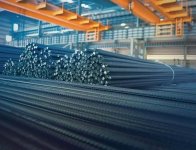
Pakistan’s iron and steel scrap imports have surged to their highest level since November 2021, indicating renewed momentum in its construction and steel industries.
According to data provided by Topline Securities on Saturday, Pakistan’s iron and steel scrap imports have continued their strong upward momentum, rising to 381,991 metric tons in October 2025. “The highest level since the all-time peak of 464,415 metric tons in November 2021.”
“The sustained rise reflects strengthening and improvement in construction activity,” said Topline.
Industry observers note that this rebound reflects improving sentiment in the real economy, supported by public-sector development works and a gradual recovery in private-sector construction.
Pakistan’s Large-Scale Manufacturing (LSM) sector showed signs of recovery as it registered a growth of 4.08% in the first quarter of the financial year 2025-26. The LSM output increased by 2.69% in September 2025 as compared to the output in September last year.
Days ago, the President of the Scrap Importers Association, Haji Muhammad Ayoob, along with other office-bearers, strongly rejected the allegations of the steel industry levelled against scrap importers bringing material from Iran via land routes, terming them “baseless, fabricated and a conspiracy against the rerolling industry.”
In a statement issued here on Wednesday, the Scrap Importers Association urged Prime Minister Shehbaz Sharif, the judiciary, NAB and FIA to take notice of what they described as malicious campaigns aimed at undermining legal land-route trade from Balochistan through misinformation and vested interests.


hydrabadi_arab
Trusted Member
A high-level meeting was held to finalise Pakistan’s meat export plan to Malaysia, the Ministry of Commerce said on Friday.
Special Assistant to the Prime Minister Haroon Akhtar Khan jointly shared the session alongside Federal Minister for National Food Security Rana Tanveer Hussain and Federal Minister for Commerce Jam Kamal Khan. Representatives from the Ministry of Commerce, the Ministry of National Food Security, public and private sector stakeholders, and technical consultants were in attendance.
The committee presented the final business plan for meat exports to Malaysia, marking a major step toward expanding Pakistan’s footprint in the international halal meat market.
“An efficient business framework for meat exports has been developed,” said Haroon Akhtar, while lauding members of the committee and ministries.
Jam Kamal highlighted the joint contributions of all stakeholders, noting, “This package is the result of collective efforts and consensus among all concerned sectors.”
The government has set a target of $200 million in meat exports to Malaysia over the next 3 to 5 years. During the meeting, it was disclosed that Pakistan currently exports buffalo meat worth a meagre $38,000 to Malaysia.
The committee identified major challenges affecting exports, including foot-and-mouth diseases, processing deficiencies, and logistical hurdles.
“The halal meat sector will be granted industry status,” announced Akhtar. “This will increase exports and strengthen Pakistan’s economy.”
Akhtar said that the business plan has been designed with mutual consultation, and specific tasks with timelines have been assigned to each sector and stakeholder to achieve the $200 million target.
Meanwhile, Kamal Khan underscored the importance of financial facilitation, saying that to reduce export costs, “the banking sector, provincial and federal governments, and the State Bank of Pakistan will play a crucial role.”
Federal Minister Rana Tanveer Hussain stated that modern slaughterhouses will be established in accordance with Malaysian standards, facilitating compliance and strengthening trade potential.
Special Assistant to the Prime Minister Haroon Akhtar Khan jointly shared the session alongside Federal Minister for National Food Security Rana Tanveer Hussain and Federal Minister for Commerce Jam Kamal Khan. Representatives from the Ministry of Commerce, the Ministry of National Food Security, public and private sector stakeholders, and technical consultants were in attendance.
The committee presented the final business plan for meat exports to Malaysia, marking a major step toward expanding Pakistan’s footprint in the international halal meat market.
“An efficient business framework for meat exports has been developed,” said Haroon Akhtar, while lauding members of the committee and ministries.
Jam Kamal highlighted the joint contributions of all stakeholders, noting, “This package is the result of collective efforts and consensus among all concerned sectors.”
The government has set a target of $200 million in meat exports to Malaysia over the next 3 to 5 years. During the meeting, it was disclosed that Pakistan currently exports buffalo meat worth a meagre $38,000 to Malaysia.
The committee identified major challenges affecting exports, including foot-and-mouth diseases, processing deficiencies, and logistical hurdles.
“The halal meat sector will be granted industry status,” announced Akhtar. “This will increase exports and strengthen Pakistan’s economy.”
Akhtar said that the business plan has been designed with mutual consultation, and specific tasks with timelines have been assigned to each sector and stakeholder to achieve the $200 million target.
Meanwhile, Kamal Khan underscored the importance of financial facilitation, saying that to reduce export costs, “the banking sector, provincial and federal governments, and the State Bank of Pakistan will play a crucial role.”
Federal Minister Rana Tanveer Hussain stated that modern slaughterhouses will be established in accordance with Malaysian standards, facilitating compliance and strengthening trade potential.
Users who are viewing this thread
Total: 5 (members: 0, guests: 5)
Pakistan Defence Latest
-
 Federal cabinet gives nod to imposition of emergency in KP; summary sent to president (22 Viewers)
- Latest: Master Chief
-

-

-

-

Country Watch Latest


Latest Posts
-

-
Federal cabinet gives nod to imposition of emergency in KP; summary sent to president (22 Viewers)
- Latest: Master Chief
-
 Makkah Defence Alliance: Turkey, Saudi Arabia, and Pakistan, news & updates (51 Viewers)
- Latest: PK781
-
-