General Economic Updates

020725203fe1f0e.webp

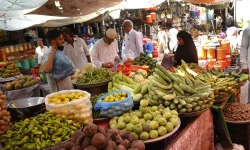
• Vegetable price slump offsets costlier staples
• Tomato glut eases prices, hurts growers
• Flour, milk and meat rates climb

KARACHI: Traders appear dissatisfied with the official inflation numbers, despite the fact that prices of many items have declined compared to rising trend in other items.
 
‘Highly disappointing year’

Separately, All Karachi Tajir Itehad Chairman Atiq Mir termed 2025 as a “highly disappointing year” in which trading and business activities shrank by 60pc, alongside rising food prices, unemployment and declining business confidence and investment.

In a statement, he further said no new industrial units were set up during the year, which led to increased capital flight amid an uncertain business environment.

While painting a bleak outlook for 2026, Mr Mir said the government appeared non-serious in providing a business-friendly environment, citing rising prices of power, gas, LPG, petrol and diesel, along with a number of taxes and duties.
 

Pakistan’s trade deficit surges 24% YoY to $3.7bn in December 2025

  • Country’s trade balance was recorded at a deficit of $2.99 billion in December 2024.
BR Web Desk
January 2, 2026

Pakistan’s trade deficit significantly increased by nearly 24% to $3.7 billion in December 2025, as compared to the same month of the previous year, data released by the Pakistan Bureau of Statistics (PBS) showed on Friday.

The country’s trade balance, the gap between exports and imports, was recorded at a deficit of $2.99 billion in December 2024.

The trade deficit expanded year-on-year (YoY) in November 2025, driven by higher imports and a significant decrease in exports.

Exports in December 2025 stood at $2.32 billion, down 20.4% against $2.91 billion recorded in December 2024.

Meanwhile, imports were recorded at $6.02 billion, up over 2% against $5.9 billion in the same period last year (SPLY).
 
On a month-on-month (MoM) basis, the trade deficit increased by over 28% in December 2025 against $2.89 billion in November 2025. The growth came amid a decrease in exports and a jump in imports on a monthly basis.

During the first six months of the fiscal year 2025-26 (6MFY26), the country’s trade deficit increased by nearly 35% to $19.20 billion from $14.27 billion recorded in SPLY.

Exports in 6MFY26 decreased by nearly 9% to $15.18 billion from $16.63 billion in SPLY.

On the other hand, imports in 6MFY26 rose by 11% to $34.39 billion from $30.90 billion recorded in 6MFY25.

Earlier, Pakistan’s current account recorded a cumulative deficit of $812 million in the first five months of this fiscal year (FY26), as compared to a surplus of $503 million in the same period last year.
 

Pakistanis spend two-thirds of income on food, power as remittance reliance grows​


Foreign remittances double as rural income sources shrink, new survey reveals

Our Correspondent
January 03, 2026

court decision in panama case should help country correct budget spending revenue collection photo reuters


Court decision in Panama case should help country correct budget spending, revenue collection. PHOTO: REUTERS

ISLAMABAD: Pakistanis spent two out of every three rupees on just two basic needs — food and electricity — as reliance on foreign remittances and financial assistance increased to meet growing expenditures, a new government survey showed.

The expenditures increased at a faster pace than the incomes due to current economic pressure and rising cost of living, according to the Household Integrated Economic Survey 2024-25, released by the Minister for Planning Ahsan Iqbal on Thursday.
 
The findings of the survey, conducted after a gap of over six years under pressure from the International Monetary Fund (IMF), have shed light on how inflation has eaten up people's hard-earned money, leaving only 2.5% in hand to spend on education. The spending on education was less than half the cost of housing.

The share of foreign remittances in household income has risen from below 5% to nearly 8%, according to the survey. The contribution of gifts and assistance also more than doubled to 4.6%, "indicating greater reliance on informal support networks", stated the official report.

There has been an exodus of young and talented people from Pakistan due to limited employment opportunities, according to the independent experts. These findings tell how difficult it has become for people to make ends meet.

There was a higher reliance on foreign remittances by rural households, which doubled in six years and indicating lower employment opportunities available to the majority of the country's population.
 
The higher reliance on foreign remittances and assistance by others reflects the shrinking domestic sources of income and the impact of double-digit inflation, according to a senior official of the Pakistan Bureau of Statistics (PBS).

The PBS, which falls under the administrative control of the Planning Ministry, conducted the survey from September 2024 to June 2025. The survey report stated that the average monthly income has increased significantly across households in the past six years. But the urban households recorded higher income levels than the rural households, rising from Rs53,000 to Rs96,767.

The overall average income increased from Rs41,545 to Rs82,179 in six years, averaging 16.3% per annum. But there were also wide income disparities. In the last fiscal year, the poorest quintile earned Rs41,851 per month compared to Rs139,317 by the richest 20%.

Compared to a 16% increase in monthly income, the expenditures rose by one-fifth during this period, according to the report. The average monthly consumption expense increased from Rs37,159 to Rs79,150, an average 19% per annum increase.
 
Expenditures

"The data reveals a clear concentration of spending in essential categories, reflecting current economic pressures, changing consumption behaviour and evolving household priorities," stated the survey.

Compared to the 2019 survey, overall household consumption in the last fiscal year increased, reflecting rising cost of living, changing consumption priorities and improved access to goods and services.

The data showed that the households, on average, spent 63% of their total expenses on just two functions, food and shelter, with electricity and gas facilities.

The data further showed that the household expenditure is the highest on food, standing at 37%, followed by 26% spending on housing, electricity and gas, reflecting the rising cost of basic food and utilities, according to the survey.

Pakistanis faced multiple challenges during the past few years, which included record-high double-digit inflation, unprecedented currency devaluation that caused imported inflation and harsh conditions of the IMF programmes that mostly put the burden on the middle-income groups.
 
The survey showed that spending on food and shelter was higher than in the 2019 era, which also reinforced the adverse impacts of double-digit inflation and the outcomes of the conditions set by the IMF, translated into more taxes and more energy prices.

Within the food group, the expenses on milk were the highest at 22%, followed by 12% on wheat, 9% on wheat and 6% on cooking oil. After spending 63% on just two items, there was little in hand to spend on the development of the mind and a healthy body.

Households' combined spending on education, health and recreation remained at just 7% in 2024-25, according to the survey. Lower expenditure is recorded on education, only 2.5%, health 3.4% and recreation 1.1%, stated the official report.

The data further revealed that the spending on education has almost halved compared to six years ago, while health spending remained "broadly stable". There was also less spending on clothing.

The survey stated that the largest increase was witnessed in expenses on housing, electricity and gas, followed by 6.6% on restaurants and 6.3% on clothing.

The spending on eateries at restaurants was more than double the expenses on education. The higher ratio of expenses on restaurants is among higher-income groups.
 

Fertiliser, steel prices fall; cement remains stable


Aamir Shafaat Khan
January 4, 2026

1767528508766.png


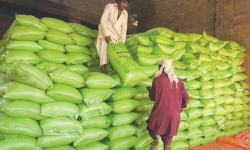
KARACHI: The national average prices of fertiliser, steel bars and different labour charges have declined in the last year, while cement prices remained almost unchanged.

However, the fertiliser and cement sector showed quite impressive sales in the first half of the current fiscal year.

As per the Sensitive Price Index (SPI), the week ending Jan 1 versus the week ending Jan 2, 2025, the price of Sona urea fell to Rs4,323 from Rs4,540 per bag, while other urea brands’ rates dipped to Rs4,212 from Rs4,391.

Urea sales had already clocked in at an all-time high of 1.356m tonnes in December 2025, up 65 per cent month-on-month (MoM) and 37pc year-on-year (YoY), taking urea offtake in 2025 to 6.73m tonnes, up by 2pc as dealers and companies offered higher discounts on urea bags.

Cement rates, as per SPI data, remained almost unchanged at Rs1,407 per 50 kg bag, despite a slight upsurge in demand on account of improving construction activity. Domestic sales of cement rose by 13.11pc in July-December FY26 to 21.152m tonnes from 18.7m tonnes in the same period last fiscal.

Labour charges increase in urban areas in 2025
 
Cement and steel bar rates had not shown a steep rise, SPI data showed that labour charges across various categories had risen over the last year.

Steel bar rates for different grades, which were hovering at Rs240,000-270,000 per tonne in January 2025, are now at Rs220,000-230,000 per tonne.

Association of Builders and Developers (ABAD) Chairman Hassan Bakhshi said demand for steel bars and cement remained relatively low in regularised high-rise buildings due to dwindling construction activities in this area. In contrast, demand for these two specific items might have remained normal or high in small- to medium-sized legal and illegal projects.

The ABAD chief said that the price of a 50kg cement bag had recently risen by Rs30 due to an axle-load issue.

Pakistan Association of Large Steel Producers Secretary General Syed Wajid Bukhari says the top steel bar brand is priced at Rs226,000 per tonne. At the same time, some manufacturers sell them for as low as Rs215,000 because demand is low.

As per SPI data, the national daily average painter charges rose to Rs1,709 from Rs1,676, followed by an increase in mason (raj) rates to Rs1,987 from Rs1,916.

Similarly, the national average daily plumber charge rose to Rs1,754 from Rs1,734, while the electrician charge (per point) rose to Rs279 from Rs267.

The ABAD chief said the average labour charges across cities appear satisfactory, as labour charges in rural areas remain mainly low compared to higher rates in cities, especially Karachi.

For example, painters doing quality work in Karachi are charging Rs2,500-3,000 per day.
 

Cotton prices set to rise on strong demand

Amjad Mahmood
January 4, 2026

LAHORE: Domestic cotton prices are expected to firm up in the coming days as textile mills accelerate purchases, buoyed by rising cotton yarn and fabric prices in China during the last two weeks of December and stronger local demand.

Cotton Ginners Forum Chairman Ihsanul Haq says market sentiment has improved despite cotton production being about 45 per cent below the official target. He noted that production is still likely to exceed earlier estimates by 100,000 to 150,000 bales, while aggressive buying by textile mills has provided price support.

According to data released by the Pakistan Cotton Ginners Association (PCGA) on Saturday, total cotton arrivals at ginning factories stood at 5.434 million bales as of Dec 31, 2025, almost unchanged from 5.452m bales recorded during the same period last year.

During Dec 16-31 alone, textile mills purchased around 218,000 bales, higher than expectations. Mr Haq said purchases could have been at least 50,000 bales more had the transporters’ strike not disrupted supplies.

By end-December, textile mills had consumed 4.708m bales, compared to 4.65m bales last year, while exporters and market players purchased about 176,000 bales. Current cotton stocks stand at 549,664 bales, slightly lower than last year’s level, indicating tighter availability. At present, 223 textile factories are operational across the country.

Regionally, Punjab ginning factories received 2.541m bales, down 4.44pc year-on-year, while Sindh recorded 2.893m bales, up 3.58pc. Despite lower reported cultivation area, Sindh’s production remained higher by 352,000 bales up to Dec 31, 2025. Notably, cotton arrivals during Dec 16-31 surged 56pc compared to the same period last year.
 
IMG-20260105-WA0012.jpg

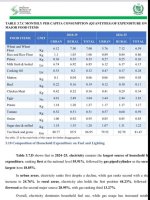
Pakistan Bureau of Statistics recently released its Household Integrated Economic Survey. It is an alarming report and points to the failure of government’s economic policies.

It shows that Pakistanis today are poorer than in 2018/19. More concerning is the attached table showing that Pakistanis today are able to consume less of wheat, rice, pulses, milk, meat, eggs, onions and oil than in 2018/19. The only exceptions to this sorry trend are edible oil and tomatoes. And this when the percentage of income the average household is devoting towards food is more than what it was 6 years ago.

And how poor are we? The average Pakistani only consumes 50 grams of mutton, 110 grams of beef and 340 grams of chicken in a month. And he or she cannot even afford one egg every 10 days. ( Miftah Ismael on X Miftah Ismail)
 

Users who are viewing this thread

Country Watch Latest

Back
Top