General Economic Updates


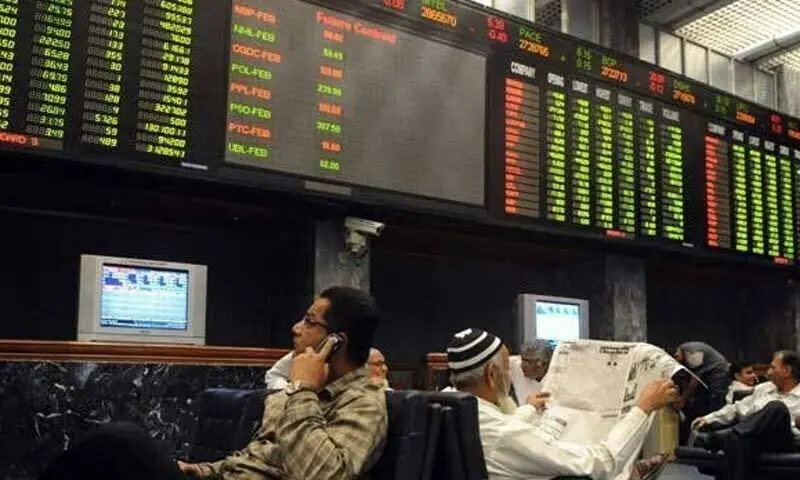
Another meltdown at PSX


it is only a meltdown, if liquidity can be separated from number of shares (traded)

in other words, if it is relatively unknown company, it is not a meltdown, bec. broker got rich off that trade (someone is winning!)

meltdown would happen, if all parties loose!

it is more like a Ponzi scheme
 

Cement: Revival at home ground

BR Research Published February 19, 2026

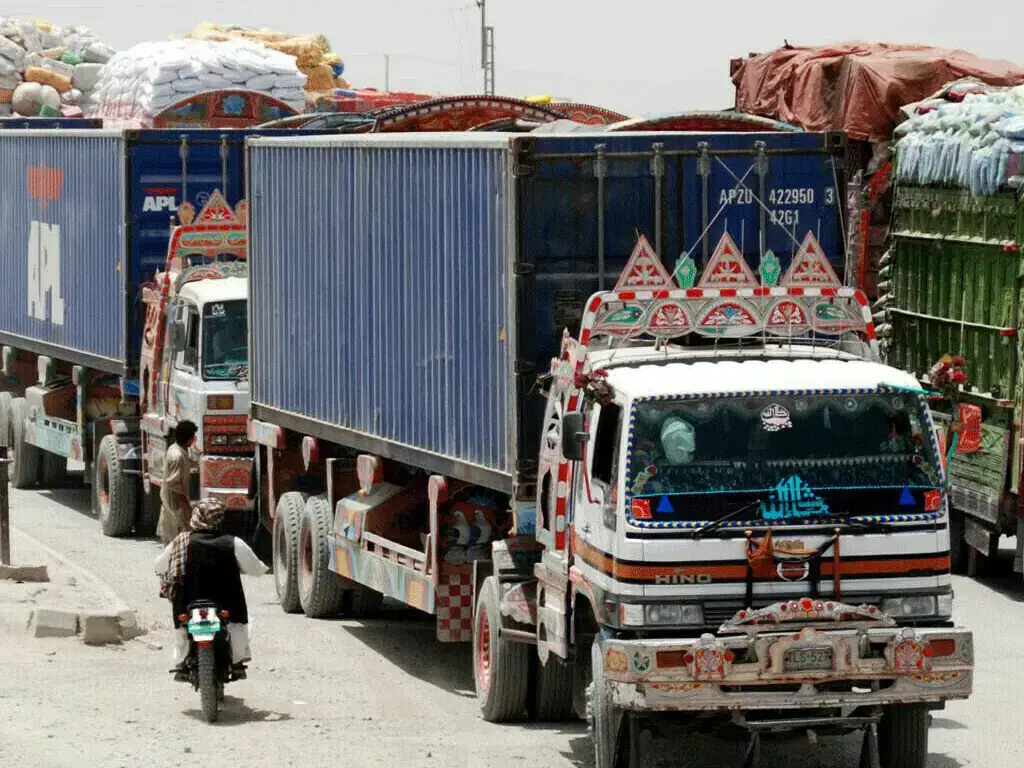
For the first time in five years, average monthly domestic demand for cement is growing. Industry data shows that domestic markets are doing the heavy lifting this year as exports slowly trudge along constrained by border blocks and demand slowdown abroad. Overall offtake went up 11 percent boosted by renewed demand in local markets.

In recent years, headline growth in cement offtake has been shielded by mounting export orders, often masking the subdued demand in the domestic construction industry.

Since FY22, the economy has been struggling for stability and construction demand has fallen prey to weaker spending by households and public sector both. Cross-border and overseas shipments climbed to 20 percent by FY25 when average monthly domestic offtake was trailing its 7-year low.


The steadier pace of local dispatches now points to a gradual revival in construction activity. Public sector projects appear to be stabilising after years of stop-start funding worsened yet by cost overruns and operational delays.

Private construction and demand in real estate is also hyped to benefit from the policy support of the government in the form of the subsidized mortgage scheme for first time buyers. Though it is unclear how long this policy will last—the previous one ended abruptly as political realities changed—the scheme is expected to provide a nudge to housing demand. And nudge it will.

READ MORE: Jan cement despatches up 12.54pc YoY

Builders and real estate developers are also awaiting a comprehensive construction policy which could give impetus to stalled projects that have been facing funding constraints and weak investor confidence. Historically, construction packages have proved politically attractive. They are relatively straightforward to design, typically combining tax amnesties, temporary incentives, relaxed documentation thresholds or subsidised financing, and they tend to generate visible activity. Housing and real estate deliver quick optics where labor can be immediately hired boosting short-term employment, and allied sectors from steel to cement are primed to serve immediate demand. Investors come running.

But as this country has experienced many times before, suchincentive-driven booms are near-term, risky and they channelsavings into speculative real estate rather than more productive investment avenues. Construction is one of the few sectors where policy signalling can lift private capital to restart shelved projects and restore buyer confidence but this is done at the expense of structural changes in the economy that are harder to design and take that much longer to implement.

For cement producers, both the mortgage scheme and the upcoming construction package will strengthen domestic demand which will also culminate in improved current capacity utilization. With strong pricing power in domestic markets, a slump in exports rebalanced by local offtake, will work wonders for major and mid-tier capacity holders.
 

THE evidence is piling up that without a dramatic change of course the economy will sink deeper into a quagmire that takes us all to a very bad place. The latest in the parade of grim numbers is a revelation by the Planning Commission that the number of people living below the poverty line has surged since 2018.

Since 2001, these numbers had been declining, sometimes slowly, other times rapidly. But for the first time in nearly a quarter century, we have seen them rise, from 21.9 per cent of the population living below the poverty to 28.8pc today.

A few months ago, another revelation came from the World Bank that Pakistan’s economy was no longer lifting people out of poverty, even when it grew. Successive growth spurts generated fewer jobs, lifted fewer people out of poverty and on the whole promoted greater inequality rather than sharing the fruits of growth more equitably.

Corporate profitability spiked rapidly during this period, although much of that was also just inflation-driven, meaning inflation was being priced into corporate cash flows. But one thing that did not adjust to inflation was wages and incomes, which declined or remained flat (at best) in real terms during this period.

The economy has been sinking into this quagmire for many years now and this parade of dismal data that has been coming out for months is only telling us that the industrial structure we now have is no longer capable of carrying the country into the future. It is not competitive on the global market and cannot fetch exports in the volumes required to meet its own import requirements.

This is one important reason why the country’s foreign exchange reserves deplete every time its economy grows. The same system cannot generate incomes in quantities sufficient to produce a market for its own goods, which is one of the top reasons why its investments cluster around those sectors where large state-sponsored rents are to be had.

It cannot produce jobs in quantities sufficient to lower the unemployment rate in any meaningful sense, which is one reason why wages and incomes remain subdued even as corporate cash flows recover following bouts of severe inflation, and why the informal sector is the large job-creating engine in the country.

If Pakistan’s industrial system cannot lift wages and incomes, does not lift people out of poverty even when it is growing, cannot create jobs or export proceeds, then what use is it? There is only one reason why we continue carrying this dismal situation along with us without any attempts at change: it is working for those whom it is supposed to serve, not the rest of us.

The rest of us are being crushed under the weight of these dysfunctions, because it is us who have to ultimately pay the bills. First the bills come in the form of an inflation tax. Your real household income has most likely declined in the past decade, and if it hasn’t, then te salute. On top of that, your tax burden has increased massively, your utility bills have more than doubled (mine have tripled since 2015), while your food and fuel expenditures have also doubled or tripled. If you’re feeling beleaguered under the weight of growing expenses, take heart. You’re not alone. With rare exceptions, everyone in the country is going through this as we count up all that has survived in the wake of the most ferocious inflationary fire our country has ever seen. The degradation in living standards is near ubiquitous.

I say ‘near ubiquitous’ because there are the lucky few who have compensated themselves. In the same period as the rest of the country was sinking below the poverty line, our civil servants gave themselves enough pay raises in various forms to keep their own heads above water. There were ad hoc relief allowances in the budgets of FY24 and FY25 of 30pc and 20pc respectively, coupled with a transport monetisation increase of 20-25pc for senior officers to compensate for the fuel price hike.

In November 2024, our judges of the Supreme Court received a 171pc increase in salary and a 400pc increase in their house rent allowance, while high court judges received a 218pc increase in salary and the same increase in their house rent allowance. Examples of the ways in which servants of the state and servants of the people compensated themselves generously for the loss of income caused by the inflationary fire of 2022 and 2023 are endless.

Now comes news that the chief minister of Punjab has decided to purchase for herself a luxury private jet. And other senior civil servants in her province received entitlements for super luxury vehicles, along with 800 litres of fuel allowance. All this while the state is struggling to meet its external debt obligations, and lecturing those who invested in solar net metering that they are ‘elites’ with no thought for the poor.

This is where we stand today: a country bankrupted, a people impoverished, a middle class consuming its savings to survive, and a state elite oblivious to the burden they place on the people they pretend to rule. This never ends. People need to know this. It will never end because so long as they can keep offloading the costs of their failures onto us — the common citizenry — they will do so, and they will have no reason to change.

We pay for their failures, and they give themselves pay raises instead. In truth, the system is working just fine. It’s supposed to deliver outsize profits to the billionaires and an outsize living to the servants of the state. Confucius once said, ‘If you pay peanuts, monkeys will work for you’, but in Pakistan, it is us who work for the peanuts while the monkeys feast at the table. Welcome to the future. It’s yours and mine alone, dear reader, to rue and endure together.

Regards

PS:

# it is working for those whom it is supposed to serve,: I don't know why this reminded me of dear @VCheng sb

#2 Hopefully, posting this article would clear the speculation floated by @LC150 that I am a shill for the current PMLN administration
 

Pakistan turns from default risk to global case study, targets $1tr economy by 2035: Ahsan​


242
ISLAMABAD, Feb 25 (APP): Federal Minister for Planning, Development and Special Initiatives Professor Ahsan Iqbal on Wednesday said Pakistan’s economic turnaround over the past two years has drawn global attention, with major international financial institutions presenting the country’s recovery as a model case study.

“In the last two years, the incumbent government has steered Pakistan, which was on the brink of bankruptcy, to a position where, through governance and reforms, every major international financial institution is now presenting Pakistan’s economic transformation as a case study,” the minister told APP on the sidelines of the Pakistan Governance Forum-2026, themed “Reimagining Governance for URAAN Pakistan.”

He said the forum was convened to align all stakeholders, federal and provincial governments, ministries, departments and the private sector, around actionable reforms under the Uraan Pakistan agenda to achieve a $1 trillion economy by 2035.

“Well, the purpose of the Pakistan Governance Forum is to create alignment so we can collectively work towards our economic goals, implement the 5Es framework, Equity, Exports, Energy, Environment, E-Pakistan, achieve exports over $100 billion, transform Pakistan into a technology-led economy, embrace AI, and address climate, energy and social challenges,” he said.

Ahsan Iqbal stressed that infrastructure alone could not drive growth. “The best hardware is useless without software.

Buildings and roads have little value if we do not invest in the skills, health and capacity of our people,” he said, underlining the centrality of human capital.

The planning minister warned that Pakistan faced two paths: “If we continue with business as usual, Pakistan may at best become a $600 billion economy by 2035. But with transformational reforms and positive national synergy, we can achieve the $1 trillion target. The difference between these outcomes is the coefficient of governance.”

Highlighting key challenges, he cited the 2.55 percent population growth, 40 percent child stunting, nearly 25 million out-of-school children and a tax-to-GDP ratio of just 10 percent.

“Until we address education, health, population planning and stunting, we cannot compete with the rest of the world. Exports are the lifeline of our future, and without achieving the targeted scale, we cannot ensure economic sovereignty,” he said.

The planning minister said the forum also gave the private sector a platform to raise issues directly with policymakers, enabling evidence-based solutions to accelerate reforms.

“It is heartening to see all provinces participating. Despite political differences, we must work together as Team Pakistan for an economic long march, focusing on development rather than political conflicts, to achieve our $1 trillion economy goal by 2035 and a $3 trillion economy by 2047,” he added.

Ahsan Iqbal said Pakistan’s stabilization and governance reforms have positioned the country as a global example of recovery. “Our focus now is on leveraging this momentum, strengthening human capital, boosting exports, and ensuring inclusive and sustainable development to realize Pakistan’s full economic potential,” he remarked.

APP/395
 
@hydrabadi_arab

Hydra bro

Pakistan’s economic turnaround over the past two years has drawn global attention, with major international financial institutions presenting the country’s recovery as a model case study.

There is much merit in the above observation. However, the key thing is that Pakistan must maintain stability and continuity of policy. Pakistan was considered a model case in the 1960s under Vikas Purush FM Ayub Khan as well and was extensively studied and copied by SoKo. But after the 1965 war and his exit, the model disintegrated and the momentum was lost.

Regards
 
It's there for everyone to see if they choose to remove their blind fold.

Many of us here are happier blindfolded. Everyone makes their own choices.

As I have said many times, Pakistan and its systems are the way they are because the people themselves want them to be that way.
 

Pakistan turns from default risk to global case study, targets $1tr economy by 2035: Ahsan​


242
ISLAMABAD, Feb 25 (APP): Federal Minister for Planning, Development and Special Initiatives Professor Ahsan Iqbal on Wednesday said Pakistan’s economic turnaround over the past two years has drawn global attention, with major international financial institutions presenting the country’s recovery as a model case study.

“In the last two years, the incumbent government has steered Pakistan, which was on the brink of bankruptcy, to a position where, through governance and reforms, every major international financial institution is now presenting Pakistan’s economic transformation as a case study,” the minister told APP on the sidelines of the Pakistan Governance Forum-2026, themed “Reimagining Governance for URAAN Pakistan.”

He said the forum was convened to align all stakeholders, federal and provincial governments, ministries, departments and the private sector, around actionable reforms under the Uraan Pakistan agenda to achieve a $1 trillion economy by 2035.

“Well, the purpose of the Pakistan Governance Forum is to create alignment so we can collectively work towards our economic goals, implement the 5Es framework, Equity, Exports, Energy, Environment, E-Pakistan, achieve exports over $100 billion, transform Pakistan into a technology-led economy, embrace AI, and address climate, energy and social challenges,” he said.

Ahsan Iqbal stressed that infrastructure alone could not drive growth. “The best hardware is useless without software.

Buildings and roads have little value if we do not invest in the skills, health and capacity of our people,” he said, underlining the centrality of human capital.

The planning minister warned that Pakistan faced two paths: “If we continue with business as usual, Pakistan may at best become a $600 billion economy by 2035. But with transformational reforms and positive national synergy, we can achieve the $1 trillion target. The difference between these outcomes is the coefficient of governance.”

Highlighting key challenges, he cited the 2.55 percent population growth, 40 percent child stunting, nearly 25 million out-of-school children and a tax-to-GDP ratio of just 10 percent.

“Until we address education, health, population planning and stunting, we cannot compete with the rest of the world. Exports are the lifeline of our future, and without achieving the targeted scale, we cannot ensure economic sovereignty,” he said.

The planning minister said the forum also gave the private sector a platform to raise issues directly with policymakers, enabling evidence-based solutions to accelerate reforms.

“It is heartening to see all provinces participating. Despite political differences, we must work together as Team Pakistan for an economic long march, focusing on development rather than political conflicts, to achieve our $1 trillion economy goal by 2035 and a $3 trillion economy by 2047,” he added.

Ahsan Iqbal said Pakistan’s stabilization and governance reforms have positioned the country as a global example of recovery. “Our focus now is on leveraging this momentum, strengthening human capital, boosting exports, and ensuring inclusive and sustainable development to realize Pakistan’s full economic potential,” he remarked.

APP/395


bakwaas .. .. ..
 

Pakistan turns from default risk to global case study, targets $1tr economy by 2035: Ahsan​


242
ISLAMABAD, Feb 25 (APP): Federal Minister for Planning, Development and Special Initiatives Professor Ahsan Iqbal on Wednesday said Pakistan’s economic turnaround over the past two years has drawn global attention, with major international financial institutions presenting the country’s recovery as a model case study.

“In the last two years, the incumbent government has steered Pakistan, which was on the brink of bankruptcy, to a position where, through governance and reforms, every major international financial institution is now presenting Pakistan’s economic transformation as a case study,” the minister told APP on the sidelines of the Pakistan Governance Forum-2026, themed “Reimagining Governance for URAAN Pakistan.”

He said the forum was convened to align all stakeholders, federal and provincial governments, ministries, departments and the private sector, around actionable reforms under the Uraan Pakistan agenda to achieve a $1 trillion economy by 2035.

“Well, the purpose of the Pakistan Governance Forum is to create alignment so we can collectively work towards our economic goals, implement the 5Es framework, Equity, Exports, Energy, Environment, E-Pakistan, achieve exports over $100 billion, transform Pakistan into a technology-led economy, embrace AI, and address climate, energy and social challenges,” he said.

Ahsan Iqbal stressed that infrastructure alone could not drive growth. “The best hardware is useless without software.

Buildings and roads have little value if we do not invest in the skills, health and capacity of our people,” he said, underlining the centrality of human capital.

The planning minister warned that Pakistan faced two paths: “If we continue with business as usual, Pakistan may at best become a $600 billion economy by 2035. But with transformational reforms and positive national synergy, we can achieve the $1 trillion target. The difference between these outcomes is the coefficient of governance.”

Highlighting key challenges, he cited the 2.55 percent population growth, 40 percent child stunting, nearly 25 million out-of-school children and a tax-to-GDP ratio of just 10 percent.

“Until we address education, health, population planning and stunting, we cannot compete with the rest of the world. Exports are the lifeline of our future, and without achieving the targeted scale, we cannot ensure economic sovereignty,” he said.

The planning minister said the forum also gave the private sector a platform to raise issues directly with policymakers, enabling evidence-based solutions to accelerate reforms.

“It is heartening to see all provinces participating. Despite political differences, we must work together as Team Pakistan for an economic long march, focusing on development rather than political conflicts, to achieve our $1 trillion economy goal by 2035 and a $3 trillion economy by 2047,” he added.

Ahsan Iqbal said Pakistan’s stabilization and governance reforms have positioned the country as a global example of recovery. “Our focus now is on leveraging this momentum, strengthening human capital, boosting exports, and ensuring inclusive and sustainable development to realize Pakistan’s full economic potential,” he remarked.

APP/395

Lol. I don't even know where to begin.

@Forsvaret
 
To view this content we will need your consent to set third party cookies.
For more detailed information, see our cookies page.
 

Finance minister unveils fuel conservation plan as Strait of Hormuz closure triggers global oil crisis​


Aurangzeb refutes oil shortage rumours, says country has sufficient stocks of fuels for this month

Shahbaz Rana
March 04, 2026

minister for finance and revenue senator muhammad aurangzeb photo app


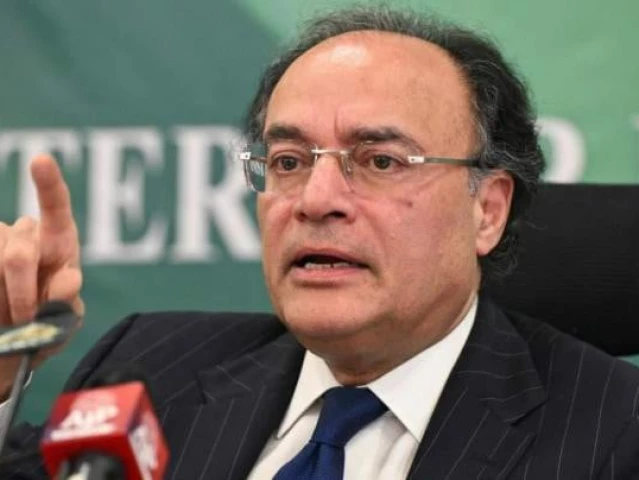
Minister for Finance and Revenue, Senator Muhammad Aurangzeb. Photo: APP

Finance Minister Muhammad Aurangzeb on Wednesday formally announced to introduce energy conservation measures to deal with disruption in import of fuels, as the government considers closing higher education institutions and weekly setting fuel prices to deal with the evolving situation.

However, the finance minister said that the country has sufficient stocks of fuels for this month in addition to 10 days’ equal crude oil reserves, emphasising there was no cause for immediate concern.

“We are introducing energy conservation measures to curtail demand but there would not be any rationing of these products,” said the finance minister in a policy statement during a meeting of the Senate Standing Committee on Finance. PPP’s Senator Saleem Mandviwalla chaired the meeting.
 

Users who are viewing this thread

Pakistan Defence Latest

Back
Top