Pakistan Records Strongest Fiscal Performance in 22 Years
Pakistan has closed FY2025-26 with a historic strengthening of its public finances. This marks a decisive shift from recurring fiscal stress toward discipline, stability, and sustainable growth.
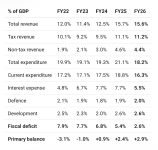
The fiscal deficit fell to just
2.6% of GDP—the lowest in 22 years—while the primary surplus reached a record
2.9% of GDP, the highest since at least FY2000-01.
A Historic Fiscal Turnaround
In just three years, the fiscal deficit has improved by
5.2 percentage points of GDP, while the primary balance has swung by
3.9 percentage points (moving from a 1.0% deficit to a record 2.9% surplus).
Primary Balance: Three consecutive years of surpluses
- FY24: +0.9% of GDP
- FY25: +2.4% of GDP
- FY26: +2.9% (Record high)
Fiscal Deficit: A 22-year low
- FY22: 7.9% of GDP (Highest since FY2000-01)
- FY23: 7.8% of GDP
- FY24: 6.8% of GDP
- FY25: 5.4% of GDP
- FY26: 2.6% (Lowest in 22 years)
Revenue Up, Deficit Down: Rebuilding Fiscal Space
(Note: All USD conversions are calculated at 1 USD = Rs 278)
Disciplined expenditure management and surging revenues helped deliver the strongest fiscal outcome in decades:
- Total Revenues (FY26): Rs 19.8 trillion ($71.22 billion)
- Tax Revenues: Rs 14.2 trillion ($51.08 billion)
- Interest Payments: Dropped from Rs 8.9 trillion ($32.01 billion) last year to Rs 6.95 trillion ($25.00 billion) in FY26. This is a massive reduction of nearly Rs 2 trillion ($7.19 billion).
- Interest Burden: Declined from 61% of total revenues in FY24 to just 35% in FY26, materially improving fiscal capacity.
- Development & Net Lending: Rs 3.25 trillion ($11.69 billion)
The Result: A fiscal deficit of Rs 3.31 trillion (
$11.91 billion), alongside a record primary surplus of Rs 3.63 trillion (
$13.06 billion). This is not simple deficit reduction; it reflects a fundamental strengthening of Pakistan’s fiscal position driven by stronger revenues, expenditure discipline, and sustained reforms.
From Vulnerability to Strength
Persistent fiscal deficits have historically been one of Pakistan’s biggest macroeconomic vulnerabilities—adding to debt, financing requirements, inflationary pressures, and external imbalances.
That cycle is being broken.
Three consecutive primary surpluses and sharply lower deficits are now translating into stronger debt dynamics:
- Debt growth has slowed to a 20-year low.
- Debt-to-GDP has declined to around 68%.
- Debt servicing costs have fallen materially.
This means lower financing pressure, improving debt sustainability, and greater fiscal space for development.
Stronger Stability, Stronger Growth
The fiscal turnaround is reinforcing Pakistan’s broader macroeconomic stabilization. Lower fiscal imbalances, improving debt dynamics, stronger external accounts, and rebuilt reserves are reducing vulnerabilities and strengthening sovereign credibility.
The progress is also being externally recognized:
S&P upgraded Pakistan's sovereign rating from B- to B with a
Stable Outlook in July 2026. The agency specifically recognized faster fiscal consolidation, stronger revenue mobilization, rebuilding reserves, and declining government debt-to-GDP.
Together, these improvements provide a stronger foundation for investment, development, and sustainable, inclusive growth.
The Bottom Line
Pakistan’s longstanding fiscal vulnerability is being transformed into a source of macroeconomic strength. Moving from a 7.9% fiscal deficit and 3.1% primary deficit in FY22 to a 22-year-low 2.6% fiscal deficit and record 2.9% primary surplus in FY26 is a remarkable turnaround.
Direction of Travel:Fiscal Reforms

Three Consecutive Primary Surpluses
Record Primary Surplus
22-Year-Low Fiscal Deficit
Slower Debt Growth & Lower Interest Burden
Greater Fiscal Space
External Validation
Stability, Development & Sustainable Growth
View attachment 210555





 Summary of Provincial Fiscal Operations in Rs Trillion (FY2025–26)
 Federal Transfers (NFC)
 Current Expenditure


