General Economic Updates

Pakistan needs to trade with india but without preconditions. It can open a cheap land transit route to Afghanistan and the central Asian states. Unfortunately both countries cannot seem to shed the baggage of the past between them. Whether we desperately need india I'm not so sure.

That land route can be used for nefarious things, and the basic rule of international politics is mutual benefits.
Please read my other post to see what i mean.
 
The only trade you guys voluntarily gotten from our side was the peace offering from the mighty Pak army generals at the border crossing. The general consensus amongst the populace is we would never trade with the butchers of Kashmiri's, regardless of what the Military Junta says.
 
Last edited:
The country is left with limited options to tackle its increasingly unsustainable debt obligations

JANUARY 8, 2024
AdobeStock_506291583-696x398.jpg

The global economic landscape has experienced significant changes in recent decades, resulting in noticeable geopolitical fragmentation. China has emerged as the world’s second-largest economy, playing a crucial role in global growth and industrial supply chains. Additionally, the global south, represented by platforms like BRICS, is consolidating its economic power.

These changes can partly be attributed to some challenges faced by emerging economies, including the economic fallout of Covid-19 pandemic, rising food and energy prices due to the war in Ukraine, and higher interest rates.

As a consequence, these countries are burdened with high levels of debt and are experiencing slow economic growth. However, the funding provided by multilaterals like the International Monetary Fund (IMF) and World Bank has not kept pace with the expanding global economy.

25.png


The World Bank acknowledges that debt has become a significant burden for the poorest countries, hindering their ability to invest in vital areas such as public health, education, and the environment. Consequently, these countries are compelled to allocate a substantial portion of their budgets to debt servicing rather than focusing on their pressing developmental needs.
Pakistan’s case is similar to its counterparts in the global south. The country’s economy has been severely affected by a series of exogenous shocks in the past two years, shaking it to its core. The situation has become so critical that the primary goal of successive administrations has been to simply keep the country afloat.

The debt situation

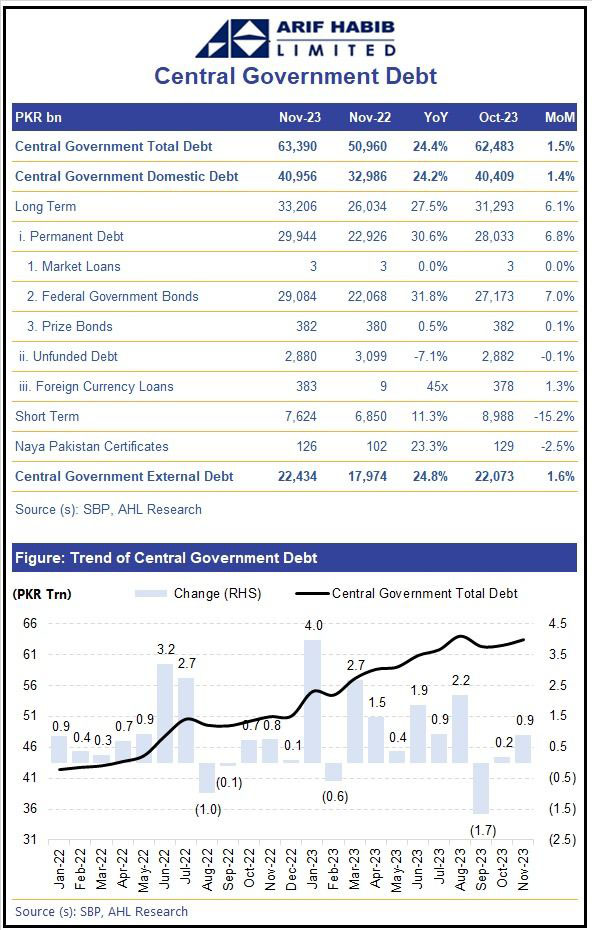
According to the State Bank of Pakistan’s (SBP) latest debt statistics released on January 5, 2024, the central government’s domestic and external debt stocks increased from Rs 62.5 trillion in October 2023 to Rs 63.4 trillion in November 2023. The long-term domestic debt saw a significant increase of 6.1%, reaching Rs 33.2 trillion, while the short-term domestic debt decreased by over 15% to Rs. 7.6 trillion. The central government’s external debt also increased by 1.6% to Rs 22.4 trillion during the same period.

Domestic borrowing represents the largest portion of the overall public debt and, as a result, carries the highest servicing cost. The government’s significant appetite for deficit financing through short-term domestic borrowing, coupled with record high interest rates, has resulted in a dual crisis of elevated interest expenses and short maturity terms. Addtionally, domestic debt servicing consumes over half of the federal budget, resulting in a significant fiscal burden.

Over the past year, the government has strategically focused on borrowing through T-bills and floating PIBs. Both options have led to substantial costs of debt servicing due to the prevailing inverted yield curve over the past year.

Additionally, relying on T-bill borrowings has increased the vulnerability to rollover risk because of their short-term nature. However, to address this issue, it appears that the government is now transitioning towards issuing longer-term bonds, which has been made possible by positive bids from market participants who anticipate forthcoming interest rate reductions.

G-1.jpg


The external front also presents a challenging situation. The government is facing the daunting task of managing borderline unsustainable debt, along with low SBP reserves, making it difficult to stay financially afloat.

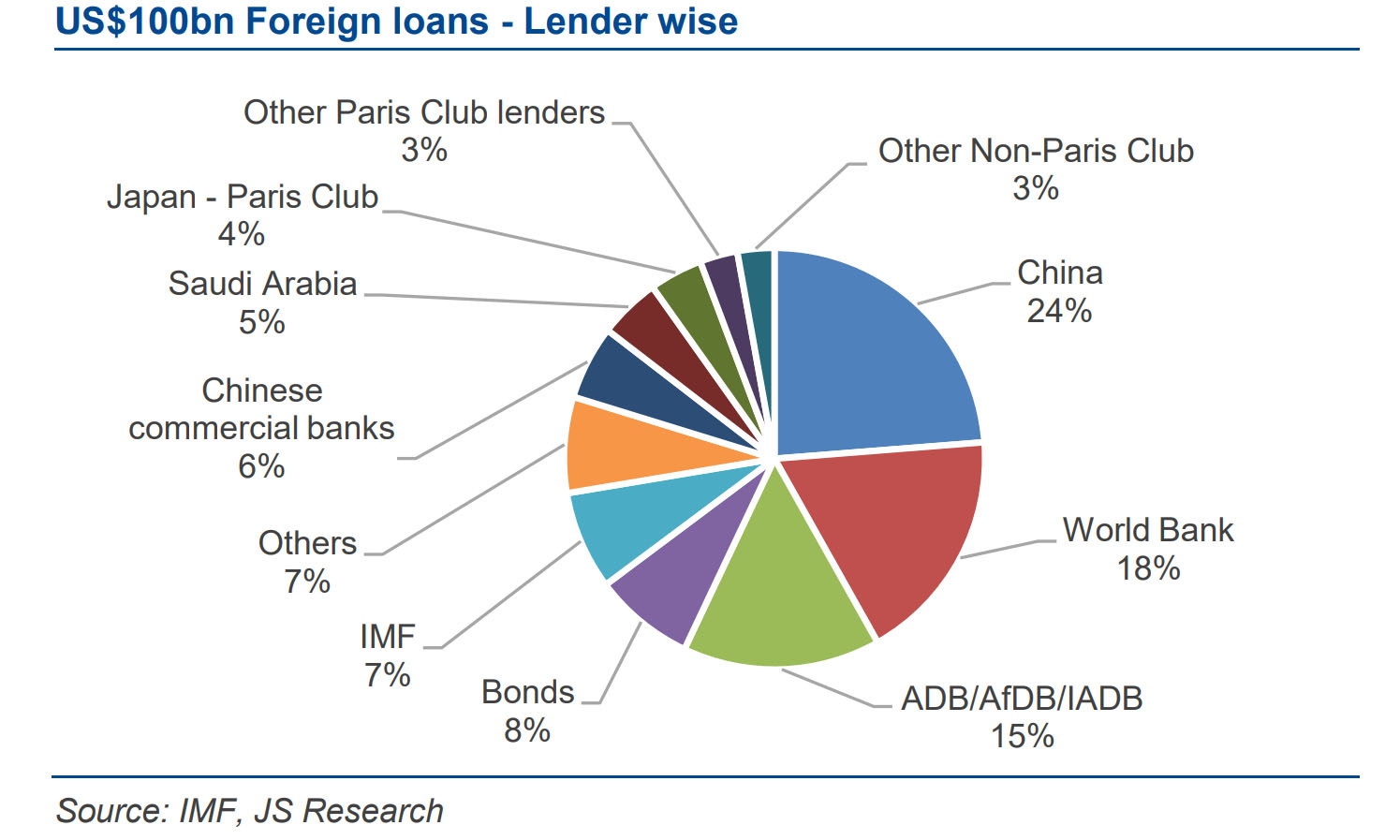
According to a report by JS Global Capital, “Recent external flows post IMF’s fresh program addressed investor’s concerns on piling external debt and its servicing. Where Pakistan’s external debt has reached 21% of GDP, its servicing is at 2.8x of outstanding SBP reserves. These levels have remained at ~1x historically, while increasing to 7.5x in Jan-2023. A key factor for Pakistan’s external debt is its lender composition. The majority share of the pie is contributed by China and its lenders, followed by bilateral/multilateral lending agencies and Middle East countries.”

G-2.jpg


Hence, the composition of Pakistan’s external commitments indicates that the prospects for debt relief are dim. This reality has been acknowledged by Shahmshad Akhtar, the caretaker finance minister, who, in her recent media interactions, reiterated that the majority of Pakistan’s external debt is held by multilateral agencies, which cannot be rescheduled due to their “preferred creditor” status.

The commercial debt, which forms a smaller portion of the external debt, is also challenging to restructure due to the involvement of multiple stakeholders and a cumbersome process.

Bilateral debt constitutes almost one-third of the external debt, and as per the Finance Minister, the government has already availed itself of the payment moratorium under the G-20 debt relief initiative following the COVID-19 pandemic.

Furthermore, any debt negotiations would require China’s stamp of approval, as the country holds around 30% of Pakistan’s external public debt. This condition itself poses a major hindrance to initiating debt relief discussions.

Regarding domestic restructuring, the country lacks the capacity to effectively manage the economic consequences of such an event.

Economic analyst Ammar Habib Khan told Profit that the chances of domestic debt restructuring remain low. Instead, he expressed the view that the government will be content with inflating away the debt due
to gradually reducing the real value of domestic borrowing through the impact of high inflation.


Khan emphasized that the primary challenge lies not in the current debt, but rather in the pressing need for liquidity to bolster reserves and support economic growth.

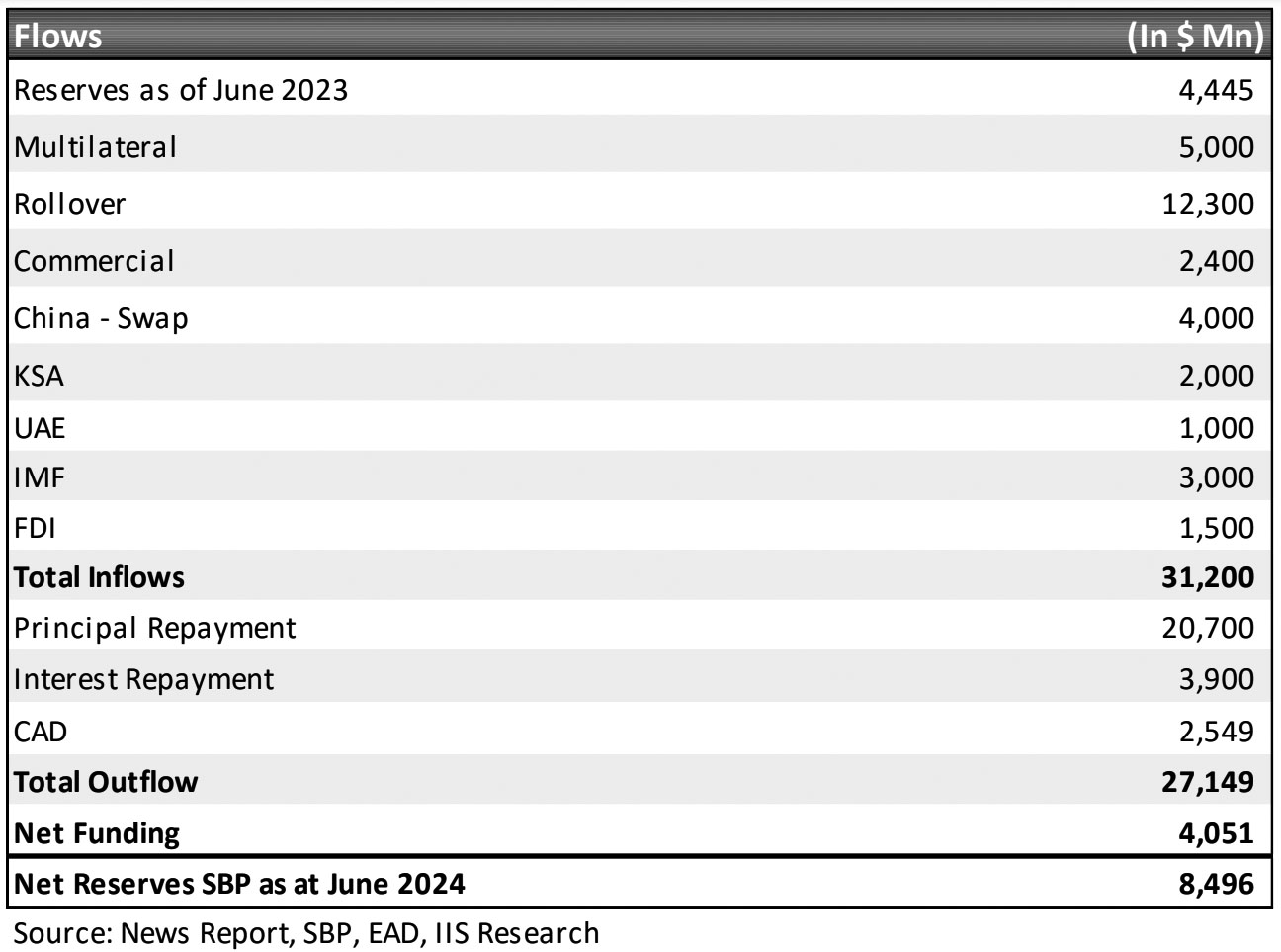
“Pakistan’s external debt obligation for FY24 is $24.6 billion with $20.7 billion principal repayment and $3.9 billion interest payment. Out of this, $5.4 billion has already been paid. Following these repayments, the remaining debt stands at $19.2 billion. Out of this amount, $12.4 billion is expected to be rolled over by creditors, leaving a net repayment of $6.8 billion for the rest of the fiscal year. This net repayment includes $ 4.3 billion of principal and $2.5 billion of interest,” read a report by Ismail Iqbal Securities.

G-4.jpg


China’s Role

When examining Pakistan’s debt dynamics, it is crucial to consider the role of China, which is heavily invested in the country. However, it is worth noting that Beijing is currently grappling with a domestic banking crisis of its own. Additionally, it has experienced setbacks due to a series of defaults by borrower nations.

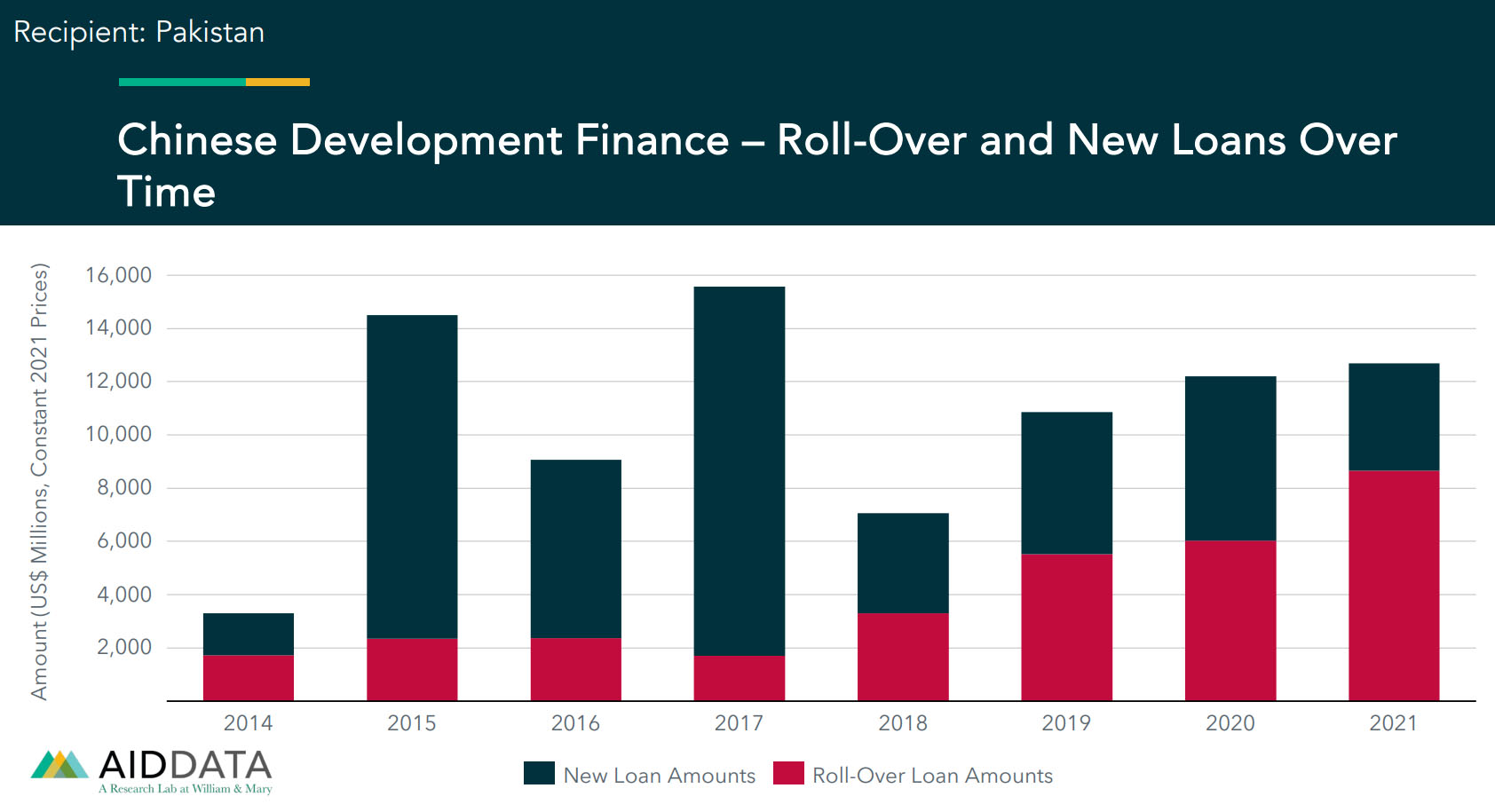
As per research lab AidData’s recent findings, China is faced with the challenge of navigating an unfamiliar and uncomfortable role as the world’s largest official debt collector. A significant portion – around 55% – of its loans to low-and middle-income countries have already entered their principal repayment periods, and this percentage is projected to increase to 75% by 2030.

The total outstanding debt, which includes principal but excludes interest, owed by developing countries to China is estimated to be at least $1.1 trillion.

According to AidData, approximately 80% of China’s overseas lending portfolio in the developing world is currently supporting financially distressed countries. Furthermore, overdue repayments to China are on the rise, both in absolute terms and as a proportion of total overdue loan repayments to official creditors, such as bilateral and multilateral institutions.

Pakistan is a major contributor to this statistic. “With 161 loans worth $68.92 billion, Pakistan is China’s 3rd largest country-level loan portfolio anywhere in the world, after Russia and Venezuela. At $28.13 billion, rescue lending to Pakistan originating in China is the highest in the world, followed by Argentina, Ecuador, and Venezuela – pointing to the particularly close “all-weather friendship” between the two countries,” reads the AidData report released in November of last year.

G-3.jpg


The Chinese strategy of rolling over payments that are due is expected to persist, as Beijing has a vested interest in ensuring Pakistan’s stability. However, those in Islamabad who anticipate China to provide a smooth resolution to Pakistan’s debt crisis may be in for a harsh awakening.

While speaking on Tabadlab’s platform, a Pakistan-based think tank, Dr. Ammar A. Malik, senior research scientist at AidData stated, “Chinese companies operating in Pakistan prioritize commercial objectives and are primarily accountable to their shareholders for profitability. While it is in their best interest to ensure Pakistan remains financially stable, the likelihood of significant debt relief in collaboration with the West seems improbable.”

All roads lead to the IMF

Pakistan’s economic stability is now contingent on securing a long-term agreement with the IMF once the current Stand-by Agreement expires in March 2024. The situation is further complicated by the fact that the country is expected to hold general elections just one month prior, in February.

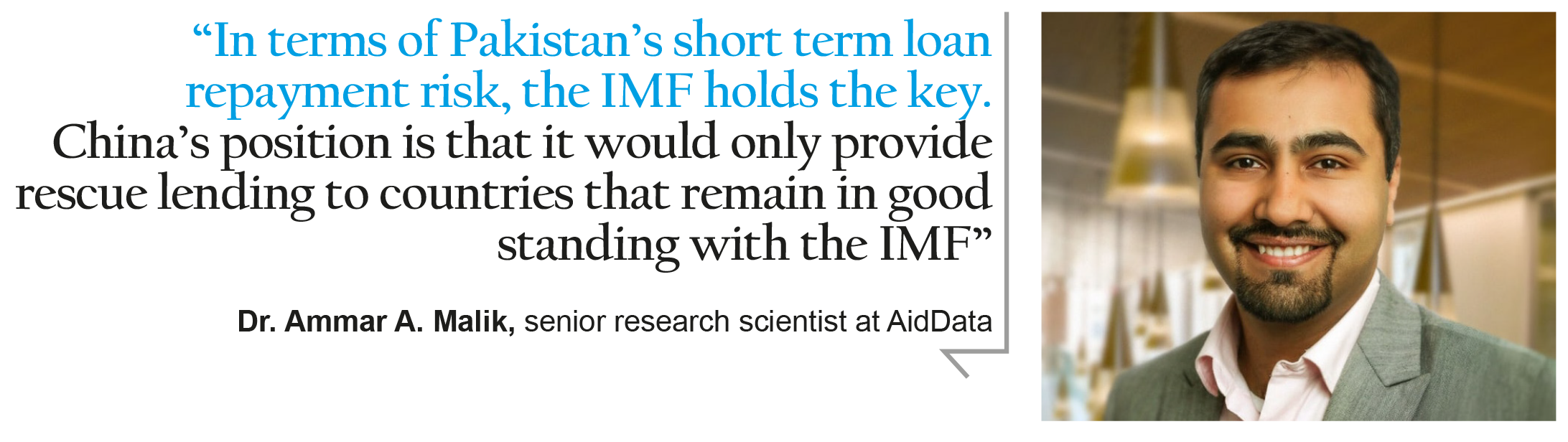
The significance of being under the IMF’s umbrella is amplified due to its implications on bilateral cooperation. “In terms of Pakistan’s short term loan repayment risk, the IMF holds the key. China’s position is that it would only provide rescue lending to countries that remain in good standing with the IMF,” remarked Malik.

Pakistan’s other major bilateral partner, Saudi Arabia, also has a similar stance. At the January 2023 World Economic Forum in Davos, the Saudi Finance Minister Mohammed al-Jadaa pointed towards a shift in the approach of giving direct grants and deposits without any conditions attached. He mentioned that Saudi Arabia is strongly advocating for recipient countries to undertake reforms. Emphasizing the need for reforms, he highlighted that while Saudi Arabia is imposing taxes on its own people, it also expects other countries to make similar efforts.

However, analysts believe that there are no significant obstacles hindering Pakistan’s ability to secure another IMF program, as all factions of the state are aligned towards this common objective.

Yet many analysts, including Dr. Vaqar Ahmed, joint executive director at the Sustainable Development Policy Institute, are of the opinion that while short-term measures like rollovers and borrowing from China and Gulf countries might offer temporary relief, a comprehensive debt restructuring plan is necessary.

In his analysis for UNDP’s Development Advocate October – November 2023, Ahmed highlights the significance of the incoming government, after the 2024 elections, conducting a thorough evaluation of debt management options. The IMF has emphasized the importance of developing a sustainable program facility. For Pakistan to maintain solvency, it is crucial to have a functional economy that generates favorable foreign currency inflows through exports, foreign investments, and remittances.

Therefore, addressing the root causes of public finance mismanagement is crucial, including fostering transparency, accountability, and efficiency in financial procedures. Implementing tax reforms, enforcing stricter budget controls, and strengthening fiscal responsibility are vital steps towards improving revenue collection and preventing reckless borrowing.

Encouraging domestic savings, attracting foreign direct investment, and seeking public-private partnerships can help reduce reliance on external borrowing in the long run.
 
Therefore, addressing the root causes of public finance mismanagement is crucial, including fostering transparency, accountability, and efficiency in financial procedures. Implementing tax reforms, enforcing stricter budget controls, and strengthening fiscal responsibility are vital steps towards improving revenue collection and preventing reckless borrowing.

Encouraging domestic savings, attracting foreign direct investment, and seeking public-private partnerships can help reduce reliance on external borrowing in the long run.
this requires cultural change the likes of post war Japan or the French Revolution. All nigh impossible in the collections of peoples that is Pakistan - there must be some other more realistic avenues.
 
The country is left with limited options to tackle its increasingly unsustainable debt obligations

JANUARY 8, 2024
AdobeStock_506291583-696x398.jpg

The global economic landscape has experienced significant changes in recent decades, resulting in noticeable geopolitical fragmentation. China has emerged as the world’s second-largest economy, playing a crucial role in global growth and industrial supply chains. Additionally, the global south, represented by platforms like BRICS, is consolidating its economic power.

These changes can partly be attributed to some challenges faced by emerging economies, including the economic fallout of Covid-19 pandemic, rising food and energy prices due to the war in Ukraine, and higher interest rates.

As a consequence, these countries are burdened with high levels of debt and are experiencing slow economic growth. However, the funding provided by multilaterals like the International Monetary Fund (IMF) and World Bank has not kept pace with the expanding global economy.

25.png


The World Bank acknowledges that debt has become a significant burden for the poorest countries, hindering their ability to invest in vital areas such as public health, education, and the environment. Consequently, these countries are compelled to allocate a substantial portion of their budgets to debt servicing rather than focusing on their pressing developmental needs.
Pakistan’s case is similar to its counterparts in the global south. The country’s economy has been severely affected by a series of exogenous shocks in the past two years, shaking it to its core. The situation has become so critical that the primary goal of successive administrations has been to simply keep the country afloat.

The debt situation

According to the State Bank of Pakistan’s (SBP) latest debt statistics released on January 5, 2024, the central government’s domestic and external debt stocks increased from Rs 62.5 trillion in October 2023 to Rs 63.4 trillion in November 2023. The long-term domestic debt saw a significant increase of 6.1%, reaching Rs 33.2 trillion, while the short-term domestic debt decreased by over 15% to Rs. 7.6 trillion. The central government’s external debt also increased by 1.6% to Rs 22.4 trillion during the same period.

Domestic borrowing represents the largest portion of the overall public debt and, as a result, carries the highest servicing cost. The government’s significant appetite for deficit financing through short-term domestic borrowing, coupled with record high interest rates, has resulted in a dual crisis of elevated interest expenses and short maturity terms. Addtionally, domestic debt servicing consumes over half of the federal budget, resulting in a significant fiscal burden.

Over the past year, the government has strategically focused on borrowing through T-bills and floating PIBs. Both options have led to substantial costs of debt servicing due to the prevailing inverted yield curve over the past year.

Additionally, relying on T-bill borrowings has increased the vulnerability to rollover risk because of their short-term nature. However, to address this issue, it appears that the government is now transitioning towards issuing longer-term bonds, which has been made possible by positive bids from market participants who anticipate forthcoming interest rate reductions.

G-1.jpg


The external front also presents a challenging situation. The government is facing the daunting task of managing borderline unsustainable debt, along with low SBP reserves, making it difficult to stay financially afloat.

According to a report by JS Global Capital, “Recent external flows post IMF’s fresh program addressed investor’s concerns on piling external debt and its servicing. Where Pakistan’s external debt has reached 21% of GDP, its servicing is at 2.8x of outstanding SBP reserves. These levels have remained at ~1x historically, while increasing to 7.5x in Jan-2023. A key factor for Pakistan’s external debt is its lender composition. The majority share of the pie is contributed by China and its lenders, followed by bilateral/multilateral lending agencies and Middle East countries.”

G-2.jpg


Hence, the composition of Pakistan’s external commitments indicates that the prospects for debt relief are dim. This reality has been acknowledged by Shahmshad Akhtar, the caretaker finance minister, who, in her recent media interactions, reiterated that the majority of Pakistan’s external debt is held by multilateral agencies, which cannot be rescheduled due to their “preferred creditor” status.

The commercial debt, which forms a smaller portion of the external debt, is also challenging to restructure due to the involvement of multiple stakeholders and a cumbersome process.

Bilateral debt constitutes almost one-third of the external debt, and as per the Finance Minister, the government has already availed itself of the payment moratorium under the G-20 debt relief initiative following the COVID-19 pandemic.

Furthermore, any debt negotiations would require China’s stamp of approval, as the country holds around 30% of Pakistan’s external public debt. This condition itself poses a major hindrance to initiating debt relief discussions.

Regarding domestic restructuring, the country lacks the capacity to effectively manage the economic consequences of such an event.

Economic analyst Ammar Habib Khan told Profit that the chances of domestic debt restructuring remain low. Instead, he expressed the view that the government will be content with inflating away the debt due
to gradually reducing the real value of domestic borrowing through the impact of high inflation.


Khan emphasized that the primary challenge lies not in the current debt, but rather in the pressing need for liquidity to bolster reserves and support economic growth.

“Pakistan’s external debt obligation for FY24 is $24.6 billion with $20.7 billion principal repayment and $3.9 billion interest payment. Out of this, $5.4 billion has already been paid. Following these repayments, the remaining debt stands at $19.2 billion. Out of this amount, $12.4 billion is expected to be rolled over by creditors, leaving a net repayment of $6.8 billion for the rest of the fiscal year. This net repayment includes $ 4.3 billion of principal and $2.5 billion of interest,” read a report by Ismail Iqbal Securities.

G-4.jpg


China’s Role

When examining Pakistan’s debt dynamics, it is crucial to consider the role of China, which is heavily invested in the country. However, it is worth noting that Beijing is currently grappling with a domestic banking crisis of its own. Additionally, it has experienced setbacks due to a series of defaults by borrower nations.

As per research lab AidData’s recent findings, China is faced with the challenge of navigating an unfamiliar and uncomfortable role as the world’s largest official debt collector. A significant portion – around 55% – of its loans to low-and middle-income countries have already entered their principal repayment periods, and this percentage is projected to increase to 75% by 2030.

The total outstanding debt, which includes principal but excludes interest, owed by developing countries to China is estimated to be at least $1.1 trillion.

According to AidData, approximately 80% of China’s overseas lending portfolio in the developing world is currently supporting financially distressed countries. Furthermore, overdue repayments to China are on the rise, both in absolute terms and as a proportion of total overdue loan repayments to official creditors, such as bilateral and multilateral institutions.

Pakistan is a major contributor to this statistic. “With 161 loans worth $68.92 billion, Pakistan is China’s 3rd largest country-level loan portfolio anywhere in the world, after Russia and Venezuela. At $28.13 billion, rescue lending to Pakistan originating in China is the highest in the world, followed by Argentina, Ecuador, and Venezuela – pointing to the particularly close “all-weather friendship” between the two countries,” reads the AidData report released in November of last year.

G-3.jpg


The Chinese strategy of rolling over payments that are due is expected to persist, as Beijing has a vested interest in ensuring Pakistan’s stability. However, those in Islamabad who anticipate China to provide a smooth resolution to Pakistan’s debt crisis may be in for a harsh awakening.

While speaking on Tabadlab’s platform, a Pakistan-based think tank, Dr. Ammar A. Malik, senior research scientist at AidData stated, “Chinese companies operating in Pakistan prioritize commercial objectives and are primarily accountable to their shareholders for profitability. While it is in their best interest to ensure Pakistan remains financially stable, the likelihood of significant debt relief in collaboration with the West seems improbable.”

All roads lead to the IMF

Pakistan’s economic stability is now contingent on securing a long-term agreement with the IMF once the current Stand-by Agreement expires in March 2024. The situation is further complicated by the fact that the country is expected to hold general elections just one month prior, in February.

The significance of being under the IMF’s umbrella is amplified due to its implications on bilateral cooperation. “In terms of Pakistan’s short term loan repayment risk, the IMF holds the key. China’s position is that it would only provide rescue lending to countries that remain in good standing with the IMF,” remarked Malik.

Pakistan’s other major bilateral partner, Saudi Arabia, also has a similar stance. At the January 2023 World Economic Forum in Davos, the Saudi Finance Minister Mohammed al-Jadaa pointed towards a shift in the approach of giving direct grants and deposits without any conditions attached. He mentioned that Saudi Arabia is strongly advocating for recipient countries to undertake reforms. Emphasizing the need for reforms, he highlighted that while Saudi Arabia is imposing taxes on its own people, it also expects other countries to make similar efforts.

However, analysts believe that there are no significant obstacles hindering Pakistan’s ability to secure another IMF program, as all factions of the state are aligned towards this common objective.

Yet many analysts, including Dr. Vaqar Ahmed, joint executive director at the Sustainable Development Policy Institute, are of the opinion that while short-term measures like rollovers and borrowing from China and Gulf countries might offer temporary relief, a comprehensive debt restructuring plan is necessary.

In his analysis for UNDP’s Development Advocate October – November 2023, Ahmed highlights the significance of the incoming government, after the 2024 elections, conducting a thorough evaluation of debt management options. The IMF has emphasized the importance of developing a sustainable program facility. For Pakistan to maintain solvency, it is crucial to have a functional economy that generates favorable foreign currency inflows through exports, foreign investments, and remittances.

Therefore, addressing the root causes of public finance mismanagement is crucial, including fostering transparency, accountability, and efficiency in financial procedures. Implementing tax reforms, enforcing stricter budget controls, and strengthening fiscal responsibility are vital steps towards improving revenue collection and preventing reckless borrowing.

Encouraging domestic savings, attracting foreign direct investment, and seeking public-private partnerships can help reduce reliance on external borrowing in the long run.
Pakistan isn't suffering from inflation. Inflation is by nature, temporary. If the price of an object is 100 today and becomes 110 tomorrow, remains at 110 for a few weeks/months and then returns to 100 it's inflation.

Pakistan's debt crisis would lead to generational poverty. Pakistan's forex reserves are already less than Ghana and Lebanon. Pak needs forex to import wheat(most crucial import), dal, palm oil etc. If all the forex earned via remittances and exports is spent paying back debt and interest then how will Pakistan finance crucial imports?
 
this requires cultural change the likes of post war Japan or the French Revolution. All nigh impossible in the collections of peoples that is Pakistan - there must be some other more realistic avenues.
I mean, not really
Debt crisis is quite easy to fix as long as someones willing to lose political capital/ establishment is willing to put the foot down for necessary yet politically difficult steps
Simple straight forward yet crucial reforms like dozen other countries

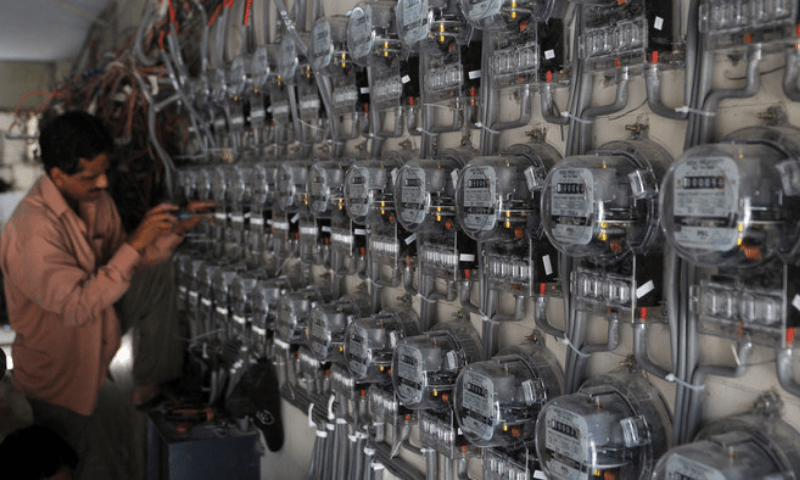
Our energy crisis was much harder to fix than our debt issues tbh - and we for the most part fixed it (I'd say 70% we fixed it- with privatization of Discos, even cost will come down eventually if they are not coming down rn because generational costs are down compared to what they were throughout 2010s)
 
Last edited:
I mean, not really
Debt crisis is quite easy to fix as long as someones willing to lose political capital/ establishment is willing to put the foot down for necessary yet politically difficult steps

Our energy crisis was much harder to fix than our debt issues tbh
The issue of external debt cannot be resolved without increasing exports, exports cannot be increased without boosting industry, industry cannot be boosted without cheap energy, cheap energy cannot be provided due to long-term contracts with IPPs on unfavorable terms.

Cpec brought Chinese IPPs, Chinese IPPs brought high electricity prices, high electricity prices resulted in lesser demand, lesser demand led to more unutilized energy, more unutilized energy led to higher capacity payments, higher capacity payments led to even higher energy prices which led to even high energy payments till entire industry collapsed.

Commercial energy cost in Pakistan is 24 cents compared to 7-10 cents in India and Bangladesh. Pakistani industries have been left uncompetitive in both export market and domestic is flooded with cheap chinese goods. How do you expect someone paying 3 times the price for energy to compete with India/BD products?


https://profit.pakistantoday.com.pk/2023/09/25/high-energy-prices-burn-steel-industry/ https://m.economictimes.com/news/in...industry-in-tatters/articleshow/102466381.cms
 
The issue of external debt cannot be resolved without increasing exports, exports cannot be increased without boosting industry, industry cannot be boosted without cheap energy, cheap energy cannot be provided due to long-term contracts with IPPs on unfavorable terms.

Cpec brought Chinese IPPs, Chinese IPPs brought high electricity prices, high electricity prices resulted in lesser demand, lesser demand led to more unutilized energy, more unutilized energy led to higher capacity payments, higher capacity payments led to even higher energy prices which led to even high energy payments till entire industry collapsed.

Commercial energy cost in Pakistan is 24 cents compared to 7-10 cents in India and Bangladesh. Pakistani industries have been left uncompetitive in both export market and domestic is flooded with cheap chinese goods. How do you expect someone paying 3 times the price for energy to compete with India/BD products?


https://profit.pakistantoday.com.pk/2023/09/25/high-energy-prices-burn-steel-industry/ https://m.economictimes.com/news/in...industry-in-tatters/articleshow/102466381.cms
ok
 
Again with same whining. No Trade with Pakistan suits India and it is likely to remain the policy for at least another 5 years.
 
Again with same whining. No Trade with Pakistan suits India and it is likely to remain the policy for at least another 5 years.
India gave MFN status to Pakistan in 1996. Past prime ministers of India tried to establish trade relations with Pakistan. But Pakistan had different ideas then. Now with BJP and Modi, India is not in the mood.
 
Trade with India is irrelevant to Pakistan's economic woes, and will only worsen them by making Pakistan dependent on India.

The problem is the culture of corruption and complacency.

But no Pakistani wants to fix their own character. They are content with whining about Army, Imran, Nawaz, Bilawal, Sindhi, Muhajir, Amreeka, China in their drawing room or on PDF.
 

IMF board nod allows disbursement of $700m

Anwar Iqbal
January 12, 2024


WASHINGTON: In a significant development, the Executive Board of the International Monetary Fund (IMF) announced on Thursday that it had successfully concluded the first review of Pakistan’s economic reform programme, backed by the Stand-By Arrangement (SBA), paving the way for an immediate disbursement of SDR 528 million, equivalent to approximately $700m.

This latest disbursement brings the cumulative total under the arrangement to an impressive SDR 1.422 billion, roughly $1.9bn. The financial support provided by the IMF underscores the global confidence in Pakistan’s commitment to implementing essential economic reforms.

The successful review signifies a crucial step forward for Pakistan as it continues to navigate economic challenges and work towards fostering stability. The disbursement is expected to provide the much-needed support to the country’s financial framework, facilitating the implementation of key reforms outlined in the IMF-supported programme.

The board’s decision reflects a recognition of Pakistan’s efforts in addressing economic vulnerabilities and implementing policy measures aimed at promoting sustainable growth.

“Economic activity has stabilised in Pakistan, although the outlook remains challenging and dependent on the implementation of sound policies,” the IMF board observed.

It also said that “continued timely and consistent implementation of programme policies remains critical, with no room for slippage”.

The board reminded Pakistan that it “requires strict adherence to fiscal targets while protecting social spending, a market-determined exchange rate to absorb external shocks, and further progress on structural reforms to support stronger and more inclusive growth”.

The IMF board noted that macroeconomic conditions in Pakistan have generally improved, with the growth of 2pc expected in FY24 as the nascent recovery expands in the second half of the year. The fiscal position also strengthened in FY24Q1 achieving a primary surplus of 0.4pc of GDP driven by overall strong revenues.

To view this content we will need your consent to set third party cookies.
For more detailed information, see our cookies page.


Inflation remains elevated, although with appropriately tight policy, this could decline to 18.5pc by the end of June 2024. Gross reserves increased to $8.2bn in December 2023, up from $4.5bn in June, while the exchange rate has been broadly stable.

The current account deficit is expected to rise to around 1.5pc of GDP in FY24 as the recovery takes hold. Assuming sustained sound macroeconomic policy and structural reform implementation, inflation should return to the State Bank of Pakistan’s target and growth continue to strengthen over the medium term.

The IMF stressed that boosting jobs and inclusive growth in Pakistan requires continuing protection of the vulnerable through Benazir Income Support Programme and accelerating structural reforms.

It also emphasised the need for improving the business environment and levelling the playing field for investors, advancing the SOE reform agenda and safeguards related to the Sovereign Wealth Fund.


Users who are viewing this thread

Back
Top