MNZGamerX
Registered Member

Will a US-developed port at Pasni, just 100 kilometers from the China-developed Gwadar Port, be acceptable to Beijing?
By Mariyam Suleman Anees
October 27, 2025

Pakistan is reported to have offered the United States a proposal for the development of a new deep-sea port at Pasni, a coastal town of 70,000 people, just 100 kilometers east of the China-funded Gwadar Port.
Pakistani officials have denied that any formal offer was made, clarifying that discussions, if any, were only exploratory and not part of any government initiative.
Even if merely exploratory, the prospect of a U.S.-developed port at Pasni has generated a buzz and raised several questions. Is the project feasible? Why is Pakistan proposing this idea now? Could it deepen tensions in an already restive region? And how might it affect Pakistan’s relationship with China?
The Pakistani offer of a port at Pasni to the Americans has not come in isolation. Last month, a Missouri-based company, U.S. Strategic Metals (USSM), signed a Memorandum of Understanding (MoU) with Pakistan’s Frontier Works Organization (FWO) to collaborate on the extraction of strategic minerals, which are critical for advanced manufacturing and energy technologies.
The MOU, signed at Prime Minister Shehbaz Sharif’s residence in Islamabad, was described by U.S. officials as a step toward strengthening the Pakistan-U.S. bilateral relationship and cooperation in Pakistan’s mining sector.
Even before this meeting, in a rare diplomatic event in August, U.S. President Donald Trump reportedly said that “Pakistan has vast untapped energy potential, and America should be its partner in developing it.” Although it was not clear if this statement was just rhetoric or a serious signal for business, Pakistan did not take long to follow up with an offer.
Pakistan’s natural resources, including rare earth minerals such as gold, copper, coal, and salt, as well as its strategic coastal belt, are underdeveloped and underutilized. Mining comprises just 3.2 percent of Pakistan’s GDP and only 0.1 percent of its exports. Recognizing this potential, Islamabad is using both its mineral wealth and maritime assets to attract foreign investment and, especially, draw U.S. interest.
This reflects changes in Pakistan-U.S. relations. Historically, bilateral engagement has been about security cooperation and development aid. U.S. financial assistance to Pakistan dipped over the past decade from $650 million in 2013 to a little over $340 million in 2018. In 2025, anticipated financial aid worth $845 million was halted, leading to the suspension of many projects across different sectors in Pakistan.
Currently, the Pakistan-U.S. relationship is a strategic, interest-driven alliance, one that is increasingly centered on energy and critical minerals, rather than on military or humanitarian aid. The U.S. has imposed a 19 percent import tariff on Pakistan, the lowest in South Asia, compared to the 50 percent tariff rate on India. This generosity toward Pakistan may reflect Washington’s economic interest in the latter. It could also be driven by the strategic interests of the U.S. — a move to secure influence in a region where, currently, China has a strong foothold.
In this context, Pakistan’s recent offers to the U.S., inviting it to invest in its mineral sector or the reported proposal to develop a port in Pasni, could be part of Islamabad’s effort to win U.S. attention and stay relevant, while also balancing its ties with China, using both its mineral and maritime assets to navigate competitive geopolitics.
China, meanwhile, already has a strong presence in Pakistan’s mineral sector through the Saindak mining project in Balochistan’s Chagai district. It has been mining gold, copper, and silver since the 1990s. Despite investing millions in Gwadar Port, China still relies on ports in Karachi for mineral exports.
As for the feasibility of a port at Pasni, the town is small with limited infrastructure. Developing a port here would require investing in its infrastructure development, and then in the construction of the port itself. After decades of investments and attention, if Gwadar Port remains underutilized, how can a new port in Pasni not have a similar fate?
Like Gwadar, Pasni is located in Balochistan province; in fact, it is located within the jurisdiction of Gwadar district itself. Like Gwadar and the rest of Balochistan, Pasni has long been affected by political unrest, local grievances over resource extraction and insurgency.
These challenges have already affected Gwadar Port and its economic viability, and the same challenges could complicate any large-scale development in Pasni. After two decades of efforts to develop Gwadar Port, it remains underdeveloped, with rail and road networks still incomplete. Pasni is not only a smaller town, but it also faces some very critical environmental issues. Sand dunes encroach on the city, making it a complicated place to develop a port.
Developing a port at Pasni, therefore, requires not only thorough technical and financial planning but also a very careful navigation of the complex social, political, and security landscape of Balochistan. The same security situation has been a concern for China for almost two decades now.
Yet, despite these challenges, China has remained heavily invested in Gwadar, not necessarily for its immediate economic gains, but for Gwadar being positioned as a “strategic strongpoint” that provides Beijing with a foothold in the Arabian Sea.
If the U.S. were to consider Pakistan’s offer of a port in Pasni, it would likely be to establish a similar “strategic strongpoint” in the Arabian Sea, not too far from Gwadar Port.
Importantly, how will China, Pakistan’s “all-weather friend,” view a U.S.-developed port at Pasni? The Chinese Foreign Ministry stated that Pakistani authorities assured them that economic engagements with the U.S. would not affect Chinese interests in the region. That Pakistan had to assure Chinese authorities about a potential U.S. role in Pasni indicates how strong China’s hold is over Pakistan’s strategic decisions.
The development of a port at Pasni will not be easy. The U.S. and Pakistan will have to overcome security, political, and infrastructure challenges that will require cautious planning and navigation of regional dynamics to avoid any unintentional economic or diplomatic fallout, before the two countries can reap the benefits of a port at Pasni.
By Mariyam Suleman Anees
October 27, 2025
Pakistan is reported to have offered the United States a proposal for the development of a new deep-sea port at Pasni, a coastal town of 70,000 people, just 100 kilometers east of the China-funded Gwadar Port.
Pakistani officials have denied that any formal offer was made, clarifying that discussions, if any, were only exploratory and not part of any government initiative.
Even if merely exploratory, the prospect of a U.S.-developed port at Pasni has generated a buzz and raised several questions. Is the project feasible? Why is Pakistan proposing this idea now? Could it deepen tensions in an already restive region? And how might it affect Pakistan’s relationship with China?
The Pakistani offer of a port at Pasni to the Americans has not come in isolation. Last month, a Missouri-based company, U.S. Strategic Metals (USSM), signed a Memorandum of Understanding (MoU) with Pakistan’s Frontier Works Organization (FWO) to collaborate on the extraction of strategic minerals, which are critical for advanced manufacturing and energy technologies.
The MOU, signed at Prime Minister Shehbaz Sharif’s residence in Islamabad, was described by U.S. officials as a step toward strengthening the Pakistan-U.S. bilateral relationship and cooperation in Pakistan’s mining sector.
Even before this meeting, in a rare diplomatic event in August, U.S. President Donald Trump reportedly said that “Pakistan has vast untapped energy potential, and America should be its partner in developing it.” Although it was not clear if this statement was just rhetoric or a serious signal for business, Pakistan did not take long to follow up with an offer.
Pakistan’s natural resources, including rare earth minerals such as gold, copper, coal, and salt, as well as its strategic coastal belt, are underdeveloped and underutilized. Mining comprises just 3.2 percent of Pakistan’s GDP and only 0.1 percent of its exports. Recognizing this potential, Islamabad is using both its mineral wealth and maritime assets to attract foreign investment and, especially, draw U.S. interest.
This reflects changes in Pakistan-U.S. relations. Historically, bilateral engagement has been about security cooperation and development aid. U.S. financial assistance to Pakistan dipped over the past decade from $650 million in 2013 to a little over $340 million in 2018. In 2025, anticipated financial aid worth $845 million was halted, leading to the suspension of many projects across different sectors in Pakistan.
Currently, the Pakistan-U.S. relationship is a strategic, interest-driven alliance, one that is increasingly centered on energy and critical minerals, rather than on military or humanitarian aid. The U.S. has imposed a 19 percent import tariff on Pakistan, the lowest in South Asia, compared to the 50 percent tariff rate on India. This generosity toward Pakistan may reflect Washington’s economic interest in the latter. It could also be driven by the strategic interests of the U.S. — a move to secure influence in a region where, currently, China has a strong foothold.
In this context, Pakistan’s recent offers to the U.S., inviting it to invest in its mineral sector or the reported proposal to develop a port in Pasni, could be part of Islamabad’s effort to win U.S. attention and stay relevant, while also balancing its ties with China, using both its mineral and maritime assets to navigate competitive geopolitics.
China, meanwhile, already has a strong presence in Pakistan’s mineral sector through the Saindak mining project in Balochistan’s Chagai district. It has been mining gold, copper, and silver since the 1990s. Despite investing millions in Gwadar Port, China still relies on ports in Karachi for mineral exports.
As for the feasibility of a port at Pasni, the town is small with limited infrastructure. Developing a port here would require investing in its infrastructure development, and then in the construction of the port itself. After decades of investments and attention, if Gwadar Port remains underutilized, how can a new port in Pasni not have a similar fate?
Like Gwadar, Pasni is located in Balochistan province; in fact, it is located within the jurisdiction of Gwadar district itself. Like Gwadar and the rest of Balochistan, Pasni has long been affected by political unrest, local grievances over resource extraction and insurgency.
These challenges have already affected Gwadar Port and its economic viability, and the same challenges could complicate any large-scale development in Pasni. After two decades of efforts to develop Gwadar Port, it remains underdeveloped, with rail and road networks still incomplete. Pasni is not only a smaller town, but it also faces some very critical environmental issues. Sand dunes encroach on the city, making it a complicated place to develop a port.
Developing a port at Pasni, therefore, requires not only thorough technical and financial planning but also a very careful navigation of the complex social, political, and security landscape of Balochistan. The same security situation has been a concern for China for almost two decades now.
Yet, despite these challenges, China has remained heavily invested in Gwadar, not necessarily for its immediate economic gains, but for Gwadar being positioned as a “strategic strongpoint” that provides Beijing with a foothold in the Arabian Sea.
If the U.S. were to consider Pakistan’s offer of a port in Pasni, it would likely be to establish a similar “strategic strongpoint” in the Arabian Sea, not too far from Gwadar Port.
Importantly, how will China, Pakistan’s “all-weather friend,” view a U.S.-developed port at Pasni? The Chinese Foreign Ministry stated that Pakistani authorities assured them that economic engagements with the U.S. would not affect Chinese interests in the region. That Pakistan had to assure Chinese authorities about a potential U.S. role in Pasni indicates how strong China’s hold is over Pakistan’s strategic decisions.
The development of a port at Pasni will not be easy. The U.S. and Pakistan will have to overcome security, political, and infrastructure challenges that will require cautious planning and navigation of regional dynamics to avoid any unintentional economic or diplomatic fallout, before the two countries can reap the benefits of a port at Pasni.


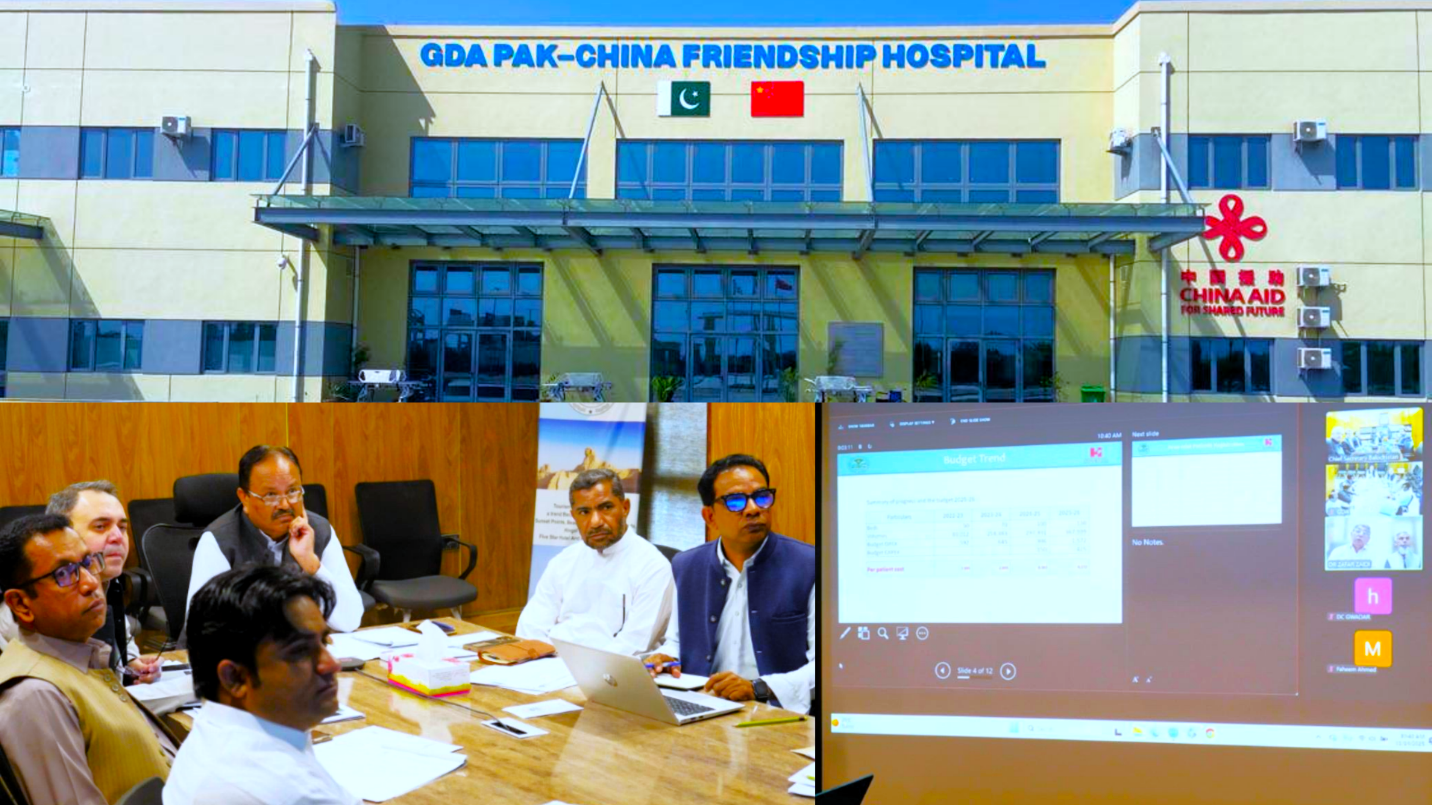
 Proposals due Dec 30 via e-tender.
 Project will move customs, storage & logistics outside the main port, freeing up core operations.