Navigation
Install the app
How to install the app on iOS
Follow along with the video below to see how to install our site as a web app on your home screen.
Note: This feature may not be available in some browsers.
More options
Style variation
You are using an out of date browser. It may not display this or other websites correctly.
You should upgrade or use an alternative browser.
You should upgrade or use an alternative browser.
HAL LCA Tejas: Updates, News & Discussions
- Thread starter indushek
- Start date
More options
Who Replied?
kaku
Registered Member
Looks like IAF is planning to complete 4000 hours of flying within next 20 years, that’s 200 hours of flying each year.
This is similar to F-16, while way ahead than JF-17.
m52k85
Registered Member


I dont know your aeronautics credentials, but it's quite the opposite. The Tejas is a reverse tamper (starts off shallow sweep angle, increases outboard, while the PG reduces outboard). I would imagine that design choice would be to optimise completely different flight regimes between the two.Beauty is in the eye of the beholder.
Different strokes for different folks.
Ugly and beautiful are subjective.
She looks pretty dang sexy to me.

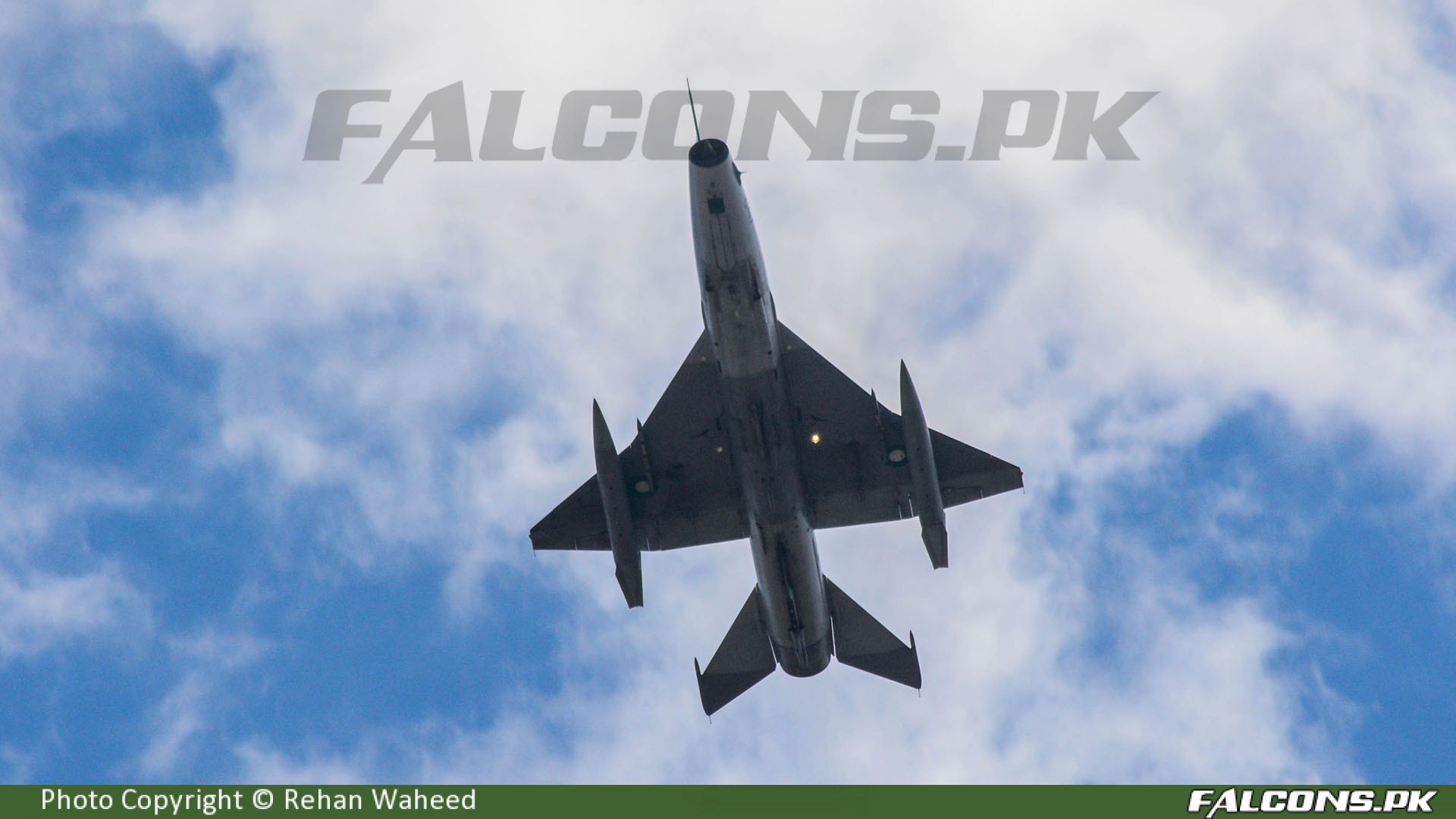
I always thought the design of the wings with the leading roots tapered from the main angle of the delta wings was genius. It basically allows for that angle to be steeper, giving the wings more surface area hence better lift, especially at takeoffs & landings & slower speeds. Almost similar to the idea of the F-7PG's wings which took the delta configuration of the MiG-21 F-13 and added surface area plus leading-edge flaps/slats. Same principle except these are at the wingtips as opposed to the wing roots on the Tejas. This gave the F-7PG much better lift & handling capabilities at slow speeds compared to the standard F-7/MiG-21.

Last edited:
JaneBhiDoYaaron
Registered Member

Bhai even prototype is not made for MK2. Can we stop this dick measuring contest.LCA Mk2 exceed in every possible way.
kaku
Registered Member
Looks like we cut copy pasted F-21’s cockpit into LCA Mk2 MWF.
LM revealed F-21 in Aero India 2019
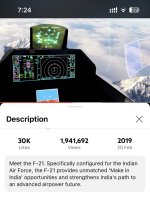
Now at aero India 2019, this cockpit was for LCA Mk2
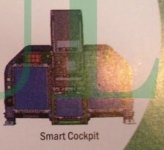
But within 1 year this tender was issued.
From Jan 2020.
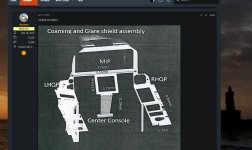
Looks like IAF got a briefing from Lockheed in Aero India 2019, and after that IAF most likely asked LAD + Central Pedestal Display like in F-21 as part of CDR.
LM explaining F-21’s cockpit in DefExpo 2020.
LM revealed F-21 in Aero India 2019
Now at aero India 2019, this cockpit was for LCA Mk2
But within 1 year this tender was issued.
From Jan 2020.
Looks like IAF got a briefing from Lockheed in Aero India 2019, and after that IAF most likely asked LAD + Central Pedestal Display like in F-21 as part of CDR.
LM explaining F-21’s cockpit in DefExpo 2020.

GoMig-21
Elite Member

Remember, most of the key controls are HOTAS, which help in high G scenarios. The LAD is for displays and only if the pilot needs to change a page or make a selection that isn't on the HOTAS, will he need to reach out and use the LAD.
That was essentially the underlying reason for creating HOTAS, you are correct, sir. I don't think there is any manufacturer that's not building their jets without it. Just seeing if you fellas are paying attention.
 (Kidding) And I don't think there is any need to reach for the displays during high G maneuvers, just the essential controls.
 The true benefit is comfort, especially at high-G maneuvers where the pilot is already struggling -- to a certain degree -- to keep all the blood from rushing to his head. If his arm is across his body it seems that would be even more straining to deal with Gs than if it was comfortably to his side, like his left hand on the throttle.
It really surprises me the Russians haven't adopted that on a single one of their relatively newer aircraft, at least the ones post F-16/Su-27. Not the Su-57 or even the recent Su75 prototype. Actually, I take that back. I believe they did it on the early Su-33 or 37 I believe. When Victor Pugachev first performed the Cobra maneuver I think it was in an Su-37. I distinctly remember the in-cockpit video showing him super relaxed & comfy, both arms on the sides while he's doing loops, barrel rolls, minimum radius turns and the Cobra.
I believe this is him doing the promotion flight video for the Su-37. From minute 1:04 to the end is exactly what I'm talking about. He's piloting that thing from his living room recliner. You can clearly see both arms to the side and how comfortable that is compared to a pilot doing the same maneuvers with a center stick. Not sure why they didn't 'stick' with it (no pun intended).
Tejas Mk1 and Mk1A also have reclining seats BTW. So will Tejas Mk2.
I believe all fighter seats are reclined a bit, somewhere around 13-15 degrees IIRC. The difference is the F-16 is at 30 degrees if I'm not mistaken.
Yes, Tejas Mk2 is being designed with a side stick. The Tejas Mk1 and Mk1A have a center stick.
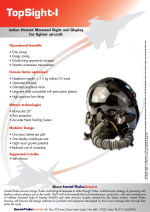
Good to know. Are Indian pilots using the TopSight helmet? This is something I believe the EAF is interested in.

Joe Shearer
Professional
Not to be pedantic, and earn the wrath of X; you do realise the implications of a double negative?I don't think there is any manufacturer that's not building their jets without it.
It read to me as if every manufacturer takes great care to omit or to do without it.
GoMig-21
Elite Member
I dont know your aeronautics credentials,
None. Zero, zilch, nada.
 I took physics in high school, averaged a C- between junior & senior years and nothing in college. You?
but it's quite the opposite.
I did say they were at opposite ends. Unless by "opposite" you mean something else? This is what I said:
GoMig-21
Same principle except these are at the wingtips as opposed to the wing roots on the Tejas.
I'm referring to the location of the angle change on the F-7PG compared to the Tejas. But they both perform the same function i.e. add more wing surface to generate more lift @ slow speeds.
The Tejas is a reverse tamper (starts off shallow sweep angle, increases outboard, while the PG reduces outboard). I would imagine that design choice would be to optimise completely different flight regimes between the two.
Not sure what you mean by "outboard"? And what are the different flight regimes between the two aircraft you're referring to?
To me, they're for a common purpose and that is generated lift @ slower speeds and also at tighter turns. My point was that both the angle design in the Tejas and the angle in the F-7PG create (or add) more wing surface, which in turn creates more lift and that helps considerably at take-offs & landings and also at slow speeds in general, specifically during tight turns where less speed is preferrable.
One of the biggest flaws of the MiG-21's delta wings was that they designed the delta wings to get the best of both worlds, lift and speed but one sacrifices more for the other. They could only make the delta wings so big because they basically wanted to have a rocket with wings. It was designed for the Soviets as an interceptor to fly straight and very fast. The larger the wings, the greater the drag so they gave it enough to meet both worlds.
It wasn't until the platform was exported extensively and used in many conflicts as a dogfighter where its shortcomings in that regard became apparent, giving the Chinese a reason to change the wings on the F7-PG.
Problem with the MiG-21 was that it bled a lot of energy going into & coming out of turns because of its relatively small delta wings and in order to maintain lift for as long as possible during a tight turn at a banking angle just short of 90 degrees, the pilot had to enter the turn at a high rate of speed and maintain as much momentum as possible which was drained rapidly, resulting in the quick loss of that energy & speed which then created problems not only maintaining lift during the turn, but coming out of the turn it was at a greater risk of stalling which is a obviously a huge problem. Increasing the wing surface area -- even minimally -- helps minimize that risk. It also dictates the size of the radius turn. It's a compounding effect; the larger the wing, the greater the lift. And in relation, the smaller the radius turn the better maneuverability.
You can see in this graph below the more you increase the bank angle, the more you reduce the effective lift.
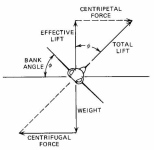
Once you reach 90 degrees, you've basically lost all lift which is why we never see fighters executing a sustained tight turn at a bank angle of 90 degrees or greater. They'll always stay under that 90-degree threshold because even at 88 degrees bank which gives only 2 degrees effective lift, it's still enough which helps sustain the aircraft's constant lift. All that is also dependent on the aircraft's power/airspeed & size of wing of course. Much of that is part of the overall wing-loading which helps determine the shape & size of the wings in the initial design phase.
Obviously I have no idea if that is the exact reason why HAL designed the Tejas' wings that way, or even the F-7PG for that matter. But the theory applies and makes sense to me. You can even see in the F-7PG that the altered wingtip section incorporates a leading edge flap whose primary function is to push airflow over the wings to generate more lift at lower airspeeds. Makes all the sense in the world.
The most impressive aircraft I've ever seen making a minimum radius turn (besides the smaller airshow stunt aircraft) was the F-22. That thing is ridiculous. Followed by the F-16. The Raptor's P&W F-119 engines and huge trapezoidal wings have a lot to do with that.
Not to be pedantic, and earn the wrath of X; you do realise the implications of a double negative?
It read to me as if every manufacturer takes great care to omit or to do without it.
Yes hahaha. Sometimes trying to be as specific as possible ends up getting me in trouble. Thanks for the correction. I am far from infallible by any stretch of the imagination.

Joe Shearer
Professional
Yes hahaha. Sometimes trying to be as specific as possible ends up getting me in trouble. Thanks for the correction. I am far from infallible by any stretch of the imagination.

kaku
Registered Member
This is not just about a single large display, but what you do with this single display, there are lots of things that go into backend. Important question is how you reduce or realtime OODA loop. Without sensor fusion, this wont be possible, and I dont think Russians want to make investment into it.It really surprises me the Russians haven't adopted that on a single one of their relatively newer aircraft, at least the ones post F-16/Su-27. Not the Su-57 or even the recent Su75 prototype. Actually, I take that back. I believe they did it on the early Su-33 or 37 I believe. When Victor Pugachev first performed the Cobra maneuver I think it was in an Su-37. I distinctly remember the in-cockpit video showing him super relaxed & comfy, both arms on the sides while he's doing loops, barrel rolls, minimum radius turns and the Cobra.

IAF use DASH in Tejas, and Targo II in Rafale,Good to know. Are Indian pilots using the TopSight helmet? This is something I believe the EAF is interested in.
View attachment 35686
Topsight is HMS, not HMDS, which display on visor itself.
Last edited:

Kaveri, if successful could be used as replacement for F404 engines during MLU for Tejas after 15-20 years in service
Mig29upgs of the Indian Airforce are getting their third engine, which would allow them to remain in service beyond 2035, should their be a need.
So Tejas Mk1a , which will likely serve till 2060 , should have an alternative to Ge F404 engine, considering the fact that GE doesn't have many customers for this Engine Barring HAL Tejas and South Korean KAI T/F 50
GE will probably close production after the delivery of the last Tejas MK1A and Tejas Trainers aircraft to IAF and Navy , unless HAL wins some export order to stretch MK1A production beyond 2034-35

vkdindian
Trusted Member
If Kaveri comes up to the task of producing the required power than that would be just a start. Rated thrust is just the starting point. There are many other aspects that come in after that.
Some of these are robustness, efficiency, survivability, lifespan etc and host of other technologies that come into a proven engine and unlikely to be available in a first generation engine that Kaveri would be when it produces the rated thrust.
India shouldn’t give it up and continue to work since there is no shortcut to success. Probably, the Indian effort to negotiate with Safran and GE for tech transfer, is to lay hands on these very aspects to hasten the process and get into the big league.
Some of these are robustness, efficiency, survivability, lifespan etc and host of other technologies that come into a proven engine and unlikely to be available in a first generation engine that Kaveri would be when it produces the rated thrust.
India shouldn’t give it up and continue to work since there is no shortcut to success. Probably, the Indian effort to negotiate with Safran and GE for tech transfer, is to lay hands on these very aspects to hasten the process and get into the big league.
Kaveri in it's present form can generate 80kn ThrustIs Kaveri super cruise does have modern technology suitable for Amca and mark two programmes
Who is helping us
Is Kaveri same as safren
Is France helping us with this
Which is less than the 85kn generated by F404
So my guess is Tejas won't be able to Supercruise , since it can't do with F404
Earlier Kaveri was rejected because it was only able to Generate 73kn thrust
GTRE has taken the help of SAFRAN for improving the afterburner component of the Engine
They have achieved 95% of the performance of F404 engine.
IAF has said that they will look into Kaveri engine for Tejas MK1a if it can achieve 47kn dry thrust and 83kn afterburning thrust
Though ideally they would Want a 90kn engine so that our 200+ strong MK1A fleet will have adequate performance room for additional upgrades over their 35-40 year life
Users who are viewing this thread
Total: 1 (members: 0, guests: 1)
Pakistan Defence Latest
-
 Federal cabinet gives nod to imposition of emergency in KP; summary sent to president (19 Viewers)
- Latest: Meengla
-

-

-
-

Country Watch Latest
-
 Indian General Admits: We Cannot Defend India Against Pakistan & China (35 Viewers)
- Latest: RescueRanger
-
 Iran - Israel/US War: Israel-US declare war on Iran, Iran responds (242 Viewers)
- Latest: Master Chief
-
-

-

Latest Posts
-
Indian General Admits: We Cannot Defend India Against Pakistan & China (35 Viewers)
- Latest: RescueRanger
-
Federal cabinet gives nod to imposition of emergency in KP; summary sent to president (19 Viewers)
- Latest: Meengla
-

-

-
