*Siege of Tobruk to Battle of Chawinda : PA 1720 Maj Yusaf Ali Khan (1917–1997) 18th Cavalry, Central India Horse ( CIH ) , 6 Lancers, 25 Cavalry & 33TDU (Tank Delivery Unit)*
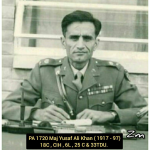
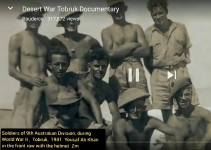
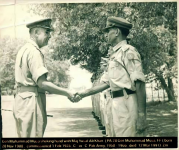
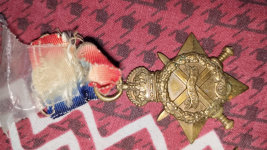
PA 1720 (IC 1467) Major Yusaf Ali Khan was born on 14 March 1917 into the martial Kaim Khani (KK) Rajput clan. He enlisted in the Indian Army in 1935 and was posted to the 18th Cavalry, which later took part in the defence of Tobruk during the Second World War under the 9th Australian Division, commanded by Lt Gen Sir Leslie Morshead.
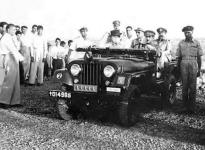
During the campaign, Yusaf served as the unit’s Intelligence NCO and was once entrusted to drive General Morshead through minefields at night. His remarkable sense of direction and calm under pressure so impressed the General that he personally commended Yusaf to the unit’s commanding officer.
"Lt Gen Sir Leslie Morshead was regarded as Australia’s greatest soldier after Blamey. His victories over Gen Erwin Rommel at Tobruk and El Alamein in World War II were decisive and helped alter the course of the war.(Reference: “Morshead: Hero of Tobruk and El Alamein” by David L. Coombes.).
On 16 September 1942, Yusaf was promoted to Junior Commissioned Officer and posted to Syria. He later attended the Tank Gunnery Course at the British School of Armour, Cairo, where his outstanding performance earned him a Viceroy’s Commission. He was promoted to Second Lieutenant on 9 June 1945 and subsequently posted to the Central India Horse , then serving in Greece.
Maj Yusaf was a life member of the “Rats of Tobruk Association” in Australia, an honour shared by all those who defended the fortress of Tobruk during the siege.
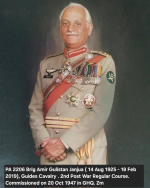
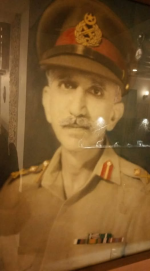
At the time of Independence in 1947, he was serving with the 6 Lancers (Duke of Connaught’s Own), stationed at Kohat. He later joined the newly raised 25 Cavalry on 9 June 1962, and being Staff College qualified, he held a Grade-2 staff appointment in an armoured division. He served under PA 136 Maj Gen ( Lt Gen ) Shahabzada Yaqub Khan (18th Cavalry & 11 Cavalry , 3 Punjab & 6 Lancers )—a wartime comrade from North Africa, where both had served in the 18th Cavalry squadron deployed at Tobruk during the first siege.
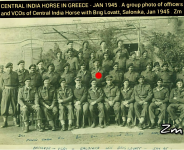
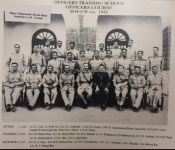
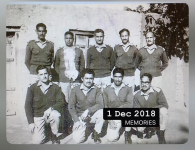
In the group photograph mentioned below, the tallest officer (marked with a red dot) in the front row is Raja Ghaziuddin Hyder (PA 470, Brigadier, later 19 Lancers). He later served as Battalion Commander at PMA and Commander 5 Armoured Brigade in 1961–62. Notably, Brig R. G. Hyder and Maj Gen Zawar Singh (later 7th Light Cavalry) had served together in CIH during the Italian and Greek campaigns.
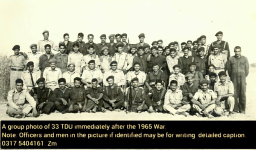
During the 1965 Indo–Pakistan War, Maj Yusaf rejoined the Army as a reservist and took part in the Battle of Chawinda, where he commanded a squadron of the 33 TDU . He retired in 1966 and thereafter managed the Kaim Khani Hostel in Hyderabad.


 The 2nd Battalion was deployed to India in 1945 and arrived at Cherat Cantonment, thirty-four miles from Peshawar, on 15 August 1947, when India and Pakistan became independent.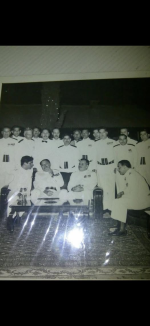


 Israel-Greece air defence deal to be 'scaled up' with UAE as contender, sources say (12 Viewers)
 Israel signs €3 billion arms export deal with Greece, defence ministry says (8 Viewers)