ghazi52
THINK TANK: CONSULTANT


- Thread starter
- #406
SELECTION OF SITE FOR PMA— Kakul, KPK.
As stated by Brig Francis Ingall in his memoirs’’ The Last of the Bengal Lancers’. While discussing various problems faced by him in establishing the Academy, Brig Ingall recounts very interesting incidents highlighting the confusion created due to lack of experience coupled with lack of resources and bureaucratic impediments, in the early days of birth of Pakistan.
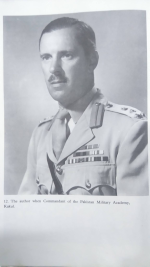
He says, ’’At a staff meeting at AHQ, presided by CinC, CGS and DMT, I was formally designated as Commandant of the embryo Pakistan Military Academy. I was told to plan for an academy with a battalion consisting of four companies and a curriculum spread over two years. Initially I was given a free rein to make what order I could make out of the confusion.
Find suitable location for the Academy, find money and staff and supervise decisions relating to curriculum. I had to appear before Adjutant General to argue my case. A newly promoted officer, he was extremely pompous and difficult to deal with. He also seemed vague about what was required of him. He was hesitant about making decisions.
The new Army’s pay and accounts department proved parsimonious beyond belief and there were times when I was made to feel I was asking for the moon. These early brushes with the seniors officers of the Army did not make me ‘best beloved’ but I was determined to barge ahead as fast as possible.
Since I used to spend my summers in Abbottabad, I thought that it was ideal place for establishing the Academy due to climatic and logistical considerations.
I knew that there was another cantonment five miles away at Kakul. In thirties it had been home of Indian Army School of Artillery and more recently a training school for young officers of Royal Indian Army Service Corps {RIASC}.
It had all the logistical backup of a well-established military station. It was within fairly easy reach of GHQ in Rawalpindi. I checked up with AHQ whether Kakul was occupied and to my delight they told me it was not. I visited the area and found it suitable from all aspects.
I physically visited Kakul Cantonment and found it idea place for Academy. New buildings housed four permanent student messes and single quarters fir about 400 students, married officers hutments, a large lecture hall plus small study halls, two cinemas and mush else besides. I returned to Rawalpindi and wrote a report that Kakul be the chosen site.
I discussed personally with CinC general sir Douglas Gracy. Kakul’s Training school was duly chosen to be the site for Pakistan Military Academy.
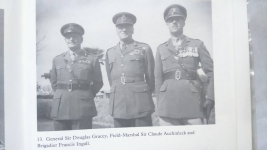
As stated by Brig Francis Ingall in his memoirs’’ The Last of the Bengal Lancers’. While discussing various problems faced by him in establishing the Academy, Brig Ingall recounts very interesting incidents highlighting the confusion created due to lack of experience coupled with lack of resources and bureaucratic impediments, in the early days of birth of Pakistan.
He says, ’’At a staff meeting at AHQ, presided by CinC, CGS and DMT, I was formally designated as Commandant of the embryo Pakistan Military Academy. I was told to plan for an academy with a battalion consisting of four companies and a curriculum spread over two years. Initially I was given a free rein to make what order I could make out of the confusion.
Find suitable location for the Academy, find money and staff and supervise decisions relating to curriculum. I had to appear before Adjutant General to argue my case. A newly promoted officer, he was extremely pompous and difficult to deal with. He also seemed vague about what was required of him. He was hesitant about making decisions.
The new Army’s pay and accounts department proved parsimonious beyond belief and there were times when I was made to feel I was asking for the moon. These early brushes with the seniors officers of the Army did not make me ‘best beloved’ but I was determined to barge ahead as fast as possible.
Since I used to spend my summers in Abbottabad, I thought that it was ideal place for establishing the Academy due to climatic and logistical considerations.
I knew that there was another cantonment five miles away at Kakul. In thirties it had been home of Indian Army School of Artillery and more recently a training school for young officers of Royal Indian Army Service Corps {RIASC}.
It had all the logistical backup of a well-established military station. It was within fairly easy reach of GHQ in Rawalpindi. I checked up with AHQ whether Kakul was occupied and to my delight they told me it was not. I visited the area and found it suitable from all aspects.
I physically visited Kakul Cantonment and found it idea place for Academy. New buildings housed four permanent student messes and single quarters fir about 400 students, married officers hutments, a large lecture hall plus small study halls, two cinemas and mush else besides. I returned to Rawalpindi and wrote a report that Kakul be the chosen site.
I discussed personally with CinC general sir Douglas Gracy. Kakul’s Training school was duly chosen to be the site for Pakistan Military Academy.