Navigation
Install the app
How to install the app on iOS
Follow along with the video below to see how to install our site as a web app on your home screen.
Note: This feature may not be available in some browsers.
More options
Style variation
You are using an out of date browser. It may not display this or other websites correctly.
You should upgrade or use an alternative browser.
You should upgrade or use an alternative browser.
IFX Indonesian Fighter Experiment (KF21/IFX program)
- Thread starter Indos
- Start date
More options
Who Replied?

Indos
INT'L MOD
Indos
INT'L MOD
- Thread starter
- #153
Exclusive: S. Korea to cover Indonesia's KF-21 shortfall, raising burden on KAI
KAI faces extra $82.3 million burden in revised KF-21 cost splitBy Jeong Min-ha,
Kim Ji-hwan,
Lee Jung-soo
Published 2025.03.11. 11:11
South Korea’s decision to reduce Indonesia’s contribution to the KF-21 fighter jet development program by two-thirds has shifted financial pressures onto Korea Aerospace Industries (KAI), the project’s primary contractor.
As of March 10, investment banking sources said the South Korean government is considering a plan to divide Indonesia’s outstanding contribution of 470 billion won ($322.2 million), with approximately $239.9 million covered by the government (74.5%) and about 82.3 million by KAI (25.5%). Some argue that KAI should shoulder an even larger share of the cost.
Since 2015, S. Korea and Indonesia have jointly developed the KF-21, a next-generation fighter jet, with a total budget of approximately $5.5 billion through 2026.
Under the original agreement, Indonesia was set to cover 20% of the total cost—$1.1 billion, later reduced to around $1 billion—in return for a prototype aircraft, technology transfers, and rights to produce 48 jets domestically. The remaining 80% was to be funded by the S. Korean government ($3.3 billion, or 60%) and KAI ($1 billion, or 20%).
However, with just one year remaining until the project’s completion, Indonesia has contributed only $274.4 million so far—just 25% of its pledged amount. Citing financial difficulties, Indonesia has requested a reduction in its share. In response, the S. Korean government proposed in Aug. 2024 to lower Indonesia’s contribution to $411.5 million. Under this adjustment, Indonesia would pay an average of $73.3 million per year from 2024 to 2026.
KAI has already reduced total development costs by approximately 6%, bringing them down to approximately $5.2 billion. However, the company now faces a heavier financial burden due to the additional $82.3 million it may need to cover. This would bring KAI’s total contribution to $1.1 billion, more than seven times its operating profit of last year.
A Defense Acquisition Program Administration (DAPA) official said, “The government and the company have agreed in principle to share the shortfall, and discussions are ongoing based on national budget considerations and the company’s financial status. The exact distribution of costs has not been finalized.”
Since last year, DAPA has sent 10 official letters to Indonesia, urging payments or requesting negotiations on adjusted contributions. However, the Indonesian Ministry of Defense has responded only three times. Two of these responses concerned an incident in which Indonesian technicians stationed at KAI were caught leaking technical data, while the third reiterated Indonesia’s request to lower its contribution to $411.7 million.
Despite the financial setbacks, S. Korea and KAI remain committed to working with Indonesia, as the country is expected to be the first customer for the KF-21. Under the agreement, Indonesia would purchase 48 aircraft. The country has also previously bought S. Korea’s KT-1 basic trainer aircraft and T-50 advanced trainer jets.
A defense industry official said, “It is our understanding that Indonesia’s reduced contribution will be offset by a decrease in technology transfers. The government led the negotiations that resulted in this concession, so it is unfortunate that a private company is being asked to absorb part of the burden.”

Exclusive: S. Korea to cover Indonesia’s KF-21 shortfall, raising burden on KAI
Exclusive: S. Korea to cover Indonesias KF-21 shortfall, raising burden on KAI KAI faces extra $82.3 million burden in revised KF-21 cost split
 www.chosun.com

SiliconBit (silicon0000)
Trusted Member

Indos
INT'L MOD
- Thread starter
- #155
Translate please
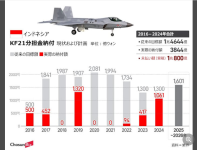
The same news but written in Japanese. I put the graph about Indonesia payment, we can see the Indonesia payment in 2024 is more than double than previous year, basically match with what I have already stated in first page of Indonesia Defense Industry Thread.
About TOT, Indonesian engineers seems only see development period as real TOT, so when SK decrease Indonesia engineers scope of development, so Indonesian also want the investment get reduced.
Something news doesnt understand is that Indonesian engineers are supposed to contribute to all development just like what happened during Technology Development Phase. But the coming of Lockheed Martin changes things and limit Indonesian participation on several key technology like on system integration work/ mostly on weapon integration development, software development, flight control, etc.
This is why when Indonesia order Rafale, Indonesian seek system integration TOT, particularly weapon integration.
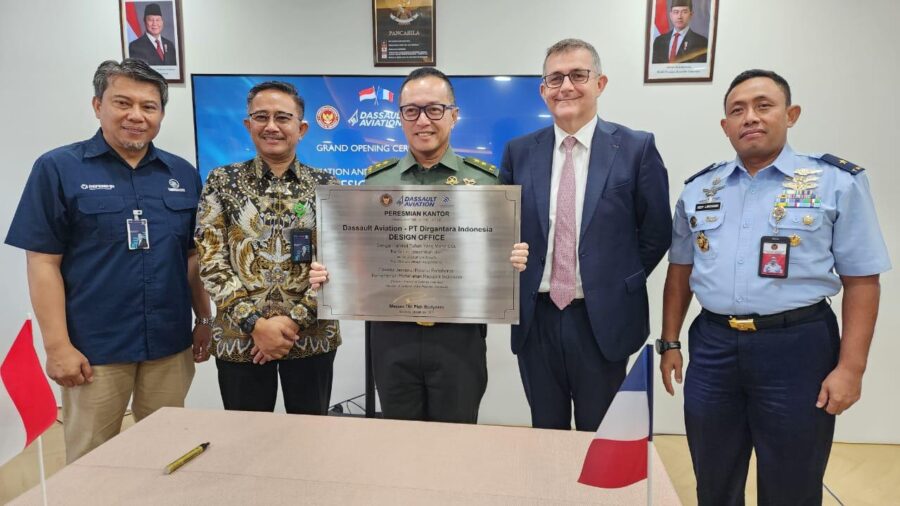
Bagian dari program pengadaan Rafale, PTDI dan Dassault Aviation resmikan Design Office di Bandung
AIRSPACE REVIEW - PT Dirgantara Indonesia (PTDI) dan Dassault Aviation pada 28 Februari 2025 meresmikan Dassault Aviation-PTDI Design Office
 www.airspace-review.com
Indos
INT'L MOD
- Thread starter
- #156
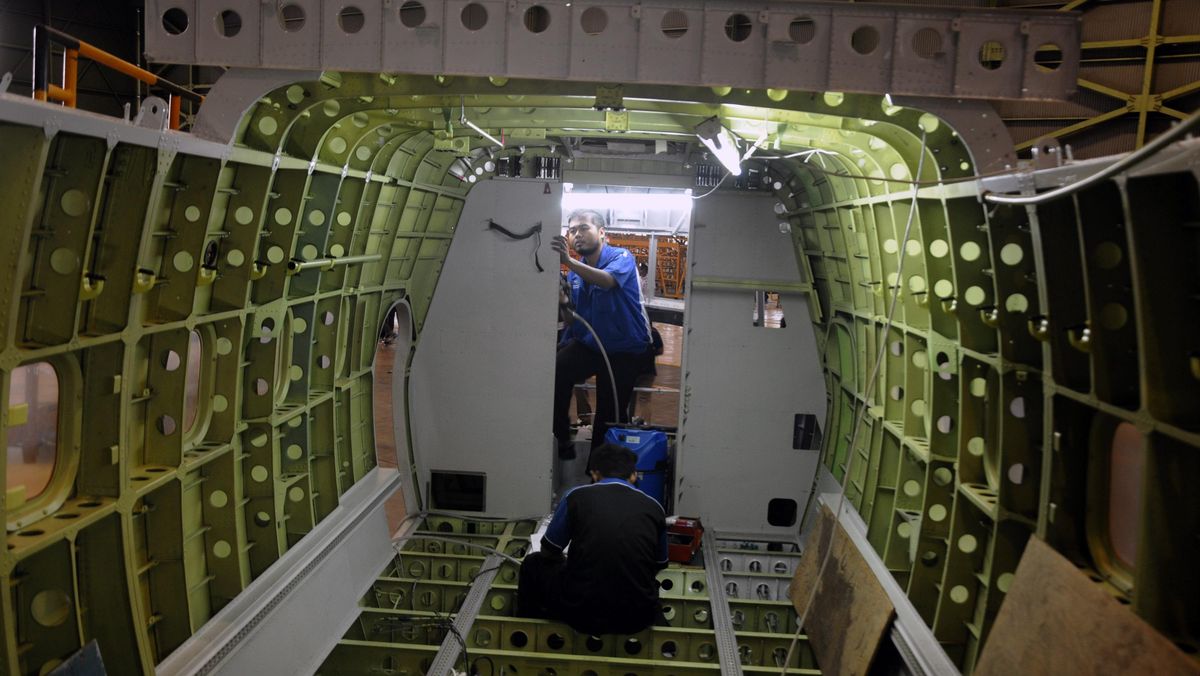
System integration is the need if we want IFX getting developed continously. Component can be sources outside the company, but the work of an aerospace company basically is designing, testing on wind tunnel, fuselage manufacturing, system integration, and testing again (flight test, static test).
------------------------
2016 news (Start of EMD/ Engineering and Manufacturing Development phase )
Jakarta, CNN Indonesia -- “Warplanes are like cell phones. The technology has changed over the years, whether it's about electronics, sensors or weapons."
Heri Yansyah, Head of the Korea Fighter Xperiment/Indonesia Fighter Xperiment (KF-X/IF-X) program at PT Dirgantara Indonesia, said this while talking to CNNIndonesia.com, Friday (19/2).
“So Indonesia must be able to upgrade this ever-changing technology. If you don't have the ability to upgrade, then buy the same aircraft as neighboring countries, then in two or three years, Indonesia will be defeated," said Heri.
Although comparing fighter planes with mobile phones, to make it far from easy. It took more than 10 years to develop the KF-X/IF-X which was designed to be a 4.5 generation multi-role fighter jet with technology approaching the capabilities of a 5th generation stealth fighter.
 www.cnnindonesia.com
------------------------
2016 news (Start of EMD/ Engineering and Manufacturing Development phase )
Jakarta, CNN Indonesia -- “Warplanes are like cell phones. The technology has changed over the years, whether it's about electronics, sensors or weapons."
Heri Yansyah, Head of the Korea Fighter Xperiment/Indonesia Fighter Xperiment (KF-X/IF-X) program at PT Dirgantara Indonesia, said this while talking to CNNIndonesia.com, Friday (19/2).
“So Indonesia must be able to upgrade this ever-changing technology. If you don't have the ability to upgrade, then buy the same aircraft as neighboring countries, then in two or three years, Indonesia will be defeated," said Heri.
Although comparing fighter planes with mobile phones, to make it far from easy. It took more than 10 years to develop the KF-X/IF-X which was designed to be a 4.5 generation multi-role fighter jet with technology approaching the capabilities of a 5th generation stealth fighter.
Buat Jet Tempur, Indonesia Siapkan Sumber Daya Besar-besaran
Pesawat tempur layaknya ponsel. Dalam setahun, teknologinya berkembang kian canggih. Membuatnya, jauh dari mudah. Infrastruktur dan manusia disiapkan.
www.cnnindonesia.com
Indos
INT'L MOD
- Thread starter
- #157
Defense Ministry try to know technology readiness level of Indonesian Aerospace to undergo manufacturing and ability to develop KF21 independenly.
The consultant cost is 2 billion Rupiah each for manufacturing readines level and engineering readiness level, so total will be 4 billion Rupiah. I think Indonesian Aerospace who do the assessment, since it is very technical and secrecy. The readiness level assessment I believe is real one, since Indonesian Aerospace who will do the manufacturing and development.
Readiness level on manufacturing also depend on the production line facility, so this can be an assessment for further investment in production facility. In other word, this show Defense Ministry seriousness in completing the production facility of IFX and also to fund internal research that is intended to fill the gap if the readiness level is not adequate.
Previously there is internal research that is intended to improve the technology readiness level of IFX team, but it is stopped during Jokowi administration in 2018. As far as I know, the internal research is still not restarted after that. So hopefully, the internal research should be restarted to fill the gap that comes after technology restriction imposed to Indonesian engineers by Korean and American during KF21/IFX EMD phase (2016-2026).
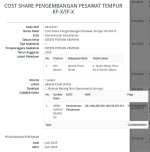
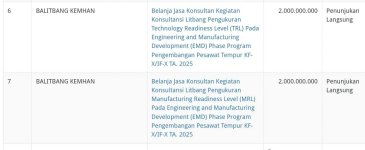
The consultant cost is 2 billion Rupiah each for manufacturing readines level and engineering readiness level, so total will be 4 billion Rupiah. I think Indonesian Aerospace who do the assessment, since it is very technical and secrecy. The readiness level assessment I believe is real one, since Indonesian Aerospace who will do the manufacturing and development.
Readiness level on manufacturing also depend on the production line facility, so this can be an assessment for further investment in production facility. In other word, this show Defense Ministry seriousness in completing the production facility of IFX and also to fund internal research that is intended to fill the gap if the readiness level is not adequate.
Previously there is internal research that is intended to improve the technology readiness level of IFX team, but it is stopped during Jokowi administration in 2018. As far as I know, the internal research is still not restarted after that. So hopefully, the internal research should be restarted to fill the gap that comes after technology restriction imposed to Indonesian engineers by Korean and American during KF21/IFX EMD phase (2016-2026).

Ali_Baba
VIP Member

Defense Ministry try to know technology readiness level of Indonesian Aerospace to undergo manufacturing and ability to develop KF21 independenly.
View attachment 108119
View attachment 108120
Given how little Indonesia buys interms of military jets, i fail to see the logic of why Indoneisa wants to be able to independently develop the KF21, or any fighter jet ?
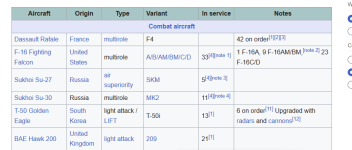
I appreicate the ambition and skill and industrial capability, I just fail to see where it will end ?
Is Indonesia planning a massive uplift in the size of the airforce ? Feels like a vanity project, than one of actual need ?????
Indos
INT'L MOD
- Thread starter
- #159
Given how little Indonesia buys interms of military jets, i fail to see the logic of why Indoneisa wants to be able to independently develop the KF21, or any fighter jet ?
View attachment 108214
I appreicate the ambition and skill and industrial capability, I just fail to see where it will end ?
Is Indonesia planning a massive uplift in the size of the airforce ? Feels like a vanity project, than one of actual need ?????
I have already stated previously, it depends on the economy. Why economy ? Because Indonesia is large country, very dominating in South East Asia region. Indonesia is the one that is feared in the region. You can see how much Singapore and Australia defense spending to understand it, and for Singapore it also has conscript policy as well. This makes the necessity to have large Air Force is not really there, I would say economic first.
Regarding economic development, due to the large territory, land, and people it has, it makes economic development needs more time than smaller nation. So this is why even under Prabowo Subianto, defense budget even get slashed and smaller than during Joko Widodo. Prabowo free lunch for school children not only benefit the students and students family, but also create more micro and small business, more money circulated in the villages as well as he wants the chickens, rice, meat are sourced from Indonesian villages.
Prabowo also wants to industrialize the nation further. It is why then he said state owned enterprises dont need to give divident any more to fill state budget. State owned enterprises need to use the money it has for growing the business, so Indonesia can be more industrialized. This is why he creates Danantara, and Indonesian Aerospace will likely get benefit from it as it is part of SOE.
When the economy is there, hopefully starting from 2030 with GDP projected by IMF to reach 2 trillion USD already, with hopefully very low poverty level, so we expect there will likely be more budget for defense acquisition, then hopefully local defense industry can get the most benefit from there, and not foreign owned one.
This is the way to keep defense spending becomes more sustainable when it is getting pretty large. So improving local defense industry is a must, we can see how much Indonesia needs to pay for 42 Rafale, around 8 billion USD. That is huge. So hopefully in the future, we can focus on IFX and develop it over time for the next 20 -30 years as it has already had Stealthy design.
UnderJokowi, defense spending is 0.7 % of the GDP, and under Prabowo it getting less than 0.6 % of GDP (based on IMF latest projection for 2025 GDP). Even Malaysia defense spending is at 1 % of GDP, while other SEA countries have more than that
Indos
INT'L MOD
- Thread starter
- #160
Alhamdulillah. Indonesia government has budgeted more than 80 million USD (1.32 trillion Rupiah) for its KFX/IFX program development cost share for the year 2025. Expected to be paid in June 2025 inshaAllah.
Basically about the same amount of money Indonesian government paid for the cost share in 2024 in Rupiah term.
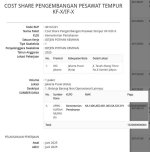
Basically about the same amount of money Indonesian government paid for the cost share in 2024 in Rupiah term.
Indos
INT'L MOD
- Thread starter
- #161
KF-21 cooperation advances as South Korea, Indonesia discuss defense collaboration
ByKim Ji-hwan
Published 2025.03.24. 10:30
Administrator Seok Jong-geon of the Defense Acquisition Program Administration met with Doni Ermawan Taufan, Indonesia's Deputy Minister of Defense, in Jakarta on the 21st to continue defense industry cooperation. This was the first high-level meeting between the two countries since the technology leak incident involving Indonesian researchers dispatched to Korea Aerospace Industries (KAI) regarding the Korean fighter jet KF-21 occurred in January of last year.
According to the Defense Acquisition Program Administration on the 24th, Administrator Seok noted during the meeting that both countries reaffirmed their commitment to continue the joint development cooperation of the KF-21 while discussing ways to enhance defense cooperation. In particular, they agreed to cooperate on a payment plan and a prompt revision of the joint development agreement for the KF-21. Previously, the South Korean government reduced Indonesia's share of the KF-21 development costs from 600 billion won (originally 1.6 trillion won) in August last year and decided to scale back technology transfer.
This was because Indonesia had difficulties in financing. While reducing the share, they were supposed to revise the joint development agreement made in 2016, but after five Indonesian researchers dispatched to KAI were indicted without detention on December 13, Indonesia has been passive about the revision discussions. The Indonesian side has claimed that South Korea's investigation of its technology personnel is unjust.
Administrator Seok said, "This became an opportunity to transition and normalize the somewhat stagnant defense cooperation atmosphere between the two countries and laid the groundwork for enhanced cooperation, including the joint development and production of the KF-21 in Southeast Asia, which has significant growth potential," adding, "Through this meeting, I hope to strengthen mutual communication and overcome current difficulties to solidify our cooperative relationship even further."
In addition, Administrator Seok discussed the local production of the basic training aircraft KT-1 and overall helicopter maintenance and parts production.

Seok Jong-geon and Doni Ermawan Taufan discuss continued KF-21 cooperation
Seok Jong-geon and Doni Ermawan Taufan discuss continued KF-21 cooperation
 biz.chosun.com
Indos
INT'L MOD
- Thread starter
- #162
Indonesia will pay the cost share of the KF-X/IF-X fighter jet program in 2025 amounting to Rp. 1,320,000,000,000 or around USD 80,072,793.45 (Exchange rate 1 USD = Rp. 16,485).
With this payment, the total cost share of Indonesia until this year will be USD 402,251,293 or around 5.21%.
Meanwhile, Indonesia has lowered the percentage of cost share in this project, from 20% to only 7%.
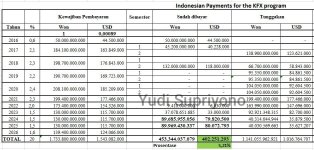
With this payment, the total cost share of Indonesia until this year will be USD 402,251,293 or around 5.21%.
Meanwhile, Indonesia has lowered the percentage of cost share in this project, from 20% to only 7%.
Indos
INT'L MOD
- Thread starter
- #163
KAI integrates AI pilot K-AILOT into KF-21 manned-unmanned systems
KAI collaborates with partners to enhance military aerial capabilities through AI integrationBy
Kim Ji-hwan
Published 2025.03.24. 18:06
Korea Aerospace Industries (KAI) has begun building a next-generation air combat system. Recently, as manned and unmanned aircraft collaborated in operations as a manned-unmanned teaming (MUM-T) system, it is considered a key element of future battlefields, prompting KAI to focus on developing artificial intelligence (AI) pilots.
According to KAI on the 24th, KAI's air combat system consists of three stages. The first stage focuses on the consolidation between the Korean supersonic fighter KF-21 and multifunctional unmanned aerial vehicles equipped with AI pilots. The second stage adds low-orbit satellites and unmanned combat drones to the first stage. The final third stage involves the formation of a combined manned-unmanned team that integrates stealth capabilities, sensors, data fusion, and the next-generation KF-21.
To this end, KAI is building an AI technology ecosystem, investing 102.5 billion won last year. It has invested in small and medium-sized corporations such as Conon, a big data AI company, Punzin, a decision-making AI specialist, and GenAI, an AI-based defense synthetic data solutions company, to secure technologies like big data and autonomous unmanned systems.
KAI is set to embark on AI autonomous flight verification in partnership with Shield AI. The plan is to validate the free flight technology of its self-developed AI pilot using the autonomous flight software HME developed by Shield AI.
The name of the KAI AI pilot is "K-AILOT." It was selected as the best entry in a public competition held for the entire nation last January. The name combines "pilot," which refers to a aviator, and KAI. KAI is developing it to autonomously recognize and analyze battlefield situations to carry out missions.
Starting this year, KAI plans to pilot K-AILOT on its multifunctional unmanned aerial vehicle prototypes. In the case of unmanned combat aircraft, KAI is conducting preliminary concept research through its own investment. KAI aims to equip K-AILOT on unmanned combat aircraft as well.
KAI aims to develop a manned-unmanned hybrid system combining the KF-21 and multifunctional unmanned aerial vehicles based on K-AILOT through a phased verification that includes commercial drones, prototypes, and real aircraft.

KAI integrates AI pilot K-AILOT into KF-21 manned-unmanned systems
KAI integrates AI pilot K-AILOT into KF-21 manned-unmanned systems KAI collaborates with partners to enhance military aerial capabilities through AI integration
 biz.chosun.com


Users who are viewing this thread
Total: 1 (members: 0, guests: 1)


